Zuzanna Czebatul

150917_Czebatul_005-1024x822 150917_Czebatul_002-1024x868 150917_Czebatul_007-677x1024 150917_Czebatul_009c-1024x683 150917_Czebatul_006_crop 150917_Czebatul_008a-712x1024 150917_Czebatul_004-683x1024

Zuzanna Czebatul

Work from A Gentleman’s Insult / A Gentleman’s Apology at Gillmeier Rech

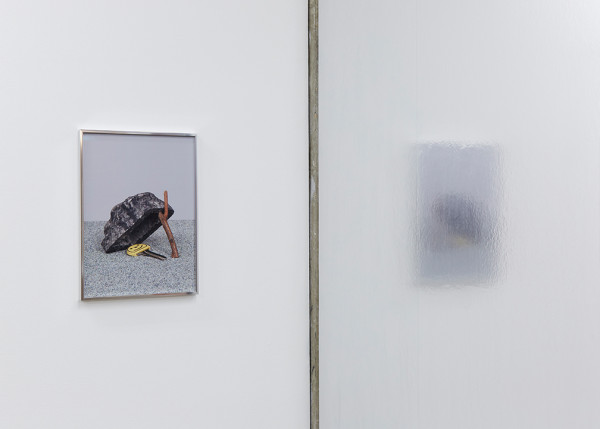
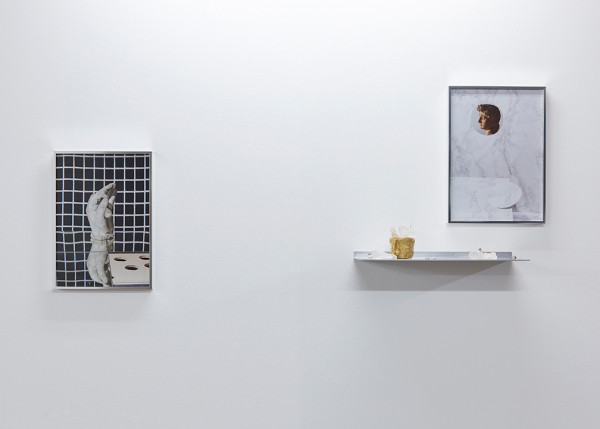
“Pivotal Blast, an obelisk measuring over six meters, lies broken in the middle of the gallery space. In three pieces, it cuts a pathway from the rear of the space to the door. In Ancient Egypt, the obelisk, a monolithic pillar with a pointed crown, symbolized rays of the sun turned to stone and was erected in front of sacred temples as a protective edifce. Examples can still be found today in Rome, Cairo, and Istanbul, and in the 170-meter Washington Monument in the United States. In Czebatul’s exhibition, Pivotal Blast, an obelisk of plush, has toppled over, so that its tip does not point at the sky, but directly at the gallery entrance. Although collapsed, the sculpture – due to the architectural perfection and beauty of the Egyptian style – possesses a monumental aura. Thus, and particularly in the current context of the destruction of the temples in Palmyra, Syria, the exhibition unfolds a space, in which the signifcance of cultural heritage and Ancient architecture for the present day can be discussed.

The title A Gentleman’s Insult / A Gentleman’s Apology is a metaphor for loss of control, for failure, and dearth of decorum that lies over the scenario in the gallery space. Accordingly, Czebatul has bathed the foor in radioactive yellow and positions Pivotal Blast next to four fat works entitled Neuro Studies that are not mounted onto the wall but rather foat a little in front of it. These grid structures, molded in colored resin, draw on the tradition of spiritual windows while being very reminiscent of Modernist abstract forms. In the center of each picture, a black and white snapshot of naked bodies can be found. Here, photographic likeness is juxtaposed with abstraction, symbolizing the proximity between ornamentation and fguration. Essentially, A Gentleman’s Insult / A Gentleman’s Apology demonstrates Czebatul’s fascination with the relationship between art historical vocabulary and contemporary con- cepts of brittle perfection to form a single statement about our everyday material culture.”

Anne De Vries

4O0A9799cweb 4O0A9648cWEB 4O0A9767cweb anne de vries6 4O0A9818cweb 4O0A9789c2web 4O0A9782cweb

Anne De Vries

Work form Submission at Cell Projects

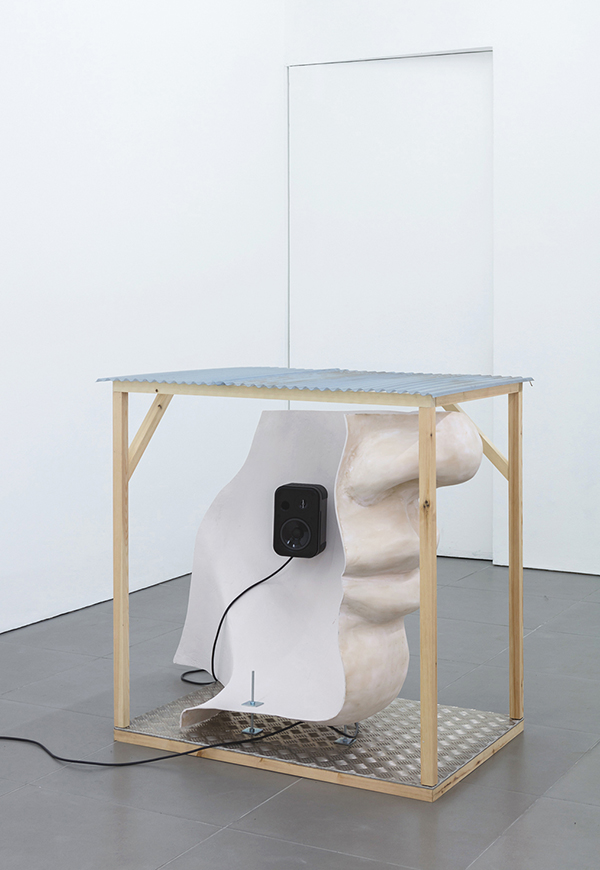
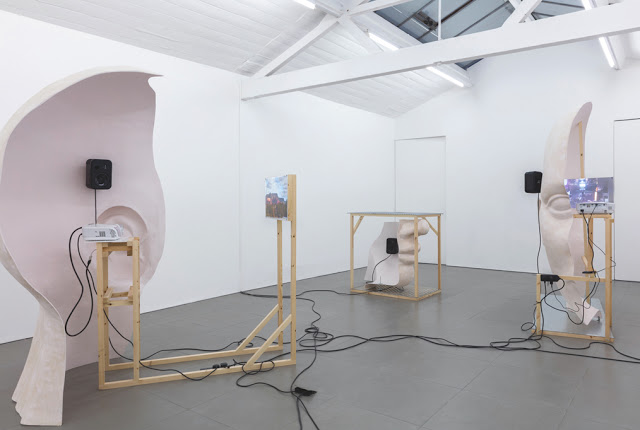
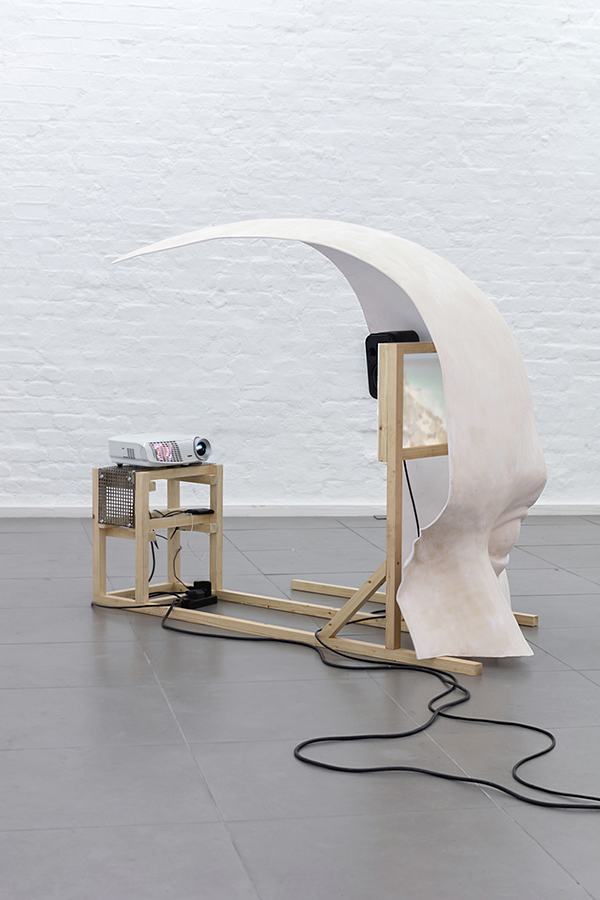
“Inside the rst gallery De Vries pulls together the human psyche by exploding a head into a variety of architectural structures and representations alongside the technology we use to feed thought and communication. Live-streamed screens of global locations take us to far away places, from the congested streets of Times Square, New York City, to a tranquil bird watch in the South American jungle. Time zones are switched to accommodate the viewer’s desire. Each architectural make-shift shelter harbours conversations between a mediator, commissioned by Vries, to investigate and interview various representatives from special unrelated global institutions ranging from monasteries, shelters, detention centres, swingers clubs and meditation centres. Via a series of discussions and questioning, focusing on the philosophy and mission of each institution, the audio reveals a simulation of codes and rules, which seem to merge into one. Technology takes an anthropomorphic form and the audio gives shape to distinct places and states of mind that can potentially be entered and fade into each other. The caller’s phrases and vocabulary simulate into fragmented codes of arti cial intelligence where humans become part of the automated tools they use.”
Thomas Albdorf

Lodret-Vandret-I-know-I-will-see_06
Lodret-Vandret-I-know-I-will-see_05
Lodret-Vandret-I-know-I-will-see_04
Lodret-Vandret-I-know-I-will-see_07
Lodret-Vandret-I-know-I-will-see_09

Thomas Albdorf

Work from I Know I Will See What I Have Seen Before (Lodret Vandret).

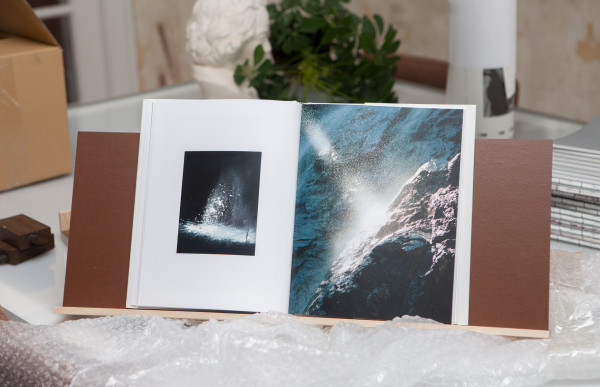
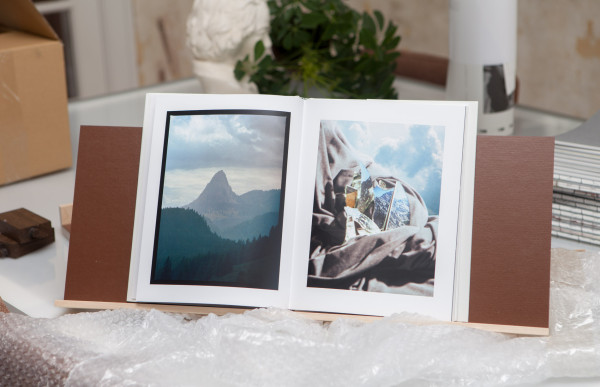
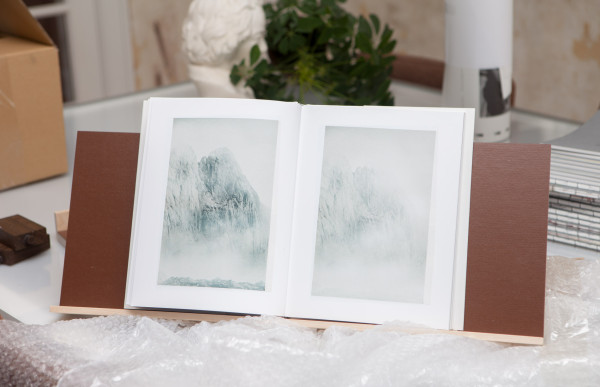
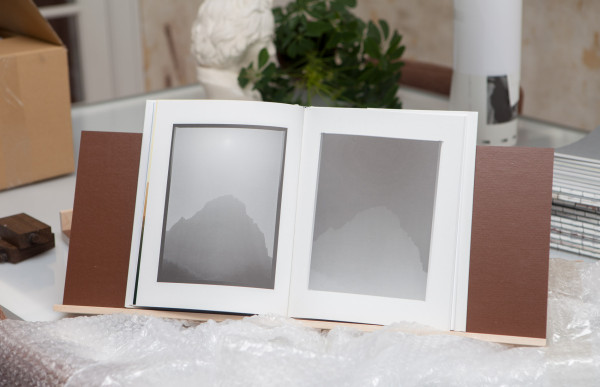
“Looking at Austria and how it is constructed and constituted within a common image space, the concept of mountains, of an alpine landscape that functions as surface for multiple projections is prevalent; be it within the classic 1960s Heimatfilm, advertising, or political propaganda.

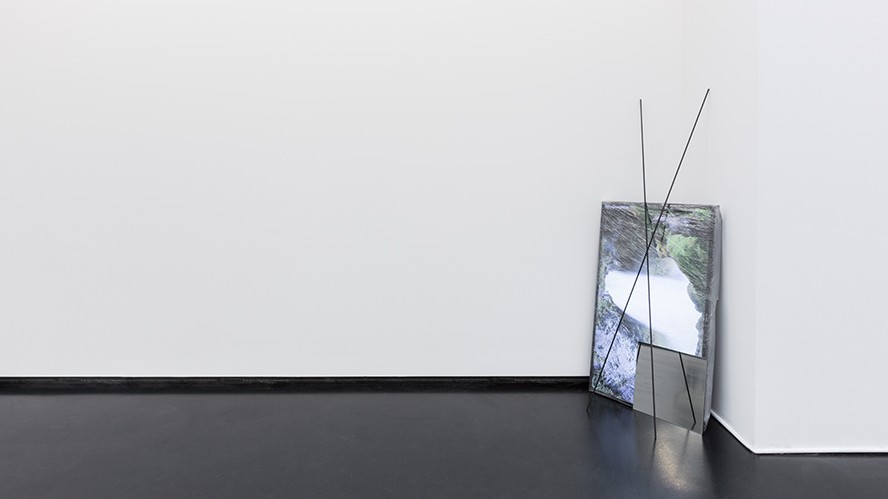
I Know I Will See What I Have Seen Before aims towards reconstructing and abstracting this mountainous visual space via various methods of image production, ranging from appropriated scanned material, digitally altered photographic images, studio settings etc., whilst also discussing the images’ productional circumstances. The works depart from their indexical referents, creating possibilities to become different images. One mountain can signify a different mountain, clouds can be petrified, water can become dust.” – Lodret Vandret

Safety Net

tumblr_nz1pa1m1UG1sifrn9o5_r1_1280tumblr_nz1pa1m1UG1sifrn9o6_r1_1280tumblr_nz1pa1m1UG1sifrn9o8_r1_1280
tumblr_nz1pa1m1UG1sifrn9o4_r1_1280tumblr_nz1pa1m1UG1sifrn9o9_r1_1280

Safety Net @ Erratum Galerie.

“‘Safety Net’ – a juxtaposed term hinting at feeling safe inside a net, waiting for those who hold the strings to play out their next moves – is the title of Erratum Galerie’s show. The term might apply to characters that make up this exhibition too; as they all come of age in this space we call the art world.
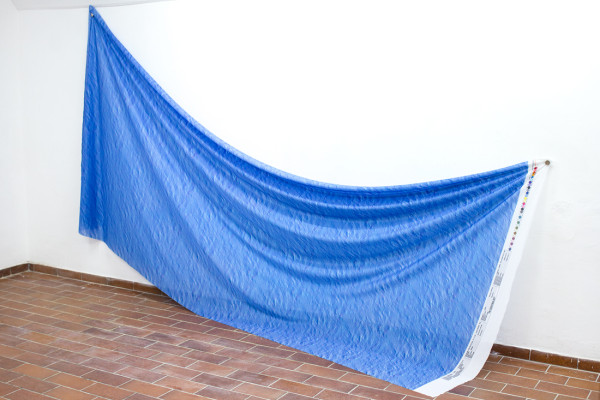
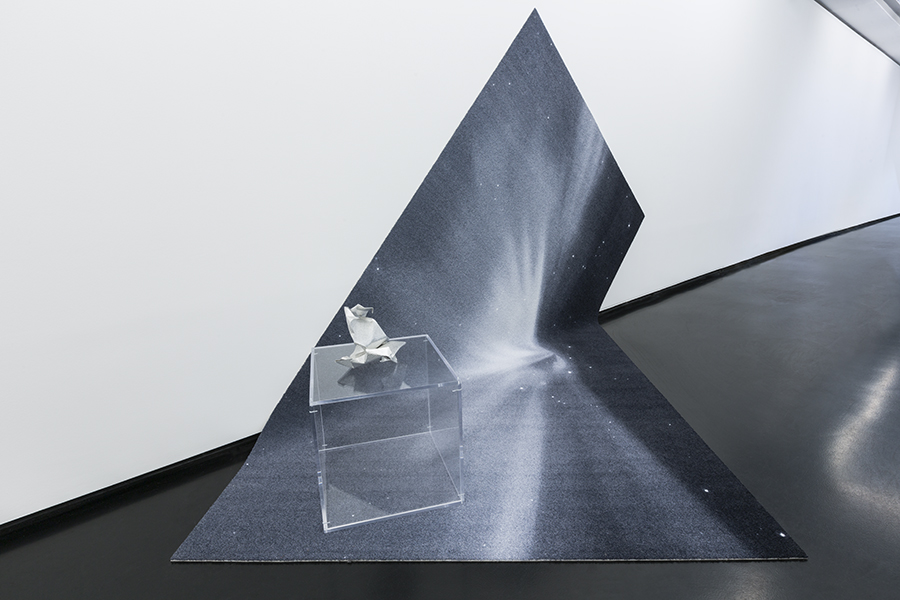
Also trying to make their way in the Berlin art scene are the show’s young curators Nina Kettiger and David Hanes who have invited three artists to give their take on the “Safety Net”. The works presented here are very distinct and interpret the topic very differently. For instance, Per Mertens’s work, which literally cascades down the wall, makes the transition between wall and floor with a 3d rendered printed cloth that’s reminiscent of the Moon’s surface. Coincidentally, it was only last September when Nasa suggested there might be water on Mars. Mertens even entitled his work “On Survival Mode” thus bringing the ever-trending sci-fi ideology closer to our realities, proposing we can continue our “world” elsewhere.

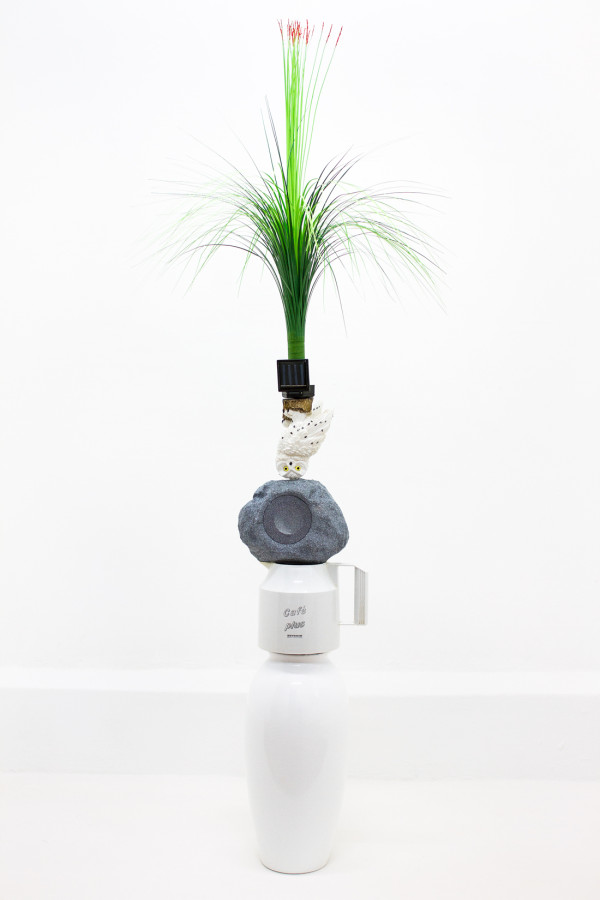
Artist Annabelle Arlie uses found objects as if they were compressed artifacts of our modern western world. Her garish aesthetics are made up of oversized euro-bill-adorned calculators, faux rocks with built-in speakers and solar-panelled light-up owls. These have been turned into shrine like objects, with names such as “Black Energy” and “Rescue Kit”. The works seem at odds with their original intentions of offhand consumption and disposal in an act of western gluttony, now they seem to take on an unearthly power. Arlie has carefully considered the arrangement of these found objects, through colour, shape and motif. Anyone who’s ever dropped into a one-euro store can see the works are made up of the latest stock but the compositions resonate so strongly. As works, it’s hard to see the pieces as singular readymade item again, “netting” consumer consumption is Arlie response to the title it seems.

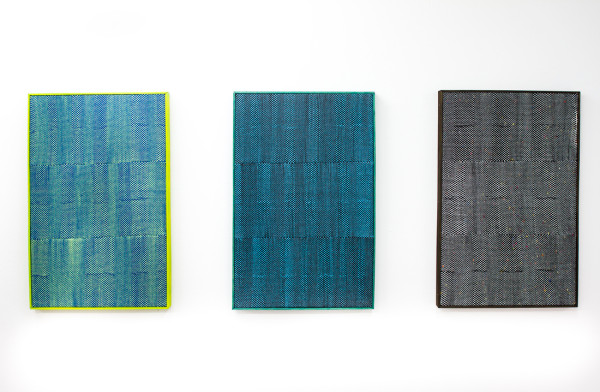
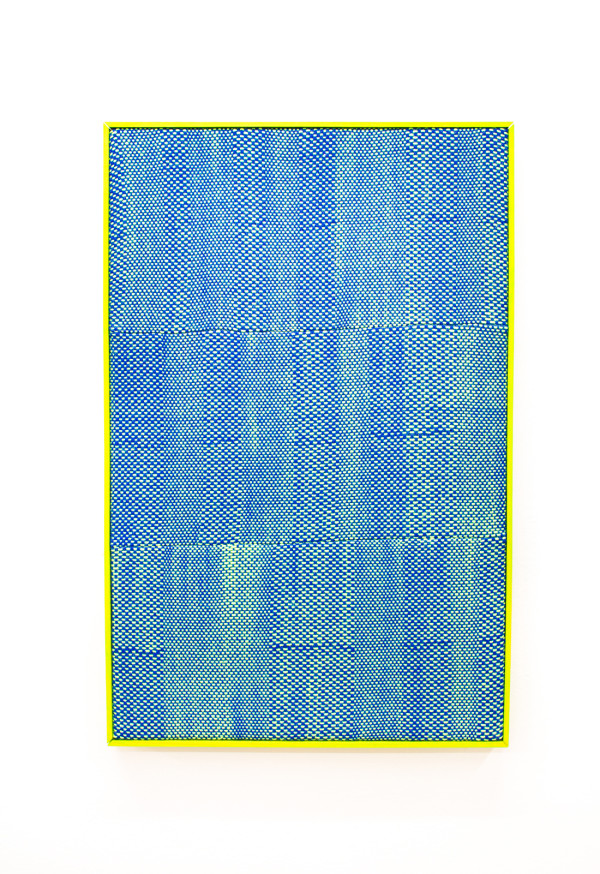
Heath West’s work has a more traditional feel to the topic of nets: four brightly coloured woven canvases hang across the gallery walls in hues of dark blues and neon pink and yellows. Seemingly confident and contained, these works become somewhat more complicated when you notice that the titles of each canvas is a song title from the American punk rock band the Misfits. Often seen as the progenitors of horror punk, the band have been synonymous with outcast teenagers throughout the world since the 90s.

Despite their difference in form, all the works explore the coming-of-age spirit in a post-internet world. Could this also nod at what happens to the pre-89 generation? They are not digital natives; they are the ones who shift between the old and new ways. They still remember the dial up sound of the internet before MSN opened, or their mums telling them to get off the internet in order to free the landline phone. But really we are all learning the rules and codes of the new elite world of the technological network. Smelling like teen spirit is perhaps just as relevant as it’s ever been.” – Victoria Rafferty

Corey Bartle-Sanderson

image_15
image_31
image_1
image_34
image_35

Corey Bartle-Sanderson

Work from HOMEWARE_update.

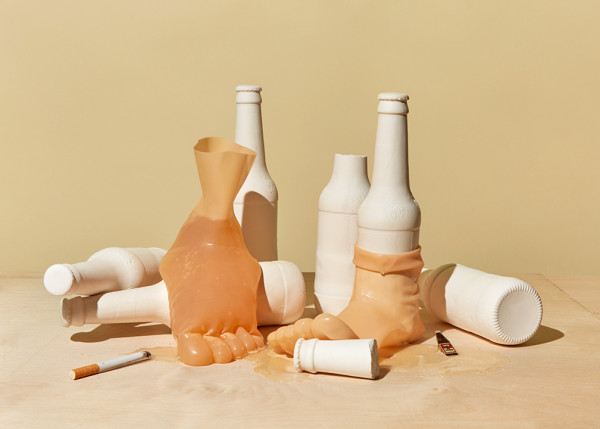
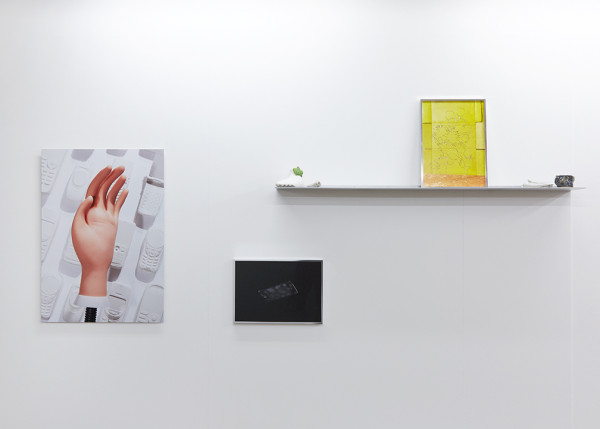
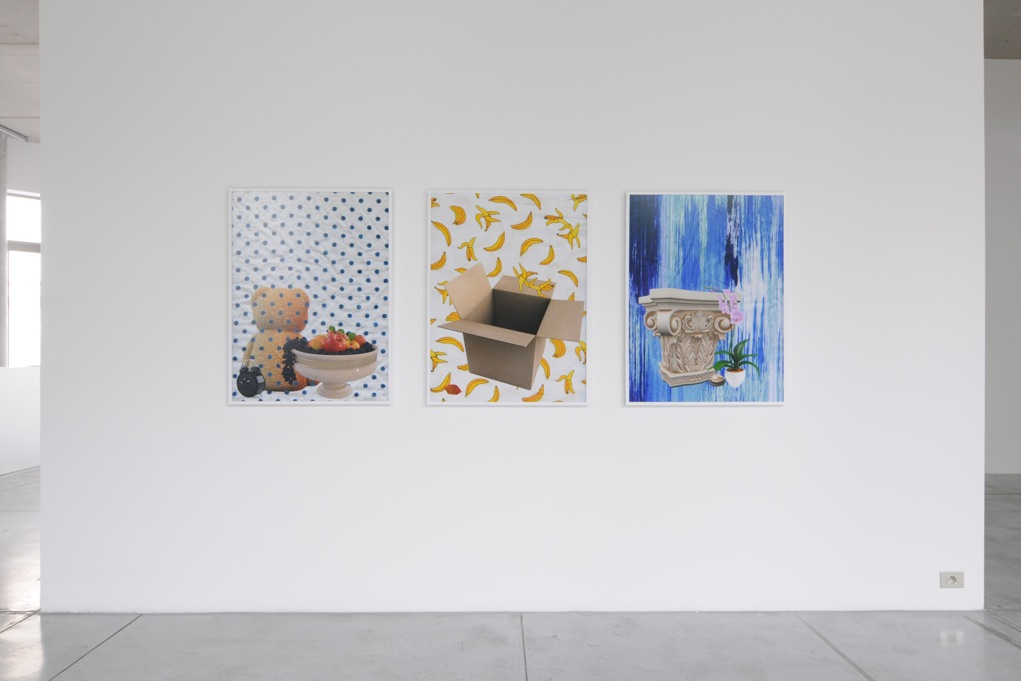
“How can we determine between artificiality and the actual world? What is ‘the model’ and what form does it take? Who can we trust?

The expectations of the spectator have shifted due to the conditions of digital processes and technology. Tools such as Photoshop, the iPhone and Tumblr are constantly accommodating a new language, through which images exist in a constant flow. The consequence of this concept is that the physicality of work is steadily depleted, and contexts are repeatedly re-appropriated. The assumption is that the image will be manipulated. My work plays with this assumption and seeks a balance between realism and surrealism, combining photography, sculpture and installation. My interests comprise digital and analogue processes equally, exploring how the real can replace digital and vice versa.

In the work, it is the photograph that becomes the conditioner of the experience, directing our view of the assemblages, becoming a means of producing two-dimensional objects obtaining a physical presence. The works placed in front of the camera favour the two-dimensional nature of the photograph, emphasising the impermanence of still-life photography that only exists in the documentation. However, sometimes the works escape the framework of the photograph, becoming sculptural and occupying a physical space.

The extension of the visual sense alters the way we think and act, the way we perceive the world, making us rethink about how an object looks. We know these objects too well, acquiring preconceptions on how things should look – how they would look if you Google them. As we see these things almost 24/7 they are accepted for how they look, we don’t think twice, or question. How do we know these aren’t just imitations of the real thing? where is the real? has it been made? Some objects are left to look handmade which can be seen up close, eventually ending this illusion. In this culture of digital liquidity everything is ceaselessly duplicated, shared, and disseminated. This idea is repeated in a new environment through old methods, imposing forms of the old on content of the new.” – Corey Bartle-Sanderson

Asha Schechter

tumblr_nwlllxOwBu1t06ptbo2_r1_1280 tumblr_nvw6npCyW21t06ptbo1_r1_1280 tumblr_mvpmk4grjS1t06ptbo5_1280 tumblr_n0z2auDJVa1t06ptbo3_1280 tumblr_mvpnbe6zvL1t06ptbo1_1280 tumblr_mvpmk4grjS1t06ptbo4_1280 tumblr_mvnrsj1nlR1t06ptbo4_1280  tumblr_mx1wnqidPi1t06ptbo3_540tumblr_mvnqsvXYQV1t06ptbo4_1280

Asha Schechter

Work from his oeuvre 

“I am interested in the lifespan of images. I am interested in how an image comes into being, what kind of work it does, how it ages, and when it stops being useful. I think of certain kinds of commercial 3D models as underemployed. The kind of models that on first blush make sense, but after further scrutiny are off in one way or another. These images have made their way into pictures, stickers, and videos I have been making, sometimes being put to sensible use, and sometimes floating in an indeterminate space, hoping that someday they might have something better to do.”

text via Charlotte Cotton’s Photography Is Magic

Pierre Clément

Transcom-Primitive-by-vinciane-verguethen-9539-e1445526416341 Transcom-Primitive-by-vinciane-verguethen-93171-e1445526591266 Transcom-Primitive-by-vinciane-verguethen-9442-e1447859392844

Transcom Primitive, show by Pierre Clément at XPO Gallery. Opening on Octobre 22, 2015. © vinciane verguethen/voyez-vous

Transcom Primitive, show by Pierre Clément at XPO Gallery. Opening on Octobre 22, 2015. © vinciane verguethen/voyez-vous

Transcom Primitive, show by Pierre Clément at XPO Gallery. Opening on Octobre 22, 2015. © vinciane verguethen/voyez-vous

Transcom Primitive, show by Pierre Clément at XPO Gallery. Opening on Octobre 22, 2015. © vinciane verguethen/voyez-vous

island

Transcom Primitive, show by Pierre Clément at XPO Gallery. Opening on Octobre 22, 2015. © vinciane verguethen/voyez-vous

Pierre Clément

Work from Transcom Primitive at Xpo Gallery

“The artistic practice of Pierre Clément is articulated around the cultural, aesthetic, and political forms that have emerged with the Internet. For his first solo exhibition at XPO GALLERY, Pierre Clément proposes an ecstatic voyage among new fields of consciousness, putting to the test visions of the world that are more “suppressed” and more “underground” such as shamanism, esotericism and the counter-culture.

Calling forth a mysticism that is tinted with empirical knowledge, the title of the exhibition telescopes the stakes inherent in the fields of communication and technology with that of the human and occult sciences.

At the same time coding, receiver and transmitter, Transcom Primitive draws its origins from the chaos and the advent of new technologies. A clever mix of raw materials and consumer objects, each work is a composition that reveals the sculptural potential of imagery. “Psychedelic,” “hacked,” and “pimped” all at the same time, this assemblage of objects, materials and narratives recalls the Codex Seraphinianus, the book of the “information age,” an epoch in which the coding and decoding of messages becomes more and more essential in genetics and information technology. Finding order in that which seems chaotic or lacking sense, these works transform the very idea of the visible by reinventing an equilibrium in the world. It is a question of landscape, memory, and propagation: is it a matter of creating a new world?

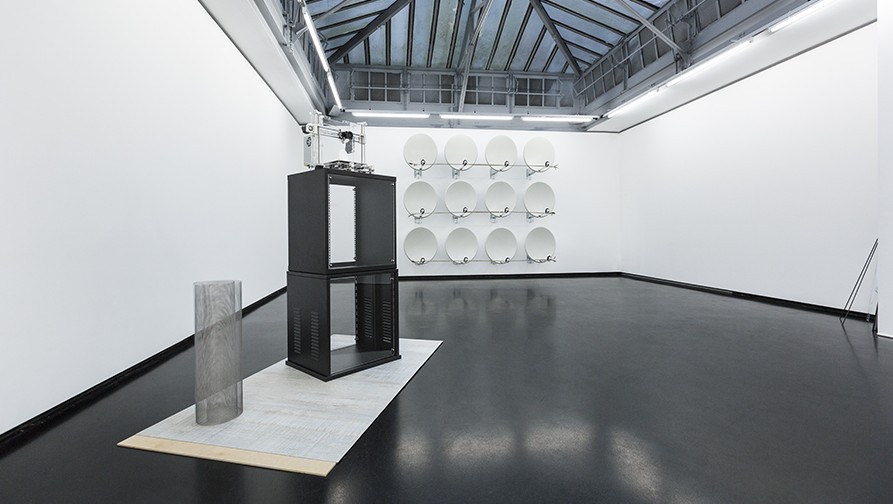
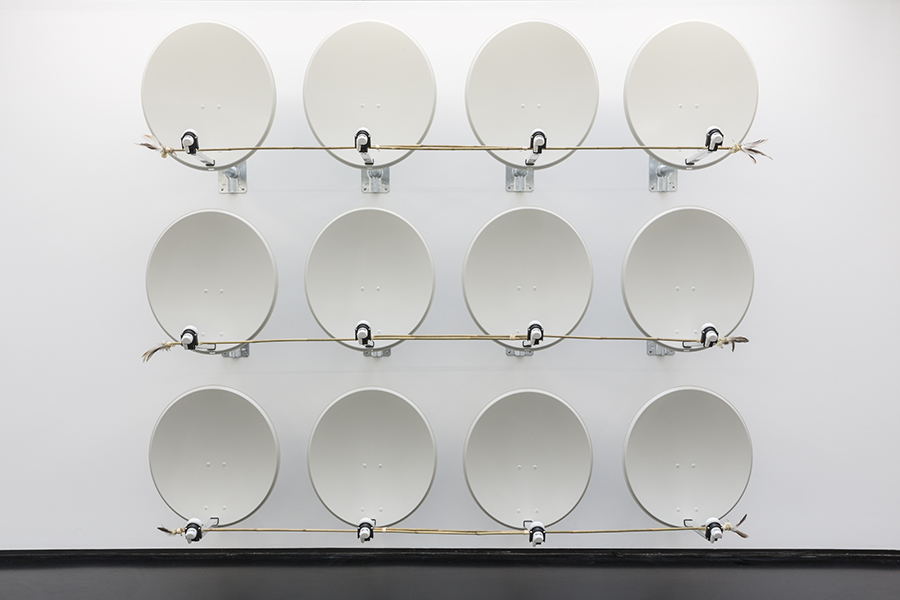
This constant appropriation of objects, purchased for the most part online as kits and assembled, shapes this taste for recombination. Between “do-it-yourself-ology” and mythologies inherent to progress and to technoindustrial systems, Pierre Clément explores here the formal potential and the symbolic power of industrially produced images and objects: the 3D printer, the accumulation and repetition of satellite antennas, which is symbolic of a certain form of telecommunication: the reappropriation of screen-savers which are iconic images of the technological universe and of the making of its origins.

Through a subtle telescoping with the origins of techno music, he also affirms the roots of his practice in “sampling.” Seeking natural, supernatural, divine and human “forces,” he “loads” his works with a magical capacity and creates illusions by falsifying materials, by reappropriating techniques that are both hand-made and stateof-the-art. This call to underground and clandestine powers derails and redirects the function of these objects. From the practical to the tactical, knowledge recombines with action within these multiple dichotomies between technology and the archaic. Each material is used here for its physical and symbolic properties and never ceases to contribute continually to this tension.

Considering these transformation of human consciousness, Pierre Clément explores alternative dimensions of thought and refers to Timothy Leary, a visionary psychologist attached to Harvard University, a thinker and spokesman for the counter-culture of the 1960’s and an icon of new-edge cyberpunk which questioned the acceleration of the mind and its powers via technology, drugs, and cultural movements (hippy, beatnik, cyberpunk, etc…).

From Timothy Leary (Chaos and Cyber Culture) to Jeremy Narby (The Cosmic Serpent, DNA and the Origins of Knowledge) or Greil Marcus (Lipstick Traces: A Secret History of the 20th Century) we can also glimpse reference to John Zerzan, an American author and philosopher of Neo-Luddite primitivism1 and the terrorist Ted Kaczynski, nicknamed the Unabomber. John Zerzan called for a return to primitivism, that is to say a radical reconstruction of society based upon the rejection of alienation and upon the ideal of the state of nature. Between ideology and technology, the interior world telescopes with the exterior world.

This exhibition, inscribes itself in the context of research that questions “the use of forces: magical visions,”

Wendy Plovmand

larger-3
larger-1
larger
larger-4
larger-2

Wendy Plovmand

Work from The Image that Paints this Canvas.

“The solo exhibition The Image that Paints this Canvas by Danish Artist Wendy Plovmand showcases her newly created body of work formed of archival pigment prints, objects, digital paintings and site-specific installations. Inspired by Lacan’s definition of The Lamella, the exhibition investigates the concept of digital process as form, movement and change.

“Lacan introduces the mysterious notion of ”the lamella”: The libido as an organ without body, the incorporeal and for that very reason indestructible life-substance that persists beyond the circuit of generation and corruption… Lacan imagines the lamella as a version of what Freud called partial object: a weird organ that is magically autonomized, surviving without the body whose organ it should have been, like the hand that wanders around alone in early surrealist films…”1

Three rugs on the gallery floor appear in the exact same size and place where a photograph of the gallery floor has been taken. The photograph is utilized as the basis for the material used to digitally paint a matching mark on the white rug. In the same way a series of printed photographic works (Lamella Caves) are mediated from the pieces that are missing in the original photographs; the works are connected by material and process in a symbiotic relationship that when mutating, give life to new hybrid species born out of the dialogue between photography and painting.

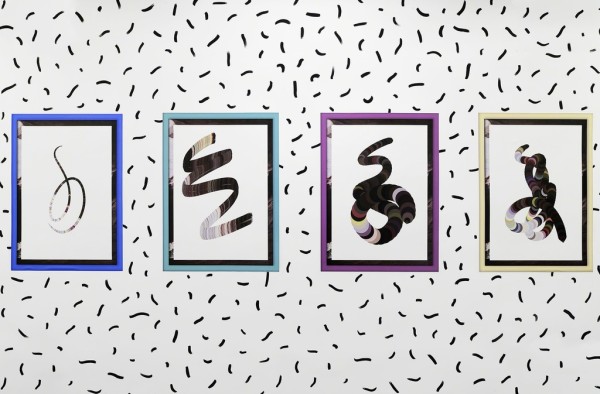
The Lamella understood as the material: a detached substance or matter that appears immortal and resembles the libido, a clear reference to the contemporary digital world. The digital realm – an unstoppable and formless matter – offers endless possibilities through perpetual and constant mutation. The Lamella too has its own life, a detached bodily organ or a mysterious snake like creature; immortal, representing life, death, creation and destruction.
The mark-making intuitive gesture, prominent in Plovmand’s exhibition, references the tradition of abstract painting where the success or failure of the work rests on chance; something accidental and casual such as the choice of brush or hand pressure. The mark-making gesture once again links to Lacan’s Lamella and the randomness of digital choices made when using the internet, search engines, computer programs etc.

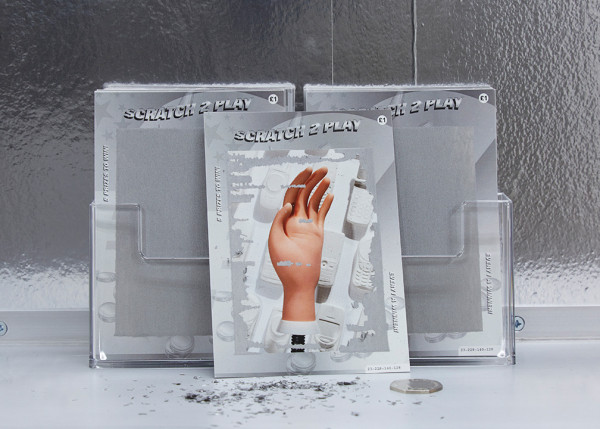
The journey as a symbolic gesture and action plays a significant role in Plovmand’s work. The Image that Paints this Canvas can be viewed as an allegory for movement and change; the mugs and key chains featured reference the kitschy souvenirs that link the journey to memory and nostalgia – manifested actions capturing the volatile, digital libido.

The work in The Image that Paints this Canvas questions the boundaries of painting and photography through the investigation of digital process, utilising the gallery (Matèria) itself as a source to create new artworks. New Mutalism is born, a fitting conceptual definition for Plovmand’s newest body of work.” = Wendy Plovmand

1 (Lacan, 1991:198)

Pascual Sisto

img_resize (1) img_resize (2) img_resize (4) img_resize (7) img_resize (5) img_resize (3) img_resize (6)

Pascual Sisto

En Plein Air at Brand New Gallery

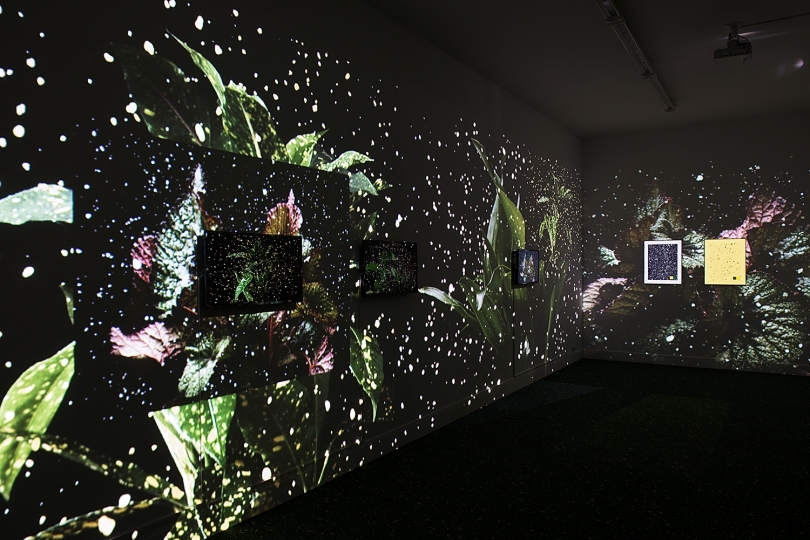
“For En Plein Air, Pascual Sisto has sampled the organic occurring markings native to a peculiar household plant commonly known as the spotted laurel or gold dust laurel (Aucuba Japonica ‘Variegata’); a plant variety that has been produced in strict cultivation by selective breeding. This sampling has occurred not once or twice but multiple times throughout different mediums, like a virus that spreads unrestricted until all distinctions between natural life and ersatz simulations become indistinguishable.

The synthesized version of the pattern is generated by a set of algorithms that randomly arranges the golden spots in space while also modifying the complexity of the edge roughness of each individual spot to closely match its source; whereas, the actual shrub the pattern is based on, is a cultivar whose green leaves are naturally and irregularly variegated with the yellow spots and blotches. Foliage color can vary considerably depending on the amount of sun exposure. Control and randomness are used in equal measure to recreate this naturally occurring organic pattern.

The golden dust pattern becomes the motif for the back gallery video installation and creates a simulated virtual environment resembling the chosen flora. The chromatic motif expands beyond its boundaries, spreading into different referent layers: through inkjet pigment on paper, dye-infused printing on a commercial carpet covering the entire space, a gobo stencil on a spotlight casting the specks onto a synthetic plant, immersive video animations and the living molecules that compose its originating plant matter. It further diffuses the domain of the senses by encapsulating the installation with a layered soundscape of wildlife sounds and a custom scent that is time-released through ultrasonic diffusers to continually affect the atmosphere of the space.

In this sense, the work acts as a house of mirrors, between the printed carpet, drawing, plants and Sisto’s amalgamation of sight, sounds and smells, including an oculus rift VR scene that transports you into your own variegated cosmos. In this mise en abyme, the hierarchies of the natural order are fused with the machine-made origins of industrial pattern design. All are blurred and merged to the point where it becomes difficult to discern the source from its copies.

Custom scent fabricated by Air Variable (www.air-variable.org)”

Justin Plakas

39b4af9ba53122b4-brokenrocks
09f98457336ec9bb-sickle
bcaed83747ef5215-hole
e10d3252de075807-shell

Justin Plakas

Work from Waiting Room.

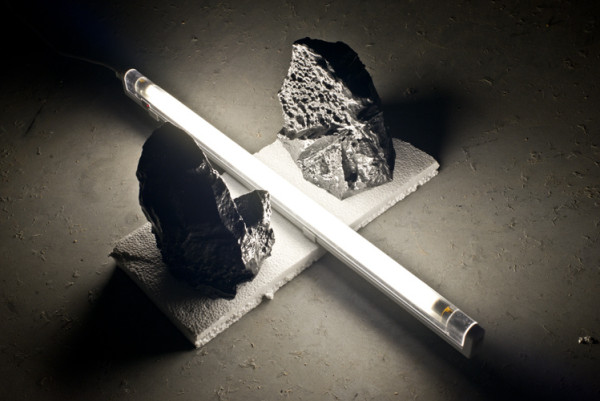
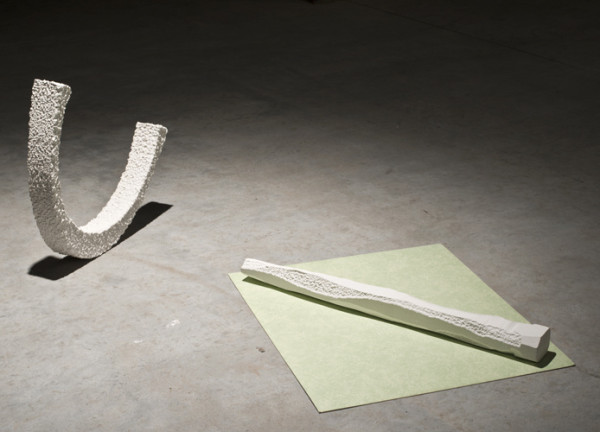
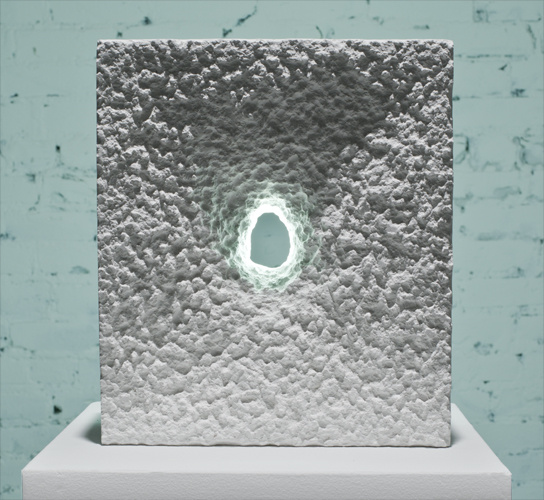
“I had spent a lot of time in the waiting room of the Shock Trauma Unit at the University of Maryland Hospital in Baltimore and then even more time within the trauma unit itself. My father had been in a really horrible car accident and for months all my down time was spent within this extremely intense environment.

Waiting Room represents a sort of mental and physical processing of that time and a new direction for my work and studio practice in a lot of ways. I had recently moved from creating completely digital 2D and time-based work to involving digital fabrication and other sculptural processes that manifested as physical objects.

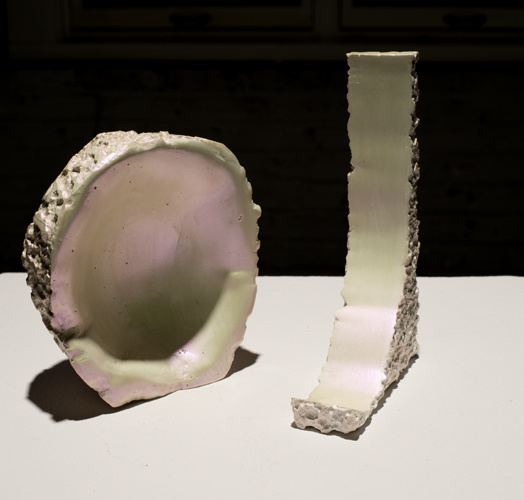
Waiting Room was created during my time as an artist in residence at the Bemis Center for Contemporary Arts in Omaha, Nebraska.” – Justin Plakas