Marc Horowitz

Marc-Horowitz-A-Hit-is-a-Hit-2014 o-MARC-900 large

Marc Horowitz

Work from his oeuvre

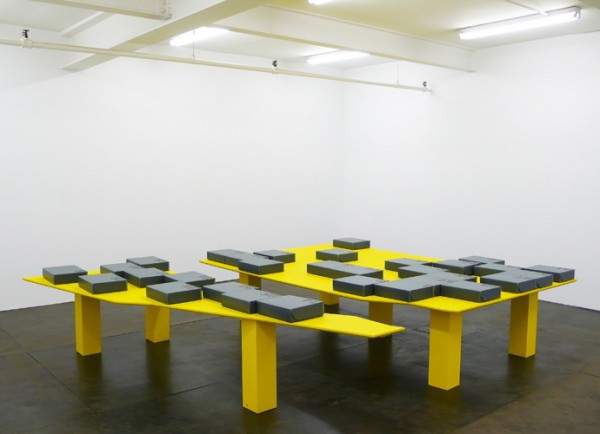
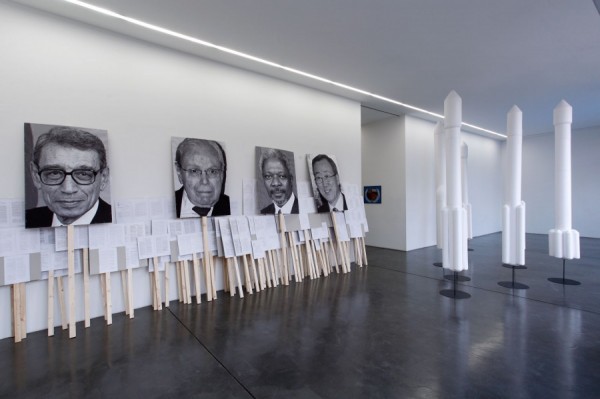
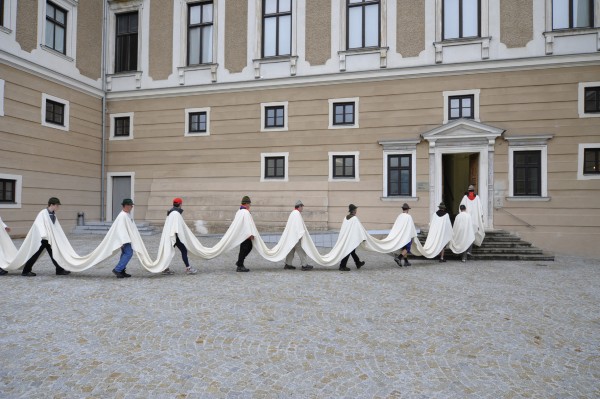
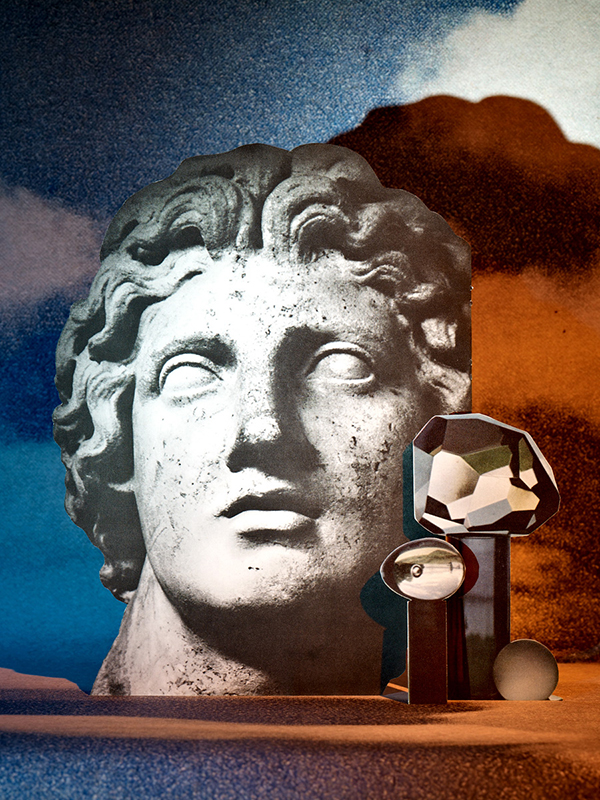
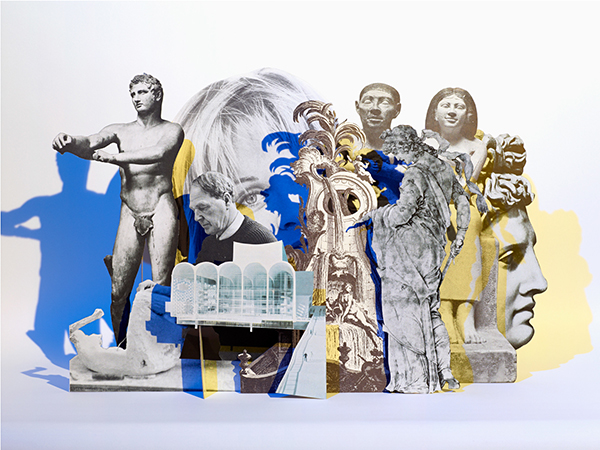
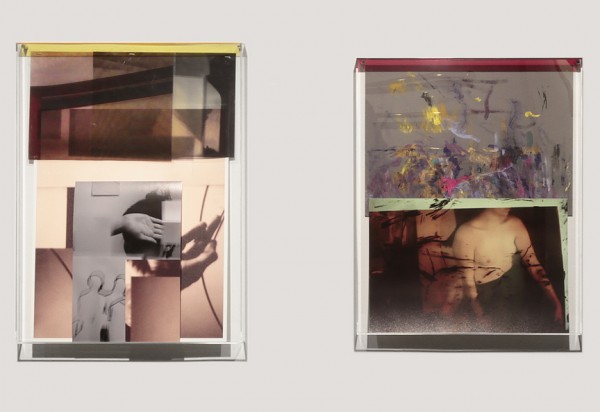
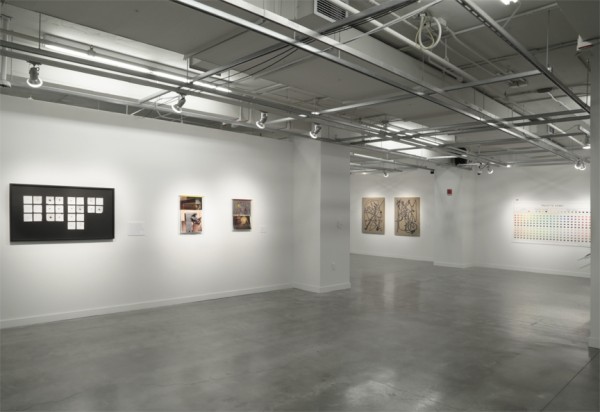
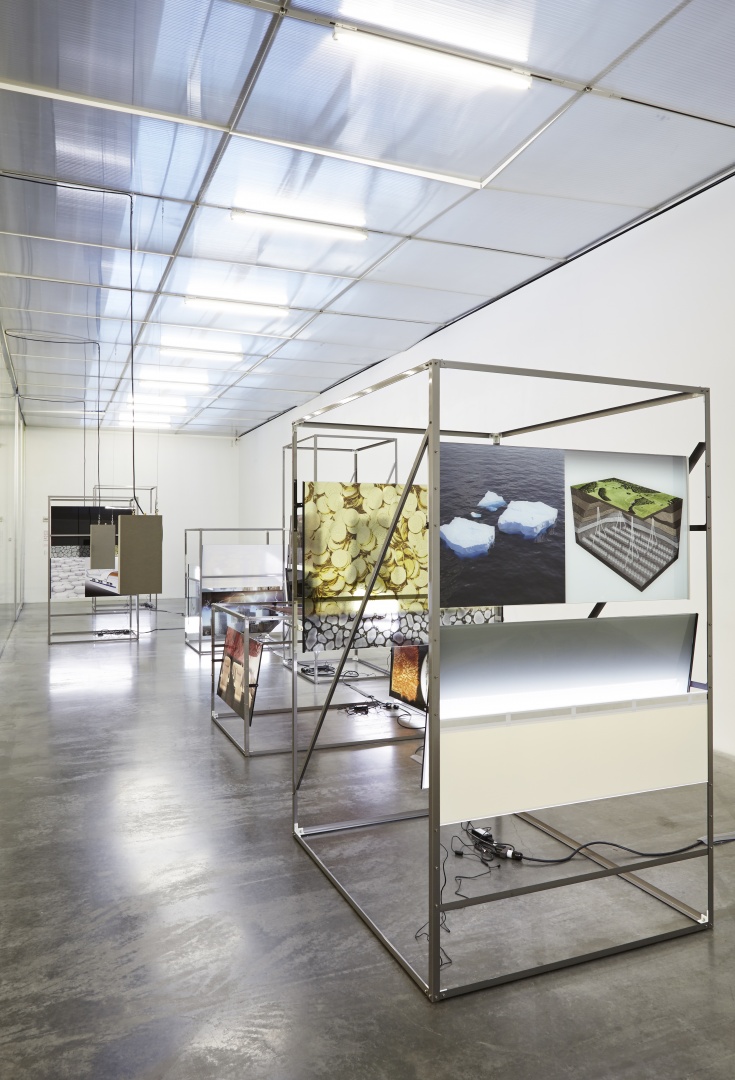
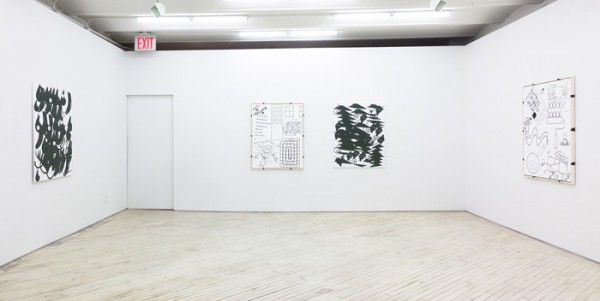
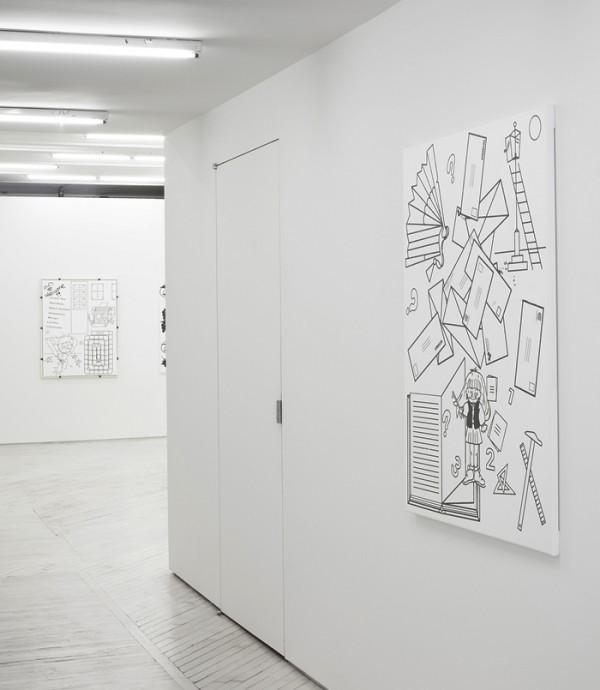
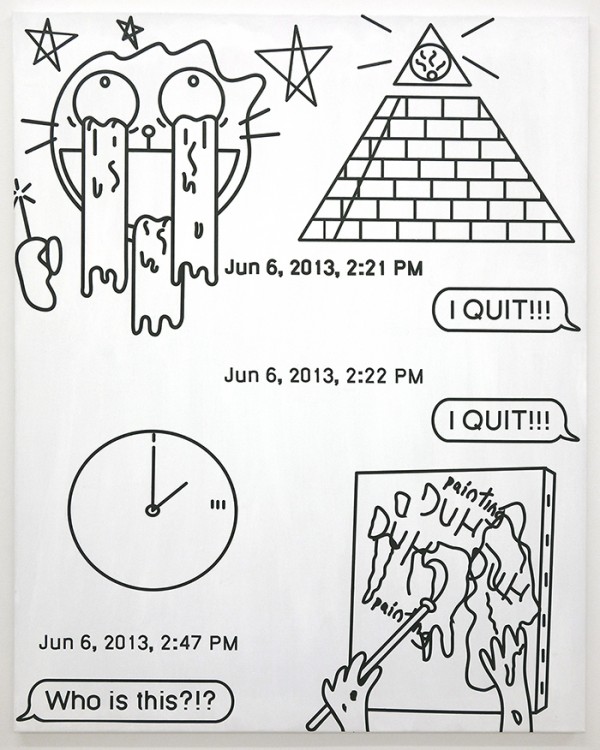
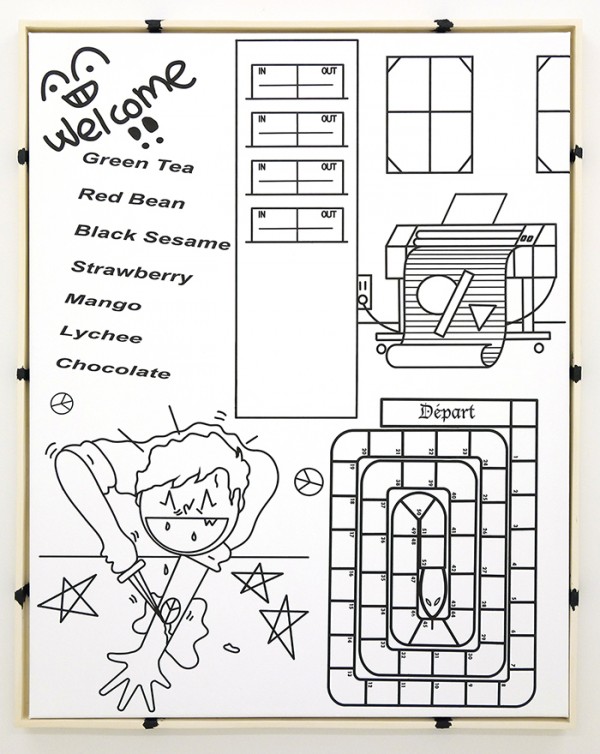
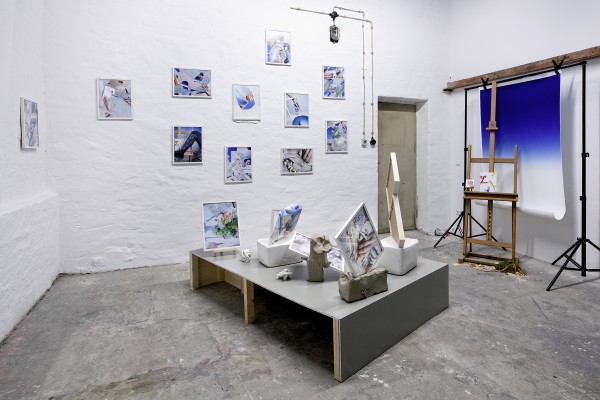
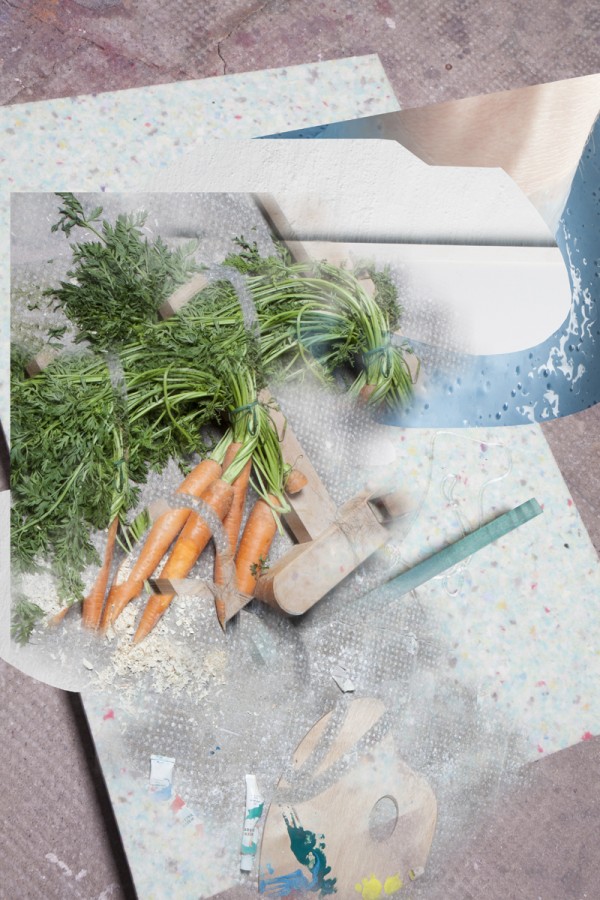
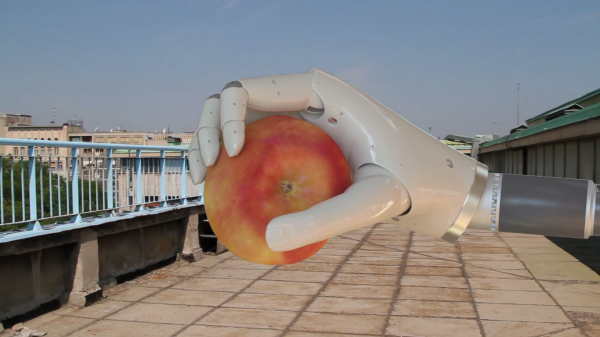
Marc Horowitz graduated from USC with an MFA in 2012. Currently, his projects are in dialogue with a diverse range of subjects, including entertainment, advertising, the built environment, commerce and the quest for daily meaning. “In my own day-to-day, I am constantly making lists of potential inventions, neologisms, moneymaking schemes, jokes, drawings, websites, characters and impromptu videos. It is my hope that these projects speak to “the moment”: that they reflect and critique American idealism and expansionism – and parody pop culture so successfully as to become reappropriated by it.”
Avery K. Singer

9_311_happening1web9_8 societyofrealistwanderers
Avery K. Singer

Work from her oeuvre.

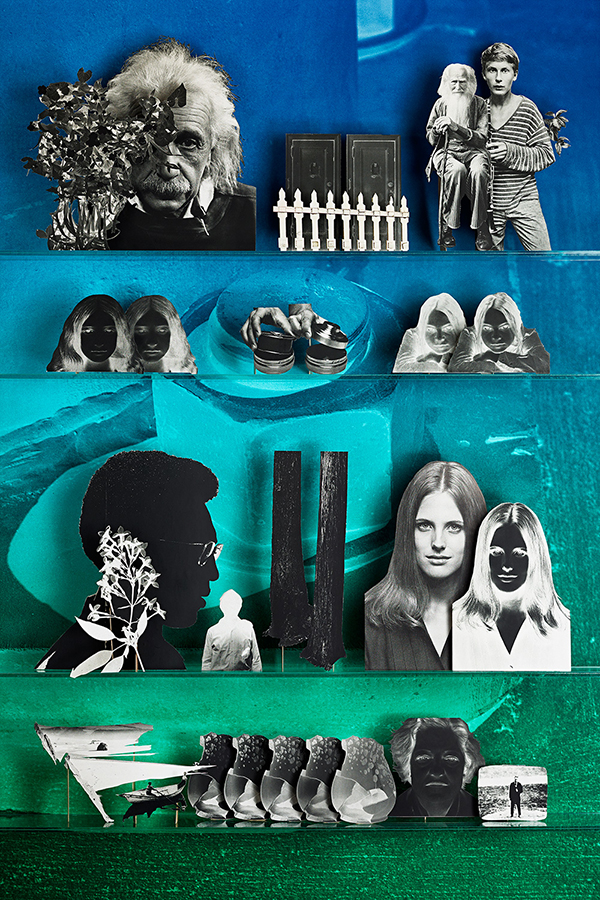
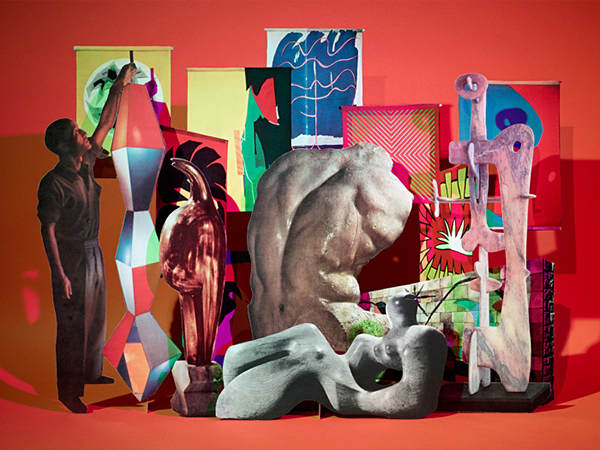
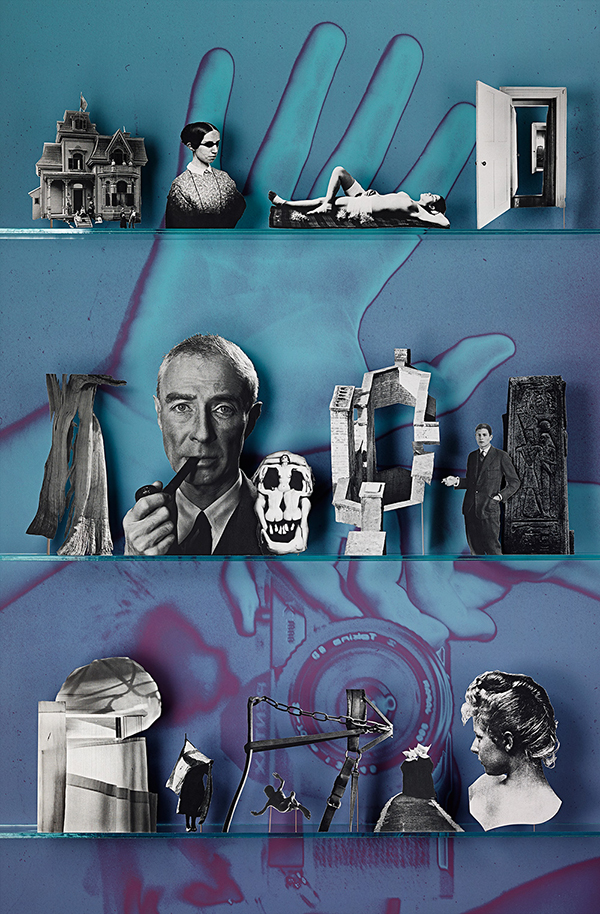
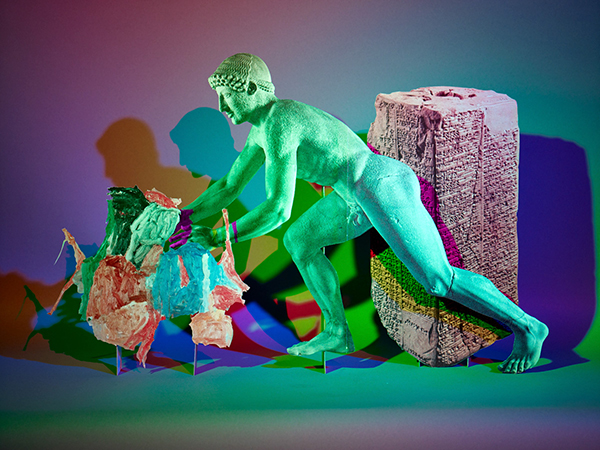
“If one views the past, be it in glances through old magazines, in movies of lost eras, or in visions of what was to come, the stream of history is laid bare, flowing forward to the present day. If one stops at a certain point and ignores what has followed, the stream opens up and the flow is forced to take whatever path we fancy.

The Artists presents a romanticized and slapstick vision of how we are or are not living. Staged figures occupy the realm of unrealized buildings or monuments, their geometric stylization skewing human forms into architectural plottings. The eyes of the dreamer rest upon both a forgotten vestige and a future transpired, with a sense of sentimentality overshadowed by a cold and uncanny pallor. These opposing viewpoints converge to produce glimpses of alternate timelines, where idealized visions of contemporary life and bohemia are filtered through past conventions. The mythologized status of the artist as a social being is examined as it exists and as it has been fantasized.

The works’ colorless palette and constructivist aesthetic hint at records of nonexistent times, commemorating absurd regimes that never came to fruition. Noirish shadows spread under expressionistic backlighting; the breezy theatricality of a performance piece freezing into history painting, a communion between artist friends becomes enshrined in neoclassical simplicity. Contemporary media, meshing with bygone trends of the historical avant- garde, produces a perspective of aesthetics that falters to find a foothold on the accepted timeline of art history.” – Avery K. Singer
Guido van der Werve

r988259_10883933A004_C013_0412M5maxresdefaultImagen 11
Guido van der Werve

Work from his oeuvre.

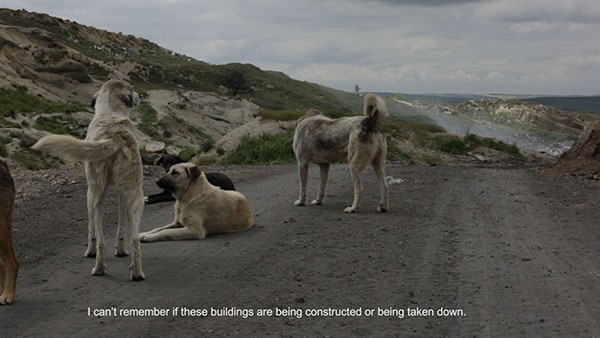
“Dutch artist Guido van der Werve makes the kind of films Caspar David Friedrich might have dreamt up if he had had a sense of humour and access to a camera. Saturated in an atmosphere of melancholy, loss and loneliness, preoccupied with dead composers and centuries-old dance forms, yet fired by a love of both the piano and slapstick, Van der Werve’s beautifully shot vignettes include: the hapless artist narrating the history of Steinway pianos while sitting mournfully on a piano stool; trudging slowly before an icebreaker in the Gulf of Finland; standing for 24 hours at the geographic North Pole, refusing to turn with the world, surrounded by stately dancing ballerinas after being knocked down by a car on a depressing suburban street; and meditating on meteorites while building a space rocket in his living-room. The films are usually accompanied by Romantic piano music played by Van der Werve, who trained as a classical musician. Frédéric Chopin is his favourite composer (because ‘his music often sounds very simple, and I think you have to reach a really high level of understanding in order to be able to do that’), although he is also fond of Sergei Rachmaninov, Sergei Prokofiev and Wolfgang Amadeus Mozart. Recently he has begun writing his own lush scores. Happily, despite skating close to pathos, Van der Werve’s films never quite fall into it. A crescendo of melancholy can abruptly shift key and tone and segue into a light-hearted mood of absurdity at the least predictable of moments.

In the classic tradition of slapstick Van der Werve’s films are fuelled by the creative possibilities of aural and visual dislocation, or, more simply, by an awareness of how simultaneously lonely and absurd life can be and how much solace can be found in abstract forms of expression. Witness, for example, the shifts in mood, setting and meaning, in the 12 minutes of Nummer vier: I don’t want to get involved in this, I don’t want to be part of this, talk me out of it (2005). The film opens with words, spoken in Dutch and written in English on a black screen: ‘I woke up early and watched the sun rise. I felt it came up just for me.’ Cut to an image of the lonely back of the artist; he is gazing out over a slate-blue sea. Very slowly the camera pans up to the sky; a small plane flies by, dragging behind it a banner emblazoned with the words ‘it was not enough’. Cue the achingly wistful chords of Chopin’sNocturne No. 1 in B flat minor, performed by the artist. The camera gradually pans down to an image of Van der Werve playing the piece on a slightly out-of-tune upright piano, perched on a pontoon in the middle of a misty lake. When the piece comes to an end, the scene changes to a barge drifting down a river. Gradually the faint strains of Mozart’s Requiem Mass are discernible, and it is apparent that the choir and orchestra performing the piece are actually on the boat. Intimations of death, and more particularly the island of the dead, become overwhelming. Eventually everyone disappears, and we are left with the gentle sounds of wind and birds. Then, without warning, the artist drops from the sky and into the river.

It is impossible, when witnessing such overwrought, touching and often hilarious scenes, not to think of Van der Werve as the love child of Bas Jan Ader, another Dutch artist preoccupied with the slapstick possibilities of isolation, sadness, alienation and the elements, especially water (into which, of course, Ader eventually and tragically disappeared). They share a sensibility that Jörg Heiser has termed ‘Romantic Conceptualism’: a condition of ‘voluptuous bliss’ that overwhelms ‘the rigidity of the Conceptual execution’ to which Van der Werve, with his tight framing and multifaceted references to history and time, is obviously in thrall. Here, for example, is Heiser discussing Ader’s video Farewell to Faraway Friends (1971): ‘We see the lone artist at the edge of the sea, silhouetted by a beautiful sunset, alluding both to Caspar David Friedrich’s scenes and to the kitschy picture postcard tradition that developed after them. It is as if Ader is mourning this history of devaluation itself, as if the faraway friends were the early Romantic artists who once, with fresh eyes, discovered Sublime nature as a mirror of their soul, and whose discovery is now obsolete.’ It’s a description that could equally apply to Van der Werve.” – Jennifer Higgie, Frieze Magazine

Katja Novitskova

140505_Novitskova_023_web
140505_Novitskova_021
140505_Novitskova_011
140505_Novitskova_010_x
140505_Novitskova_002_crop
140505_Novitskova_012
140505_Novitskova_022_web

Katja Novitskova

Work from Spirit, Curiosity, Opportunity.

“The objects found in this fossilised collection look like cubes, polygons, slots, arrows, round holes, bones, feathers and even artistic impressions. It may have resulted from a variation of the same basic process which forms fossils on Earth, where mud replaces organic material over time. There is a small possibility that some of the original artifacts are still present around the crater.

A few artifacts have been minimally sharpened or enlarged for clarity purposes only. No manual “pixel twiddling” was ever performed on any image in this exhibition. Panoramic camera source images for these artifacts were only available in JPEG form on the NASA archive servers.

Not all images here can be dismissed as natural rock formations. Red outlines show unusual shapes: note the indentations on the rocks in the back of the image (arrows). Could this be a fossilised life-form or a mechanical artifact? Perhaps these two heavily censored images of a scrambled sky and altered ground surface originally displayed real objects on the planet, which we are not allowed to see. This perfectly formed object is outlined by the sun’s shadow and resembles a bird or vehicle. Does this rock have lettering? And what is that if not a female figure, and a possible child and man near it?” –

Der Grund ist nicht Licht, sondern Nacht

Installation View 1  both works by Yorgos Stamkopoulos
Installation view 2, Left work by Yorgos Stamkopoulos, Right work by Alexander Wolff
Installation View 3, Left wall painting Alexander Wollf, Right works by Julie Opperman
4

Der Grund ist nicht Licht, sondern Nacht at Christian Ehretraut.

“
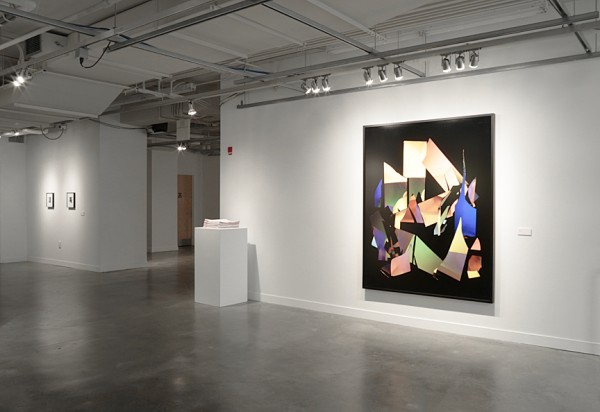
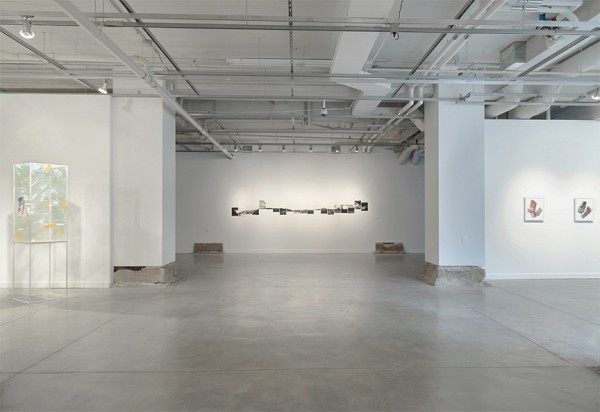
Through their surfaces, structures and the ways in which they are assembled, the works in the exhibition move in direct relation to the surrounding exhibition space and installed artwork. In their use of optical irritations, often intense color and repetitive rhythm, they oscillate between playful sensuality and analytical concept.
 The title of the exhibition comes from the diaries of Paul Klee, who in 1908 was beginning to build up his works on a black ground (rather than white), remarking that darkness was the “natural state” of things, and light was that which made it visible.

Julie Oppermann’s work pushes the limits of visual perception, making paintings that are physically difficult to perceive. The scintillating effects arising through the calculated layering and juxtaposition of contrasting colors through repetitive line patterns elicit shuttering afterimages, optical flicker, and disorienting sensations of movement. The paintings, on one hand, reference the digital, looking as if they might be computer-generated, vector-based interference patterns; up close, however, they reveal a gestural, intuitive approach.
Glitches, bleeds and mis-registrations rupture the illusory field of the moiré, creating visual noise and also highlight the basic tools at work: taped-off line patterns and paint on canvas.

Yorgos Stamkopoulos’ paintings are composed from a variety of multi-layered, flashy, minimalist color fields. Once a layer has been applied with the air-brush, it is masked in a gestural act with countless drippings in a “Pollock-style” manner only to be painted over again. Stamkopoulos repeats this process over and over until the canvas is fully covered; only then are the layers of masking removed to reveal the final image. Similarly to Oppermann, Stamkopoulos builds up layer upon layer, but relinquishes the final control over the painting, leaving room for the unconscious, the unplanned and the random.

Alexander Wolff’s works from the past six years are assembled from different fabrics, printed on, dyed and sewn together. Individual parts of an image are repeated, rotated and mirrored, combining print- and painterly techniques. Wolff continuously questions the possibilities of painting in general, of the image and of representation. He integrates found materials, paint, light and photography as well as the exhibition space itself: A large installation on the gallery’s brick wall is staged both as an autonomous image as well as the backdrop for the whole exhibition.” – Christian Ehretraut

Screen Play

tumblr_n52hoeRDm41tw01zeo1_1280 tumblr_n52hlqD1Cy1tw01zeo1_1280 tumblr_n52hj9BnUD1tw01zeo1_1280 tumblr_n52herbMNy1tw01zeo1_1280 tumblr_n52h66IImg1tw01zeo1_1280 tumblr_n52hseUgxr1tw01zeo1_1280 tumblr_n52hcktJsU1tw01zeo1_1280

Screen Play

A show of documentations of artworks by:

Kathryn Andrews, Brendan Anton Jaks, Eva Berendes, Simon Denny, Carson Fisk-Vittori, Patrick Hill, Tilman Hornig, Dan Rees, Philipp Timischl, Anne de Vries

at SWG3 Gallery, Glasgow

Curated by Camille Le Houezec & Joey Villemont.

“As artists we create images, as curators we believe in their potential; their potential to be seen, to travel, to expand and inspire. Thanks to Hight Definition, one can now see the actual colors, textures or materials of an artwork, from behind a screen. With the Internet, it is now possible to get a better idea of a show, a museum collection without even visiting it in the flesh. To be honest, we never had the chance to contemplate most of these exhibited artworks for real and this show is the occasion to experiment with a ‘Real Life’ exhibition format in the digital age.

Every artist now has to consider the ‘second life’ of his/her work. Once the exhibition is over, the work goes back into storage while its documentation starts a career online (and the photograph better be a good one!). By using some controversial and subjective selection criteria such as the online virility of the image, its visual impact, the quality of the picture taken, Screen Play reveals a primordial aspect of contemporary art production today. We find something very primitive in exhibiting images we see online each day. Playing back and forth between 3D and 2D, we re inject these documentations of artworks in their natural environment in a way to see what it does to show images of artworks within the exhibition space. Obviously, nothing can replace the sensation of seeing a work in the flesh, but could its representation create something else, something you can’t get with the actual artwork?

We created itsourplayground.com four years ago to host online exhibitions built around documentations of artworks mixed with found images, GIFs, videos and texts. The site’s homepage is a playful, immaterial space that picks up on the qualities that are inherent to the internet (ease of access, practically without monetary charge, rapidity), to produce surprising narratives, deconstructing the hierarchy that usually reigns among documents.

Screen Play is//pursue a reflexion around the mode of diffusion and propagation of artworks through their documentation and could also be seen as an experimental human scale model of our website. Screen Play will also be the occasion of an online show which will be launched this summer on www.itsourplayground.com”


Simon Dybbroe Møller

SDM_Aperture-Orifice_view-05 SDM_Aperture-Orifice_view-04 SDM_Aperture-Orifice (1) SDM_Aperture-Orifice_view-01

Simon Dybbroe Møller

Work from “Aperture & Orifice” at Galerie Kamm, Berlin.

“This is what I would like you to know and how I would like you to know it.

The music video to D’Angelos breakthrough hit “Untitled (How Does It Feel)” could be read as a meditation on the brotherhood between the vulgar and the stylized, the erotic and the pornographic. It features a single long shot of the singer, his unclothed and ripped upper body in a black space. While the camera moves around him capturing the tightening and relaxing of his muscles in ultra close up, it also limits itself to moving within an imaginary frame defined, top, left and right, by the dark emptiness of the studio and at the bottom by what is presumably his naked crotch. In other words, this is the Ken Burns’ style panning and zooming into a photographic image you know from the automated slideshow on your computer, albeit in 3D. The motif actually flexing its muscles is what makes this product a bastard. Or: the perfect crossbreeding between the moving and the still image.

We know it well; The relationship between aperture and shutter, between the eye and the sitter. We have been there and understand that desire. We allow ourselves to think of pelvic floor exercises while choosing our f-stop.

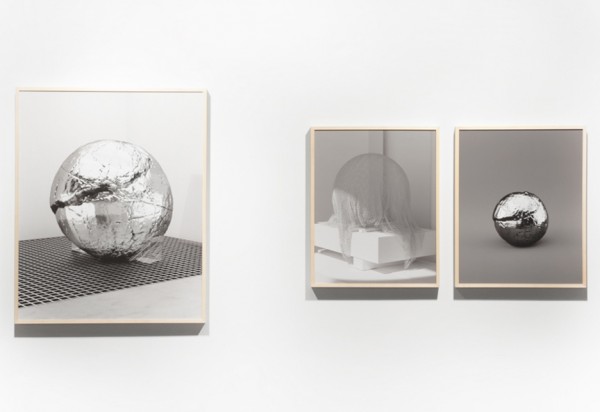
If anything, you should know that the Canon Mark II was produced for a 4-year period ending in 2012, and that it was the first camera to unite professional still picture and moving image making capabilities. An unassuming black plastic thing that cancelled a century long debate on the qualities intrinsic to photography on one side and the moving image on the other. Of course, as we all know, film is just a series of photographs arranged chronologically, making the fusing of the two in this machine seem more like a reunification of twin sisters separated at birth than a daring cross boundary merger. This machine is both real applicable progress and an anachronism at heart. It is the technology-commodity equivalent to launching a passionate attack on religion in the company of nothing but declared atheists.

These days we photograph what we eat. It is as if we are preparing to one day have the edited evidence at hand: This is what I fueled my body with. We turn the mechanics of survival into images of mood-lit wellbeing, into images of choice. The Japanese tradition of fake food called Sampuru, a name derived from the English word “sample”, was developed by candle makers to communicate menus to non-Japanese speaking foreigners. Molds are made of the components of an actual dish, then cast in polyvinyl chloride and hand painted. During the molding process, the ingredients are chopped up and combined in a manner similar to actual cooking.

We are on a cross Atlantic flight and we are thirsty. And then shortly after the drinks have been served, we eat. And then we all go to the toilet. Imagine how paper and urine and feces now slides through the tubing of this incredible machine. What a great experimental model this is. This is where weight is constant. This is where dieting won’t save you.” – Simon Dybbroe Møller

Katinka Bock

IMG_6257 IMG_6287 IMG_6476

Katinka Bock

Work from “Februar” at Meyer Riegger, Berlin.

A Conversation between North and February

North: My constant is space, my territory immaterial. But time envelops my limbs. It reaches out for me, while I lay my breath on it. Here I exist in a subtle way. The passing of time is inscribed in the discrepancy between two chairs, one placed on an island in a park for a certain time, weathered and dull-edged, it bears evidence of my presence, my gusting and secret hunting on its skin. I never saw the other one. Would they recognize each other?

February: Their togetherness is destined to last for a certain duration, this duration is my body, I surround them with my definition of time. I am just as caught up in the temporary as you are, but with the period of time that I impart in my invisible demarcation, I also provide space to stay, to pause. A viewer can linger.

North: You are traversed by a horizon line of bronze-cool branches, your borders marked, along the wall, the ceiling, the coordinates that encircle you here and now. The points that mark me remain in the realm of the non-visible, if one even grants me such measuring units. Despite the limitation and definition of place, time, space: I grow continually, as movement. Within a single day, a person can take on my characteristics, climbing up to a balcony and dropping matter from it. The result is shaped by calculation and coincidence, it carries my vibrating, oscillatory driving force, even if we may not see the action nor the material being moulded. It is like an open game.

February: I need these boundaries, the beginning and the end. Without any firm definition I would be lost. That which flows does not lie in my power. You move freely. I develop in the liberty of this cave and surface, which I embrace with my body. I harbour caves like this here too, allegorically shaped out of clay, with wood, cloth and other soft materials… plastic footballs that are crumpled or bit apart by dogs, found or traded. Their jagged form nestles up to to my columns. My hollows are vessels for words. And then the open spaces, you spoke of the horizon. It defined the distance, the landscape, possibly even the border, where I may meet you, where our spirits convene. This blue sfumato line winds between stasis and its trembling dissolution in space. I feel close to you, kindred, although you make the end of my existence clear to me.

North: We are part of flux, we are processes. The transience of the moment and the limit of space; who would be we if they frightened us? They define us, just as we describe and fill them, as what they are and can be. The balls tell us stories, just like the chairs speak of reciprocal absence. Only their dissimiliarity within sameness reveals their shared orientation. They connect the two of us, and yet they are completely themselves.

February: Warmth and cold, light and dark. Space, surface. Time, space. We bear all of this inside ourselves, we reveal it in the counterpart that comes close to us. You selected the performance, I the exhibition. We encounter our roles. Trying them out may soften and sharpen our eye for experiencing time and space as what they are. They are us. Somewhere, children play with balls outside, they do not ask about February and they do not ask about North.

North: Your horizon is the beginning of my act. We will meet again in May” – Christina Irrgang. Translation by Zoe Claire Miller

Heidi Norton

42_140213-838
42_140213-850
42_untitled-1
42_140213-849
42_140213-840
42_140213-4143
42_140213-841
42_6
42_purplesmoke

Heidi Norton

Work from to Threptikon.

“If all continued to grow and grow, if there were no death, the world would be monstrous.

My father wrote a home remedy on a piece of paper in 1977, the year I was born. It was folded and pressed like a dried-up flower in a Fox Fire book he sent me in the mail. It spoke of cobwebs, bacon, and muslin, a supposed natural remedy for a wound made by a rusty nail. A year after I received the note I showed it to him and he refused to believe he wrote it. My parent’s past went missing, they wrote their own self-mythology, retrospectively, using time and space to distance themselves from their previous life as homesteaders. My work is in part an attempt to reclaim their time lost. Through the mediums of photography, sculpture, and painting my work speaks to the instability and liminality of time, while investigating ideas of preservation through material and modes of display.

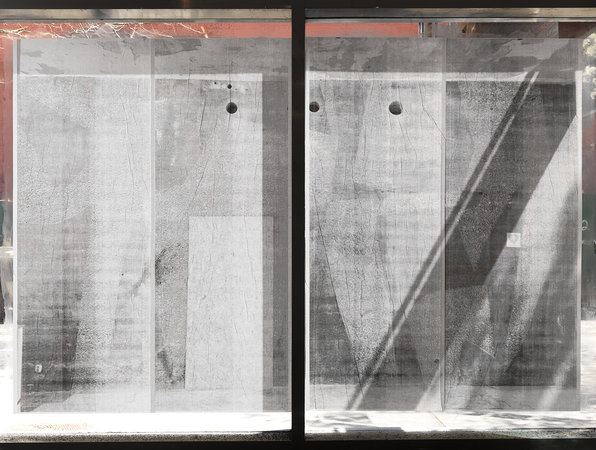
Plants and light become the primary mediums, as does glass, resin, wax and detritus (literally dirt from my studio floor). The plants act as a metaphor for larger, macro ideas of nature and its ecological cycles–of its impermanence and futility. Houseplants are encased, pressed, or “frozen” using materials that speak directly to histories of preservation. Light and it’s phenomenological (via the viewing experience) and physical effect, go hand in hand. The silver halide crystals of a photograph can trap light, just as the photoreceptors of a plant absorb light during photosynthesis. As the plants move through ecological spans of time, the works’ physical form expands and compresses.

The relationship between image and object is cyclical and malleable. Material is deconstructed and folded into new works, objects become photographs and photographs become objects, each activating and demanding a new space. The studio is the activation site. It’s hybridity between plant study and art production is a constant negotiation. It has provided insight into my process, helping me realize that I have different ways of performing and producing. The photographic process is methodical and structured, allowing me to use the lens to distort, skew and disrupt space and time–to fix, to sterilize, to make permanent. The sculptural process is one of improvisation, of reaction, of movement, of change. Glass is broken, resin is recycled, dead plant is plucked, and impressions of the studio are lifted and layered into new works.” – Heidi Norton

Melike Kara

MelikeKara_RealSorbet_Ortloff_5
MelikeKara_RealSorbet_Ortloff_6
MelikeKara_RealSorbet_Ortloff_3
MelikeKara_RealSorbet_Ortloff_1

Melike Kara

Work from Real Sorbet at Kunstraum Ortloff.

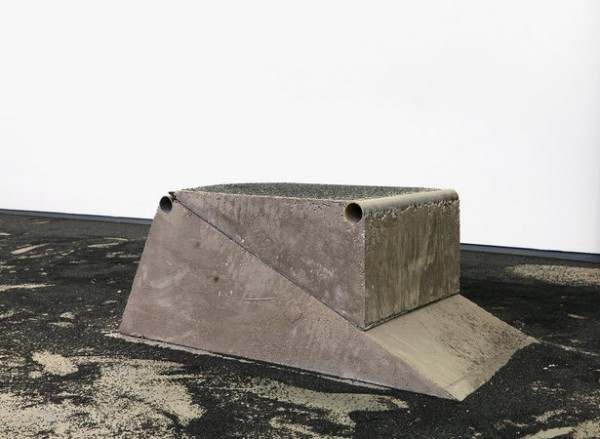
Melike Kara’s work makes specific reference to the last remnants of modernism. Her pared back metal sculptural forms illustrate the streamlined potential for poetry within the sleek cool of industrial design. Her use of colour suggests a revisiting of 50’s America, with a nostalgic glimpse at the west coast cool of Californian chic. Her painted works, whilst acknowledging the history of painting which precedes it, alert the viewer to the action of her very specific mark making process, whilst simultaneously they hint at a freedom, cut loose from the trappings of the painting canon. Real Sorbet illustrates the intricate relationship contemporary art has to its past whilst playing with a newer, fresher vision of what we may expect to come.