Sunday, 21 October 2012


Zachary Davis
Work from his oeuvre.
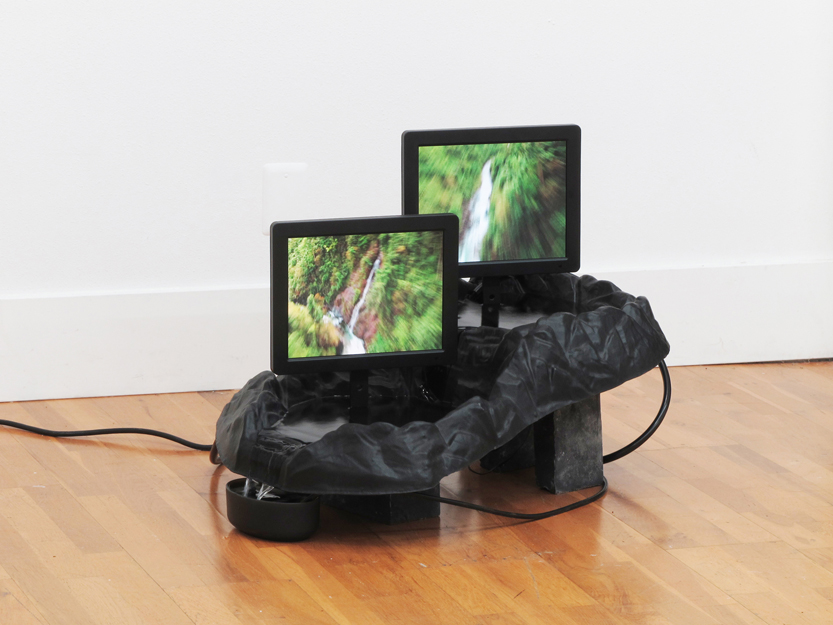
“Zachary Davis is concerned with the limits and difficulties of human cognition, evolved long ago as a “learning and pattern recognition machine.” An active member of Portland-based artist collective Appendix Project Space, which is known as much for intellectual engagement as physical practice, his current research explores the resonance of new visual technologies with deep-rooted neurological processes. A broader interest in the collision of the natural and the synthetic also informs his project. While this sounds dryly conceptual, Davis’s study finds appealing material form in an interrelated and carefully curated body of sculpture, moving image, and photography.” – Becky Hunter
via Triangulation Blog
Tags: installation, nature, new media, sculpture
Posted in Uncategorized | Comments Off on Zachary Davis
Saturday, 20 October 2012


Lisa Shahno
Work from THE ITERATION.
“The collection is inspired by the Fractal Cosmology theory which maintains the structure of the universe to be of the fractal nature and the universe itself to be infinite in any direction. A fractal is a kind of geometric shape which can be divided into parts, each at least approximately a reduced-size semblance of the whole, or a self-similar shape. According to the theory, there is a hierarchical organization (or nesting) of matter – from the elementary particles to the clusters off galaxies, with three main levels: atomic, astral and galactic. So the central issue of Fractal Cosmology is that the universe may consist of infinite number of levels which are similar to each other but different in scale – thereby there could be no “smallest” nor “largest” scales – the whole observable universe can be enclosed inside a molecule of some larger-scale universe and at the same time an atom may contain another world with its own galaxies, stars and inhabited planets…
Models of the collection represent a variety of matter levels in the universe. All pieces’ patterns are composed of the one repeating basic element – the square divided by diagonals – an elementary particle, but each model has a different scale and number of particles involved.” – Lisa Shahno.
via Triangulation Blog
Tags: black and white, fashion, geometry, grid, minimal, pattern
Posted in Uncategorized | Comments Off on Lisa Shahno
Friday, 19 October 2012


Daniel G. Baird
Work from his oeuvre.
“Daniel G. Baird considers ideas endemic to Western society of culture and technology, often subverting ideas of technological progress with juxtapositions of their primitive translations. Baird, a Master of Fine Arts candidate at the University of Illinois at Chicago, predominantly works through sculpture using found objects and those of his own creation.
The artist frequently makes use of CNC cut models, as evidenced by his 2007 collaboration with fellow SAIC graduate Robert Andrade. Titled “A Moon of Saturn Resting on a Doric Foundation,” the sculpture pairs the landscape of Titan—the terrain believed by scientists to closest resemble the environmental conditions of the Earth—with the Parthenon, an ancient representation of advanced human civilization. Here, Baird and Andrade collapse numerous centuries, subtly highlighting the innumerable, sometimes prodigal events accounting for our currently screwed up civilization, and consequent desire to inhabit an untapped alien world.” – Karen Archey
Tags: architecture, greek, installation, sculpture
Posted in Uncategorized | Comments Off on Daniel G. Baird
Thursday, 18 October 2012


Wesley Meuris
Work from his oeuvre.
“Beginning with an interest in the interaction between architecture and human conditioned-behaviour, I became intrigued by the conditions that coalesced around the making of cages for animals. The implicit requisite is, of course, that the cages be ‘liveable’ with respect to a particular animal, so that it may survive outside its usual habitat. But more important still in the construction of such cages, is the comfort that we (viewers) generally experience when we look at animals in captivity, most often in zoos. I consider the zoo as a control-domain in terms of the viewers vis-à-vis the observed animals, but the viewing public too is led into a controlled architecture.
Taking this as starting-point, I proceed to put together a system of zoological classification and so determine which cage is suitable for which animal. This classification is founded on my visual experience. Each cage that I design is coded according to the following criteria:
* the nature/species of the animal
* specifications of the cage: size, %water, type of ground structure,…
* atmospheric conditions: temperature, humidity, air movement,…
* feeding and care
* relationship between cage and public
The artificial habitat is created according to elementary principles: enclosure, inclination, door openings, water parts, steps, slopes and private spaces – these with tiles, metals, sand and glass. Architecturally, a consensus is sought in the relationship between the animal, the cage and the viewer.” – Wesley Meuris
Tags: belgian, enclosure, human, interaction, light, minimal, space, spacial, zoological
Posted in Uncategorized | Comments Off on Wesley Meuris
Wednesday, 17 October 2012

Lorenzo Durantini
Work from his oeuvre.
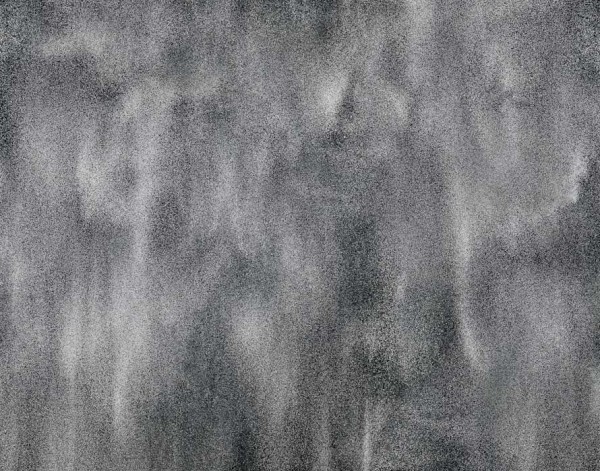
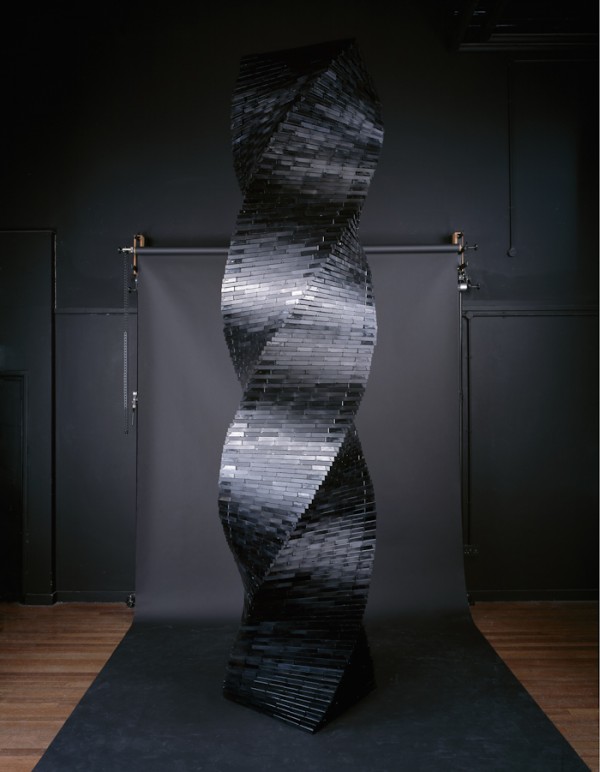
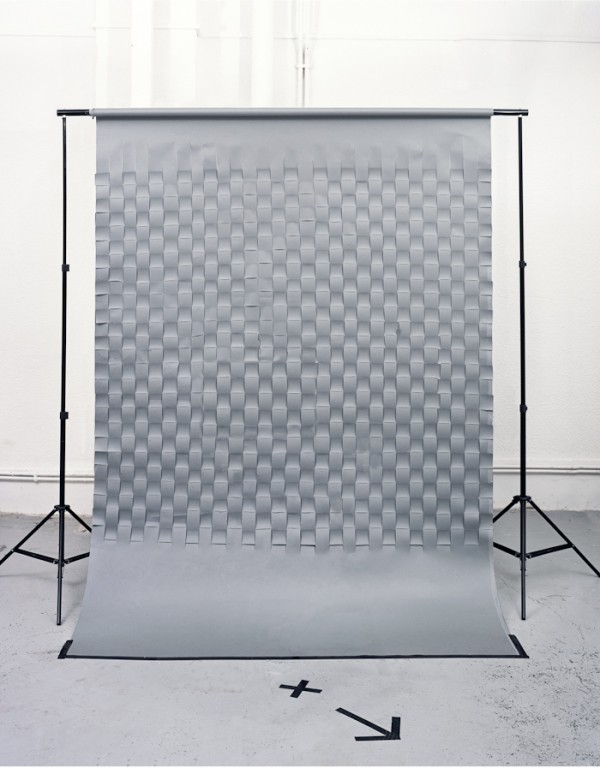
“I am interested in freeing up space between figuration and abstraction. The tension between recognising meaning while interrogating its very possibility has pushed me to the periphery of representation. My work explores the detritus of the photographic studio through playful sculptural interventions that question its role as a site for the construction of meaning. I am interested in how carefully destructive processes can reveal the hidden histories and expected lifespans inscribed into everyday objects. My current interests include photographic materiality, the architecture of the studio, immanence and emancipatory desublimation.” – Lorenzo Durantini
via Triangulation Blog.
Tags: aesthetic, black, minimal, rad, scale, vhs, white
Posted in Uncategorized | Comments Off on Lorenzo Durantini
Tuesday, 16 October 2012


Johan Rosenmunthe
Work from Silent Counts.
“The point of departure for Johan Rosenmunthe is a childlike fascination with stones – ordinary objects, mysterious and silent but carrying a hidden story. The artist applies to them his nostalgic, scientific and philosophical point of view and presents them as the traces of this intriguing visual tale entitled Silent Counts…
At first sight most of his earlier works seem to be a product of ‘’on location’’ practice. The photographs showed either modern city or completely savage areas (Imagine Remembering, The Isle of Human or Off). Once we give them a scrutinized regard we can see that it is none of that. The essential topic of his works is situated before and after the capture, in the conception and meticulous retouch.
Silent Counts confirms the turning point which took place in 2011 with the cycle Transmutations. Henceforth Rosenmunthe puts the emphasis on the process taking place in the studio; he is a photographer who fabricates, gathers and puts together whats being removed form the image in the flow of reality. To say it in a bit provacative way quoting Stephen Shore – Johan Rosenmuthe is a photographer who has eyes but hands as well.
He shows the attitude of a mistrustfull witness towards the capacity of photography to reproduce the reality reliably. Rosenmuthe often plays with this kind of naive and instinctive interference but with Silent Counts his ambition is different. He proposes a precise examination of the stones and the objects put in relation with them from purely photographic angle. Somehow the aim is, basing on a personal subject, to create a group of images whose form and narration will be strictly photographic.
Doing so, Johan Rosenmuthe takes advantage of the features of the medium, mostly the confict between the 3 dimension objects presented in 2 dimensions, the optical superiority of lenses and photo-sensible materials over the human eye, the capacity to create limited and independent space and ability of the image to absorb new meaning depending on the context. This cycle of a distant and stellar beauty is clearly an accomplishment linking conceptual photography and the most sophisticated formalism.” — Paul Frèches
Tags: photography, rocks, studio
Posted in Uncategorized | Comments Off on Johan Rosenmunthe
Monday, 15 October 2012


Tom Ireland
Work from Sierra Blanca.
“My more recent practice explores the relationship(s) between modernist art and design practices and the western space programme of the mid/late 20th century as proponents of interrelated aesthetic and ideological values. My practice is becoming increasingly reductive with the bare minimum of intervention in source materials and with greater emphasis placed on slight gestures designed to unlock new meaning and possibilities within the given objects and/or images. A constant theme within my recent practice is an unpicking of specific histories and legacies.
I am interested in objects and images – what they are, the space they fill and their weight – physically, culturally, intellectually and visually, their position within the world and their potential. I am interested in the processes’ that happen when elements meet in a given space or time and the transformative powers acting upon them to reveal new possibilities. By weaving together a combination of sourced objects and appropriated images and/or text(s), my work uses ideas of waste, memory, and wealth to investigate the relationship between information and the audience(s) which receive(s) it. Strong sculptural concerns play a large role in the formation of my works. Larger sculptural pieces are often offset / complemented by a series of inter-related images and/or other sculptural works. Acting as ‘bit players’ (conceivably the sum total of endeavours which underpin the ‘act’), these smaller works are aimed at leading, disrupting and/or shaping narrative, at times evoking humour, ideas of underachievement and ridicule within a complex hierarchical system. Objects and images are placed together and arranged to establish a dialogue between themselves and the viewer. Issues of cultural weight and resonance feature in the individual pieces with the work also displaying a desire to examine institutional mechanics, codes and cultural value systems present when confronting given information. The works aim for an idea of transcendence and aspiration through the use of peripheral contextual information, bestowing significance upon objects, images and other materials.” – Tom Ireland
Tags: edit, omit, photography, rad, space
Posted in Uncategorized | Comments Off on Tom Ireland
Sunday, 14 October 2012
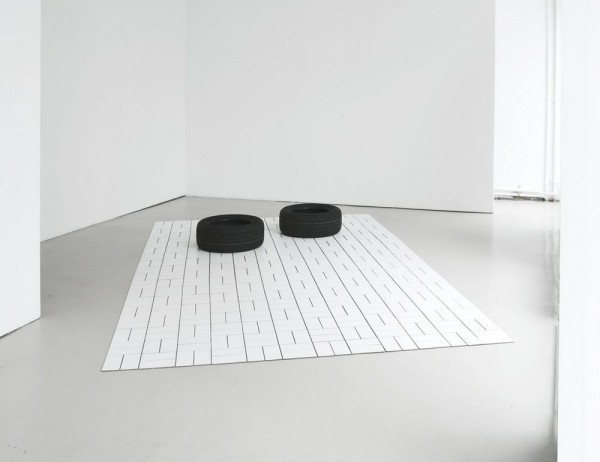
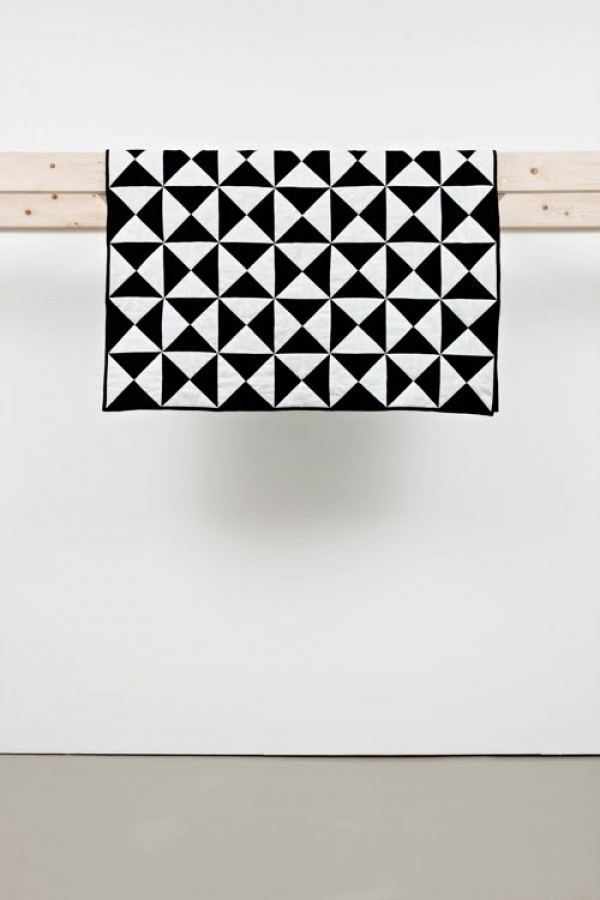

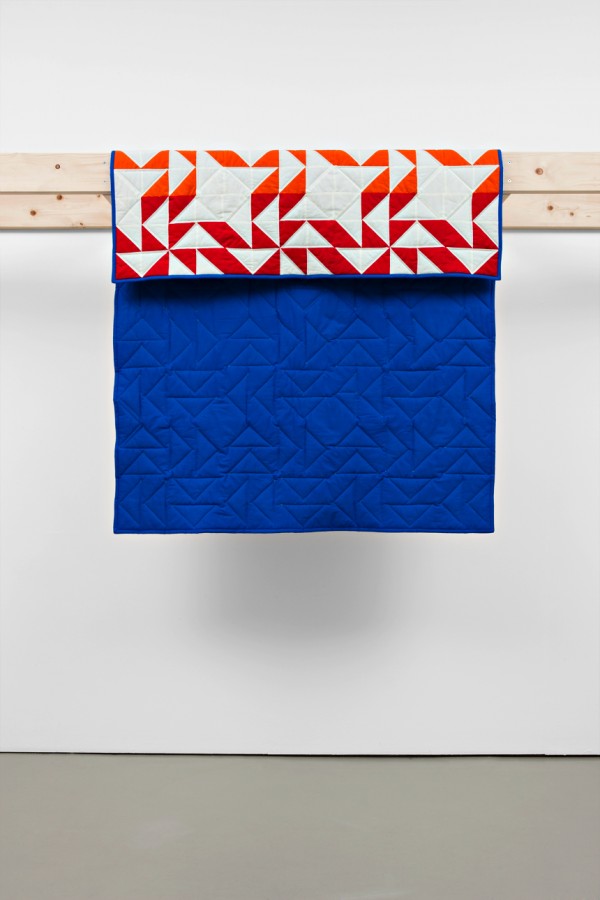
Marius Engh
Work from his oeuvre.
“Marius Engh’s work seems to derive from the encounter between minimalist forms and prosaic elements. This apparent formalism, however, dissolves upon closer observation, in an unexpectedly political twist. That is why in “Lycanthropic Chamber”, his solo exhibition at Standard in 2008, one could see nothing that physically resembled a savage beast: the wolfmen were hidden behind the signatures under photos of identical airplanes, fictitious identities that the US government used to authorize the air transport of prisoners of war to countries whose judicial systems accept “alternative” interrogation methods” – Mousse Magazine
Tags: minimalist, norweigan, sculpture
Posted in Uncategorized | Comments Off on Marius Engh
Saturday, 13 October 2012


Daniel Kukla
Work from the The Edge Effect.
“In March of 2012, I was awarded an artist’s residency by the United States National Park Service in southern California’s Joshua Tree National Park. While staying in the Park, I spent much of my time visiting the borderlands of the park and the areas where the low Sonoran desert meets the high Mojave desert. While hiking and driving, I caught glimpses of the border space created by the meeting of distinct ecosystems in juxtaposition, referred to as the Edge Effect in the ecological sciences. To document this unique confluence of terrains, I hiked out a large mirror and painter’s easel into the wilderness and captured opposing elements within the environment. Using a single visual plane, this series of images unifies the play of temporal phenomena, contrasts of color and texture, and natural interactions of the environment itself.” – Daniel Kukla
via Field Notes
Tags: mirror, nature, perspective, reflection, space, stars
Posted in Uncategorized | Comments Off on Daniel Kukla
Friday, 12 October 2012
“Buck’s practice is decidedly anti-modernist working with assemblage, collage and reconfigurations of existing, mundane, often found materials; regularly reclaiming industrial or industrially produced components. Materials and objects with traces of an alternative history and existence – carpet, found posters, aged foam, latex, plastic are selected, re-imagined and combined to explore the limits of form, question notions of perception and re-interpret sculptural techniques and their art historical lineage.
Buck will often disrupt the encounter the viewer has with her work, carefully unsettling the physical experience or interaction with the work – hanging works at unusual heights or selecting work to sit uncomfortably together. Buck explores the works performativity and searches for what, in her words, simultaneously attracts and alienates the viewer, for work which raises questions rather than presents answers. Throughout her practice Buck presents delicate moments of uncertainty.” – Rokeby Gallery
Tags: anti-modernist, historical, relics, sculpture
Posted in Uncategorized | Comments Off on Bettina Buck