Ethan Cook
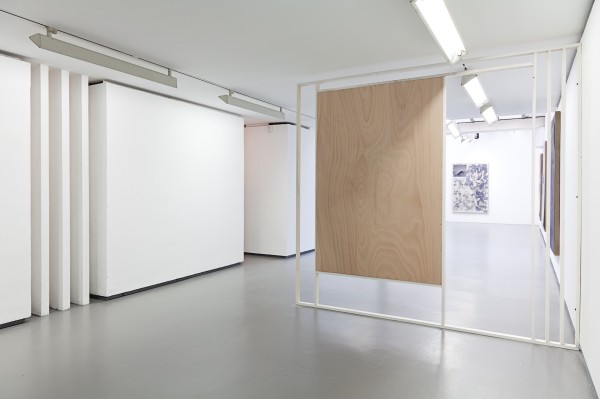
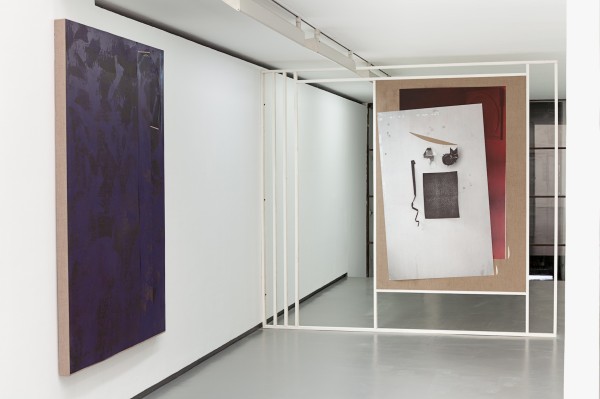
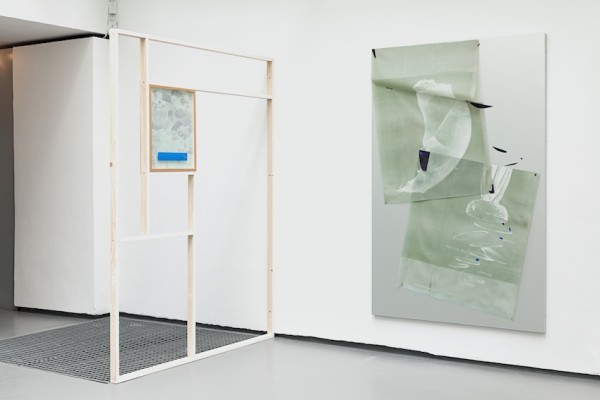
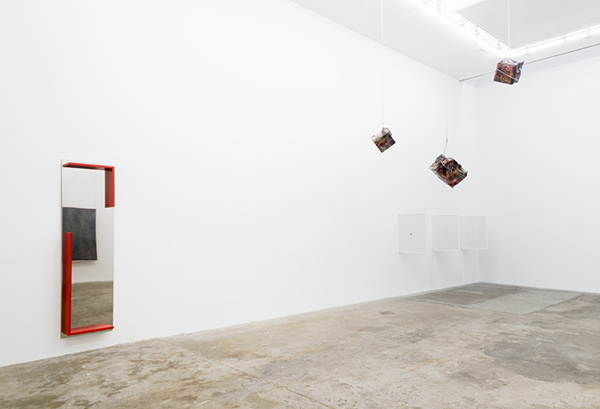
Work from Lobstee.
“It seems only right that Ethan Cook would choose to title this exhibition after a one-word poem by Aram Saroyan. Like Saroyan, Cook tends to lean towards the minimal, favoring an approach centered on visible process, understated gesture, and economy of form. Keen to find aesthetic potential in unassuming sources, both men aim to deconstruct a basic, familiar material set – in Saroyan’s case, the alphabet; in Cook’s, the constituent physical elements of painting – to inventive ends, achieving results rich in both historical reference and visual reward.
Just as Saroyan’s poetic experiments confront presumptions surrounding the relationship between meaningful expression (i.e., sentences, statements) and mode of delivery (letters, words), Cook’s work challenges conventional approaches to both creating and understanding physical artworks. Though he has explored numerous approaches over time, each of Cook’s series finds the artist engaged in a rigorous investigation of his materials – their construction, their constitution, their inherent qualities and aesthetic potential – as viewed through the scope of a painterly practice; equating origin with endpoint, he looks to the support itself as his medium, its physical traits as his formal language, the process of its fabrication as his subject. In evoking Saroyan, then, Cook neatly reinforces what has long been a central idea within his broader practice: namely, that the constituent elements of ones process might be viable media in their own right, available to be worked with rather than merely on.
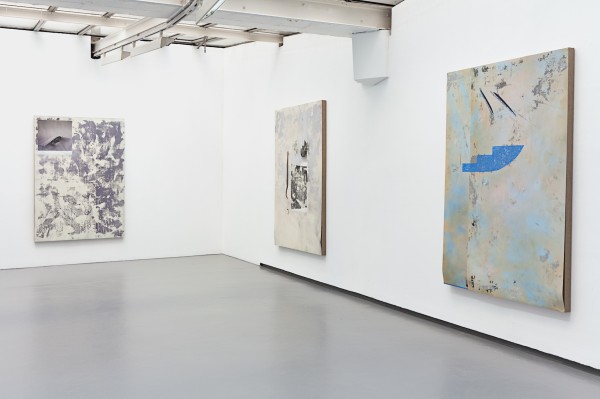
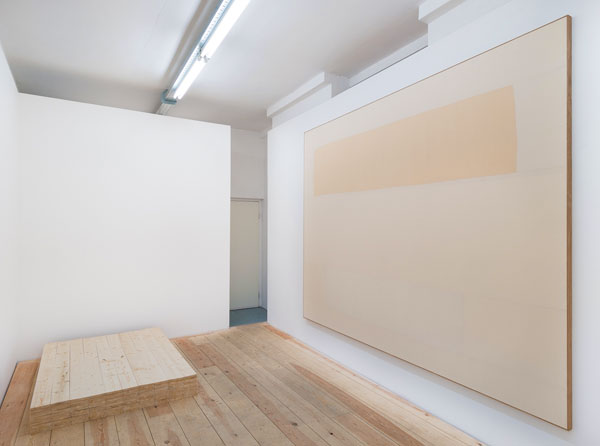
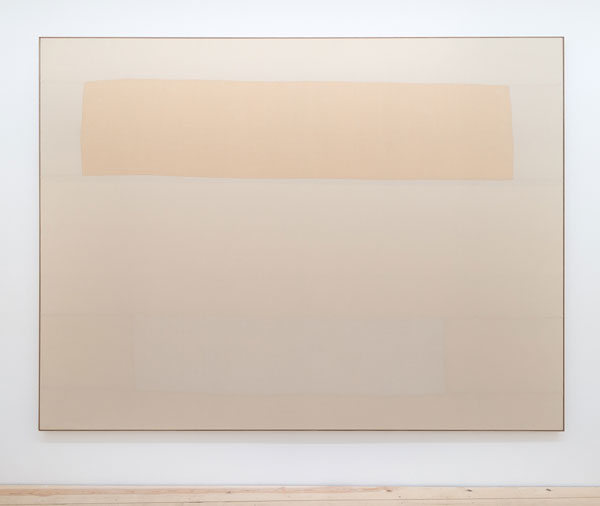
These numerous parallels are confirmed by both the sparseness and the content of Cook’s exhibition, with each of the show’s two artworks similarly embodying the central tenets of his practice. First, commanding the main wall, is one of Cook’s signature woven paintings, composed entirely of canvas (both hand-woven and manufactured) and mounted in the artist’s frame. As with previous works in the series, Cook’s process involves producing his own material using a four-harness floor loom, manually fashioning pre-dyed cotton and linen fibers into 40-inch x 7-yard sheets of single-colored plain-woven canvas. Almost like a drawing, a plain-woven canvas is constructed line by line, with each incremental cross-stitch at once a product and a literal illustration of the creative act. But where those earlier works found the artist cutting those sheets into smaller shapes to be arranged and sewn together into a single unified canvas, here he takes a more indexical approach, adopting a larger format that allows the sheets themselves to function as forms while retaining their original width. In combining this material with manufactured canvas, Cook reinforces the central motif of integration, at once emphasizing the work’s woven constitution while inserting it further into the field of traditional painting.
The monumental size of this new work also serves to emphasize the subtlety of Cook’s visual treatments. As ever, he derives his formal vocabulary from the inherent traits of his materials – in this case, the geometric nature of woven patterns, the texture of overlaid threads, the elasticity of stretched fibers, and the seams of conjoined sheets. Using these elements as a foundation, Cook achieves a range of textures whose tactile variations function almost like brushstrokes, producing a remarkably diverse surface that confounds any initial readings of the work as “flat.” These effects are reinforced by the work’s palette, which is neutral to the point of being nearly monochromatic: though it retains the interplay of forms and subtle negotiations of depth that defined previous works, here the subdued color range focuses our attention as much on the material as the image, allowing a work composed entirely of blank canvas – typically a point of visual rest when reading a painting – to succeed in actively engaging the eye, rewarding close inspection with a deceptively complex viewing experience.
In isolating the ground as both medium and subject, Cook aligns himself with a lineage of artists who similarly aimed to discard staid conventions by emphasizing art’s fundamental elements. One important reference point would be Bernard Frize, whose vivid canvases were achieved through the implementation of rigid restrictions and rules. (Frize’s notion of the artist as “laborer” is also relevant here.) We also find Cook in direct dialogue with mid-1960s France – particularly the work of Supports/Surfaces artists like Daniel Dezeuze, whose penchant for exhibiting colored frames without canvas similarly spoke to the aesthetic potential of painting’s essential components. In each case, we see artists embracing reduction as a means of both purification and progression, and it is ultimately within this tradition that Cook’s canvases are best understood.
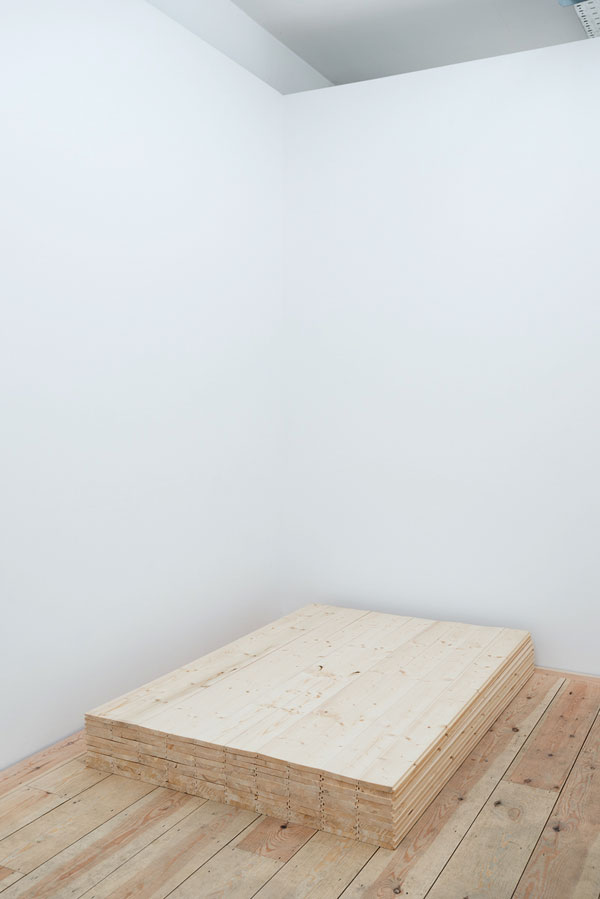
The second piece on display in lobstee finds Cook translating these ideas into a sculptural installation. Built and installed on-site, the work is composed of 100 wooden planks, each measuring 4.5×70.5 inches, stacked atop one another and joined by tongue and groove fittings which are left visible to the viewer. In both materials and presentation, the resulting piece finds the artist in conversation with Minimalist sculptors like Carl Andre and Donald Judd, recalling not only the rigid simplicity of their best-known works, but also their interest in how objects composed of simple, repeating forms function in physical space. As in the woven paintings, Cook’s sculpture deliberately lays bare the methods of its creation, providing a legible index of time, labor, and process. It also directly reflects and activates its surroundings, echoing the canvas’ forms, palette, and seaming, as well as the color and material of the gallery’s hardwood floor. In its utilization of plain materials towards intricate effects, then, Cook’s sculptural work comes less as a departure from painting than as an extension of his ongoing conversation, finding the artist once again using his materials plainly but thoughtfully, offsetting a rigid formal economy with aesthetic accessibility.
As is so often the case in Cook’s work, the pieces on view in lobstee are ultimately about narrative: though resolutely non-figurative, each piece is literal in its representation of both medium and method, offering the audience a clear sense of Cook’s creative process. Crucially, they also reaffirm the artist’s rare talent for yielding aesthetic results from highly involved formal investigations. This, in the end, is perhaps the most crucial point to be made in discussing Cook’s ongoing body of work: for as compelling as his working methods are, it’s ultimately his ability to translate them into direct, well-defined compositions that sets this output apart from both his own previous work and that of so many of his peers. Though deeply rooted in process, these works are thoroughly accessible and visually memorable, at once positioning his work within broader conversations of process-based abstraction while offering his audience a visual experience beyond the mere contemplation of materials and surface treatment. With the resulting exhibition at once upholding and extending the underlying concepts that drive his practice, lobstee illustrates this vital balance, amply confirming Cook’s ongoing efforts to employ reductive means towards revelatory ends.” – Christopher Schreck