Rana Begum

page40-1008-full
page40-1006-full
page40-1003-full
page40-1002-full
page40-1000-full

Rana Begum

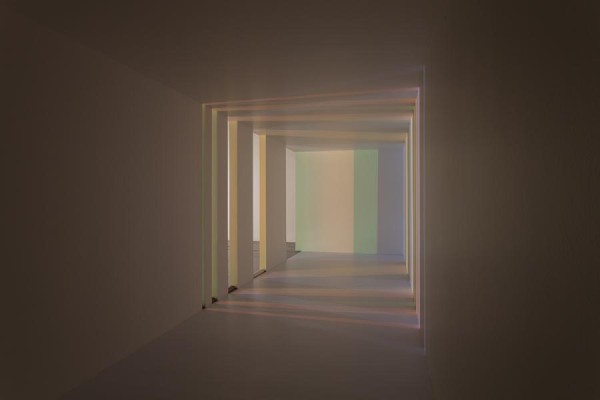
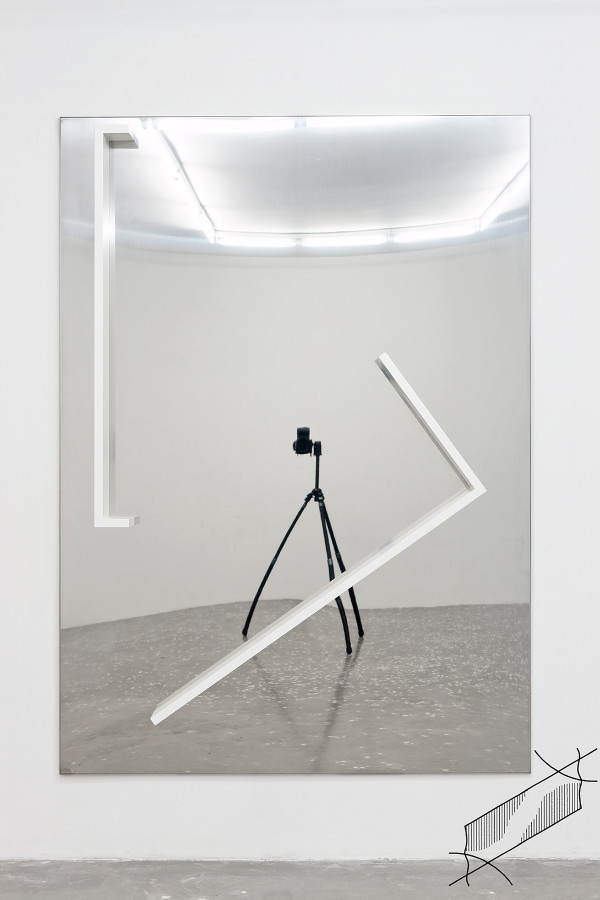
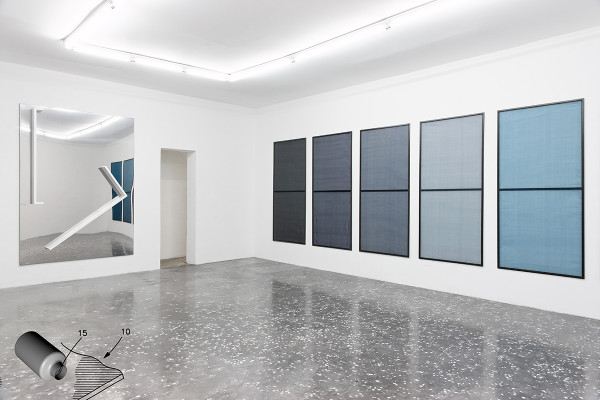
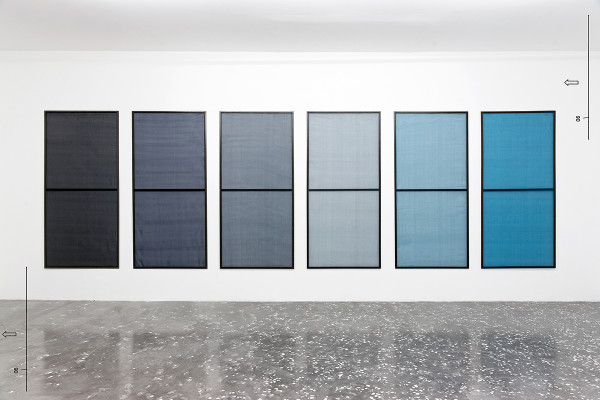
Work from Manifold at Christian Lethert.

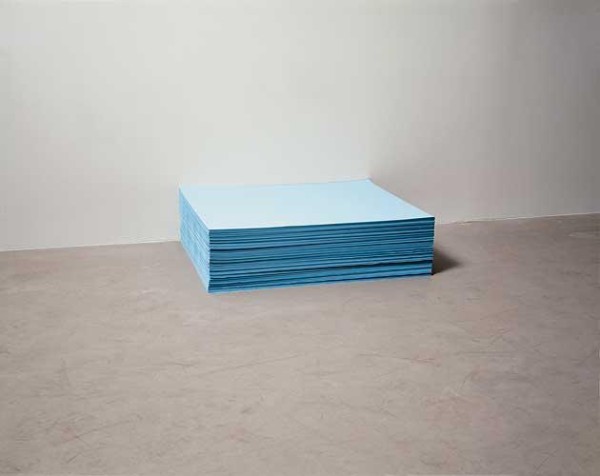
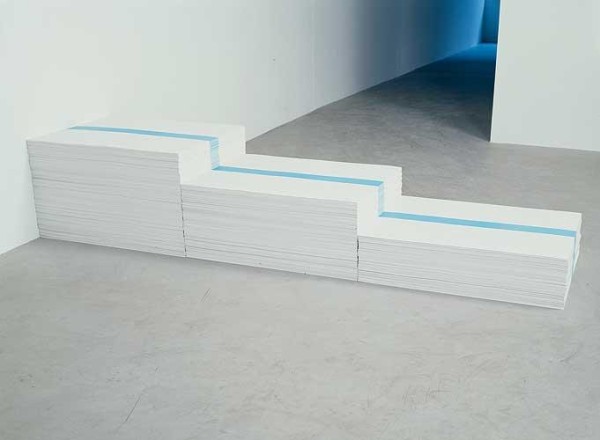
“We are very delighted to present Manifold, Rana Begum’s first solo-exhibition in Cologne. The London-based artist is exhibiting a new body of work comprised solely of white folded steel sheets, which originate from studies in paper.

The vivid colours that Begum applies on the back of the white folded works radiate onto the white wall, giving the impression that the work is floating in space. This new series of work represents a calm and contemplative approach, yet Begum’s bold use of colour conveys the electric intensity of the city.

Rana Begum’s post-minimal form vocabulary is not only influenced by Donald Judd and Agnes Martin, but also by colourful Islamic art and architecture. Effortlessly taking the vibrant collage of the urban environment and concentrating it through a process of refinement and filtration, Begum creates works, which are crystalline, simple, pure and hard-edged. Begum’s work is minimal in its formal language, imposing order and system by abstracting moments of accidental and visual wonder. The multi-perspective quality of Begum’s art invites the viewer to walk around, choosing where to pause in front of the work, instead of being a passive observer:

‘The soft glow of colour is smuggled into the space of shadows and opacities interrupt the spaces of reflection and the resulting structures are materially stable but perceptually labile. As the viewer moves across the work, colour, light, shadow and composition all shift. Again, the singular object is made plural; the viewer’s relative position to it at a given moment determines the specific composition perceived but positions and, hence, compositions are multiple if not infinite.’ – Murtaza Vali”

Christian Lethert Gallery

Anders Nordby

0767bfdf54e14b68c4e3b150a9c88a70
a71b30a946cb31870e8313aa77a01271
e82e5f8464be2beebd8a398bf0be3c82
5770c3b5309ae13b98d7dad43ff55ec9

Anders Nordby

Work from The Queens Gambit Declined at STANDARD (OLSO).

“By way of anecdote we learn that Duchamp’s premature abandonment of art for chess was brought about after watching dandy author Raymond Roussel playing chess in a Parisian café. What one really learns from such an anecdote soon becomes somewhat unclear confronted with the elegantly ephemeral poise that marks efforts carried out by Anders Nordby—he knows all the tricks yet can’t help dissolving them as all these movings and tremblings set in motion proceed. While the art of the 20th century’s deep infatuation for all things chess is well-known, as is the Roussel epiphany of Duchamp, another key admirer of Roussel, namely Surrealist André Breton, infamously nurtured a visceral disdain for chess. When Breton and Nicolas Calas constructed their idiosyncratic Wine Glass Chess Set it was accompanied by a series of “profanations.” A series that concludes with the statement “[w]hat must be changed is the game itself, not the pieces.”

What is less-known is that Breton suffered from an obscure condition called “anarchic hand syndrome” and certain biographers suggest that the papal Surrealist’s aversion to chess in fact is a function of this disorder. Its most prominent symptom is loss of the sense of agency, meaning that while the hand still somehow is a part of oneself and one’s body one loses the ability to control the movements of the hand. One could also speculate further whether Breton was in fact suffering form the related and slightly worse disorder, “alien hand syndrome,” where one in fact senses a loss of ownership of the hand, where one’s hand is an estranged, displaced object responding to anything but the commands of its “owner’s” brain. In this state of separation from one’s own limbs the hand becomes an alien object that increasingly responds to the calling of other objects; a hairbrush on the table in front of it, a box of matches, an old magazine, a piece of dirt, a baseball glove, a wild plant, a magnifying glass, a Whippet, a vase.

One could perhaps imagine someone faking an alien hand, someone letting themselves get absorbed in a fluid back and forth movement, letting their own sense of agency bleed away onto an array of more or less estranged limbs and dismembered objects. Exo-consciously constructing and then essentially losing control of what would be an alien phenomenology of sorts. “Only inspiration is in control,” Breton and Calas attribute to Baudelaire in their “Profanation” manifesto of (un-)chess. Similarly, in this plethoric tangled network of art objects, secrets, claimed artistic personae, fraudulent identities, withheld invisibilities, and actors botching their roles, the different nodes of an ever expanding networkedness come to disregard the common binaries between subjectal and objectal, animate and inanimate, cognitive and non-cognitive agencies.

We mentioned the dandy. As is well-known, the dandy is not normally an artist, because an artist normally seeks the limelight. But then: what is the limelight, etymologically speaking? An intense white light obtained from heating up and burning incandescent quicklime. So, what if the limelight is something that in and by itself is something that actively, yet without intention, seeks out the dandy cum artist? The networks emerging from what one could propose to term autopoetic alien nodes one somehow slides in and out of as if caught in a revolving door. In Nordby’s work these nodes form fluid substrates and ontologies. One is led to think of certain passages from Belgian Symbolist author Georges Rodenbach’s 1892 novel, Bruges-la-Morte. This is a novel eerily ahead of its own time, in which the protagonist’s increasing identification with the city’s inanimate buildings and lifeless mirror-images take on an uncanny, indeterminate biotic existence. To Rodenbach, this cold limelight, these multiple codings, turns out to be an actual and material fluidum, both letale and elan, a fluidum infused via the fractal nodes of the cityscape itself. Rodenbach writes: “Mute analogies. The mutual interpenetration of the souls and the things. We enter into them while they enter into us. Cities have their own personalities, a self-sufficient spirit, a trait that is almost objectified, one that corresponds to joy, to new love, to renunciation, to widowry.”

A longer reading will have to demonstrate the theoretical transport of what Rodenbach dubs mute analogy, particularly in regards to the pictorial rhythms and pulsions of today. Further—when it comes to Nordby —these notions manifest in tandem with talk and stuttering of insect media, swarm intelligences and so on and so forth. If the artist cum dandy, or was it the other way around, sets out to un-work yore’s notions of idleness, encounters the algorithmic weightlessness characteristic of a package sniffing networked society, the proverbial working-ants, develop their own brand of idiosyncratic anarchic and alien limbs. The ant cum dandy… the danty, the Dante, the Danton, the Dantec. Springing forth new purgatorical patterns and diffusing biotic agencies.” – Peter J. Amdam

Delaney Allen

summer.of.self.reflection
recreating.the.sunsets.with.my.finger.over.the.lens
west.of.indio.california
somewhere.in.california

Delaney Allen

Work from A Personal Nature.

“Flickering like lusty visions of dreamscape temptation, the teasing glimpses of Delaney Allen’s hyper-saturated world are tempered by a mercuric foundation in a Darwinian timeline. In A Personal Nature, a frothy wonderland of glitz remains heavy in the mind of the viewer like a drug induced trance, toxic but also mesmerizing, crystalline but devoid of all rational structure. The glowing abstractions in Allen’s work blur together into a half-waking dream, and the residual uncertainty of oneself permeate the work as a whole: time, both waking and dreaming, becomes so shimmeringly oblique that it is impossible to tell the difference between reality and its mere representation and reconfiguration.

Time as a wonderland of personal meaning and desire, however, also finds literal expression in references toward geological oddities like geysers and hot springs, lateral moonscapes defying the preconceptions of “ordinary” nature. Contrived still-lifes, gilt and velvety, are illuminated beside the geometrical textures of natural phenomena. Juxtaposing these images, however, only blurs the line between recognizability and truth, between that which is decidedly human and that which is systematically organic; imagine, perhaps, an aesthetic in which Amelia Bauer meets David Altmejd. Desire is written in the landscape: it is inescapable, haunting, and self-defeating.

This cyclical decay is reinvented, re-enlivened, in the frank theatrics of the gelatinous glamour of works like Sunset Dinner at The Four Seasons, Nevis, West Indies, 2013. In this work, the site of traditional vanitas is re-contextualized through Rococo elements of interior style and 21st century coloration; the artificiality of the piece is palpable and curiously precarious, as the bedazzled image reflects intimately the contradicting grandeur and stupefaction bred in a highly manufactured and unstable environment. At its core, it calls into question the very nature of desire itself.

Whether situated by technological invention or geologic strata, Allen’s work thematically insists that navigating one’s place in such twisted horizons of meaning gives rise to a peculiar type of self-reflection and introspection, to a search for veracity whilst constantly in a state of flux. The sheer intersubjectivity of these digital prints vividly underscores the translucence of sight and non-linear awareness. The accompanying prints of text assert this feeling of disorientation: at what point do these recollections themselves become unreliable, slipping in and out of our grasp?

“There is a silver glow in the valley. The glow fades into the sky. Pink to silver gradient,” one narrative recounts. This idea of gradient, of a liquid transition between the cosmic and the granular, manifests itself in the explicit visual patterning of Recreating the Sunsets With My Finger Over the Lens, 2013, and, less obviously, in How I Envision the Earlier Self-portrait, 2013, in which the identity of a statuesquely posed woman is obscured by an ultra-violet bouquet of hydrangeas. Ideas of re-visitation and subsequent documentation, of carving out a certain space in the hollows of reverie, delineate the artist’s, and likewise the audience’s, search for authenticity in the neon passage of personal, historical, and geological time.” – Teresa Fredericks

Simon Denny


07_SimonDenny_installationView_Details_cGregorTitze 10_SimonDenny_installationView_Details_cGregorTitze 09_Ausstelllungsansicht_SimonDenny_ThePersonalEffectsofKimDotcom-800x600 04_SimonDenny_installationView_Details_cGregorTitze-525x700 14_Ausstelllungsansicht_SimonDenny_ThePersonalEffectsofKimDotcom-800x600

Simon Denny

Work from The Personal Effects of Kim Dotcom

“The legal issues around Kim Dotcom’s file-sharing site Megaupload, once one of the most popular platforms for data exchange on the Internet, has had unprecedented consequences for international data exchange, international law, and the local media landscape in New Zealand. Following investigations by the FBI and a suit by a US court, Megaupload and Megavideo were closed down in January 2012, according to the indicment “to stop a globally operating criminal organization, whose members were perpetrating large-scale copyright infringements and laundering vast sums of money, with a total damage of more than 500 million US dollars.”

When the New Zealand police raided German-born Dotcom’s Coatesville mansion, arresting him and closing down his file-sharing website, they seized a number of objects in his possession. These included US $175 million dollars in cash, 60 Dell servers, 22 luxury cars, numerous screens, and works of art. The legitimacy of this police operation was later questioned while, in light of the crimes of which Dotcom is accused, there has been much debate about the ownership and transfer of data.”

David Adamo

7-09272013-800x567
6-09272013-800x535
DA308.13.1a-09272013-600x766
DA304.13.1-09272013-600x899
DA305.13.1-09272013-600x903

David Adamo

Work from his current exhibition at Untitled.

“UNTITLED feels at home in presenting an exhibition of a new body of work by David Adamo, his second at the gallery. For this exhibition Adamo has taken something enormous made by something small and translated it into something small made by a person—the termite mound.

Termite mounds readily concede their ‘sculptured’ organic appearance and elaborate technical sophistication. The mounds of the magnetic termite (Amitermes meridionalis), for example, are wedge-shaped, with their long axis oriented almost perfectly north–south; scientists suspect that the novel design provides a thermoregulatory apparatus. (The narrow end of the nest takes up minimal peak-intensity heat, allowing the termites to maneuver aboveground by day while lesser insects are forced to take respite underground.) A column of hot air rising in the mound ventilates the subterranean tunnels, providing essential temperature control for the cultivation of underground fungal gardens, and for maintaining a comfortable nest for the brood to live below ground.

In 2007, NASA engineers used the termite mound as an analogous architectural model home capable of sustaining human life on Mars in the event of the encroaching future post apocalyptic fallout. Through this replication of the termite mound Adamo investigates the morphic qualities of organic material digested and reconstructed through its most essential elements. Engrained within this gesture the artist also isolates the implicit qualities of a fundamental element of the dwelling/habitat/home for everything from the most basic of life forms to our most idealized futuristic selves.” – Untitled

via Contemporary Art Daily

Ryan Estep

cast painting 4-s IMPORTANT-W stretch0-front-s

Ryan Estep

Work from his oeuvre.

“Rooted in the latent content of materials, my current body of work examines the phenomena of touch and it’s diverse relationship between labor and value. Between the affect of construction work and art handling my practice explores various modes of touch through objects and audience. Materials such as heat and handmade soap, dirt and lidocaine, act as moderators, inviting and at times obscuring the senses. I aim for a “tactile vertigo” of sorts; a moment where the predictable returns to the obscure and the most basic of perceptions are called into question.” – Ryan Estep

Cocky Eek

25_marken--1
25_cllrrspace
25_blobkids
25_bloboutside
25_05

Cocky Eek

Work from Blobs.

“‘In space, man is small. In cell-space man is all’

Being emerged in white space, with no beginning and no end, with no point to focus on.
creating space out of space, vaccuum, being lost in a space, where its rigidity stops and wobblyness starts, inside out, listen & stick your head in.

Striped // 2010, Marken NL
In 1916 the Island of Marken at the Netherlands was heavily flooded. In a wild storm some of the black striped wooden houses were blown al the way to the Danish coast. Eek replaced one of the houses which hover like liquid architecture in the presence of two girls in scifi- regional dress.” – Cocky Eek

Zeitguised

970f067954e32f99f7e66e8e36889011d051d5b8ce8856cf4d95c73f105fd6b1
1f038c510f8b35a467cb25018eea4149

Zeitguised

Work from Badlands.

“Exploring the Arizona desert landscapes, the photographer’s camera becomes the recorder of the original source, while the artist’s digital modeling tool interprets the phenomenology of the geological formations. The resulting world becomes a striking and uncanny walk-in bastardization between the rich reality of the landscape and the reduced analytic model thereof.” – Zeitguised

via Field Notes

Mårten Lange

al-01 al-55 al-27 al-22 al-03

Mårten Lange

Work from Another Language

“In Another Language Mårten Lange examines the natural world and the sciences surrounded by it. By capturing flora, animals, and natural phenomena he creates a visual enigmatic and intimate world where the subjects are distanced from their environments; they appear as sculptures in frozen photographic moments.

The aesthetics of science and the materiality of the depicted objects are constantly emphasized and explored in Lange’s black-and-white images, which result in an ambiguous and unreal index of nature. InAnother Language, Lange reiterates photography as documenting and voyeuristic means, while he lingers upon how the visual image can capture shapes, patterns and texture. The world we are entering, the objects we are viewing, and the other language the photographs read, bring us to a secret and mythical world. The idea of ‘other language’ is thus two folded; nature and its laws can be seen as one language, while the idea of photography as a language and system is underlined throughout the project.” –Melk

Laura Letinsky

Screen Shot 2013-10-11 at 3.05.37 PM
Screen Shot 2013-10-11 at 3.05.20 PM
Screen Shot 2013-10-11 at 3.05.05 PM
Screen Shot 2013-10-11 at 3.09.40 PM

Laura Letinsky

Work from Ill Form and Void Full.

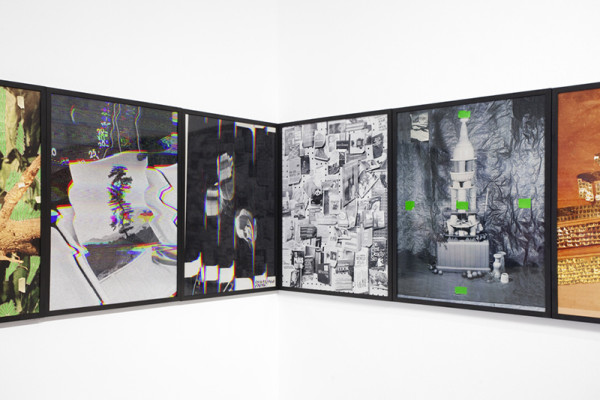
“This exhibition focuses on Letinsky’s new series, Ill Form and Void Full (2010-11), and marks a significant development in her work since 2009. Letinsky became increasingly interested in the artificiality of the photograph and its potential as a self-reflexive space. Here Letinsky has begun incorporating paper cut-outs from lifestyle magazines and art reproductions of food and tableware into her studio arrangements.

The series title Ill Form and Void Full continues Letinsky’s interest in playing with representations of space and time, but departs from the narrative potential of the still life. It focuses on the relation between positive and negative space, and a more muted depiction of a subject where two and three dimensional forms from different sources co-exist uneasily.” – Photographer’s Gallery London