An-My Lê


An-My Lê

Work from Small Wars.

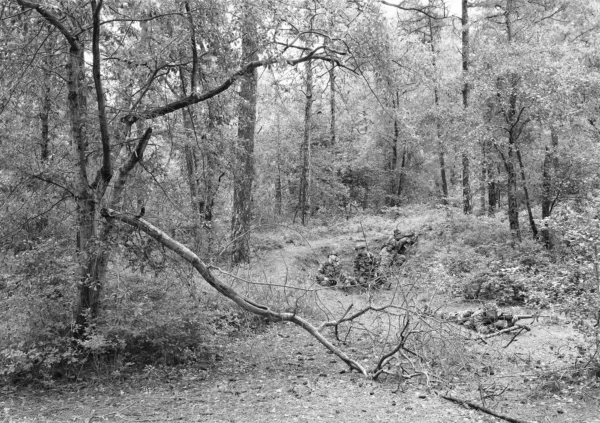
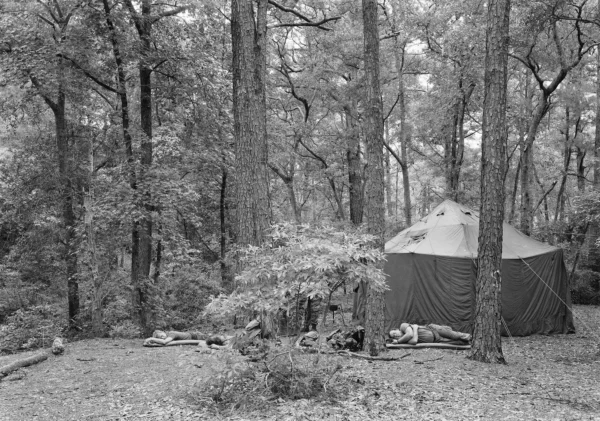
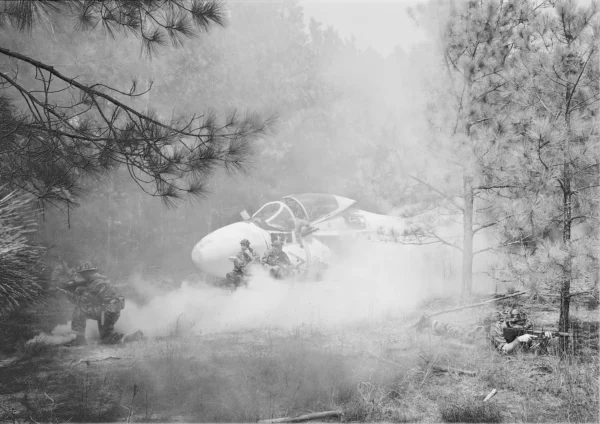
“At first glance, the photograph Small Wars (rescue) (1999–2002), appears to capture a frantic moment during a tense battle: A helicopter has been grounded and seems to have crashed, since smoke is pouring from its hull. A man in a camouflage uniform kneels on the ground, rifle cocked, prepared to fire. Two other men, also soldiers, given that they are wearing helmets, stand in the background, either dealing with the wreckage or poised to join the impending fight. The photograph was not taken on the frontlines, however, but is rather one of a series of pictures of men reenacting battles from the Vietnam War in the forests of Virginia—something they do as a hobby. An-My Lê, who left Vietnam as a young girl with her family in 1975 to move to the United States, conceived the project as a way to explore the mediatization of the Vietnam War and the ways it is presented on film and television. Since most people learn about the war from its portrayal in movies such as Stanley Kubrick’s 1987 film Full Metal Jacket, which focused on the violence experienced by the troops, Lê set out to investigate the extent to which the Vietnam War is embedded in the collective memory of the United States. The men who reenact the battles are playing a part scripted by history, yet the battles ultimately bear little resemblance to the actual events on which they are based. Numerous factors point to this subtle subterfuge: There is notably little blood or gore in any of the photographs; the battles have been completely sanitized. Also, the surrounding foliage is made up of pines and oak trees, which are typical of North American woods rather than the dense tropical forests of Vietnam. The disorienting effect of the photograph raises broader questions of the reliability of media images of war. Lê uses a large-format camera similar to that employed by Civil War photographer Alexander Gardner, who famously staged some of the scenes he shot. Her choice of camera taps into the larger history of war photography and the ways in which images are manipulated to varying ends, often either to downplay or to highlight the impact of war and the consequences of armed combat.” – Claire Barliant

Joachim Koester


Joachim Koester

Work from their oeuvre.

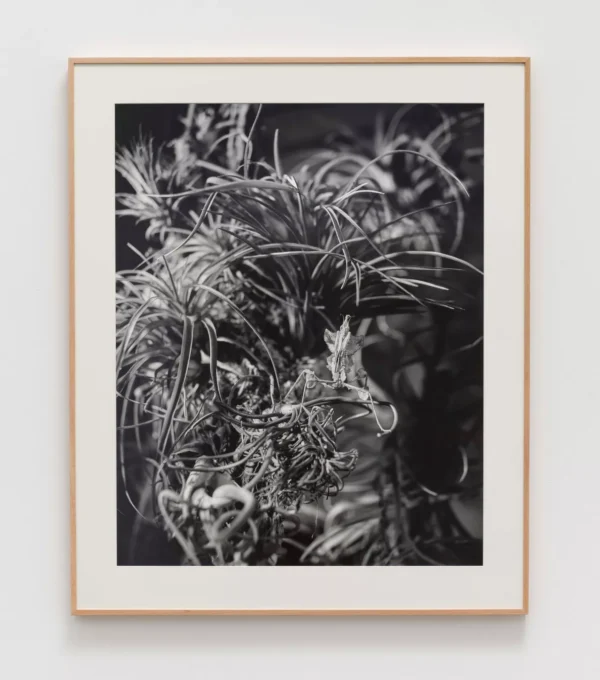
There is also a great overview of Koester’s work from Nicolai Wallner.

“Joachim Koester uses strategies of montage, archiving and storytelling to illuminate and complicate historical events that form a collective mythical construction of the recent past. His works explore the legacies and mine the fictions that form around movements and experiments – be they in the systems of art, mind-altering substances or the occult.” – excerpted from a wonderful text by stills.org.

Dionne Lee


Dione Lee

Work from Trap and Lean-to at Lightwork.

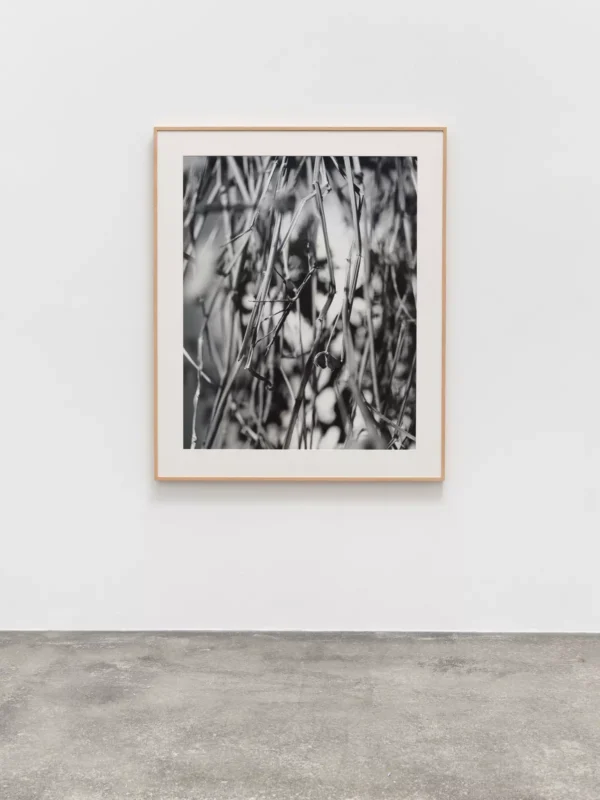
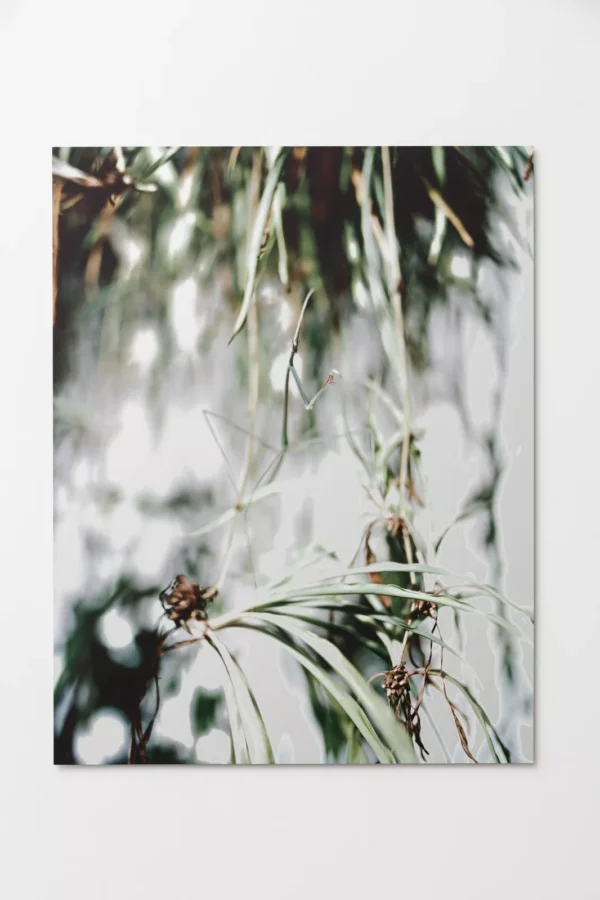
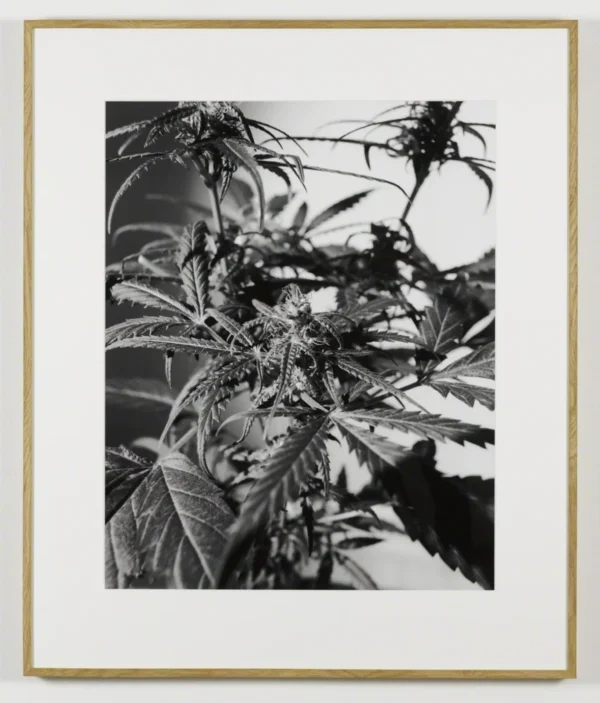
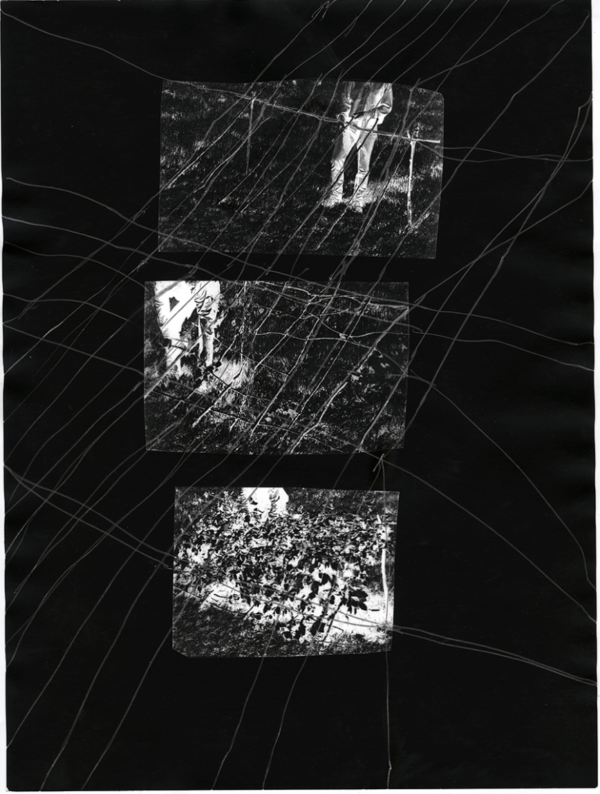
“Oakland, California-based artist Dionne Lee employs video, collage, photography, and sculpture to explore American landscape and her place within its complex history. As an African American woman, she sees the natural world as both a place of refuge and tranquility, but also the location of racial violence, danger, and vulnerability. More broadly, her work acknowledges the terror of climate change, mass migration, and humanity’s ongoing drama of survival. Duality often surfaces in work where she notes that “two things can be true at once.”

Lee often manipulates found imagery in the darkroom in a process both organic and intuitive. The exhibition contains many fragments of photographs from her many wilderness survival manuals and vintage color magazines offering majestic views of “the great outdoors.” The survival manuals offer detailed, step-by-step directions on building a lean-to or foraging for food and water. Lee has become adept at these skills herself, thus reclaiming her connection to the earth and salvaging nearly-lost ancestral skills and knowledge. As the earth continues to shift beneath our feet, Lee asks what determines survival: not just who has what, but who knows how.

Lee’s darkroom practice has the same sense of intervention and disruption. With a forceful irreverence for the sacred silver gelatin printing process, she deconstructs photography itself. Lee draws with graphite directly on prints before and after she exposes them. She pulls negatives across the scanning bed to create painterly abstractions. She tears, crumples, solarizes, and double-exposes fragments of information, challenging both photography’s purpose and authorship along with any idealized and colonialist view of the earth.” – Lightwork

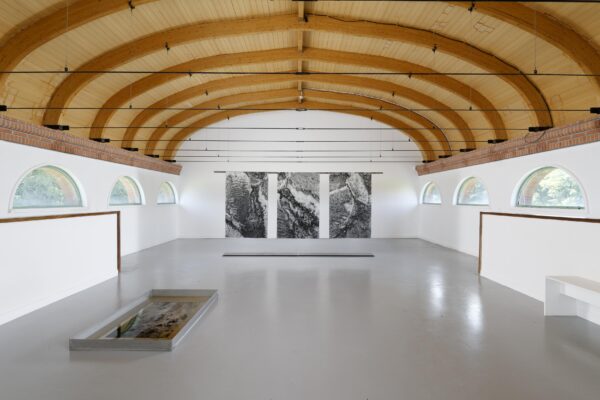
Awoiska van der Molen


Awoiska van der Molen

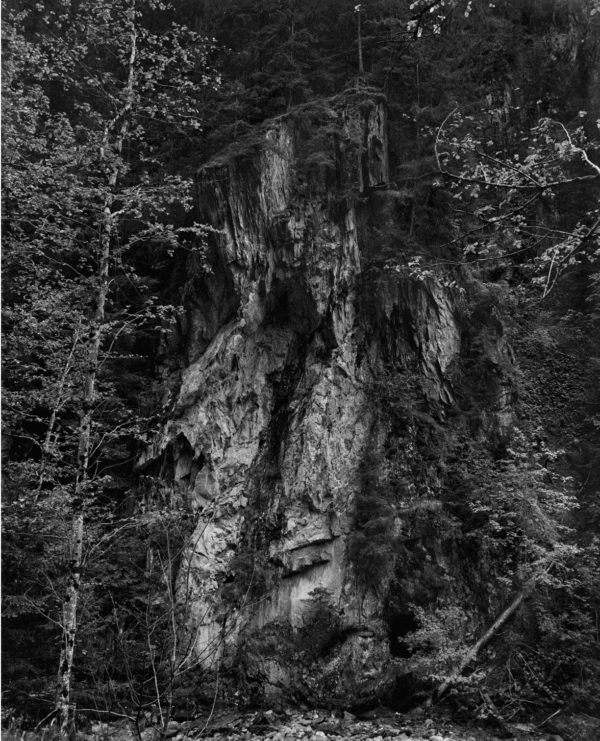
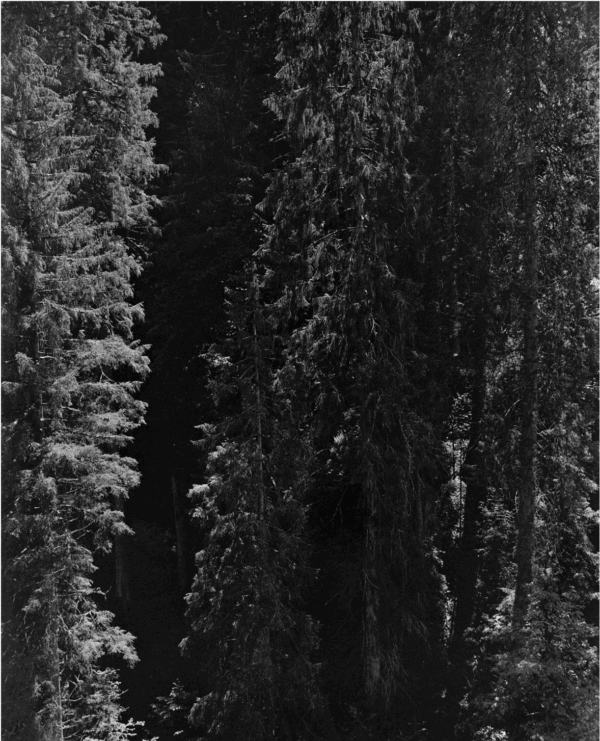
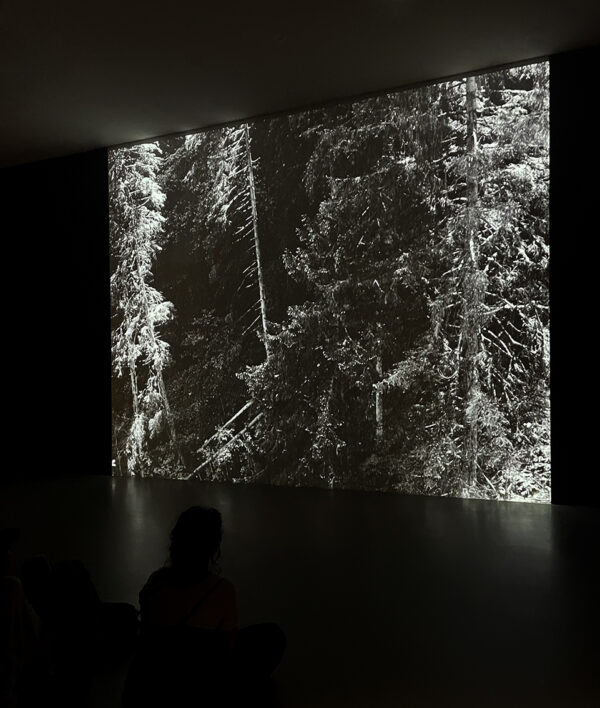
Work from The Living Mountain.

“…Awoiska van der Molen’s audiovisual installation The Living Mountain (2022) shows the grand landscapes of the Südtirol Alps in Austria, the homeland of Thomas Larcher, composer of the accompanying music. In this compelling work, Van der Molen’s atmospheric black-and-white photography and the experimental score merge as often as they collide with the music, revealing the monumentality and fragility of the mountains. The promise of untouched nature is close at hand, and it is appealing to lose ourselves in a sensory installation like this, which Van der Molen is making for the first time in her long photographic career…” – Iris Sikking from Contested Landscapes at Kunsthalle Mannheim

Mark Ruwedel


Mark Ruwedel

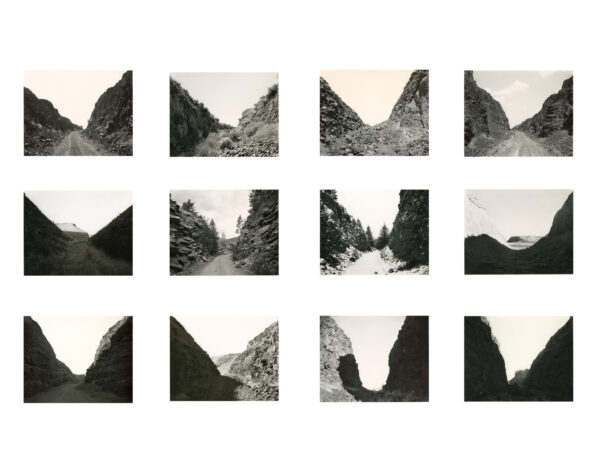
Work from Westward.

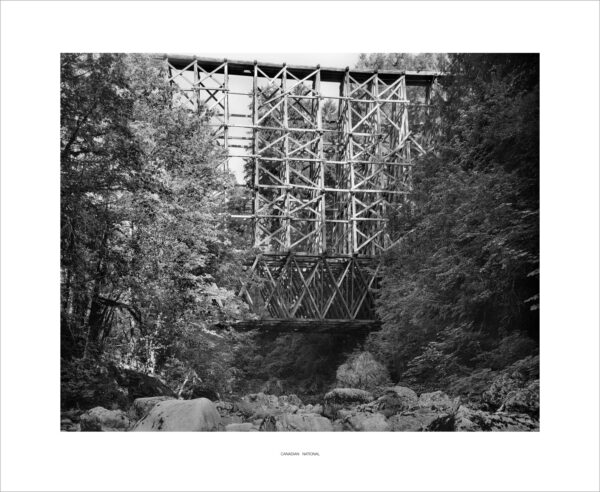
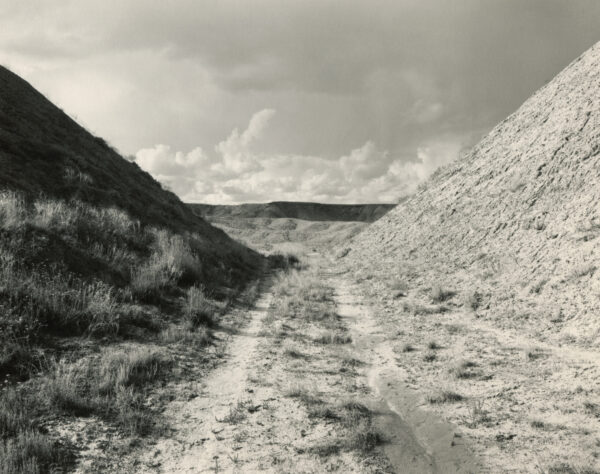
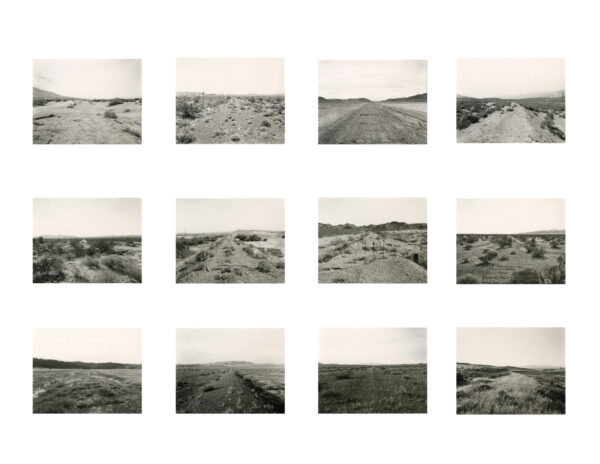
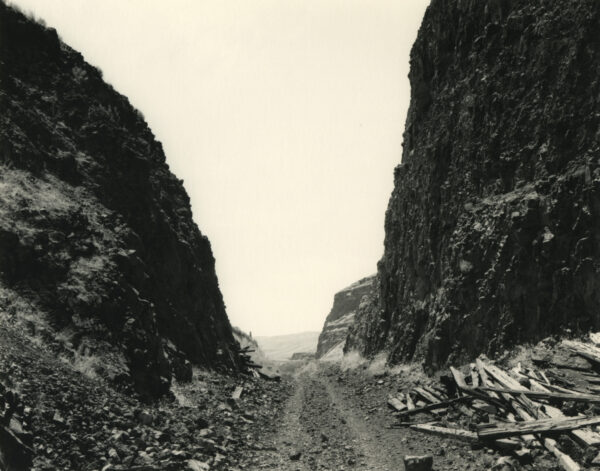
“Ruwedel is an artist who has been photographing American deserts and other remote locations for over 25 years, pursuing epic-scaled projects on railroad construction, Pre-Columbian sites, the landscapes of nuclear weapons, and more recently, failed attempts to live in the harsh environment of the desert.

With an affinity for stark, barren landscapes that are otherwise uninhabited, Ruwedel found solace in the desert as it soon became his primary field of inquiry to explore subtle perceptions about the historical versus contemporary in landscape photography.

Influenced by photographers Lewis Baltz and Robert Adams, Ruwedel’s works do not only overlap the ideas of the landscape and histories the place represents, but also the histories of picture-making. He uses land as a suitable place for social inquisition by studying each intricate history of the American or Canadian West and producing mesmerizing black-and-white photographs of the grades, cuts, tunnels, trestles, and craters of his immediate surroundings to reveal narratives—both geological and human—contained within. The images are wrought with history as the land reveals itself as being both an agent of geological processes and a field of human endeavor.” – Mark Ruwedel

Ugo Rondinone


Ugo Rondinone

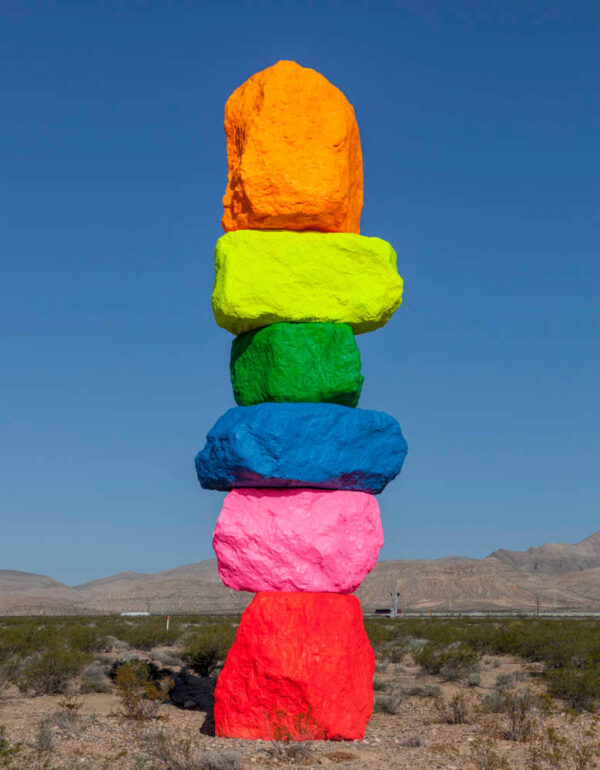
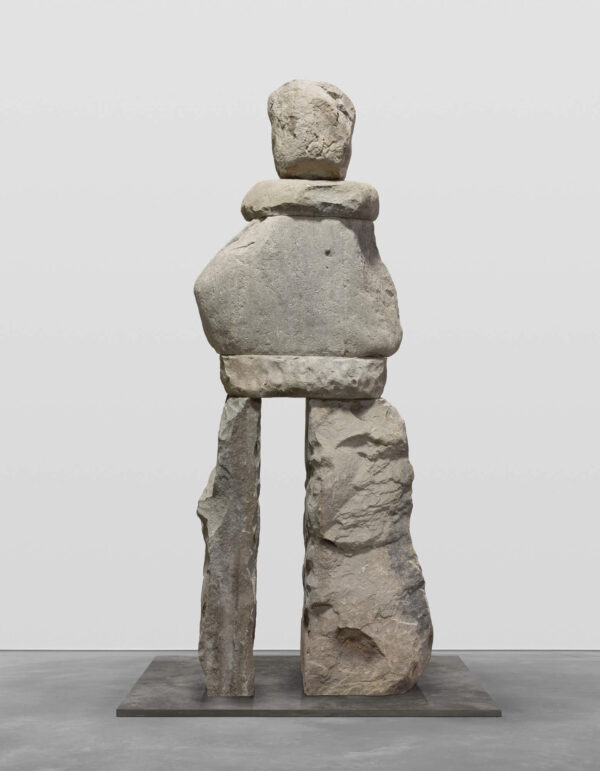
Work from his oeuvre.

“Ranging from installations and sculptures to psychedelic paintings and large-scale drawings, Ugo Rondinone’s eclectic practice explores the relationships between opposing forces—day and night, real and artificial, euphoria and depression. His most recognizable works are his colorful “Rocks” sculptures: vertically stacked rocks painted in fluorescent colors. Inspired by naturally occurring geological formations and the meditative art of rock balancing, Rondinone has built these large-scale artworks in public settings around Liverpool, Miami, and the Nevada desert. He has created smaller iterations for gallery exhibitions. Rondinone has also made bull’s-eye-shaped, neon-hued mandala paintings and cast-bronze sculptures…” – Artsy

Torkwase Dyson


Torkwase Dyson

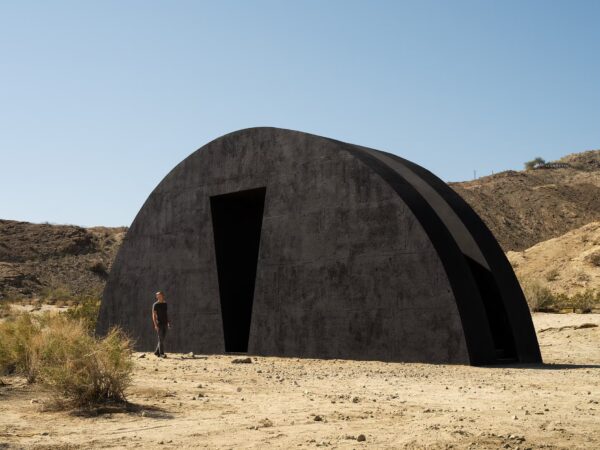
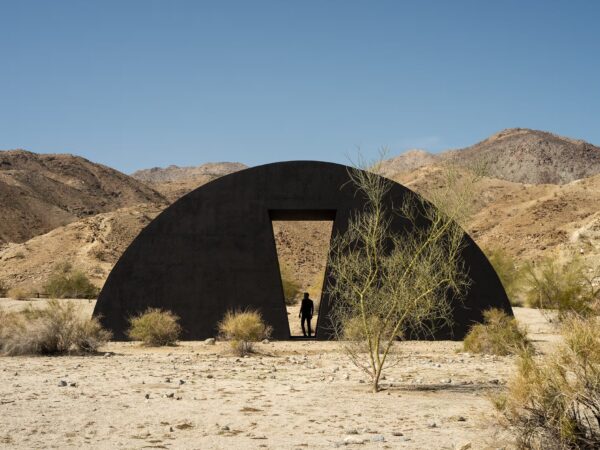
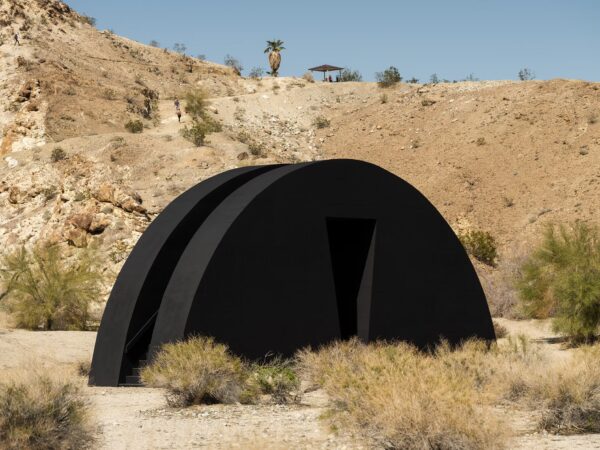
Work from A Liquid Place.

“Torkwase Dyson describes herself as a painter working across multiple mediums to explore the continuity between ecology, infrastructure and architecture. Dyson’s abstract works are visual and material systems used to construct fusions of surface tension, movement, scale, real and finite space. With an emphasis on the ways black and brown bodies perceive and negotiate space as information, Dyson looks to spatial liberation strategies from historical and contemporary perspectives. She seeks to uncover new understandings of the potential for more livable geographies, recognizing that many landscapes, infrastructures, and built environments were actively shaped to devalue Black life.

Liquid A Place is part of an ongoing series that started from the premise that we are the water in the room, inviting viewers to consider their bodily interconnection with rivers and oceans that surround us. After all, around 60 percent of our bodies and 70 percent of the planet is water, and these waters circulate across our bodies and the planet as they shift states from solid to liquid to gas.

For this iteration of Liquid A Place, Dyson creates a monumental sculpture that is a poetic meditation connecting the memory of water in the body and the memory of the water in the desert. How do we go to the water in our bodies to harvest memory? Can this liquid memory help us reconsider scale and distance as critical forms in holding onto liberatory life practices? What kind of scalable infrastructure can our bodies resist and invent, making cities more livable? How are new geographies formed from the architecture of our bodies?” – Desert X

Farah Al Qasimi


Farah Al Qasimi

Work from Arrival.

“Arrival, Farah Al Qasimi’s third solo exhibition at The Third Line. Using the language of horror cinema, Al Qasimi reveals a new body of work featuring jinn folklore across the UAE.

“The show premieres Farah’s first feature-length film; a 40 minute horror-comedy titled Um Al Naar (Mother of Fire). In it, a fictional Reality TV network has produced a segment on Um Al Naar, a Ras Al Khaimah-based Jinn. Um Al Naar narrates the region’s changes from its occupation by Portuguese and British naval forces to its current adoption of a national identity based around tolerance and a drive to generate culture. She pays close attention to these changes in their day-to-day iterations: the gendered pastimes of the country’s youth, waning trust in traditional forms of spirituality and medicine, and the loss of history in an urgent bid for novelty.

The photographs in the exhibition are moments pulled from the world she describes. She follows a baker with an Instagram business making buttercream roses, dance parties in which the only participants are men, and moves throughout homes looking at indicators of bodies and their personal style. Um Al Naar laments the formalities and social constructs of modern-day life, longing for a more fluid, interconnected world in which there is ample space for the paranormal, the unseen, and the absurd…” – Third Line Dubai

John Pfahl

John Pfahl

Work from Altered Landscapes.

“In his series Altered Landscapes, Pfahl physically changes the environment, fabricating the view to question our perception of the landscape through added elements that reference mark-making devices associated with photographs, maps, plans, and diagrams. These gestures sometimes repeat strong formal components; fill in information suggested by the scene, or act upon information external to the photograph itself. The picturesque scenes are at once interrupted and completed by the artist’s involvement in creating the photograph.” – Joseph Bellows Gallery

Ron Jude


Ron Jude

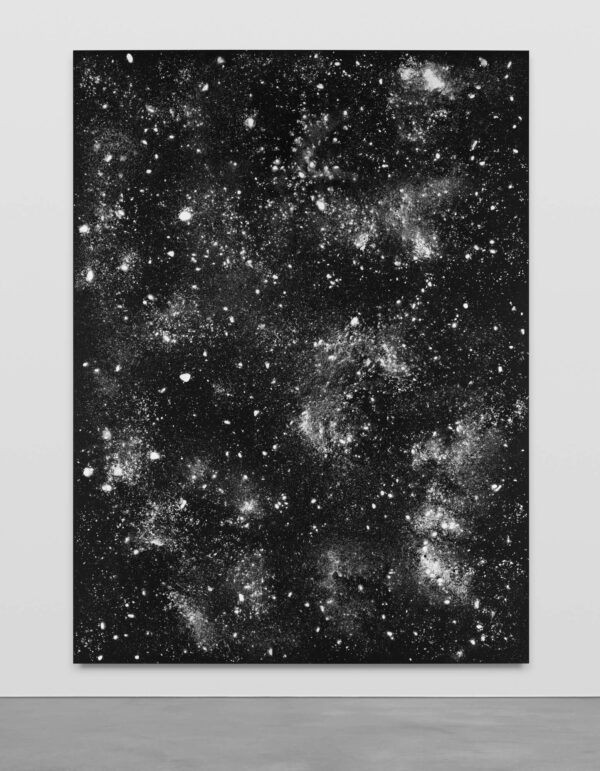
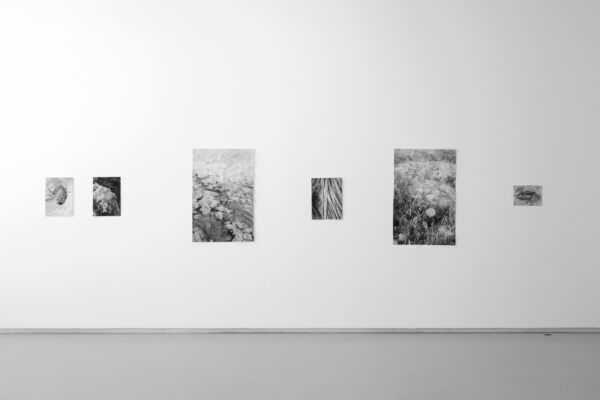
Work from 12HZ.

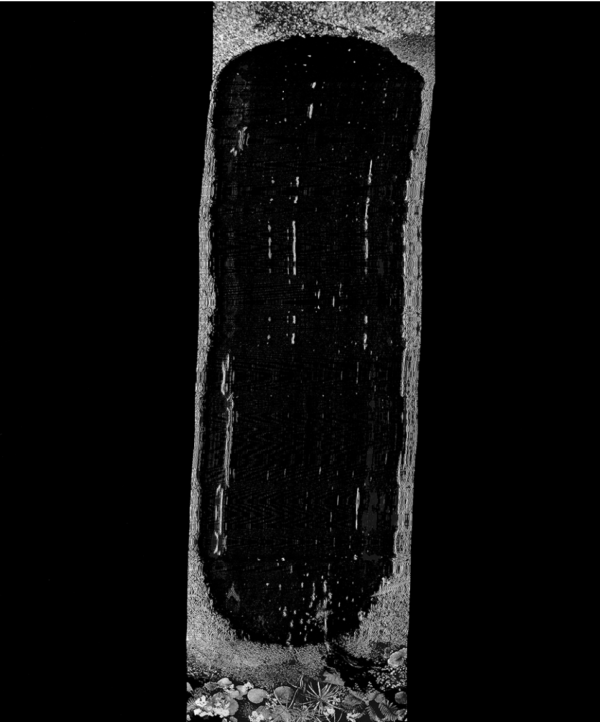
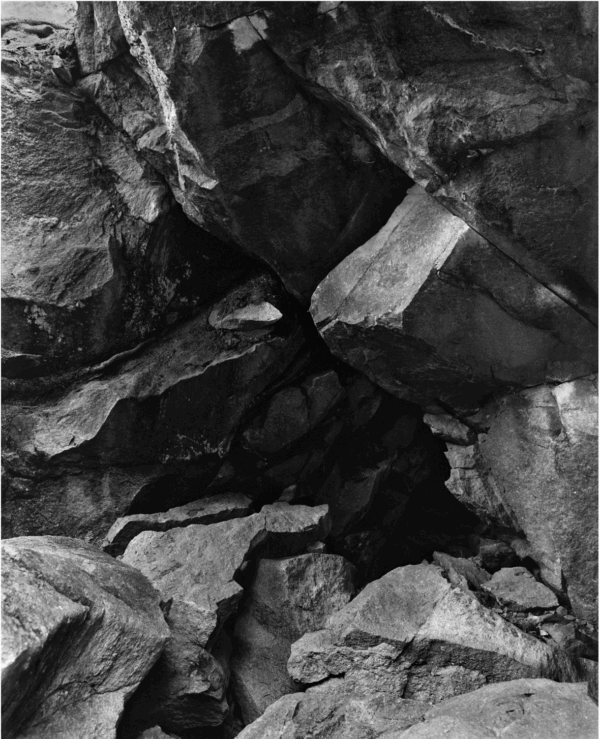
“The title of this work references the limits of human perception—12 Hz is the lowest sound threshold of human hearing. It suggests imperceptible forces, from plate tectonics to the ocean tides, from cycles of growth and decay in the forest, to the incomprehensibility of geological spans of time. The photographs in 12 Hz allude to the ungraspable scale and veiled mechanics of these phenomena, while acknowledging a desire to gain a broader perspective, beyond the human enterprise, in a time of ecological and political crisis.

12 Hz consists of large-scale black and white images of lava tubes, tidal currents, river water and welded tuff formations: pictures describing the raw materials of the planet, those that make organic life possible. The photographs up to this point have been made in the state of Oregon, from the high lava plains in the Deschutes National Forest to the gorges in the Cascade Range, and the sea caves and tide pools near Cape Perpetua on the Oregon coast.

Jude’s new work affiliates him with the ethos of the Dark Mountain Project, a cultural movement that grew out of a manifesto written in 2009 by the English writers Paul Kingsnorth and Dougald Hine. Among the principal concerns of this movement is the urgent conviction that literature and art need to pivot away from “the myth of human centrality,” and to “re-engage with the non-human world.” In doing so, this work asks: how does one depict the indifference of the non-human world to our egocentrism and folly without simply offering false comfort by looking away from our reckless actions? Is it possible to engage the landscape in a meaningful way without resorting to formal trivialities, moralizing or personal narrative?

These photographs don’t attempt to tell us how to live or what we’ve done wrong, nor do they reduce the landscape to something sentimental, tame and possessable. Rather, they endeavor to describe and reckon with forces in our physical world that operate independently of anthropocentric experience. The photographs in 12 Hz work in service to a simple premise: that change is constant, whether we are able to perceive it or not.” – Ron Jude