Katinka Pilscheur

katinka Pilscheur katinka Pilscheur katinka Pilscheur 12_Pilscheur_koal-494x370 katinka Pilscheur 09_Pilscheur_koal-494x402 katinka Pilscheur

Katinka Pilscheur

Work from her oeuvre

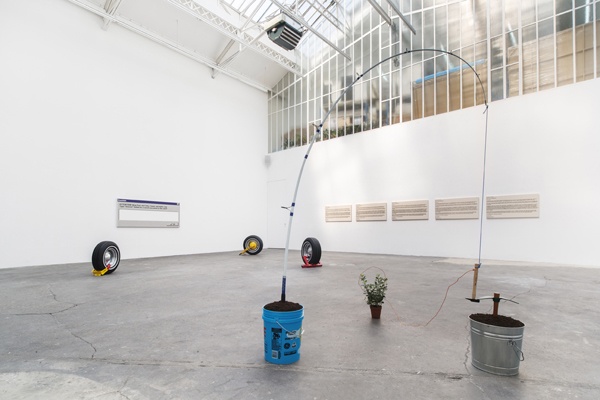
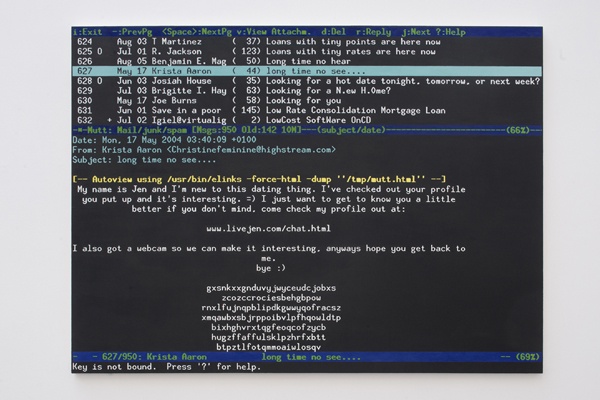
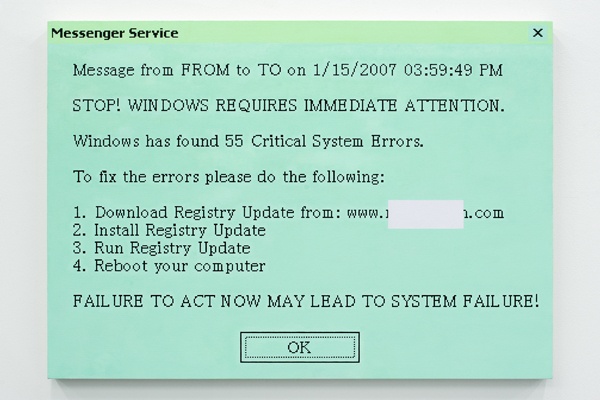
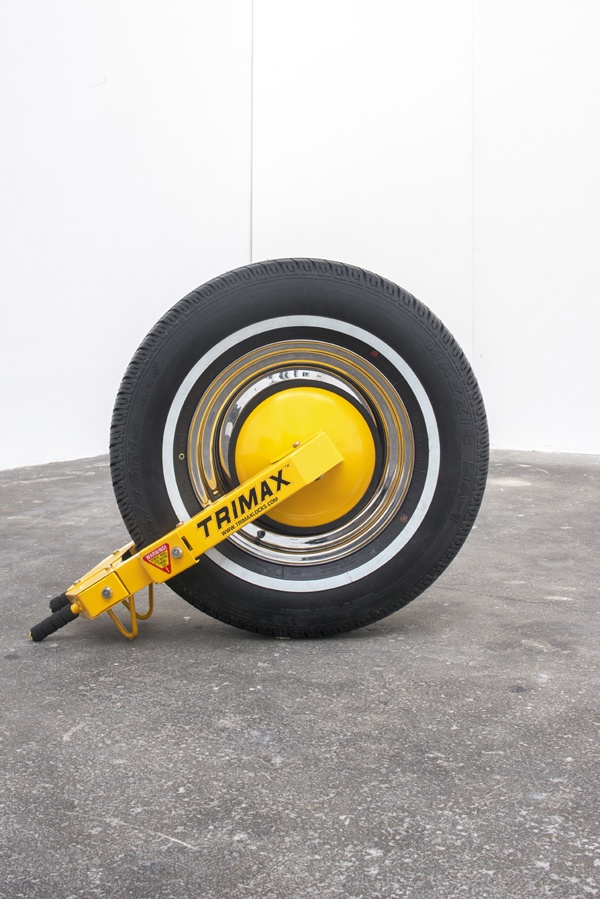
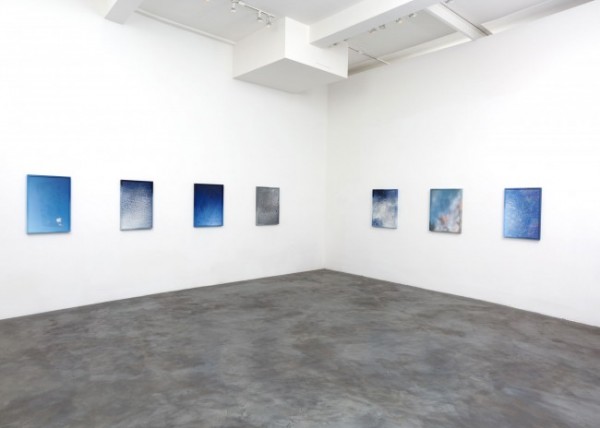
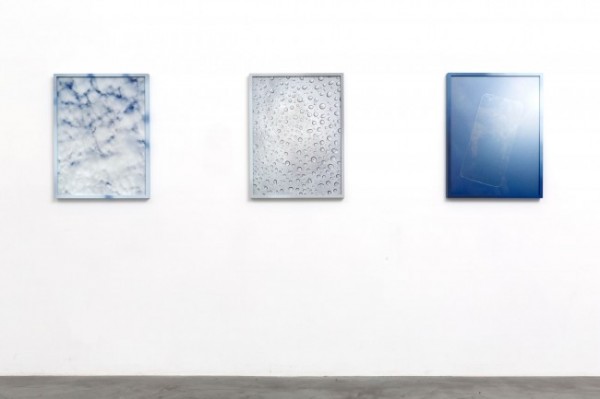
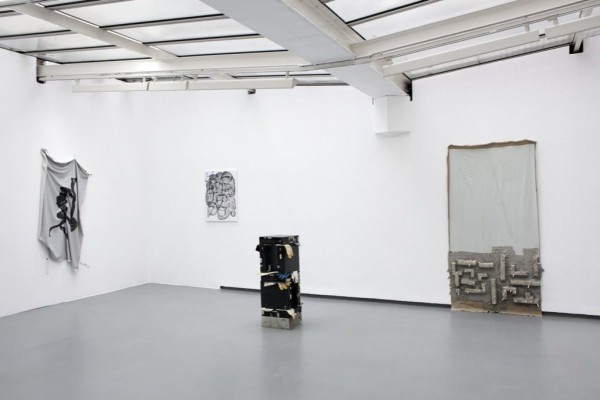
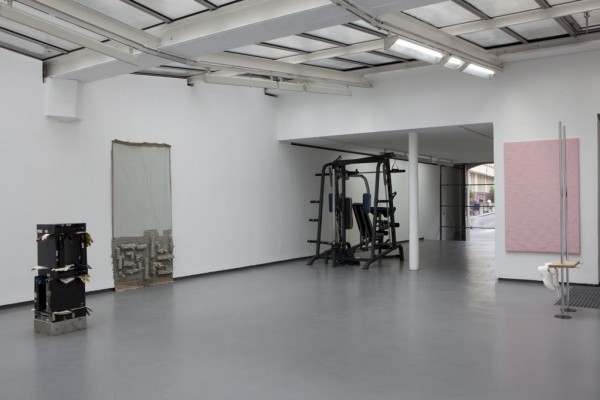
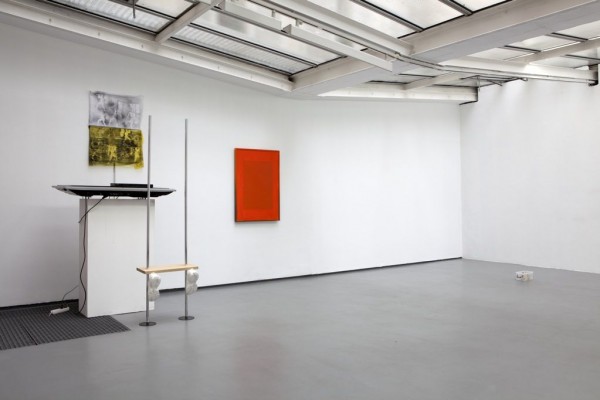
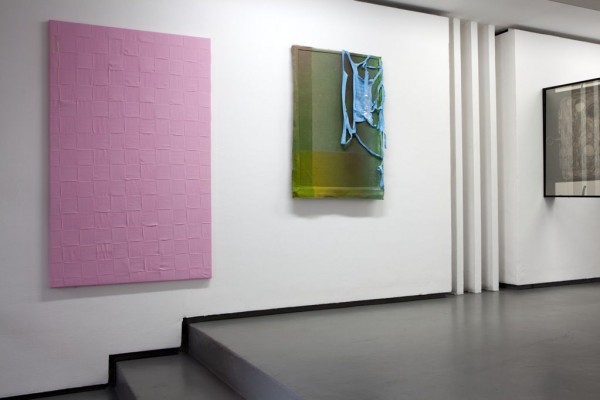
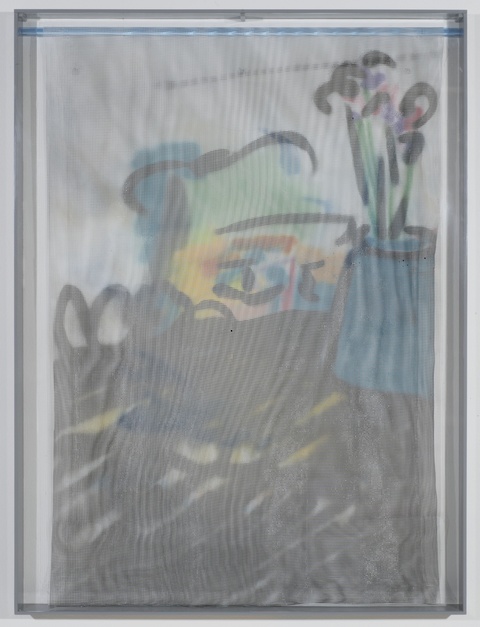
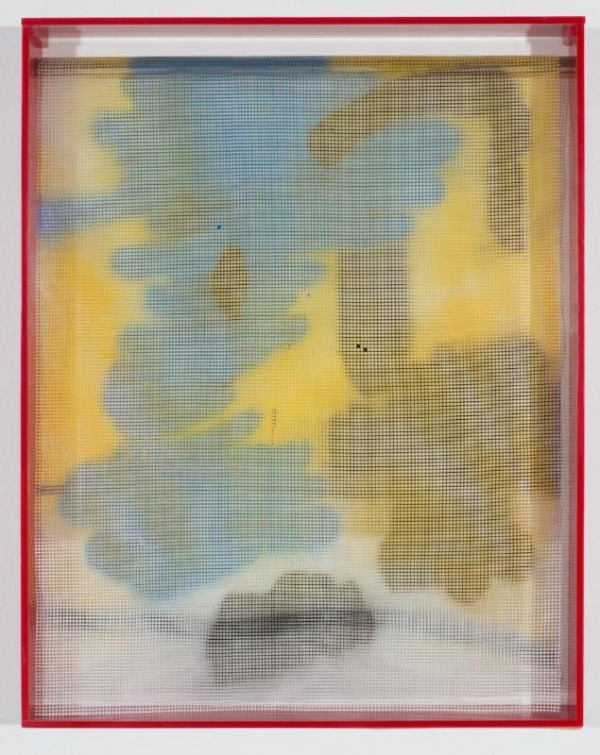
“I was drawn to Katinka Pilscheur at the very beginning; I knew we had something in common. From the moment I saw power tools and materials piled in wait, I knew: this was my childhood. The soft metal memories of mine, bent into an arc of energy; the suffering of hard labour but the joy and understanding of a true days work. The destruction and rebirth of Berlin’s scenes of construction. The wait for something spectacular and the result of something mundane. As we up look at the ivory tower of glass and metal only to feel dismay, lower your eyes; change lies at the very core and center of being. Change is more than the worldbuilding up around us.Pilscheur captures still shots of seemingly benign pieces of the whole and cages them. She is tempting the viewer to irritate these faux animals to see what they are really made of.” – Koal

Brian O’Doherty

1 2 7 8

Brian O’Doherty

Work from P! at Simone Subal Gallery, New York.

“Attempting to trace Brian O’Doherty’s artistic concerns through his seven decade career is akin to falling down a rabbit hole. This would undoubtedly please the artist, who delights in the type of misdirection that aims at inspiring deeper thought. His output includes mazelike grids (Vowel Grid, 1970) among other labyrinths-inspired imagery like his rope drawings (notably Rope Drawing #120: Here and Now, 2014) in which warrens of colored segments are teased by ropes in three dimensions to create masterful parallaxes.

These works, on view as part of a joint exhibition presented by P! and Simone Subal, demonstrate the continuing currency of O’Doherty’s thinking. AOU, The Broad Vowels, 2005, comes from the period he worked under the pseudonym Patrick Ireland, which he assumed between 1972 and 2008 in protest over the political situation in Ireland. Here, O’Doherty employs trompe l’oeil through color and line to illustrate how the eye can confuse, mislead, and obfuscate. Also depicted are painted shapes of the titular vowels, which come from Ogham, an ancient Celtic language written as dashes and lines and never spoken aloud, that emphasize his interest in delineating underlying visual patterns to describe systems of existence, thought, and communication.

For O’Doherty, beyond trick lies reason. Just as the artist’s “Inside the White Cube” essays—originally published in Artforum between 1976 and 1986—indicates how a gallery space is anything but neutral, these paired exhibitions enable a reading of O’Doherty that discusses ways of seeing beyond surfaces. A Geographical Notation on Equivalence and Multivalence of Meaning (Arse / Ass), 1965, describes the potential for glorious misunderstanding when attempting to communicate about sex in Ireland versus the United States—the different meanings of the words “tramp” and “bum” being a case in point. O’Doherty’s famous portrait of Marcel Duchamp as an electrocardiogram, Portrait of Marcel Duchamp, Lead 1, Slow Heartbeat, 1966, is shown here, too. As with Ogham, the heartbeat is unspoken—ultimately, however, what could be more fundamental to a person’s existence.” – Gemma Tipton, Artforum

Jordan Tate

NOISE-REDUCE-Untitled_Panorama2185SUPERBLACKSUPERBLACK_X174-173170-179

Jordan Tate

Work from SUPERBLACK @ Transformer Station.

SUPERBLACK is the result of a two-year research project in collaboration with scientists at the University of Cincinnati. SUPERBLACK is a physical body designed to absorb nearly all electromagnetic radiation (visible light, infrared light, ultraviolet light, etc.) and offer the experience of a localized, contained, and absolute darkness.

At its core, SUPERBLACK is an exploration of certain dualities – subject/object, void/full, black/white. Tate’s larger photo-based practice further explores the nature of these dualities that inform, limit, and govern our experiences.

Within Tate’s work, the photograph is used as an idea, as a metaphor for knowledge itself, rather than a physical object or even an image. Photography becomes a way of analyzing the interplay between culture, science, and technology that transforms individual observations into systems of knowledge.

Anthony Pearson

AP_Install_2014_11AP-14-032AP-14-023bAP-14-005a
Anthony Pearson

Work from his exhibition at David Kordansky, Los Angeles

“David Kordansky Gallery is very pleased to announce an exhibition of new work by Anthony Pearson. In his third solo exhibition with the gallery, Pearson presents new wall-based sculptural reliefs made from plaster and bronze. These works are activated by the effects of ambient light on their surfaces and are informed by the artist’s long-standing relationship to photography.

Over the last decade, Pearson has authored a constantly evolving vocabulary of objects and images. Common throughout this evolution are autonomous, expressive gestures on the one hand and rigorous formatting on the other. Even when it does not make a direct appearance in the work, the photographic process operates as a guiding logic for the unification of diverse materials and techniques in a harmonious vision. This is because light itself––as reflection, as ambient phenomenon, as illuminating energy––is both the physical and conceptual source of Pearson’s project.

Featured prominently in this exhibition are examples of a new typology that the artist refers to as Etched Plasters. Though they vary in scale, each consists of a field of plaster set inside a frame. The plaster has been scored by hand using a variety of implements and an array of mark-making strategies. Dense networks of swirling lines, systems of crenellated grids, and swooping patterns reminiscent of natural forms create complex reliefs and cast intricate shadows. Pearson sometimes pigments the plaster before pouring it; if the tones he chooses can be divided most easily into whites and blacks, within these categories subtle variations of hue can be discerned, including pinks, blues, greys, and browns. The colors of the frames reflect a similarly sensitive spectrum of whites, off-whites, and natural woods.

Though the Etched Plasters are defined by marks, supports, colors, framing, and their relationship to the wall, it would be a mistake to identify the body of work as painterly or pictorial. Rather, it represents a focused meditation on the experience of physical surfaces and the function of light. Each etched line is a sculptural gesture that prompts the object to respond to the conditions in which it is installed. An emphasis on optics and the body’s ability to perceive seemingly immaterial phenomena therefore place the work in conversation with the ethos of the Light and Space movement. This represents a local inheritance, as Pearson has lived in Los Angeles for nearly his entire life. In many ways his practice can be read as a series of attempts to embody and reflect the perceptual qualities of Southern California.

New bronze wall-based sculptures on view are the latest iterations of Pearson’s Tablet typology. Cast using molds made from hand-sculpted clay forms, they take shape as biomorphic, inwardly folded cylinders. Some have been rendered at large scale and exude the wrought physical force of bodies working against gravity; others make use of the intimacy of smaller dimensions and feature taut, interlocking geometries. But common to all of the new Tablets is the depth of their richly patinated surfaces. Traditionally associated with physical and visual weight, here bronze conjures surprising luminosity. The Tablets offer a complement––rather than a contrast––to other optical phenomena that take place around them. Metallic surfaces have been transposed into the realm of light, creating direct associations between these new sculptures and earlier experiments in photography that have remained at the heart of Pearson’s work. Seen alongside the Etched Plasters, and considered in the context of previous typologies, the Tablets are parts of an alchemical chain that synthesizes observation, material specificity, and unbridled intuition.” – David Kordansky Gallery, Los Angeles

Ingo Mittelstaedt

Ingo Mittelstädt
23_IM_Banquet
Galerie Koal
Ingo Mittelstädt
Galerie Koal
Ingo Mittelstädt

Ingo Mittelstaedt

Work from DORT at Kunsthalle Rostock.

“The exhibition deals with a double interplay: on the one hand, Mittelstaedt shows his own works from previous years – interrelating these to each other. On the other hand, he curated works from the collection of the Kunsthalle creating a conduit between him and artists like Kate Diehn-Bitt, Hermann Glöckner and Willy Wolff. These artists are one of the very few that were incorporated in the collection not because of cultural policy factors but for their mere artistic nature and hence can be seen as the outcasts of the East German cultural sector. At the same time, Mittelstaedt deals intensively with the history of the Kunsthalle Rostock. In doing so he involves the exhibits of the collection as well as exhibition views from the early years of the Kusthalle to make the forms of presentation of the sixties and seventies aesthetically comprehensible.

Likewise, his own always analog works are characterized by artistic dialectics: in an exciting interaction between art historical references and photographic alienation, aesthetic dissolving and material presence, they explore the level of abstraction photography is able to offer. Objects of everyday life, objects of nature, or objects of art often constitute the basis of Mittelstaedt’s artistic works. He smoothly moves between documentation and staged displacements, not without letting both ideas mingle with each other, or making them crash into each other.” – Kunsthalle Rostock

Florian Auer

FA_image9 FA_image8 FA_image6 FA_image7 FA_image1 FA_image10

Florian Auer

work from Blue Prints

“Blue Prints conceives the exhibition space as a plane of colliding dimensions. Angles, shadows, interfaces, liquid camouflage, and perspectives cast the physical environment into a scenario that arouses the very act of recognizing. A throw of dice opens up a virtual arena with its own chances. Due to its purposeful use of blank space and careful placement of 3-dimensional ideas Blue Prints proposes a concept of hyperreality allowing multiple non-linear readings of reflexion. Ideas of virtual renders on their way to perform and mediate congealed in time; a space turning into a frozen spectacle.” –Kraupa-TuskanyZeidler

Richard Aldrich

Forget-Your-Dreams-9-TIFF-800x533 RA3_MG_6111-800x533 RA4_MG_6251-800x533 RA5994-524x700 RA6035-524x700
RA4691

Richard Aldrich

Work from his oeuvre.

“The structure for Aldrich’s upcoming show is that of two distinct parts. The first, opening November 8th, will be on view for a week and a half, after which a second show will open on November 19th and run through the end of the month, and then back to the first show for the remainder of the exhibition, closing December 21st.

A Day in the Life

The 2nd show, entitled “A Day in the Life”, obliquely refers to the form of the Beatles song of the same name that features, and is perhaps mostly known for, its format of being two separate songs in one—a McCartney song plunked down in the middle of a Lennon song. The title also refers to a text* written by Aldrich in 2005 in which he describes art installations as a collection of fragments (artworks) that when combined describe, encompass a day in one’s life. Aldrich’s work is ostensibly about what happens when we see two different paintings hung next to each other, and how this forces us to reconstruct our idea of what each one would have meant seen singularly. In the exhibition, that process is expanded from two separate paintings into two separate exhibitions. The medium of meaning is in the modulation between the works—in the time and interstitial space that separates this and that.

The works in each exhibition make sometimes subtle and sometimes overt reference to works in the other show, works from previous shows, and to notions of evolution and comparative learning. While this is generally true of Aldrich’s work, in this double show context the effects are more pointed and crystallized.

2001 #1 2004

A work from Aldrich’s first show at Oliver Kamm/5BE gallery in 2004, from around the same time of the aforementioned text, will be exhibited on loan. In many ways, the viewing progression of the first exhibition echoes the narrative of the final sequence of “2001: A Space Odyssey”—the initial engagement, clashing abstraction, the acknowledgment of self, and finally the ascent of the child/past.

Zig Zag Cubism

A series of, thus far, three paintings, the first shown in 2010 at Sculpture Center, the second in 2011 at Bortolami, in which forms migrate from painting to painting.

Ken Griffey Jr.
Junior Felix
Felix Gonzalez-Torres

an unstretched painting/strips of red stripes and green
strips of red stripes and green/text concerning text piece
text concerning text piece/patty waters exposition

Zig Zag Cubism #3 features a text discussing the two dramatically different sides of the Patty Waters lp “Sings” and the swath of linen cut from “Looking With Mirror Apparatus” 2008, with notes concerning “Two Planes (With Text)”, 2007.” – Richard Aldrich & Bortolami Gallery

Steve Bishop

06100411page

Steve Bishop

Work from “It’s Easier To Love Your Song Than It Is To Love You“.

“I opened my mouth to speak, but a much better point was made. This was as much to my surprise as to everyone else’s. Initially stunned, agreement followed. The first few exclaimed “That’s it!” and then soon others “Yes, that’s the answer to this whole thing!” I was right but I didn’t realise why. Not straight away at least. In time I understood what I had said and like everyone else, agreed wholeheartedly. But I had not the slightest inkling of where the thought had come from. In fact, I intended to say something else, but a garbled mix of two sentences using mostly all the same words, but with entirely different meaning, was brought forth to unanimous praise.

Soon my words spread and so did their effect. Further afield at first, in a formation that felt like a growing puddle pushing out the periphery. When a video of the event surfaced, that puddle was smeared everywhere at once. In every pocket of each city, suburb and township, the ideas that those unauthored words had encouraged were proliferating in every forum that would hear them.
Commentators were referring to it as the ‘spark’. But unbeknownst to its followers it was a struck not like flint but like a fumbled cigarette igniting the bush that nonetheless spread into wildfire.

I realised the easiest option was to try to keep my mouth shut from then on. And I felt no shame letting others take what they wanted or needed from it – my words were ringing true and that was the main thing.

I have to admit though that it was very exciting. Flattering words were bestowed upon me and the personal and social benefits flowed. I was aware of time and as I continued to offer no new thinking, I became hypersensitive of people’s attention. I still felt responsible for a unity, to be at the forefront, but I was basking in a fading glow. Right when they expected the most, I had the least to give.”- Steve Bishop

Adham Faramawy


Adham Faramawy

Work from his oeuvre

“Adham Faramawy is an artist who explores changes in perception brought about by the digital age. For this exhibition the artist poses questions around media consumption and the persuasive potential of advertising to reflect and reproduce images of ‘well being’.

Across a landscape of high definition flat screens and sculptural wall and floor works, bodies flex, exhale, and exfoliate to the sedative tone of synthesized audio. Manipulated digitally, where tactile surface interplays between liquid planes, Faramawy shoots staged live performers often using his smart phone, a device, which is symptomatic of a contemporary syndrome of immediacy. Interested in erasing the boundaries of production and presentation the artist accelerates the speed at which live footage can meet the digital screen allowing it to be mediated by the mechanisms of the more familiar filter through which we visualize and conceptualize. Routines of banal choreographed workouts and rejuvenating skin treatments are played out, one on one and up close to the screen, performers often neoprene clad or waxed and polished naked. Carefully staged where human exchange can be computer-mediated, these subjects carry with them the isolated remoteness of the online experience.

For Hydra water is constructed as a luxury product and is abundant. Digital pixels and meditative sound sublimate water into a fetishized fluid counterpart, heightening it’s potential to heal and regenerate thus playing into the increasing anxiety over it’s potential scarcity. Points of hydration or drowning are continuous dichotomies throughout the new body of work, either by performers constantly feeding an unquenchable thirst by drinking water from plastic bottles in post-rave thirst aftermath, or by the animated image dissolving into digitized rippling screens.
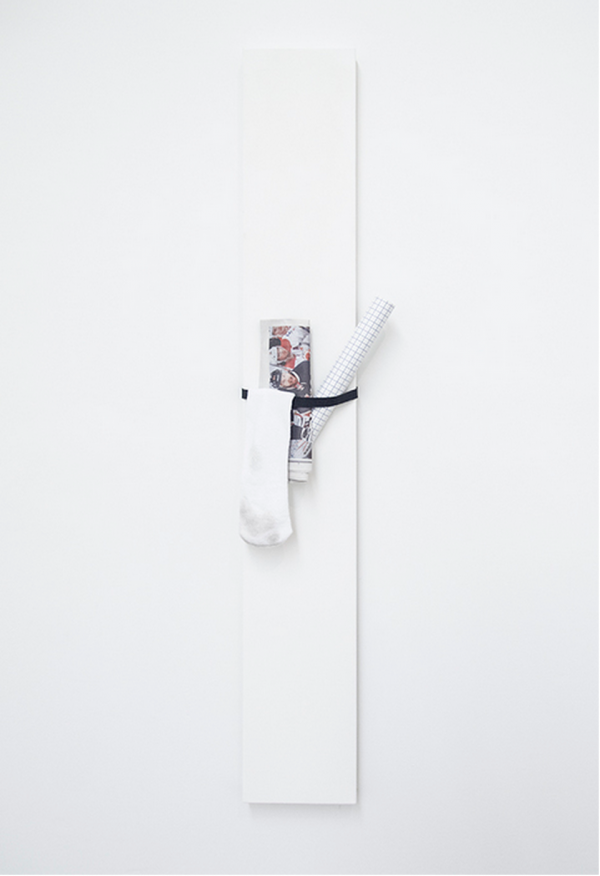
As with previous presentations Faramawy will present a series of 3D and 2D works; leaning digital flat screens and cuboid podiums will occupy the space. Paint and pixel oscillate, with surfaces counterpoising colour schemes that reproduce screensaver gradients, proxies for the digital treatment of live footage.  Despite the self-containment of wall and video work the question of which section is ascendant – which is background and which is foreground is open-ended. The artist draws us into an examination of formal points of contact between the physical and non-physical, directing us towards aesthetic histories to bring subjectivity and primacy of experience to the fore. All works are bound together in a sealed world, each requiring the other, their liquid relationship to be read as flowing and symbiotic.”

text from recent exhibition at Cell Project Space

Martin Kohout

martinkohout-boosted-mck24og-01 martinkohout5006yearsinstall11 martinkohout-boosted-mck24og-03 martinkohout5006yearsinstall02 martinkohout-boosted-mck24og-06

Martin Kohout

Work from BOOSTED EXL5006XL/M and BOOSTED MCK24.OG

Hibernation
is
the
default
metabolic
state
for
some
animals
that
exist
in
this
state
for
the
greater
part
of
the
year
at
times
of
a
metabolic
energy
crisis.

Conversely, up-regulation of metabolism and alertness is a widespread and common survival strategy in response to the availability of energy.”

text via Exile