Like a Virgin

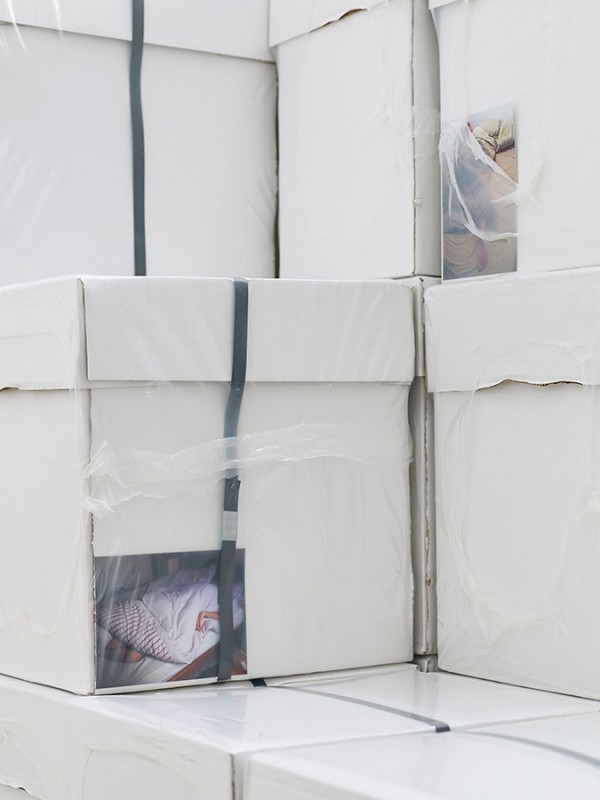
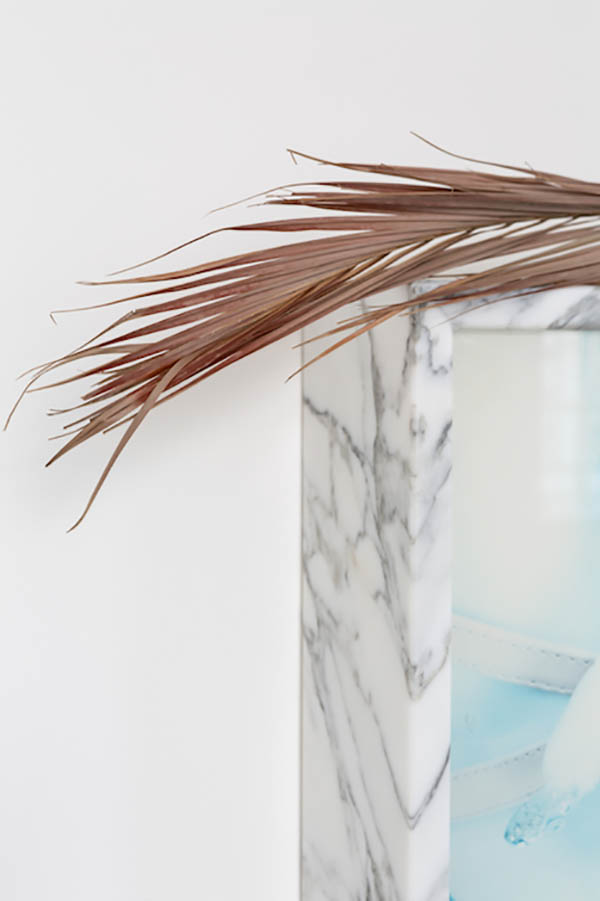
VI- VII_Like a Virgin_Emma Ilija Wyller_Untitled  Frosted Resin- 2014_C9T6789
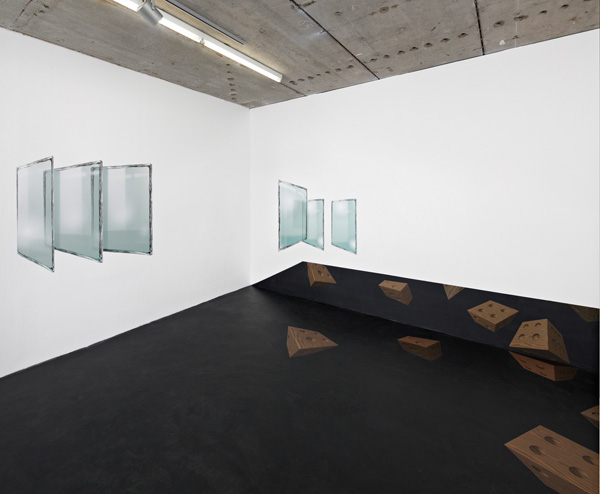
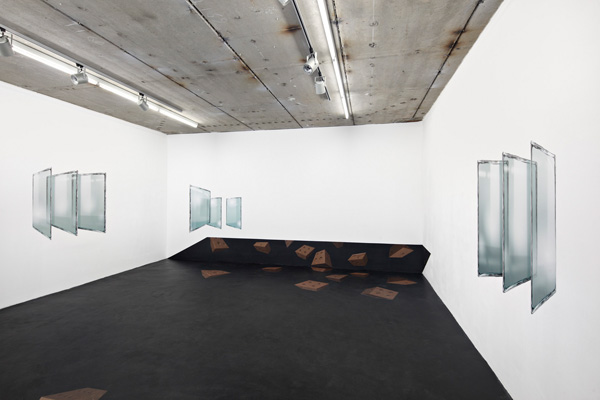
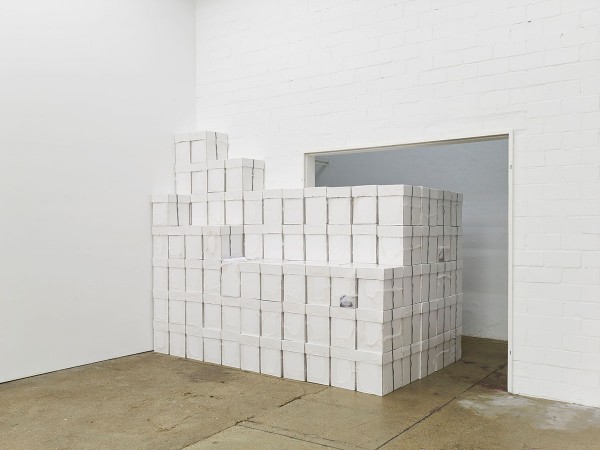
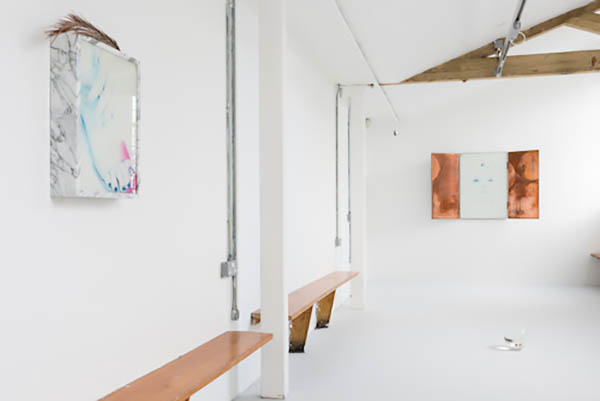
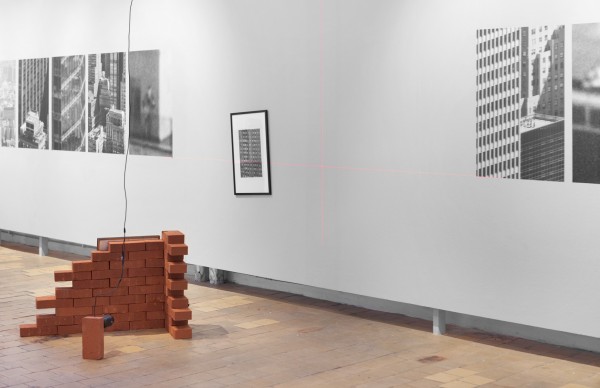
VI- VII_Like a Virgin_Exhibition View_C9T6872_2x
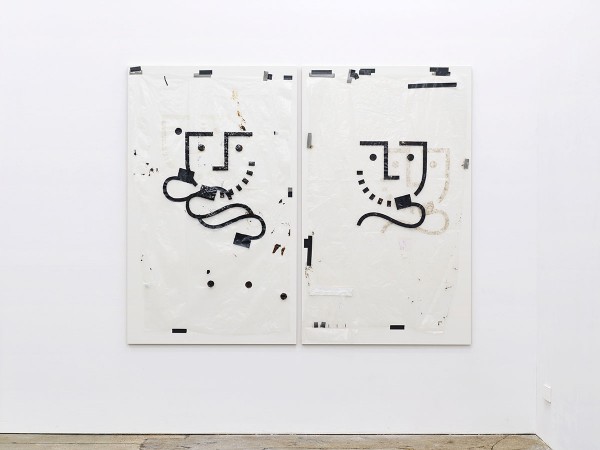
VI-VII_Like-a-Virgin_Lars-Laumann_Dogyear-2014_C9T6801-600x899
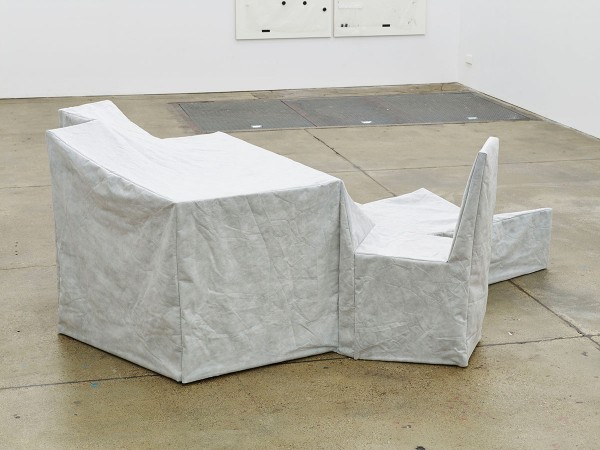
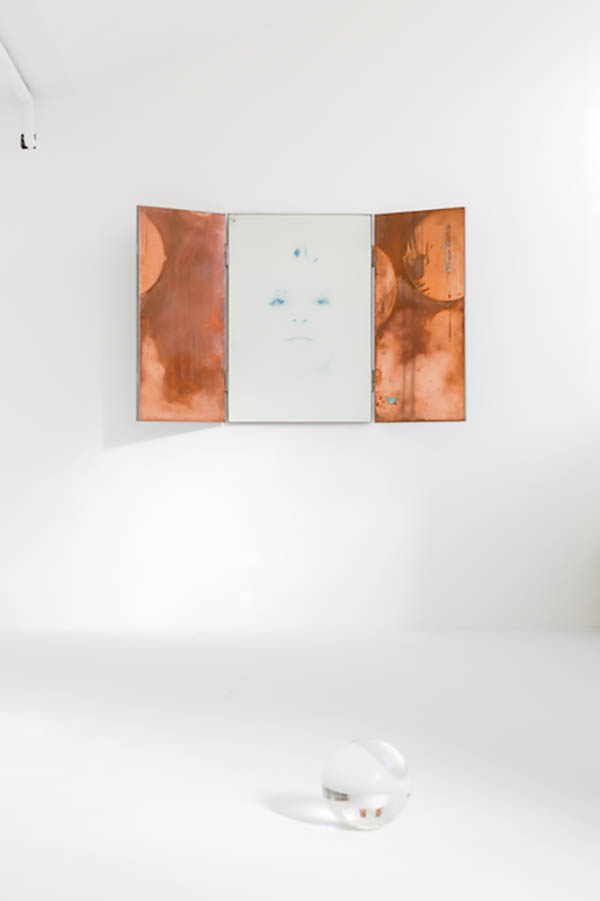
VI- VII_Like a Virgin_Brad Grievson_Shutters 1_2014_C9T6759
VI- VII_Like a Virgin_Exhibition View_C9T6869_2x

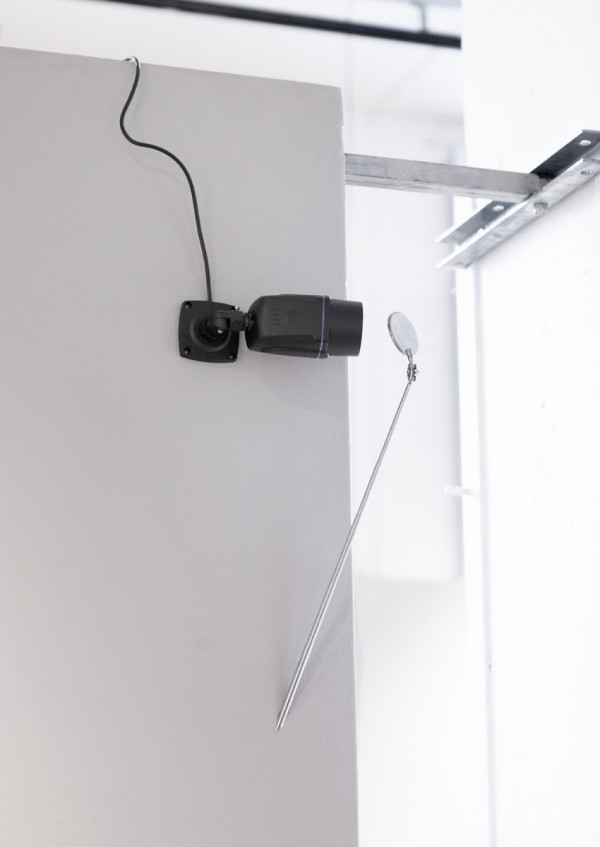
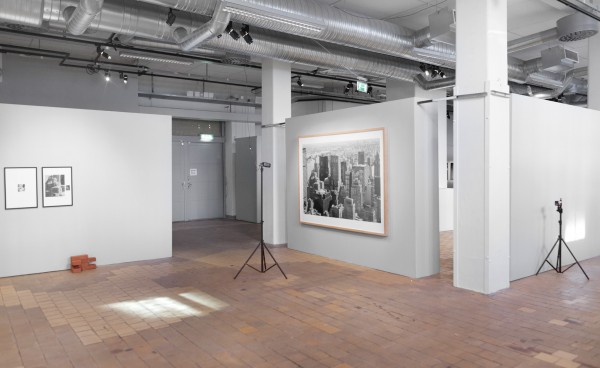
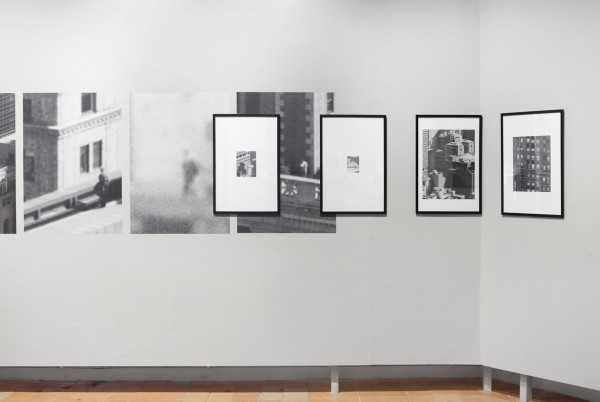
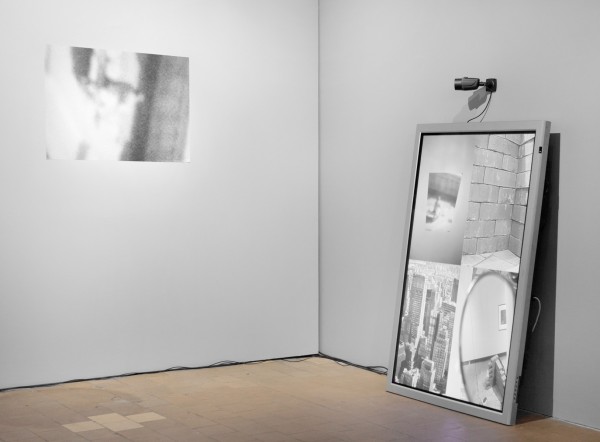
Like a Virgin @ VI, VII.

This unlikely story begins on a sea that was a blue dream…i

Before arriving at the cloudberries and crème, the fluffy desert of choice that completes the holiday meal here, one must endure a traditional Christmas Norwegian dinner that is all about survival.
Two of the most popular dishes to mark this event are meant evoke the hardships of times past, and both are borrowed from a time when living in the mountains and making it through the next few months meant the key concept of preservation: getting what food you had in the autumn to keep you fed until the spring.

Out of this concept, comes Lutefisk. A transformative event in which whitefish, first meticulously dehydrated with Lye, is bloated back to life, and sits in a jellied state, quivering next to a side of peas and gravy. On other tables and other plates for example, Pinnekjøt, or dried sheep’s ribs, evoke the biblical story of an infant revered by shepherd men of modest means.

Interestingly enough, despite all of this moderation, the partaking of lutefisk became most popular as a holiday tradition in the noughties, and consumption rose by 72% between 2005 and 2008, years that were, at least economically speaking, fairly cushy times.

Was this deep reach into the past a form of soul-searching? A ribbon, nervously tying us to the past? What prompted the rise of reconstituted fish as a symbol of the hard working and innocent days of old? Was it the mere austere tendency of the melancholy protestants, or something more contemplative that allowed this delicacy to appear as the holidays’ more modern logo?
____________

‘Like a Virgin,’ VI, VII’s eleventh exhibition, takes various positions around gallery economies, newly built architecture and the gallery’s recent move from cellar to storefront.

Some works engage with the ‘shop’ aspect of the gallery’s new location, by presenting cash and carry commodity structures while others deal simply with cash…” – VI, VII

via Contemporary Art Daily

Tilman Hornig

Installation view 3
Installation view 1
free simulation
lightblue bonus

Tilman Horning

Work from his oeuvre.

“The central component of the work
Before and After: An image about potential
Before and After: about the ideas motivation
Before and After: I am familiar with mandarins
Before and After: December, November, October
Before and After: the central component of the work
Before and After: I am familiar with potential
Before and After: about the image, idea, work
Before and After: I am well as web based works with mandarins
Before and After: the best part: there’s no extra potential
Before and After: A image about central components” – Tilmin Hornig


George Henry Longly

6b29c9ef615c20ac774de0659eb00677 9b018f42c01491f9789b16b3672fd29b eb4422db5d24f655464201887a9f96ee 8701fb252525ac21f1053c67cb781b4d

George Henry Longly

Work from “Hair Care” at Jonathan Viner, London.

“Whoever thought that Samson’s power would be in his hair? Not Delilah, or anyone else for that matter. A magnificent Biblical warrior, with superhuman powers, Samson tore a lion limb from limb with his bare hands with the help of his magical hair, but without it, he found himself to be utterly average. Hair is primarily an accessorial human feature: a way of wearing identity even on a naked body. It is soft and flexible, yet strong – one strand of human hair, should, according to shampoo commercials, be able to bear the weight of an egg. It is also the part of the human body that is approached most like a sculptural material – shaped with the hands into sculptural weaves, slick wetlooks and power bouffants.

The tradition of magic potions and spells lives on today in the world of beauty products, particularly those that are ascribed with magical properties that promise to revive the body’s fading powers. George Henry Longly’s recent marble sculptures, each of which is a standard size of 160 x 110 x 55 cm, carved with au courant phrases, acronyms and dates, are also regularly inlaid with exactly this type of mythic beauty product. Yves St. Laurent’s iconic make up product Touche Eclat, a golden wand receptacle that contains a ‘touch of light’ for disappearing dark circles around the eyes, appears several times, as does Rogaine, a product that promises to bring back lost hair. These potions work via a combination of materials and faith, and are invested in by those who fear giving up the powers that they draw on from bright skin and thick hair.

The conferring of power and desire onto bodies and objects is a recurring concern in Longly’s latest series of works, a trinity of vitrines, in which softness and liveness is repeatedly turned into permanence. Longly has also transformed a living body into a museum object via a casting process. The intimacy involved in the process of casting an attractive body is subverted by the holding of the resultant cast behind glass, resting on a garment from Issey Miyake’s Pleats Please line in a vitrine that is close to a coffin. As with the artist’s work in marble, the ephemeral is made permanent, encased in loaded materials and displayed. The price we pay, however, is that we are not granted to touch this body: important, powerful objects here are kept away from grubby, lascivious touch of hands and fingers. We can vicariously touch objects such as meteorites and helmets, however, in a second vitrine, via live geckos, who are able to stick to objects via electrostatic attraction, thereby entering into a closer, and more intimate relationship with objects than we can ever hope to have. The third vitrine contains an abstract hangerlike sculpture that Longly created from his sketch of an ancient statue of a hermaphrodite that he saw on a visit to Rome.

Longly’s treatment of materials of levity and those of gravitas is equally reverential, and keeps them away from the clamor and mess of the everyday. However they exist in a reverential space that is somehow half serious. Though we can’t touch anything behind the glass, we can sit on the vitrines like they don’t mean a thing. Reptiles climb over precious objects while sculptures are dressed up with nowhere to go, giving a sense of both the genuine power of self-image, and its vulnerability to vanishing into nothing. ” – Jonathan Viner

Simon Denny

Screen Shot 2014-03-02 at 10.53.01 PM Screen Shot 2014-03-02 at 10.48.54 PM SD2014_09-1-630x840 Screen Shot 2014-03-02 at 10.59.30 PM

Simon Denny

Work from “Disruptive Berlin”.

“The title “Disruptive Berlin” uses a term that is commonly applied in this context to game-changing businesses. A great startup will always aim to “disrupt” an existing industry. An obvious example of this is how Apple “disrupted” the mobile phone industry with the iPhone in 2007. That product completely changed an entire market and made all other players at the time totally irrelevant. So “Disruptive Berlin” is a portrait of a highly motivated community intent on changing the way commerce (and life) is done in Berlin and around the world.

The exhibition is an exploration of what this community produces culturally, the values, the rhetoric, the images, and visual content they transmit.”- Simon Denny

Greatest Hits

GH - Idle Resources installation view 3
GH - Idle Resources installation view 4
GH - Idle Resources installation view 6
GH - Idle Resources installation view 7
GH - Untitled (Viewer Abandonment I) still 2014 HD 1080p mp4 4min 9sec
GH - Untitled (Viewer Abandonment II) still 2014 HD 1080p mp4 60sec

Greatest Hits

Work from Idle Resources at Tristian Koenig.

“Tristian Koenig is delighted to present Idle Resources, Greatest Hits first solo exhibition with the gallery and the first exhibition of the

2014 season. Idle Resources engages with the fallout of the attention economy. It reflects on the extremes of cognitive connection and

disconnection, focus and distraction, within our highly mediatized society.

Attention economics is an approach to the management of information that treats human attention as a scarce commodity, and applies

economic theory to solve various information management proble ntemporary [sic] consumption.

For the exhibition, Greatest Hits will present three suites of new work that probe different areas of the attention economy – from the

aesthetics of acoustic damping and pharmacological treatment of attention deficit disorder (ADD), to a soliloquy on the pervasive

presence of screen-mediated experience.

Ute Müller
4-EXHIBITION
10-EXHIBITION
129
57
96

Ute Müller

Work from her oeuvre.

“…This body of works – paintings, architectural structures, sculptural references – defines a space where the viewer is immediately captured by the beauty of a painting that has its origins in the history of twentieth century abstraction.

Yet this is only a transitory emphasis, an instant of burning passion later exposed to the artist‘s scrupulous critique, revealing her own tendency to question such tradition.

Catalysts and kingpins of the whole exhibition, the paintings are monochromes at first glance – toning from grey to blue – but slowly unveil different and deeper levels of paint. The sculptural elements purposefully arranged in close proximity to the paintings, suggest the audience different points of view and contribute to define portions of space in which a close relationship between the work and the eye is established – initially estranged, then, intrigued.

The audience  is thus confronted with fragmentary processes and discern several „views“ which direct the eye inside an apparently indecipherable pictorial space, like constructivist scaffolds made of guiding lines for the eye.

Müller knows what it means to be inside a tradition. She is perfectly aware of the forms devised by her forerunners, from the Russian Constructivism, one of the first movement to investigate the connection between painting and real life, to the minimal art experiences; but she also knows how to redefine and reconstruct her poetics through a series of slight variations which answer originally the tortuous questions sorrounding the status of painting as art.
Her paintings fluctuate between solidity and instability. Different levels of interpretation can be applied, side by side, independent of one another; they all influence the journey of the audience through the pictorial space. The result is a multi-perspective game in which the imaginary and the real are entwined, in which poetry and narrative are balanced by more physical, pragmatic needs, and where man is still the core of the matter, oscillating between illusion and reality….” – Galeria Collicaligreggi.

vis DUST Magazine.

Rachel de Joode

IMG_9833_de_Joode_Molten_Inner_Core
IMG_9830_de_Joode_Molten_Inner_Core-1
_MG_5708
IMG_9790_de_Joode_Molten_Inner_Core
IMG_9803_de_Joode_Molten_Inner_Core

Rachel de Joode

Work from The Molten Inner Core at Neumeister Bar-Am.

“Puddles, Meteorites, A Surface of a Dinosaur Bone, Bronze, Grey Goo, Fat, Stone and Human Skin all have an aesthetic calling to de Joode. These things are explored for their material agency, not only their communication with us but with each other and their context.
Skin plays a central role in ‘The Molten Inner Core’. The average human adult carries roughly 2kg of dead skin, the surface of which is shedding every two weeks. This perceptual layer is therefore useful to de Joode when understanding a physical interaction between things, and investigating when a thing changes form.

Works ‘White Pedestal Thing’ and ‘Sculpted Human Skin In Rock’ explore the co- dependance and understanding of pedestal and sculpture. Visibly handmade clay miniatures act as pedestal and sculpture, while abstract forms in human-scale are flat. These two-dimensional shapes are covered in ‘sculpted’ photographs of skin and stand in solid rock. ‘Achilles’ depicts the artists heel and is printed the height of the artist. Although photography is used as representation, each object is acting in a non-hierarchical grouping. A print, the ink, the frame, the floor, a pedestal, a sculpture and even the artist herself retains a potential to become (melt into) another thing.” – Neumeister Bar-Am

Thomas Albdorf

14_albdorf_stilllife 01_albdorf_formerwriter_900 17_albdorf_stilllife 02_albdorf_actualities 15_albdorf_stilllife Screen-Shot-2014-01-20-at-22.29.51

Thomas Albdorf

Work from his oeuvre

“Thomas Albdorf’s still lifes are never quite what they seem – the more the perspectives, shapes and colours shift, reflecting the Austrian photographer’s interest in manufacturing beauty and uncertainty out of seemingly mundane. “What fascinates me when I look at art created by other people is how they engage with simple objects within their immediate reach,” he says. “I feel drawn to people who manage to create something very beautiful and charming out of almost nothing.”

Albdolf’s immediate surroundings are the outskirts of Vienna, an area he wandered in search of raw material for his Former Writer series. Seizing on wood, wire, tyres and fridges, he created a kind of ‘edgelands’ trash art, sometimes adding paint to enhance the sense of uncertainty. “I used to do graffiti writing but I stopped at an early age because it’s quite superficial,” he says. “But as I was wandering the peripheries of Vienna, I saw tags and I wanted to use a spray can again.

“I like the idea because one of the easiest tools to use in Photoshop is the simple brush, so I thought I would use a mixture of real and fake paint. So the paint in the first picture in Former Writer is Photoshopped in – you can’t see it in the reflection in the mirror. But the paint in the second one was sprayed on with a can, and you can see the drips. When I use paint in the series, I create basic, thick lines because that’s what works best with spray cans. So it’s very rough and naïve, and it links digital painting to analogue painting.”

Albdolf also mixed up where he worked, sometimes shooting on location and sometimes setting up shots indoors. “The studio as a place became a topic of interest for me; the idea that if something is inside it’s staged and if it’s outside it’s authentic,” he says. “I wanted to see how these two types of images work together.”

“I did a presentation on Allan Sekula’s Fish Story when I was studying; it’s a story shot on container ships about how goods are shipped around the world. During the process, I wasn’t sure if Sekula really went on the trips with the container ships. Was it real or not? I didn’t know either. But it doesn’t matter, authenticity doesn’t matter. It’s hard to draw a line between the two, and thats’s what my work is about.”

Albdorf is fascinated by the way the internet decontextualises images. Pictures that would once have been given meaning by being shown in a newspaper, magazine or a family album are stripped bare, he says, rendering them all part of the same ‘digital soup’.’I’m interested in creating images that stage this uncertainty,” he says. “i’m trying to show images that don’t have too much logic in them, where the subject and object aren’t functioning as they are supposes to. Decontextulisation is present in how we see images, and as long as the internet works the way it does, that uncertainty needs to be examined.”

via BJP

Harun Farocki

HARUN-FAROCKI-PARALLELE-13_300dpi-800x533 homothetic (2)homothetic homothetic (4) homothetic (3)   homothetic (1)


Harun Farocki

Work from Parallele

“In 2007, Harun Farocki, whose work has had a decisive influence on the history of the political film since the late 1960s, was the first artist and filmmaker featured at Galerie Thaddaeus Ropac. Besides over 100 productions made for television and cinema, Farocki – curator, long-time author and editor of the magazine Filmkritik, and visiting professor at Berkeley, Harvard and Vienna – has set out his reflections on the relation between society, politics and the moving picture. His importance in the visual arts is reflected in retrospectives of his films in institutions such as Tate Modern/London, and solo exhibitions in the MUMOK [Museum of Modern Art]/Vienna, Jeu de Paume/Paris, Museum Ludwig/Cologne and more recently in the Kunsthaus/Bregenz. The significance of his films and installations is demonstrated not least through his participation in the documenta in 1997 and 2007, as well as in the Venice Biennale this year.

For the first time, the Paris exhibition features Farocki’s new four-part Parallele I-IV (2012-14), which the artist has been working on for the past two years. It coincides with a solo exhibition at the National Gallery in Berlin (Hamburger Bahnhof), which will be held from 5 February to the end of July.

The question of how technologically produced images influence and define our social and political spheres, our consciousness and our habits, has been a leitmotiv in Farocki’s work for many years. In his new cycle, Farocki describes the 30-year-long developmental history of computer graphics, with a special focus on the aspect of animation. The work is based on the assumption that we live in technologically produced image worlds, which Farocki characterises as ideal-typical. It seems that soon reality will no longer be the criterion for the imperfect image, but rather the virtual image will be the criterion for imperfect reality.

The four-part cycle Parallele deals with the image genre of computer animation. Computer animations are currently becoming a general model, surpassing film. In films, there is the wind that blows and the wind that is produced by a wind machine. Computer images do not have two kinds of wind.

Parallele I opens up a history of styles in computer graphics. The first games of the 1980s consisted of only horizontal and vertical lines. This abstraction was seen as a failing, and today representations are oriented towards photo-realism.

Parallele II and III seek out the boundaries of the game worlds and the nature of the objects. It emerges that many game worlds take the form of discs floating in the universe – reminiscent of pre-Hellenistic conceptions of the world. The worlds have an apron and a backdrop, like theatre stages, and the things in these games have no real existence. Each of their properties must be separately constructed and assigned to them.

Parallele IV explores the heroes of the games, the protagonists whom the respective players follow through 1940s L.A., a post-apocalyptic, a Western or other genre worlds. The heroes have no parents or teachers; they must find the rules to follow of their own accord. They hardly have more than one facial expression and only very few character traits which they express in a number of different if almost interchangeable short sentences. They are homunculi, anthropomorphous beings, created by humans. Whoever plays with them has a share in the creator’s pride.” (Harun Farocki)

To mark Harun Farocki’s 70th birthday this year, as well as the monographic exhibition in Paris and Berlin, Walter Koenig is publishing the book Harun Farocki – Diagrams, which for the first time approaches Farocki’s work through the specific disposition of images – stills from a total of 15 films and installations.”

via Contemporary Art Daily

Helen Marten

Screen Shot 2014-02-23 at 7.53.15 PM
Screen Shot 2014-02-23 at 7.54.31 PM Screen Shot 2014-02-23 at 7.53.44 PM
Screen Shot 2014-02-23 at 7.54.06 PM

Helen Marten

Work from her oeuvre.

“Marten treats physical stuff the digital way: she drags and drops, compresses and unpacks, crashes and reboots. She’s obviously not the only one doing this, but she does it in a way that is as comfortable with sculpture as hammering or welding (although she actually does occasionally hammer and weld). Entering the London-based artist’s exhibition, ‘Take a Stick and Make it Sharp’, earlier this year at Johann König in Berlin felt like being dropped into Tron after a troll cluttered the movie with previously deleted data. You wandered around risking knocking into a gold-coloured American mailbox, which sprouted daisies and a little black cross, and was log-jammed with rolled-up envelopes (Home Grown, 2011). Sport socks were suspended from a wall-mounted pick-up-sticks of custom-welded steel tubes in shades of green and beige, like laundry hung out to dry by builders on bamboo scaffolding (Riggers, 2011).

You could go on elucidating the details and wordplay in the show but that would mean becoming entangled in convoluted descriptions, as experiencing Marten’s work is equivalent to finding folders full of stuff nestled into folders nestled into folders in your memory bank. Thisfeeling of being unable to retrieve and read data in a manageable way was expressed in tangible form on the gallery wall in the form of digitally printed wallpaper, the central element of which was a ‘wait’ cursor from an obsolete generationof Apple software – a black wristwatch – surrounded by blurry, vector-drawn steam-trainsand a Greek temple: the out-of-date ridiculed by the seriously antique (Some Civic Shades, 2011). The wristwatch symbol speaks to any viewer who, like me, always wonders if the time will come when they’ll get stuck and freeze – mouth open and saliva dripping like Patrick when SpongeBob asks him a question – on earlier cultural references and ways of inhabiting them. But then, this kind of recently outdated material is hot stuff for anyone wanting to understand how ideas and styles succeed one another – the genealogy of progress. Rustic’s Ransom (Peach, Pearl Grey, Clay) (2011) is a multi-punch-lined joke about this: three panels are mounted onto steel bars like a family crest of crossed swords, yet immersed neatly into each of their laser-cut surfaces of Corian (a synthetic material used for kitchen worktops) are Nokia mobile phones from earlier this century; they’re accompanied by a brick-sized piece of wood sprouting a delicate antenna-like twig. It’s like a Neanderthal ancestor of wireless communication.” – Frieze