Saturday, 15 February 2014
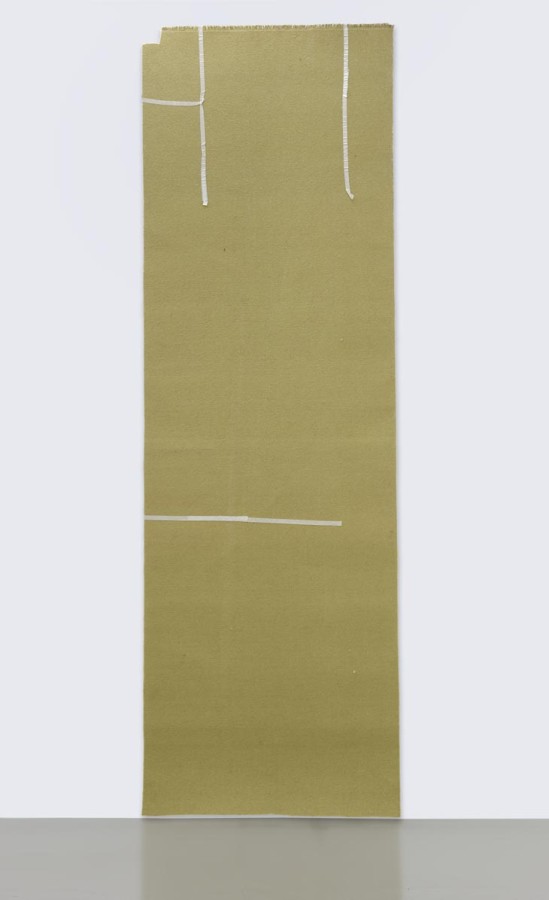
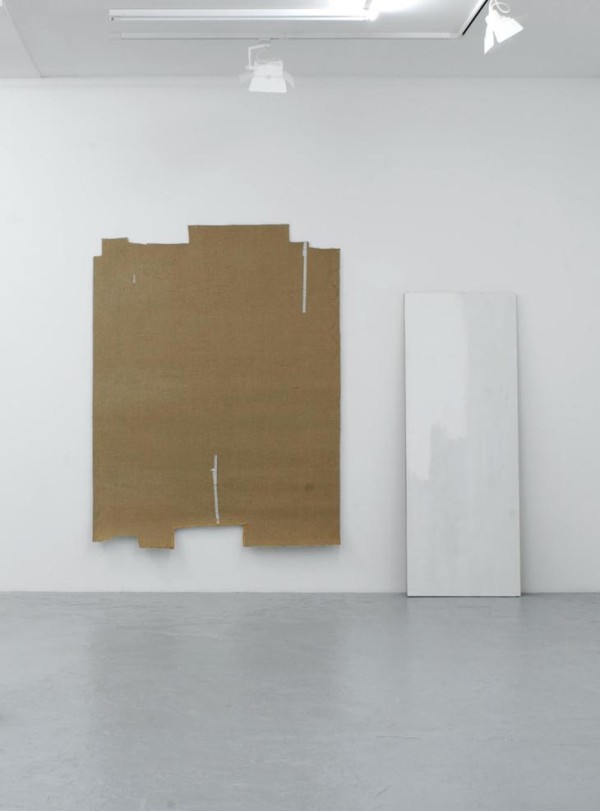
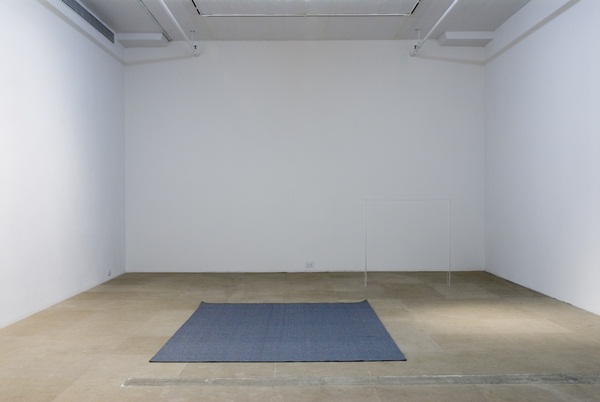
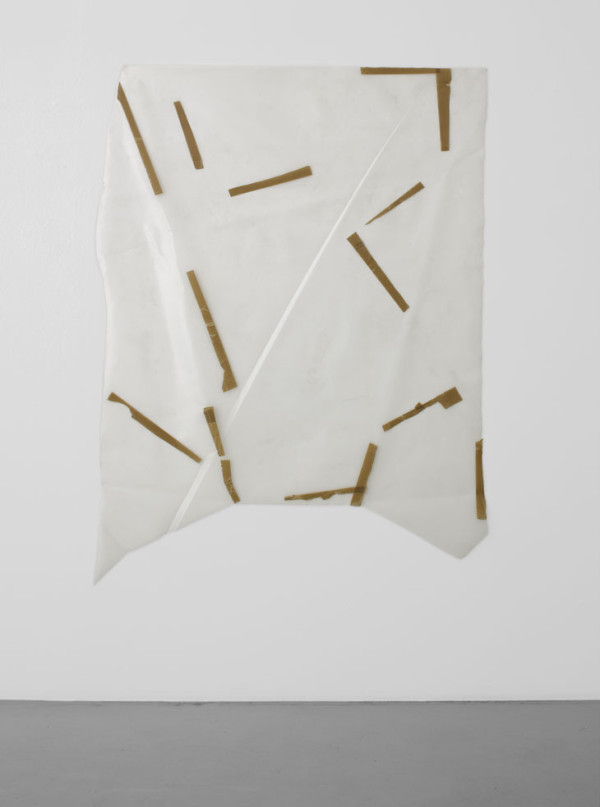
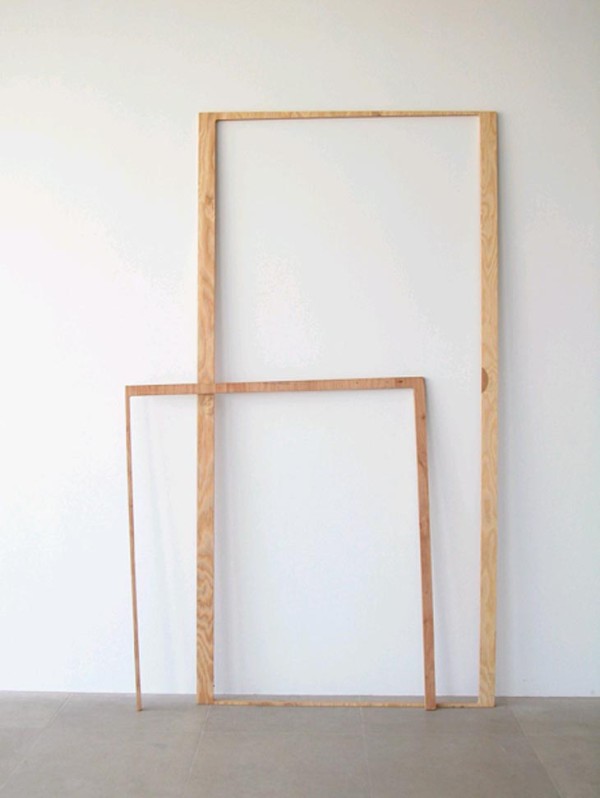
Gedi Sibony
Work from his oeuvre.
“With his sensitive handling of hollow-core doors and commercial carpet, Gedi Sibony is one of several young Biennial artists doing exciting things with sculpture. “I have a family history with these materials; my father was a contractor,” says the 32-year-old New Yorker. His playful transformations of crude elements—like foam insulation surrounded by silver-painted twigs—have led critics to compare him to Richard Tuttle, though he’s also inspired by Bruce Nauman’s early sculptures and Rauschenberg’s Combines. In 2004, Sibony made his solo debut at the Lower East Side gallery Canada; since then, he’s made ArtReview’s list of top emerging artists and turned up in group shows all over town. “He has an eloquence in his economy of means that is really exceptional, especially in New York, where there is a lot more bombastic work,” says SculptureCenter curator Anthony Huberman.” – New York Magazine
Tags: construction, materials, minimal, sculpture
Posted in Uncategorized | Comments Off on Gedi Sibony
Friday, 14 February 2014

Nora Schultz
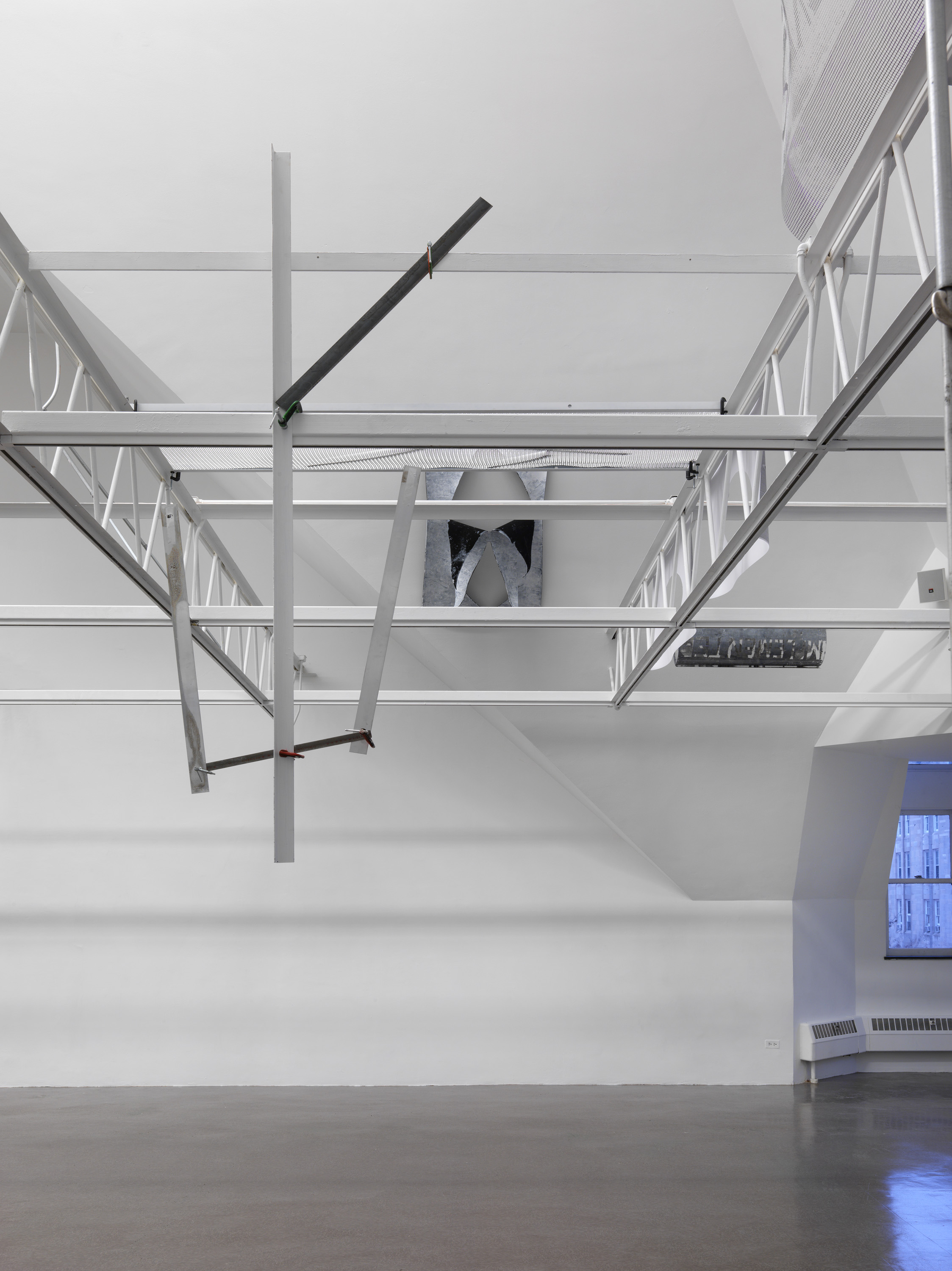
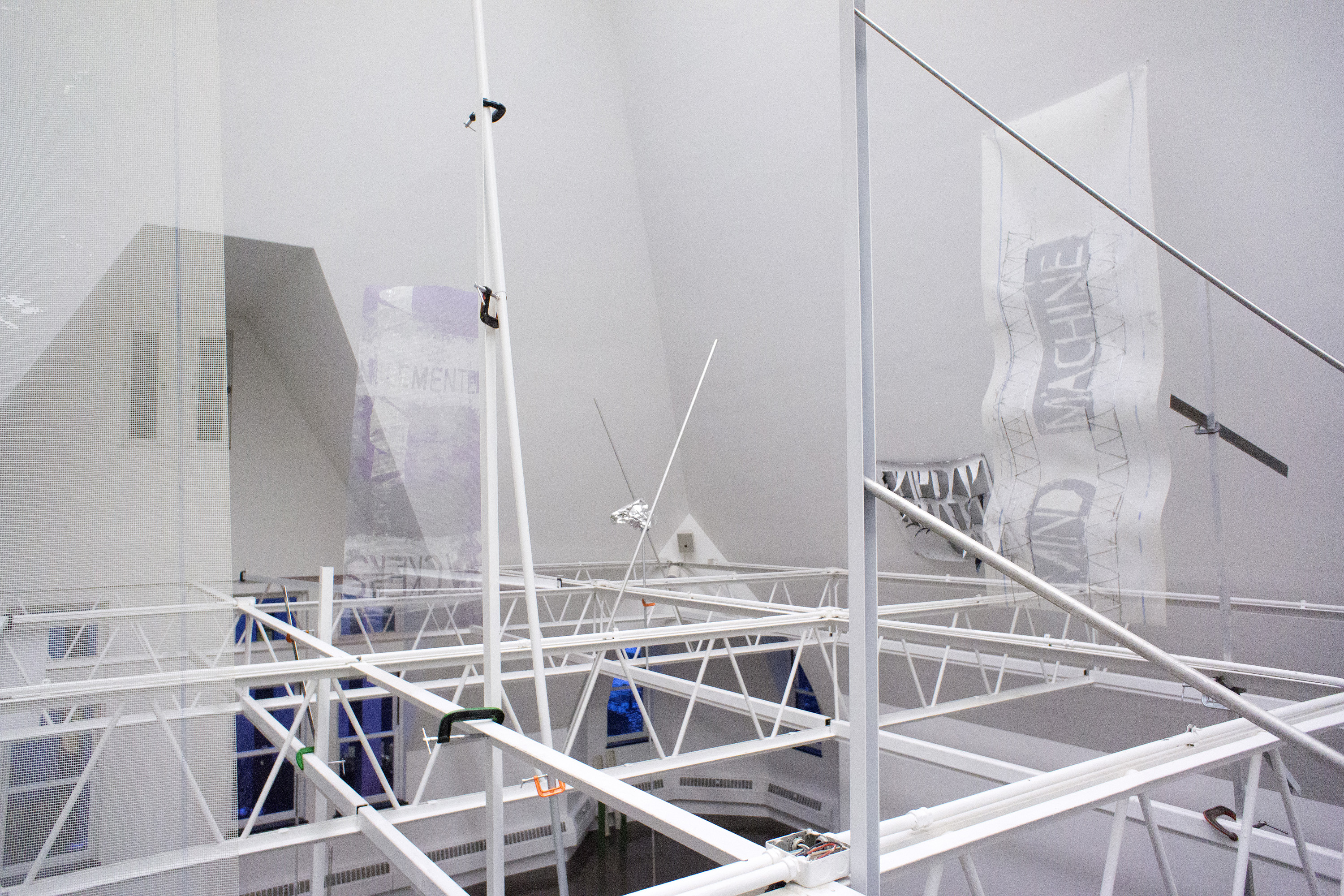
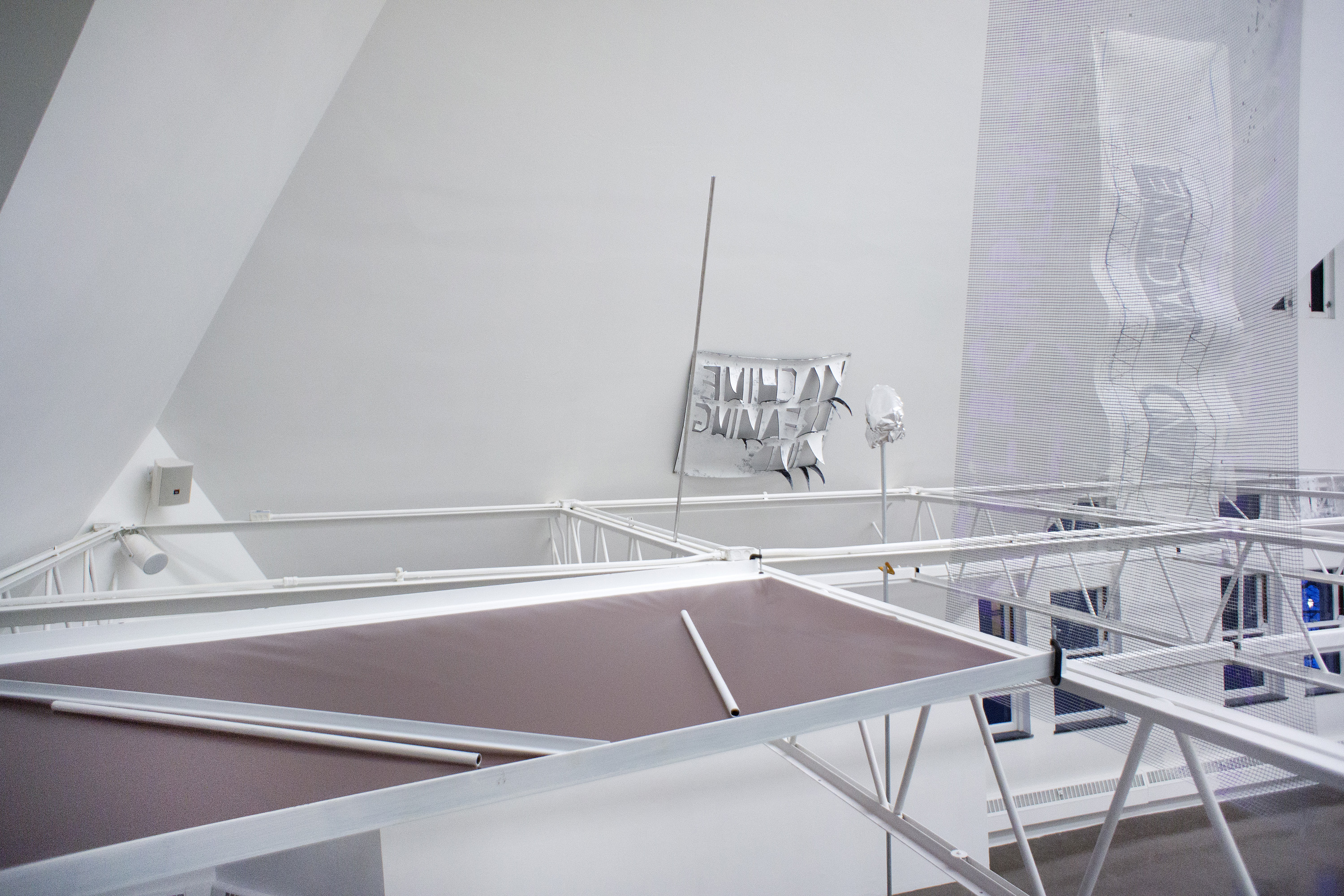
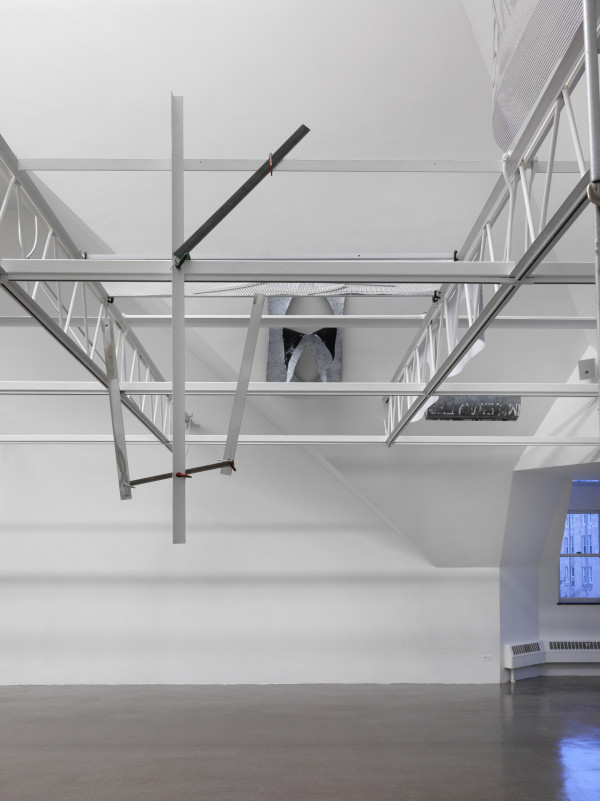
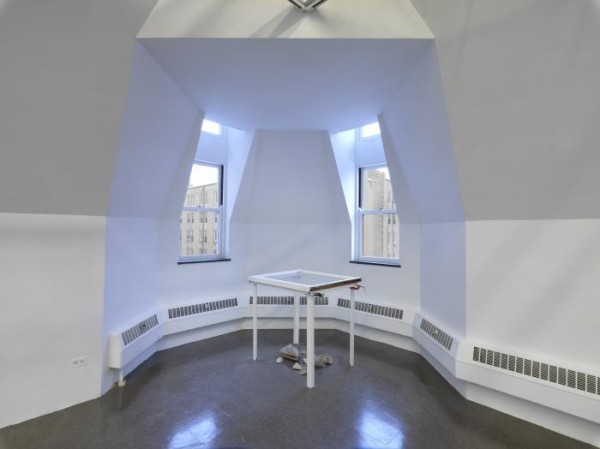
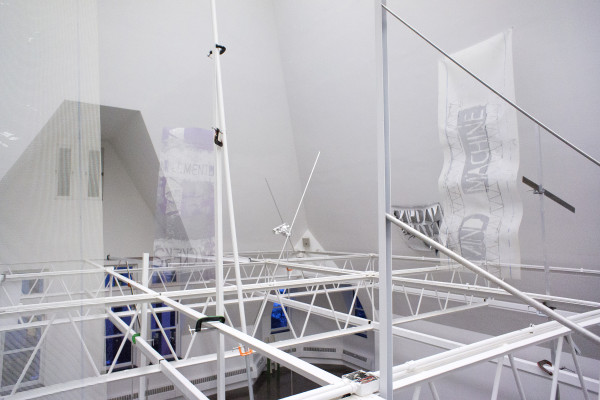
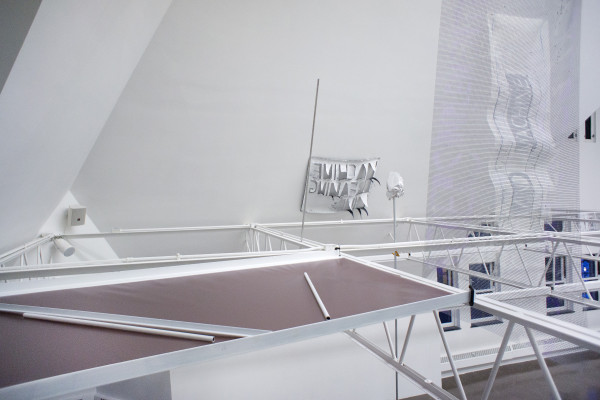
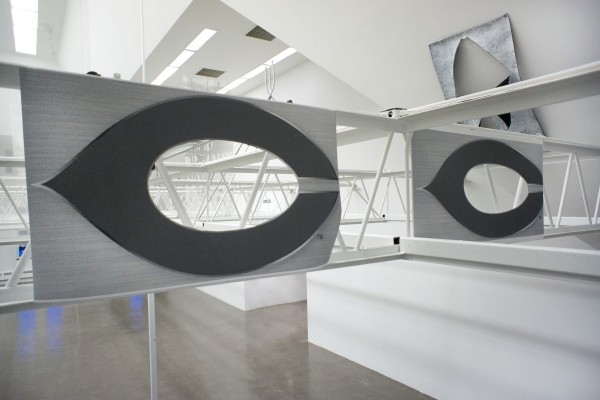
Work from parrottree-building for bigger than real @ The Renaissance Society
“The Renaissance Society presents a solo exhibition of new work by Berlin-based artist Nora Schultz from January 12 to February 23, 2014. This is Schultz’s first solo museum exhibition in the United States, as well as the first show curated at The Renaissance Society by new Chief Curator and Executive Director, Solveig Øvstebø.
Assimilation to environment defines Schultz’s artworks from their genesis. The artist sources the materials she works with by scavenging around the site of exhibition. In this case, she manipulates found objects pulled from, among other places, the hardware store, the Renaissance Society basement storage, and a newspaper read during installation. She frees these “things” by disassociation, estranging them, removing them from their context so they can become: forms, colors, lines, themselves. The installation transforms these objects once again; in the gallery, her works layer themselves and each other, fully taking advantage of three dimensions, constantly redefining their parts in relation to one another. Elements stand, hang, and print on one another; each piece frames another, reweights another, depends on another. Language then intrudes: Schultz’s titling, her statements in interviews and conversations, the ephemera (posters, texts) she releases alongside the exhibition, and the words written on the things themselves, subject them to external references, altering their meaning ever further. And then, of course, there is the work’s reception throwing everything into new relief yet again. In this way, the artist suggests an art that is a predicament, a shifty, evasive, and radically unsettled state for a group of transitory objects and ideas. This work is ‘finished’ when it is shown, but only at that moment, in that place; everything will finish again and again.”
Tags: berlin, C clamps, chicago, found objects, rafters, The Renaissance Society
Posted in Uncategorized | Comments Off on Nora Schultz
Thursday, 13 February 2014

Michael Sellam
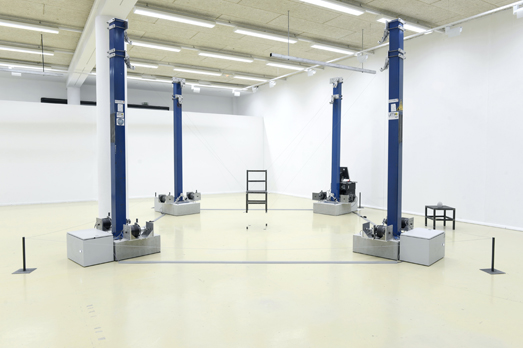
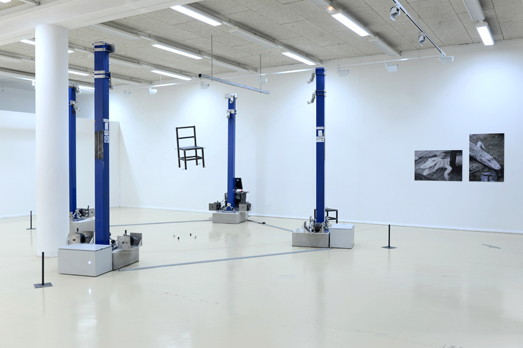
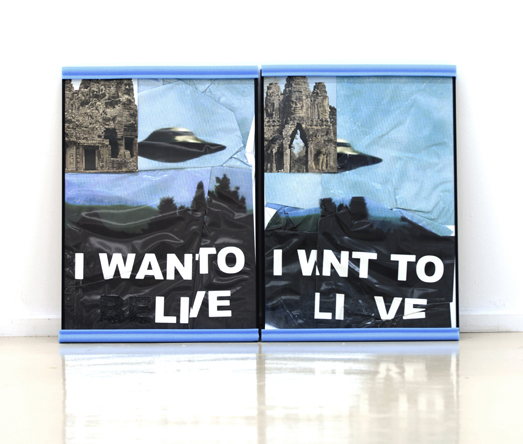
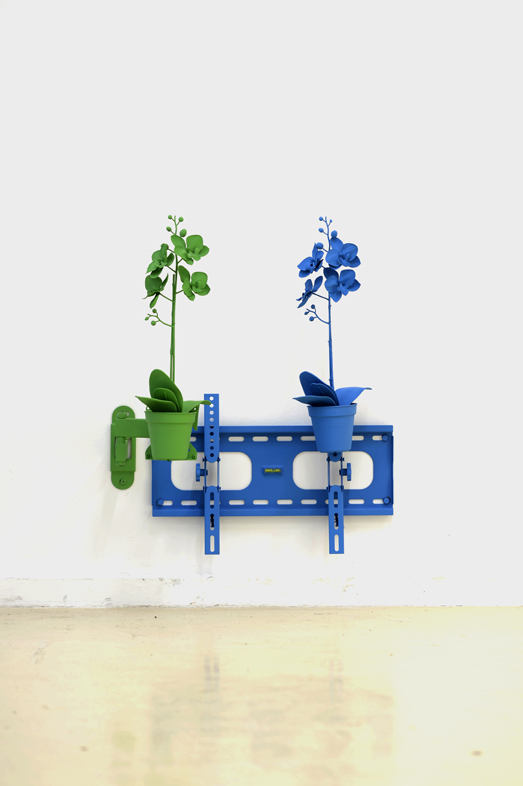
Work from Science, fiction, culture, capital.
“Our civilization develops a logic of contingency, the possibility for each thing to be different. How the notion of matter is open to an economy and a thought shape at a time when everything is programmable ? Experience through art Relations tensions between science , fiction, culture and capital development , in fact, some artifice. there is may be necessary to produce a new aesthetic that is neither representative nor abstract or conditional , but constitutes a time when, more than any other , we build a world which includes our demise as a possible and coexist or chaotic forms and ordered traffic : ideas, forms , atoms, energy, genes, information .
The exhibition is conceived as a heterogeneous group which deals , among other things, flowers, tensegrity , sexual differentiation , casting hard drive , smoke, aliens, roundtrip , garment Egyptian strings, panels twin cork , forest impossible, intensive an extremely slow machine and albino alligators programming.” – Michael Sellam translated via Google.
Tags: capital, chair, dynamic, french, gravity, science
Posted in Uncategorized | Comments Off on Michael Sellam
Wednesday, 12 February 2014
Tags: chicago, data, intangible elements, simulated realities
Posted in Uncategorized | Comments Off on Only Real
Tuesday, 11 February 2014
Ken Okiishi
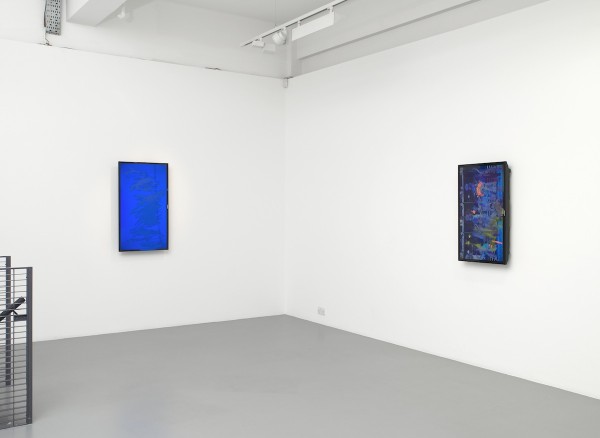
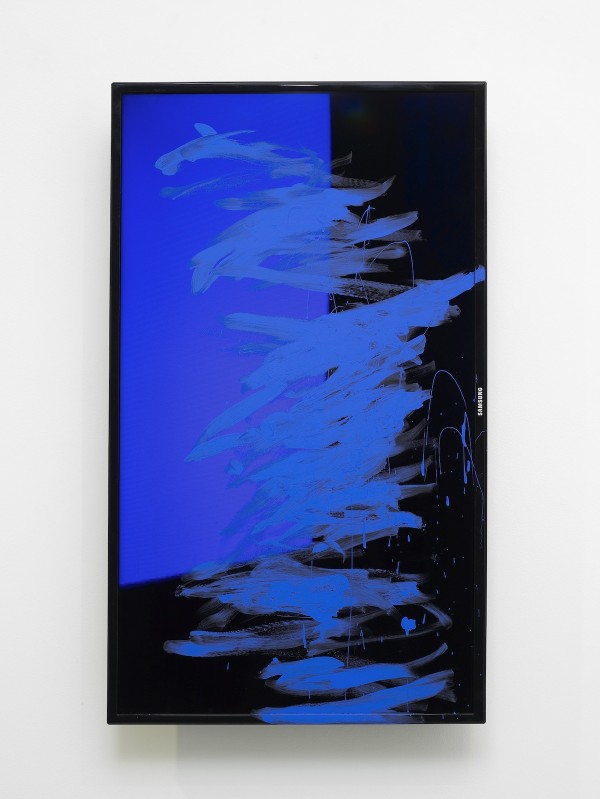
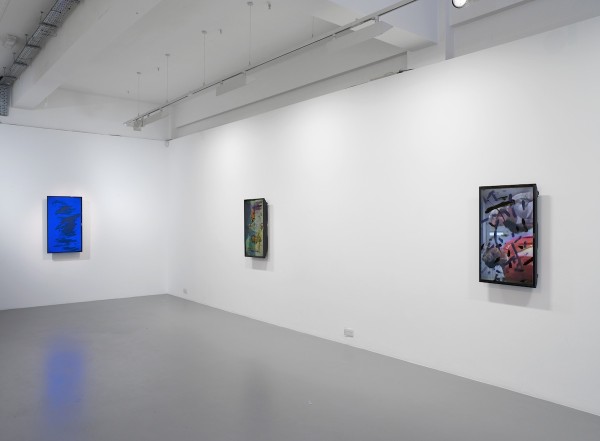
Work from “Gesture/Data” at Pilar Corrias, London.
“Ken Okiishi takes up and troubles the vocabulary of the media that he uses. His works hover over and within the relationships between matter and memory, perception and action of a digitally networked culture. Using video, performance, and installation he creates moments when language and images begin to fall apart. As Okiishi subverts the material claims of the media, the glitches that occur illuminate spaces for the production of something other than what has already been.
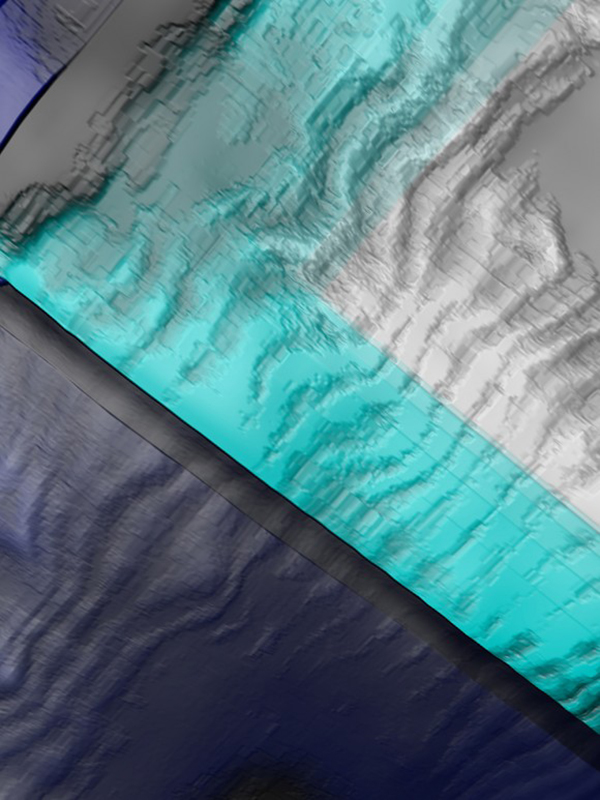
For gesture/data Okiishi brings together a new set of HD flatscreen television works and wallpaper. The series gesture/data considers the formal properties and the traces of sources of stored memory, along with the new ways we have of reading memory and images through gestures. The video layer of the flatscreens contain two types of footage, the first being old home VHS tapes of recorded television shows that Okiishi has corrupted further by re-recording over parts of the tape with new digitally broadcasted television. The general breakdown of the magnetic particles in the VHS tapes, combined with the transfer of the footage to USB for playback, has resulted in a glitchy, colour-rich layer of video that jitters between 1990-present. The flatscreens themselves become an abstract support surface that hovers between the VHS footage and the interference paint, which Okiishi applies directly on the screen while the video is playing.
In the second type of video footage Okiishi looks at moments of rupture, in being and language, of a space that is a digital void. The video is a HD recording of a BARCO TV screen running a standard blue void as it fails to register a signal from a media input. As the camera scans over the screen the proto-pixels of the monitor fly out and hover in “honeycomb” formations of various intensities, qualities, and ranges of blue. Adopting the cinematic/video technique of chroma-key or “green screen” Okiishi paints over the blue video in chroma green and blue paints—a gesture that brings the digital void further forward to the support surface of the flatscreen.” – Pilar Corrias
Tags: gestural, london, painting, pandigital, screens
Posted in Uncategorized | Comments Off on Ken Okiishi
Tuesday, 11 February 2014
Juliette Bonneviot
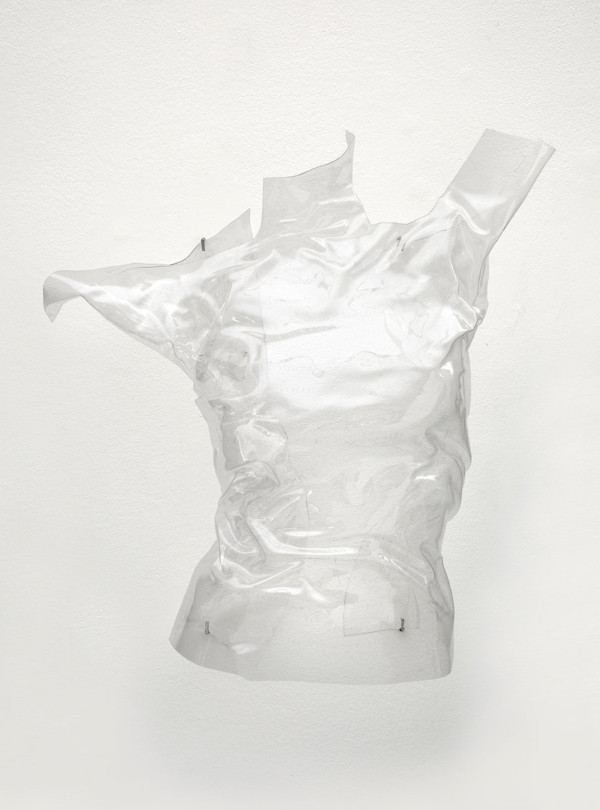
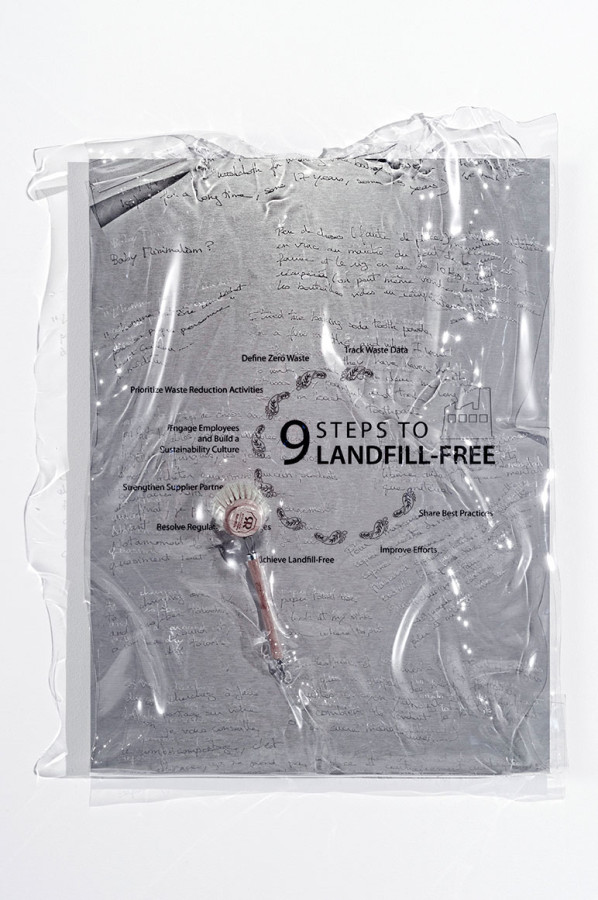
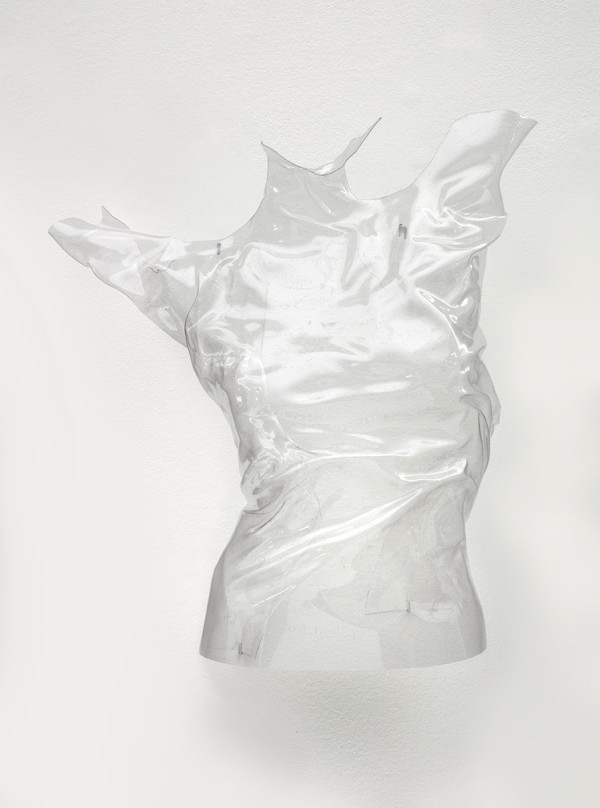
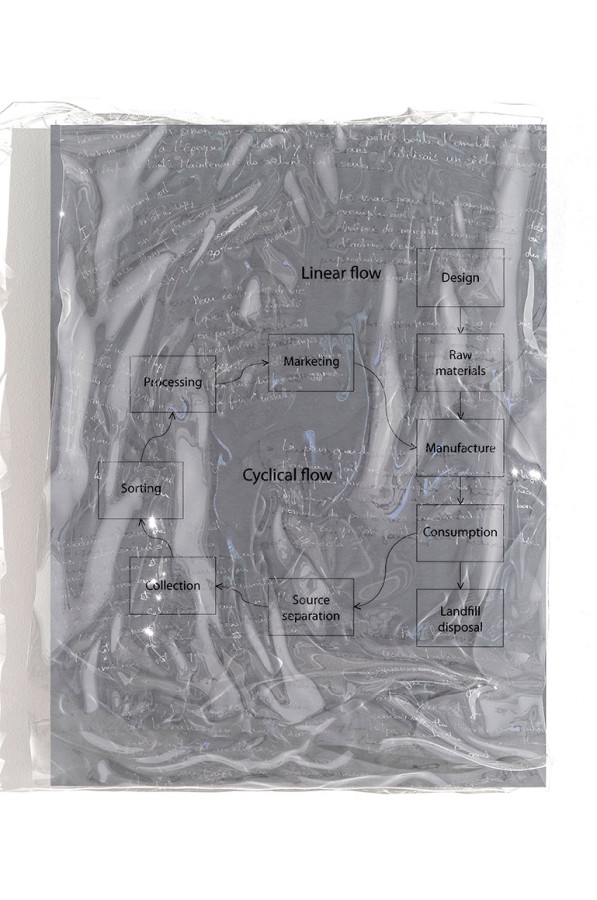
Work from Jeune Fille Minimale
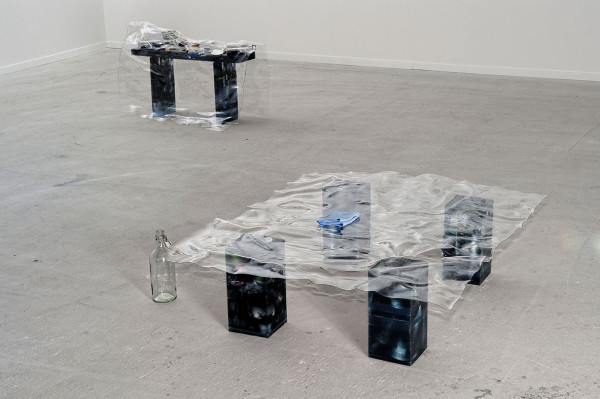
“The project is based around the relationship between an eco-Housewife and the waste produced in her daily life. The character in my story is called Jeune Fille Minimale, and is obsessed with using industrial environmental strategies to run her household. The project was inspired by an Internet community of housewives who have adopted the industrial strategy of Zero Waste, ranking their consumption of household goods so as to reduce the amount of waste they produce. The project tells an ecological story, in a way that aims to be as close as possible to reality. Here there is no “green” aesthetic. Instead, I try to place myself in a sort of “dark ecology, “ as theorised by the writer Timothy Morton. “The form of dark ecology is that of a noir film. The noir narrator begins investigating a supposedly external situation, from a supposedly neutral point of view, only to discover that she or he is implicated in it. The point of view of the narrator becomes stained with desire. ( … ) The ecological thought includes negativity, irony, ugliness and horror.” Timothy Morton, The Ecological Thought. The experience of the housewife transports her onto a larger scale than that of her household and her possessions. This sensation is very disturbing, not because this world is exterior and strange to her, but because she realises that she, and her behavior, are integral parts of it. In fact, waste becomes the typical narrative figure of the stranger that is so common to romantic literature. This stranger then becomes even stranger, the more the housewife tries to understand its nature; the more she senses the extent of her own ecology, the more she is drawn to him.
[…]
While adopting the same characters, I decided to combine several narrative forms, thus providing myself with a tale on several levels. There is the main story, which is fictional. But this fiction becomes almost documentary, because it includes references to the web community of housewives, which was the initial inspiration for the story. I have copied down notes and comments directly from the forum discussions of the housewives. The Minimale Jeune Fille thus reports the stories of these housewives. I also chose to include myself in this story, giving it an autobiographical aspect. I’ve followed all the housewives’ advices to reduce my own waste. I used any plastic waste that I could not reduce in the production of my own work. I became the eco-Housewife.
[…]
In a sense, I’d like my story of dark ecology to speak about the transmission of knowledge. Knowledge and tacit memory are, in part, built up by the transmission of stories. I think that one of the strengths of narratives consist in their ability to modify human behaviours”
Posted in Uncategorized | Comments Off on Juliette Bonneviot
Sunday, 9 February 2014
Ditte Gantriis
Work from her “COMPANY”.
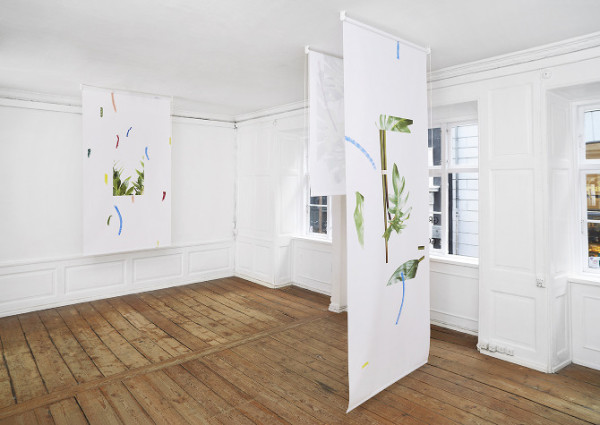
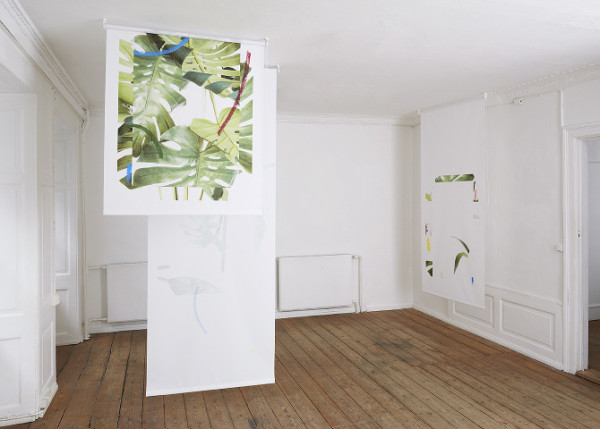
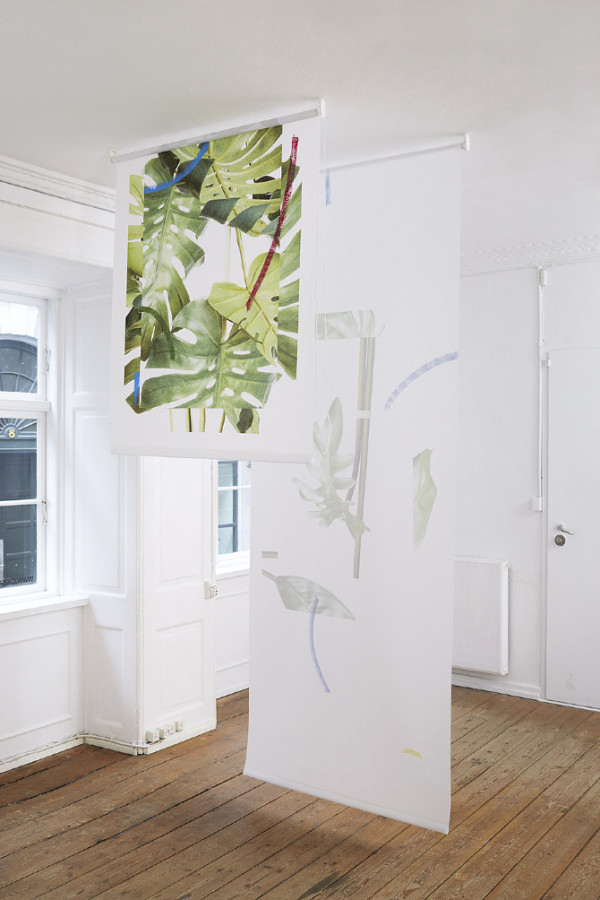
“The five large collages are printed on long roller blinds, and all combine both digital images and hand-drawn elements. The blinds have been installed spatially in Green is Gold’s exhibition space – a once inhabited apartment – and are thus separated from their original function.
The collages consist of fragmented images of various houseplants collected from online shops, lifestyle blogs etc., whose purpose is to guide us to safe home-design solutions. However the grainy images also evoke enlarged close-ups of the kind of photographic decorations made familiar from franchise coffee shops and restaurant chains or advertising banners from shopping centres and airports. The prints are layered with painterly gestures that, despite their analog quality, seem to reflect the inherent materiality of the digital images.
Whether the severely pruned living room plants are real or fake is difficult to tell. The difference appears insignificant and is perhaps of no consequence since both serve the same purpose: to furnish living spaces with pleasant ambience. The blinds are installed in such a way as to lend the two-dimensional surfaces physical form, which again creates a persistent presence. Something similar applies to the somewhat comical and strenuous soundtrack, which in its cheerful and digitally sounding way attempts to keep the collages company.
With COMPANY Gantriis asks pertinent questions about what keeps who company and vice-versa. What informs the exhibition, as its title also alludes to, is corporate and anonymous design. This aesthetic is the very opposite of the personal, yet it is perhaps exactly what keeps us company in our private and personal spaces.”- Green is Gold
Tags: commercial aesthetic, danish, leaves, print, scrolls
Posted in Uncategorized | Comments Off on Ditte Gantriis
Saturday, 8 February 2014
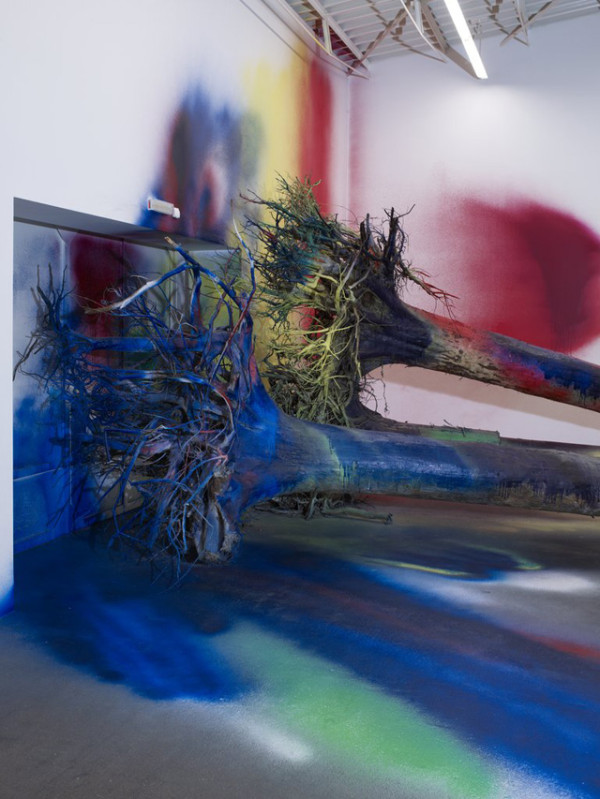
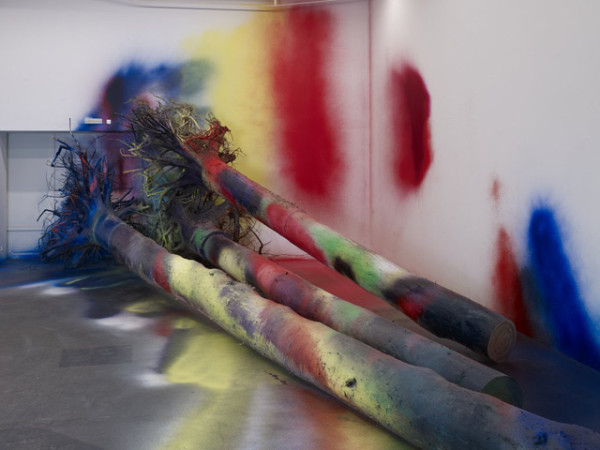
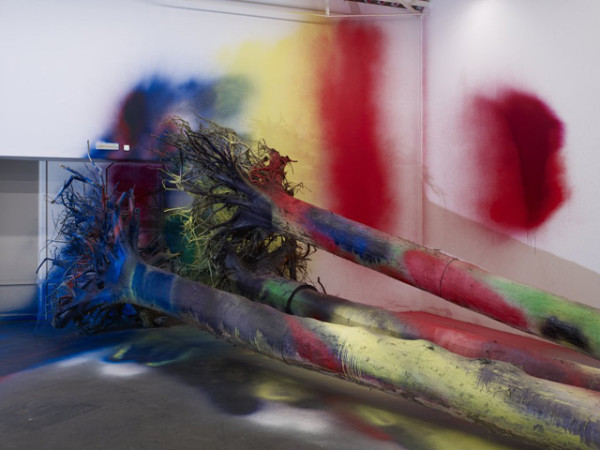
Katharina Grosse
Work from I Think This Is a Pine Tree at KHB.
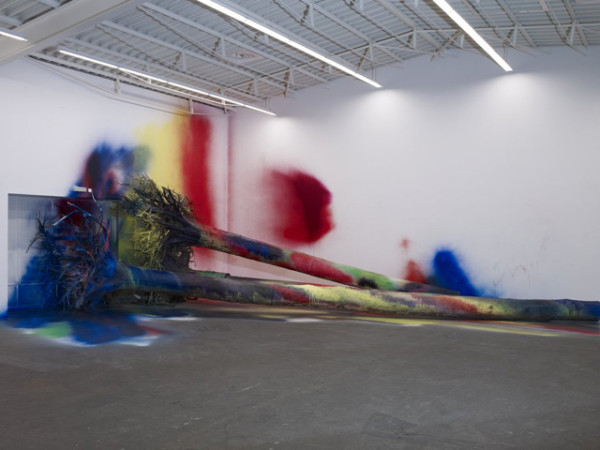
“In a large room, three tree trunks lie haphazardly in a pile at a slight angle to the wall. They have been stripped of their branches and bark but their roots remain intact, awkwardly protruding into a closed doorway. The trees along with the floor and wall of the museum have been doused with an energetic — if not defiant — series of gestures of brightly colored spray paint. The piece, “I Think This Is a Pine Tree” (2013), by Katharina Grosse at the Hamburger Banhof Museum for Contemporary Art in Berlin was a jolt to my system. Like any discovery of an uprooted tree, Grosse’s piece is familiar, while taking on its own immediate dramatic presence. It contains recognizable elements — gestures evocative of Abstract Expressionism, an application reminiscent of graffiti — but the work is not merely a mix and match of previously explored territory.
“I Think This Is a Pine Tree” delivered a sensation often sought by any visitor to a contemporary art museum. Goosebumps formed on my neck and blood pumped to my limbs causing the urge to run, skip, and jump around in a fight or flight response of viewership. My ego was having none of it. “Come on you’re in a museum. Yeah, you came here searching for this very feeling but play it cool. You are an educated adult for god’s sake! Go read the description, look ponderously at the piece, and start figuring out why it made you feel this way. Spread your response out over time; mix some delayed gratification in with work. Maybe write something about it. Just do not hurdle those tree trunks!”
Traditional Abstract Expressionism is often applied (and I say this as someone who painted in an Abstract Expressionist style for some years) through pushing paint, building on blank canvas and other paint. The physical structure and texture of an Ab-Ex piece is often redefined by the medium itself. Ab-Ex artists have broken the picture plane, cut through the canvas, exposed the stretcher bars, even hacked them up but the plane almost always remains in a back and forth relationship with the medium, even if only referentially or antagonistically. Grosse is not painting outside the picture plane, because there is none. She is using spray paint exactly how it was designed to be used, to paint over something, to move without touching what is painted, free of friction. Spray paint evokes graffiti, but there is nothing approaching image or text in Grosse’s marks, nor is the piece framed by or directly responding to the architecture like graffiti often does. Rather, the floor, the wall, the trees are all fair game in coloring movements. The distinction between these structures is not necessarily ignored nor accentuated by the application of the paint. As a result, “I Think This Is a Pine Tree” manages to be a series of actions, despite its form as an installation, sculpture, and painting…” – Hyperallergic
Tags: fall, installation, khb, painting, pine, rad, tree
Posted in Uncategorized | Comments Off on Katharina Grosse
Friday, 7 February 2014
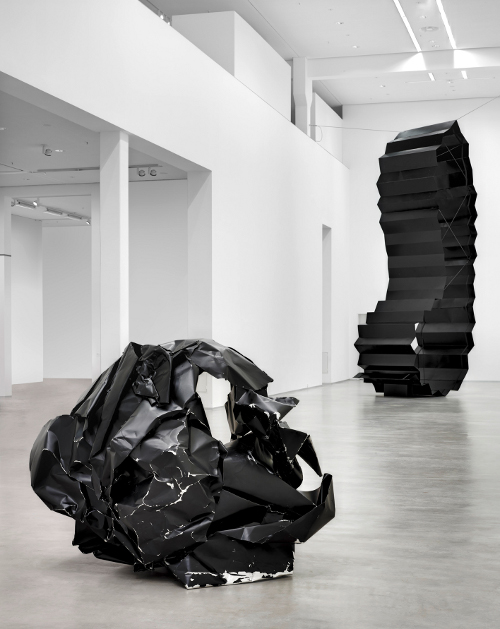
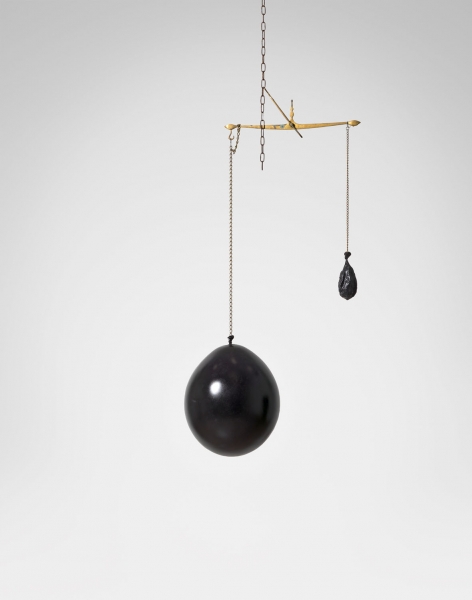
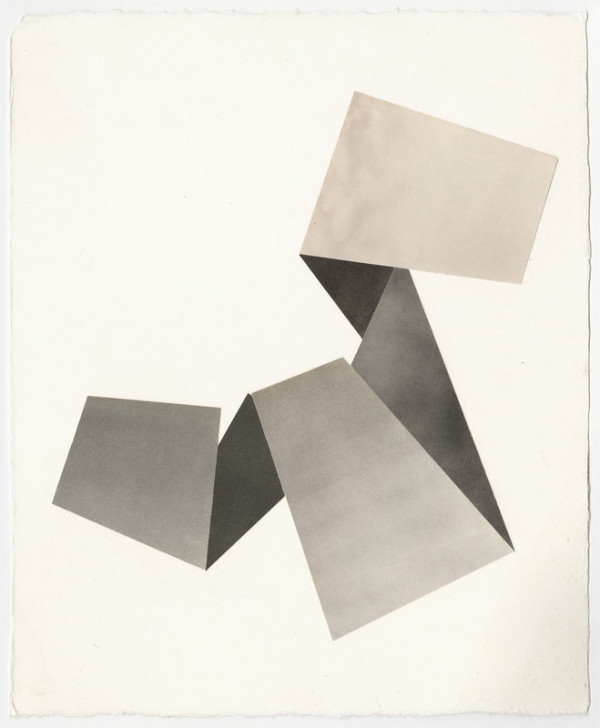
Katja Strunz
Work from Berlinische Gallery.
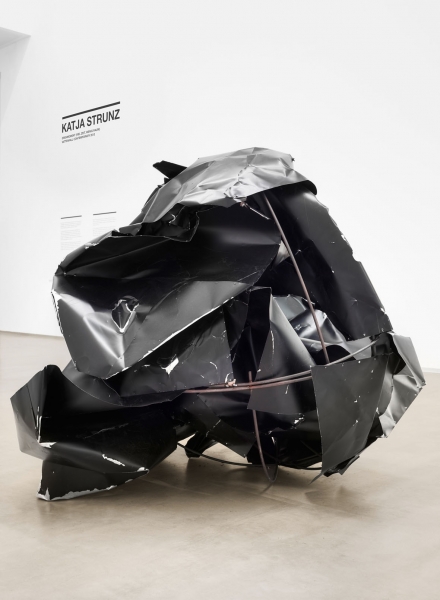
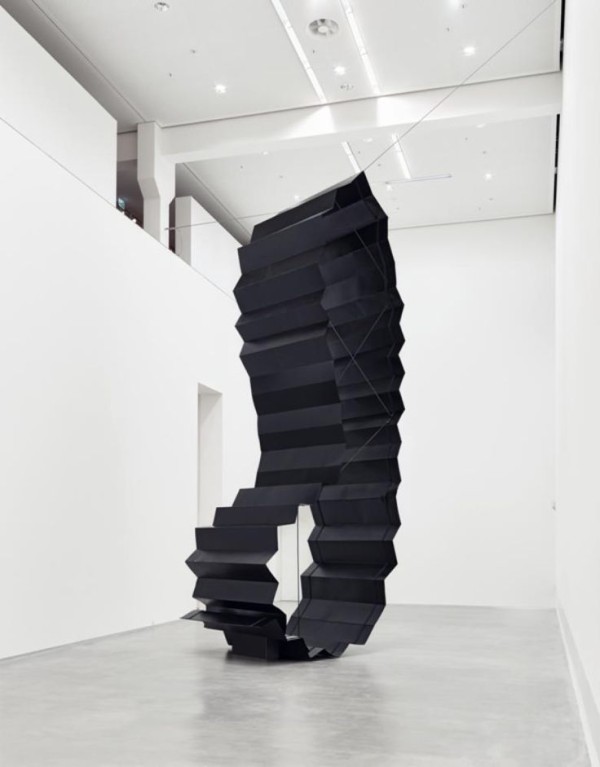
“…Four pieces, 3 sculptural works and one work on paper, whilst the curation of the show seems balanced, the necessity of having four pieces seems perhaps doubtful. The space is rightfully dominated by two large-scale sculptural works titled ‘ Tellurische Kontraktion’ and ‘Tellurischer Riemen’.
Tellurischer Kontraktion greets you on entrance into the space resembling a scrunched up piece of paper, its close resemblance to the everyday object allows us to imagine an aspect of movement and a closeness that is quite unexpected from blackened steel and aluminum. The piece, when unfolded holds the capacity of the exhibition space questioning notions of space and perception. The scale of the work allows the steel to, in itself achieve a successful execution of its own materiality whilst at the same time embodying the materiality and structure of paper.
Behind Tellurischer Kontraktion, commanding attention from the get-go is Teller Riemen, again, blackened steel, but this time the piece stands at a height of 8 meters, supported by a steel rope and an internal frame which gives the piece its form. Again this piece references the everyday object allowing us to imagine how the work would materially function yet in reality removing that function and creating a space in which to look at the formal in another context.” – La Scatola Gallery
Tags: balloon, berlin, floded, irl, metal, sculpture
Posted in Uncategorized | Comments Off on Katja Strunz
Thursday, 6 February 2014
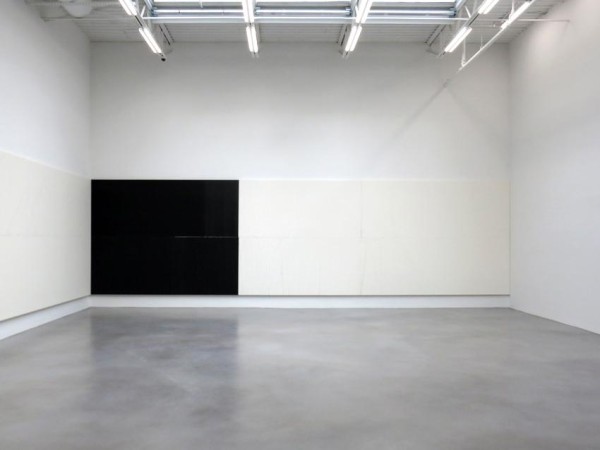
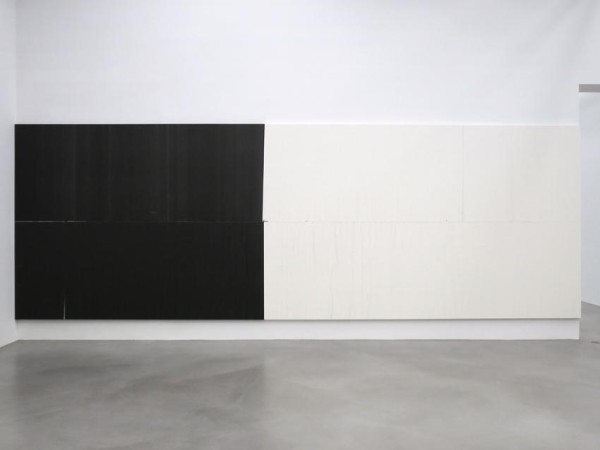

Wade Guyton
Work from his current exhibition at Petzel.
“In 2007 Guyton showed a series of black paintings made with his Epson 9600 printer and covered the gallery’s concrete floor with a facsimile of his studio’s plywood floor. This time he has made five new works on linen specifically for the gallery’s walls. Using the same digital file from 2007, but enlarged to accommodate a new printer’s increased width, they are printed with an Epson 11880. The ink is UltraChrome K3 with Vivid Magenta. The works are turned on their sides, hung horizontally and stretched to fit the gallery walls. Two of them are jammed in a corner…” – Petzel
Tags: black, dichotomy, digital, epson, painting, printing, white
Posted in Uncategorized | Comments Off on Wade Guyton