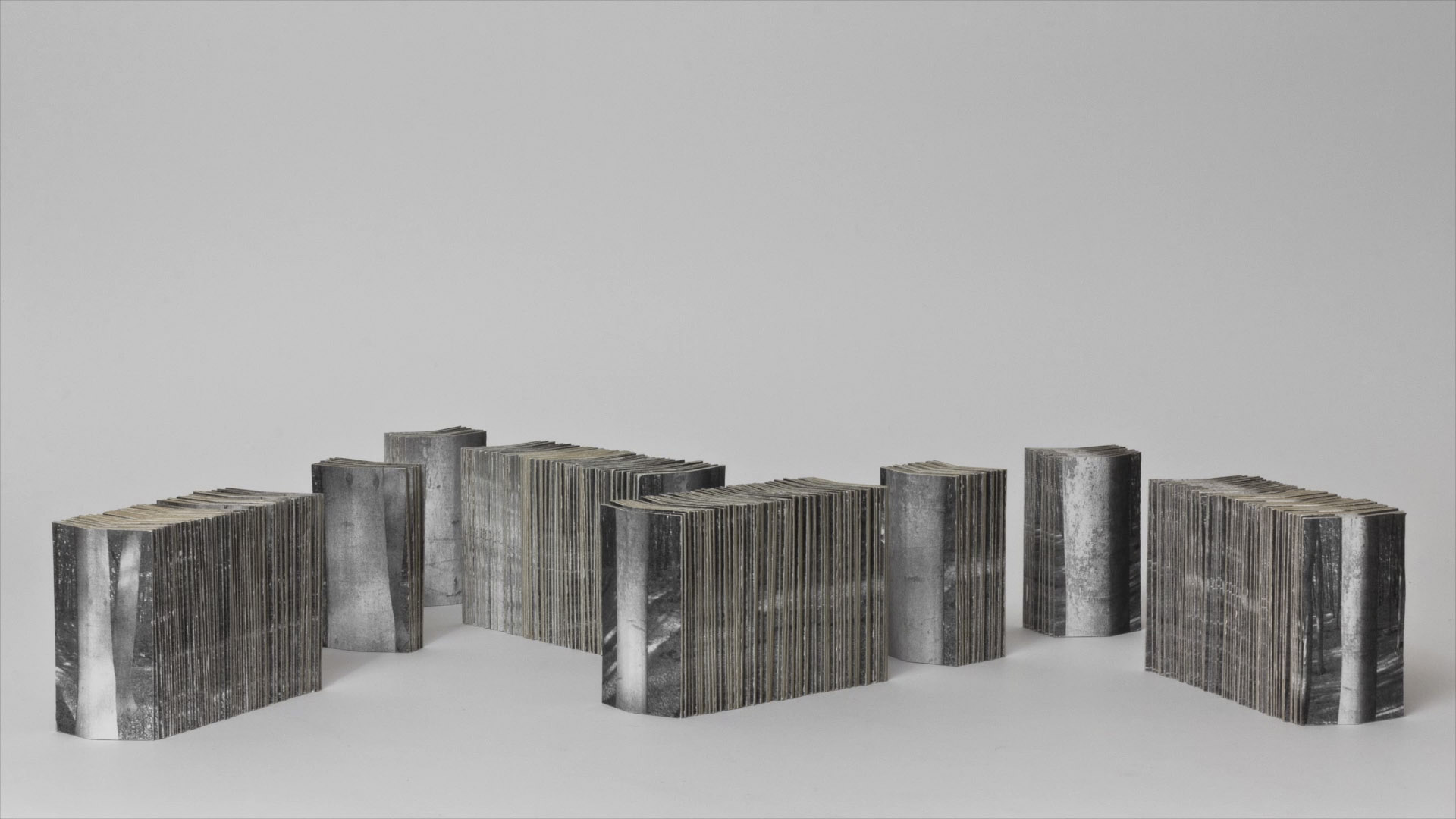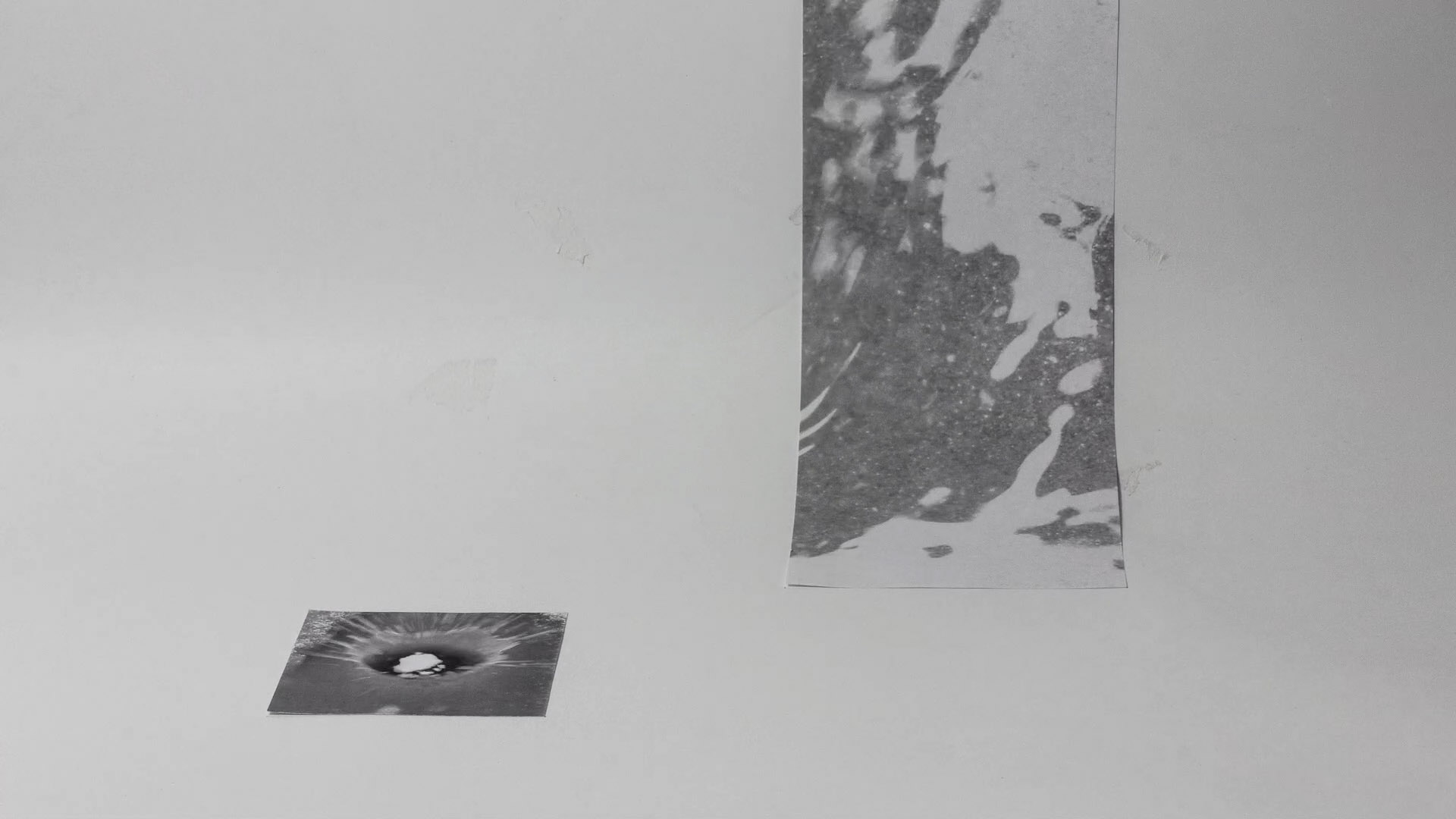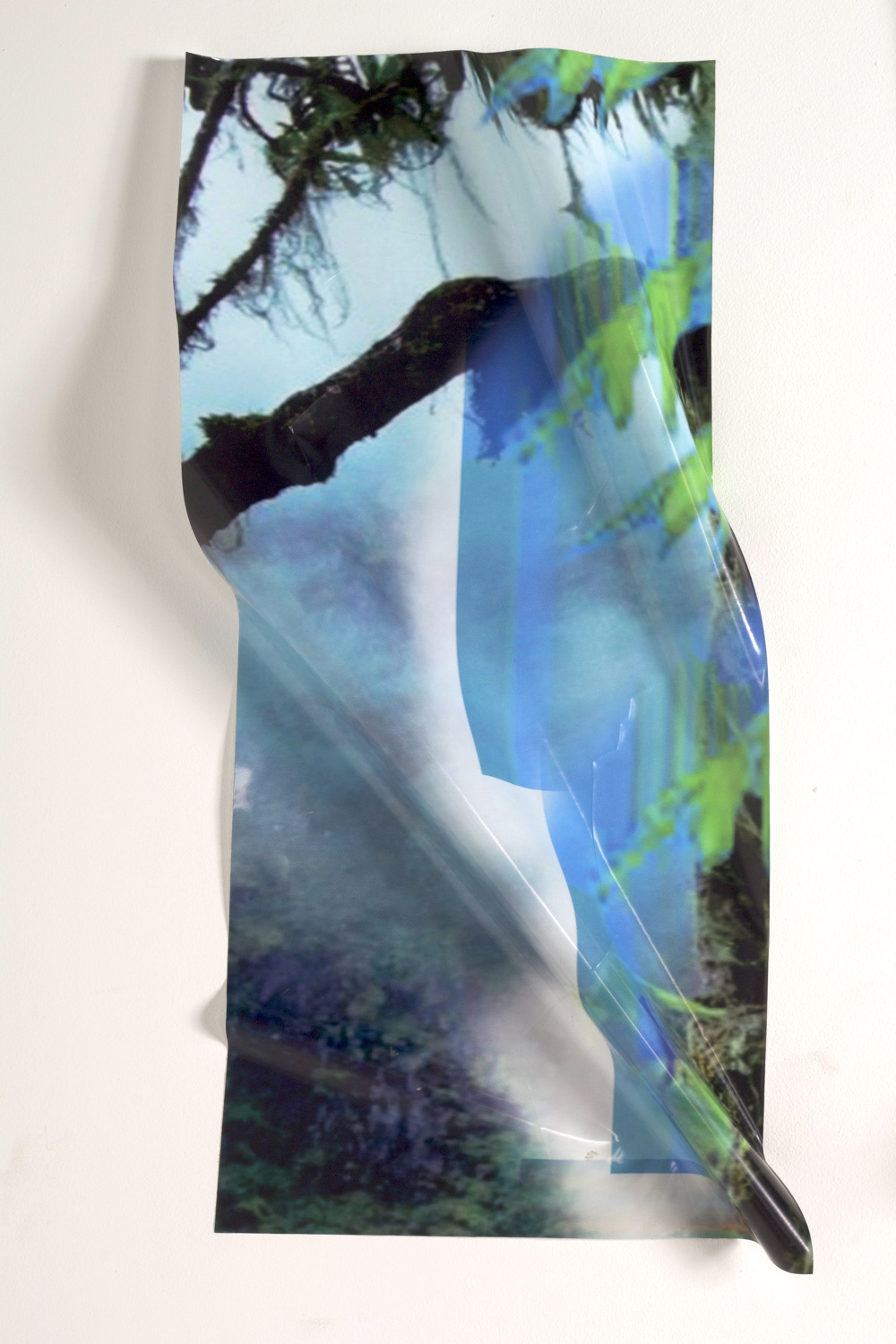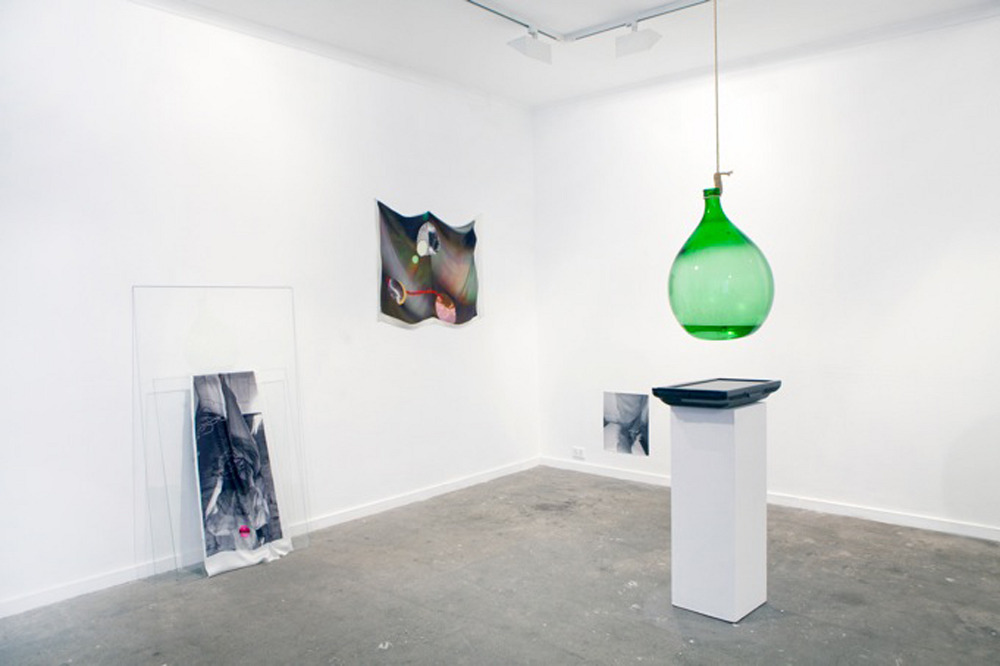
Olivia Erlanger

materialstudies6 materialstudies31 materialstudies3 materialstudies4 materialstudies7

Olivia Erlanger

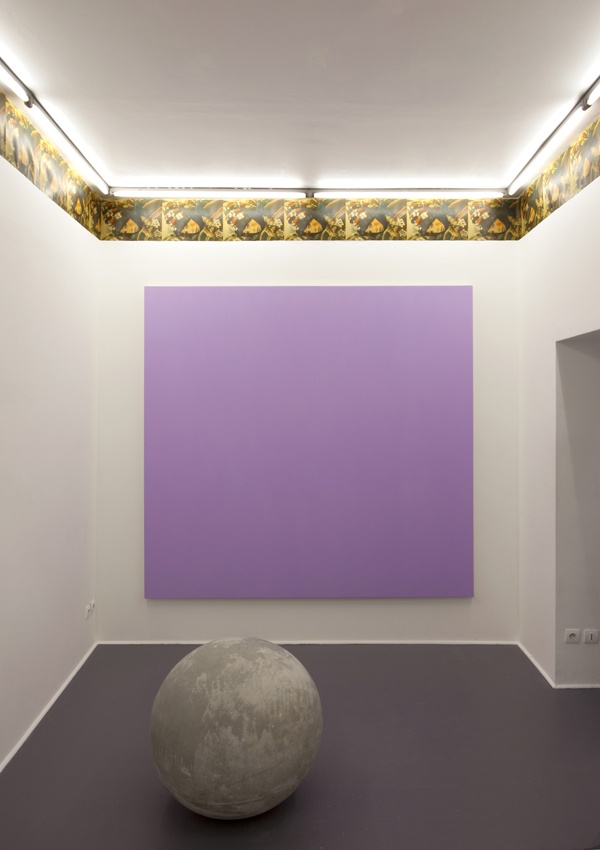
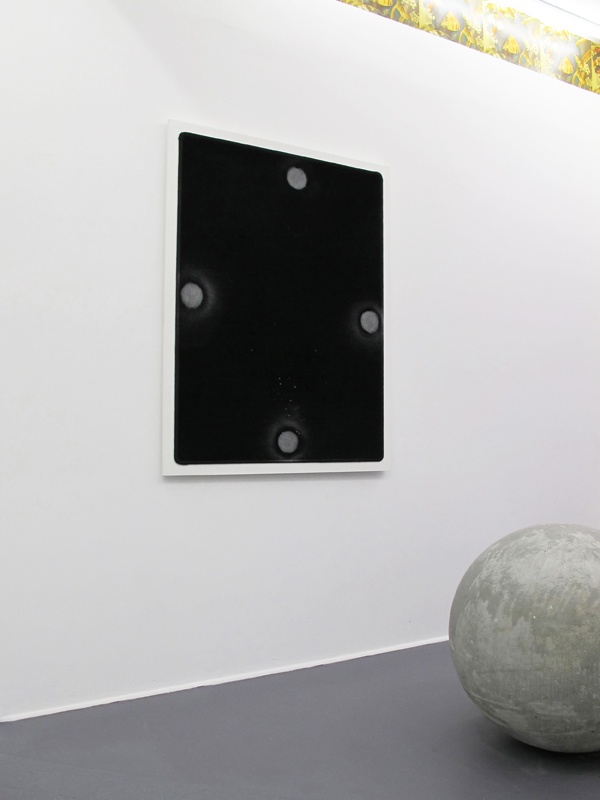
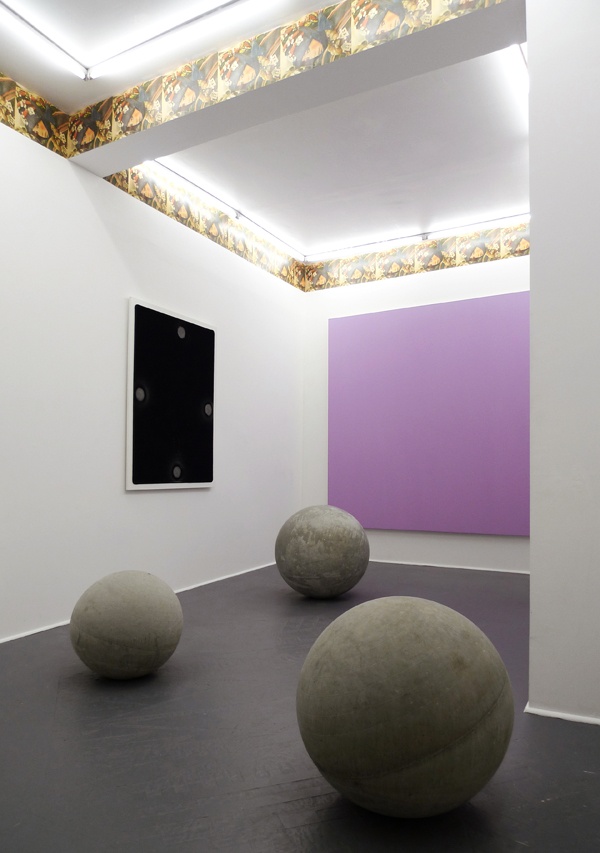
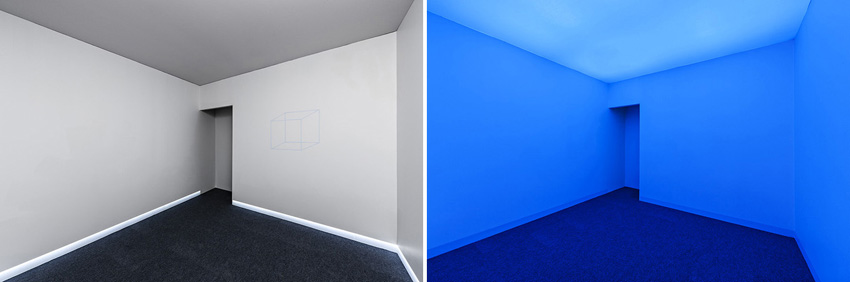
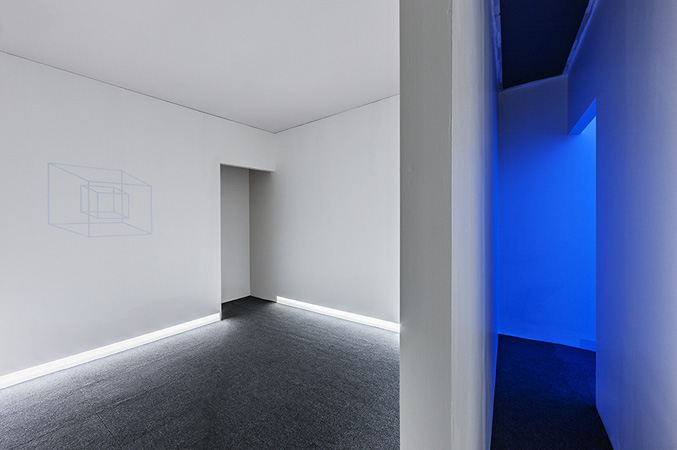
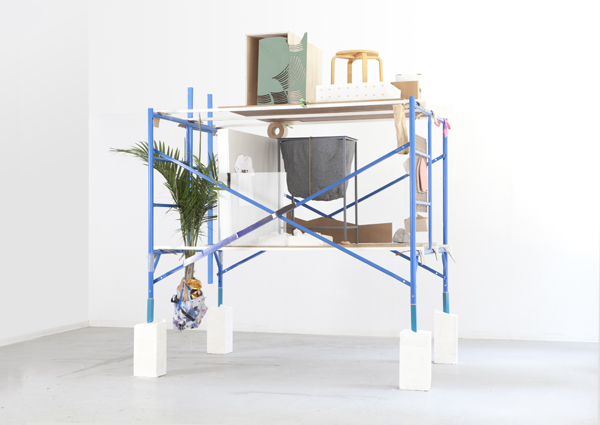
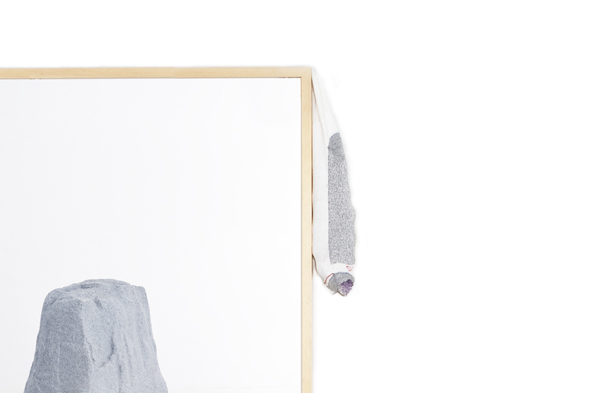
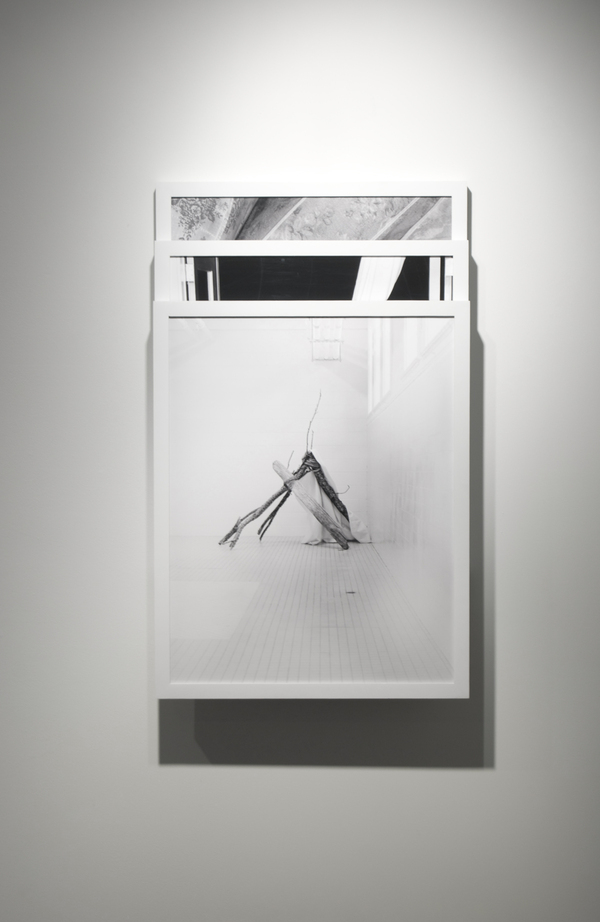
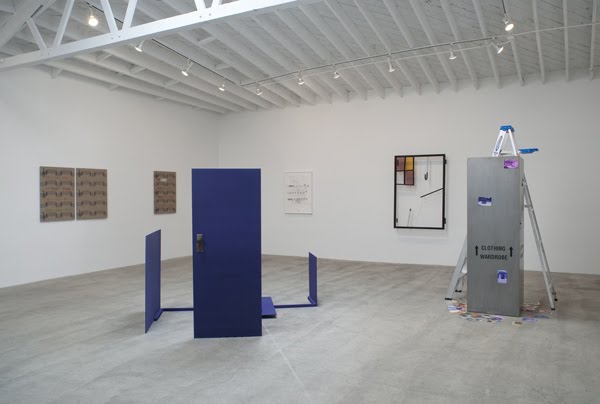
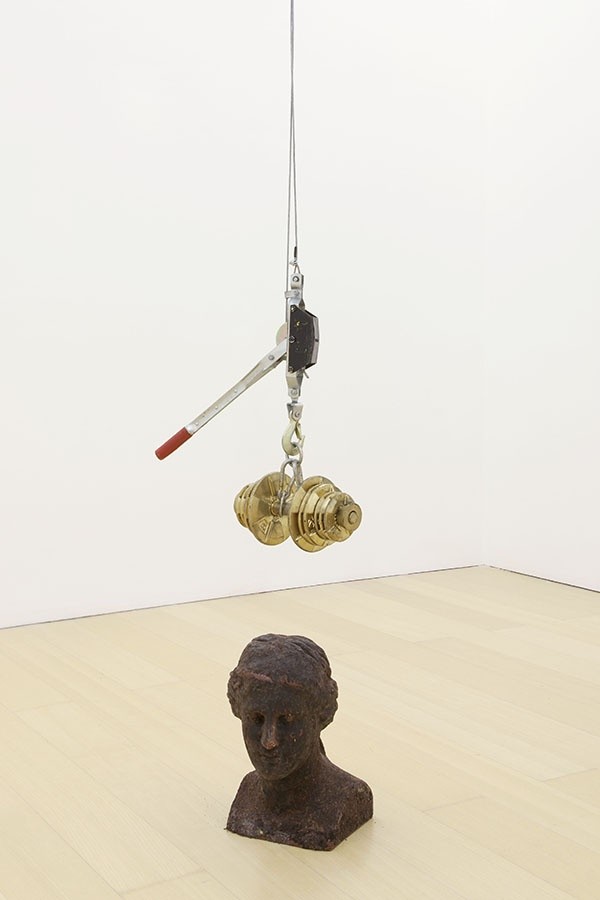
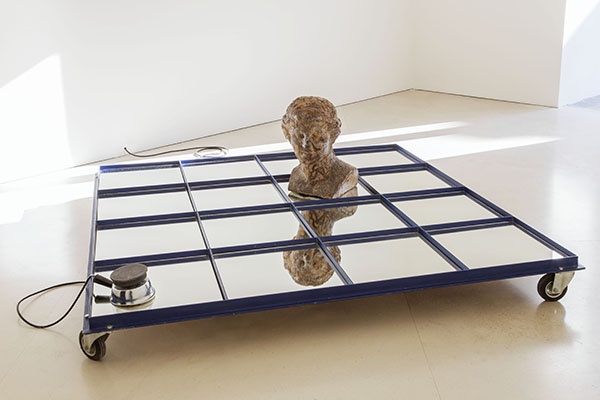
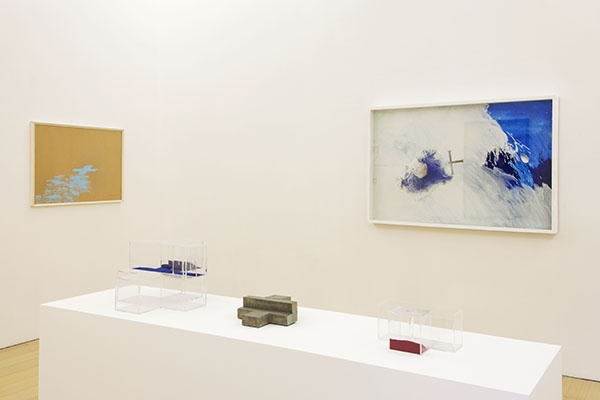
Work from Material Studies.

“Vivid, warm light fills the room and spreads over the desk as I sit and work at my computer. Daylight disappears slowly, burning, falling, bathing the Hudson River in washes of gold and rose. And while I am sure the sunset is spectacular, I keep my back turned, ignoring it.

The unavoidable connotations of relaxation, of love and romance, with fantasies of desert islands – it’s all too much. The natural sunset has become so saturated with meaning that it is impossible to tell the difference between the reality and it’s symbolism, or simulation.1

Like Dave Hickey’s experience of sunset over the Las Vegas Strip (as described in his essay Rhinestone As Big as the Ritz) my sunset over the Hudson River “looks bogus as hell.”

Hickey writes,

“…the question of the sunset and The Strip is more a matter of one’s taste in duplicity. One either prefers the honest fakery of the neon or the fake honesty of the sunset—the undisguised artifice of culture or the cultural construction of “authenticity”—the genuine rhinestone, finally, or the imitation pearl.”2

If the Sunset Strip is Hickey’s “genuine rhinestone”, then I’ve found mine in sunset calendars. Calendars are used to make sense of the infinite. By using imagery of the same diurnal event to represent the passage of time these calendars also reflect our wish to stop it.

The authenticity of the sunset calendar is in its shortcomings. In simulating the sunset through images symbolizing the daily experience, the event is abstracted from it’s phenomenal truth. But there is honesty in the abstraction and an acknowledgement of it’s own blatant fakery.

Similarly, the honesty of the “Double Rainbow” video by Paul Vasquez (aka Yosemite Mountain Bear) is in its own shortcomings. In “Double Rainbow”, Vasquez cries, laughs and screams, sharing his delight over capturing the double rainbow on camera. The recording is dim, gray, and shaky.  His genuine awe of the double rainbow makes the grainy video look even more unremarkable.

The failure to faithfully reproduce the double rainbow phenomenon is exacerbated by Vasquez ecstatic ramblings. The viewer does not take him seriously but rather laughs at the ridiculousness of the depth of his emotional response. But, as with my sunset calendars, the authenticity of “Double Rainbows” is found in its flaws – its failure in attempting to share the experience, to communicate a feeling, to capture the ineffable.” – Olivia Erlanger

Richard Healy

rowing-6 rowing-5 rowing-13 rowing-9 rowing-11 rowing-8 rowing-10 rowing-1

Richard Healy

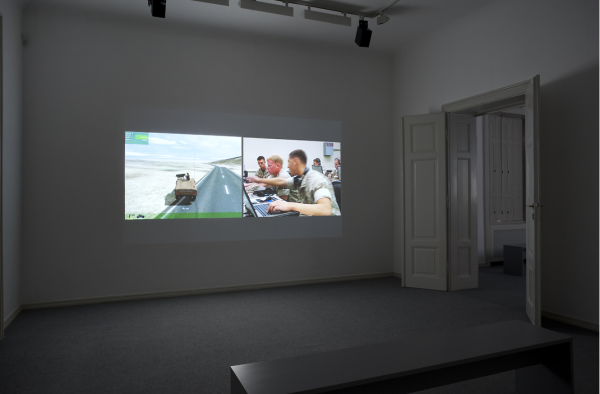
Work from Prone Positions

“Oliver Basciano: Your work, which encompasses sculpture, installation and video has this uncanny, unworldly feel to it. This perhaps stems from your use of digital animation in the videos works, which in turn affects how the viewer receives the tangible objects. Yet we should be more familiar with this aesthetic – we spend so much of our time working in ‘digital space’ – on our laptops, staring at our phone screens after all. What is your work’s relation to real world materiality? Much of your work seems a rejection of, or at least a critical investigation, of physicality.

Richard Healy: The idea of ‘materiality’ occupies a lot of my time. For me physicality has always appeared to be the result of ‘hard-work’ or ‘labour’. I would never say that I reject hard work, but I do investigate the idea of how ‘hard’ I am working versus how ‘productive’ I am being in the studio. I suppose this is a by-product of working with digital technology. I can sit until late in the studio being highly productive, creating thousands of high definition jpegs for a new film, however I am not working ‘hard’, my computer is. Again, I can make dozens of marks with a digital pen and in a few clicks these are transposed into chiseled strokes on a slab of marble. The computer allows for this hyper-productivity because it is divorced from the time constraints of physical material labour.

OB: How political is that mediation of labour for you? Marx said we were supposed to become freed through our labour, and then the Silicon Valley utopianists said we’d become freed from labour. Yet we seem to have become enslaved to our screens. I always think of video rendering as a great expression of that: the computer is doing the work, but it traps you, babysitting it. Or, more generally, maybe we’re the babies and the computers are looking after us. But perhaps you have a more optimistic outlook!

RH: Generally I have an optimistic outlook. My interest in labour is a result of the consistency of technology in our everyday lives, every moment is an opportunity to be productive at the hands of a laptop or smart phone. Is that liberating? I honestly do not know, I definitely find the speed of technology liberating, but you are right that more often than not it just frees more time to use more technology. To open another window or look at another screen.

Any political mediation would be on who owns this productive space. I use various online platforms through which I make my work – Tumblr pages, issuu pdfs, Vimeo uploads –these platforms obligate the user into a form of self-design or self-presentation. This is interesting I think. How we are so free with the idea of appropriation that we happily navigate the web projecting images of ourselves through the default settings of others. I realise the speed of the computer screen obligates me to work more, blurring the boundary between social past-time and real-time labour. However my optimistic side hopes that this blurring is a result of my satisfaction with producing work through this process. Not only can you produce effects quickly through a computer but in a second you can upload it onto the web to show the world. The act of courting attention in this way can have its trappings, however I view it as a liberating aspect that the computer screen has offered the art world.

OB: We can never fully reject materiality though, however much we spend our lives working with or within computer space, we’re still eating, breathing, moving objects in the real world.

RH: Yes and the work isn’t rejecting or ignoring that. It will always be rooted in the material world, so undoubtedly the idea of materiality is always present in my work. For example I have a collection of images of marble and other surface textures to render into films and prints. These materials are always placed out of arm’s reach however. They are suggested, described rather than realised. When an object does escape the gravity of the computer screen and I produce a sculpture, the choice of materials (mainly glass) echoes their digital origins. These choices were repeated in my last show where digital prints were mounted directly onto the surface of the glass frames denying any physicality of the paper, while trying to recreate the moment when I first saw the image on the computer screen.

OB: Perhaps a work you made for a show last year titled Vetiver connects that idea. You made candles scented with the smell of a Comme des Garcons cologne right? Whilst the candle is an object, its main function is something immaterial, a smell.
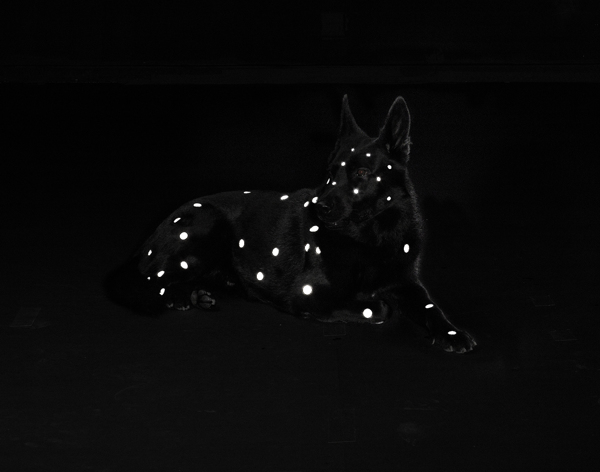
RH: The use of perfume came about from an invitation to do a show at Marian Cramer’s project space in Amsterdam. It is a unique situation, as it demands that the artist make work for Marian Cramer’s home as well as the white-cube gallery space. The notion of this brought up obvious issues of gallery display, interior design and taste. I started to make scented candles as objects that could exist in both spaces and bridge the presentation. The idea of using my cologne in these candles seemed sensible: it allowed the show to address my tastes as the artist and Marian Cramer’s tastes as curator and collector. As a motif it seemed very different to other elements within the show. Most of the works deal with surface and the formulation of architectural space, yet here there was nothing but the heavy vapor of the cologne I used.

OB: What’s your relationship to design, or more specifically architecture? You didn’t study it did you? Your work, both the videos and the sculptures, has an architectural sensibility to it. The computer animated video Testing Ground for example has this amazing architectural space depicted, yet it’s a fiction – it reminds me of those old Archizoom projects or Zaha Hadid’s conceptual designs.

RH: Yeah, I really like the idea of fiction within art practices, and architecture links to this. I never trained as an architect and when I was younger I didn’t express any interest in architecture, I did however love science fiction. And my first interests in architecture came from sci-fi design – Star Trek: The Next Generation, Babylon 5 and Dune, as well as the Foundation series by Isaac Asimov were hugely influential. However, it wasn’t until I saw an exhibition by Superstudio that I realised that architecture could be concept based, that it could be virtual rather than real. That first encounter with Superstudio lead to me seeking out Archigram and Archizoom and their models, fanzines and masterplan prints. With all these groups, what I liked was the language they used; in fact I probably liked the way that they communicated their ideas more than the ideas themselves. Architectural design has a really great aesthetic to create fiction with. Models and prototypes are such interesting objects of potential that allow you to point the audience in a direction and at the same time afford the audience a lot of freedom.

OB: When did this interest manifest itself as a work though?

RH: The first time I made an architectural film was out of necessity. Part of my fine art course was an interim show of all the student’s works in what was a very small gallery. The idea of compromise in that situation was problematic for me so I decided I would make a virtual model of the gallery and curate a solo show of objects from my studio at the time. That video became the first version of Testing Ground. These videos have been shown several times since that outing and every time are different, reflecting a different set of objects and ideas that are occurring in my studio. In fact I think of Testing Ground as a direct extension of my studio. That is another aspect of architecture that I have borrowed – the idea that a work can be edited, altered and improved in subsequent versions.

OB: That idea of editing, renovation and improvement (which a digital practice lends itself to) is picked up in a text that you made available alongside a show you did last year. It was a story, a parable really, written by the architect Adolf Loos, describing a man who hired in an architect to furnish his house. The essay seems to mock the idea of a ‘finished product’.

RH: Loos’ essay was a critique on a certain mode of modernist design and the limitations it placed on the user. In the story the client wants to bring art into his home, however does not want to deal with choosing it, so hires an architect and defaults to his tastes. I found the idea of scale the most engaging aspect of the essay. In the end the architect has reduced art and design to a capsule collection of good-taste, while simultaneously reducing his client’s life into an ordered trap of certainty and function. In Testing Ground I delay any conclusion, I prolong the process with more edits and additions. It is a space for production without any conclusion, which is an exciting prospect.

Interestingly, having used Loos’ essay I came across Against Nature by the French novelist Joris-Karl Huysmans, that seems to celebrate the provisional and inconclusive. I ended up using an extract to accompany the exhibition Vetiver. In the extract Huysmans’ protagonist creates various perfumes to mask the smell of the garden outside his window. In the end he gives up, collapsing exhausted on his windowsill, but only after having mixed endless variations of compounds and tinctures. The whole book is filled with similar unconcluded projects, however there is something progressive about these willful acts even though they serve no function. It’s a really moving book.”

text via interview Oliver Basciano

Seasons of The Void

seasonsofthevoid1_0 Seasons-of-the-Void-2_press 8724837076_f477724f58_z Seasons-of-the-Void-catalog-Fruit-760x541 Seasons-of-the-Void-1_press

Seasons of The Void

Collaboration between Sascha PohfleppAlexandra Daisy Ginsberg and Andrew Stellitano

“Humans on a mission to Mars must either take their provisions with them or cultivate food to sustain their voyage. Seasons of the Void responds to current proposals to use synthetic biology to produce food in space through the design of organisms that electrosynthesise rather than photosynthesise.

Here, electricity flows through a dark tank connected to ship’s solar panels. Inside, two symbiotic cultures of modified yeast feed on the electricity, forming spherical fruit-like shapes in microgravity – a radical departure from how most life on Earth converts energy.

Cut open, a harvested fruit reveals a structure that resembles the growth rings of a tree. A record of the 377 days of the journey; the diminishing power of the Sun, the magnetic field within the tank at times having been distorted by solar flares, a brief moment in the shadow of Venus that momentarily halted the growth and small streaks in the fruit, left by cosmic rays.

Astronauts would be farmers of the void as well as its explorers; their ship, a celestial body in its own right as its artificial ecosystem orbits the Sun.”

Guyton/Walker

phoca_thumb_l_Walker+Guyton-PaintCansX50 3775488446_e99c0cce55 guyton_walker

Guyton/Walker

Work from their oeuvre.

“According to Guyton and Walker, the show is a continuation of their artistic processes, both in seclusion and together. Rumination and even moments of stagnation are all part of the effort. “Sometimes you have ideas that don’t make any sense to execute on your own, or you don’t feel like being alone in the studio. It’s more interesting to work things out with a friend,” they explain. One idea that has worked out quite well is the appropriation of functional objects like tables and beds. It turns out that making art out of mattresses is harder than it looks. “One day we were approving the tufting designs and mattress tape for our prototypes, the next day this old family from New Jersey that made them was out of business—100 years, then two mattresses with us and gone. ” – Interview Magazine 

Eugenia Maximova

Associated-Nostalgia_-3-940x940 Associated-Nostalgia_-6-940x940 Associated-Nostalgia_-10

Eugenia Maximova

Work from Associated Nostalgia

“Kitsch and the human propensity for exaggerating have always fascinated me,” says Eugenia Maximova, who was born behind the Iron curtain, in the Bulgarian city of ruse on the banks of the river Danube. “Many of my childhood memories relate to kitsch. It was on open display in almost every household growing up – crystal and ceramic dinner sets, vases and figurines, hard-to-acquire foreign objects, plastic fruit and flowers. They were showcased behind glass and were the pride of the house.”

But it was only when she started working on the design for Kitchen Stories From the Balkans – her self- published photobook, available this month, based on her much- published series of modest interiors – that she began to think about how to include “some of those incredible plastic tablecloth patterns so beloved in these latitudes”. Then came the discovery that the garish tablecloths have been manufactured in her hometown for many years; all the serendipity she needed to forge a new project, Associated Nostalgia.

From plastic cats to brightly patterned wallpaper, nothing is too garish or clashes too much to be included in her still lifes.

“Kitsch is sometimes difficult to digest, but for many it is also unpretentious and tasteful,” states the journalism graduate, who picked up a camera eight years ago after the sudden death of her mother, a noted painter, and who regards her work as something of an antidote to the usual stories about the region, focusing on conflict. “Kitsch doesn’t require lots of preparation, rethinking or consideration. In fact, it barely requires any thinking at all. Kitsch is melodramatic, sentimental and folksy, but it also entertains. The kitsch culture of today flourishes across all areas of life.” But, she insists, the work remains a form of social observation and commentary.

“The scarcity of goods during communism created a culture of showing off, in which people behave ostentatiously. Kitsch was also widely used as political propaganda during that period. Art’s sole raison d’etre was to bolster a dictatorial regime and glorify its leaders.”

She chooses subjects to photograph from her memory, sourcing objects from “forgotten drawers”, and photographs them using a Hasselblad 500cM in natural light. “I like still life as a genre because it leaves enough space for personal creativity,” says Maximova. “It is up to the artist’s imagination what you see.”

text via BJP

Yuri Pattison

Screen Shot 2013-12-28 at 11.11.39 AM Screen Shot 2013-12-28 at 11.12.35 AM Screen Shot 2013-12-28 at 11.11.59 AM Screen Shot 2013-12-28 at 11.12.13 AM

Yuri Pattison

Stills from RELiable COMmunications.

“Through the prism of the 1991 attempted coup d’état in Russia to bring down Mikhail Gorbachev’s government and restore hard-line Communist Party rule, Yuri Pattison’s newest work, RELiable COMmunication, repositions 2013’s defining story: Edward Snowden’s revelations about the U.S. National Security Agency’s global surveillance operations.

When one scrolls through the project, the site slips between real-time chat logs addressing the ’91 plot, purportedly culled from the eponymous RELCOM (a Russian networking apparatus that predates the modern internet), IRC communiqués from that same year relating to the first Gulf War, and Jabber chats between hacker Adrian Lamo and one “bradass87,” AKA Chelsea Manning, Snowden’s forerunner in whistleblowing. (The piece will evolve, with new content and texts, over the course of its run.) RELiable COMmunication could be considered a historiographic effort; its non-linear narrative merges past, present, and future into one textured mass, a transhistorical portrait of theleaker and his or her event. Accompanying you through the archival layers are small, rotating 3D models of the Chelyabinsk Oblast meteorite—another event that restructured our sense of history, but in this case via an object that exists outside any human’s timespan. (The meteorite also appears in another form scattered through Pattison’sInstagram account.)

Adding a further tantalizing layer to the wide-ranging cultural references marshalled in the project, the press release for RELiable COMmunication begins with an explanation of the Inuktitut word for the internet, ikiaqqivik, which translates into English as “traveling through layers.” The text links to a 2006 journal article that not only gives great insight into the research behind RELiable COMmunication—it also will appeal to anyone with an interest in articulating time, narrative, and history in digital culture.

Yuri Pattison’s RELiable COMmunication, a new work commissioned by London-based Legion TV, is online until the end of May 2014.” – Laura Davidson, Rhizome

David Maljković

Maljkovic-025-800x533 Maljkovic-024-535x700 Maljkovic-027-800x533 Maljkovic-010-466x700 Maljkovic-029-800x580 Maljkovic-030-800x695 Maljkovic-017-800x533David Maljković

Work from Sources in the AirGAMeC

“Sources in the Air gathers a broad array of works completed over the past decade and interacts with the particular environment of the exhibition space, radically modifying the layout and selection of the works, in an ever-changing dialogue amongst existing works, new site-specific productions and the architecture of each museum.

David Maljković has emerged in recent years as one of the most significant artists on the international arena, thanks to a body of works with which he investigates the cultural, social and political heritage of his country through an ongoing comparison of past, present and future, interpreted as hypothetical and interconnected dimensions of reality.

Maljković freely rearranges this material to highlight the tension between the avant-garde utopias of Yugoslavia under Tito and the potential for renewal ignored by recent national history, suspended between a collective “state” identity and a future with an uncertain cultural memory.
As much as these cultural roots constitute the heart of Maljković’s research, the artist’s practice is distinguished by the freedom of the language with which he conducts a universal reflection on the mechanisms of collective memory, and by the detailed attention he pays to the strategies and exhibitional mechanisms.

Alongside works, such as Monochromes (2013), Lost Pavillion (2008) and the Temporary Projections series (2011), the retrospective aspect of his solo exhibition at GAMeC will be embodied by a series of photographic collages that the artist created for the exhibition in Bergamo, in which pictures of works executed by Maljković throughout his career are superimposed and almost condensed in order to construct a visual and conceptual mapping of his artistic practice. Thus, the idea of a “travelling exhibition” is critically re-examined. The works are not merely transported from one place to the next: instead, they become devices that can react to both space and time. The artist’s capacity to reflect on the mechanisms of vision, reproduction and the transmission of images overturns the concept of “retrospective” and its allegedly rigid structure.
The theme of collective amnesia often present in Maljković’s production (which includes videos, photographs and installations) is developed in the Temporary Projections series and in Monochromes. Here, the instruments used to record, reproduce and preserve memory – like film projectors and slides, photographic equipment and archival materials – are presented as silent tools, often used “against themselves” in contradiction with their functions.

For the GAMeC exhibition, Maljković has conceived an installation for presenting the works that, by dominating the rooms of the Spazio Zero, alters their perception: a stage and a series of structures will constitute a set through which visitors can interpret the retrospective path of the exhibition, understood as a dynamic mise-en-scène.
Display for Massimo Minini is one of the artist’s most recent works. Never displayed in Italy before, it is a retrospective reflection using all the invitations produced in the forty years of activity of the Galleria Massimo Minini, which currently represents the artist in Italy. Maljković thus not only pays tribute to an extremely significant figure in the history of contemporary art in Italy, but he also creates a link between the past history of a commercial gallery and the present day of his solo show at the museum, between the public space of the museum and the private space of the gallery, between individual memory and its conveyance in the social arena.”

Christopher Aque

48_aqueperegrineinstall4e48_laurel-gitlen-4-3-130308tumblr_inline_muvnhfqLyB1r14a9848_2012aquerock-2e


Christopher Aque

Work from his oeuvre.

Christopher Aque is a New York-based artist working in sculpture, video, publishing, photography, and installation. By repurposing everyday images and materials, his work refers to experiences of “queerness” or “otherness” that are at once familiar and unsettling. Personal and consumer items such as the Abercrombie bags Aque collected as a child, Vaseline petroleum jelly, record covers, and movie posters are recontextualized or recoded to represent larger cultural melodramas. Aque has recently shown at Laurel Gitlen (New York), the University of North Dakota, Practice Gallery (Philadelphia), and Peregrine Program (Chicago).


Seth Adelsberger

Springsteen_Gallery_Seth_Adelsberger_Surface_Treatment_Install_7_web Springsteen-1 Springsteen_Gallery_Seth_Adelsberger_Surface_Treatment_Install_8_web-1052x700 Springsteen_Gallery_Seth_Adelsberger_Surface_Treatment_Install_6_web-1052x700 Springsteen-12 Springsteen_Gallery_Seth_Adelsberger_Surface_Treatment_Install_4_web-1052x700 Springsteen_Gallery_Seth_Adelsberger_Surface_Treatment_Install_12_web-1052x700

Seth Adelsberger

Surface Treatment @ Springsteen Gallery

“Surface Treatment examines the chemical and scientific properties of painting. The Submersion paintings are the result of a refined procedure that is a combination of washes, staining, and the gestural application of gesso. The paintings are created in batches of 3-6. Some paintings in each batch succeed, while others fail. The saturated coloration is the result of a focused study of the variations within a duotone palette of turquoise and magenta. The pigments are synthetic with chemical names like pthalocyanine and quinacridone. These colors conceptually relate to both basic printing processes (CMYK) and computer LED screens (RGB). Their final appearance (the “glowing” of the form) is a visual corollary to the universal experience of living a life mediated by backlit iPhone screens and laptops.

The Submersion paintings are also a hybridization of Abstract Expressionism and Color Field Painting- painting movements strongly connected but historically distinct. The linear march of modernism only recognized clean breaks and categorical division between generations. This left the work of transitional artists out of the historical dialogue. It is now possible and relevant to reexamine and further these neglected yet vital stylistic territories. Despite their gestural nature and deep coloring, the Submersion paintings are based more in a structured analysis and automatic approach than potential association with emotion and expression.”

Nate Boyce

nate boyce3 lavender_front_web lavender_seq2 nb_r3_1_web skin_grid1

Nate Boyce

Work from his oeuvre

“With only thirty years under his belt, the San Francisco based Nate Boyce balances an artistic practice that jumps between international museum tours of his experimental music and video art performances and a studio practice that forces video into conversation with traditional sculpture.

When video art emerged in the 60’s, it became increasingly interested in exploring the possibilities and tricks of the medium and quickly fell out of step with the formal aesthetic questioning that characterized painting and sculpture of the same period. Though fluent in the language of technology, Boyce brings these formal investigations back to the forefront of his work.

Taking a small hand-carved and airbrushed object as his starting point, Boyce uses an obsolete low-resolution digital camera to capture video of the form slowing rotating. Using cutting-edge computer modeling, Boyce layers a slick undulating surface on the grainy image of the sculpture as it turns. The contrast between the visible grain of the original video and the clean texture of the CGI draws attention to the surface of the screen, evoking the critical history of painting rather than the more narrative tradition associated with film and video.

By its nature, video art disrupts our sense of space, as three-dimensional objects are depicted on a flat two-dimensional screen. Boyce confounds the tension between the two and three dimensional in his work by displaying video of a three-dimensional object on a two-dimensional LCD screen suspended within a three-dimensional sculptural pedestal. Early iterations of his sculptures played with the positive verses negative space of the pedestal, by creating a line drawing version of a traditional pedestal in welded-steel. Powder-coating the steel structure in the same pearlescent color as the rotating subject of the video reinforces the feedback-loop between the object and its support.

Recently, the structure of the pedestals have become more sculptural in form. In “Plinth Inhibitor” at the Bemis Center for Contemporary Art, the armature supporting the screens took an almost reclining form, spreading out across the floor and reorienting the screen upward to be viewed from above. In deliberately confusing the relationship between the sculpture and its pedestal, Boyce revisits the issues that fueled modernist sculpture.

Boyce’s facility with technology allows him to re-envision the ubiquitous modernist public sculpture by again subverting the traditional pedestal support. Rather than utilizing a white rectangular form meant to recede into the background, Boyce situated a recent sculpture on an irregularly shaped plinth that he airbrushed with a generic scene of a public park. Wrapping the surface of the three-dimensional pedestal with a two-dimensional image meant to evoke a three-dimensional park scene again disrupts our experience of space. This image-skin alludes to the way in which three-dimensional worlds are created in computer imaging, linking the sculptural support with his video work.

In a moment when technological obsolescence speeds ever forward, it is unique to find an artist who embraces outdated equipment and sets it in conversation with newer, shinier, cutting-edge technologies. Firmly rooted in the formal and aesthetic concerns of modernist sculpture, Boyce embraces the spectrum of technological means available to depict and manipulate the object in space. As these technologies continue to develop, it will be interesting to watch this multi-pronged practice evolve.”

text via SFAQ