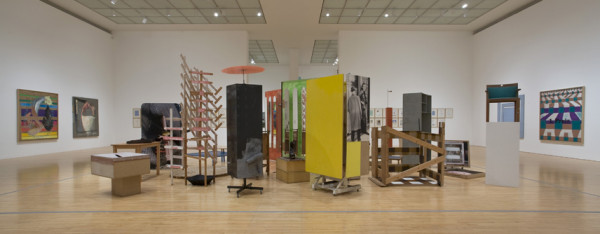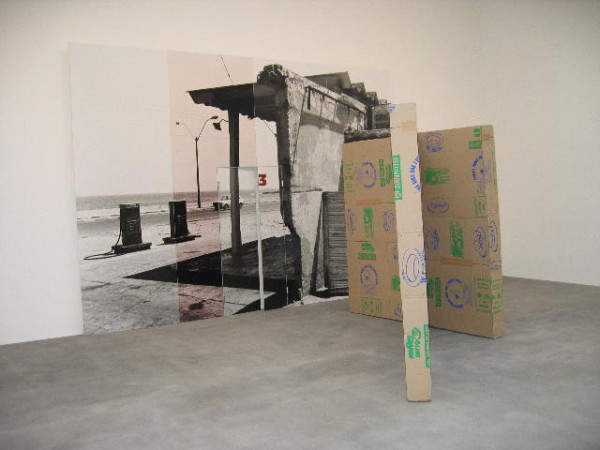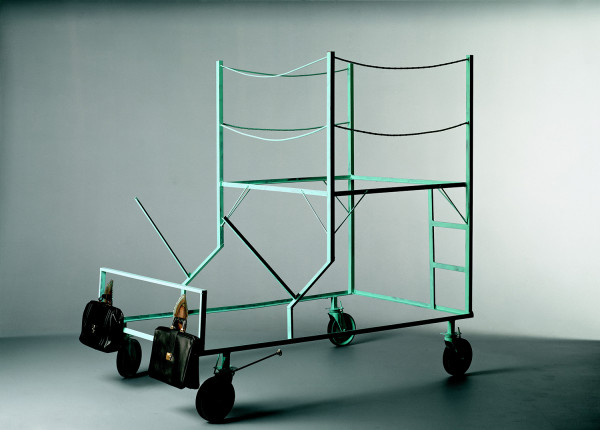
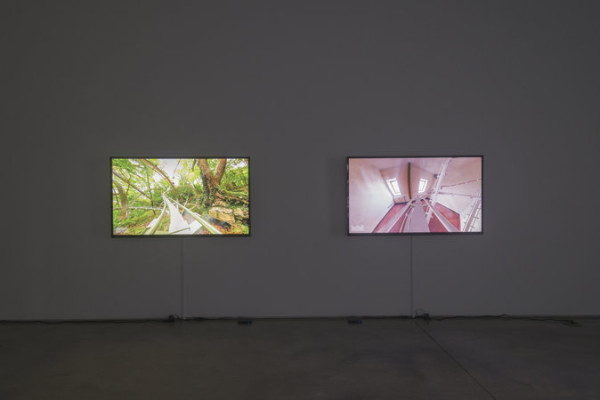
Carla Scott Fullerton

1309
1580
1310
1312
1663

Carla Scott Fullerton

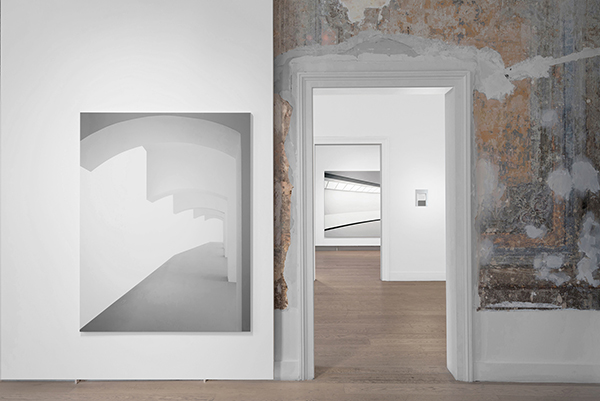
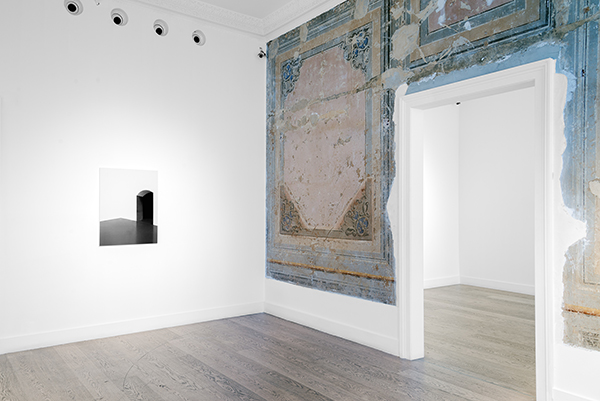
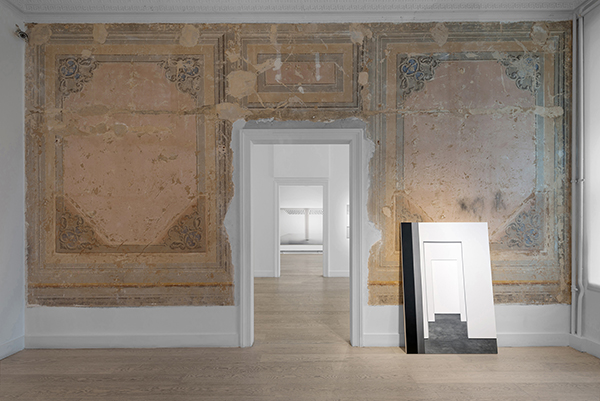
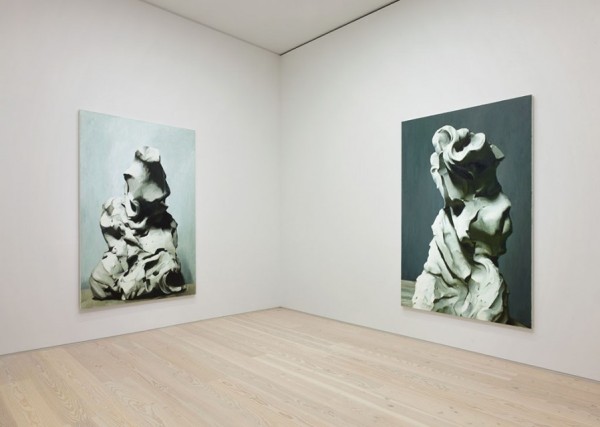
Work from her oeuvre.

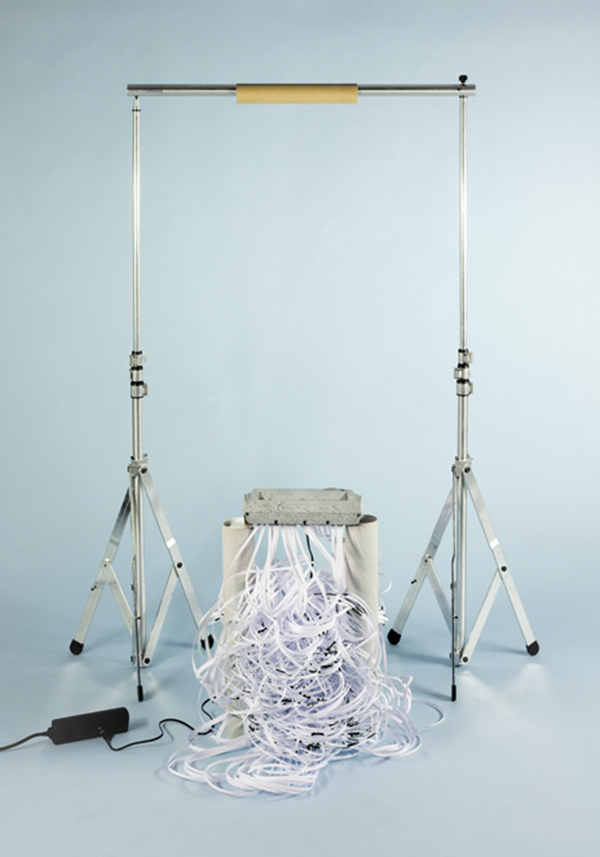
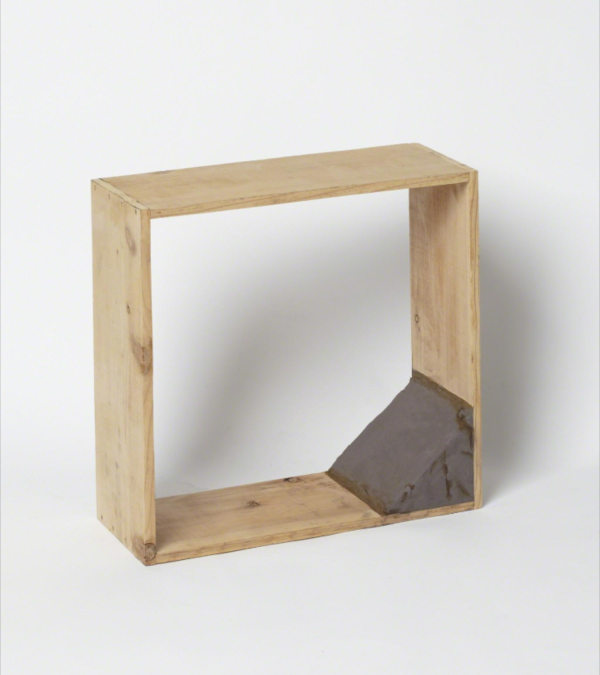
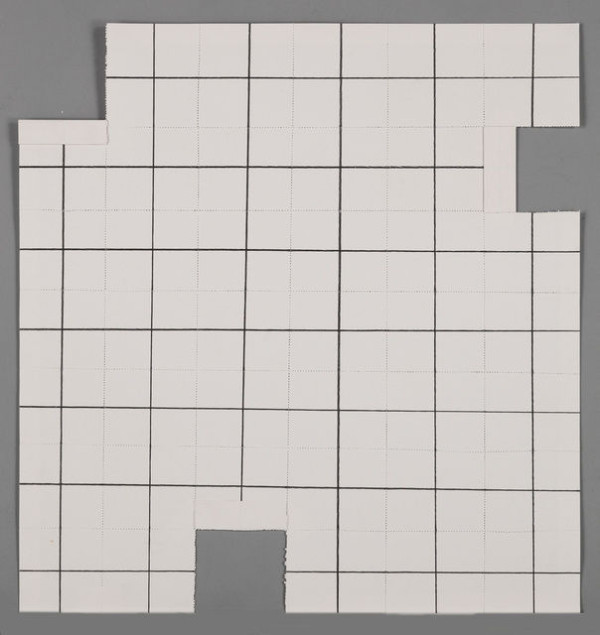
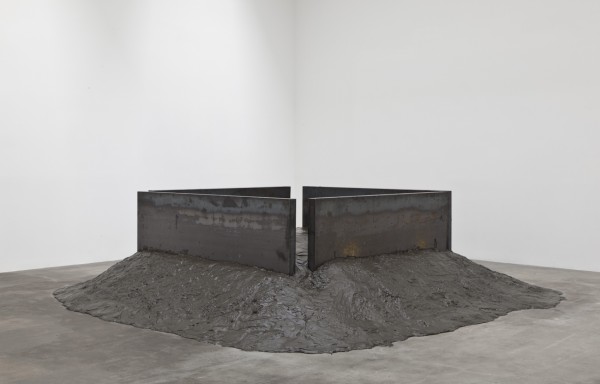
“Carla Scott Fullerton is deeply engaged with sculpture, investigating materials process involved in construction and deconstruction, those being old and new.

She questions how forms and formless structures sit together, juxtaposing material forms through processes and playing with shapes that relate to architecture.

She works with heavy industrial materials such as cement and steel, allowing them to take on their own form. Devoid of their usual restrictions and through the irregular and unpredictable processes of pouring, the work is deliberately imperfect and free of the expected forms governed by the traditional notions of architecture.” – CHERT Berlin

Ulrich Vogl

Observatorium-Ausschnitt-3712x4000
O.T.-Gesamt-4000x2393
Radion_4000x2995
Pool-3025x4000
Radioskop_Raum_1591x1973

Ulrich Vogl

Work from his oeuvre.

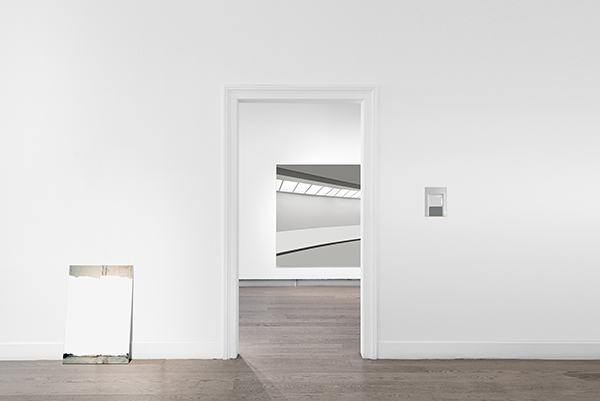
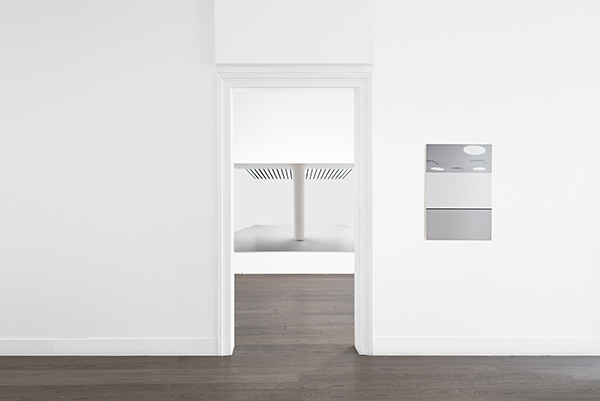
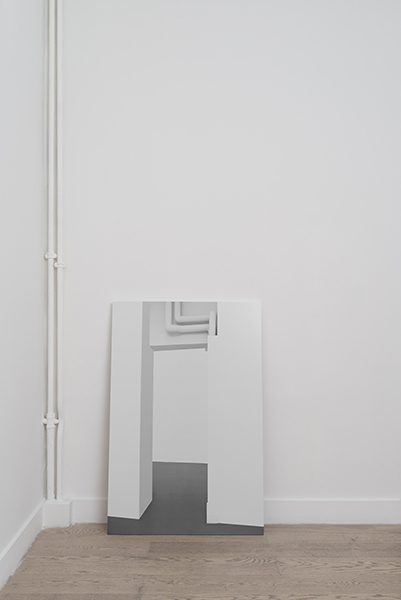
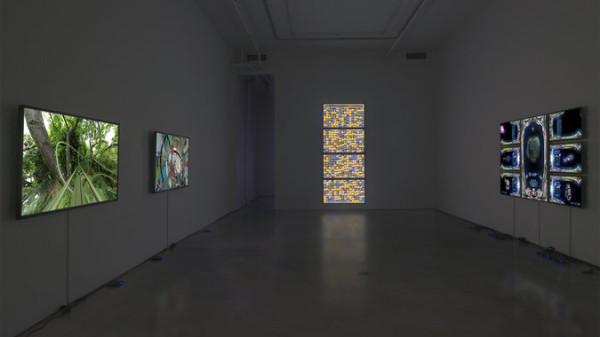
“Ulrich Vogl (Kaufbeuren, 1973) grew up in southern Germany. He studied in Monaco, Berlin and at the School of Visual Arts in New York. He says he inherited his artistic streak from his grandfather, who was a researcher and inventor. This familiar and romantic world belongs to Ulrich Vogl as to his works, which are a mix of invention and idyllic evocation, purified by clear and defined forms, minimal colour choices that simper away every affectation and confers the work a concise and intriguing aspect.

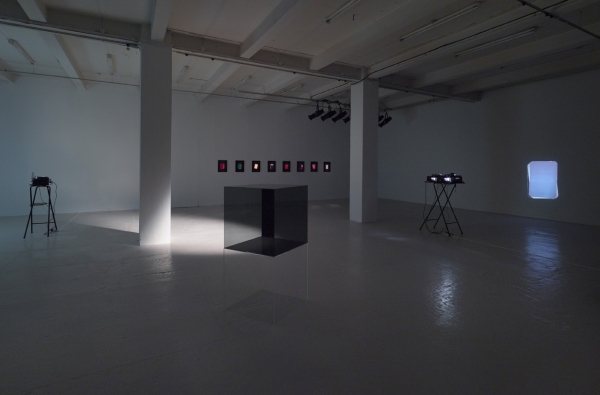
O.T. (2010) is a beautiful, intimate opera, a rhythm-inspired technology in the composition of slide projectors (different to each other) that set up a night view of the city, which the artist is going to describe in the interview that follows, as a world in equilibrium. This quest for harmony, compensation point of convergence between nature and science, is disseminated in Vogl’s artistic research, like a light that indicates what may be the thin line between conflict and harmony, prose and poetry, reality and imagination.

He prefers these last categories, that analyzes and provides in detail, variations, traces of which the works are scattered: the tiny holes that go beyond a tin foil create an atmosphere, a landscape, a night vision in O.T., in Fernrohr ( 2009), and in Meer (2009) are transformed in the infinite space of the kaleidoscope and the sea sight. The ability to imagine is the quality that inspires Vogl to illuminate a concrete block with the light of a projector in Observatorium (2010), to create a starry sky with a crescent moon. So he, again, combines technological and branches or plants to create shadows of another reality in Pool (2010) and generates islands and clouds from tin and sugar in Of Islands and Clouds (2008). This presence of lirism should not deceive us, since the artist does not expect to reach poetry and emotion only, but also a balance of the worlds that echo in nature, humanity, technique and technology…” – excerpted from an interview with Silvia Scaravaggi.

Lutz Bacher

Ashtray-close-up-466x700Mark-Blower-130923-Lutz-Bacher-ICA-0029-800x533 Shadow-Horse-2-800x533

Lutz Bacher

Work from “Black Beauty” at the Institute of Contemporary Art, London.

“Since the beginning of her career in the 1970s, Bacher has drawn upon disconnected information from popular culture and her own life, producing works that play with the interchangeability of identity, sexuality and the human body. Bacher uses images and objects in a physical, sometimes visceral manner, conducting arrangements of seemingly disparate entities and allowing them to interact in new ways. The artist’s expansive work explores human identity as it is defined through gender, sexuality and the human body. Lutz Bacher is as elusive as her work is ambiguous, perhaps preferring not to dictate how her works should be viewed.

The exhibition at the ICA will present new and recent works which combine striking installations with film, sound and sculpture. At the core of the exhibition will be Black Beauty(2012), several tons of coal slag which will flow throughout the lower gallery. This piece will be paired with a sound work, Puck (2012) which will envelope the viewer as they move through the space. The audio recording of the character Puck at the conclusion of Shakespeare’s A Midsummer Night’s Dream is repeated with different emphases and pronunciations. In addition Angels (2013), a found broken mirror, will be reconfigured and placed within Black Beauty. Black Magic (2013) is a new site specific work made from black vibrating ‘astroturf’ that will be displayed along the full length of the concourse in the lower gallery.

The entrance to the upper galleries will feature It’s Golden (2013), a new work made from iridescent gold mylar. Accompanying this will be Chess (2012) and the sound piece Elvis(2009), a looped audio work featuring Elvis Presley crooning in the background. Bacher’s interpretation of narratives is further explored in the new installation Horse Shadow (2010-12) which will slowly rotate, casting shadows across the gallery walls. This will be paired withHorse Painting (2010).

The enigmatic and eclectic mixture of ideas that Bacher brings together are full of personal and philosophical significance and are frequently driven by tactical humour.” – ICA London
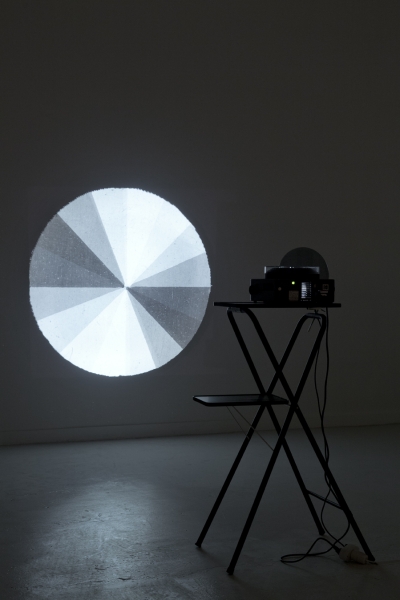
via Contemporary Art Daily

Niels Trannois

Niels Trannois-Vue d'expo 05_BD
Niels Trannois-Vue d'expo 06_BD
Niels Trannois-Vue d'expo 01_BD
Niels Trannois-Vue d'expo 10_BD
Niels Trannois-Vue d'expo 11_BD

Niels Trannois

Work from B (hands in a chinese cookie jar) at Valentin.

“Niels Trannois’s paintings can be understood as fragments of the fictional scenario of what could happen if reality were to absent itself, no doubt the submerged side of a world in abeyance overrun by figurative resurgences, ready to hide away or be dissolved as if recaptured by an old atavism.

F. Scott Fitzgerald wrote: “A clean break is something you cannot come back from; that is irretrievable because it makes the past cease to exist” (The Crack-up). This break, this uprooting that leaves one speechless is what Niels Trannois is trying to render pictorially, to the point of provoking it, in order to “make painting amnesiac” as he says. The beginning of the pictorial act is no doubt a process of regaining control of a “modern” questioning, with the aim of suspending an irresolute opposition between content and expression, language and sensation, narration and abstraction, between that which signifies and that which, always, flees. As the artist puts it, at the root of this is an attempt to “think without words”, without any support or certainty, the sole prerequisite being a confused flow of images and mental representations, either private or collective.
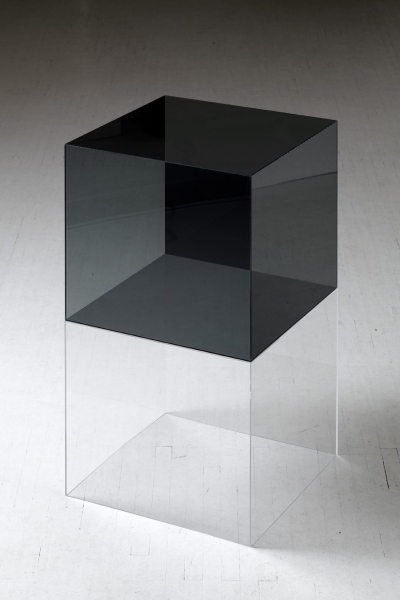
On the wall in the artist’s studio there are already the beginnings of a future pictorial sequence: pinned-up leftovers, those statusless residues of finished works and collected images that constitute the painter’s dislocated perspective. Photographed, then printed in large format on paper, these snapshots were taken right in the workspace and then subjected to a “pictorial treatment”. This imprinting and detachment process proceeds at two tempos. First there is the slowness of permeation, when the paint, applied to the “back”, swells the pores of the image in order to “surface”. Then there is the force of impact, which, by means of pressure between the sheet of paper and the wooden plate, extracts the excess, fossilises the negative on a medium that then serves as a frame on which the image is pinned. The “positive” that the final pictorial image constitutes, presented to the eye “naked”, without protection, is a reactive surface; porous to the potential hydrometric variations of its presentation space, it is the intaglio measure of a breath that is never completely mastered.

This process of permeation and extraction, which the artists employs with very limited means (paper, wood, aerosol spray, oil), literalises work done directly on language. A language whose resistance he tests manually: filling the image, then undoing its completeness, brining the play of the unpredictable to heart of the expressive process means also endeavouring to undo the snapshot, the “full and flat” image. Seeking to detach what is behind the visible facts means suspending meaning and breaking the ellipse, making it deficient. It means, as the artist explains, giving painting its proper role, which is to “undo the system of language to understand materialities that, through echoing or synthesis, evoke situations, a sensibility.”

Beyond the apparent serenity and inertia of this suspended world, one finds preserved in memory on the canvass the violence that the pictorial act has imposed, that is to say something that tears the original image from its presence by a process of displacement and collision. It is this paradoxical state, this latent zone, shared between myth and language, revelation and disappearance, traces and bodies, which make it so that Niels Trannois’s paintings always refer to something outside the frame, to a “missing part”. Because although the images represent sediments of the various processes, they also reveal an interiority on which the viewer can only speculate superficially. The negative obtained by transfer, then recovered by a piece of unbleached canvas, supports the image and makes it into a sculptural foundation. It is its blind spot, or you might say the spot neutralised by a screen-memory.” – Clara Guislain.

Trending

e h b

Haley Mellin, Parker Ito, Brad Troemel, Artie Vierkant

Work from Trending at Untitled, New York.

“Over the past few decades nearly every aspect of life has become globalized and driven by electronic information. The inevitable result of this radical shift has been a reorientation of our experience of space and time. The overflow of the seemingly infinite stream of new information has ushered in a compression of time and an accelerated turnover. Art has come to reflect and address this condition much the same way financial markets have. Flexible accumulation, short production runs, and sudden market shifts now characterize art as much as other advanced economic sectors.

Trending seeks to address this new status quo, one of accelerated obsolescence and rapid shifts. The artists in this exhibition reflect the conditions of a newly globalized art world through the conception, production, and attention to the dissemination of their work. Trending is a declaration of what the most salient works of the moment are as much as it is a projection into the direction art will continue to move from here forward. In our compressed state of time, Trending simultaneously acts as a retrospective – looking back on recent art products by a new class of producers – as well as a preview of what’s to come.

To trend is to statistically rise to prominence through collective agreement – either through a concerted effort by a core group of users (viewers), or as a phenomenon which arises out of the resonance that content has with a broad group of individuals. As an exhibition, Trending seeks to honor the new modes of attaining cultural capital that this digital reorientation of experience has afforded art while still honoring the essential role that the physical exhibition space retains, as facilitator of intervention, dialogue, and distinction.” – Untitled, NY

Ethan Cook

lobstee-02
lobstee-01
lobstee-03

Ethan Cook

Work from Lobstee.

“It seems only right that Ethan Cook would choose to title this exhibition after a one-word poem by Aram Saroyan. Like Saroyan, Cook tends to lean towards the minimal, favoring an approach centered on visible process, understated gesture, and economy of form. Keen to find aesthetic potential in unassuming sources, both men aim to deconstruct a basic, familiar material set – in Saroyan’s case, the alphabet; in Cook’s, the constituent physical elements of painting – to inventive ends, achieving results rich in both historical reference and visual reward.

Just as Saroyan’s poetic experiments confront presumptions surrounding the relationship between meaningful expression (i.e., sentences, statements) and mode of delivery (letters, words), Cook’s work challenges conventional approaches to both creating and understanding physical artworks. Though he has explored numerous approaches over time, each of Cook’s series finds the artist engaged in a rigorous investigation of his materials – their construction, their constitution, their inherent qualities and aesthetic potential – as viewed through the scope of a painterly practice; equating origin with endpoint, he looks to the support itself as his medium, its physical traits as his formal language, the process of its fabrication as his subject. In evoking Saroyan, then, Cook neatly reinforces what has long been a central idea within his broader practice: namely, that the constituent elements of ones process might be viable media in their own right, available to be worked with rather than merely on.

These numerous parallels are confirmed by both the sparseness and the content of Cook’s exhibition, with each of the show’s two artworks similarly embodying the central tenets of his practice. First, commanding the main wall, is one of Cook’s signature woven paintings, composed entirely of canvas (both hand-woven and manufactured) and mounted in the artist’s frame. As with previous works in the series, Cook’s process involves producing his own material using a four-harness floor loom, manually fashioning pre-dyed cotton and linen fibers into 40-inch x 7-yard sheets of single-colored plain-woven canvas. Almost like a drawing, a plain-woven canvas is constructed line by line, with each incremental cross-stitch at once a product and a literal illustration of the creative act. But where those earlier works found the artist cutting those sheets into smaller shapes to be arranged and sewn together into a single unified canvas, here he takes a more indexical approach, adopting a larger format that allows the sheets themselves to function as forms while retaining their original width. In combining this material with manufactured canvas, Cook reinforces the central motif of integration, at once emphasizing the work’s woven constitution while inserting it further into the field of traditional painting.

The monumental size of this new work also serves to emphasize the subtlety of Cook’s visual treatments. As ever, he derives his formal vocabulary from the inherent traits of his materials – in this case, the geometric nature of woven patterns, the texture of overlaid threads, the elasticity of stretched fibers, and the seams of conjoined sheets. Using these elements as a foundation, Cook achieves a range of textures whose tactile variations function almost like brushstrokes, producing a remarkably diverse surface that confounds any initial readings of the work as “flat.” These effects are reinforced by the work’s palette, which is neutral to the point of being nearly monochromatic: though it retains the interplay of forms and subtle negotiations of depth that defined previous works, here the subdued color range focuses our attention as much on the material as the image, allowing a work composed entirely of blank canvas – typically a point of visual rest when reading a painting – to succeed in actively engaging the eye, rewarding close inspection with a deceptively complex viewing experience.

In isolating the ground as both medium and subject, Cook aligns himself with a lineage of artists who similarly aimed to discard staid conventions by emphasizing art’s fundamental elements. One important reference point would be Bernard Frize, whose vivid canvases were achieved through the implementation of rigid restrictions and rules. (Frize’s notion of the artist as “laborer” is also relevant here.) We also find Cook in direct dialogue with mid-1960s France – particularly the work of Supports/Surfaces artists like Daniel Dezeuze, whose penchant for exhibiting colored frames without canvas similarly spoke to the aesthetic potential of painting’s essential components. In each case, we see artists embracing reduction as a means of both purification and progression, and it is ultimately within this tradition that Cook’s canvases are best understood.

The second piece on display in lobstee finds Cook translating these ideas into a sculptural installation. Built and installed on-site, the work is composed of 100 wooden planks, each measuring 4.5×70.5 inches, stacked atop one another and joined by tongue and groove fittings which are left visible to the viewer. In both materials and presentation, the resulting piece finds the artist in conversation with Minimalist sculptors like Carl Andre and Donald Judd, recalling not only the rigid simplicity of their best-known works, but also their interest in how objects composed of simple, repeating forms function in physical space. As in the woven paintings, Cook’s sculpture deliberately lays bare the methods of its creation, providing a legible index of time, labor, and process. It also directly reflects and activates its surroundings, echoing the canvas’ forms, palette, and seaming, as well as the color and material of the gallery’s hardwood floor. In its utilization of plain materials towards intricate effects, then, Cook’s sculptural work comes less as a departure from painting than as an extension of his ongoing conversation, finding the artist once again using his materials plainly but thoughtfully, offsetting a rigid formal economy with aesthetic accessibility.

As is so often the case in Cook’s work, the pieces on view in lobstee are ultimately about narrative: though resolutely non-figurative, each piece is literal in its representation of both medium and method, offering the audience a clear sense of Cook’s creative process. Crucially, they also reaffirm the artist’s rare talent for yielding aesthetic results from highly involved formal investigations. This, in the end, is perhaps the most crucial point to be made in discussing Cook’s ongoing body of work: for as compelling as his working methods are, it’s ultimately his ability to translate them into direct, well-defined compositions that sets this output apart from both his own previous work and that of so many of his peers. Though deeply rooted in process, these works are thoroughly accessible and visually memorable, at once positioning his work within broader conversations of process-based abstraction while offering his audience a visual experience beyond the mere contemplation of materials and surface treatment. With the resulting exhibition at once upholding and extending the underlying concepts that drive his practice, lobstee illustrates this vital balance, amply confirming Cook’s ongoing efforts to employ reductive means towards revelatory ends.” – Christopher Schreck

David Brandon Geeting

Screen Shot 2013-11-12 at 10.53.20 PM Screen Shot 2013-11-12 at 10.54.12 PM Screen Shot 2013-11-12 at 10.53.53 PM Screen Shot 2013-11-12 at 10.50.26 PM Screen Shot 2013-11-12 at 10.50.57 PM tumblr_mmr5izfsGf1qa9e47o1_1280-730x1095

David Brandon Geeting

Work from his oeuvre

“Geeting has moved from a natural, somewhat lofi aesthetic to more polished images that fuse the photographer’s sense of atmosphere with neater lines and compositions, refashioning the trivial items of daily life into new objects that seemingly come from some parallel universe” –Disturber

Hannah Levy

4__MG_2032(1)_v2 4__MG_0490_2 4__MG_2013(1)

Hannah Levy

Work from her oeuvre.

“Artist Hannah Levy uses the term “design purgatory” to describe these overlooked objects, cursed to live below the radar and gaze of their human creators. Levy finds herself attracted to forms that, once removed from their intended environs and functions, begin to lose the human conditioning that initially defines them. Medical equipment, safety bars, gymnastic devices and pool handrails can all be freed of the bondage of their human servitude. Once free, these objects immediately seem to lose their obvious semantic connections. They become epistemologically disconnected from the human mind. What was once the metal structure of a shopping cart starts to seem increasingly alien and non-human.

In Levy’s Untitled stainless steel and vinyl piece (2013) there are two figure-four handrails that no longer are tied to the edge of a pool. Instead they rise up from a concrete floor. Their ergonomically designed use is thwarted, and they turn inward becoming more of a blockage then a helping hand. The vinyl that covers them gives them a prosthetic new skin that further complicates definition. One of Levy’s classmates called them “dog heads,” seeing them first as an outline of a cartoon dog. Undoubtedly that same classmate has used this poolside object countless times. In this context, however, the human to object connection has become oblique.

What is key in Levy’s work is how she provides these objects with the potential to take on new meaning, giving them license to express unknown aspects of their virtual selves. Something like a grab-bar is inherently tied to the binary of human/object. The object is formed and exists only in regards to its ergonomic relationship with the human body. Levy removes the human body from her work and provides new synthetic bodies, usually cast polyurethane foam or rubber that interacts with these forms to create new differential assemblages. This move displaces the object from direct human knowledge, yet the essence of the object still remains. Somewhere in the stillness of viewing, a strange familiarity with the object exists. It is more felt then understood, an unspoken and purely intuited connection that reveals a different side to what is already known. It is here that the human viewer begins to peek into the virtual potentials of these objects.” – Ryan Lauderdale, Wow Huh

Nick Relph

Nick-Relph-at-Chisenhale-Gallery_20-800x598
Nick-Relph-at-Chisenhale-Gallery_01
Nick-Relph-at-Chisenhale-Gallery_09
Nick-Relph-at-Chisenhale-Gallery_27-800x589
Nick-Relph-at-Chisenhale-Gallery_17-800x600

Nick Relph

Work from Tomorrow There Is No Recording.

“Tomorrow There Is No Recording examines handicraft, materials and ideas of value. Using a four-harness floor loom, Relph has fabricated a series of weaves using materials including polyester, rayon, silk, monofilament, latex and paper. The weaves are presented at Chisenhale as part of a specially conceived installation.

Relph’s interest in handmade, woven textiles stems from an appreciation of the labour involved in their production, in addition to the particular formal and material resonance of these constructed fabrics within our digitally-oriented culture. Woven surfaces can be read as images, whilst also retaining the information of their making – mistakes and irregularities or impressions from the loom – and the signs of wear that emerge over time and through use. This preoccupation with the relationship between image and surface emerges from Relph’s previous film and video work. He has said: ‘I can’t think about moving image now without thinking about the surface upon which it’s being viewed’.
Relph first began to explore his interest in the material and social effects of textiles through moving image. Thre Stryppis Quhite Upon ane Blak Field (2010) – presented at the Venice Biennial 2011 and currently on display at Tate St Ives – connects the meandering history of tartan with the Japanese fashion label Comme des Garçons and the artist Ellsworth Kelly. Here, Relph employs a trilogy of colour – red, blue and green – as a visual motif and conceptual device to weave associations between subject matter in the film. The history of colour reproduction, manufacture and consumption are further explored through the presentation of the film as a composite RGB projection, which recalls the mechanical print processes used in the textile industry.

Relph’s contemporary methodology of accumulating, cutting and pasting, and manipulating research material, as a source of both information and inspiration, is juxtaposed with materials and processes that are idiosyncratic and often homespun. The links Relph makes are tentative, suggesting something elliptical at play in the manufacture and circulation of goods, and, in turn, influencing our subjective attachment to them.

Casey REAS

reas_substrate_0 reas_substrate_1 reas_substrate_2 reas_substrate_4 reas_substrate_3 reas_substrate_5ele

Casey REAS

Work from Substrate

“The Substrate series breaks apart television signals into fixed, laser-etched surfaces. Using the Control Room images as a foundation, it pulls apart the data to form a new landscape.The circular form and matte finish of anodized aluminum refer to instruments for measuring electrical signals.” via Western Digital