Thursday, 20 June 2013
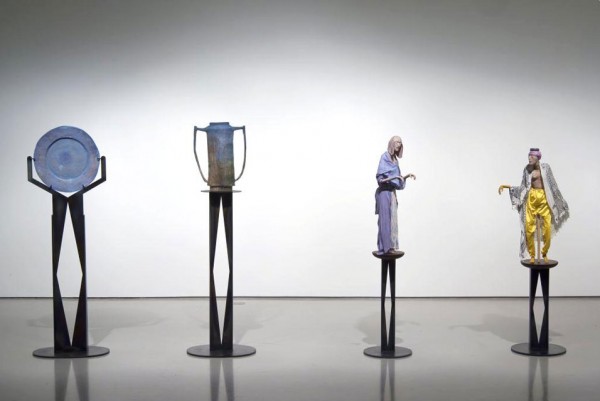
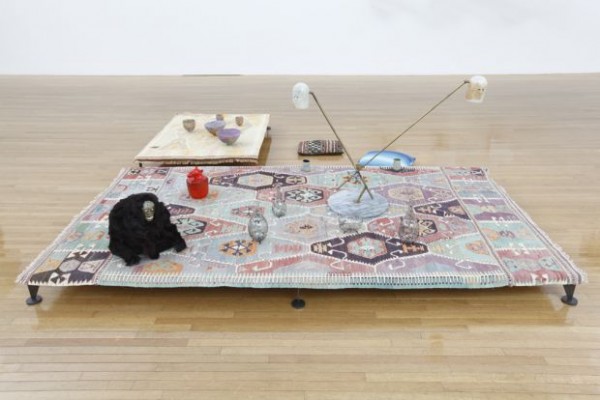
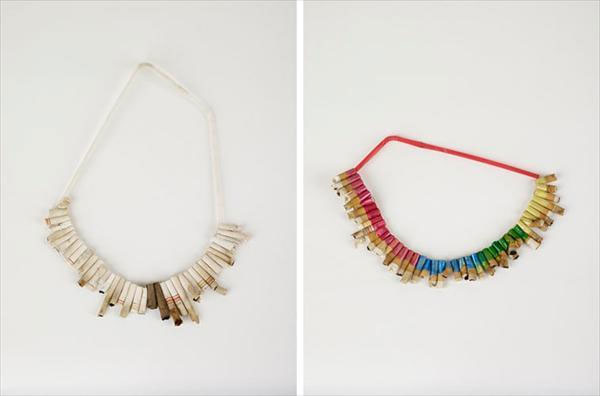
Francis Upritchard
Work from her oeuvre.
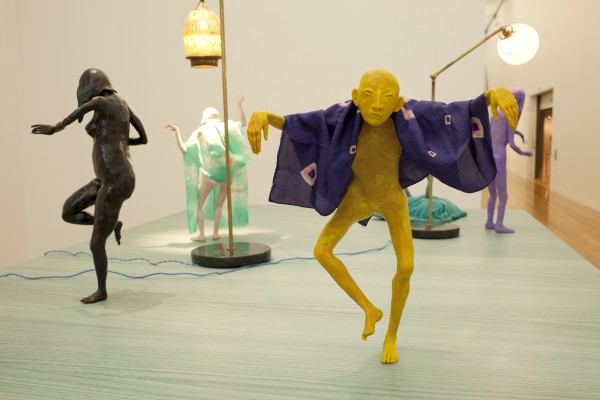
“Francis Upritchard’s psychedelically coloured human figures ‘live’ on islands of ornate furniture. There is a festival feeling to their gatherings, emphasised by Upritchard’s acid-bright colours, hand-woven blankets and tie-dyed silks. Upritchard has said ‘all the things that hippies hoped would happen, or felt might happen, didn’t.’ In one sense her exhibition is about the failure of the 1960s and 70s counter-culture that is still celebrated at festivals – and its gaudy, individualistic “alternative” aftermath.
Originally from New Zealand and now living in London, Upritchard makes figures that appear archaic, yet they also seem to be devotees of contemporary cults, marooned in an alternative universe, ineptly groping after spirituality. We are left with artefacts as clues to meaning.” –Nottingham Contemporary
Tags: archeology, artefacts, design, sculpture
Posted in Uncategorized | Comments Off on Francis Upritchard
Wednesday, 19 June 2013

Gerhard Richter
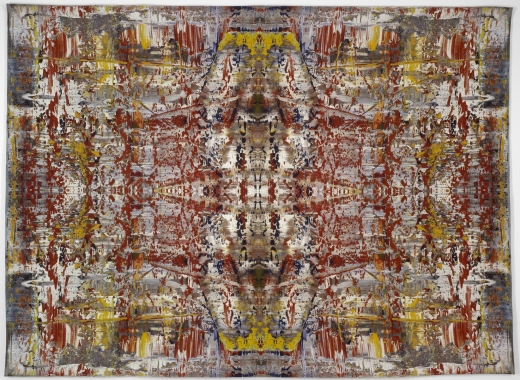
Work from Tapestries at Gagosian Gallery.
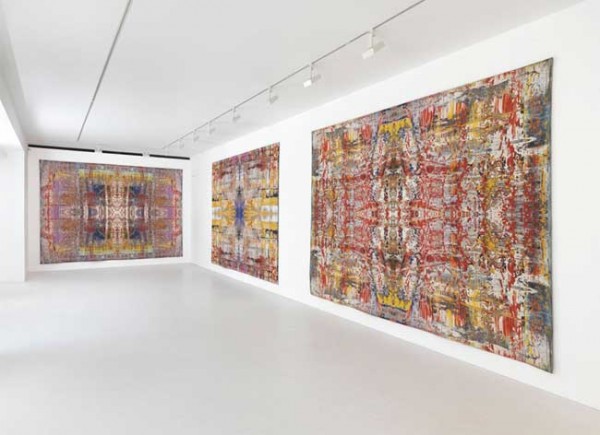
“Gagosian Gallery presents a group of four tapestries entitledAbdu, Iblan, Musa, and Yusuf (all 2009) by Gerhard Richter.
These works are based on Abstract Painting (724-4) (1990), a key example of Richter’s distinctive approach to non-representational painting. The visual effect of the tapestries is a Rorschach-like multiplying of the forms and colors of the original canvas.
Woven on a mechanical jacquard loom, each tapestry repeats four times the image of one quadrant of the painting. Somewhat surprisingly, the painterly, stochastic qualities of the original translate onto the loom’s digital iterations. Though derived from the same painting, each of the four tapestries surprises and dazzles with its own complex symmetries. In Abdu, a cobalt blue supernova erupts into a sea of overlapping reds, mixed whites, and yellows; while Iblan is a layered vision of lilacs and midnight blues that emanates from a bright white center. Within a delicate red top-layer, some marks appear to have been finger-painted; given such refined illusions of gesture it is easy to forget that the works do not employ paint at all.
In recent years, Richter’s interests in media-merging and appropriation have resulted in works that multiply and transform his abstract paintings into prints, books, and other paintings. The digitally generated Strip paintings of 2012 are complex manipulations of the same painting from which the four tapestries were produced. But in the tapestries, the continuous probing of the space between painting and photographic reproduction finds resonance in the textures of the artisanal medium, rather than in the smooth depiction of color and speed. Translated from paint to wool, Richter’s distinctive abstraction imbues a traditional medium with new dynamism, while the act of painting itself passes into a parallel tactile realm.” –Gagosian Gallery
Tags: abstract, digital manipulation, mega-famous, tapestry
Posted in Uncategorized | Comments Off on Gerhard Richter
Tuesday, 18 June 2013

Faiza Butt
Work from her oeuvre.
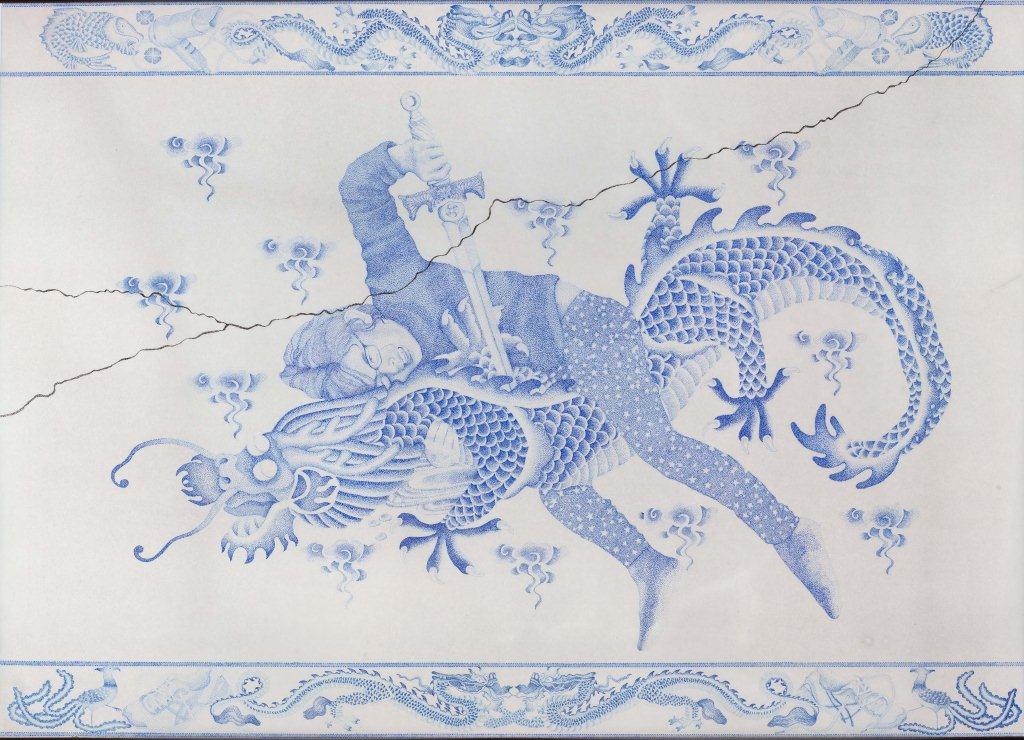
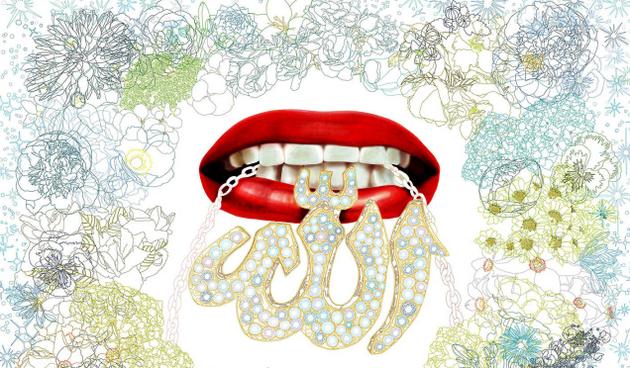
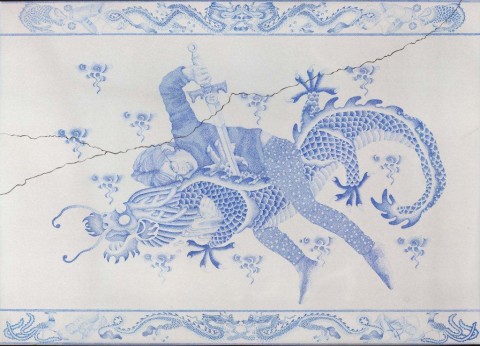
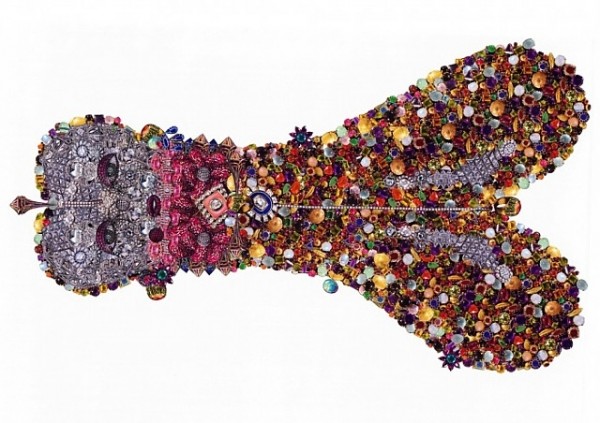
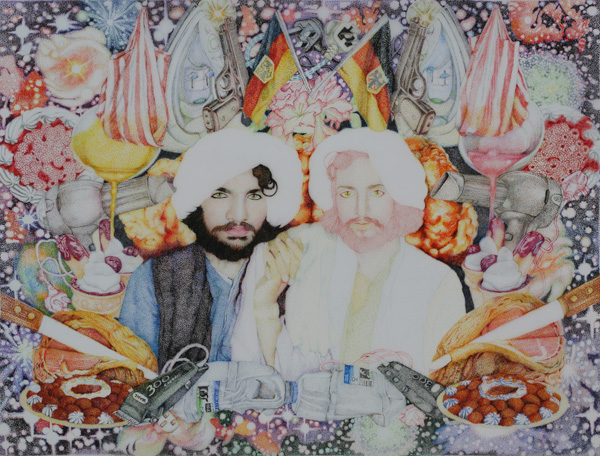
“Butt’s work travels through global visual culture—drawing influence through time and space. She deftly implements the aesthetic signifiers of media, advertising and fine art to create an aesthetic that is uniquely her own, yet utterly familiar. Known for her technique of repetitive mark-making, reminiscent of both pointillism and the par dokt method of miniaturist painting, Butt manages to synthesize a multitude of references. She speaks the contemporary language of hybridity.
Often Butt’s work takes the form of light boxes. These structures are reminiscent of the neon lights and electrically lit signposts that fill large urban centers, appropriating the format of advertising. This mode of presentation similarly manages to imprint her work on the viewers mind—even after closing your eyes the image remains.
Advertising is not only referenced through form, but content as well, as many works draw upon the oversaturation of information presented in advertising. Often Butt utilizes banal imagery that aims to simultaneously confuse and elucidate the message of the central subject. In My love plays in heavenly ways the border of the work exhibits hairdryers and tennis shoes interwoven with more orthodox depictions of dragons, koi fish, and flowers. In the One series, the primary focus of the work is embedded in a delicately rendered sea of flora. For Zaveer Zangeer countless images, each with their own unique associations, are utilized to construct a single text. Butt’s artistry captures the moment when benign and violent imagery become indistinguishable.” -Justine Ludwig
Tags: advertising, light boxes, ornamentation, pakistan, political
Posted in Uncategorized | Comments Off on Faiza Butt
Monday, 17 June 2013

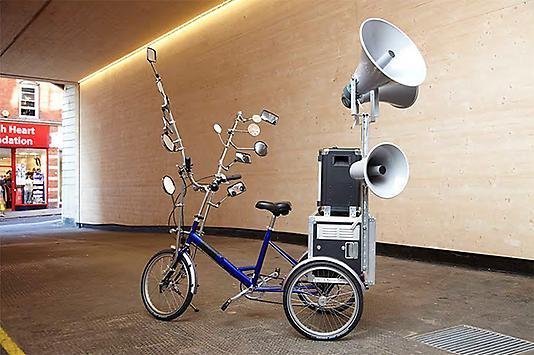
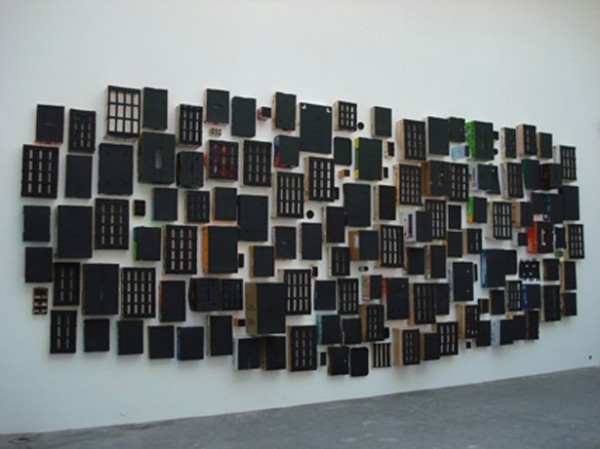

Abraham Cruzvillegas
Work from his oeuvre.
“Abraham Cruzvillegas was born in Mexico City in 1968, where he lives and works. Cruzvillegas’ practice deals with history and the construction of the self in reference to economic, social, political, and historical conditions. Employing various means to create open-ended strategies of production and reception, Cruzvillegas gives objects a new life and context, generating shifts in meaning and interpretation, meanwhile demonstrating how concepts and relationships can be constantly inverted and transformed. He explores economies of the makeshift, hand-made, and the recycled, and often incorporates site and elements of a particular location within the context of a work, exhibition, or project, creating a connection between Mexico City and the location in which the artist is working. His practice examines the way in which one constructs or reconstructs histories from information, illustrating how ideas are often a dialogic conflation of many people, places, and times. Improvisation and assemblage are core aspects of his practice, which is informed by, and connected to ideas of survival economics, labor economies, and the ready-made.” –Regen Projects
Tags: economy, found objects, mexico city, recontextualization
Posted in Uncategorized | Comments Off on Abraham Cruzvillegas
Sunday, 16 June 2013
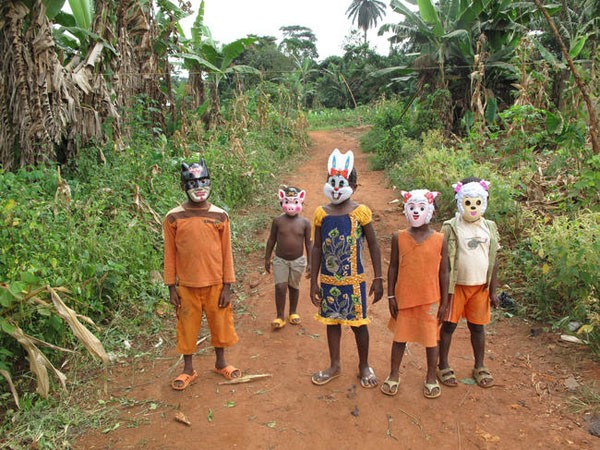
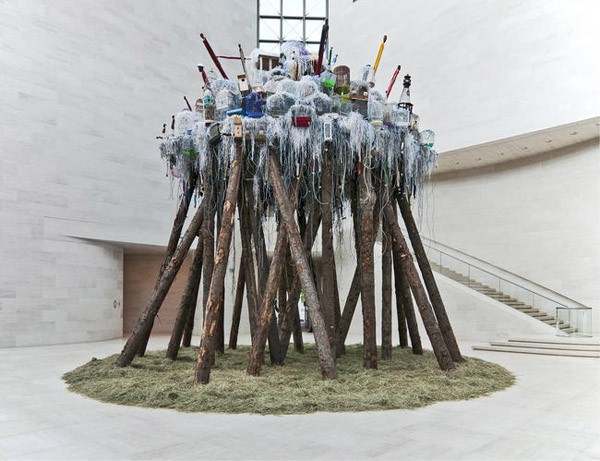
Pascale Marthine Tayou
Work from his oeuvre.
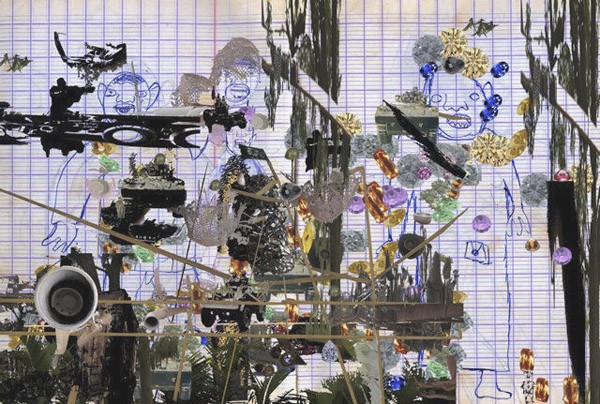
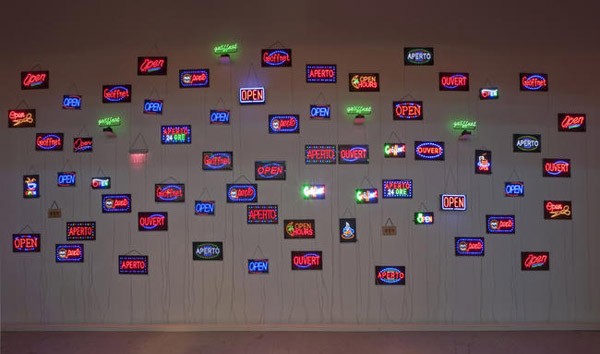
“Jean Apollinaire Tayou was born in Cameroon. In the middle of the 1990s he changed name, declining it in the feminine form to become Pascal(e) Marthin(e) Tayou. This marked the beginning of an unceasing artistic, geographic and cultural nomadism that has brought Tayou to prominence on the contemporary art scene.
Tayou’s work, like his name, is deliberately fluid and eludes pre-established schemes. Multiple, ungovernable, gripping, profound, unexpected, proliferating and varied, it is always linked to the idea of travel and the encounter with what is other to self. Being a traveller is not just a condition of life for Tayou, but also a psychological condition capable of subverting social relations and the political, economic and symbolic structures of our lives.
Tayou’s work is conceived in situ, in close association with the here and now. Every new exhibition project is viewed by the artist as a celebration of life and as a relational experience with everything, that is, with place, people, culture, history, and the materials and objects that populate that world. ‘A mix between salt and sugar,’ is how the artist defines his shows. ‘This is life. We are happy then sad, and vice versa, and so it goes on. This is harmony: a little light, a little darkness. When I create a show I always try to play with this condition of the human being.’” –Galleria Continua
Tags: installation, nomadism, objects, site-specific
Posted in Uncategorized | Comments Off on Pascale Marthine Tayou
Saturday, 15 June 2013
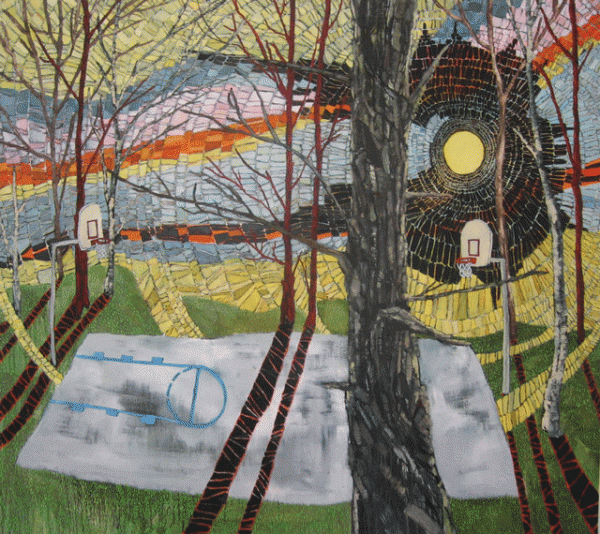
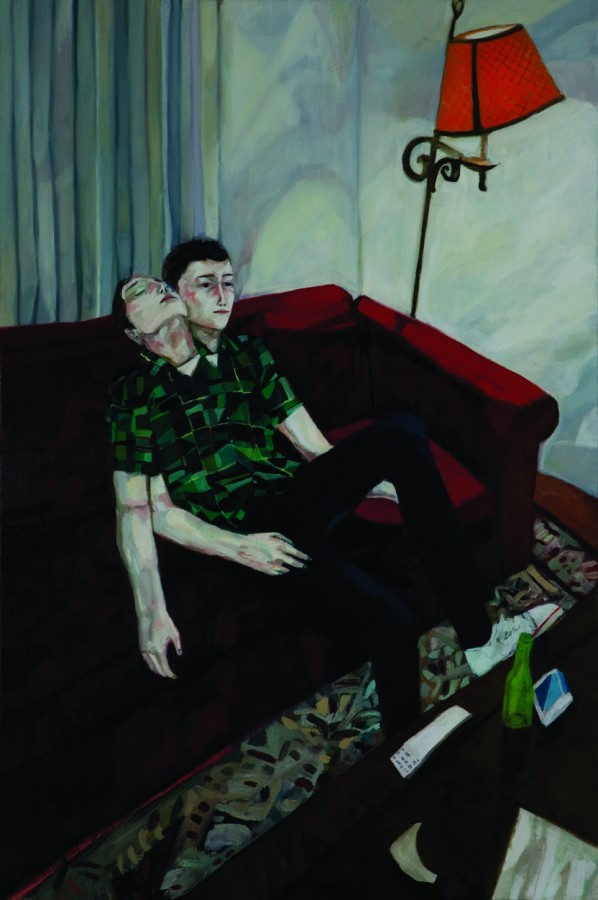
Raffi Kalenderian
Work from his oeuvre.
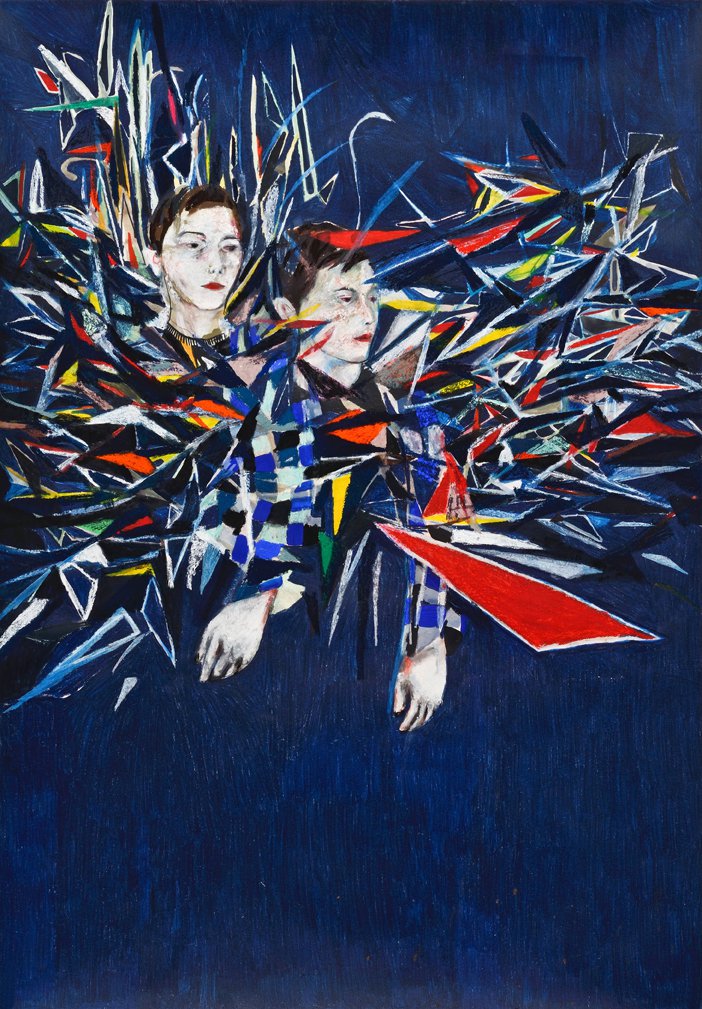
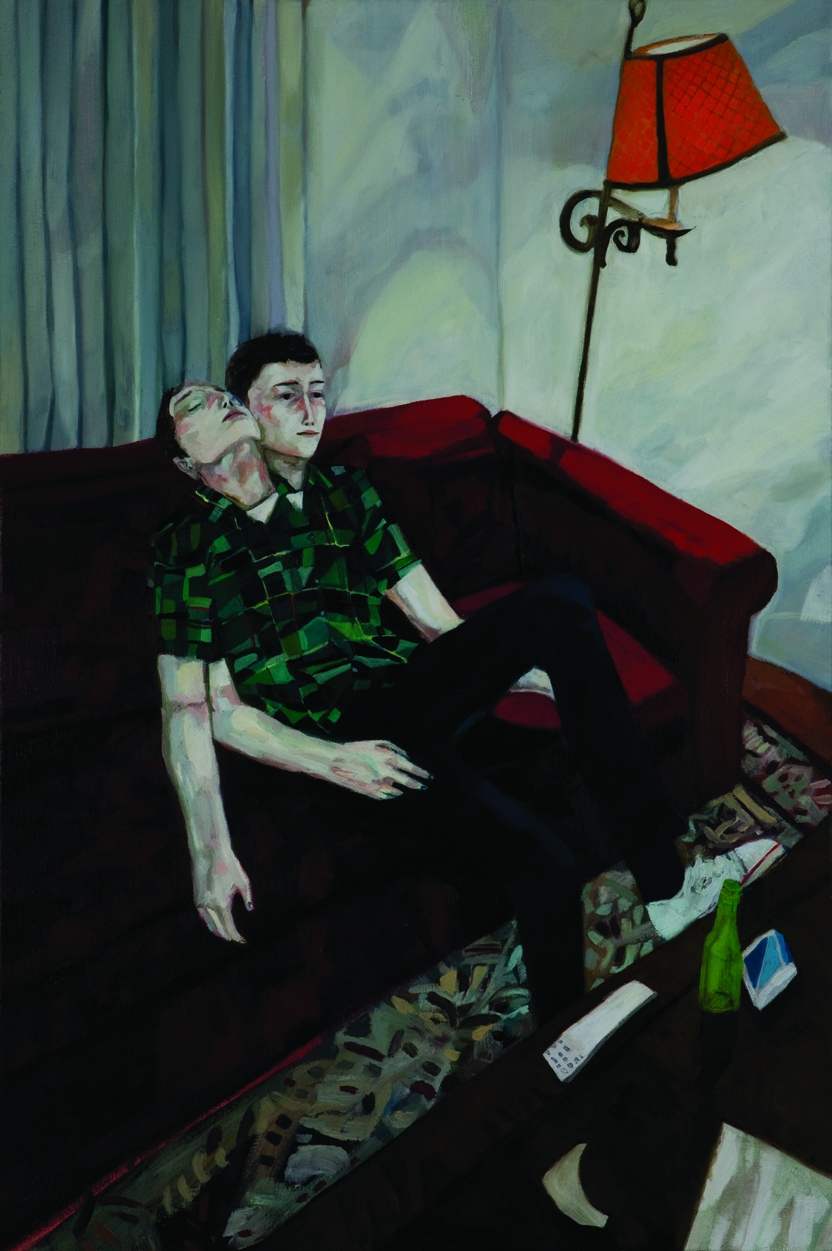
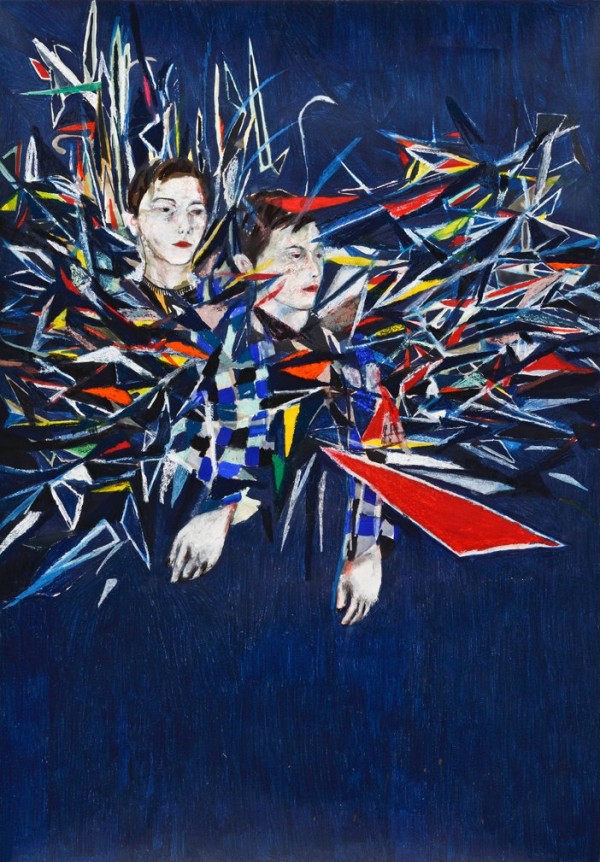
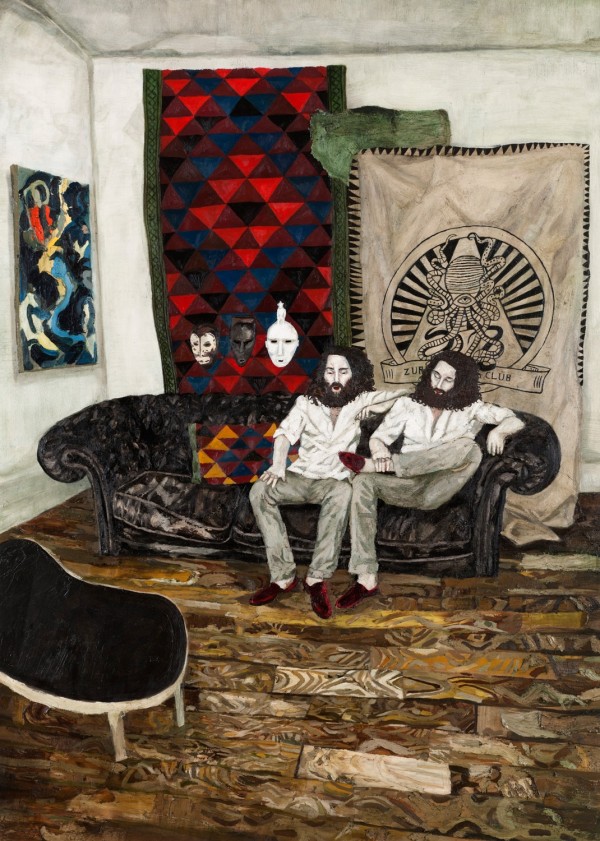
“Working both from life and from photographs, Kalenderian features his friends in a series of intricate portraits. His paintings and drawings convey both an intimate moment between artist and sitter and a dreamlike detachment that places his subjects in a peculiar equilibrium between reality and illusion. Sometimes, the same character appears numerous times in an image, as a strange shadow figure, a somewhat less tangible Doppelgaenger whose co-existence seems dependent on their counterpart. These flat, less two-dimensional secondary figures load the portraits up with a psychological meta-reality, a dreamlike level of consciousness that seems to exist beside or underneath the visible world. In his own words, the artist describes his work as ‘portraits done from life’ in which ‘the social aspect is incredibly meaningful to me. Technology can be isolating, so sitting with a friend for a few hours and observing them, talking, is a great way to slow things down. And the time frame forces me to look and work fast, to use observation as a springboard for invention. Plaid shirts provide the opportunity for distortion and abstraction. A pattern in the sofa takes over, spills into the foreground. Plants everywhere. The drawing becomes, among other things, a record of this time together, a record of existence. Often, the decisions I have to make rapidly in the live setting lead to painting and drawing moments that are more exciting than anything I could have done alone.'” –Susanne Vielmetter Projects
Tags: multiple realities, painting, pattern, portraiture, psychological space
Posted in Uncategorized | Comments Off on Raffi Kalenderian
Friday, 14 June 2013
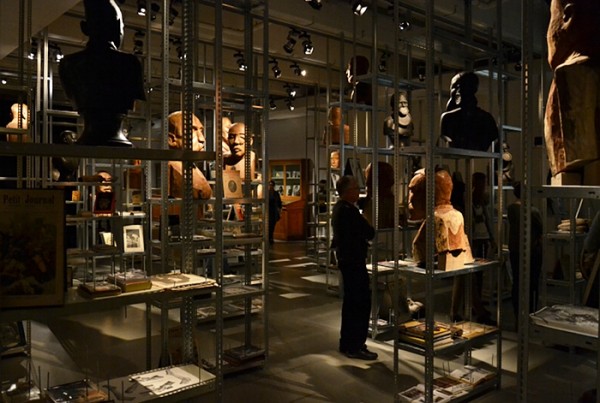
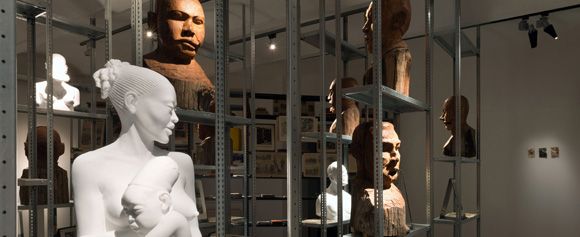
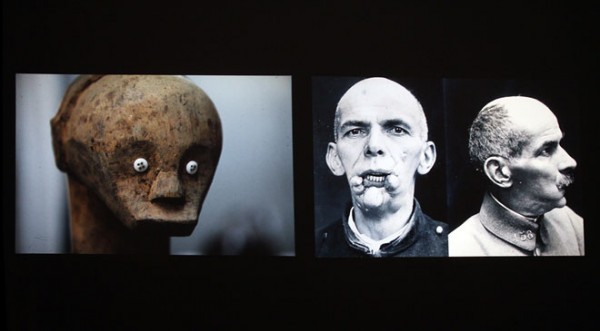

Kader Attia
Works from REPAIR. 5 ACTS and dOCUMENTA (13).
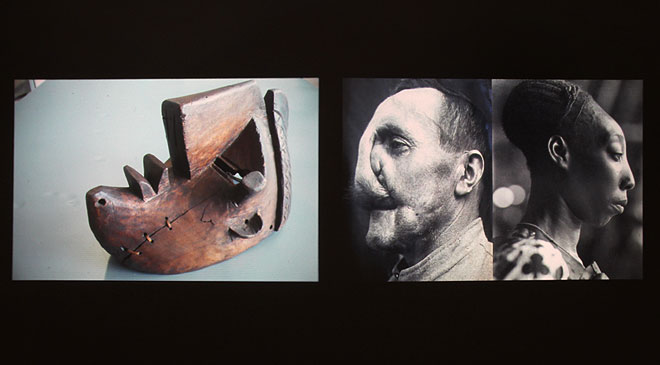
“REPAIR. 5 ACTS at KW Institute for Contemporary Art is French-Algerian artist Kader Attia’s first institutional solo exhibition in Germany. For KW, Attia develops a site-specific installation in five acts, which applies his concept of “repair” as reconstruction in a wider sense to political, cultural and scientific topics, examining their various interactions.
The exhibition places subjects Attia has been working with for several years in relation to each other, at times associatively and at times as framing an argument. He combines the European approach to its own colonial past within the framework of World War I with struggles for independence on the African continent, with current migration politics and with mechanisms of identity construction. In this installation, Attia further examines his longstanding research into processes of re-appropriation, as most recently presented at dOCUMENTA (13) in Kassel.
Attia develops a dramaturgy that leads the audience through the installations as if it were an obstacle course and prompts the visitor to reflect without prescribing any pre-determined perspectives. Each of the five acts illuminates the topos of “repair” from a different point of view, so that an overall picture of Attia’s concept of “repair” unfolds as the course is completed act for act.
The artistic practice of Kader Attia (born in 1970 in Dugny) is characterized by his life between various European and African cultures and places and their contrasts and differences. Attia’s spatial installations, videos and photographs draw their potential from the tension between sensually experiential forms and content which examine our constructions of realities.” –KW Institute for Contemporary Art
Tags: colonialism, history, re-appropriation, site-specific
Posted in Uncategorized | Comments Off on Kader Attia
Thursday, 13 June 2013
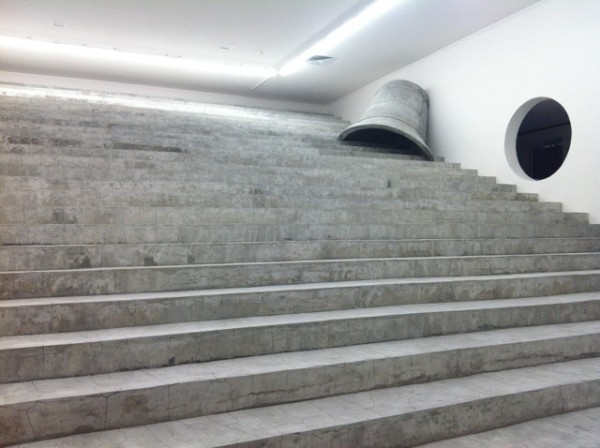
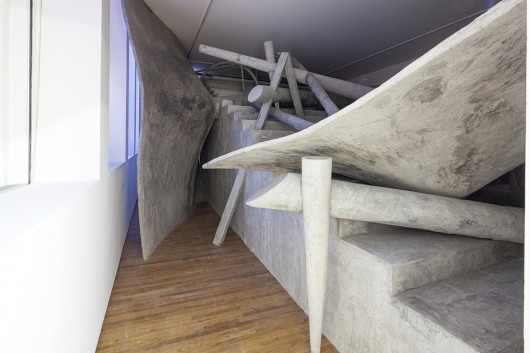
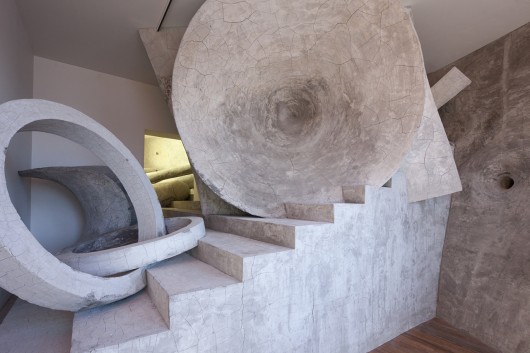
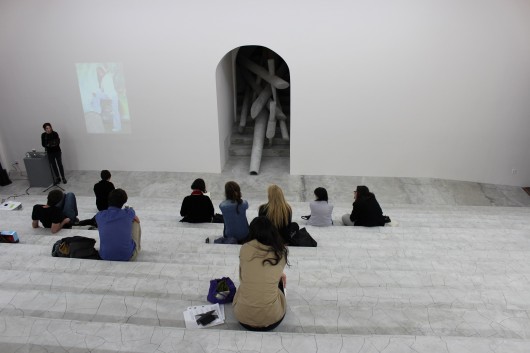
Adrián Villar Rojas
Work from Expo 1: New York.
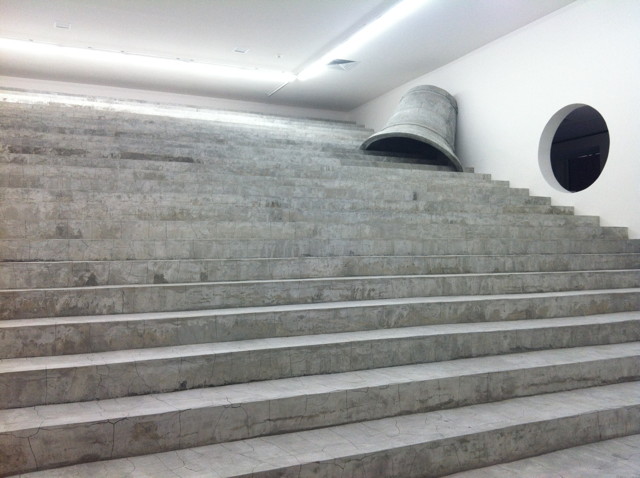
“Adrián Villar Rojas’s La inocencia de los animales (The innocence of animals) is an immersive installation that resembles both an amphitheater of antiquity and a postapocalyptic cavern. Consisting of cracked, crumbling clay and concrete, the work points forward and backwards—seemingly to the very beginnings of civilization and its aftermath. Villar Rojas’s work also serves as a place to impart and absorb knowledge by acting as the location of the EXPO School. Speaking of his work, Villar Rojas says, ‘What I wanted to do was work as if I was not human. As if the human species didn’t exist anymore. I mean, as far as we know, for 6,000 light years around us, the only beings that are producing symbols, that are thinking—in the planets, in the universe—are humans. So when humans disappear from the face of the earth, then there will be no more art. What could you do in those last moments? What would the last art look like?'”-PS1
Tags: education, future, immersive, post-apocalyptic, sculpture
Posted in Uncategorized | Comments Off on Adrián Villar Rojas
Wednesday, 12 June 2013

Anri Sala
Work from Ravel Ravel Unravel.
“Anri Sala’s project for the French Pavilion has been conceived for the space of the German Pavilion where it is exceptionally being exhibited, and is entitled Ravel Ravel Unravel (2013). The title of the piece is a subtle play on words based on the verb to ravel and its opposite, to unravel, as well as a reference to the famous French composer Maurice Ravel, who in 1930 composed the Concerto in D for the Left Hand which is at the heart of Anri Sala’s project.
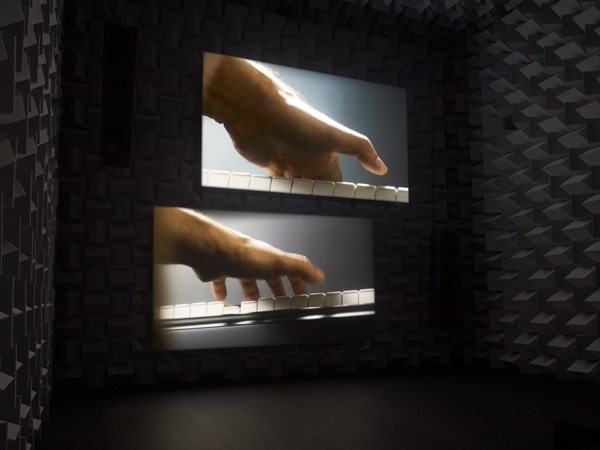
Occupying the central space of the German Pavilion, the first of two works, entitled Ravel Ravel, consists of two films, each focused on the left hand of a famous pianist: Louis Lortie and JeanEfflam Bavouzet. Both of these performers were invited by Anri Sala to perform Ravel’s Concerto, accompanied by the Orchestre National de France, conducted by Didier Benetti.At the centre of Anri Sala’s project is the interpretation of the same piece of music by the two musicians. As the artist explains: ‘each film is focused on the choreography of the left hand encompassing the entirety of the keyboard, while the right hand remains still.’
These two films are projected simultaneously in a semi-anechoic chamber, and, thanks to the sound spatialisation work of sound designer Olivier Goinard, they create the impression of a musical ‘race’, due to the discrepancy between their tempos that has been prepared beforehand by Anri Sala and by the composer and conductor Ari Benjamin Meyers. The artist continues: ‘my intention, is to make a space resound consecutively to the temporal gap between the two performances; to paradoxically create an ‘other’ space in an environment conceived to annihilate the sense of space (by suppressing echoes).’
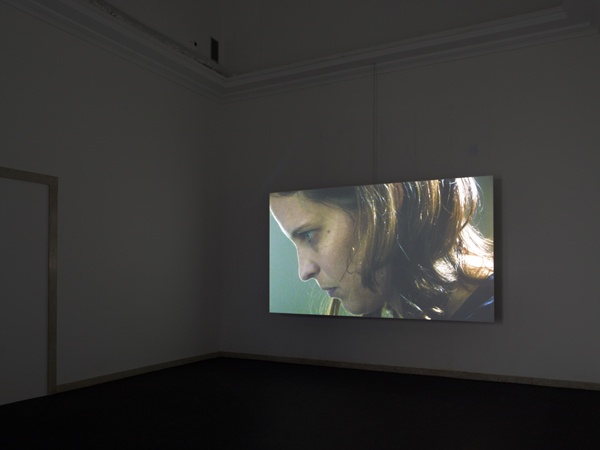
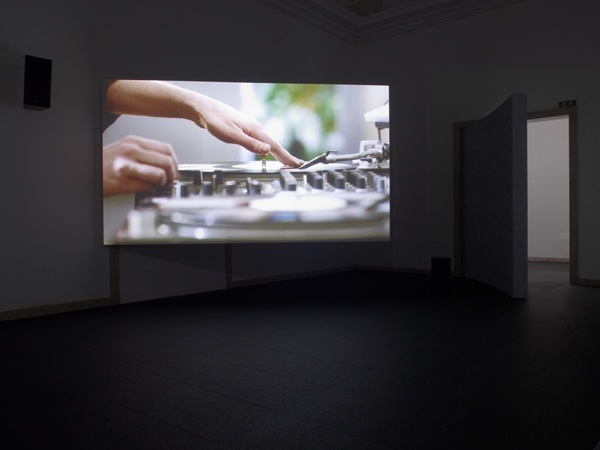
In the adjacent rooms, two other films are presented under the single title Unravel. Chloé, a DJ, is filmed alone, mixing each of the two interpretations and trying to unite the two versions of the Concerto through her unique interpretation.
Unravel and Ravel Ravel generate a three-fold narration. The viewer indeed first discovers a film centred on Chloé’s face and whose meaning, in the absence of any music, remains open. After the Ravel Ravel installation, the last film (and second part of Unravel) finally unveils the movements of the DJ filmed in the German Pavilion, on the musical score of Ravel’s «re-unified» Concerto.In these films, Anri Sala continues his exploration of space and sound, as well as the silent language of the body. He offers an experience based on difference and sameness, in an ambitious piece of work that further pushes his experimentations in sound spatialisation. The work appeals just as much to the viewer’s intellect as to his body, creating a powerful physical and emotional experience, submerging the viewer in its music.-Stefano Cernuschi
Tags: french, music, Venice Biennale, video
Posted in Uncategorized | Comments Off on Anri Sala
Tuesday, 11 June 2013

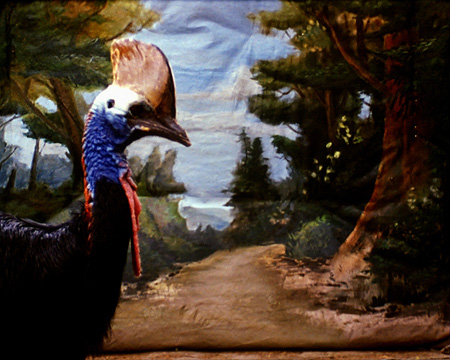


João Maria Gusmão and Pedro Paiva
Work from their oeuvre.
“Since 2001, João Maria Gusmão and Pedro Paiva have collaborated on the creation of enigmatic, lyrical photographs and sculptures, but most prominently they work in 16mm silent film. Through their investigations into the limits of scientific rationalism, they unfold what they have called ‘poetic philosophical fiction,’ suggesting that the world may not simply be more mysterious than it appears, but perhaps more inscrutable than we can even conceive. In the process of sketching their expanded view of reality, Gusmão and Paiva have studied an eclectic range of writers and philosophers, including Plato, Propertius, Jorge Luis Borges, Alfred Jarry, Victor Hugo, and René Daumal. Daumal, who seems to serve as their literary patron saint, was a precocious para-surrealist writer and poet whose allegorical novel of 1938, La grande beuverie (A Night of Serious Drinking), furnished Gusmão and Paiva with the neologism ‘abissology’ (the study of the abyss), which they have used to describe their practice of depicting the indiscernible.
In contrast to the dense thicket of literary and philosophical references that undergirds their inquires, Gusmão and Paiva’s films are spare and concise, and often solely comprise an isolated gesture or single allegorically charged vignette. Cowfish (2011), for instance, consists of a slowed shot of a live fish helplessly flapping its fins on a dinner plate, while 3 Suns (2009) presents a static shot of the ocean, seen from the inside of a cove, which has been superimposed in triple exposure so that three suns blaze in an arc. Other films like The Great Drinking Bout (2007), in which a group of men take part in a kind of ritual intoxication that leaves them in a state of blind ecstasy, have a more narrative bent, but nevertheless maintain a somewhat occult or mystical significance.” –La Biennale di Venezia
Tags: 16mm, abissology, mystical, philosophy, silent film, Venice Biennale
Posted in Uncategorized | Comments Off on João Maria Gusmão and Pedro Paiva