Monday, 26 March 2012


Kerstin Brätsch
Work from her oeuvre.
“Obfuscating the divisions between traditional media, Brätsch’s installations feature large oil paintings and three-dimensional units, such as magazine and poster racks. The posters and zines both advertise and remix corresponding paintings. This strategy extends to the collective Das Institut, the performance group It’s Our Pleasure to Serve You, and to printed media—interviews, advertisements, and portraits. Conveying an amount of skepticism, Brätsch’s work propels a discussion of ground and support between the artist’s paintings and her work as both a musician and a performer.”- Art in America
Tags: art history, found materials, german, installation
Posted in Uncategorized | Comments Off on Kerstin Brätsch
Sunday, 25 March 2012


Timm Ulrichs
Work from his oeuvre.
“In 1959, he established the ‘Werbezentrale für Totalkunst, Banalismus und Extemporismus’ [Central Advertising Agency for Total Art, Banalism, and Extemporality] and thus began to extend a hitherto limited notion of art. Based on the idea of the readymade, and above all on Kurt Schwitters’ Merzkunst, he takes up the artistic project of the historic avant-garde: to link art and life. He interprets the notion of an art of ideas (Duchamp) and of conceptual art since the 1960s in such a way that he makes his life, his everyday routines, his body the subject and object of his art. Since that time, Ulrichs calls himself a total artist, and since then he has been working on an interdisciplinary, heterogeneous oeuvre in which the genres of sculpture, performance, video, photography, concrete poetry and installation are all mixed. As the first ‘living work of art’ (Ulrichs about Ulrichs), he exhibits himself, measures his body, and exposes himself, as a living lightning rod, to the reality of life and death. That this artistic game links reality and fiction is demonstrated by his tattoo on his eye-lid: ‘The End’. Ulrich creates a subtly ironic body art that intentionally distances itself from the shock effects of what is usually known as body art.
His language games, tautologies, and actions confront the question what art is and still can be historically. ” – Wentrup Gallery
Tags: chairs, german, modernist aesthetic, performance
Posted in Uncategorized | Comments Off on Timm Ulrichs
Saturday, 24 March 2012

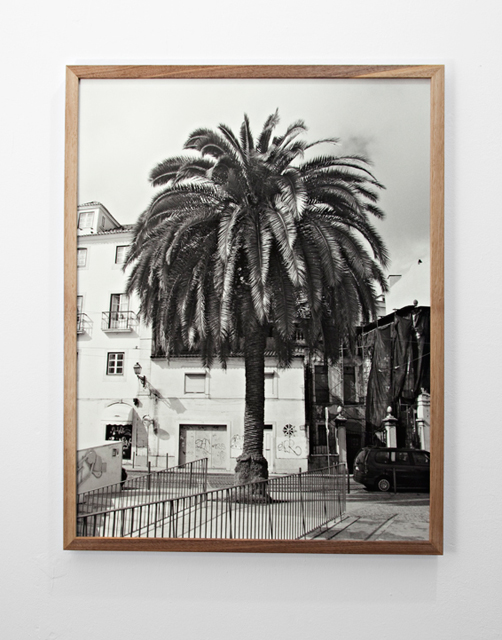
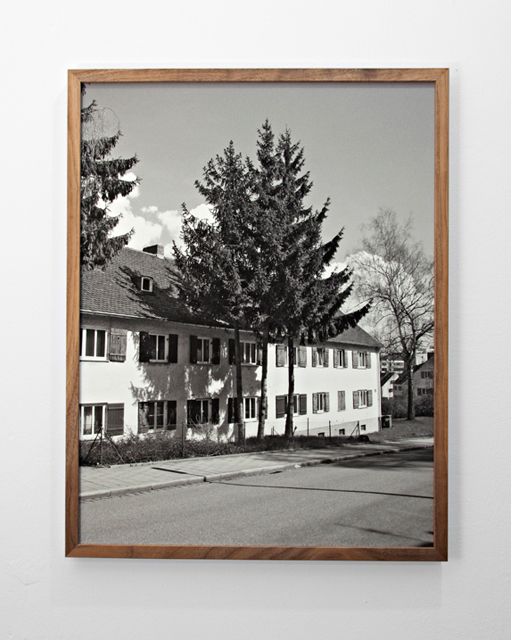
Erik Van Der Weijde
Work from Der Baum.
“Der Baum shows 44 photographs of trees, taken by Van der Weijde over the past few years.
The list of places where the photographs were taken includes different locations in Europe and Brazil. Their descriptions range from specified historical sites, such as the elementary school Adolf Hitler attended, or the street where kidnap victim Natasha Kampusch was held, to unidentified places as for example ‘school’, ‘road’ or ‘park’.
“Der Baum” series takes direct inspiration from the book “Der Baum im Bilde der Landschaft”, a German photo book published in 1931 by K.R Langewiesche. This title was part of a book series called “Der Eiserne Hammer (The Iron Hammer), which aimed to provide cheap educational tools for the uneducated masses. The series carried the motto “Das Gute für Alle (The Good for All)”.” – Chert Berlin
Tags: black and white, german, nature, straight, text, trees
Posted in Uncategorized | Comments Off on Erik Van Der Weijde
Friday, 23 March 2012

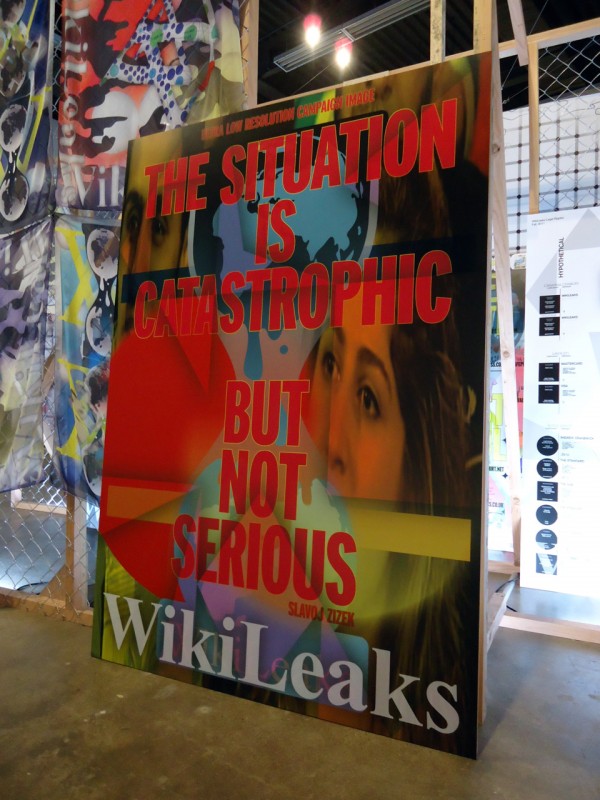

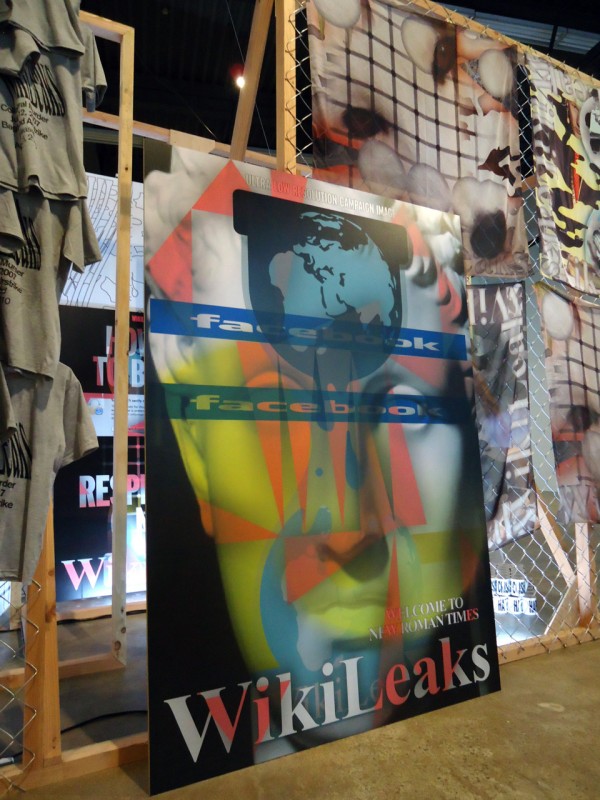
Metahaven
Work from Wikileaks design proposals.
“What image comes to mind when you think of WikiLeaks? Some see it as heroic, others as destructive. Either way, the release of formerly classified documents and diplomatic cables over the last six months have helped transform the site and its founder, Julian Assange, into known entities. But while thinking of Apple or Facebook or even the 2008 Obama campaign calls up certain aesthetic associations or shorthand imagery, WikiLeaks mostly brings to mind the image of Assange’s wan face and silver hair. Perhaps, as Daniel van der Velden of the design studio Metahaven argues, WikiLeaks ought to re-evaluate its “visual identity.” “Does it matter what it looks like?” he asked in a talk sponsored by the Graphic Design Museum in the Netherlands. “Maybe it does.”…
The designers have put forth a range of possible visuals. These include a drip shape, representing a leaked bit of information. They’ve explored WikiLeaks as a Petri dish, where reactions are created. They’ve created a visual map of its information-distribution “architecture” and also considered the ways that the current globe logo might be extended. More tangibly, the designers have begun releasing (or “leaking”) a series of 193 pro-WikiLeaks posters on its site, in a plain and stark style, one for every country, pushing the idea that you can support WikiLeaks from anywhere in the world.
As the publication Design Observer noted, this thinking-out-loud approach can be frustrating. But it makes a certain amount of sense that this particular visual identity should be explored in an unusually transparent way. Perhaps it will result in constructive, far-flung feedback. Besides, Metahaven’s relationship to WikiLeaks is, to put it mildly, unusual. The designers approached WikiLeaks in June with an offer to update its graphic identity, via e-mail. “Absolutely. Go for it!” came the reply, according to Metahaven. “We have a shortage of such things. . . . J. A.” As WikiLeaks controversies have ratcheted up since then, simply keeping the site operational has become a serious challenge, as have further e-mail discussions. So as van der Velden points out, WikiLeaks isn’t really a “client,” but rather something like the subject of a public, and wholly voluntary, research project.” – Branding Transparency, Rob Walker, New York Times
Tags: design, dutch, fashion aesthetic, installation, political
Posted in Uncategorized | Comments Off on Metahaven
Thursday, 22 March 2012


Alejandro Almanza Pereda
Work from his oeuvre.
“Alejandro Almanza Pereda’s body of work comprises sculptures, drawings, installations, photographs and prints.
The Mexican artist’s research is primarily focused on the field of equilibrium and precarious forces, bringing life to an allegory of our society and that which we perceive to be certain.
The objects he is most interested in are those found in daily life: forms, interior decorations, furnishings, and many other common tools.
Through his precarious installations he takes away the presumed function of the chosen object, instead transforming it into a mere aesthetic whim.
Always maintaining a site-specific attention to places and contexts, the artist is able to create humorous and, at the same time, prickly critiques of human self assurance, showing us the superfluous and comic aspect of our beliefs.” – Chert Berlin
Tags: berlin, chert, flavin, gnms, lebowski, refresh, sculpture
Posted in Uncategorized | Comments Off on Alejandro Almanza Pereda
Wednesday, 21 March 2012
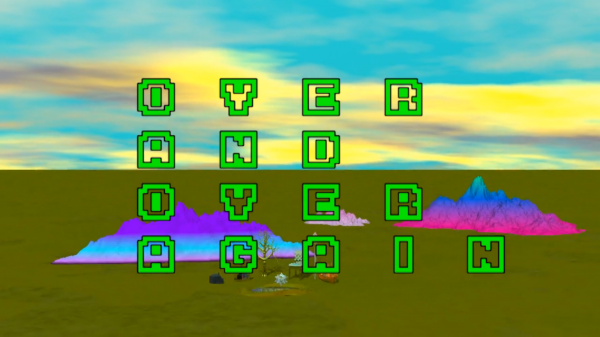
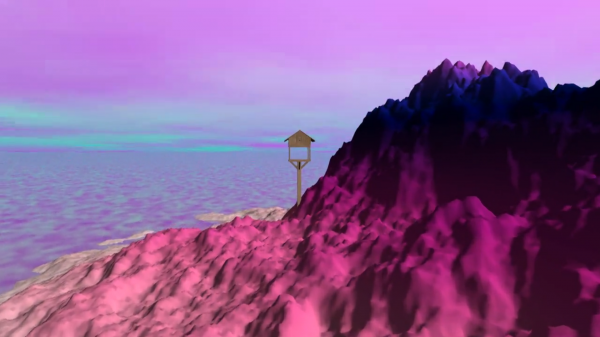
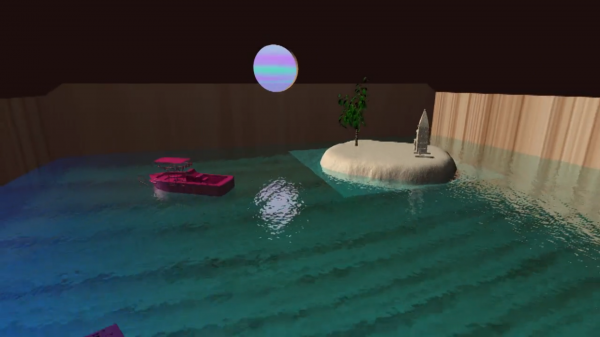
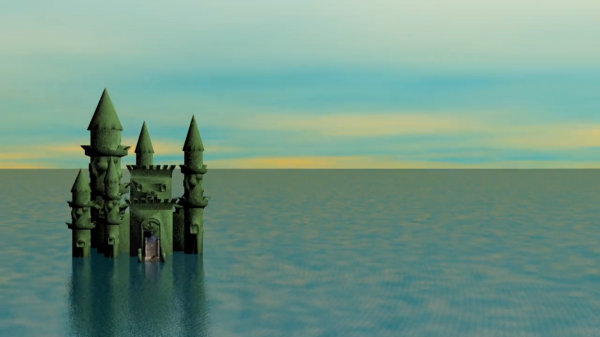
Jeremy Couillard
Work from Over And Over Again
“In my past life, when i was a conquistadora, I got lost in the amazon down tiputini river, on a canoe with shamanic hepatoligitists who used estrous cycles to predict the future. We capsized and were rescued on the backs of alligators and ended up in a florescent village that was run by deranged cartographers who were mapping out elements that Mendeleev would never know about. Topological quantum computing with jungle potions, panther bones and protein receptors. The cartographers told me: “You have the most incredible cellular structure we’ve ever seen.” They mixed my hair with the reddish bark of a yew tree to make a phosphorescent wax. With the wax they constructed an idol. It had wires in its mouth. I connected the wires to my arm and received an infusion of a mitotic poison that sent me on a vision quest 500 years in the future where i was selling homemade healing machines and Tibetan ceremony daggers on Amazon, making viral videos of kittens sleeping with lions, lost in a crowded city of restaurants and atheists. When I came back I spent several weeks with the shamans and cartographers We discovered a cave of microscopic transistors and used them to build a canoe. We set it in the water, said our goodbyes and continued the journey downriver.” – Jeremy Couillard
via Triangulation Blog
Posted in Uncategorized | Comments Off on Jeremy Couillard
Tuesday, 20 March 2012
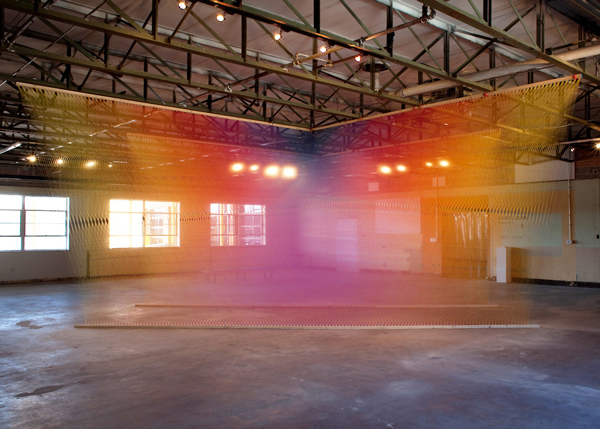
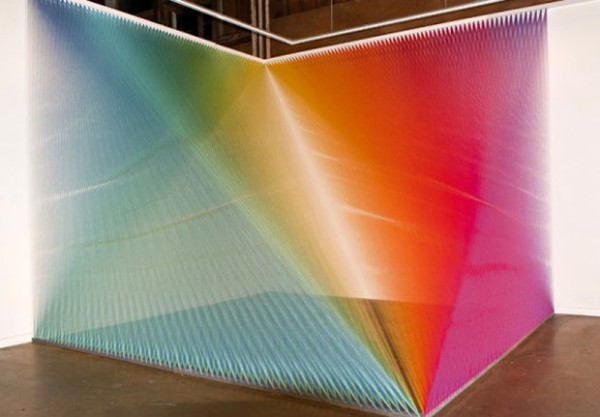
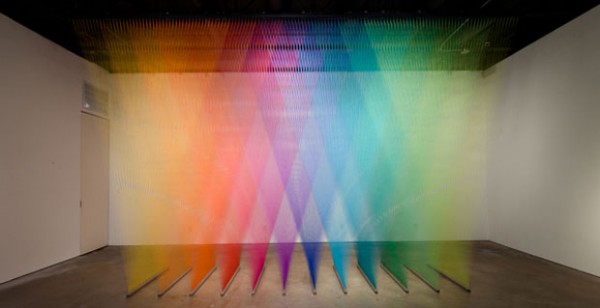
Gabriel Dawe
Work from Plexus.
“Citing Anish Kapoor as a major influence, Dawe creates complex and often vertigo inducing spatial structures, which direct the viewer through space. Accordingly, they emulate the invisible forces which shape our existence; the social norms, rules and expectations which determine who we are. In this, Dawe references theorist Michel Foucault’s notion of biopolitical structures of power, which are used to control the individual. However, whilst for Foucault such structures were overwhelmingly malign, Dawe sees them more ambiguously. As with architecture and clothing, which Dawe’s installations evoke, they can control and limit, but also protect and support. In giving visual expression to these webs of forces, the artist alludes to evolutionary theory, microscopic imagery and the patterns inherent in nature, drawing our attention to the ‘invisible order amidst the chaos of life.’ This stunning installation makes the intangible visible, giving form to structures which exist at the very edges of our comprehension.” – National Centre for Craft and Design
Tags: color, gradient, hue, installation, spectrum, thread
Posted in Uncategorized | Comments Off on Gabriel Dawe
Monday, 19 March 2012


Nicholas Gottlund
Work from Baker’s Dozen @ Open Space Baltimore.
“Comprised of thirteen aluminum plates traditionally used in offset lithograhy, Baker’s Dozen reflects on the materials and processes of commercial printing. The plates which are typically used to print from, in this case, are the work themselves. Objects such as paper, press sheets, film and cardboard are placed on their surfaces and exposed. Each plate is inked, leaving a visible copy of the original. There is a reflexive clarity to the effect each object has on the plate. The resulting thirteen works highlight perceptual variety; moving from monochrome flats to vibrating moirés. Baker’s Dozen poetically investigates the process of reproduction in a most literal way.” – Open Space Baltimore.
Tags: copy, lithograph, mechanical, process, reproduction
Posted in Uncategorized | Comments Off on Nicholas Gottlund
Sunday, 18 March 2012
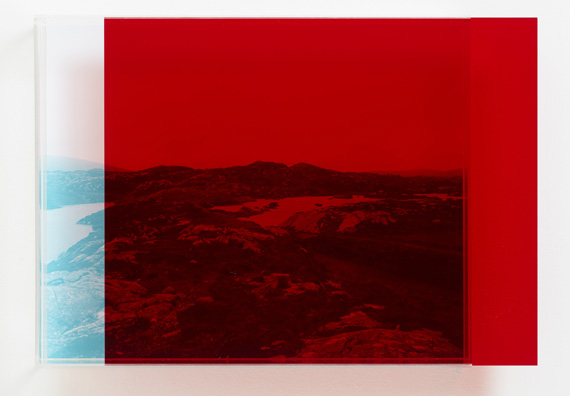


Ebbe Stub Wittrup
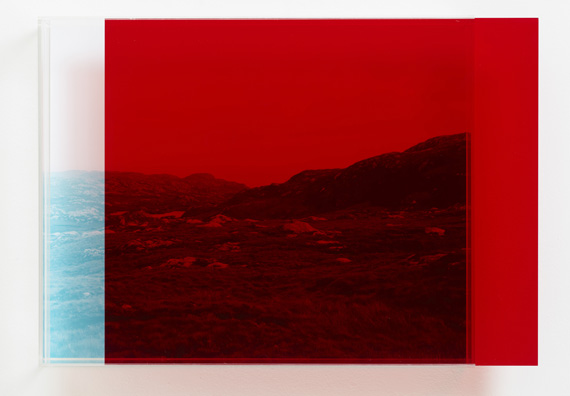
Work from his After Space Odyssey.
“All the works in the series are locations from the science fiction film 2001: A Space Odyssey from 1968 by the director Stanley Kubrick. One scene in the film was meant to show the planet Jupiter, and the island of Harris in the Outer Hebrides most resembled the director’s idea of Jupiter. This Scottish area consists primarily of large boulders worn down by huge melted glaciers. The rocks in the area are of the anorthosite type and closely resemble the rock type that exists on the Moon.
During the shooting back in 1968 the landscape was filmed from a helicopter, which projected a red light down over the landscape. The greenish shades of the landscape were thus cancelled out by the red light, so that the film appeared in greyish shades. The landscape looked more unearthly and barren, like an imitation of Jupiter.
In Stub Wittrup’s works, as in his earlier works, the artist explores the relationship between the mythi¬cal, the fictive and the real. The photography from this series exists in a kind of intermediate state, as the actual photograph arises between two colours – the cyan green and the complementary red colour…” – Martin Asbæk Gallery
Tags: 3d, cinema, cult classic, cyan, denmark, landscape, movies, photography, pop-culture, red
Posted in Uncategorized | Comments Off on Ebbe Stub Wittrup
Saturday, 17 March 2012


Sylvain Sailly
Work from Instructors @ Bubblebyte.
“Over the past five years, Sylvain Sailly has worked with multimedia installations that combine prints, video work, and sculptural objects. His work explores the dematerialisation of systems and procedures diffused in contemporary society, highlighting invisible processes in production which transform into the practical and meaningful. Sailly’s practice researches the notion of hidden differences between objects and their abstraction, and the way these differences elude direct investigation.
Instructors, the artist’s first solo show at bubblebyte.org, follows the research on imperceptible variations and takes the form of an on-line series of semi-autonomous 3D animations created exclusively for bubblebyte.org. The series adds to the artist’s personal web diagrams collection and functions as an extension of his site-specific and gallery work.” – http://www.bubblebyte.org
Tags: 3d, animated gif, awesome, google, new media, radical, sculpture, sketchup
Posted in Uncategorized | Comments Off on Sylvain Sailly