Ilanit Illouz


Ilanit Illouz

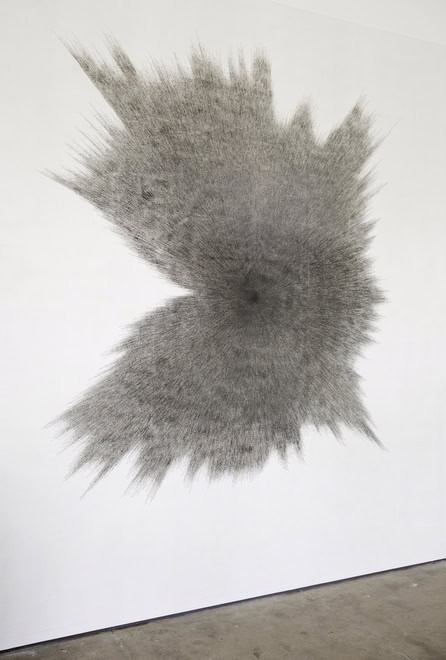
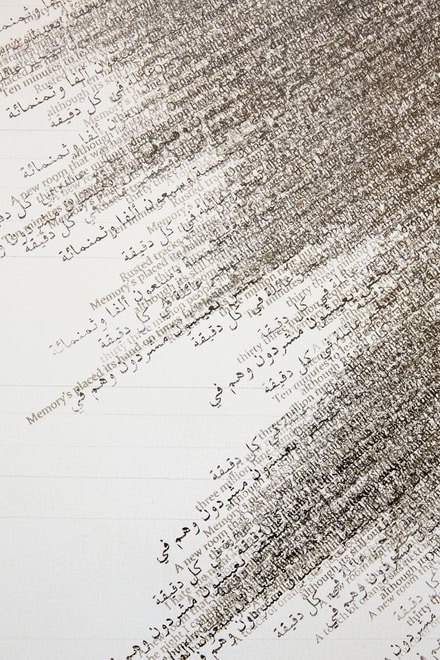
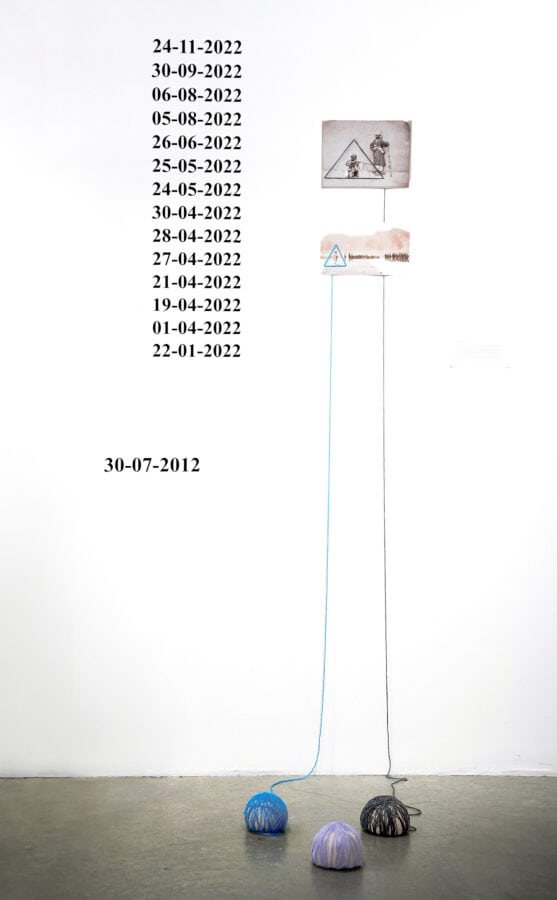
Work from The Memory of Landscape.

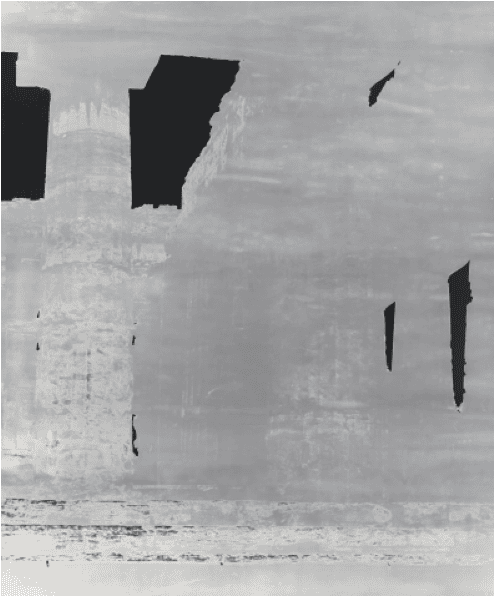
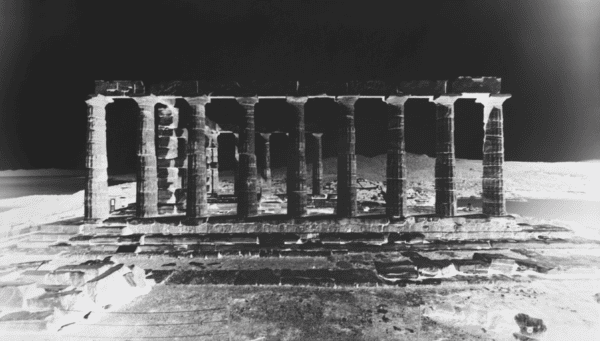
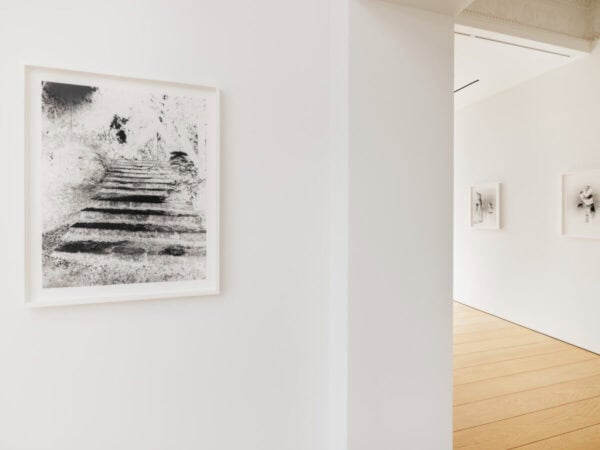
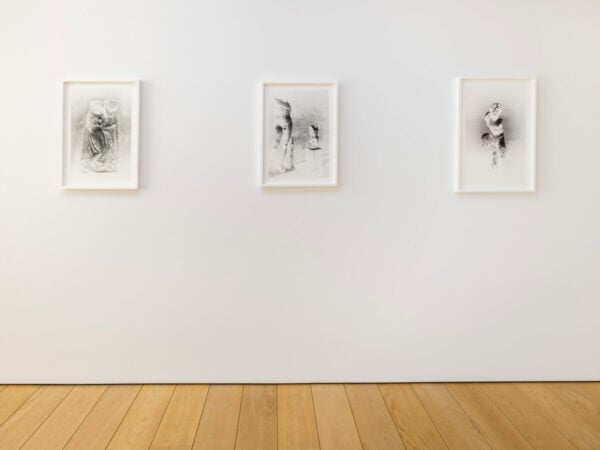
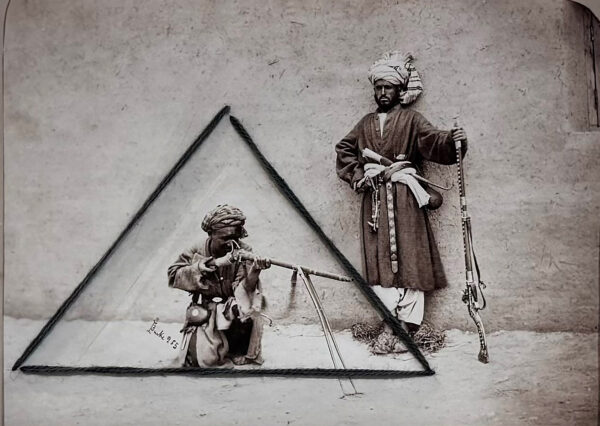
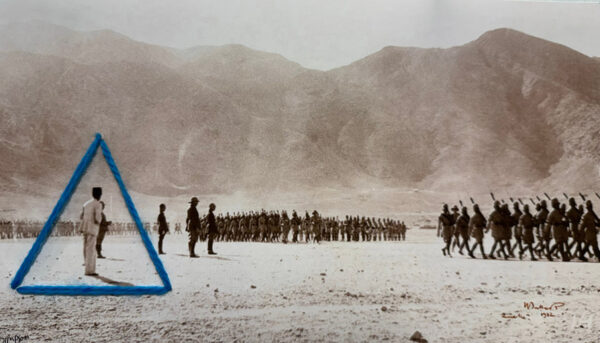
“For me, Ilanit Illouz is not an artist but an archaeologist. Like an intrepid excavator, she travels through the landscape, walking the desert in search of what is hidden, undiscovered. In a certain way, her research-driven approach is no different from that of an archaeologist—demonstrating an equal commitment to studying the human past through its material traces, whether that past is ancient or recent. Even her works are “fossilized,” infused with the raw fabric of time—dust, sand, salt, earth, and minerals. Like an archaeologist, Ilanit Illouz goes in search of ancient places: the Mediterranean, the Dead Sea, and the Judean Desert. Lands that remember and commemorate, and others that are now erased.
She asks herself: How can one evoke a place whose landscape has left no trace?

Ilanit Illouz’s work serves to create a memory and a place where none exists. A translation of the untranslatable.
She meditates on personal and collective traumas, paying homage to her mother and to countless others who traveled great distances in search of a better life. In the case of Illouz’s mother, migration took her to Algeria, Marseille, and Kiryat Ata (in northern Israel). Her abstract landscapes thus represent the sociopolitics of territory, borders, geography, and independence. They are decidedly anonymous—a choice I see as intentional and metaphorical—representing simultaneously somewhere and nowhere, or the thin line between personal and universal experience.
Ilanit Illouz’s works are “political landscapes” for the histories and memories they contain, but also for the narratives they seek to foreground. The artist’s unique process is essential here, taking the form of a kind of “intervention”—an act of excavation and delicate gathering of organic materials. I picture Ilanit Illouz bending down to retrieve salt, earth, and sand, and in return leaving a part of herself embedded in the ground. The artist creates a physical mark on the landscape—or perhaps it is more of an exchange? A collaboration, or even a performance? I imagine the land sacrificing itself for Ilanit Illouz in order to be remembered. The idea of “taking” echoes in my mind. Taking photographs, or taking something that does not belong to us—land, a home, or someone’s rights.
Many of Illouz’s destinations are the sites of both contemporary and historical conflicts, often centered on the land itself—which, through the artist’s hand, crystallizes and takes form on the surface of her prints. These are also places implicated in modern battles over natural resources, notably the Dead Sea, whose precious salt is at the center of an international boycott due to illegal exploitation. The Dead Sea is also facing a climate crisis and is shrinking at an alarming rate—about one meter per year. In the last fifteen years, 1,000 sinkholes have appeared—depressions that open in limestone regions. The French word for “sinkhole,” the artist’s mother tongue, is “doline,” the title of her ongoing series.

Extraction and our seemingly insatiable appetite for natural resources mark our landscapes in their own way. More recently, Illouz’s work has taken her to volcanic regions of Italy. Here, the earth remembers the seismic activity of its past and its impact on the scarred landscape and the civilizations that once inhabited it. Volcanoes are both witnesses and traces of the past. The artist describes her interest in history as “autobiographical, geological, mineral, and vegetal.” Thinking of volcanic matter—lava, dust, and stone—brings to mind the myth of Medusa, wronged by men, exiled, and endowed with the terrible power to turn men into stone. To “petrify” them, in a way reminiscent of the fossilization protocol used by Illouz. Medusa represented an otherness that could not be understood and therefore had to be destroyed. After Perseus cut off her head, Pegasus and Chrysaor emerged from her body. A transformation—a new life born from death. Volcanic regions are hostile, and yet life finds a way to survive, sometimes to flourish.
By using organic materials and excavation-like techniques, Ilanit Illouz highlights environmental pressures on geology, landscape, limnology, ecosystems, and Earth’s climate, as well as the effects of the Anthropocene on ancient worlds. By taking very little, she reveals many phenomena; her physical interventions symbolizing both mining and, more broadly, the manipulation of soil, as well as the building of dams. For the artist, the use of salt is particularly meaningful. Its complex history as a commodity of exchange intersects with its role in the historical and technological development of photography. Photography is, at its core, a process born of the industrial and imperial era.
Salt, too, has crossed continents and oceans, shaping political, social, and economic dynamics along the way. It preserves but also degrades—a metaphor for the fragility of our environment and the dynamics of political power. Pioneers Thomas Wedgwood (British, 1771–1805) and Joseph Nicéphore Niépce (French, 1765–1833) developed early salt-printing processes but could not find a way to fix or stabilize their images. William Henry Fox Talbot (British, 1800–1877) made improvements around 1834 using a saline solution. The use of natural resources to capture images was further developed by Niépce around 1822 with the creation of the heliograph. This process involved bitumen of Judea, a light-sensitive material applied to a pewter plate. It produced the earliest known photograph made directly from nature, View from the Window at Le Gras (1826 or 1827).

There is a true alchemy in Illouz’s work, a formal beauty in the physical materiality and artisanal gestures of her practice. It is painstaking work, marked by great meticulousness. After collecting her organic materials, she returns to her studio. Like Wedgwood, Niépce, and Talbot, she creates and applies a solution to the surface of her photographic prints—often repeatedly and over several months. A transformation takes place. The result is otherworldly: a lunar landscape shimmering with millions of diamonds. A Trojan horse concealing its complexity and drawing the viewer in.
Ilanit Illouz emphasizes the cathartic dimension of the whole process—walking, gathering, remembering, washing, erasing, forgetting. To me, her prints are an act of resistance. An alternative archive of history. A new form of life emerging from the roots of the past.” – Fiona Rogers (translation)

Andreas Greiner


Andreas Greiner (co-produced with Daan Lockhorst)

Work from Jungle Memory.

“ARTIFICIAL INTELLIGENCE AND DEEP LEARNING REEXAMINE LANDSCAPE PAINTING / Custom programmed and trained CycleGAN and computer vision algorithms.

Due to anthropogenic climate change causing higher temperatures, drought and better living conditions for tree pathogens, forests are endangered worldwide. Jungle Memory seeks to archive this ephemeral life form and its specific aesthetics in a vast digital database by photographically documenting forests, like on the Island of Vilm or the Hambach Forest in Germany, the primeval Bialowieza Forest in Poland, the Red Forest in Chernobyl or the burnt down parts of the Plumas National Forest in California. While our image of nature had traditionally been expressed through landscape painting, this project reinterprets the genre for the digital age; nature is not perceived by human senses, but rather through a Deep-Learning Algorithm. Artificial Intelligence can thus be understood as extending the ‘human gaze’ on nature. The technological appropriation of the natural world creates a digital hallucination, questioning the sublime nature-experience heralded in the romantic era.

During the process of applied machine learning, the project took a self-critical turn in analysing its own electric energy consumption. Calculating the carbon dioxide emissions of projects and integrating them in their display (e.g. Change the system, Mars on Earth, 880), is an effort to begin to understand and visualize these rather abstract relationships.” – Andreas Greiner

Bryan Schutmaat


Bryan Schutmaat

Work from Islands of the Blest.

“I’ll come back to you
in the hour of basalt and copper,
back like floodwater pressing its
shoulder against the ribs of the valley.

When I rub bear fat into my boots
a star disappears and the bones in my hand
become a set of gears
bringing electricity to this canyon
of burnt oil and jagged creeks.

When I say your name
the meridian goes bright
as the bit in a blind horse’s mouth.
When I say your name
a bucket of sparks empties into the river
and the night sky is streaked through
with charred snags and shale.

Each night a new ghost
lays out a single crosstie
and a farrier’s hammer
falls through the well shaft of my dream.
I am all steam polish and cable hum,
all snowdrifts clinging
to the north side of the ridge.

I turn coal into motion.
I lie flat on my stomach and drink
from the runoff like a mountain boomer.
I look into a wall of flame
and hear the songs of a trestle.

A buzzard throws down
the ace of spades
and I run a grease bead
across the axle of the moon
and make it spin.

The horizon opens its mouth
and strikes a match against its dry tooth
and I write this letter for you
and sew it into a pantcuff made of smoke
from these islands of the blest.”

Michael McGriff

An-My Lê


An-My Lê

Work from Small Wars.

“At first glance, the photograph Small Wars (rescue) (1999–2002), appears to capture a frantic moment during a tense battle: A helicopter has been grounded and seems to have crashed, since smoke is pouring from its hull. A man in a camouflage uniform kneels on the ground, rifle cocked, prepared to fire. Two other men, also soldiers, given that they are wearing helmets, stand in the background, either dealing with the wreckage or poised to join the impending fight. The photograph was not taken on the frontlines, however, but is rather one of a series of pictures of men reenacting battles from the Vietnam War in the forests of Virginia—something they do as a hobby. An-My Lê, who left Vietnam as a young girl with her family in 1975 to move to the United States, conceived the project as a way to explore the mediatization of the Vietnam War and the ways it is presented on film and television. Since most people learn about the war from its portrayal in movies such as Stanley Kubrick’s 1987 film Full Metal Jacket, which focused on the violence experienced by the troops, Lê set out to investigate the extent to which the Vietnam War is embedded in the collective memory of the United States. The men who reenact the battles are playing a part scripted by history, yet the battles ultimately bear little resemblance to the actual events on which they are based. Numerous factors point to this subtle subterfuge: There is notably little blood or gore in any of the photographs; the battles have been completely sanitized. Also, the surrounding foliage is made up of pines and oak trees, which are typical of North American woods rather than the dense tropical forests of Vietnam. The disorienting effect of the photograph raises broader questions of the reliability of media images of war. Lê uses a large-format camera similar to that employed by Civil War photographer Alexander Gardner, who famously staged some of the scenes he shot. Her choice of camera taps into the larger history of war photography and the ways in which images are manipulated to varying ends, often either to downplay or to highlight the impact of war and the consequences of armed combat.” – Claire Barliant

Joachim Koester


Joachim Koester

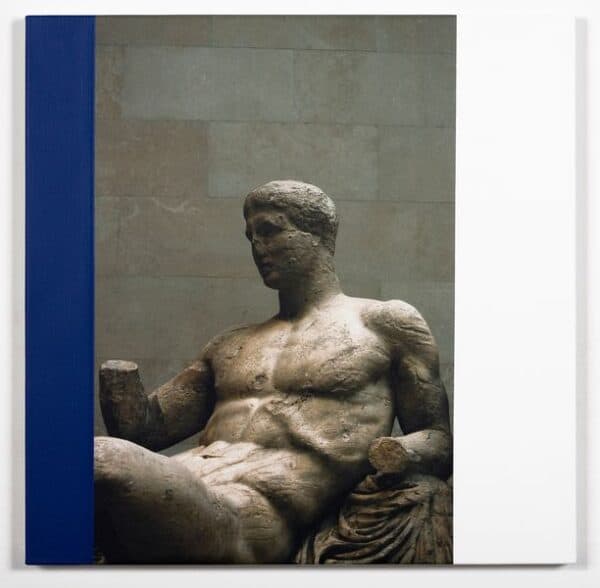
Work from their oeuvre.

There is also a great overview of Koester’s work from Nicolai Wallner.
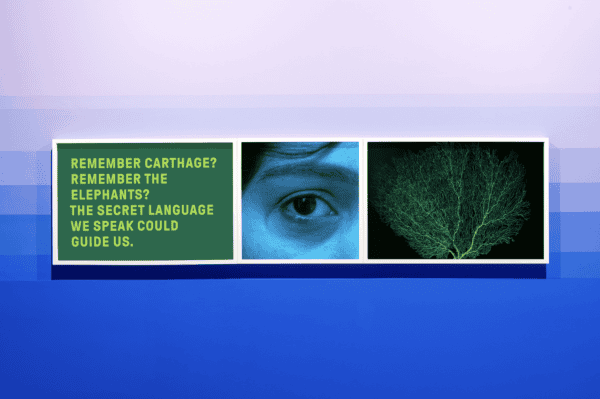
“Joachim Koester uses strategies of montage, archiving and storytelling to illuminate and complicate historical events that form a collective mythical construction of the recent past. His works explore the legacies and mine the fictions that form around movements and experiments – be they in the systems of art, mind-altering substances or the occult.” – excerpted from a wonderful text by stills.org.

Dionne Lee


Dione Lee

Work from Trap and Lean-to at Lightwork.

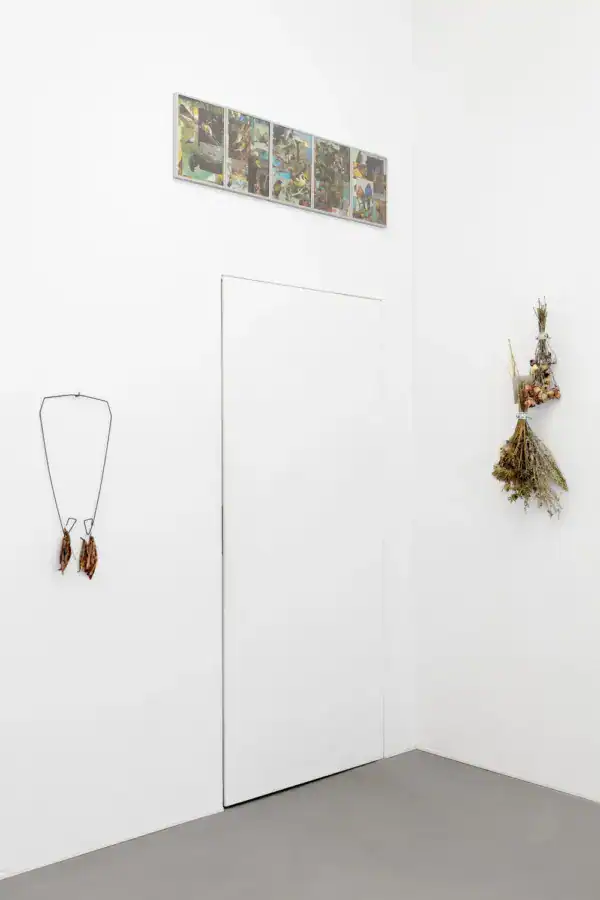
“Oakland, California-based artist Dionne Lee employs video, collage, photography, and sculpture to explore American landscape and her place within its complex history. As an African American woman, she sees the natural world as both a place of refuge and tranquility, but also the location of racial violence, danger, and vulnerability. More broadly, her work acknowledges the terror of climate change, mass migration, and humanity’s ongoing drama of survival. Duality often surfaces in work where she notes that “two things can be true at once.”

Lee often manipulates found imagery in the darkroom in a process both organic and intuitive. The exhibition contains many fragments of photographs from her many wilderness survival manuals and vintage color magazines offering majestic views of “the great outdoors.” The survival manuals offer detailed, step-by-step directions on building a lean-to or foraging for food and water. Lee has become adept at these skills herself, thus reclaiming her connection to the earth and salvaging nearly-lost ancestral skills and knowledge. As the earth continues to shift beneath our feet, Lee asks what determines survival: not just who has what, but who knows how.

Lee’s darkroom practice has the same sense of intervention and disruption. With a forceful irreverence for the sacred silver gelatin printing process, she deconstructs photography itself. Lee draws with graphite directly on prints before and after she exposes them. She pulls negatives across the scanning bed to create painterly abstractions. She tears, crumples, solarizes, and double-exposes fragments of information, challenging both photography’s purpose and authorship along with any idealized and colonialist view of the earth.” – Lightwork

Awoiska van der Molen


Awoiska van der Molen

Work from The Living Mountain.

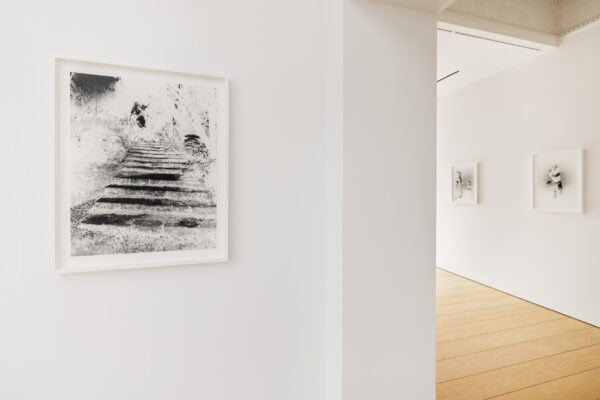
“…Awoiska van der Molen’s audiovisual installation The Living Mountain (2022) shows the grand landscapes of the Südtirol Alps in Austria, the homeland of Thomas Larcher, composer of the accompanying music. In this compelling work, Van der Molen’s atmospheric black-and-white photography and the experimental score merge as often as they collide with the music, revealing the monumentality and fragility of the mountains. The promise of untouched nature is close at hand, and it is appealing to lose ourselves in a sensory installation like this, which Van der Molen is making for the first time in her long photographic career…” – Iris Sikking from Contested Landscapes at Kunsthalle Mannheim

Mark Ruwedel


Mark Ruwedel

Work from Westward.

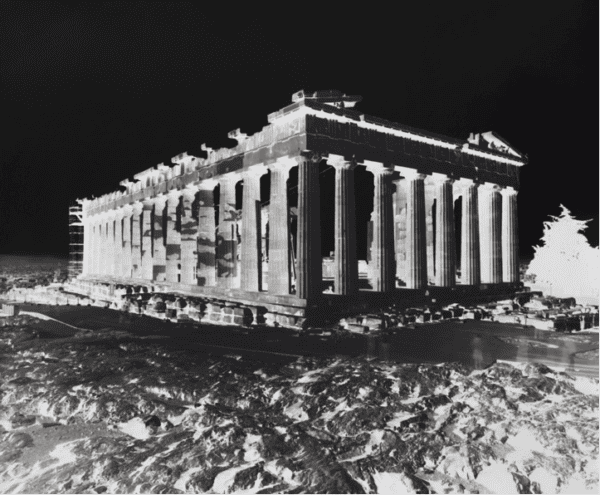
“Ruwedel is an artist who has been photographing American deserts and other remote locations for over 25 years, pursuing epic-scaled projects on railroad construction, Pre-Columbian sites, the landscapes of nuclear weapons, and more recently, failed attempts to live in the harsh environment of the desert.

With an affinity for stark, barren landscapes that are otherwise uninhabited, Ruwedel found solace in the desert as it soon became his primary field of inquiry to explore subtle perceptions about the historical versus contemporary in landscape photography.

Influenced by photographers Lewis Baltz and Robert Adams, Ruwedel’s works do not only overlap the ideas of the landscape and histories the place represents, but also the histories of picture-making. He uses land as a suitable place for social inquisition by studying each intricate history of the American or Canadian West and producing mesmerizing black-and-white photographs of the grades, cuts, tunnels, trestles, and craters of his immediate surroundings to reveal narratives—both geological and human—contained within. The images are wrought with history as the land reveals itself as being both an agent of geological processes and a field of human endeavor.” – Mark Ruwedel

Ugo Rondinone


Ugo Rondinone

Work from his oeuvre.

“Ranging from installations and sculptures to psychedelic paintings and large-scale drawings, Ugo Rondinone’s eclectic practice explores the relationships between opposing forces—day and night, real and artificial, euphoria and depression. His most recognizable works are his colorful “Rocks” sculptures: vertically stacked rocks painted in fluorescent colors. Inspired by naturally occurring geological formations and the meditative art of rock balancing, Rondinone has built these large-scale artworks in public settings around Liverpool, Miami, and the Nevada desert. He has created smaller iterations for gallery exhibitions. Rondinone has also made bull’s-eye-shaped, neon-hued mandala paintings and cast-bronze sculptures…” – Artsy

Torkwase Dyson


Torkwase Dyson

Work from A Liquid Place.

“Torkwase Dyson describes herself as a painter working across multiple mediums to explore the continuity between ecology, infrastructure and architecture. Dyson’s abstract works are visual and material systems used to construct fusions of surface tension, movement, scale, real and finite space. With an emphasis on the ways black and brown bodies perceive and negotiate space as information, Dyson looks to spatial liberation strategies from historical and contemporary perspectives. She seeks to uncover new understandings of the potential for more livable geographies, recognizing that many landscapes, infrastructures, and built environments were actively shaped to devalue Black life.

Liquid A Place is part of an ongoing series that started from the premise that we are the water in the room, inviting viewers to consider their bodily interconnection with rivers and oceans that surround us. After all, around 60 percent of our bodies and 70 percent of the planet is water, and these waters circulate across our bodies and the planet as they shift states from solid to liquid to gas.

For this iteration of Liquid A Place, Dyson creates a monumental sculpture that is a poetic meditation connecting the memory of water in the body and the memory of the water in the desert. How do we go to the water in our bodies to harvest memory? Can this liquid memory help us reconsider scale and distance as critical forms in holding onto liberatory life practices? What kind of scalable infrastructure can our bodies resist and invent, making cities more livable? How are new geographies formed from the architecture of our bodies?” – Desert X