Thursday, 18 August 2011
Tags: commerce, current events, recontextualize, video
Posted in Uncategorized | Comments Off on Marysia llewandowska and Neil Cummings
Wednesday, 17 August 2011


Fabian G. Tabibian
Work from his oeuvre
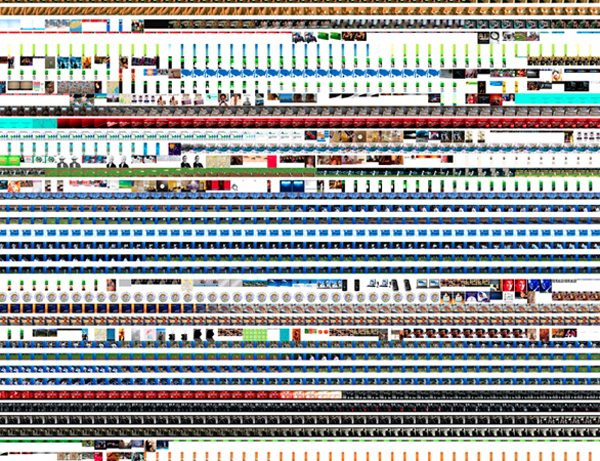
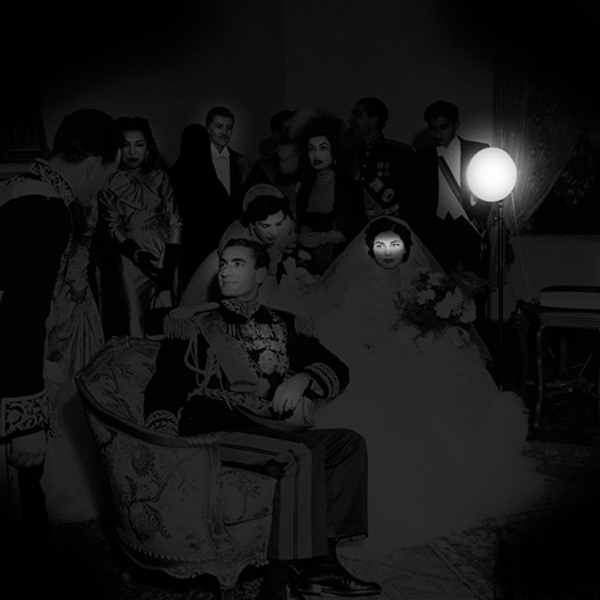
“My work uses the tropes of painting to examine the impact of the Information Age on the individual and the global community. I consider myself a painter, although I work primarily with lens-based, print-based, and digitally created media. I am more interested in painting as philosophy, rather than painting as material. This approach to painting reflects a mass media experience where information is sampled, quoted, referenced and eventually remixed into something new. In my practice, the history and language of painting become subverted with loaded social content and digital processes, thereby creating new forms through playful and irreverent quotation.” – Fabian G. Tabibian
via Rhizome
Tags: digitally created media, favicons, Information Age, lens-based, painting
Posted in Uncategorized | Comments Off on Fabian G. Tabibian
Tuesday, 16 August 2011


Lino Lake
Work from his oeuvre.
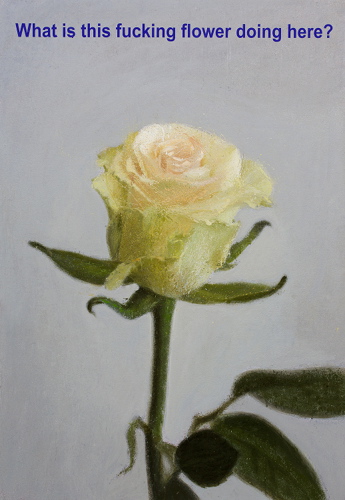
“The painting exciting for me to be his obsessive nature and role ambiguity, obsolete or not in the global context of art where it is always, nonetheless, unexpected. His scholarship seems to break the only rule of art: Freedom. The painting is indeed a closed frame appears to be a prison for many artists. It seems that the artist seeks to free a number of unnecessary problems with the paint. Unusual features seem utopian dreamers or stick to the painters, too serious. Painting as a pure form of expression as a blank where freedom expands barrier-free improvisations or whims of a selection of historical currents subject to certain nervous tics of the painter, I am horrified.
In my table: “What makes this fucking flower here?” We could transplant the word “painting” instead of “flower”. What makes this fucking picture here? I’m interested in whether or not the representations and artistic and useful. I wonder what is not art. Comic Another question: Can you imagine some afternoon classes as a hobby on happenings and installations? Surely some day appears, for example, some amateurs say an artist at an opening that she and her nephew (who is a doctor) also, for example, conceptual art.Painters tend to have dicicil to differentiate this type of “art.”” – Lino Lago
via Today and Tomorrow.
Tags: computers, hyper real, painting, simulation
Posted in Uncategorized | Comments Off on Lino Lake
Monday, 15 August 2011


Phil Collins
Work from his oeuvre.
“In all the different strands of his practice Collins investigates the perils of representation and the emotional core of such seemingly transparent media as video and photography. Instinctively distrustful of the camera and its effects, yet responsive to its potential as an instigator of relationships, his works often revolve around a convocation of individuals. Complicating both the myth of aesthetic autonomy and the fantasy of art as in itself political, Collins films, photographs, installations and live events appropriate the documentary tradition and elements of popular culture, such as pop-music and dance, to establish an immediate and humorous connection with the participant and viewer. Throughout, Collins displays a disarming mix of critical conscience, exuberant charm and an ambivalent empathy with his subjects. Recent projects have included a disco-dance marathon in Ramallah, the re-recording of a Smiths album in Bogotá with local musicians to produce a karaoke machine for fans, and a press conference with former reality–TV participants.” – Kerlin Gallery
Tags: master of the drum machine, meta, participatory, photography, video
Posted in Uncategorized | Comments Off on Phil Collins
Sunday, 14 August 2011


Daniel Everett.
Work from his oeuvre.
““Daniel Everett embodies the current technological zeitgeist shared by post dot-com kids, the kids of the dot-com kids, and the relationship we have to our interconnectivity (the internet). His work is jaded, earnest, and self mocking at the same time.” – Beautiful/Decay
Tags: clean, everett, photo, refresh, saic, sculpture
Posted in Uncategorized | Comments Off on Daniel Everett
Saturday, 13 August 2011


Sam Henne
Work from Something Specific About Everything.
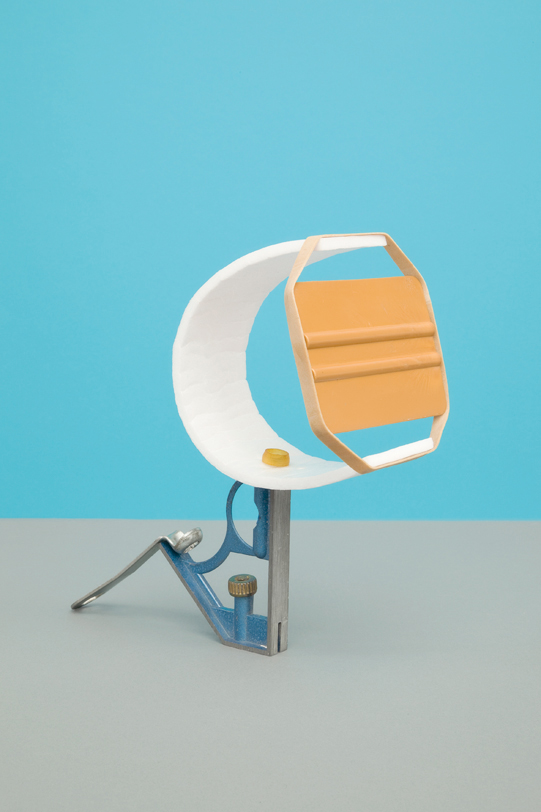
“I was looking through German’s good prospects (gute aussichten), where the playful, colorful work of Samuel Henne caught my eye. The sketch series of Erwan Frotin and the work of Uta Eisenreich came to mind, and if you grew up with memory games from the seventies, you might have an immediate affection for the work. It appears I am not the only one who enjoys the vibrant little sculptures. Henne had already exhibitions in venerable venues like the photomuseum Winterthur and the Deichtorhallen in Hamburg.
After I had seen all his table top creations, I couldn’t detect any further reason for the existence of this work beyond the purely visual aspects. Was there a hidden angle that I had missed? I read his (German only) text, which consisted of three complex sentences, and still there was no explanation. The only part in English is the title, and Google guided me to a text about a Buddhism weekend seminar, written by Alan Watts called “The World As Emptiness” (or, How the Dharma Bum Spent His Easter Vacation transcribing). Google did not help me any further, and I can’t detect any intrinsic Buddhistic qualities in Henne’s artificial transformations. I have translated Samuel Henne’s German text as well as I could, so that you can read it for yourself.
“something specific about everything” focuses on various aspects of value and revaluation of materials and objects within the arts practice and the cultural hierarchy. Issues such as Duchamp’s invention of Readymades and transformational processes fuse together with the artistic mediums.
Photography takes a special position in this topic, as photography made a value transformation as an artistic medium to gain an equal position to paintings and sculptures. Photography became an artistic medium, instead of getting a reduced position as a “pure recording” process.
Am I getting old (fashioned) when I am asking for more substantial thoughts? I mentioned Erwan Frotin and Uta Eisenreich in the beginning, and I think that their work has a certain legitimacy. Frotin is creating work for the commercial (advertising) market, and the visual language of Eisenreich is part of her concept, but do you feel the urge to discuss the “cultural value system” when looking at “something specific about everything”? Taken in a wider context, I can see the interest in just the visual aspects of Henne’s work as being part of a trend. In our times of continued political depression, people may welcome the clean, colorful and simple to feast their eyes on and which does not require us to deal with the burden of reality.” – via Mrs. Deane
Tags: aesthetic, commercial influence, crtique, mrs deane
Posted in Uncategorized | Comments Off on Sam Henne
Friday, 12 August 2011

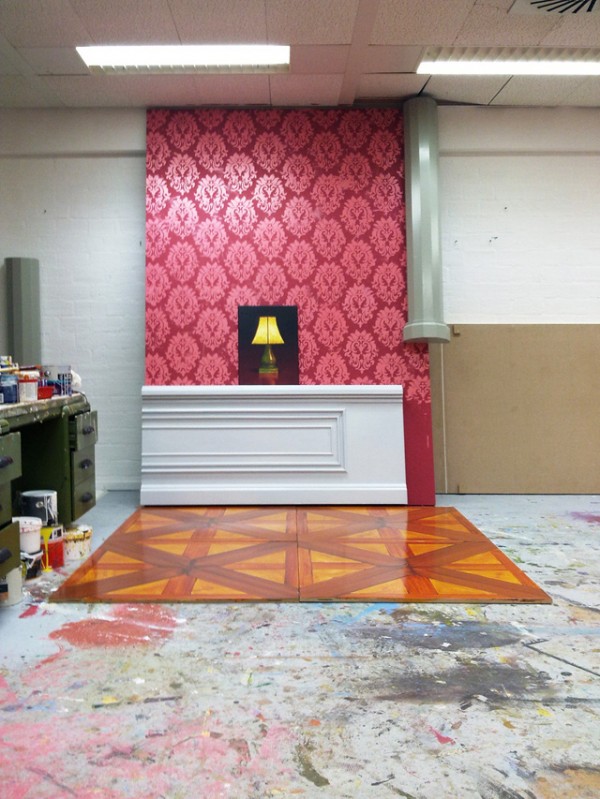

Michiel Van Der Zanden
Work from his oeuvre.
“Using photographs, Van der Zanden, reconstructs space with the help of the 3D computer program Blender. In the digital setting he pulls the space apart. This results in the artificial nature of a virtual space and highlighs the tension within the bigger picture. At the Heden booth at Art Amsterdam, some elements from the painting, such as the floor and the fireplace, are made physical again. The original space comes back to life! Within this Michiel van der Zanden presents his paintings as were it a museum of his work. With this the circle is completed.” See more;
“Michiel van der Zanden imports the world of digital media in painting, and vice versa, using computer games and 3D computer graphics. The artist has long been fascinated by games and their distinctive visual language. A game is essentially a 3D (photo-) collage. Van der Zanden adapts his way of painting on the chosen subjects. Sometimes very precisely to exaggerate ‘kitsch’ and sometimes almost in an expressionistic way.” – HEDEN
Tags: blender, digital, painting, second life
Posted in Uncategorized | Comments Off on Michiel Van Der Zanden
Thursday, 11 August 2011
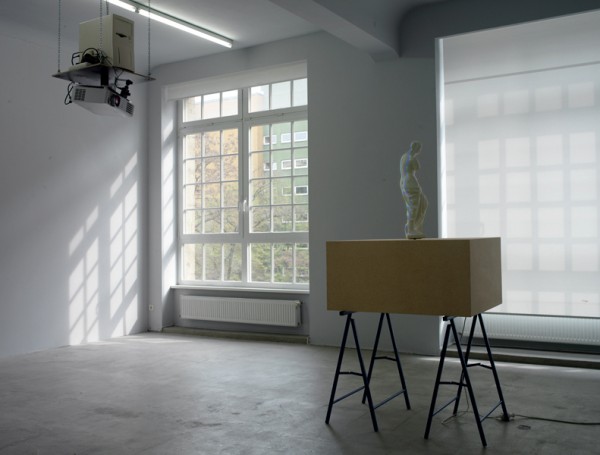


Frank Eickhoff
Work from his oeuvre.
“I am photographing constructed objects made of different materials, such as paper cuts, prints, foil, paint, metal, wood etc. On top of that I project digital generated light which is mapped in realtime on the objects and the scene. At some point the digital process and the materials visually merge into each other. They meet in the same space, but actually remain completely separated things. In this sense, one could say, that Marx’s concept of ‘Doppelcharakter’ or Fetish constitutes itself in the moment of congruence and superposition of diametric opposites. The computer, on the other hand, is the only medium which makes it possible to simulate, automate and temporarily overcome such contradictions. The Turing Machine can be seen as the administrative machinery of the paradox. I believe that’s why it is so successful.” – Frank Eickhoff
Tags: awesome, bust, greek, projection, rotate, sculpture
Posted in Uncategorized | Comments Off on Frank Eickhoff
Wednesday, 10 August 2011


Étienne Chambaud
Work from his oeuvre.
“CHAMBAUD’s work never functions in isolation but finds its sense or its interest in a permanent dialogue with other works. They grow mutually rich, while gradually drawing the vague contours of a constellation made of common references” – by RAPHAËL BRUNEL, 2009 via We Find Wildness.
Tags: french, holes, light, meta, sculpture
Posted in Uncategorized | Comments Off on Étienne Chambaud
Tuesday, 9 August 2011

 ” class=”alignnone size-full wp-image-10455″ />
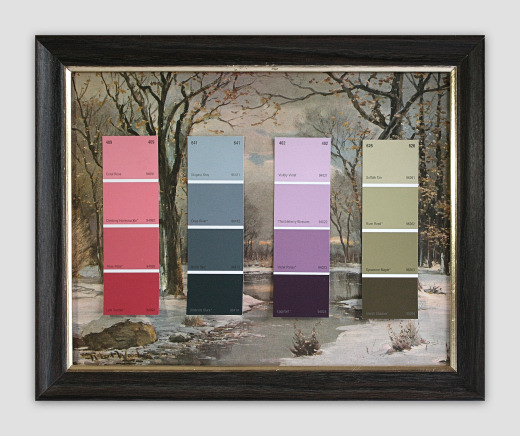
Chad Wys
Work from his oeuvre.
“…Deconstruction is a major part of my thought process in and out of the studio. Academically, I am pursing a study of art theory and criticism and I reward myself by writing about the problems and triumphs occurring in the art universe today as well as in the past—I thoroughly enjoy taking contemporary ideas into the past and considering things in new ways. In my writing I use theoretical frameworks to negotiate a more lucid and dynamic understanding of culture and how culture interacts with the visuality that permeates there…” – Chad Wys
Tags: edit, found object, one-liner, photoshop, reproduction, technology
Posted in Uncategorized | Comments Off on Chad Wys