Monday, 10 January 2011




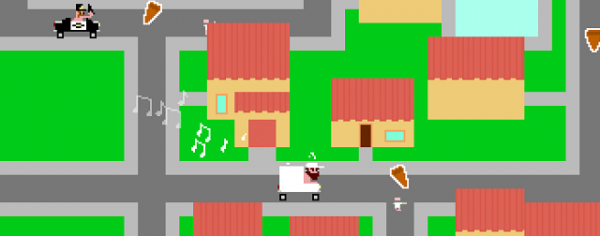
Mark Essen
Work from all-games.
“Game designer and artist Mark Essen started producing games for Adult Swim, and boy, are they cool. Take Pipedreamz, which features a hungry ghost who must secretly binge on meat in order to advance to the next level, which involves surfing for condiments like ketchup and relish. Or the comically masculine Turbo Turbo Turbo, where you smash into cars, win bar fights, and drink to gain points. Or Cream Wolf, where you play an ice cream truck driver/werewolf who must collect cones, feed kids and avoid cops. Every so often the game slips into a nighttime world, where the aim is to lure customers back to your lair with dreamy music. The games are a testament to Essen’s genius and unique sense of humor, so check them out!” – Rhizome
Tags: 8-bit, awesome, new media, rhizome, video games
Posted in Uncategorized | Comments Off on Mark Essen
Sunday, 9 January 2011

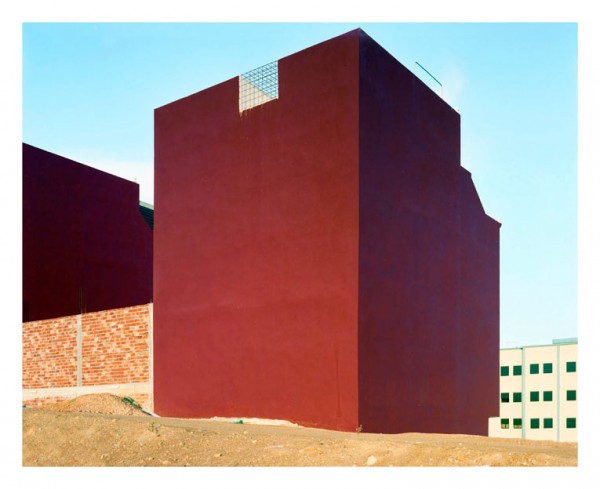
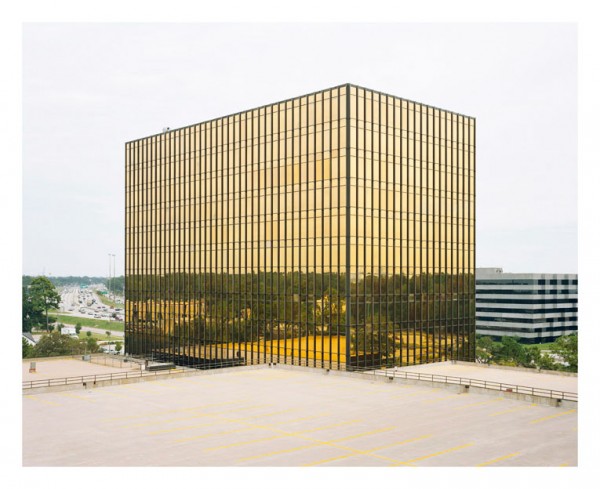
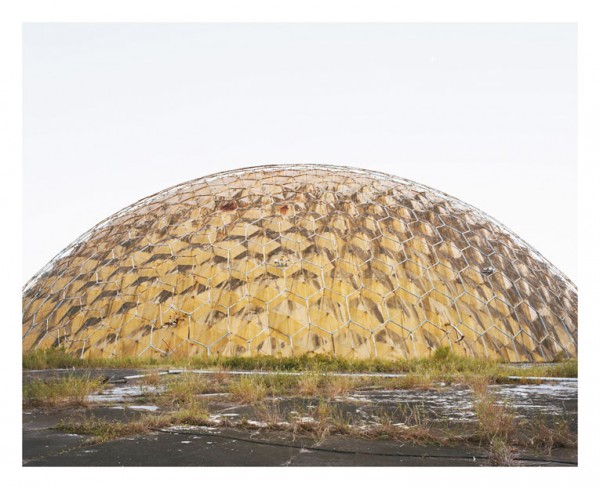
Bas Princen
Work from Refuge.
“Bas Princen brings together five cities from a region which over the past fifty years has experienced dramatic development. The five cities portrayed are Istanbul, Beirut, Amman, Cairo and Dubai. The images of Princen constitute architectural research and visual poetry at the same time. This survey has been commissioned and produced as part of the collaborative research platform diwan, initiated and curated by Philipp Misselwitz and Can Altay. Diwan brings together artists as well as leading academics, practitioners and experts from the field of architecture and urban studies in Turkey and the Middle East.” – via Refuge
Tags: architecture, buildings, color, dutch, photography, solid, straight
Posted in Uncategorized | Comments Off on Bas Princen
Saturday, 8 January 2011

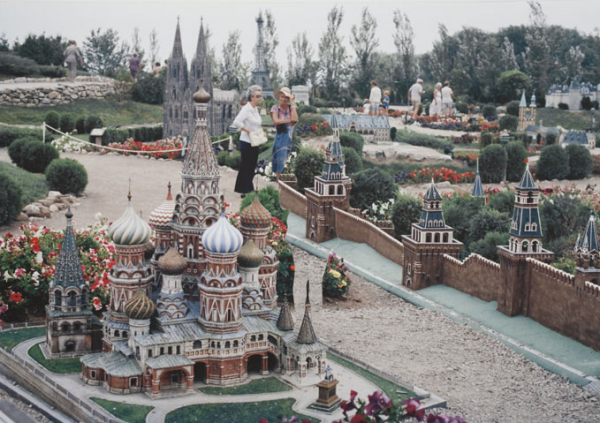


Tatiana Grigorenko
Work from The Disappeared.
“an anti-portrait of a missing protagonist. inspired by soviet-era images that were manipulated to make individuals ‘disappear’ from history. the project is an exploration of memory, presence, invisibility and historical revision. blowing up my family’s snapshots to the point that their grain structure started to fall apart, i meticulously removed myself from each image using collage and/or paint.” – Tatiana Grigorenko
via i heart photograph.
Tags: cover up, history, nostalgia, obscured, omission, photography, russian
Posted in Uncategorized | Comments Off on Tatiana Grigorenko
Friday, 7 January 2011
Duncan Malashock
Work from his oeuvre.
“I’m interested in our relationship with technology, specifically within the context of the Internet as a day-to-day activity, and in light of the history of the use of technology as a way of representing ideals. I make analog videos that are concerned with the history of creative technology, and in exploring what I understand as the ideals of early computer art. I also make interactive websites as public artwork, and that work emphasizes exploring interaction and simulations as their own media. Lately I’ve also started making sculptural pieces using projections, either from laser light or digital projector, which explore both of these sets of ideas, with a focus on the interaction between the ”immaterial” content and physical spaces and objects.” – Duncan Malashock
Tags: animation, computers, radical, rick silva, video
Posted in Uncategorized | Comments Off on Duncan Malashock
Thursday, 6 January 2011


Carlee Fernandez
Work from Man.
“…In her newest work entitled “Man,” Fernandez probes the power, aggressiveness, and macho beauty of the men who have been influential in her life and her art-making through contemporary self-portraiture. By juxtaposing her body next to or entwined with images of masculinity through photographs, video, and sculpture, the work is her dark reconciliation with her envy of “man.”” – Platform Gallery
Tags: black and white, father, identity, man, photography, self-portrait
Posted in Uncategorized | Comments Off on Carlee Fernandez
Wednesday, 5 January 2011


Steven Brahms
Work from The Survival Project.
“Over the past year and a half I have been engaged in an investigation of contemporary man’s relationship with nature and himself, and how acts of imagination are tools for remembering our forgotten knowledge.” – Steven Brahms
“Each image is a demonstration, an investigation, an experiment of skills and techniques to be used in the event of a catastrophe. The images are the physical accounts of interior journeys. Together they create the document: a guide, which in turn transforms the viewer into another participant.” – Steven Brahms via Shane Lavalette.
Tags: apocalypse, evasion, instinct, jeff wall, photo, photography, primal, slick
Posted in Uncategorized | Comments Off on Steven Brahms
Tuesday, 4 January 2011
Caroline Heider
Work from her oeuvre.
Caroline Heider bases her work on existing pictures, on a public world of images which is conveyed in magazines, for example. Media-related images are a reality of their own and have their reflexive effect on the world. The artist’s interests focus on this process and the social and cultural context of the pictures. In particular, she examines the question of how pictures function in the context of artistic production. Caroline Heider adopts strange pictures for her works, she removes them from their contexts and reproduces and processes them.
A decisive »trick« in this process is the fact that she folds them: in contrast with the method of collage, combining parts of cut-out pictures, the area of folded pictures remains in principle intact – as deliberate action the fold creates a two-dimensional picture body, in whose »shadow« parts of the picture still exist, even though they are hidden. Often, pictures of fragmented (women’s) bodies are created in this way, while the social meaning of the (fashion)accessories coding the body within society are highlighted. In the case of the »Pelzchen«- series showcased in the exhibition, Elfie Semotan’s models are derived from a printed catalogue of the Liska fur shop. The caption says Elfi-Semotan-Series, referring to the grande dame of Austrian (fashion) photography. Elfi Semotan got the idea for this advertisement through a volume of paintings in which she saw works by Raphael. The poses of the advertising catalogue are based on the painterly model. Thus the line between art and advertisement is not clear in Semotan’s work, in contrast to Heider’s.” – Rainer Iglar
Tags: austrian, context, edit, folded, interesting, obscured, photography
Posted in Uncategorized | Comments Off on Caroline Heider
Monday, 3 January 2011


Laura Bell
Work from The Alba Series.
“Bell’s absorption in her adopted country’s rich history is palpable in her work; the series reads as a celebration and perhaps even romanticization of a country with a much older past than her own homeland, with its own distinct sense of mythology and magic—something that could be perceived as lacking within American culture.
Her attraction to the ancient roots of Scotland is at the forefront of her photographs, as is a simultaneous sense of remove—Bell seems to view (and subsequently present) the country as deeply mysterious, perhaps unknowable to outsiders, with stark, static and impenetrable photographs of a craggy moonlit hilltop, or a misty, rather ominous forest at dusk.
It warrants consideration that the two aforementioned (and above-pictured) photographs have both been cropped into an oval and a circle, respectively. This serves as a further nod to the Old Master painting that Bell cites as inspiration, in their formal mimicry of tondo pieces, which date back to ancient Greece, but are perhaps best known for their Renaissance revival.
Mood-wise, though, these two images for me recall the allegorical landscapes of 19th century German Romantic painters (such as Caspar David Friedrich). Here, too, Bell’s landscapes take on a heightened meaning, a deep sense of symbolism and subsequently imply the dwarfing of petty human concerns.
Each of Bell’s photographs is meticulously composed and highly formal, with a striking contrast between light and shadow. There is an overwhelming feeling of stillness in her work—each piece seems to exist outside of time, and conveys a sense of the ancient, the magical, the otherworldly. This is true too of her interiors—I never imagined that a photograph of a just-extinguished candle, (complete with dissipating smoke) could appear so static, so serene, so eerily devoid of any discernible human presence.
Bell’s work continually exhibits a serious influence of and affinity to the medium of painting – at times it rather unexpectedly resembles painting more closely than it does photography. And just as Romantic artists, poets and composers often looked to Middle Ages for inspiration, and Renaissance artists looked to Antiquity, here too we see an artist looking backwards, mining cultural production from long ago in an attempt to say something new. More of Bell’s work can be seen on her website.” – Hey Hot Shot
Tags: circles, hey hot shot, immigration, nature, orientation, place, scotland
Posted in Uncategorized | Comments Off on Laura Bell
Sunday, 2 January 2011


Andrey Bogush
Work from the Rainbow Project.
“My current interests in photography are linked with perception of objects and Gestalt theory. These are very formalistic studies of still life and pseudo still life through the medium of photography with moments of interference from editing software.
In the Rainbow project, I digitally overlaid standard rainbow gradients on photographs to include a new visual and possibly conceptual dimension. My subdued pallet splits with color—alternately drawing attention to the reliability of photography and the hyper-reality of color processing.” – Andrey Bogush
Tags: finnish, gestakt, irony, kitsch, mocking, perception, rainbow
Posted in Uncategorized | Comments Off on Andrey Bogush
Saturday, 1 January 2011

Depart (Leonhard Lass & Gregor Ladenhauf)
Work from Chukwa’s Approach & Woodward.
“On the back of Chukwa,
Bright like a mountain dew-tune and crystalline airs.
We seek shell and shelter in subsurface saltlake sittings,
The one-drone rondo-0-o.
We rest against the interwalls of zero cavity‘s brainbows,
Celebrating Achilles’ de-feet.
Stir montane waters in the syncoronation of prime times,
Immersed rim ram short circuit oscillations,
In echological mining claims,
Drilling me softly with a chord.
What happens quiet shelldome if ever.
…turtles all the way down” – Depart
Tags: austrian, digital, rick silva, turtle
Posted in Uncategorized | Comments Off on Depart