
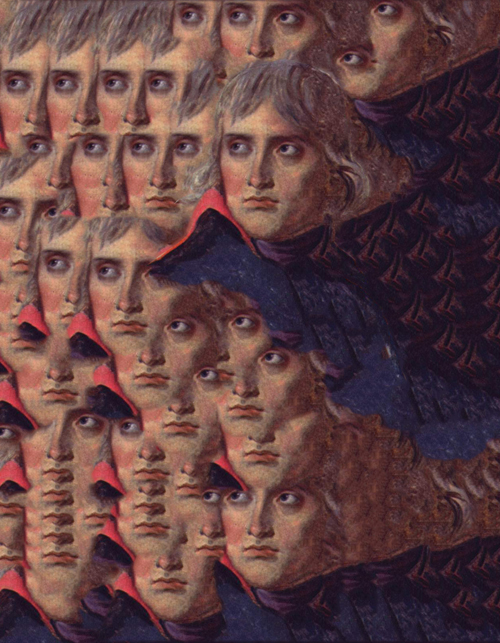


Work from (Un)finished.
“This series of images is based on paintings that were left unfinished by artists throughout history. The paintings have been ‘finished’ by Adobe Photoshop CS5’s Content-Aware Fill feature.” – Adam Cruces
contemporary art blog
Tuesday, 21 December 2010
Work from (Un)finished.
“This series of images is based on paintings that were left unfinished by artists throughout history. The paintings have been ‘finished’ by Adobe Photoshop CS5’s Content-Aware Fill feature.” – Adam Cruces
Monday, 20 December 2010


Work from his oeuvre.
Sunday, 19 December 2010


Work from Machinic Vision.
“This work focuses on the potential for new forms utilizing computer aided design that would present a paradigm shift in representation and photographic imagery. While traditional photography has always been connected to the capturing/indexing of light, this work explores the abilities of digital imaging to shatter that physical connection to a more radical position of the photographic image as a data set that can be rendered through a computer virtually. I see this work as addressing the emancipatory possibilities of photography’s loss of the index.” – Alex M Lee
Saturday, 18 December 2010


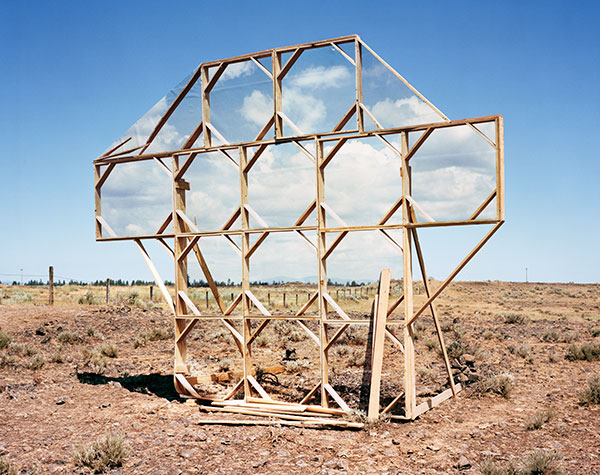
Work from his oeuvre.
“We often say, photographs “capture” time. But to capture something is not to understand it, because in the act of capture the thing is changed. Family albums, travel photographs- what they do with time is give it boundaries. They make memory possible by giving it shape. They describe an event or a place as if in the absence of time, as if time does not exist.
My recent work aims at a photography that can speak to the passage of time more as it is experienced and in doing so it aims to enhance that experience.
Take, for example, the piece Three Moments [top image]. These were highly labored moments, each a month apart, each isolated and made into physical objects. The second moment attempts to recapture the first, while the third attempts to recapture them both. The result is meant to feel like a return to a place that may not seem to have changed, yet- since every instance of time and place is singular- it is perpetually and irrevocably being lost.
If I were to return to the place it would be a different place. Every time you sit in your favorite chair it is a different chair.
Rotation also attempts to make palpable an aspect of the passage of time. By repositioning the ladder and camera every thirty minutes, the angle of the object to its shadow has been made constant. One visible record for the passage of time, the length of shadows created by the vertical motion of the sun, has been isolated. The other, the directional movement of shadows created by the horizontal movement of the sun, has been eliminated. In its place is a more visceral visual record, the rotation of the earth.
Focused attention on the passage of time heightens the senses to it. A concept that can seem intangible is given weight.
Attention to time and place informed the making of Inversion. With the exception of solar noon, every moment of the day has a twin, opposite moment, when the angle of the sun to the horizon is the same but its direction is opposite from south. This pattern is created everywhere every day by the earth and the sun. My diptych is an act of participation in which the camera faces north, a pile of cinder blocks is manually inverted, and two such twin moments are observed.
In the end, it seems, we are here to observe.” – Chris Engman
Friday, 17 December 2010

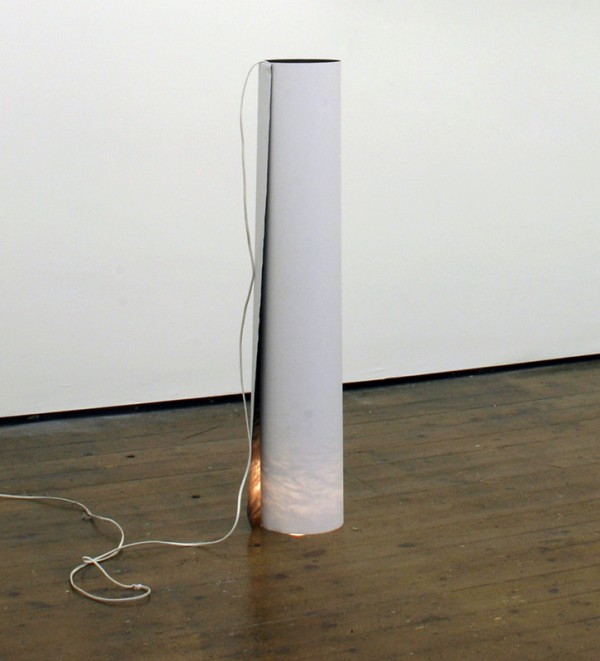

Work from his oeuvre.
“From spiritual transfiguration to critical resistance, some form of distance has always been attributed to the artwork. This distance has historically been considered somewhat revelatory in that it announces a beyond that might open to either sacred or secular enlightenment, and perhaps more recently politics. That the artwork might be conceived of as distant from the world is attached to a notion of the artwork appearing beyond any conceptual determination or particular social use value. As such this distance seems to imply a relationship between two points, between the world and the work: distance being the movement from one polarity to another. Hence aesthetic debates have always retained this notion of moving from, and remaining within, two points – from Romanticism’s material to spiritual, or Modernity’s transient to eternal, and perhaps more contemporaneously from individual present to historical commonality.
Such distance remains in the character of art objects today as the way an artwork might be simultaneously both just a material object and also appear to be something more than this. Distance seems to occur as some intangible portion more than the sum of the object’s parts, the elusive difference between object and artwork. This transformational shift from one point to another is consistent from both religious artefacts to reified art commodity. In the sacred object, this distance is transfiguring, moving from material to spiritual. In critical thought this distancing was seen to yield to self-reflection from a standpoint beyond self-interest.
Aesthetic distance thereby has connotations of both transfiguration in spiritual transcendence and transformation of the self in critical reflection. Yet either way distance is always marked by it’s parameter points, and any transformative qualities always remain linked to their originators. There is the transformative potential in the distance between object and artwork, and there is the critical reminder in the distance from the object. Distance therefore oscillates between social and aesthetic spheres, worldly and otherworldly. It might be either spiritual transfiguration or critical revelation, and at the same time it might be neither.
In The Distance from Here to There Conroy explores this conundrum that art objects might be “… either more than they appear to be, or maybe more accurately more than they are because of how they appear”. Situated in this distance between material ephemera and mythical absolute, Conroy’s work presses upon the fragility of how a set of events, objects or positions can potentially transform into a political gesture, a spiritual presence or a romantic fragment.
The works pursue the relation between mistake and the marvellous; as Conroy states they point to a paradoxical “space in (between) the work being present, and there not being any work present”. This slippage leads Conroy into a productive set of circular arguments, at once compromised and transitional. Works like All Revolutions are not the Same (2008) are developed out of an attempt to design a certain weight of meaning beyond the remit of controlled construction. As such, the work implies a political aspiration while at the same time undermining the basis of its own assumption. This concern with connecting to something via separation is also apparent in the work When the Going was Good (2008), which affectionately conflates the fetish of commodity with the art object’s romantic gesture. In doing so the work is both homage and critique, not as a cohesive articulation but more through an absent yet calculated encounter. Absence then is what might inform this distance from object to artwork, like in the enigmatic image of the woman in I try to Forget but it’s just a Reminder (2008), the way both she and the image are in the process of “turning away and disappearing”.
As Conroy posits these fragile transformations deal with the problematic notion of some kind of latent revelation, the possible but unruly correlation between material particularity and universal idea. To this extent The Distance from Here to There is defined in the absent but implicit relation between common ground and abstract space; the aporia that might act to leave some imprint of that which remains intangible.” – Gil Leung
Thursday, 16 December 2010

Work from his oeuvre.
“(RE)MAKE Tutorial ” is a multimedia piece entirely based on popular, free and available web found elements : a software for image retouching, an online music listening platform, and a picture found on internet.
…
This work appears as a “work in progress”, an accidental proposition, similar to a tutorial through its assembling process. (RE)MAKE Tutorial is a low tech adaptation which revisits one of the most traumatizing Hollywood’s cinema production: JAWS. The motionless photography of the sea is brought back to life thanks to the simple Photoshop selection tool.”
__________
“My Favourite Landscape is made of 500 70 x 50 cm offset prints. It is a reappropriation of the well known Windows XP desktop : Green Hill. Taking advantage of the weakness of the computer, it sets the common bug out of its context, on a wall, expending it to a much bigger scale. The famous picture finds a new landscape shape out of its usual frame.”
__________
“The installation NADAL Beta consists in a purview which is meant to insert and to deploy itself within an architectural in order to animate it. The installation proposes a degenerated form of tennis loaded by a canon ball. The machine propels balls on a meticulously calibrated trajectory in order to generate a space emulation.
The installation develops a kind of clinical juggling generated by a radical and mecanical purview… Among this perspective, the intervention questions notions of shifting process and network in order to produce an innovative plastic concretisation of circulation within a steady space.”
all text Paul Destieu
Wednesday, 15 December 2010

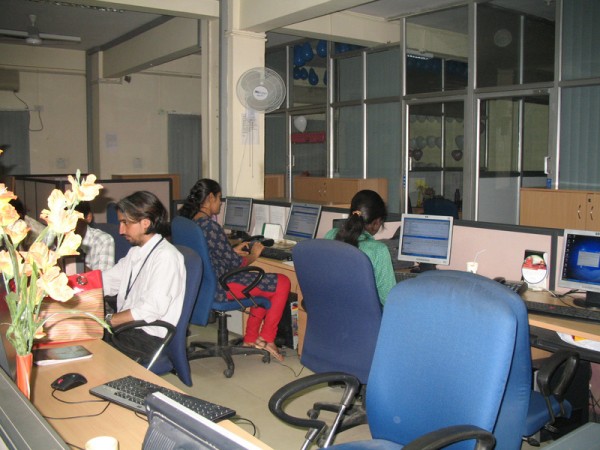

Work from Virtual Assistance.
Virtual Assistane will be showing at Extra Extra‘s new space @ 1524 Frankford Ave in Philadelphia starting January 7th at 6:00.
“Andrew Norman Wilson and Akhil C.
The Virtual Assistance project began with research geared towards unpacking the relational system of Get Friday, a virtual personal assistant service based in Bangalore, India. Get Friday typically provides remote executive support, where a largely American client base is assigned a “virtual” personal assistant. I am a part of that client base, paying monthly fees for a primary assistant who works out of the Get Friday office in India. My “assistant” is a 25-year-old male Bangalore resident named Akhil. In paying for our relationship I am not attempting to lighten my work load, but rather to attempt collaborative projects and even reversals of the normative outsourcing flow under a corporate contract arranged for one-way command. Using the service has been a method of engaging with, understanding, and reacting to an economy in order to learn, with the help of Akhil, how to peel back the corporate veneer, revealing limitations, histories, biographies, networks, power, desire, and more.
From the Get Friday website :
Get Friday [is] working round the clock 24/7, now catering to busy individuals and small businesses in 30 odd countries across different time zones. It has managed to take global outsourcing which was previously meant only for Fortune 500 businesses, within the reach of ordinary people – an individual, an entrepreneur or a small business owner. It takes pride in serving customers from diverse backgrounds. Get Friday is also the pioneer in bringing the idea of ‘Get the Personal touch of an assistant along with access to a pool of expertise’ into the market that makes virtual assistance dependable and so scalable. [Get Friday] is today a full fledged Life Outsourcing Company.
Personal outsourcing initially came to my attention through the writings of proponents Thomas Friedman and Tim Ferris as a problematic method to shorten the typical American work week—to slough off excess labor onto globally integrated residents of developing countries. Global outsourcing tends to produce telematic relationships – telematic in the sense of a remote control over another’s labor, the manipulation of dependence. If power is defined as the ability to manipulate resources across space and time, to what extent can authority in my relationship with Akhil and Get Friday be re-distributed amongst a service where the normative use is one-way command? How can this be reversed towards mutual assistance and collaboration? Can my relationship with Akhil become a device for altering the work conditions of Get Friday? How personal and creative can this relationship become?” – Andrew Norman Wilson
Tuesday, 14 December 2010
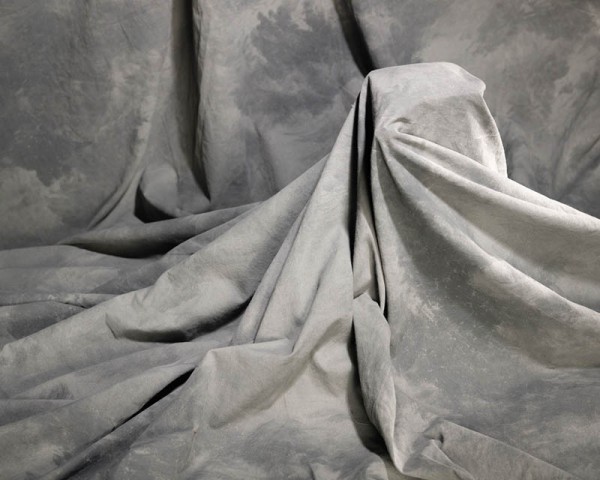

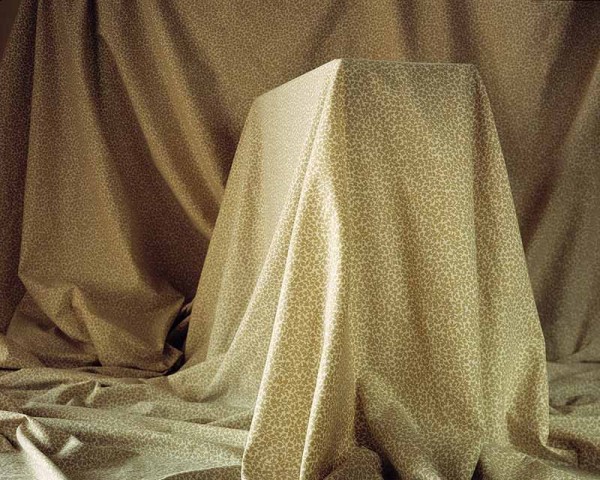
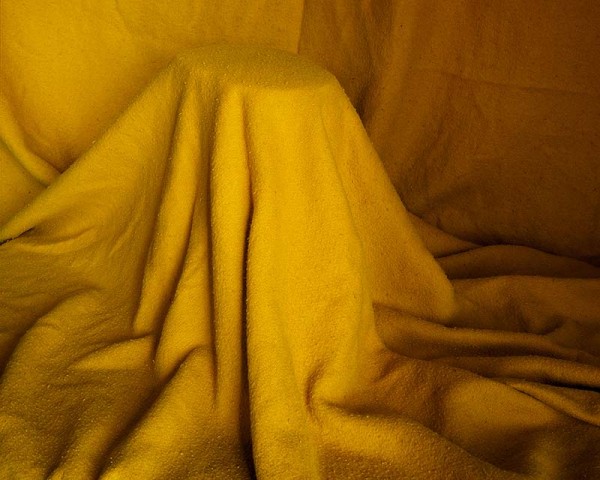
Work from Some Things.
Dalzen has work from Some Things in a show at Guild Gallery II in NYC opening Thursday (6:00 – 7:30 @ 119 9th Avenue / NYC).
“Photography often features the usage of an illusionary background creating a setting devoid of planar divisions manifest by a seamless background or skype. Comparable effects can be seen in advertising through the usage of such things as literary devices and alluring imagery to sell idealized products that are none-the-less illusionary. Some Things replaces one illusion for another creating a series that is neither subject nor setting, product nor form, ideal nor reality.” – Erik Dalzen
Monday, 13 December 2010


Work from oops.
“Somewhere between a home-video mixtape and a postmodern travelogue, “oops”—a ten-minute art video composed entirely of appropriated YouTube videos, seamlessly stitched together via a motif of camera drops—serves both as transportative adventure and metaphorical elucidation of YouTube itself (i.e. endless related videos), exemplifying the Internet’s infinite repository of “throwaway” social documentation. From suburbia to subterranea, the radically shuffling environs induce a vertiginous yet aesthetically contextual thread—a transcendent, reincarnating POV; our omnipresent Camera—by which, the nature of the ultra-verité videos, eschewing any filmic grounding, plunges the viewer into a relationship of fleeting immediacy w/ its many videographers: a self-portrait at arms length, the digital blur of an obscuring thumb, a disembodied narrating voice. This abstractly voyeuristic portrayal of an ever-filming generation (who won’t let the transcendence of being in A Moment inhibit their document-everything impulse) presages a future where every instant of our existence, from the mundane to the sublime, is preserved and catalogued for all to see.” – Chris Beckman
via Rhizome.
Sunday, 12 December 2010


Work from Layer Drawings.
“The theme of my work is “the physical that permeates into the art piece.” In a foggy landscape, we no longer see what we are usually able to see – the distance to the traffic light, the silhouette of the trees, the slope of the ground. Silhouettes, distance and horizontal sense all become vague. When we perceive this vagueness, the water inside the retina and skin dissolve outwardly toward the infinite space of the body surface. The landscape continues to flow, withholding us from grasping anything solid. By capturing spatial change and the infinite flow of time, I strive to produce art that creates movement between the artwork itself and the viewer’s experience of the artwork.” – Nobuhiro Nakanishi
via Valentina Tanni.