Tuesday, 24 December 2013



Seth Adelsberger
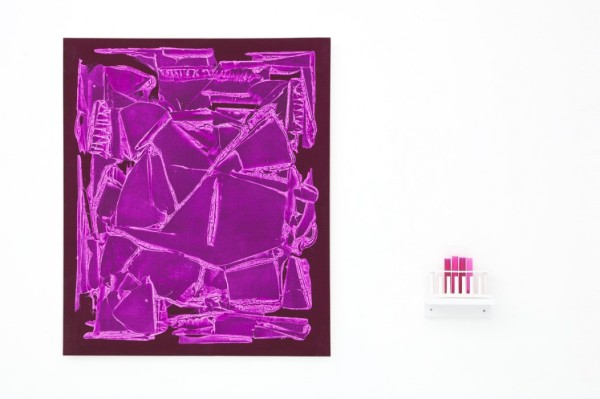
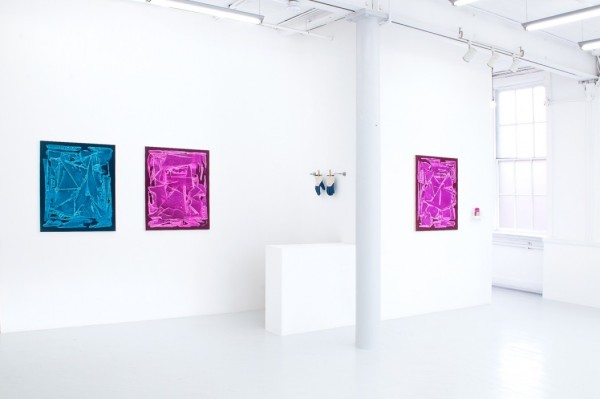
Surface Treatment @ Springsteen Gallery
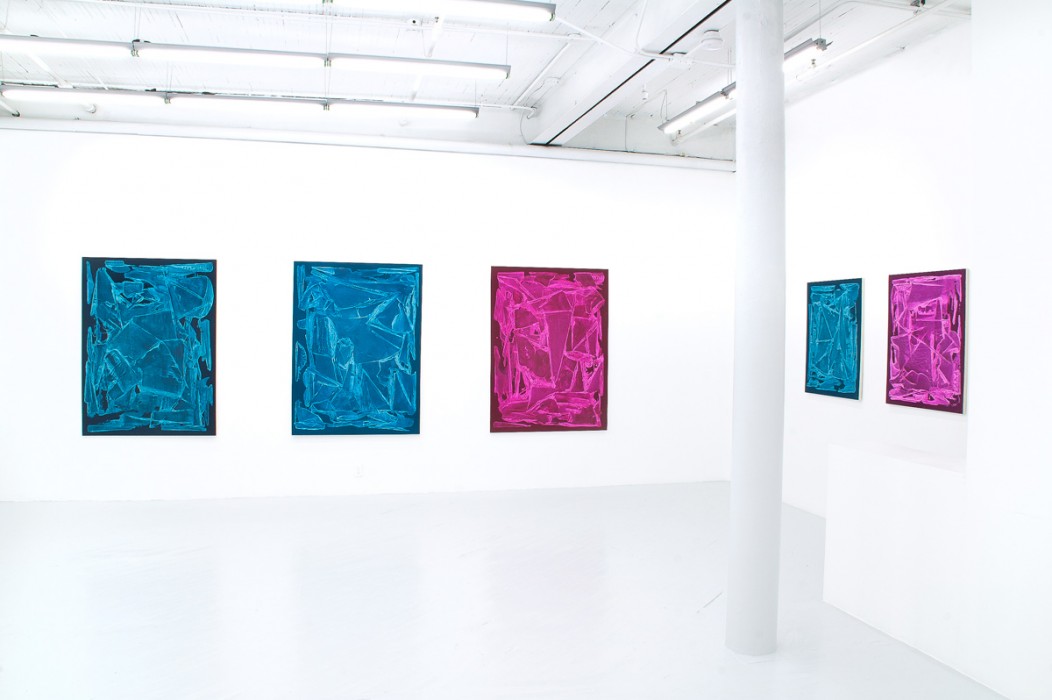
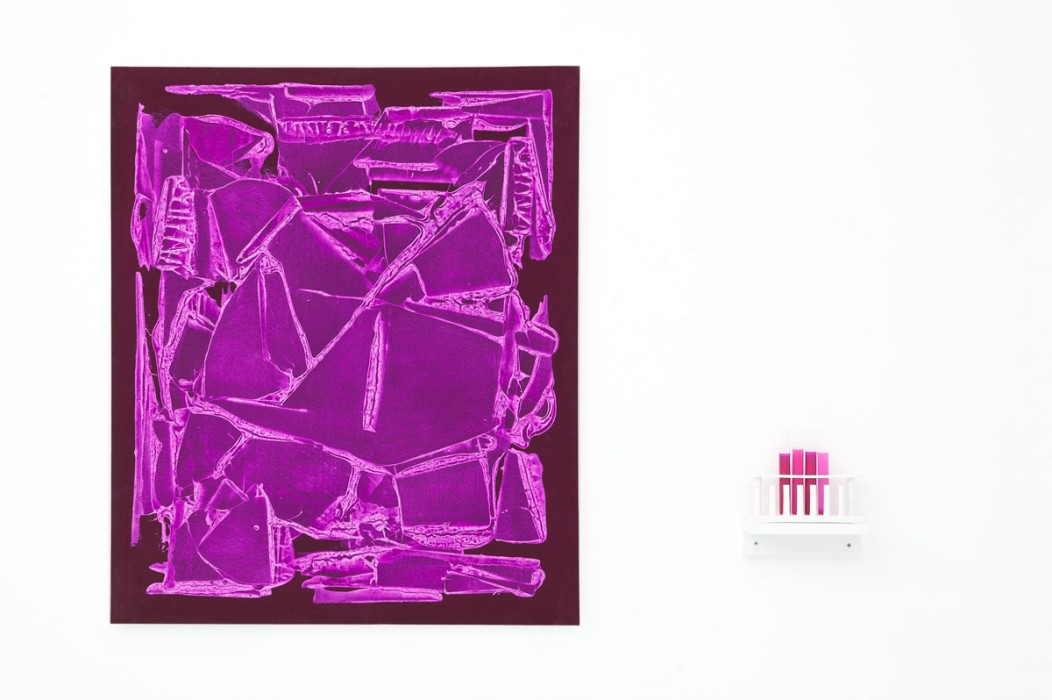
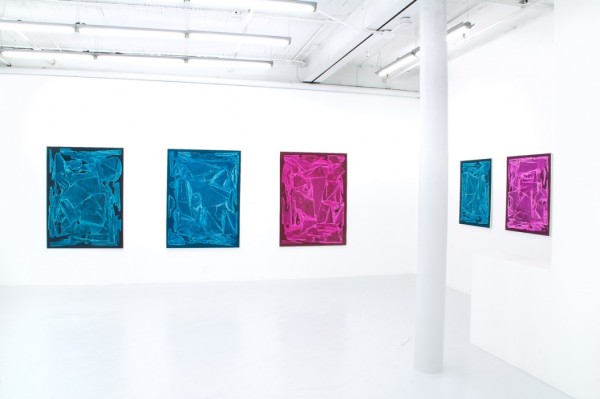
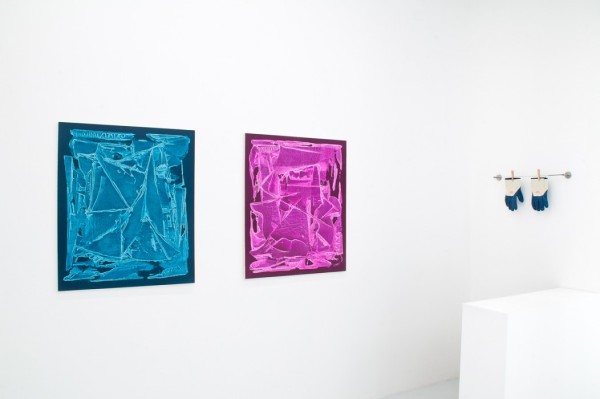
“Surface Treatment examines the chemical and scientific properties of painting. The Submersion paintings are the result of a refined procedure that is a combination of washes, staining, and the gestural application of gesso. The paintings are created in batches of 3-6. Some paintings in each batch succeed, while others fail. The saturated coloration is the result of a focused study of the variations within a duotone palette of turquoise and magenta. The pigments are synthetic with chemical names like pthalocyanine and quinacridone. These colors conceptually relate to both basic printing processes (CMYK) and computer LED screens (RGB). Their final appearance (the “glowing” of the form) is a visual corollary to the universal experience of living a life mediated by backlit iPhone screens and laptops.
The Submersion paintings are also a hybridization of Abstract Expressionism and Color Field Painting- painting movements strongly connected but historically distinct. The linear march of modernism only recognized clean breaks and categorical division between generations. This left the work of transitional artists out of the historical dialogue. It is now possible and relevant to reexamine and further these neglected yet vital stylistic territories. Despite their gestural nature and deep coloring, the Submersion paintings are based more in a structured analysis and automatic approach than potential association with emotion and expression.”
Tags: Abstract Expressionism, backlit, chemical, CMYK, color field, painting, rgb, science
Posted in Uncategorized | Comments Off on Seth Adelsberger
Sunday, 22 December 2013

Nate Boyce
Work from his oeuvre
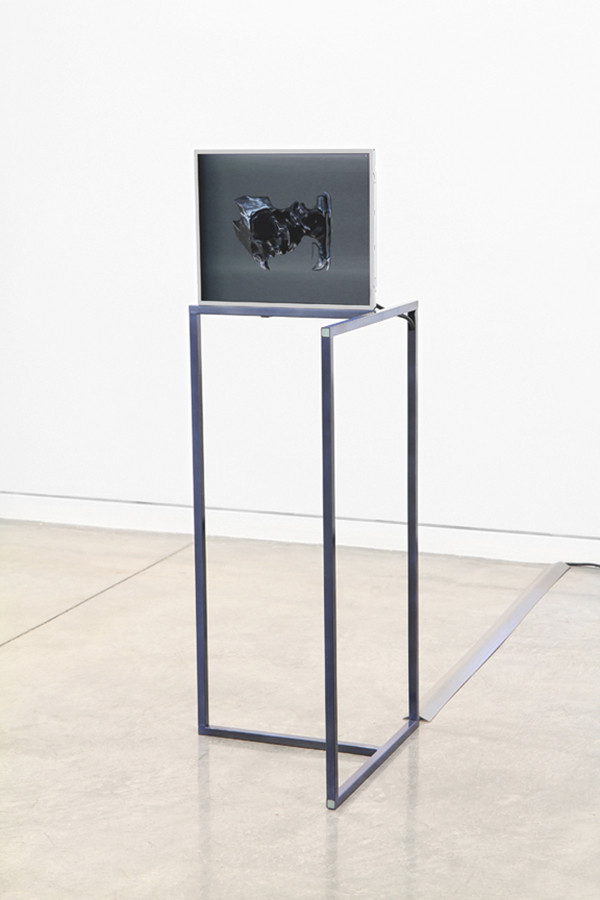
“With only thirty years under his belt, the San Francisco based Nate Boyce balances an artistic practice that jumps between international museum tours of his experimental music and video art performances and a studio practice that forces video into conversation with traditional sculpture.
When video art emerged in the 60’s, it became increasingly interested in exploring the possibilities and tricks of the medium and quickly fell out of step with the formal aesthetic questioning that characterized painting and sculpture of the same period. Though fluent in the language of technology, Boyce brings these formal investigations back to the forefront of his work.
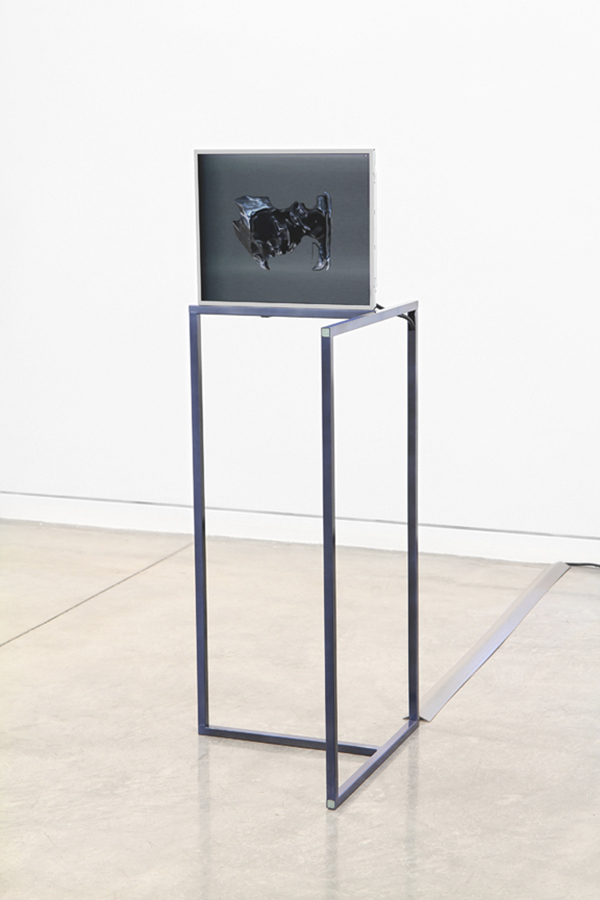
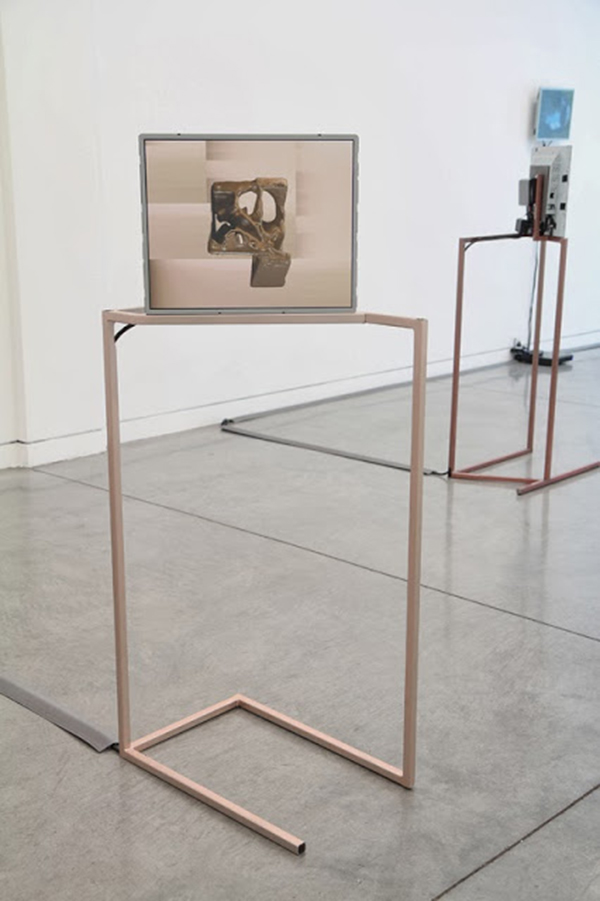
Taking a small hand-carved and airbrushed object as his starting point, Boyce uses an obsolete low-resolution digital camera to capture video of the form slowing rotating. Using cutting-edge computer modeling, Boyce layers a slick undulating surface on the grainy image of the sculpture as it turns. The contrast between the visible grain of the original video and the clean texture of the CGI draws attention to the surface of the screen, evoking the critical history of painting rather than the more narrative tradition associated with film and video.
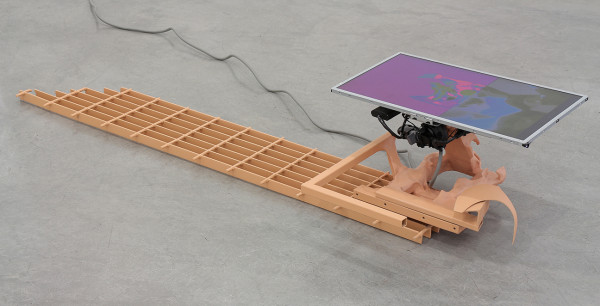
By its nature, video art disrupts our sense of space, as three-dimensional objects are depicted on a flat two-dimensional screen. Boyce confounds the tension between the two and three dimensional in his work by displaying video of a three-dimensional object on a two-dimensional LCD screen suspended within a three-dimensional sculptural pedestal. Early iterations of his sculptures played with the positive verses negative space of the pedestal, by creating a line drawing version of a traditional pedestal in welded-steel. Powder-coating the steel structure in the same pearlescent color as the rotating subject of the video reinforces the feedback-loop between the object and its support.
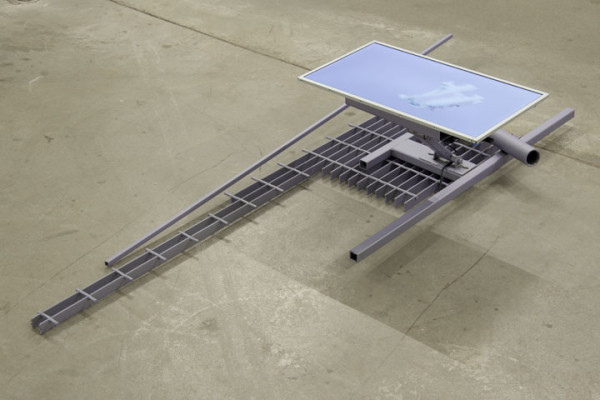
Recently, the structure of the pedestals have become more sculptural in form. In “Plinth Inhibitor” at the Bemis Center for Contemporary Art, the armature supporting the screens took an almost reclining form, spreading out across the floor and reorienting the screen upward to be viewed from above. In deliberately confusing the relationship between the sculpture and its pedestal, Boyce revisits the issues that fueled modernist sculpture.
Boyce’s facility with technology allows him to re-envision the ubiquitous modernist public sculpture by again subverting the traditional pedestal support. Rather than utilizing a white rectangular form meant to recede into the background, Boyce situated a recent sculpture on an irregularly shaped plinth that he airbrushed with a generic scene of a public park. Wrapping the surface of the three-dimensional pedestal with a two-dimensional image meant to evoke a three-dimensional park scene again disrupts our experience of space. This image-skin alludes to the way in which three-dimensional worlds are created in computer imaging, linking the sculptural support with his video work.
In a moment when technological obsolescence speeds ever forward, it is unique to find an artist who embraces outdated equipment and sets it in conversation with newer, shinier, cutting-edge technologies. Firmly rooted in the formal and aesthetic concerns of modernist sculpture, Boyce embraces the spectrum of technological means available to depict and manipulate the object in space. As these technologies continue to develop, it will be interesting to watch this multi-pronged practice evolve.”
text via SFAQ
Tags: lcd, rotating object, San Fran, screen, video
Posted in Uncategorized | Comments Off on Nate Boyce
Saturday, 21 December 2013

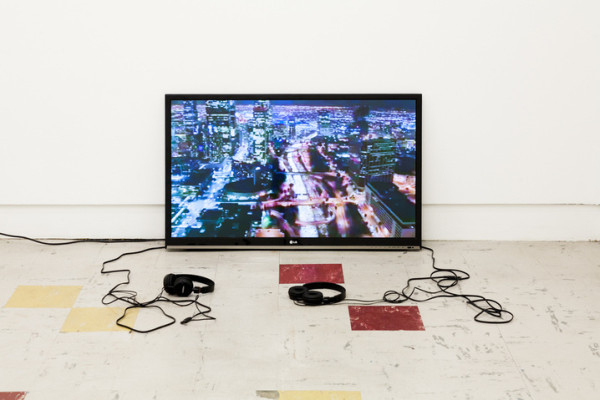
Greatest Hits
Work from their oeuvre.
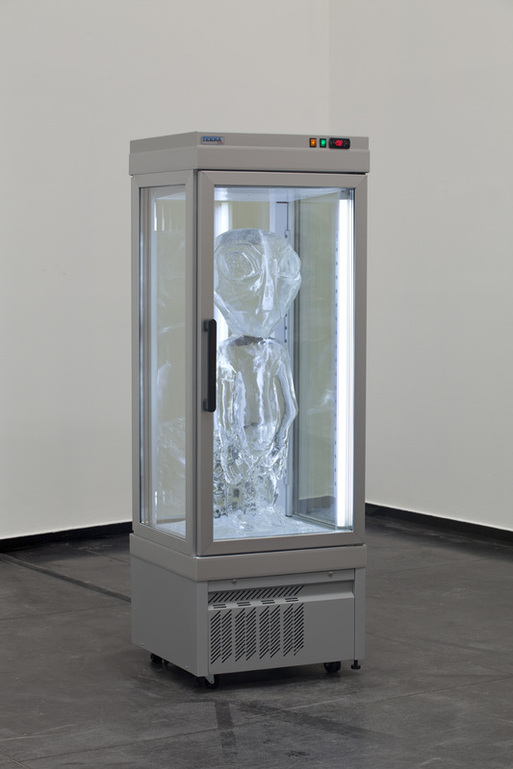
“It was the winter of 2001 — dark and cold, as usual. During the launch of the event we initiated a conversation with the audience about their experience on the subject of aliens. This discussion yielded very unexpected results: in a culture of few words, people picked up the microphone, one after the other, and talked about what they saw and what they thought about it. It was a genuine and warm conversation. It made me realise that aliens are a great subject to engage people, not only in general discussion, but also in discussions about contemporary art. In other words, aliens could open the door to contemporary art for the uninitiated.
In the beginning I thought this path must belong to art’s populist tricks, like using footage of sexual imagery or domestic violence. Later I figured out that perhaps what was also at play here was a tautology. Contemporary art is as detached from traditional human cultures as aliens are. This is exactly where the value of both lie: the potential of introducing unknown ways of being and thinking to the domains of familiarity.
From this moment on I became a proponent of ‘alienship’ in art. I claimed that contemporary art is always a matter of collaboration between individuals and an alien, and it should remain so if it wants to stay true to its nature as a reality-bending discipline. I even compared an institution I worked with to a large alien in the middle of a city, producing and distributing realities that were not yet there.”- Raimundas Malašauskas
Tags: consumer goods, humor, melbourne, sculpture
Posted in Uncategorized | Comments Off on Greatest Hits
Friday, 20 December 2013
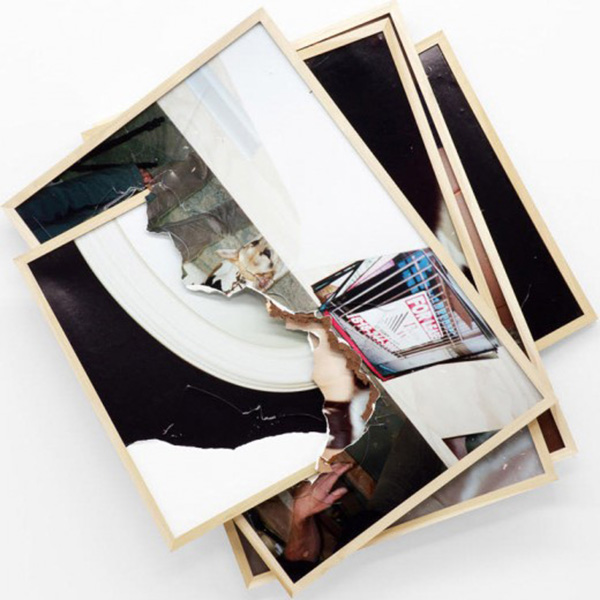
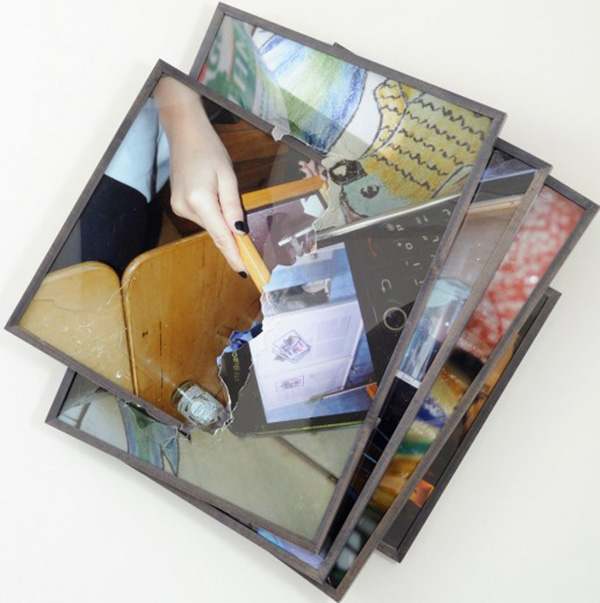
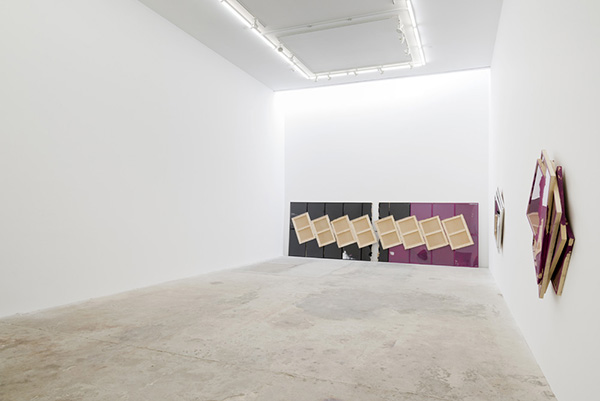
Brendan Fowler
Work from his oeuvre
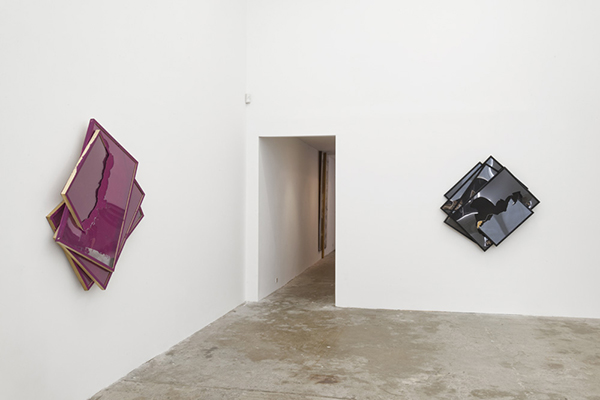
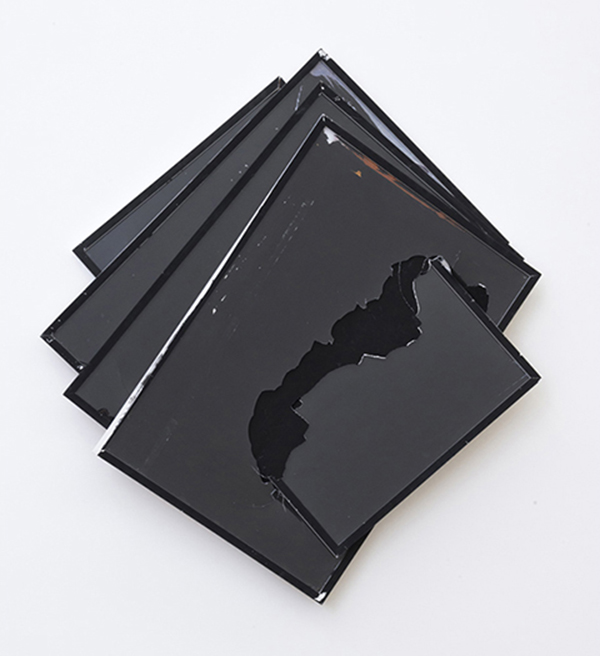
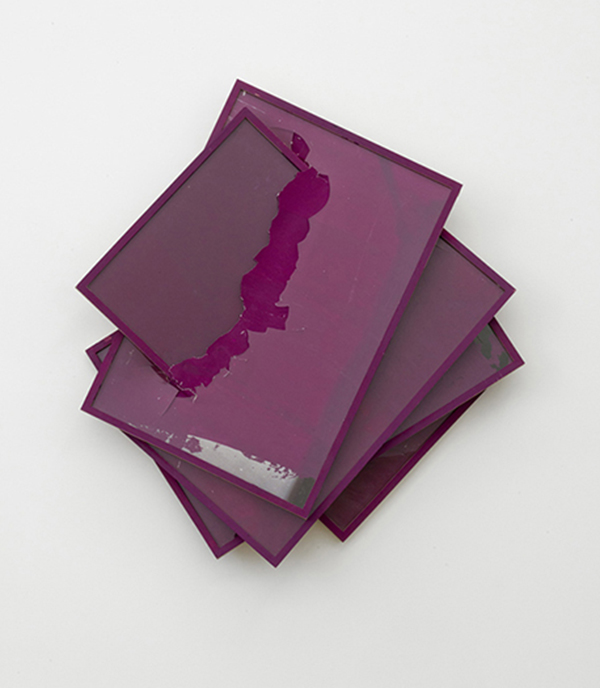
“I have worked for other artists and in galleries but have never been employed as anyone who writes condition reports. As such, I am often surprised to see very detailed reports for my sculptures when they are transported that read like ‘frame is piercing other frame / plexi is cracked in 5 places / work is broken’ etc. All of these moments that I’m sort of laboriously faking with these things art transporters will often very meticulously catalog, which I know that they must do to protect their ends, lest it should appear that they picked up 4 photographs from the gallery which somehow made it into this sculptural collision on the ride over to whomever they are delivering the work to. Joel and I started to joke about taking them literally — work is broken here, here and here — and then wondering what if these condition reports were really cover ups to cover the shippers accidents with the work? Who are these fucked up shippers breaking these perfectly fine framed photographs? We always joke that we have shipper problems.
A few years ago I made monochrome versions of my usual sort of pieces by silkscreening solid purple over the inkjet prints before they were framed and as well over the fronts of the frames themselves. How my work functions typically, or engages within histories of painting or sculpture, or considerations of how this body of work functions differently within those histories aside, we were joking about what kind of crazy fucked up shipper would pick up these four photographs and on the way to delivering them not only get them jammed into this sculpture, but would some how get the whole thing purple? That shipper would have to be fired, right? No, man, they’re going to jail!
Part of making the purple ones initially was to recycle the test prints and ‘bad’ prints and ‘mis-stained’ frames that occurred as byproduct from my regular working (these were the elements I printed over with solid purple), but more so I was curious to find out how these kind of image dependent sculptures would function if all the imagery was exhausted out of them, or literally blocked in, buried under, painted over. I chose purple the first time because it is my favorite color, and tried to match the shade to the color of smoothie I had been making every morning before going to work (…literally a choice based on taste…sorry… ). All told, I liked how the purple monochromes functioned and I wanted to make another set of monochromes, but another color this time. Black seemed a logical choice given how much I have been making work around/involving/dependent on the mirroring effects generated by framing dark images behind regular, glossy, UV plexiglass, turning the image into a mirror. Black’ed out ones could bring up a whole other set of questions. Is blacking out more something than purpling out? Less? Are these ‘murdered out’? (Technically, yes). Does the content in fact glare back at you with its eyes closed like an angry cartoon child in the very bright sun? Arms crossed, ‘hmmph’ing out? And what about this other color, the third set of monochromes, it is kind of like a different purple, different berry. Full disclosure, I’m not very good at seeing color.”
Tags: broken, crazy fucked up shipper, frames, humor, murdered out, New Photography 2013, photo sculpture, photography, purple smoothie
Posted in Uncategorized | Comments Off on Brendan Fowler
Thursday, 19 December 2013
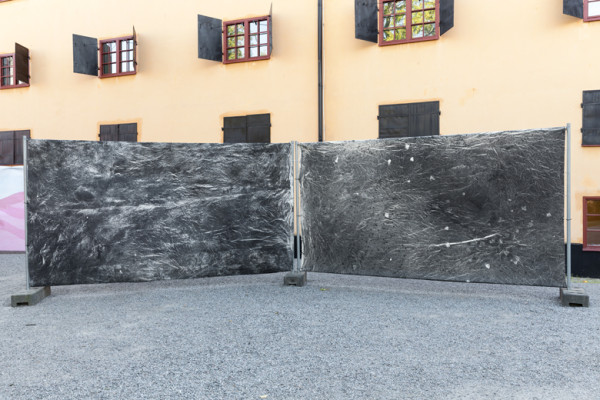
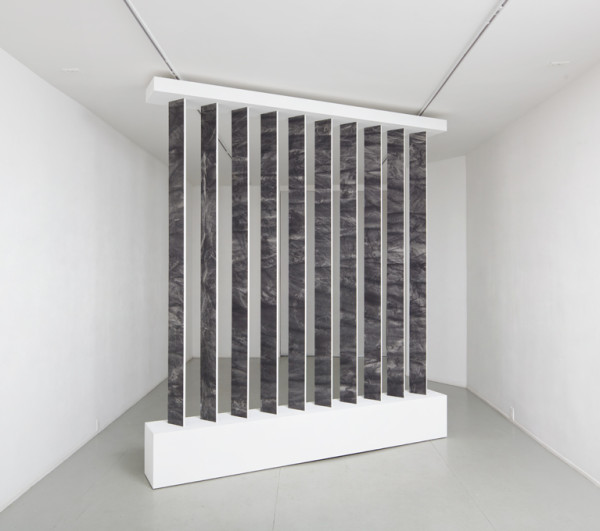
Sam Moyer
Work from her oeuvre.
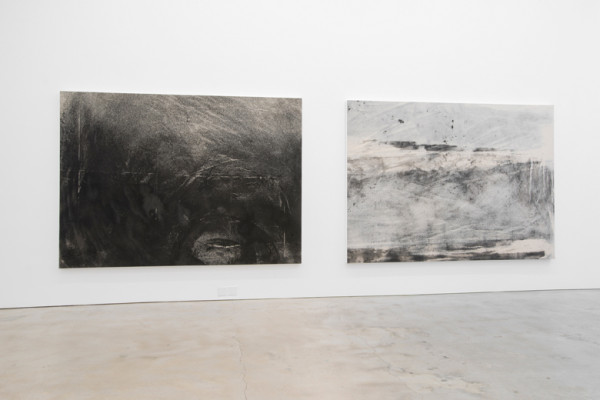
“Examining these mysterious pictures up close you wonder if Ms. Moyer made them by meticulously copying photographs of wrinkled fabric, as Tauba Auerbach does. Ms. Moyer produces them by a kind of tie-dye process. She crumples sheets of fabric, dyes them black, stretches them out, makes stripes using bleach and then irons them flat onto wood panels.
Like Jackson Pollock’s dripping Ms. Moyer’s technique automatically produces the old flip-flop between literal surface and illusory space of uncertain, possibly infinite depth. This kind of thing never goes out of style; it has been the essence of painting and drawing since the first cave artist picked up a piece of charcoal and made a mark on the wall with representational intent.
It also serves as a metaphor about the relationship between our finite bodies and infinite minds. That Ms. Moyer’s works are more sophisticatedly suave than wildly original does not make them any less gratifying to behold.” – New York Times
Tags: black and white, design, sculpture, texture
Posted in Uncategorized | Comments Off on Sam Moyer
Wednesday, 18 December 2013
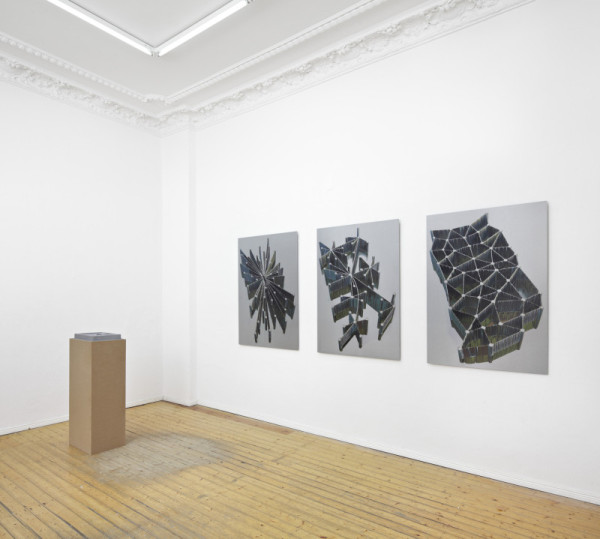
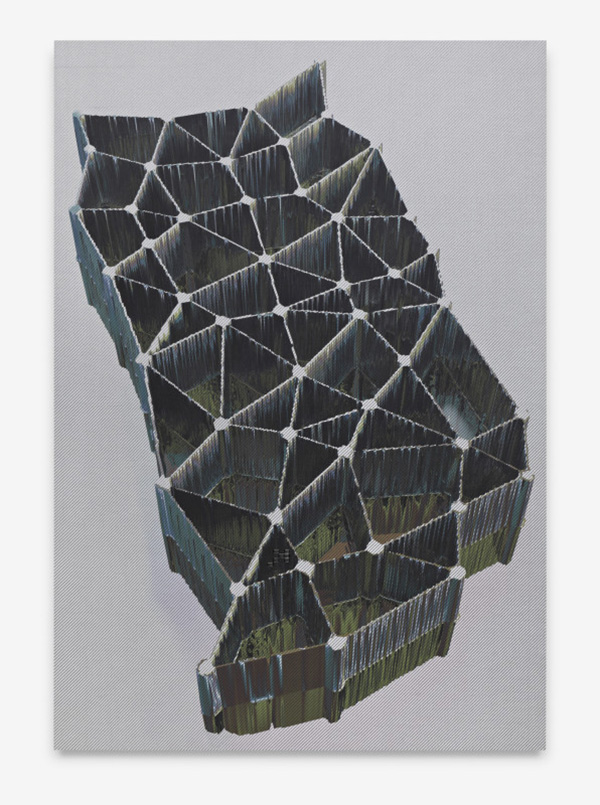
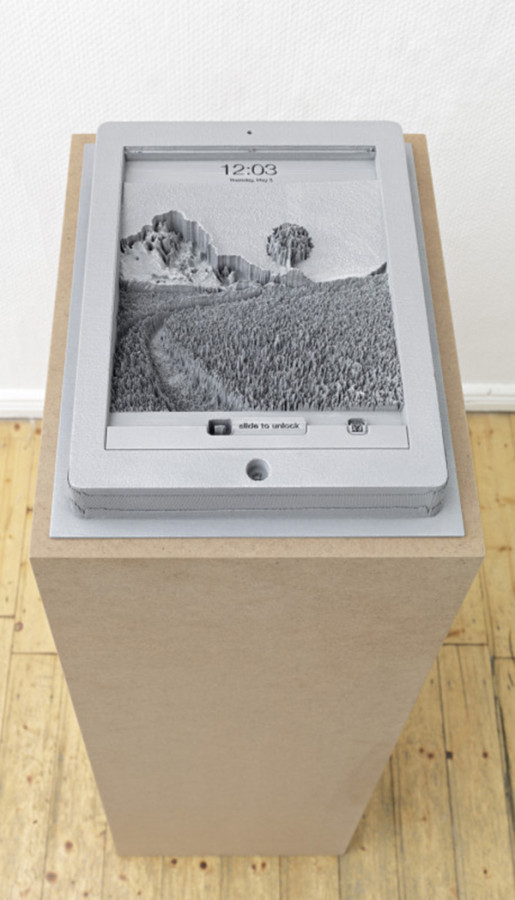
Spiros Hadjidjanos
Local Manifestations @ Future Gallery
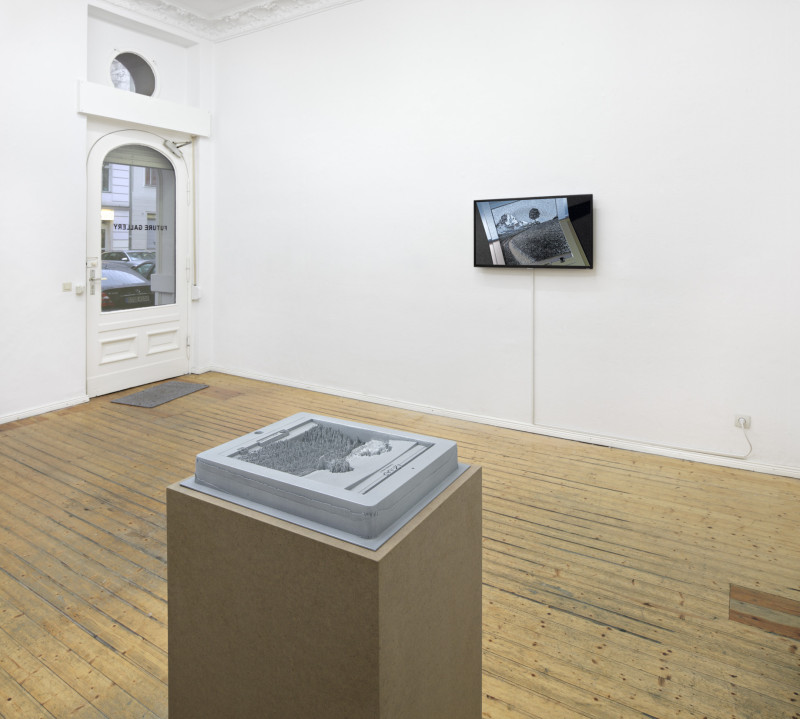
“In 1959, the American engineer Paul Baran was charged by the RAND Corporation with the task of designing a telecommunications network resilient enough to survive a nuclear attack. A year later Baran published his proposed solution: a network of distributed nodes without a centralized core. He argued that a distributed network would be indestructible because the connections between its nodes were redundant; multiple redundant connections safeguard a system from total destruction if individual nodes are damaged. A decade later, Baran’s distributed relay node architecture formed the conceptual framework for the first system of inter-networked computers, which would become the basis for today’s decentralized wireless internet.
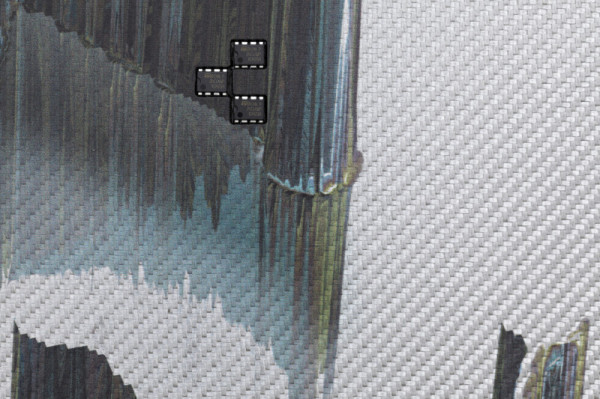
In Local Manifestations, Spiros Hadjidjanos excavates the topology of our contemporary wireless terrain – the virtual/physical surface of wireless networks through which we communicate – uncovering the interlocking system of nodes and redundant connections upon which this intangible landscape is constructed. As we simultaneously navigate and construct this space, we ourselves become nodes, receivers and transmitters of data contributing to the redundancy and therefore the imperviousness of the system. We become “wireless subjects.”
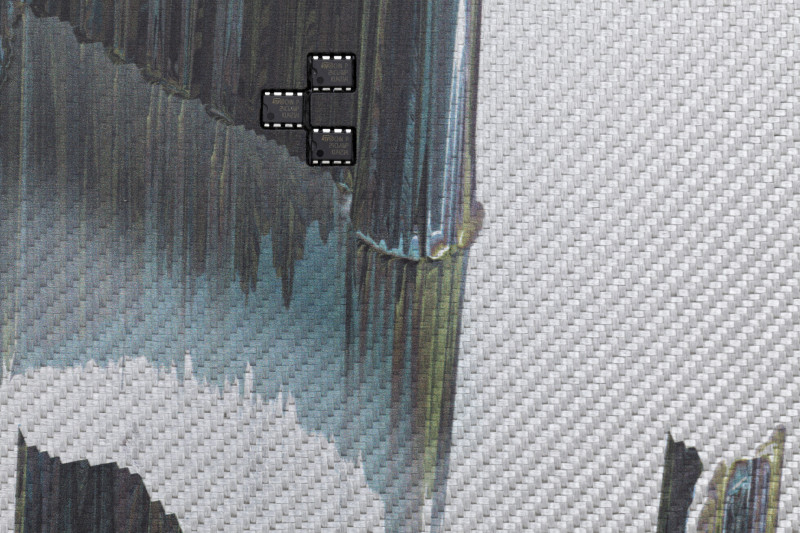
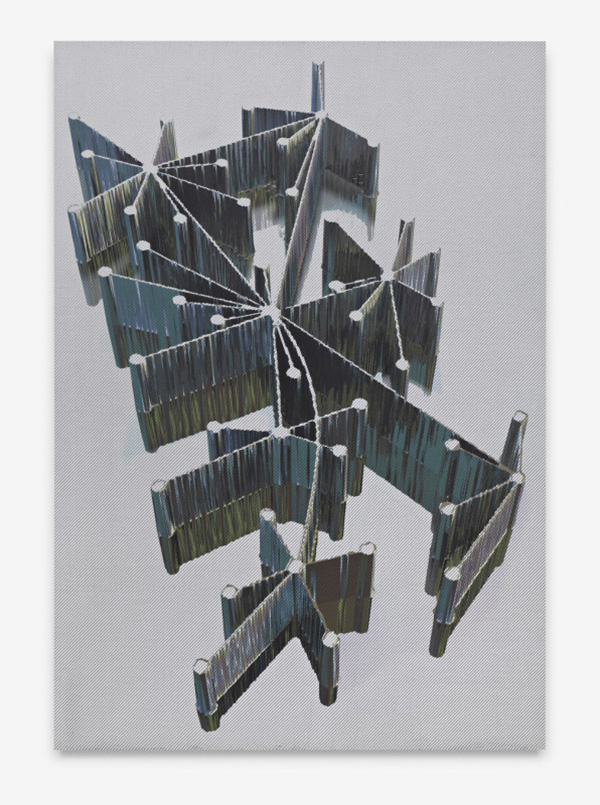
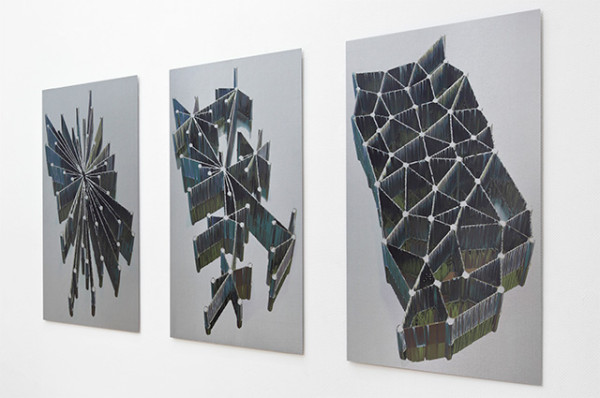
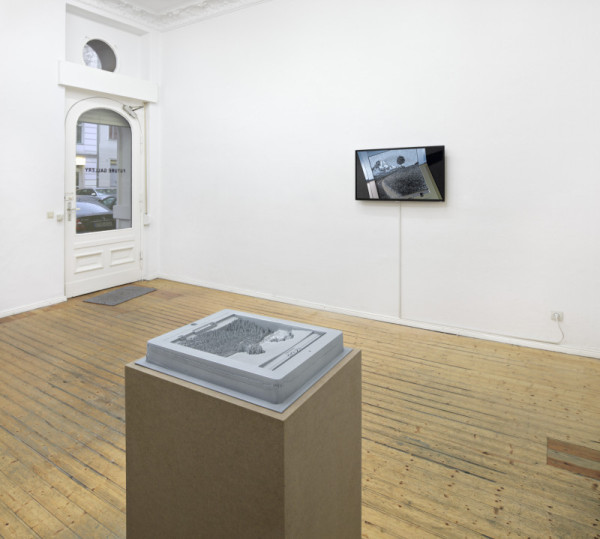
Within the tensile mesh of a distributed network, it becomes possible to conceive of the relations between fixed entities themselves as objects. Hadjidjanos’ work, in line with realist philosophies, treats them as such; through multiple points of entry, he asks what it could mean to manifest a “relation as object.” The act of manifesting or actualizing relations takes many forms: signals from wireless routers are converted into visible projections; diagrams of Baran’s networks are embedded into the lightweight mesh material of carbon fiber; a person circulates the exhibition space mumbling signals received from a mobile phone; mobile devices become topographical maps and morph into each other in a series of slowed-down animations. In each of these works it is the transitions, movements, and relations that are the object of study.
The “local” is not contrasted here with the “global.” It does not imply an opposition between the singular and fixed or the multiple and connective, but rather contextualizes this exhibition as one object-relation within a theoretically infinite set of iterations. The multiplicity, or redundancy of its outward relations is what is responsible for the integrity of its inner relationships. The exhibition is not “reduceable either to its internal components or to its outward effects” – making it, according to Graham Harman’s definition, an object.” – Elvia Wilk
Tags: carbon fiber, decentralized wireless internet, microchips, nodes, topology, uv prints, wireless subjects
Posted in Uncategorized | Comments Off on Spiros Hadjidjanos
Monday, 16 December 2013
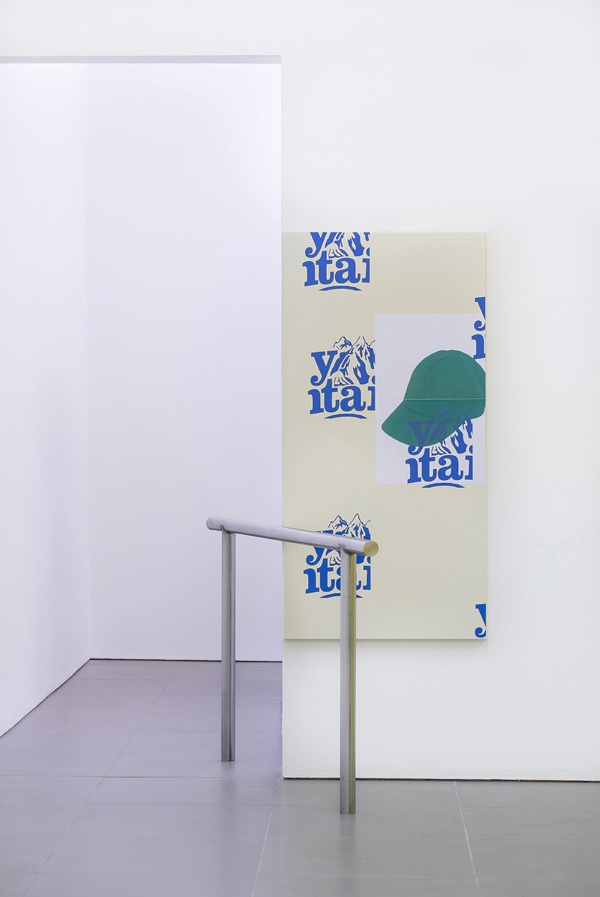
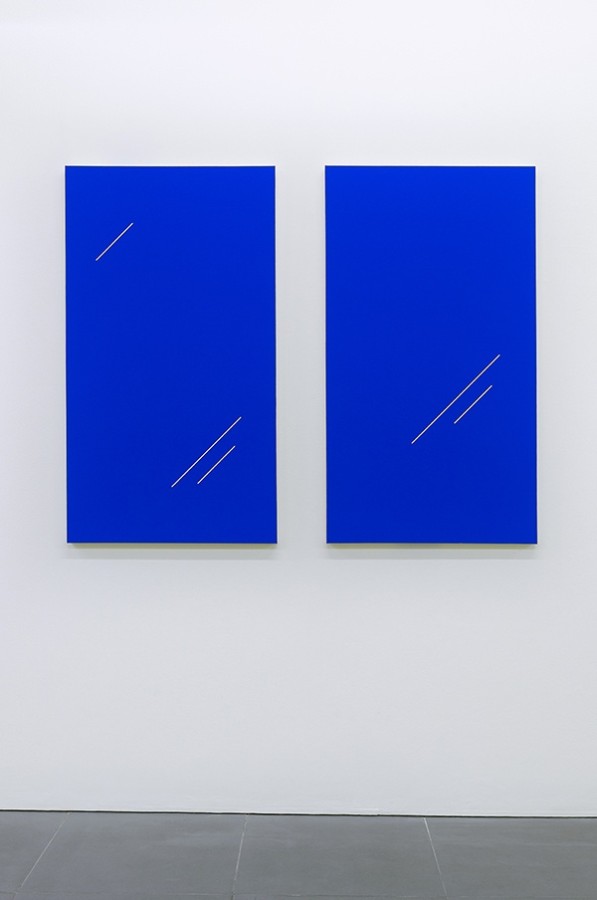
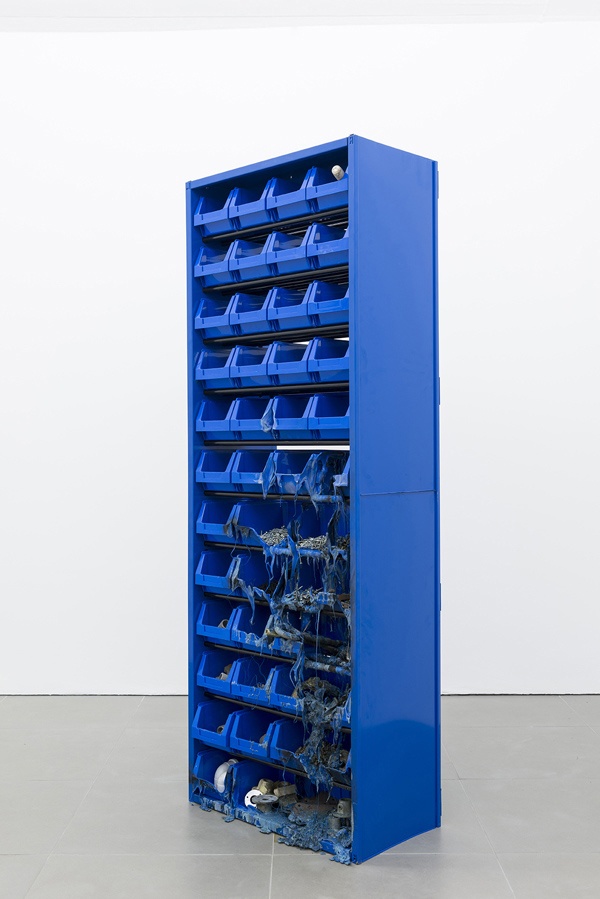
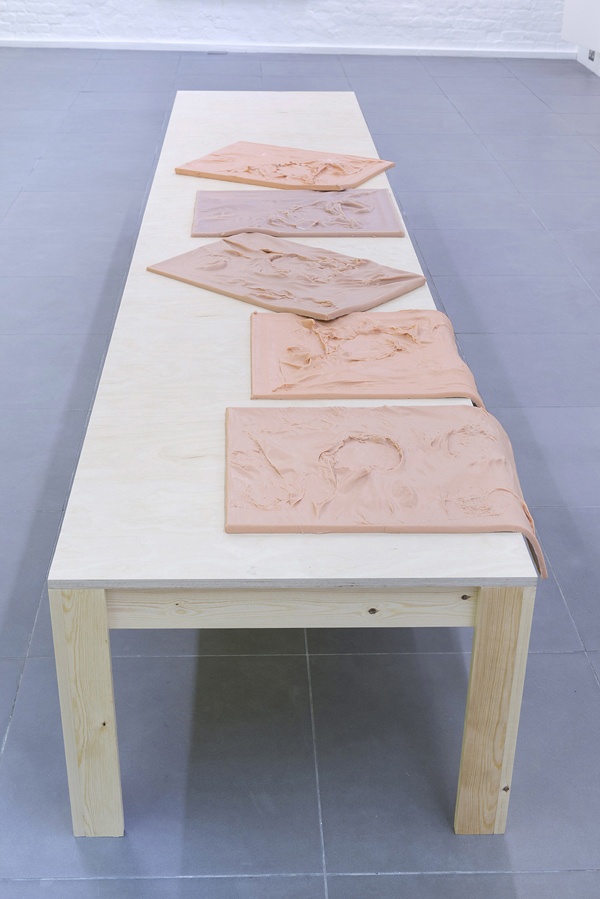
“Comrades of Time” at Cell Project Space, London.
“[A firework is lit. A small crowd stands, watching as it shoots upwards into the sky. An explosion. Sparks fly outwards.]
The history of art since the birth of modernism follows the trajectory of a firework. An artwork, once a singular object of contemplation in which time accumulates, now functions on a flat horizontal field swapping focused engagement for networked global visibility. The singular switched for omni-directional dispersal.
The second in a series of exhibitions titled after the eponymous essay by Boris Groys (1) , Comrades of Time Comrades of Time features emerging and established contemporary artists whose work re-negotiates modernism from a renewed position of globalisation, technological advancement and high-speed communication.Acutely physical objects and everyday references, invite engagement – yet devices of repetition, material manipulation and negation – cause a displacement that defers any ultimate arrival. Transience prevails in an eternal feedback loop. Art for art’s sake 2.0 (2) .This focus back inwards is brought to the forefront as tactics of institutional critique emphasise the networks of production, distribution and reception that maintain them. Disembodied and shed of much content, these apolitical, asexual, ahistorical works – are prepared for high-speed travel. Like the shrinking of Mike Teavee when transmitted through space in Willy Wonka’s television machine (3) – marks of transmission are often wrought visible.In our era of infinity scrolling (4), where knowledge circulates across networks at an unprecedented rate, Comrades of Time Comrades of Time suggests a renewed confidence in the plastic arts for continued art making. Curated by Chewday’s.
1 Boris Groys, Comrades of Time. First published by e-flux, 2009. 2 If Kazimir Malevich’s white on white painting was a work of ‘pure feeling’ these are works of pure transmission. 3 Willy Wonka and the Chocolate Factory. Dir. Mel Stuart. By Roald Dahl. 1971. 4 Endless scrolling script (Tumblr, Instagram, Facebook etc.)” – Cell Project Space
Tags: conceptual, london, pandigital
Posted in Uncategorized | Comments Off on Comrades of Time
Saturday, 14 December 2013

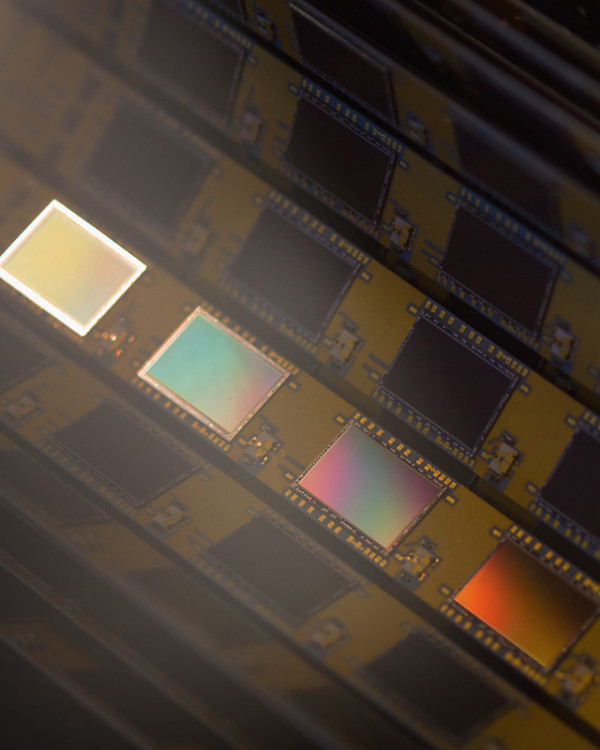
Eric William Carrol
Work from his oeuvre.
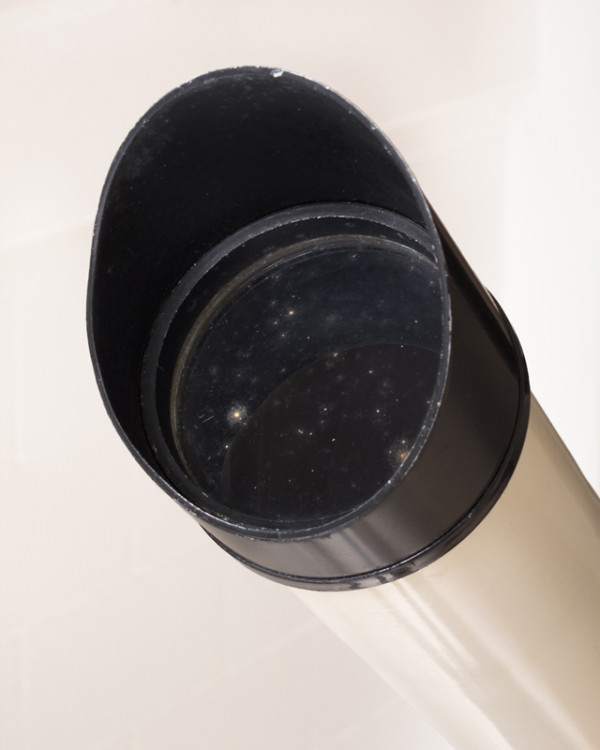
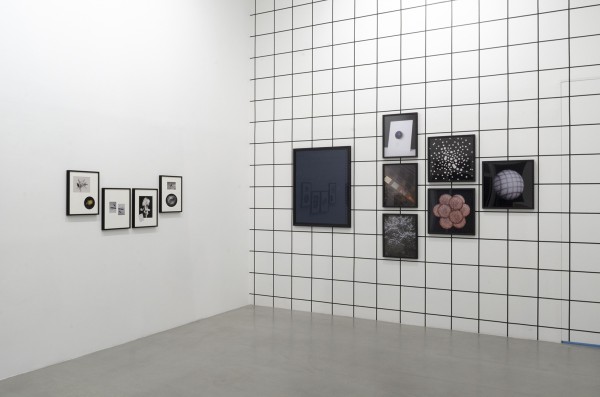
“Amelia Sechman: The collages in your most recent series, G.U.T. (Grand Unification Theory) Feeling, seem like an intuitive visual cataloging system. Where do the connections come from?
Eric William Carroll: A combination of theory and experience. Since the project is attempting to communicate something purely via photographs, I rely on visual similarities to make connections. But beneath the surface I’m trying to establish deeper connections.
AS: Were there any particularly extraordinary moments when you realized the connections between two things that previously seemed unrelated?
EWC: It wasn’t really a “moment,” but I had the gradual realization that everything is connected and that it’s only a matter of degree or perspective that separates something from everything else.
AS: What is it about these visual echoes and rhythms that compels you to bring them together?
EWC: Part of it is wanting to understand the world on a basic scientific level. The other part is that, image-wise, we’re seeing a huge variety of photographs appear together in the same container for the first time—by that I mean Google’s image search, Tumblr, Flickr, etc. Bringing seemingly random images together on the screen creates new connections. New photographic synapses are being formed. And also, I have a firm belief that everything is related and some things are more closely bound together than others (see fig. 3.4 and 4.2).
AS: Those diagrams seem to represent humankind’s impulse to reduce vastly different quantities into digestible, bite-size pieces. How does this processing of the infinitely huge and infinitesimally small factor into your work?
EWC: Well, that’s what photography does. It flattens, compresses, and objectifies. It’s up to me and the viewer to unpack that information and put it back together in a way that makes sense (or non-sense).” – excerpt from an interview with Amelia Sechman for Daily Serving
Tags: grand unified theory, photography, rad, science, space
Posted in Uncategorized | Comments Off on Eric William Carrol
Friday, 13 December 2013

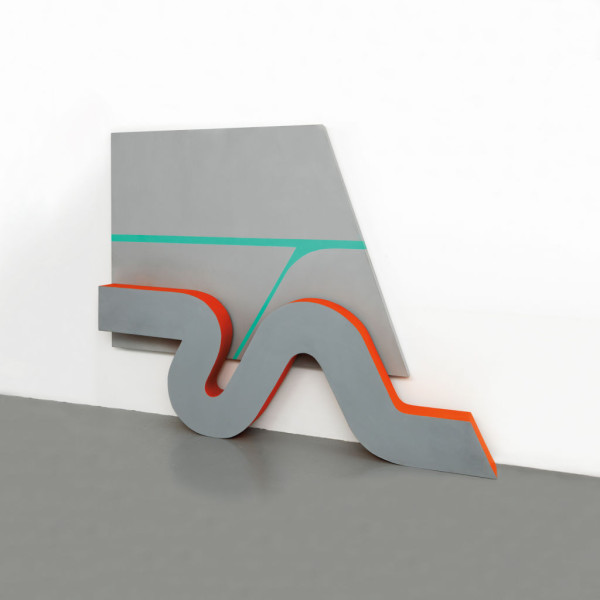

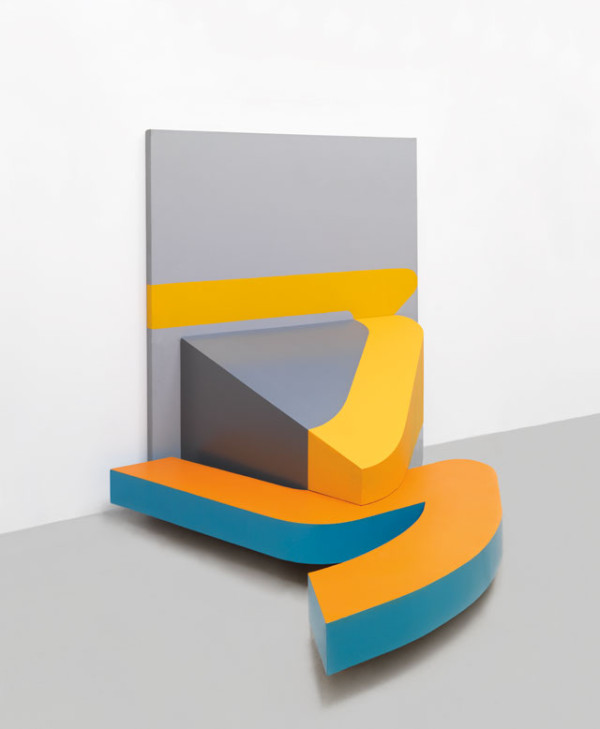
Sven Lukin
Work from his oeuvre.
“Lukin’s steady move into actual space culminated at the end of the 1960s in what is probably his best known work—an undulating 120-foot long wall relief in green, pink, and orange, permanently installed at the Empire State Plaza in Albany, New York. The next 30 years of Lukin’s career are something of a blank, at least for now. If he was making work, he hardly showed it; this significant figure of the 1960s essentially disappeared from the art world (and New York), which may explain why I, and many other contemporary viewers, are only now discovering his work for the first time.
When the story (as told in this show) picks up again, it’s with work that initially appears radically different from what came before: geometric shapes painted in acrylic on irregular pieces of burlap that have been stretched over lengths of thin tree branches and tied together into rough triangles, irregular polygons or, in one case, a pair of wing-like shapes. Equally evocative of Native American art and modernist abstraction (not such an unlikely pair, given their formal and spiritual affinities, and the serious debt that 20th century abstraction owes to American Indian culture), and also reminiscent of Peter Young’s “stick” paintings circa 1970, these untitled works may seem funky and handmade next to Lukin’s highly finished 1960s work, but the underlying concerns are the same: the relation of painted elements to the shape of the support, bent bands of color, and the interpenetration of painting and sculpture. What’s different, obviously, is the explicit presence of nature. It’s as if Lukin had turned away from the pop-modernist dream of the 1960s toward a conception of art that was more archaic, more ritualistic. In fact, Lukin has connected his post-1960s work to his Latvian grandfather who was, he told People Magazine in 1979, “once or twice removed from a shaman.” (Lukin was born in Riga in 1934, and immigrated to the U.S. in 1949.)”- Brooklyn Rail
Tags: 1960s, color, graphic, minimal, sculpture
Posted in Uncategorized | Comments Off on Sven Lukin
Thursday, 12 December 2013
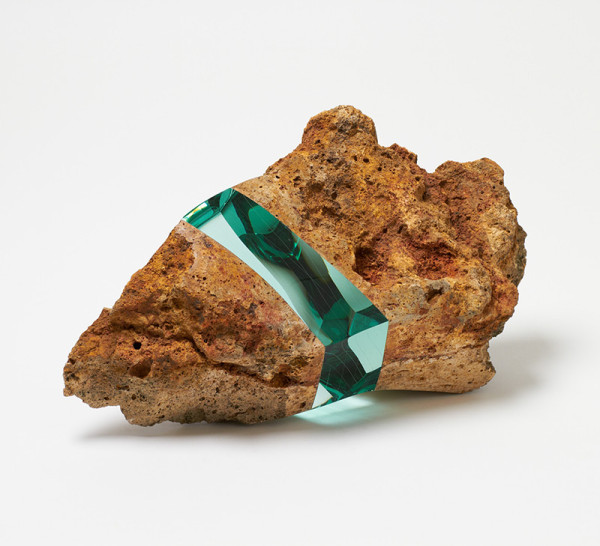
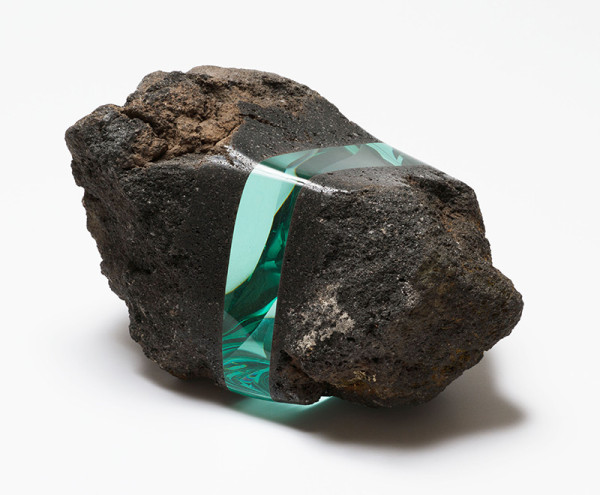
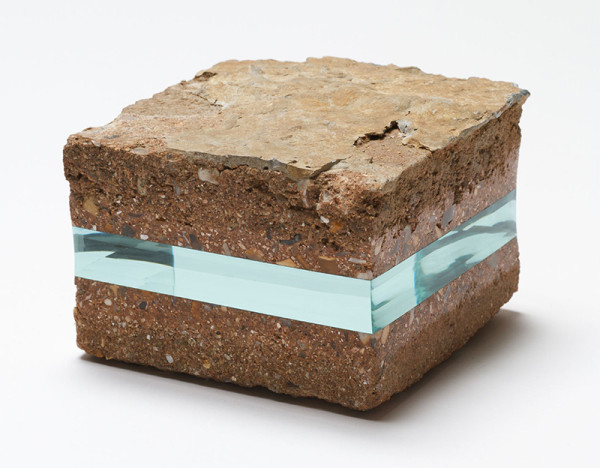
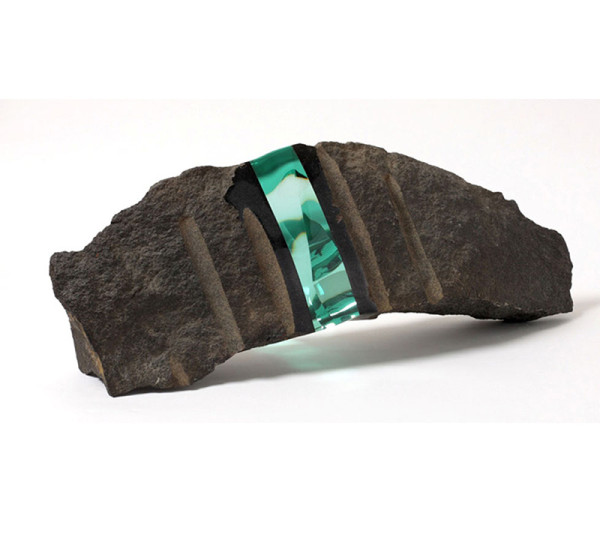
Ramon Todo
Work from his oeuvre.
“Using stones and bricks with history and culture of the land, he creats the sculpture of the stones put in polished glasses.” – Art Front Gallery
Tags: german, glass, history, insert, japanese, place, rocks
Posted in Uncategorized | Comments Off on Ramon Todo