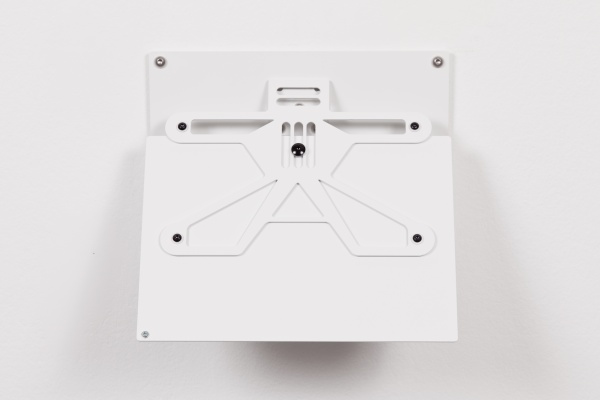
Julian Oliver

1-640-2 remote-install_screen_640 NODE13 remote-install-julian-oliver_04-640x425

Julian Oliver

Work from Remote Install

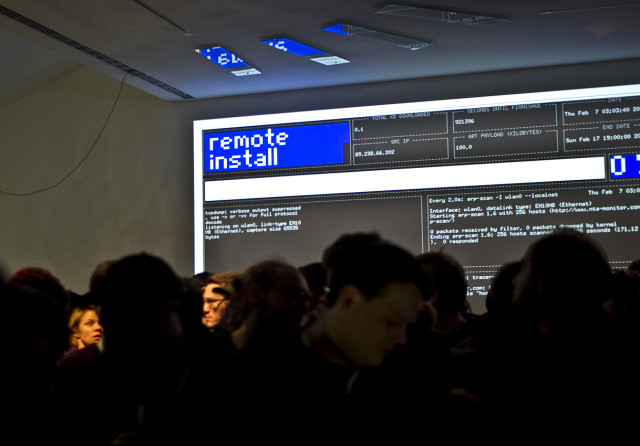
“A remote install in the media-arts world refers to the artist not being physically present at the gallery during the installation process. Rather, they send a link to download the software and work with a local team to set it up on hardware already provided.

Remote Install is a work of network-dependent Software Art that presents its own installation process as an artefact in itself.

Distributed as a stripped down, customized GNU/Linux Operating System, the gallery merely needs to copy a single file onto a USB stick, plug it into a computer on site and boot it on the day of the opening. Remote Install then analyses its network context and the amount of space given to it – the free space on the USB stick. It then logs into the artist’s server and creates a file of random binary data to exactly fill this space and proceeds to download it over the course of the entire exhibition. An algorithm ensures the last byte is downloaded on the last second of the exhibition.

Devices on the gallery network that use too much bandwidth are knocked off the network by the script, as they are a threat to the installation process. Detailed statistics relating to the process appear in several regions in the output, including a list of all the routers between the gallery and the artist’s server on the Internet.” –Julian Oliver

Pablo Jones-Soler

tumblr_mns83fk31g1qfavrio1_500 tumblr_mns8lfK3Cp1spe72zo1_1280 tumblr_mns4e01VLB1spe72zo1_1280 tumblr_mns8mkQmeU1spe72zo1_500-1

Pablo Jones-Soler

Work from Frontier options or something about levels and Omega Systems

“Frontier options or something about levels:

Looking at the Gaia hypothesis through consumer products, which operate within their own evolutionary system. Seeing earth as a complex self-regulating ecosystem where organisms and their inorganic surroundings interact to maintain the appropriate conditions for life. There is a stand off between modern man’s relentless and blind progress with a Middle Class tribalism based on retreat and re-composition.  It looks at human’s relationship with nature, and questions how close we can really get to it whilst living in internal artificial

Omega Systems:

Set in an ideal homes show/ business park aspirational space to be treated as a bit of stock footage, it looks at ideas around; distribution, production vs consumption, public vs private property and occupation.” –Pablo Jones-Soler

Carlos Jiménez Cahua

13_dsc0736_v2 13_77_v2 13_76 13_dsc8642-2 13_rapjr

Carlos Jiménez Cahua

Work form his oeuvre

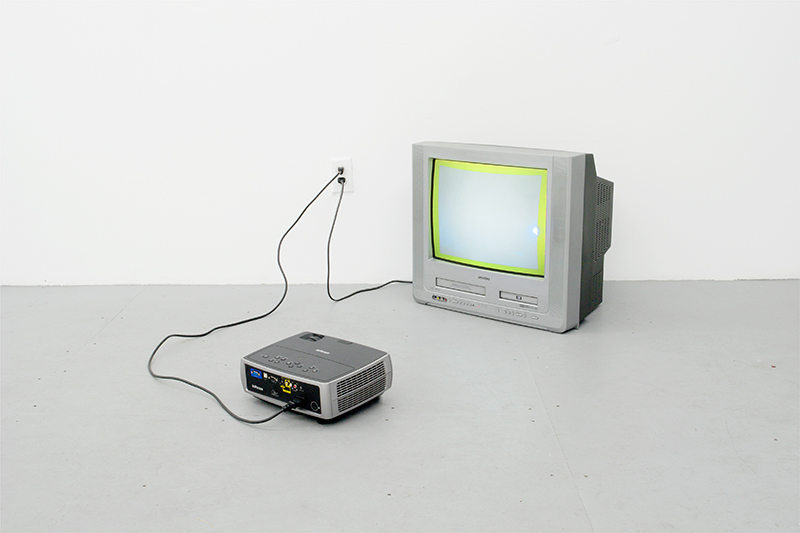
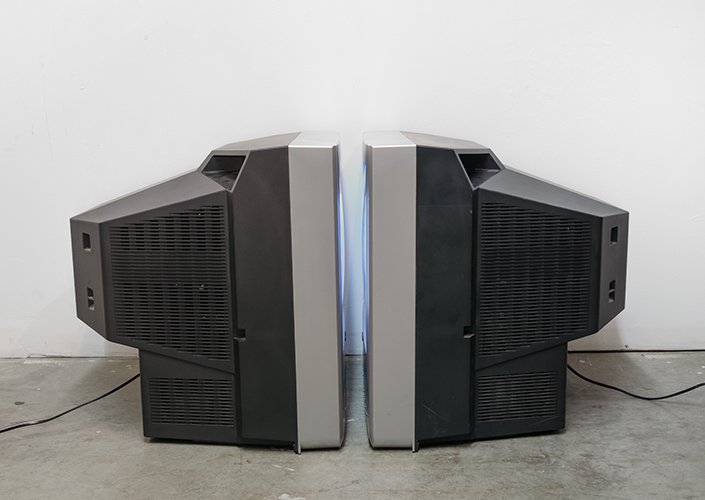
“I have been engaged in structuralist investigations in photography (both digital and analog) as driven by an abiding interest in the image and the material carrying that image. Analog photographic work has involved the making of cameraless photographs (which could be termed “photograms,” but I find that term imports certain aesthetics and bodies of work I don’t necessarily find myself akin to). My making these prints comes from treating the paper not as a passive surface waiting for images or imagery, but rather, as an agent unto itself, whose own material particularities (specifically, its rectangularity, color gamut, and compliance to folding and shaping outside the plane) bear a significant causal relationship to the final product. With this I’d hoped to achieve two things: firstly, parse an un(der)-explored visual language unique to analog, photographic paper (which, generalized, is in some sense a Modernist endeavor), and secondly, highlight the materiality of an often ignored aspect of photographs, namely the print, or made less specific, its objecthood. Analogously, I have inhabited a similar structural conception in working with digital images, whose innate lack of materiality has been of particular interest, and whose electronic, literally code-based structure seems like a fertile, if rigid, ground to explore.

Most recently, I’ve migrated some of my formalist, Modernist and Structuralist interests to other media, like sculpture, video, projection works and paintings. This impulse has come from, among other things, realizing that my interests have lately evolved out of being specific to photography, thereby de-justifying my allegiance to that medium. Working in these media that are new to me has also allowed me to lean on previous vehicles of interest in artmaking, particularly the power and failings of our mind’s perceptive apparatus, the use of color, particularly the saturated primary colors, and finally an attraction to the rectangle.” –Carlos Jiménez Cahua

Hugo Arcier

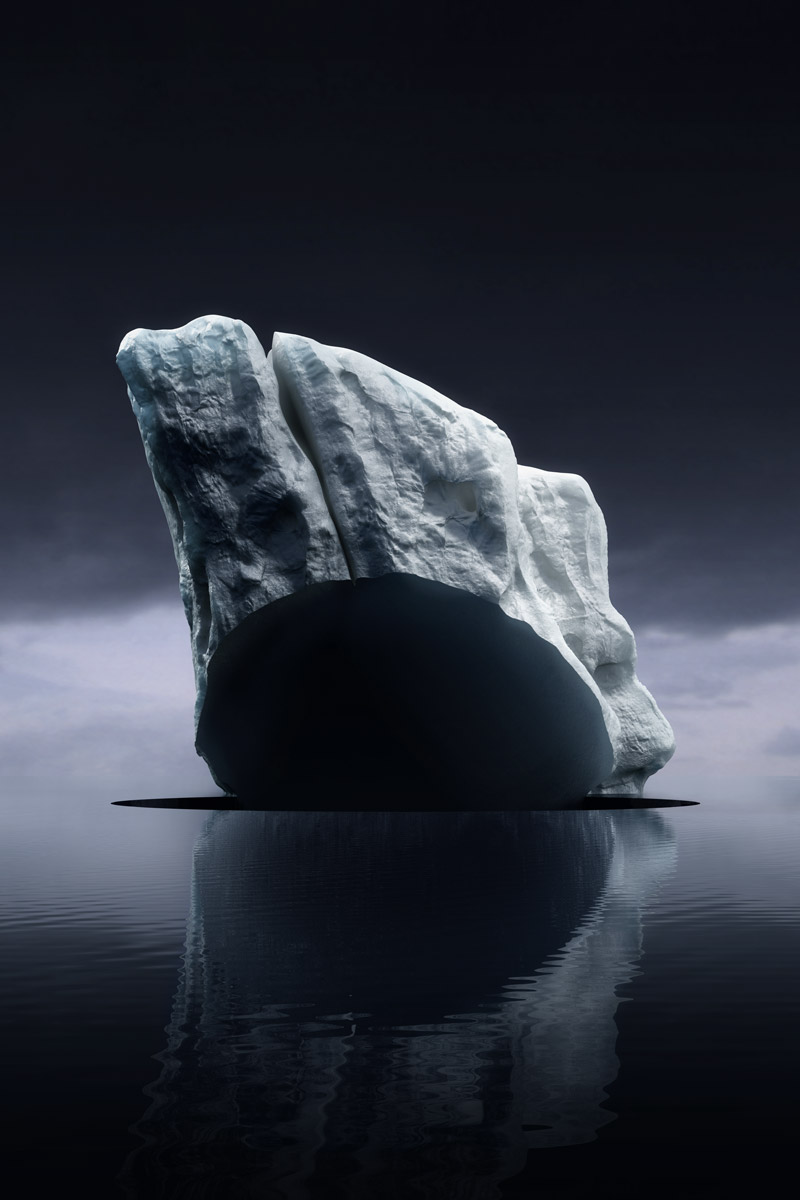
"NATURE BOOLEENNE" by Hugo Arcier "NATURE BOOLEENNE" by Hugo Arcier "NATURE BOOLEENNE" by Hugo Arcier "NATURE BOOLEENNE" by Hugo Arcier "NATURE BOOLEENNE" by Hugo Arcier "NATURE BOOLEENNE" by Hugo Arcier

Hugo Arcier

Work from Boolean Nature

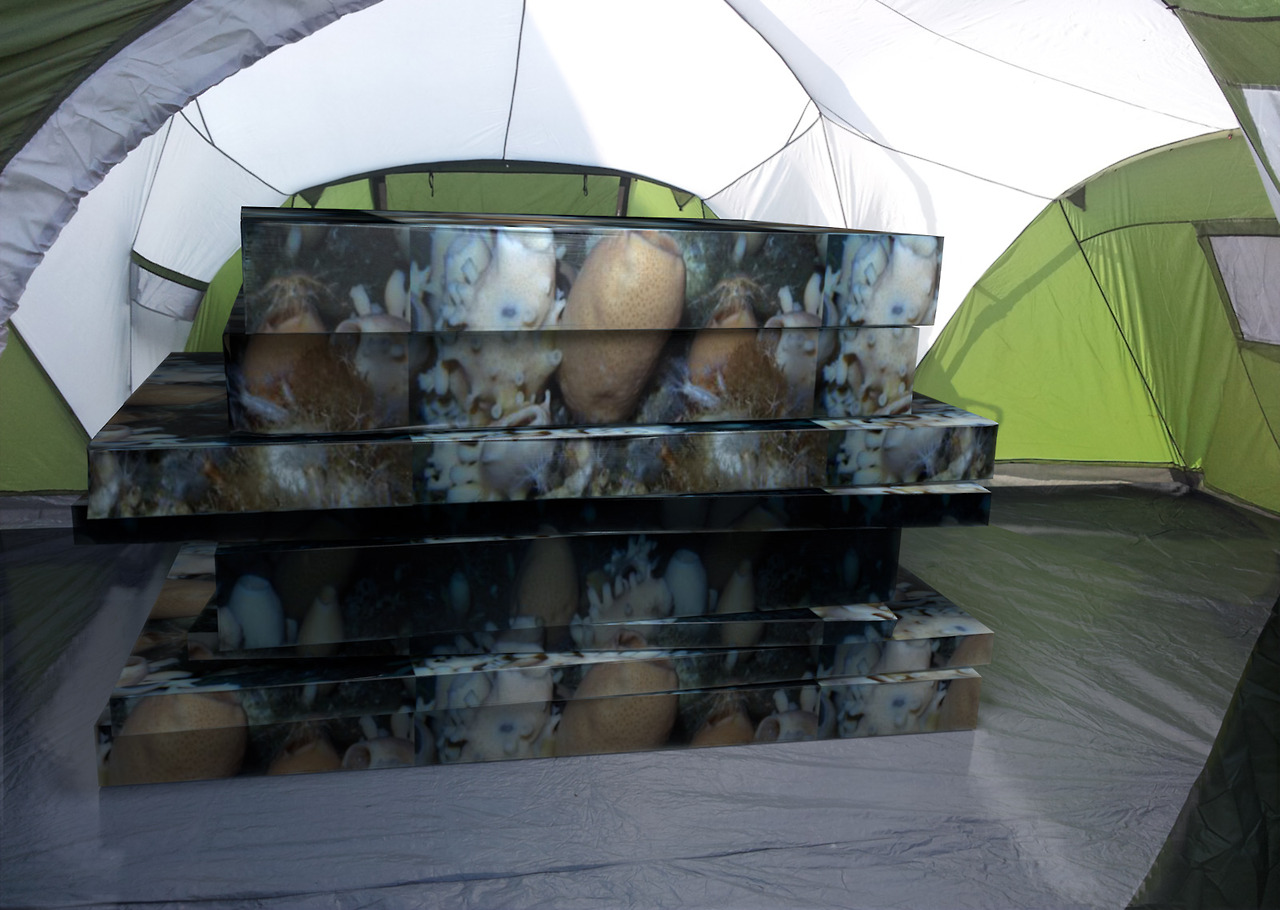
“In logic and computer programming, a Boolean operator is a type of variable between two states. In computer-generated imagery, Boolean operations enable one to subtract, add or create an intersection between two objects. In this series Arcier has painstakingly constructed landscape scenes, upon which he applies spherical boolean subtractions. The resulting images are morbid representations of computational logic applied to nature. The works are completed through the production and sculptural realization of the portion that has been subtracted from the virtual scene.” –Hugo Arcier

via Rhizome Artbase


United Visual Artists

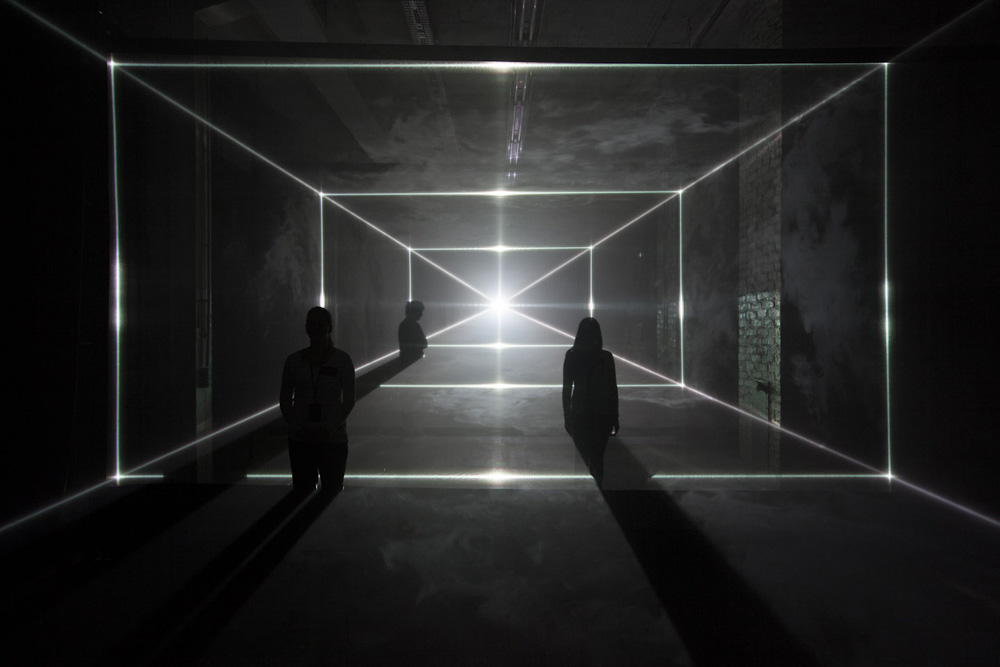
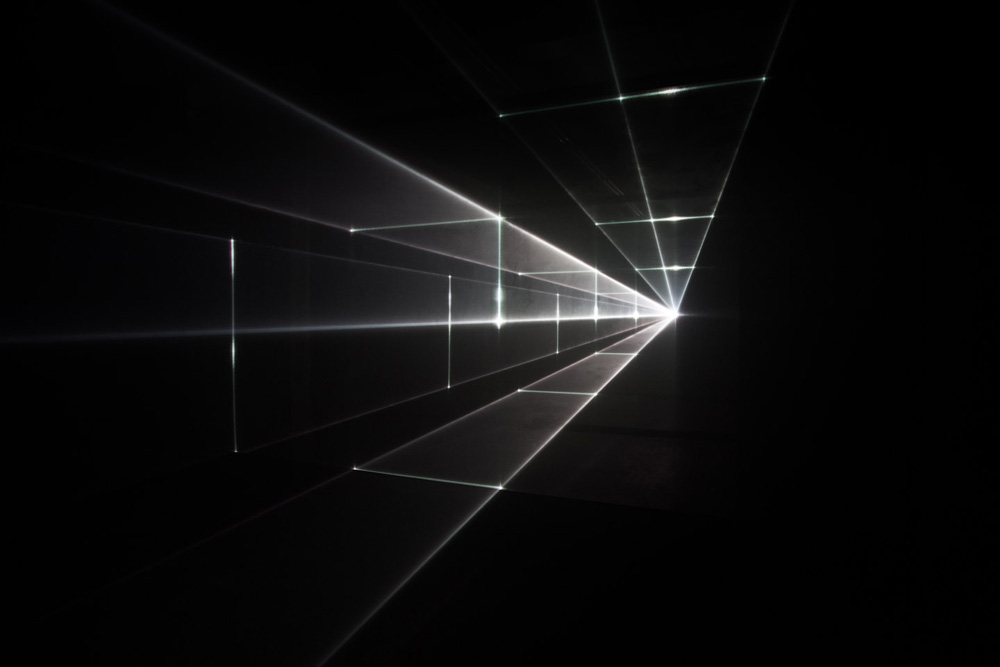
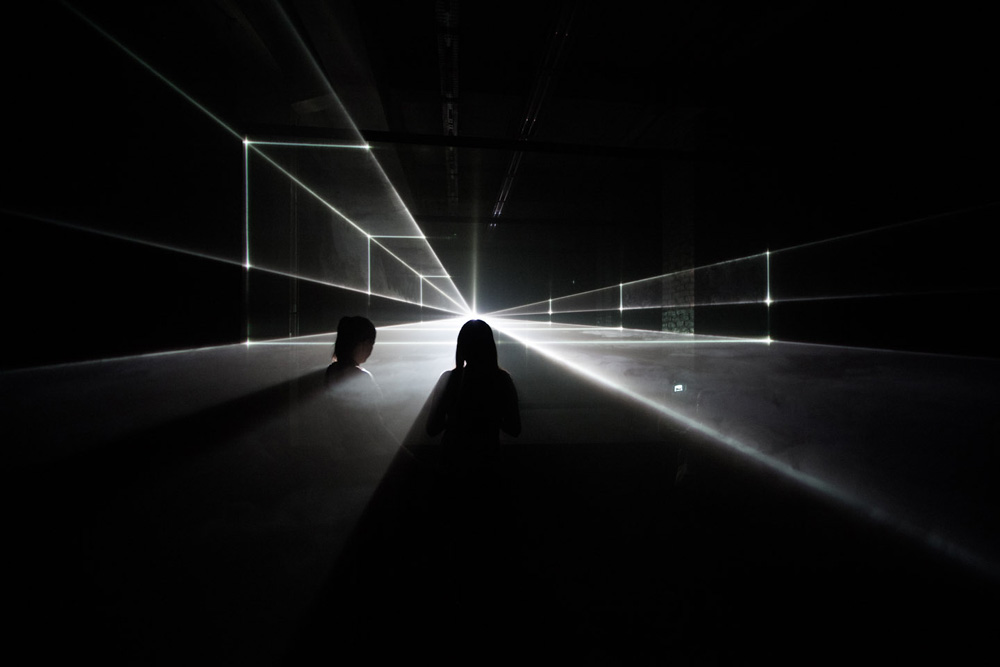
United Visual Artists TRIANGULATION BLOG 13 United Visual Artists TRIANGULATION BLOG 10 United Visual Artists TRIANGULATION BLOG 06 United Visual Artists TRIANGULATION BLOG 12 United Visual Artists TRIANGULATION BLOG 05

United Visual Artists

Work from Vanishing Point

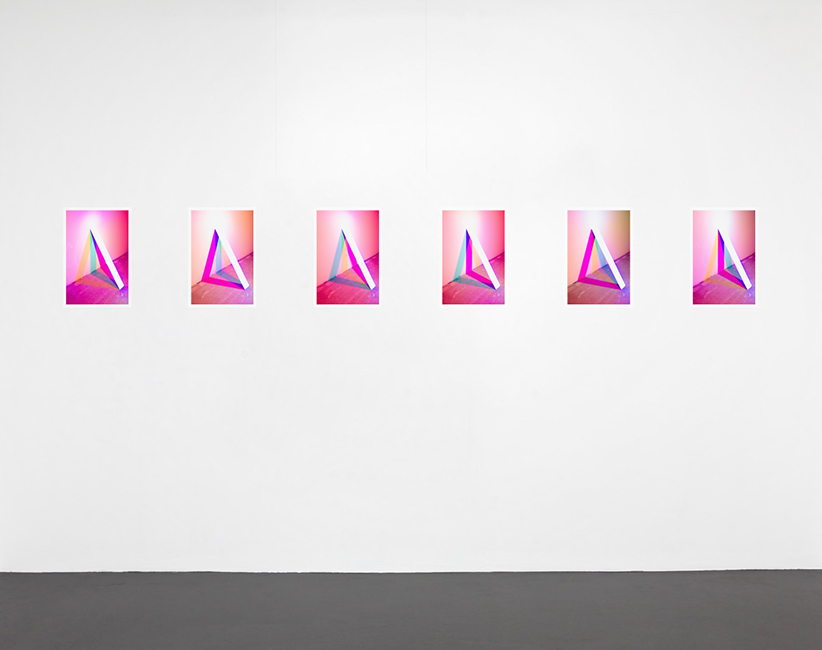
“Vanishing Point employs perspective as both tool and visual outcome to reshape, redefine and represent a space. Inspired by sketches of Leon Battista Alberti, Leonardo DaVinci and Albrecht Dürer, UVA sends lines into space from an arbitrary vanishing point, creating different volumes, divisions and rooms to be explored by the audience.” – United Visual Artist

Aoto Oouchi

tumblr_mmn0r15jDU1s7y29yo1_1280 tumblr_mnteep034H1s7y29yo1_1280 tumblr_mmpmdfy9Ll1s7y29yo1_1280 tumblr_mloqod8f3j1s7y29yo1_1280 tumblr_mow483t4iv1s7y29yo1_1280

Aoto Oouchi

Work from his oeuvre

“In the time of post internet art, an understanding in pure digital media consumption/ production/ redistribution and the philosophy of object-oriented ontology is what frames Aoto Oouchi‘s work field. ‘What you see is what you get’ is the title of his latest work and portrays a representation and recontextualisation of “objects” or “pictures” in a “picture”. We are used to see “real” sculptures as pictures in the net, we rarely go there, walk around and look at a sculpture. Instead we flick through masses of pictures every day online and we are used to it. Aoto’s work is about the question of our validation of mass and reality.” – O Fluxo

Carey Denniston

10_denniston_to_what_degree_MT 10__MG_0403aa 10__MG_0619

Carey Denniston

Work from To what degree a stone is a stranger/To what degree it is withdrawing

“Carey Denniston’s works upend our typical notion of how multi-panel photographs are supposed to function. Instead of shifting our attention from one panel to another, drawing out a narrative into a wider arc, or creating associations and juxtapositions between nearby images, she subverts those premises and uses one panel to obscure the other. It’s an inversion that not only undermines our expectations, but interrupts the photographs in such a way that their ability to deliver a legible narrative is undermined.

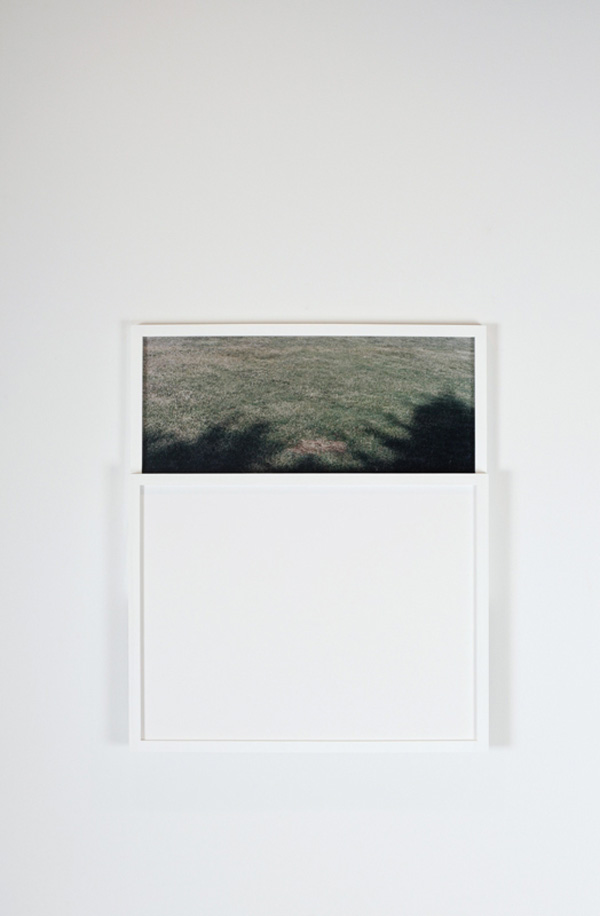
Each work is made up of a single photograph in white frame partially obscured by a blank white panel, like an opaque Japanese screen or a sliding door. These sculptural panels frustrate our ability to draw out a story, reducing the works to mysterious formal exercises. An image of a round plastic ball is cut in half, while another is narrowed down to the slats of an outdoor table and the boards of a wooden deck. In other works, the fragments of visual textures are more mysteriously edited, leaving behind small snippets of geometric tile flooring, a lumpy blue tarp, a rock wall with flecks of straw, and a woven white fabric. I was ever so tempted to push the white panel back to see more of what was going on, or to peek on the back side to see if there was any image hiding there; the eclipsed images give little clue to a larger purpose. But this dissonant set-up is what gives the works their friction – it’s disciplined, rational, and rigidly controlled, all in direct convention of what we’re used to.

Denniston’s works point to a heightened sense of the duality of photography, of a picture’s ability to be both a recognizable story and a set of abstract lines and forms at the same time. Her panels break up this effect, reducing a functioning photograph to a hint of its former self, stripping away our ability to easily interpret a narrative or context and leaving us with more questions than answers. Her works are like puzzles that can’t be figured out, momentarily annoying but seductively challenging. Unlike many contemporary photographs which shout from the walls to get our attention, these works actively hold back, in quiet, defiant resistance.” – DLK Collection

Art of Living (i.e. : Goodbye, Blue Monday)

009-Vue-dexpo 018-Emanuele-Marcuccio-Desk 013-Timur-Si-Qin-detail 004-Katja-Novitskova-Shapeshifter1 001-Vue-dexpo-1-HD 021-Emanuele-Marcuccio-Its-like...

Art of Living (i.e. : Goodbye, Blue Monday) at Galerie Valentin, Paris

Featuring Lupo Borgonovo, Luca Francesconi, Sonia Kacem, Emanuele Marcuccio, Katja Novitskova, Timur Si-Qin, Anicka Yi 

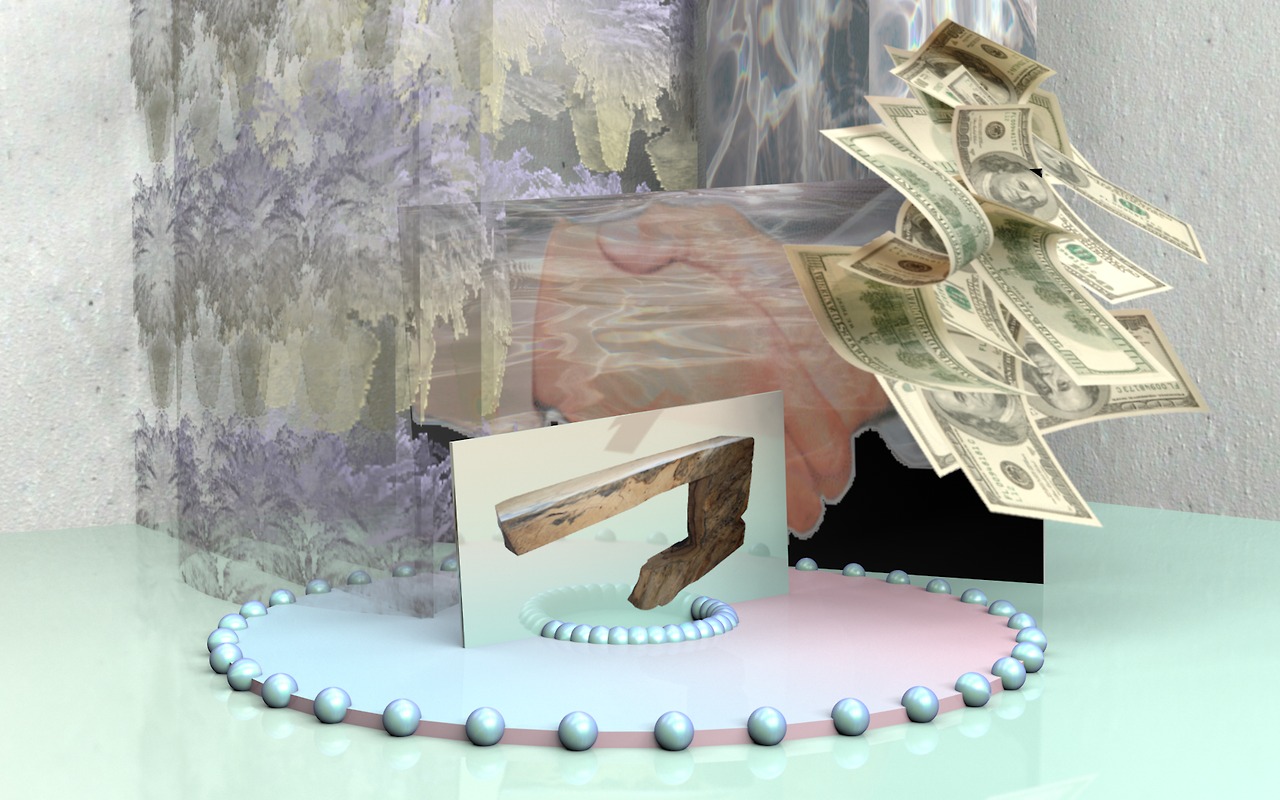
“This exhibition is an adaptation. Or rather, this exhibition is a pretext. A pretext for talking about other things, and when we speak of “things,” we mean all the objects of our lives. Objects with which we have lived, objects that we have observed, which become food for thought, used and reinjected—like the material part of the world—into works of art. We might summarize it in this way, with an existential explanation of raw materialism borrowed from the preamble to Breakfast of Champions by the American author Kurt Vonnegut.1

Drawings by the famous author—member of the American Academy of Arts and Sciences and the National Institute for Arts and Letters—were originally included in the text. It is interesting to point out that his work deals with simple themes and makes references to genres that are often deemed “minor,” such as science fiction (although we ought to really speak of surrealism). It has always been, however, an attempt to raise the level of the debate through events drawn from everyday life, as abstract and excessive as they may be.

“My drawing of a rattle snake, for instance. They’ll have no trouble recognizing it as a rattle snake and saying to themselves, «rattle snake ».”2

The author thus poses a simple, obvious aphorism that conceals an instrumental point of view on life as a free eld in which one has to grab all the things making us up as if they were a residual portrait of ourselves.

At its start, the project proposed to bring into the gallery space pieces of either lived or mental life, and to put together a show in which the works would be made up of objects from reality. These offer the viewer a certain imagination and hence an open semantic feld, presenting us with a “list” by George Perec, the author of Things: A Story of the Sixties. Through a proposition just as straightforward and objective as it is possible, “Art of Living” would like to illustrate people’s life stories through their objects, that is, Material Beings. In a word, in the show there are objects that we have “experienced,” and which are henceforth part of a work of art. Referring again to Vonnegut’s drawing, we can say that things (what is left of our lives), even recontextualized, are not necessarily imbued with another meaning. Constituting works of art, they become once again a “back to zero” in cyclical, closed time. Just like when one says sarcastically at each and every start of a new week, predictable all the same, “Goodbye blue Monday.”

This show grew out of a conversation between Philippe and Frédérique Valentin and the artist Luca Francesconi. As part of this project, Francesconi is also presenting a series of interviews on the theme of the object.

1 Kurt Vonnegut, Breakfast of Champions, or Goodbye Blue Monday (New York: Delacorte Press, 1973).
2 Kurt Vonnegut, La Colazione dei Campioni, Italian translation: Attilio Veraldi, Italy: Eleuthera, 1999″

via Mousse Magazine

Onformative

googleFace0 googleFace2 googleFace4

Onformative

Work from Google Faces

“The way we perceive our environment is a complex procedure. By the help of our vision we are able to recognize friends within a huge crowd, approximate the speed of an oncoming car or simply admire a painting. One of human’s most characteristic features is our desire to detect patterns. We use this ability to penetrate into the detailed secrets of nature. However we also tend to use this ability to enrich our imagination. Hence we recognize meaningful shapes in clouds or detect a great bear upon astrological observations.

Objective investigations and subjective imagination collide to one inseparable process. The tendency to detect meaning in vague visual stimuli is a psychological phenomenon called Pareidolia, and captures the core interest of this project.

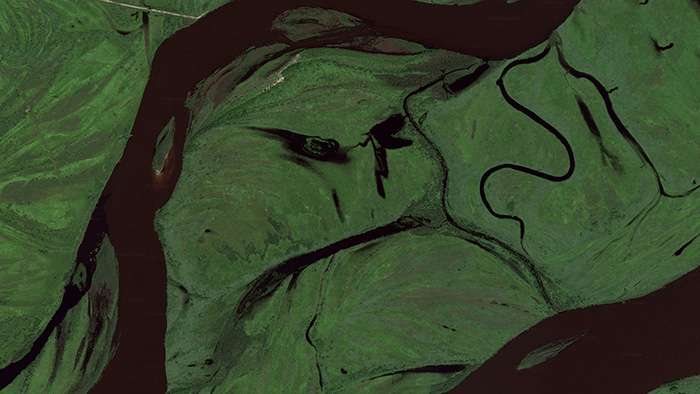
We were driven by the idea, to explore how the psychological phenomenon of Pareidolia, could be generated by a machine. We wrote an algorithm simulating this tendency, as it continuously searches for face-like shapes while iterating above the landscapes of the earth. As a major inspiration we took a look at the “Face on Mars” taken by Viking 1 on July 25, 1976.

One of the key aspects of this project, is the autonomy of the face searching agent and the amount of data we are investigating. The source of our image data is halfway voluntary provided by Google Maps. Our agent flips through one satellite image after the other, in order to feed the face detection algorithm with landscape samples. The corresponding iteration algorithm steps sequentially along the latitude and longitude of our globe. Once the agent circumnavigated the world, it switches to the next zoom level and starts all over again.

Our Facetracker already circumnavigated the world a couple of times and astonished us with quite versatile results. As it continues to travel the world within the upcoming months, it continuously zooms into the earth. This process decreases the step-size for each iteration and therefore increases the amount of images and travel time exponentially. Some of the detected images aren’t usable at all, as we are not able to recognize any face-like patterns within the detected images. Other satellite images, on the other hand, inspired our imagination in a tremendous, yet funny way. However the search goes on, as our diligent robot continuous investigation. Below we have collected several images already found. Click on the images to see it directly on Google Maps.” –Onformative

Jacob Riddle


Jacob Riddle

Work from his oeuvre.

“Separating from the camera and venturing into new means of image capture such as screen captures, animated gifs, and screen recordings has led me to become a landscape photographer, not exploring the west, but the graphical user interface and the great depths of the internet.” – Jacob Riddle