Mike Nelson

MN-More-Things-62-lg
MN-2013_02_21-15-lg
MN-More-Things-86-lg

Mike Nelson

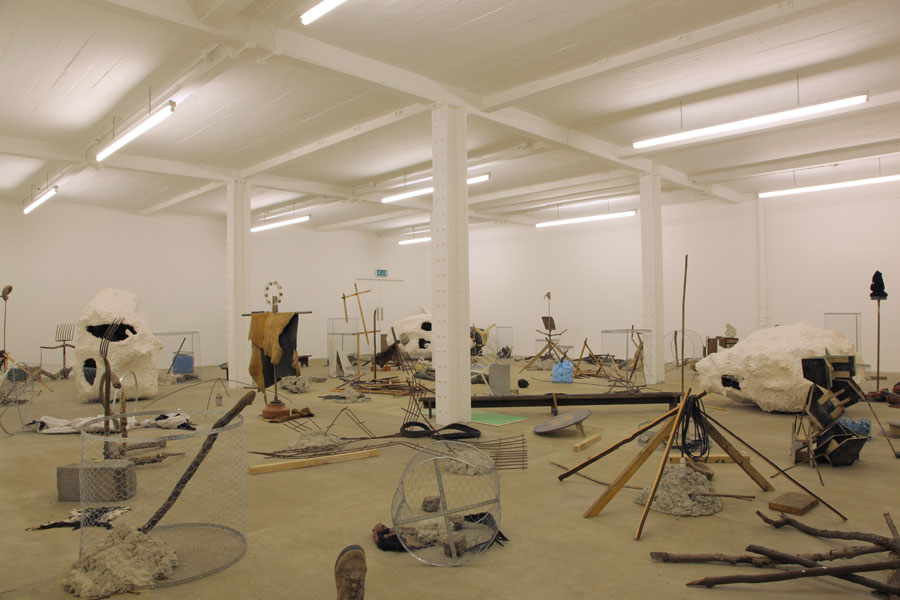
Work from More things (To the memory of Honoré de Balzac) at Matt’s Gallery.

“For his fourth show at the gallery Mike Nelson has chosen to eradicate the constructed architecture that has formed the prevailing structures of his previous three Matt’s Gallery commissions: Trading Station Alpha CMa in 1996, The Coral Reef in 2000 and AMNESIAC SHRINE or Double coop displacement in 2006.

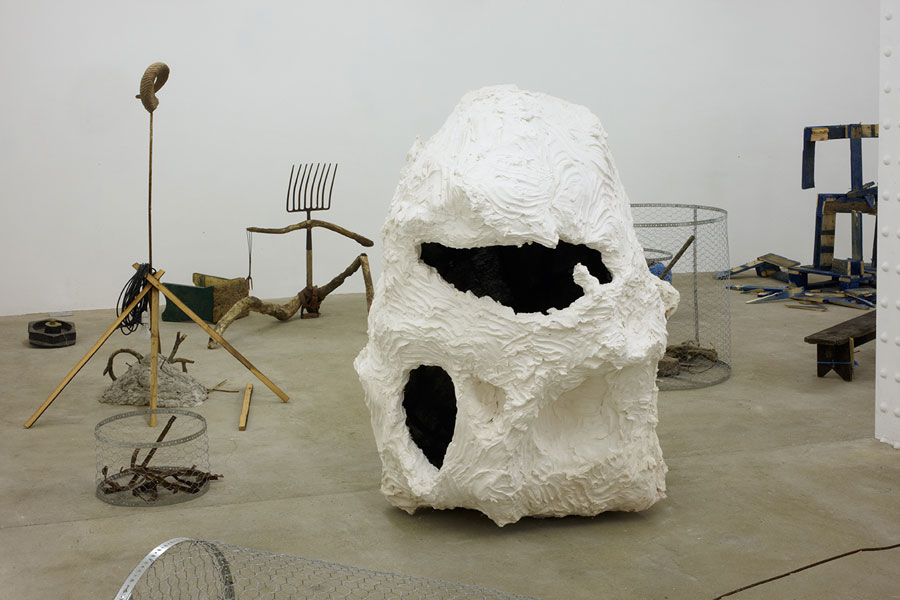
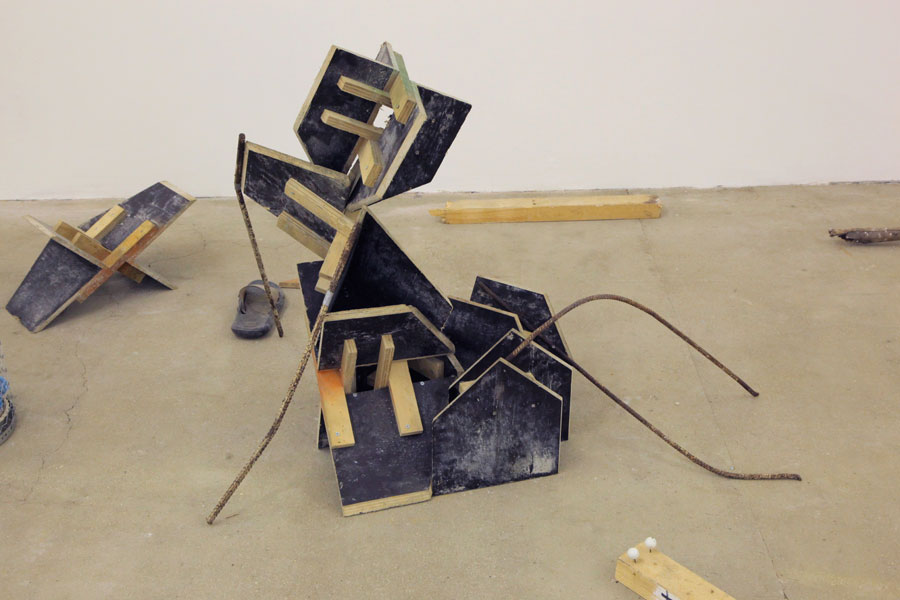
Nelson returns to the right hand space where he constructed his first two works for the gallery, and has elected to replace those architectural constructs, that were built to hold and direct their audience, with sculptural entities.  Gone are the spatial divides that existed in varying forms before, presenting us instead with an exhibition of objects, constructed on site with the most rudimentary materials.

Each element of the work is an invocation of time spent, a votive effigy of sorts, built up to emanate a sense of ‘being’, soaked in the material from which it is formed.  To all intents and purposes it is a sculptural experiment in presence as opposed to absence: the space around as opposed to that within.  In this way the viewer is placed outside of the work and forced to look in, the phenomenology of experience and discovery receding to the point of non-existence; these works only exist in isolation.

Their frame of reference is also curtailed, gone are the elaborate meta-narratives. All that is left is the space, the material, the maker and their respective histories imbued with the desire to make something with an intensity that can conjure a sense of what has been, out of the very material that spans that time.  The old English term ‘poppet’, which would later become ‘puppet’, refers to folk dolls constructed to be imbued with sympathetic magic; what Nelson proposes here is more of an empathetic magic, one that could be seen to mimic that of the class b1 androids in Philip K Dick’s ‘Do Androids dream of Electric Sheep’.

Here Nelson concentrates on sculptural aspects, turning inside out his perceived practice – a reversal that ultimately only accentuates the imbued rituals of previous works.” –Matt’s Gallery


Francesca DiMattio

Francesca_install_3
ltvs-francescadimattio-1
Francesca_Dimattio
ltvs-francescadimattio-4

Francesca DiMattio

Work from her oeuvre.

“DiMattio’s paintings have often made reference to feminine craft techniques such as sewing, weaving or quilt making. In an attempt to shift the assumption that these crafts are most often delicate or small-scale domestic creations, she scales them up and uses a rougher, more masculine hand. Keeping with an interest in domestic craft, it is fitting that her sculptures are formed from ceramic. Using a material deeply ingrained in rules, craft and history, she turns it on its head by irreverently pulling from its history and pairing extravagant reference with crude slabs marked by fingers and punch marks.

DiMattio investigates the history of porcelain to examine the ways in which visual iconography moves through culture. She looks at how porcelain’s visual history is one of copies, fakes and re-makes; how a revered technique such as the blue and white design found on a Ming Vase was copied by the English, Dutch and French, morphing and changing slightly through each iteration, and can now be found on a kitsch object in a gift shop. Like her paintings, the sculptures here juxtapose conflicting historical references, from 18th century English Wedgwood, French Rococo and Ming Dynasty to kitsch animal figurines. These are grafted objects, fusing disparate elements into a curious new whole. Each piece is made completely as one, rather than from found forms put together after the firing. The different passages affect one another, with glaze from one element interrupting, transforming and connecting multiple facets of the same sculpture.

DiMattio’s new work incorporates bases and handles of various forms, from gilded heaps of clay to delicately sculpted adorning flowers. Bases of piled up clay are reminiscent of Chris Ofili’s elephant dung, whilst a slumping torso-like coil pot seems on the verge of collapse. Debris made by sculpting animalia has been collected and put on the adjacent surface, creating a rough texture made of dust, chunks and trimmings, and elements in high gloss sit next to bright matte colour. DiMattio creates unstable and shifting objects that are a combination of various logics of taste. In Cuvette à Tombeau, one moment the china-painted landscape is beautiful and the bright rough-textured yellow feels broken, crude or flawed, and on a second look, the texture becomes vibrant and rich, whilst the landscape becomes something you might find in a thrift shop. The changeability of taste is heightened and examined through DiMattio’s uncanny pairings that ask the viewer to look closely at and interrogate these new abstract and de-hierarchised forms.” –Pippy Houldsworth

Aditya Pande

large
Aditya Pande 001
Aditya Pande 002

Aditya Pande

Work from his oeuvre.

“Most of Aditya Pande’s works can only be described as oxymorons: elegantly grotesque; digital primitivism; controlled spontaneity; intricately ordered anarchy. In his works, Pande balances his every movement with its opposite. The works combine the skills of drawing and printmaking with the surfaces of both photography and painting.

Aditya Pande’s unique digital, mixed-media collages excite the eye with their explosion of colors, their intricacy of lines and complex compositions. His digital graphic designs are physically altered after printing to create a surface that blurs between two dimensions and three. Pande economically creates the impression of deep recesses with sparing collage elements. One must lean in for a closer look to be certain which elements lie flat and which come off the surface.

While Pande’s technique is au courant, his subject matter and style speaks to something more primitive. While the look of the works is most immediately referential to the abstract Surrealism of the Spanish master Joan Miró and the hyper-Expressionism of the Danish painter Asger Jorn, there is something much older hiding in Pande’s pictures. Somewhere in Pande’s mixed-media creations lurks the prehistoric cave art found in both Lascaux and Bhimbetka.” –Nature Morte

Heeseop Yoon

27.junkshop-Skowhegan
sm302
FP stilllife14_md-filtered
Arts/Industry Pottery Kohler


Heeseop Yoon

Work from her oeuvre.

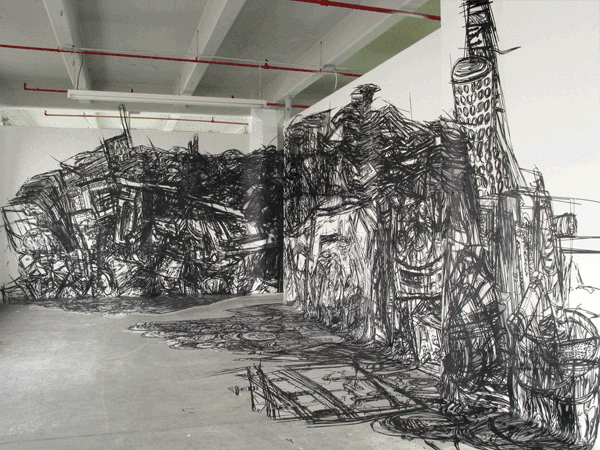
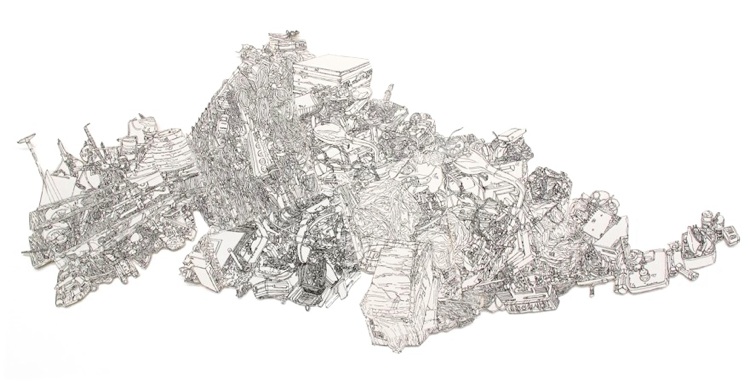
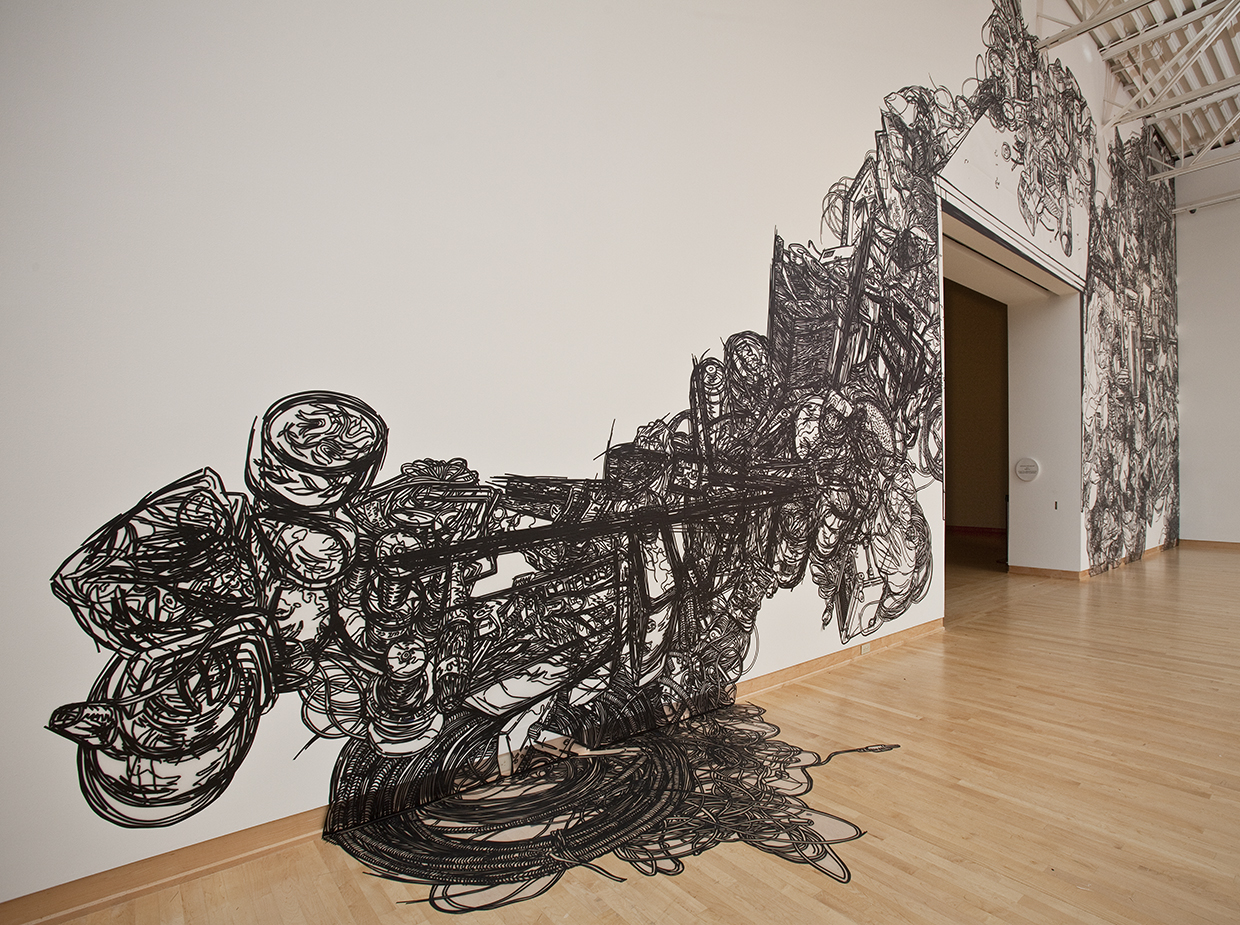
“Heeseop Yoon (NY) uses “organizational lines” and narrow black masking tape to explore concepts of perception. Organizational lines are used to map the structure of a realistic drawing. These lines, by definition, are drawn and later erased, but they serve to measure the composition and guide the proportional adjustment of represented objects. Yoon’s subjects—interiors of junk shops and storage facilities—test the ability of the line to make order out chaos.

Working from photographs, Yoon draws her subject matter freehand on sheets of transparent polyester film that are later attached to the gallery wall. She retains her exploratory sketches, her mistakes, and the corrections on each drawing. The lines not only situate the forms in the clutter, they also cross over, search out, and assess the entire scene.

Each and every line—including the mistakes—becomes indelible when the black tape manifests its path. The multiple lines, made uniform by the one-quarter-inch tape, take on a kinetic effect and sense of immediacy. They work together to make the image less clear. The resulting paradox interests Yoon: the more she looks, the less she believes in the accuracy or reality of the drawn images.” –John Michael Kohler Arts Center

Shilpa Gupta

photo 4
artwork_images_424832438_753919_shilpa-gupta
shilpa-gupta-singing-cloud_01
Shilpa_Gupta

Shilpa Gupta

Work from her oeuvre.

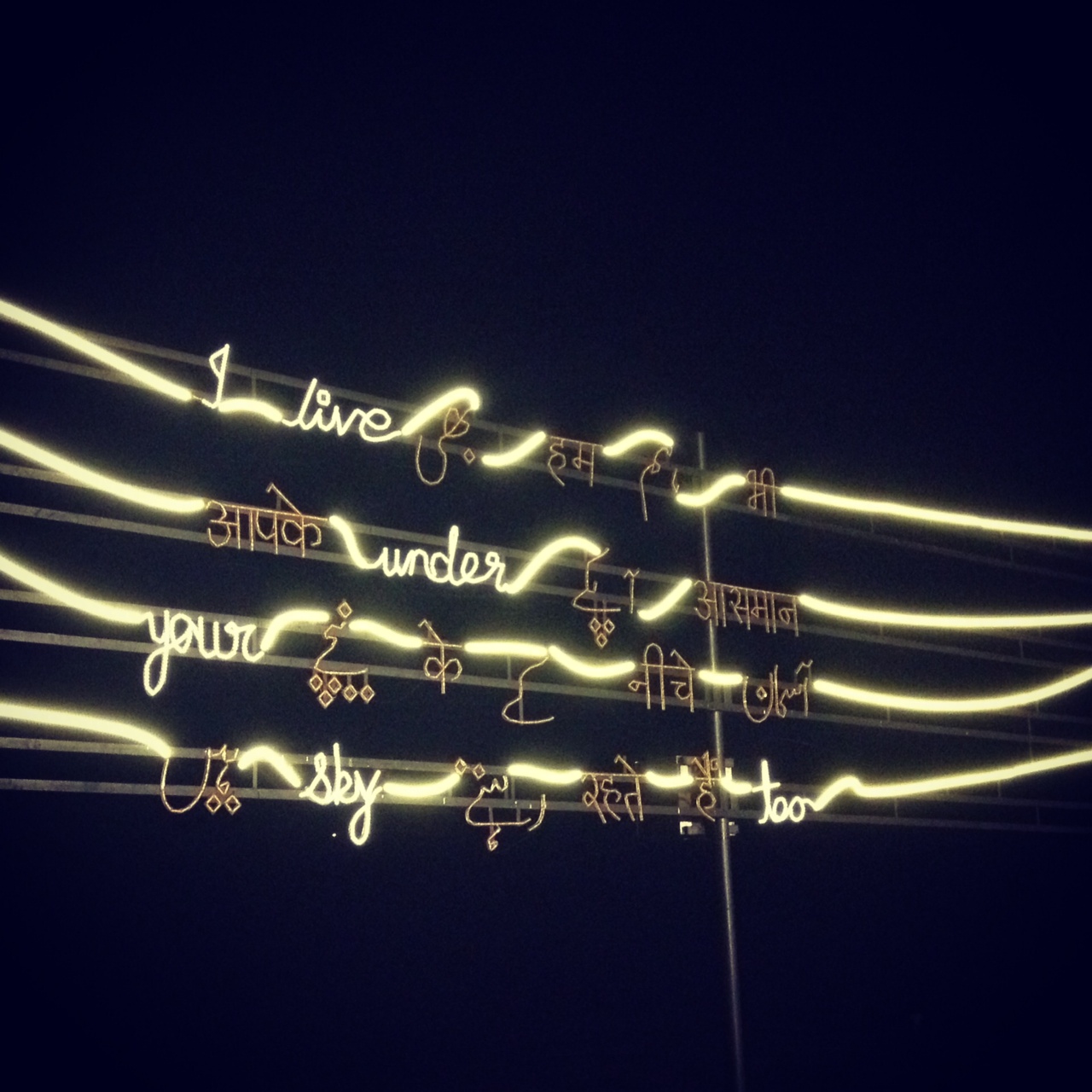
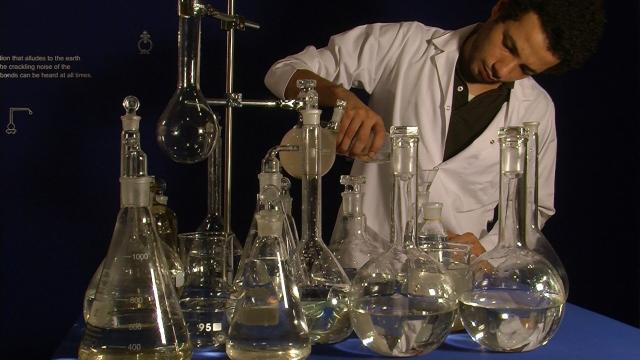
“Shilpa Gupta creates artwork using a variety of media including video, objects, photography, sound and performances to examine such themes as desire, conflict, militarism, security, technology and human rights. Gupta’s application of technology in her works reveals her interest in how various media affect our understanding of the political realm. Considering technology as being an extension of body, mind and perception, she possesses a sharp political consciousness about the role, psychology and aesthetics of these media forms.” –Arnolfini


Goshka Macuga

macuga
OPF-37-GoshkaMacuga-Ofwhatisthatitis-Image2
OPF-37-GoshkaMacuga-Ofwhatisthatitis-Image1
17761829_large

Goshka Macuga

Work from her oeuvre.

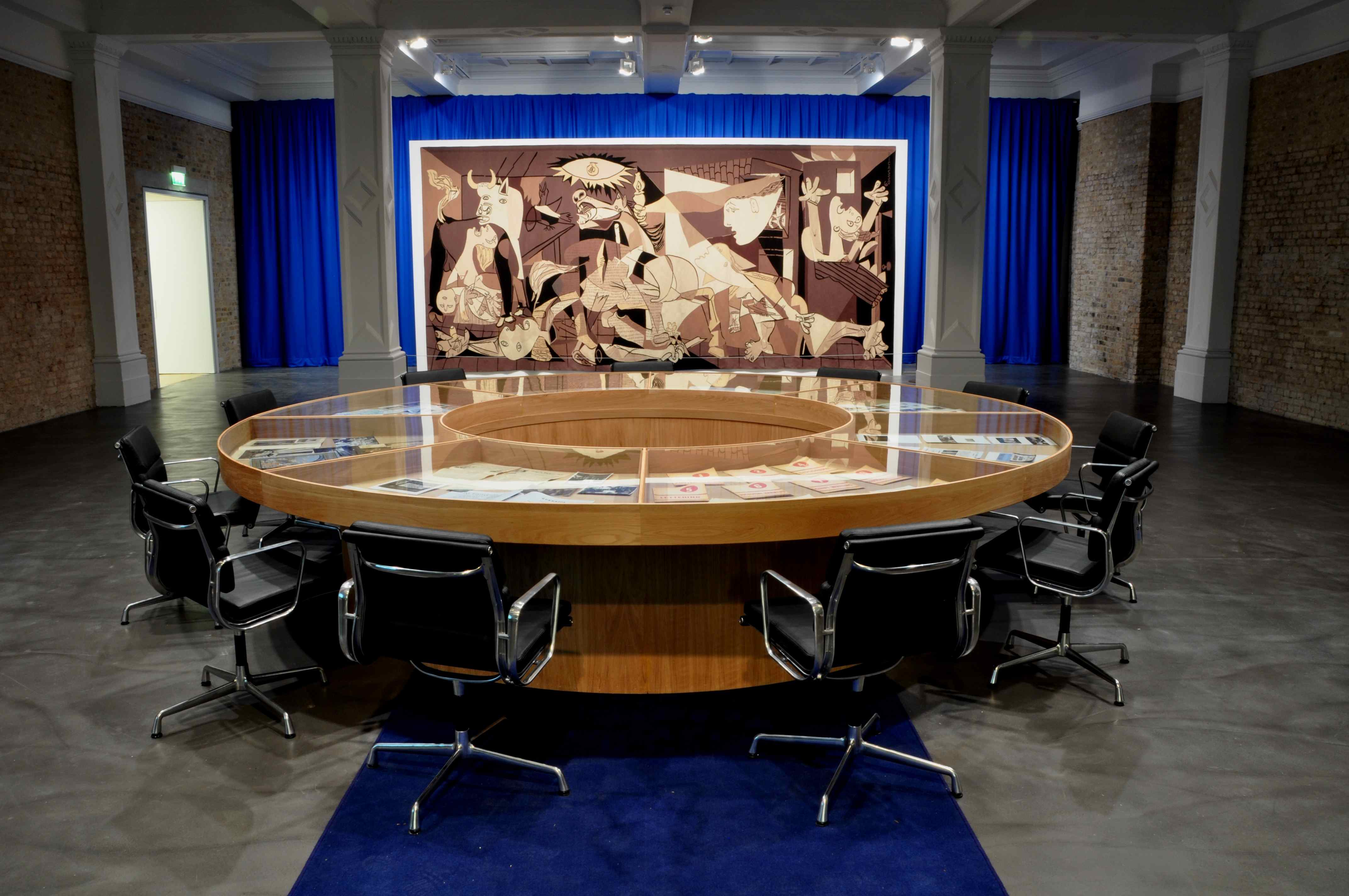
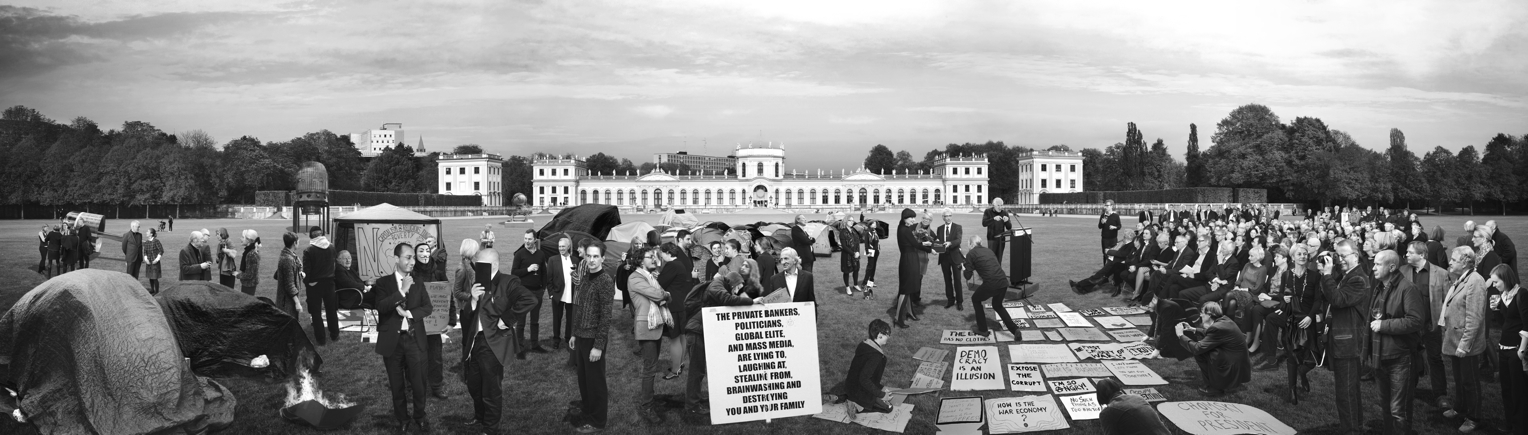
“Goshka Macuga (born in 1967) is an interdisciplinary artist working across a variety of media, including sculpture, installation, photography, architecture and design. She fuses various sources together into one cohesive, meaningful narrative. The Polish-born artist now lives and works in London, having completed her studies at the Central Saint Martins School of Art and w Goldsmiths College. In 2008 she was nominated for the Turner Prize.

Macuga’s methodology stretches beyond the typical confines of the artist, venturing into the realm of curatorship and exhibition design. She creates large-scale shows that examine her subject from a variety of perspectives, incorporating her own original works, along with pieces that appropriate elements of the works of other artists and historical artifacts. She strives to revive the ideas behind these works by placing them into a new, contemporary context. She most often cites the works of modernists or precursors to modernism, drawing from the output of such artists as Paul Nash and Eileen Agar, Francis Picabia, Marcel Duchamp, Andy Warhol, Sigmar Polke, Martin Kippenberger and even Picasso, along with incorporating various political and historical documents.

Macuga has likened her artistic practice to a voyage or a pursuit of answers. Her subjects are predominantly rooted in politics, sociology and ethnography, however they also employ quite a bit of self-referencing in order to create another layer of meaning through an examination and critique of curatorial and archival practices, ultimately devising a statement on today’s art world. In both instances, she adopts archival materials, surveying how things have changed, and how they have also stayed quite the same, the world reverting to a constant cycle through pro-social and anti-social tendencies. For Macuga, art is not merely art. Her works go beyond ornamentation in order to delve deep into the role of the artist and to use that privileged role to voice strong opinions on the injustices or idiosyncracies of the world.” –Agnieszka Le Nart


Nikhil Chopra

NikhilChopra_RAJA3
Nikhil Chopra_YRCII_SG
Nikhil_Chopra_waiting
Nikhil_Chopra-2

Nikhil Chopra

Works from him oeuvre.

“Nikhil Chopra works at the boundaries between theatre, performance, live art, painting, photography and sculpture. He devises fictional characters that draw on India’s colonial history as well as his own personal history. He inhabits these characters in largely improvised performances that last up to 3 days.

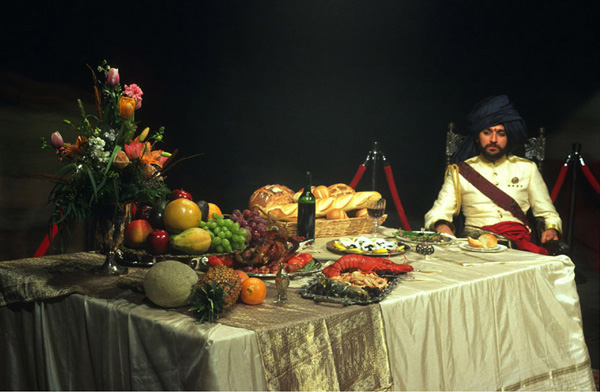
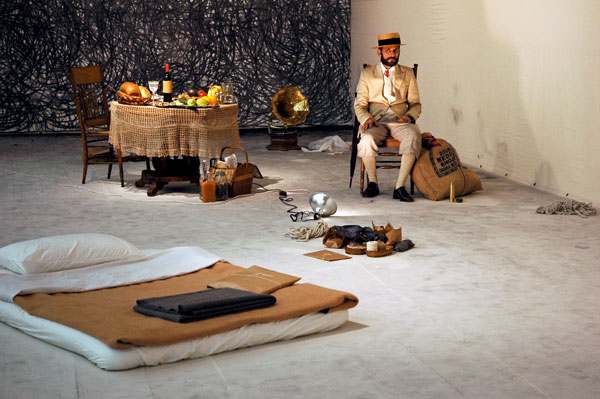
Chopra’s character, Sir Raja, was created when he was living in Ohio in 2002. A stereotype of the Indian prince from the country’s colonial era, Chopra uses this alter ego to create tableaux for live performance, film and photographs. In the performance Sir Raja II, 2003, the character could be found at the end of a 350-foot red carpet, seated motionless at a table with spread of food, fruits, and flowers. Here Chopra created a live Vanitas painting and challenged the viewer to confront past and present issues of colonialism, exoticism and excess. The theme of death and references to European painting also appeared in the Mumbai performance The Death of Sir Raja III, 2005, where he lay adorned in silk and jewels, surrounded by velvet drapes and rich oriental rugs, as if he were posing for a painting depicting his own death. While performing, the artist does not interact with the audience, who unlike in theatre, are free to come and go throughout, however the artist’s awareness of their gaze and the constant potential for the boundary between player/viewer to be breached, adds to the tension and intensity.

In What will I do with all this land? 2005, Sir Raja is shown journeying on horseback through his vast inherited estate in a series of atmospheric black and white photographs. These portraits of the robed prince alone in the epic landscape of Kashmir are reminiscent of 19th century British Imperial photography of Indian dignitaries. The narratives around Sir Raja do not, however, refer to a specific person or moment in history but is rather woven from Chopra’s personal memory, old family photographs, ancestral home and endless family stories.

Chopra’s most recent character, Yog Raj Chitrakar, is loosely based on the artist’s grandfather, Yog Raj Chopra. Educated at Goldsmiths College of Art, London, in the 1920s, Yog Raj Chopra was a frequent open-air landscape painter who spent a large part of middle age capturing the grandeur of the Kashmir Valley.

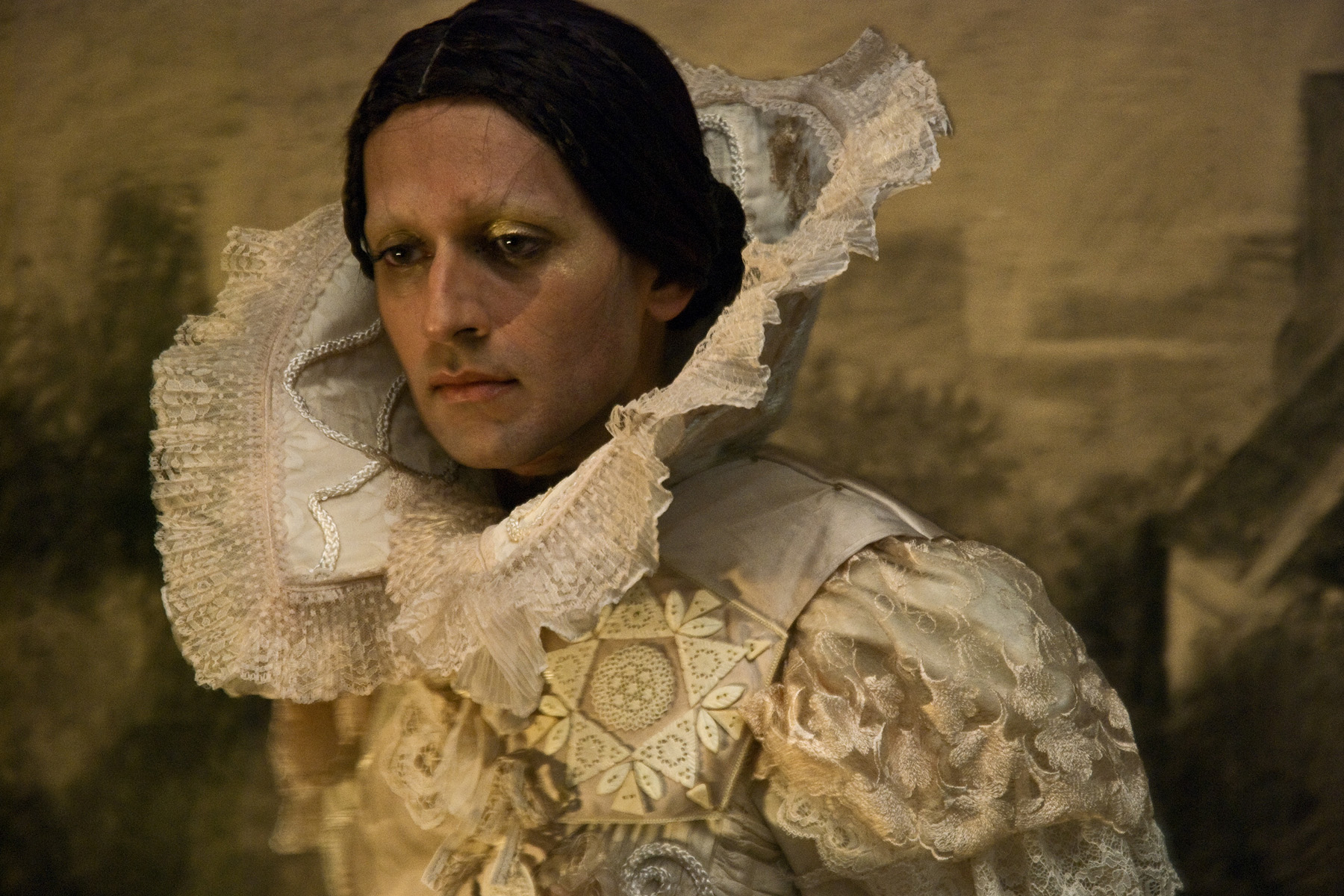
The character Yog Raj Chitrakar has many faces: explorer, draughtsman, cartographer, valiant conqueror, soldier, prisoner of war, painter, artist, romantic, dandy and queen. These are signified by the elaborate costumes, which are changed throughout performances to indicate the character’s transformation. Yog Raj Chitrakar sets up camp, indoors or outdoors, and makes large scale drawing of what he sees: cities in transition, places at the cusp of change, the collision of history and the present, architecture and nature. The large-scale drawings, as well as the props used in the performance, are left as a remnant, however it is the process that is the most important to the artist, as he states: ‘I want the experience of a work to precede the object and I want the making to be at the centre of it.’”-Herning Museum of Contemporary Art

Yto Barrada

Yto Barrada sm
med_1-barrada_1-jpg536
44_barrada

Yto Barrada

Work from her oeuvre.

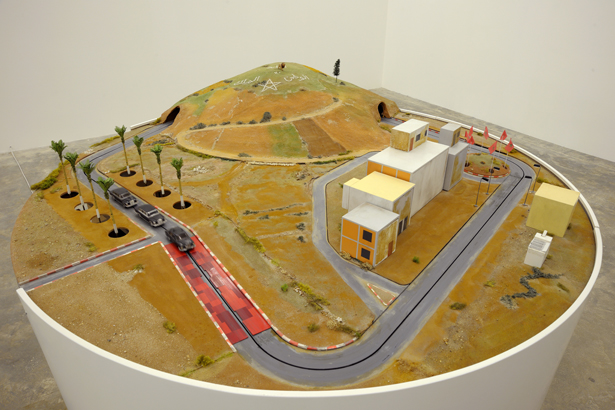
“Barrada’s work – photographs, films, publications, installations and objects – reflects the peculiar situation of her hometown, Tangier, and the way notions of local and global are articulated there. At the northern tip of Morocco, Tangier is a city of several frontiers. One border is the Strait of Gibraltar: the 13 km wide stretch of dangerous currents which divides Africa from Europe has come to symbolize the odyssey of the immigrant, and the existential issues of a society dominated by a desire to leave. Another frontier of this fast-growing city of a million souls runs along its shifting outer edge, where new construction meets the landscape of northern Morocco. There, a quieter drama is played out as the diversity of local people and wildlife yield to the bulldozers and concrete trucks, and the monocultural vision of the planners and developers who command them. The work of Yto Barrada resists any simplification of the context of immigration – that great European ‘issue’ – on the globalized world. In the photo series ‘A Life Full of Holes: The Strait Project,’ which she began in 1998, the artist portrays the city and its residents in a kind of everlasting waiting state. The suspended expectation of the people relates at the same time to their personal imaginary, to the ancient myths of remission and death, as well as to the present geographic and political situation. Her recent project, ‘Iris Tingitana’ has extended Barrada’s inquiry to the landscapes that surround Tangier. These works records the shifting border between city and nature, and the accompanying homogenization of the country’s urban and botanical surfaces. Barrada grew up between Tangier and Paris, where she studied history and political science at the Sorbonne, and subsequently attended the International Center of Photography in New York. Her practice, combining the strategies of documentary with a more meditative approach of images drove her to return home, after sixteen years abroad. There, she continues to explore the many levels of a complex reality, avoiding the rigidity of any discourse, and without showing any dramatic event. Barrada’s work evokes a Tangier where postcolonial history has materialized one of its dead-ends. And another response of this artist to the dynamics of the region was to co-found the Cinémathèque de Tanger, North Africa’s first cinema cultural center, which she now directs. The Cinémathèque offers another way to invest herself into the status of images and representations, specifically in the Arab world.” –e-flux


Ursula Biemann


PB_her strategies
EC02Mo
XM_kitchenvideo

Ursula Biemann

Work from her oeuvre.

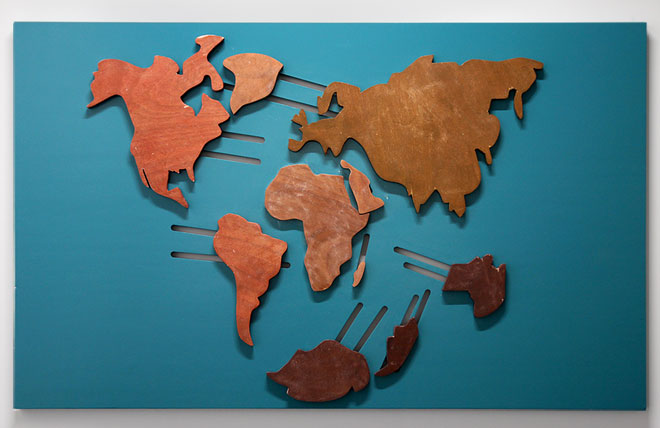
“Ursula Biemann (Switzerland) is an artist, theorist and curator who has in recent years produced a considerable body of work on migration, mobility, technology and gender. In a series of internationally exhibited video projects, as well as in several books ‘Been there and back to nowhere’ (2000), ‘Stuff It – The Video Essay in the Digital Age’ (2003) and her new monograph ‘MISSION REPORTS’ (2008) she has focused on the gendered dimension of migrant labour from smuggling on the Spanish-Moroccan border to migrant sex workers in the global context. Her experimental video essays connect a theoretical macro level with the micro perspective on political and cultural practices on the ground.

Insisting that location is spatially produced rather than pre-determined by governance, she made space and mobility her prime category of analysis in the curatorial project ‘Geography and the Politics of Mobility’ (2003) at the Generali Foundation in Vienna, ‘The Maghreb Conncection’ on migratory systems in North Africa, Cairo/Geneva (2006) or the art research projects ‘Black Sea Files’ on the Caspian oil politics at Kunstwerke Berlin (2005) and ‘Sahara Chronicle’ on trans-saharan mobility. The most recent video essay ‘X-Mission’ (2008) is an analysis of the Palestinian refugees camps as a zone of exception.

Biemann’s practice has long included discussions with academics and other practitioners, she has worked with anthropologists, cultural theorists, NGOmembers, architects, as well as scholars of sonic culture. Her video essays reach a wide and diverse audience through festival screenings, art exhibitions, activist conferences, networks and educational settings.” –Tate

Sam Durant

COL_0513 022
COL_0513 041
COL_0513 042
COL_0513 054

Sam Durant

Work from Proposal for Public Fountain at Sadie Coles.

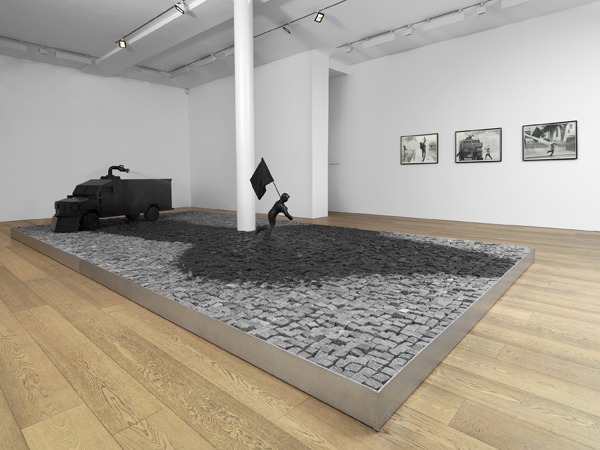
“Sam Durant’s third exhibition at Sadie Coles HQ, Proposal for Public Fountain, centres on a fountain sculpted from black marble – a prototype for a larger installation in a public setting – together with a series of related graphite drawings. The structure features a reproduction of an armoured water cannon, which sprays a jet of water onto a hooded figure bearing an anarchist flag. Its note of polemic is a defining aspect of Durant’s art. Poised between detached commentary and acerbic critique, it recasts a contemporary episode of state authoritarianism in the ‘stately’ aesthetics of public stonework.

Durant’s tableau at once expresses the heroism and pathos of the defiant revolutionary. At the same time, a sense of absurdity clings to the frozen forms and intermittently spurting water: anarchist and riot truck alike appear locked in futile gestures. The two antagonists are based on two news photographs sourced online, showing uprisings in Santiago in 2011 and 2012 (and the title’s allusion to Duchamp’s Fountain of 1917 – the archetypal ‘readymade’ – subtly underlines the readymade quality of these sources). The work simultaneously reaches into a long history of artistic representations of individuals subordinated by states, whether paintings of Christ’s flagellation or Goya’s The Third of May 1808.

As in those and other historical precursors, Durant elevates specific events to the level of allegory. The monochrome, simplified forms of his fountain – both the blueprint on display and the unrealised final version – crucially universalise it. In its material, it invokes civic centrepieces such as Rome’s Trevi Fountain with its elaborate stonework allegories, and other decorative follies of ‘Old Europe’. It also harnesses the chiselled style and histrionic poses typical of totalitarian state art, and various other grand public statements such as the hard-edged countenances of Mount Rushmore. Forms ordinarily used to validate a nation’s self-image here speak of state repression, and potentially of the abuse of power. The public fountain – customarily an anodyne backdrop to civil uprisings – has here become a fraught memorial to such events.

As the title suggests, the construction is provisional and subject to revision in different contexts: the series of graphite drawings (Durant’s first since 2008) maps its potential development. This latest work is one of a series of ambitious projects which explore the form and functions of public structures – most recently Scaffold at ‘dOCUMENTA (13)’, Kassel, a combination of reconstructed gallows used in executions of significance throughout US history (now on display at Jupiter Artland, Edinburgh). Here, as in this latest exhibition, Durant highlighted the endurance of imperialist behaviour and draconian rule throughout the world, and linked modern-day political violence (and its often spurious pretexts) to episodes from history. Durant’s long-term interest in public monuments is also reflected in his ongoing photographic archive of defaced monuments. In addition, Proposal for a Public Fountain follows a body of work commemorating the key figures of the Italian anarchist movement of the nineteenth and early twentieth century in a series of marble busts.” –Sadie Coles