Saturday, 11 May 2013
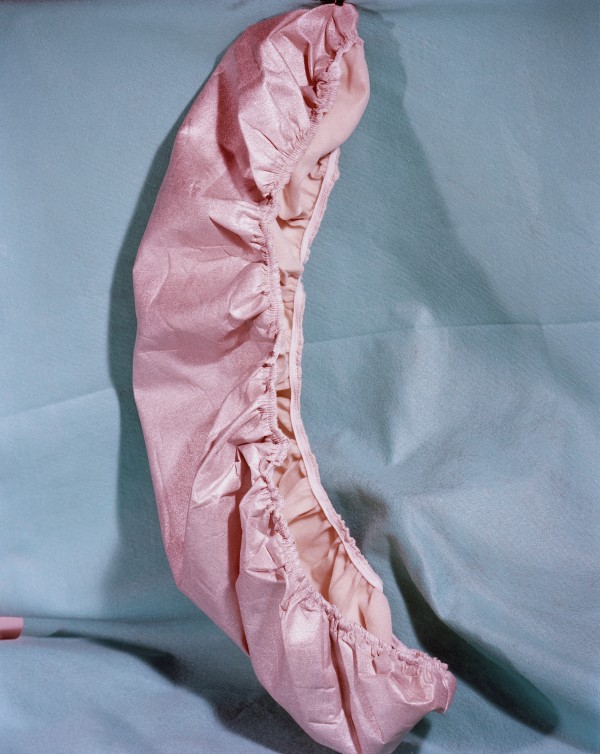
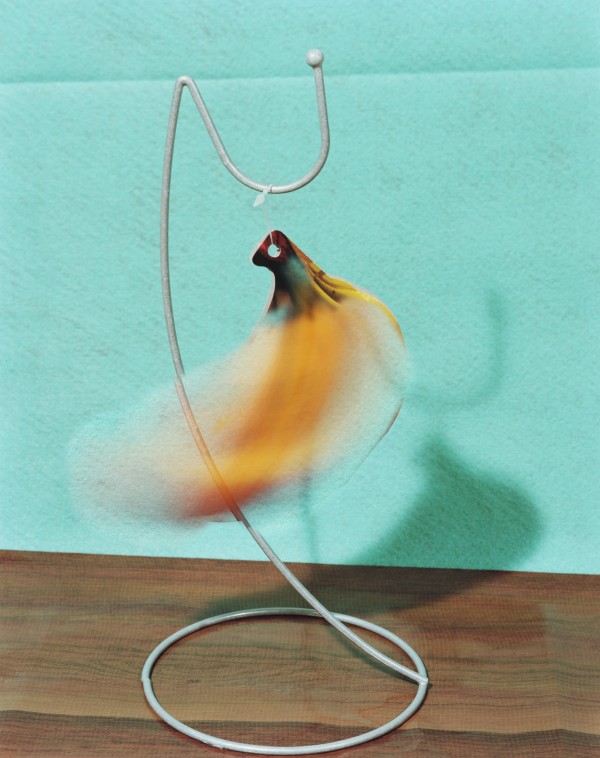
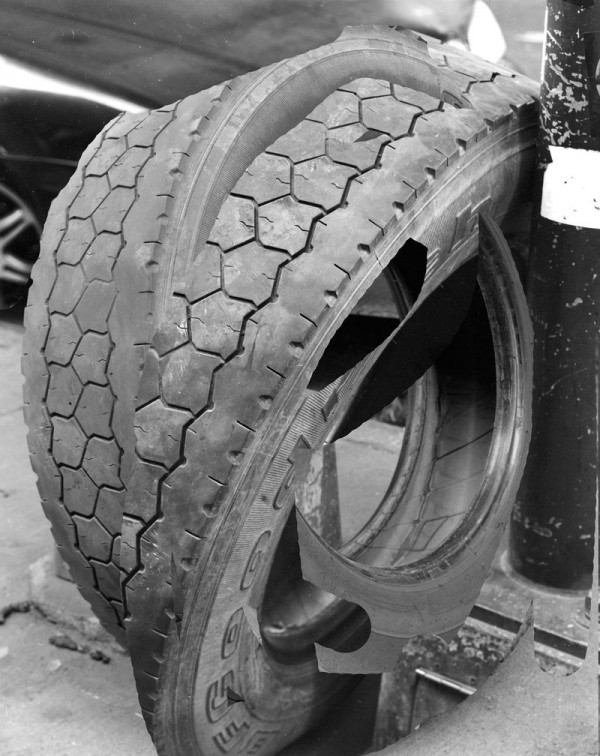

Lucas Blalock
Work from his oeuvre.
“Carmen Winant:
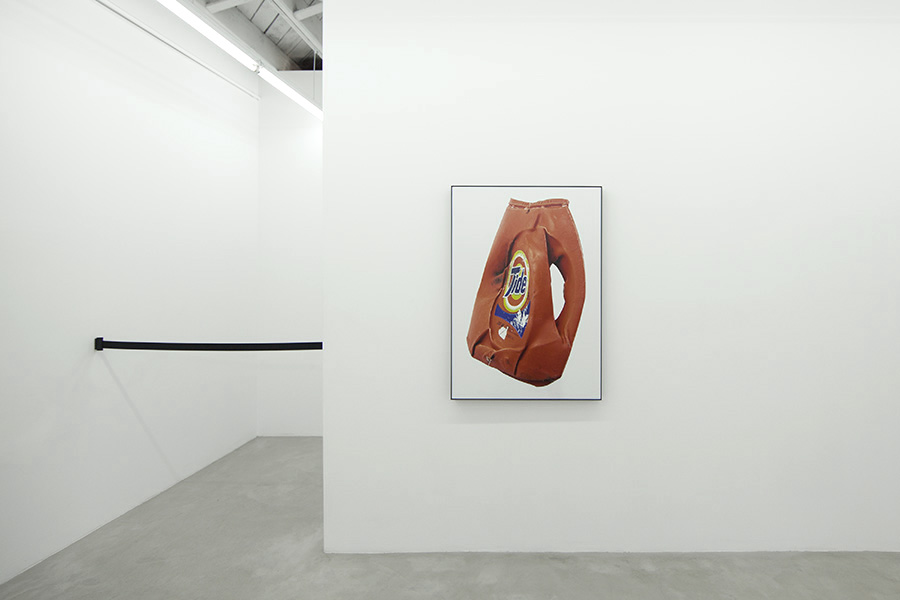
All of your pictures are shot on 4× 5 film, scanned and then post-produced in Photoshop. Why work across multiple formats?
Lucas Blalock:
Early on, it was important that the pictures had a foot in both the analogue and the digital. When I began making pictures in the late 1990s, I fell in love with the 4 × 5 camera. But analogue is not so significant to me anymore. I am more interested in the way in which it affords me moments of translation.
CW: Between analogue and digital processes?
LB: Yes, such as processing the negative through the scanner into Photoshop colour-space or removing the dust. Procedures like those, and others, become over-articulated in my process. Instead of approaching these procedural steps as expected, my action might be more evident, or less correct. As opposed to painting, which is considered to be an accumulation of a set of decisions, photography is classically thought of as a picture made by a single decision – the shutter – and that Photoshop or the darkroom is a kind of ‘post-production’. For me, the state of the photograph is much more in the physical object and I tend to think about all of these steps as stages of production.
CW: Your work is reminiscent of surfing the Internet for images for hours on end, or of being on hallucinogenic drugs. Both of those experiences are alienating in their own way: hyper-real and hyper-false. In your work they appear to co-exist.
LB: I started to think of the real and the false in this way partially through Jean-Luc Godard, which, in turn, led me to Bertolt Brecht’s ideas about theatre, and gave me a model for thinking about photography. I am interested in how I can use the technologies of picture-making, intended to be highly transparent, in opaque or interruptive ways. Offstage tools – studio, camera, Photoshop – are brought back onstage, and into the picture.” – excerpt from an interview with Carmen Winant for Frieze.
Tags: medium specific, meta-photography, photography, sill-life, Verfremdungseffekt
Posted in Uncategorized | Comments Off on Lucas Blalock
Friday, 10 May 2013
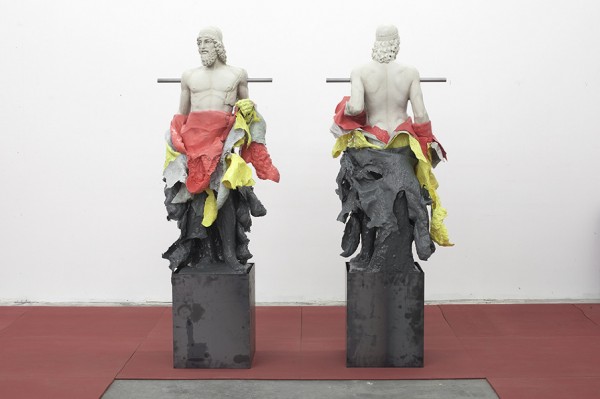

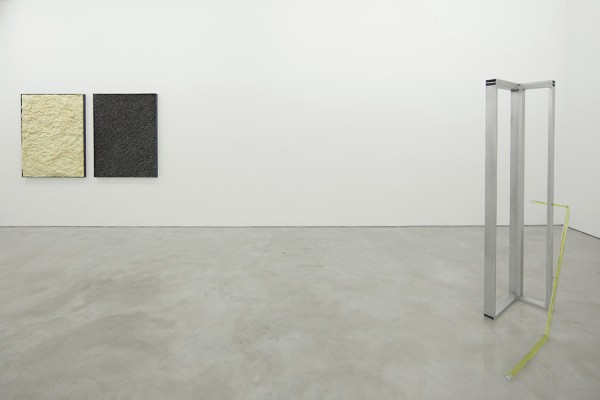
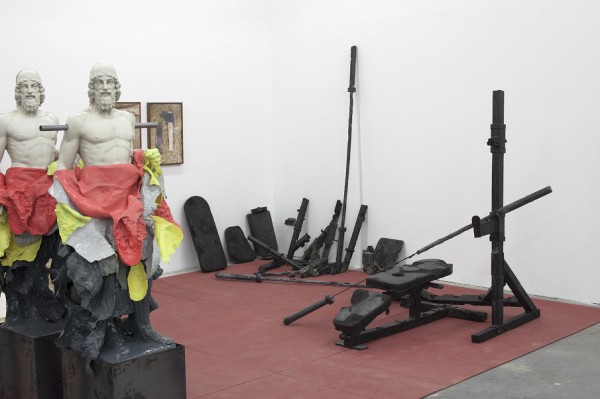
Nick van Woert
Work from his oeuvre.
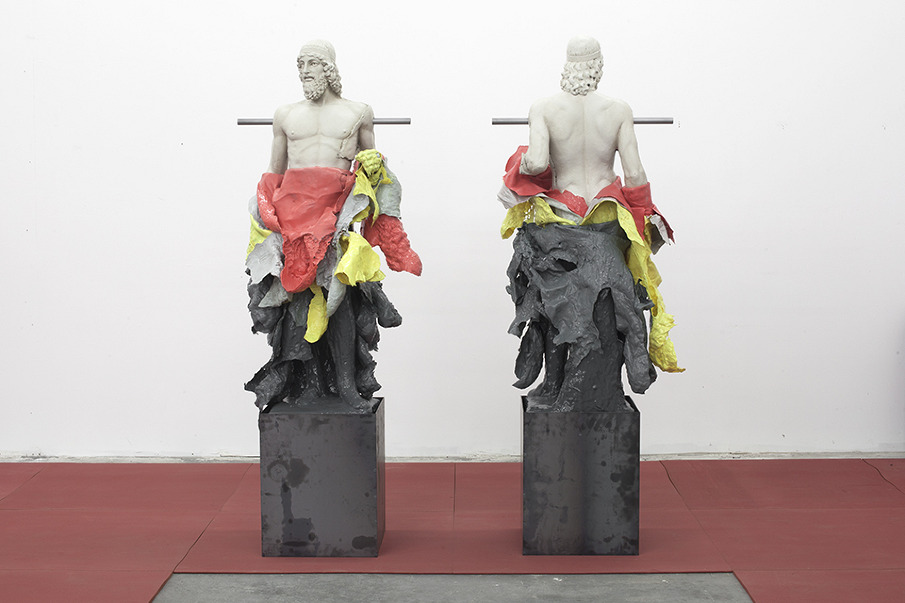
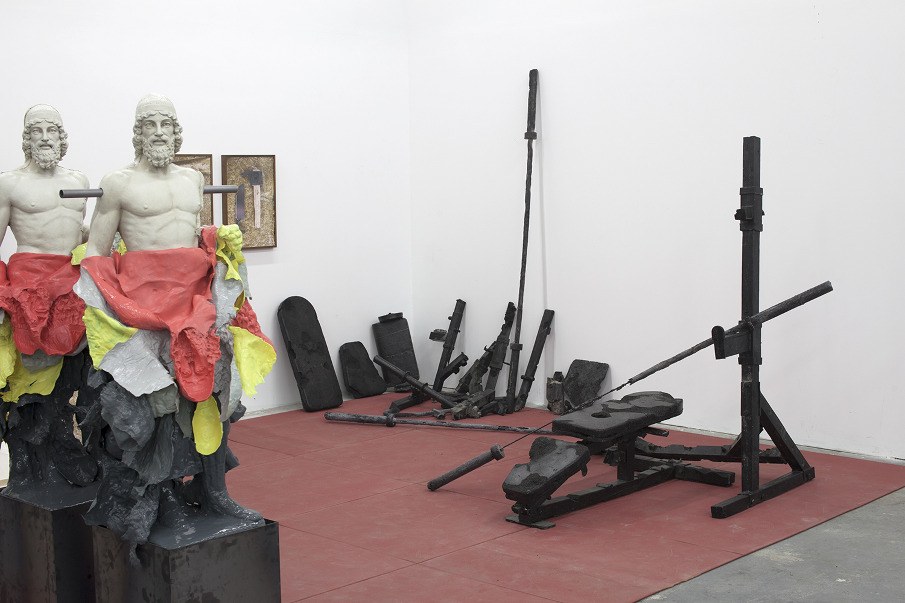
“The post-apocalyptic terrain van Woert covers in “No Man’s Land” is expansive, and initially seems to lack a center. Each piece, however, addresses humans’ conflicting capacities for creation and destruction. The exhibition includes an 8-foot-tall set of silverware, with which van Woert intends visitors to “ingest” his works, alluding to the artist’s fascination with the unsustainable rate of human consumption.
Ten monochromatic paintings in earthy hues are van Woert’s nod to 19th-century landscape painting in the American West, an unexpected source of fodder for an aesthetic that’s far from romantic. “I often think of myself as a landscape painter,” van Woert says. “While growing up in places like the Yosemite Valley, I realized things have changed in our world, materially.” Van Woert examines this change, unhindered by contemporary notions of beauty. “The most challenging thing for me as an artist is to battle this conversation of what looks good and what works well,” he says. “I want to ask people to see my work as an entirely material language, rather than a visual one.” – NY Times
Tags: art historical, consumer materials, equipment, new york, painting, sculpture, sports, tools
Posted in Uncategorized | Comments Off on Nick van Woert
Thursday, 9 May 2013
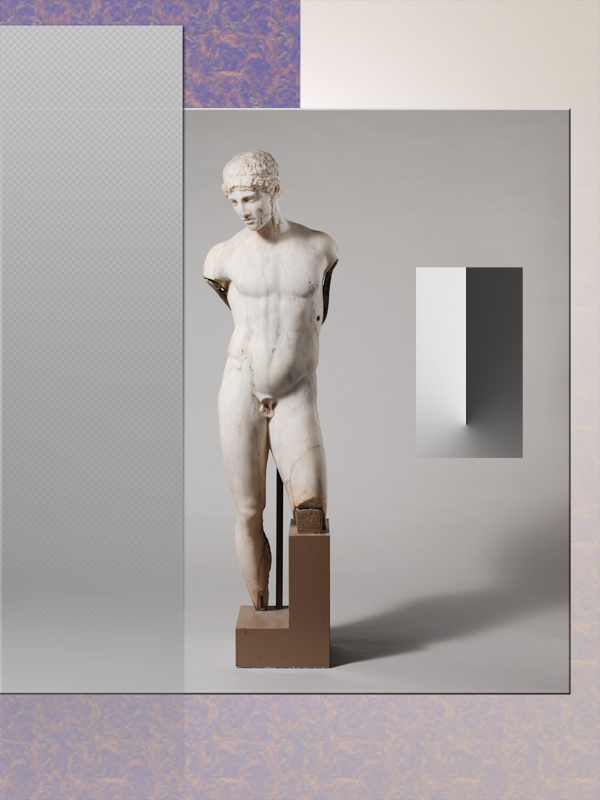
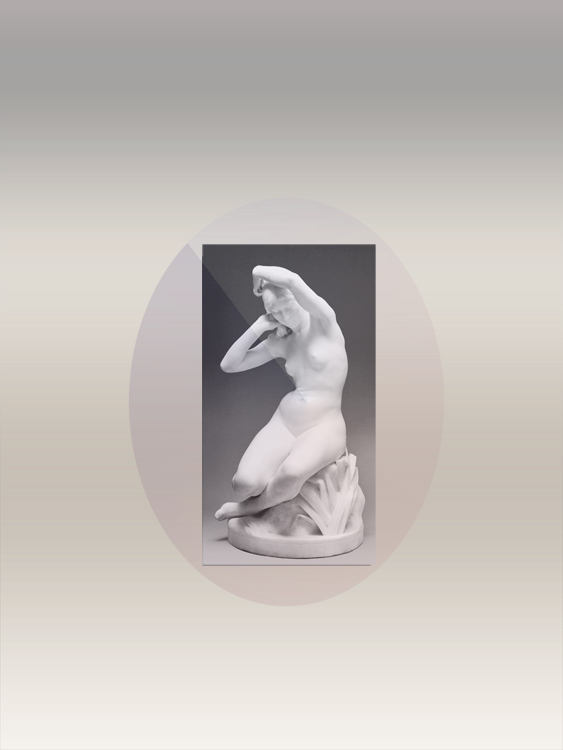
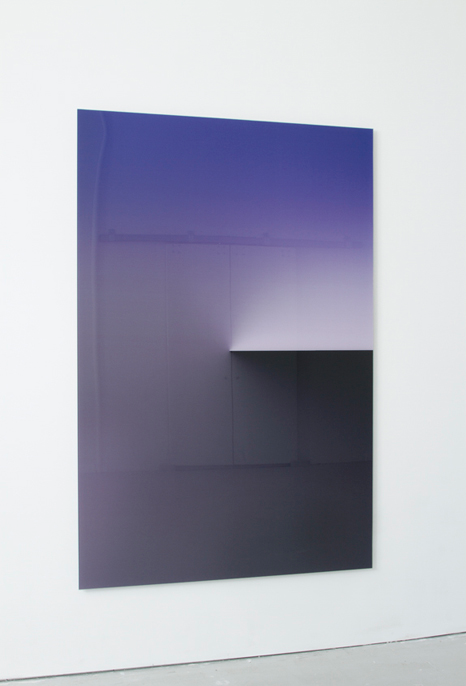
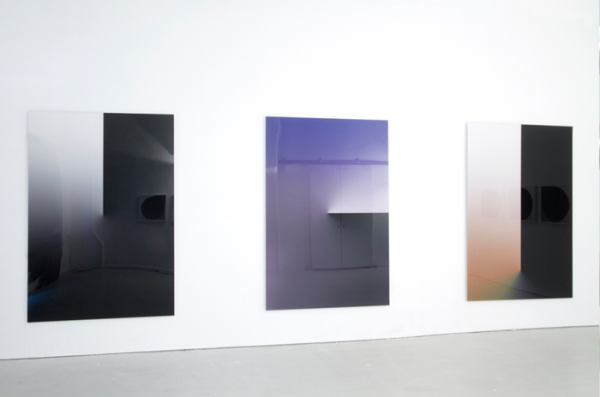
Lyndsy Welgos
Work from her oeuvre.
“Rawson Projects: Firstly, I think you have always attempted to address the identity of photography as an art medium in your work. In your first exhibition with Rawson Projects, while still employing photographic processes, you stripped the works of specific references to time and place. Can you describe how this new body of work continues to examine these aspects of contemporary photography?
Lyndsy Welgos: I guess it doesn’t directly address those issues from the last show, but I feel any time you have a photograph that is completely appropriated, abstract, or conflated in some way, photographic mythologies get a little mixed up. Obviously there is a kind of institutionalization of photography that is addressed in these works. Time and notions of realism are some of the biggest constraints that hold the medium to a certain institutionalized standard.
RP: What is the significance of the found images in the work? Specifically, why did you choose images from the Metropolitan Museum of Art’s online catalogue?
LW: Maybe it’s the ubiquity of these types of works that I wanted to appropriate. I don’t think these images have anything to do with art history itself. Now, they are in the context of a photograph that is its own sculptural object – one that doesn’t need to depend on a particular past for its livelihood.” – excerpt from an interview with Rawson Projects
Tags: art historical, institution, meta-photography, museum discourse, new york
Posted in Uncategorized | Comments Off on Lyndsy Welgos
Wednesday, 8 May 2013
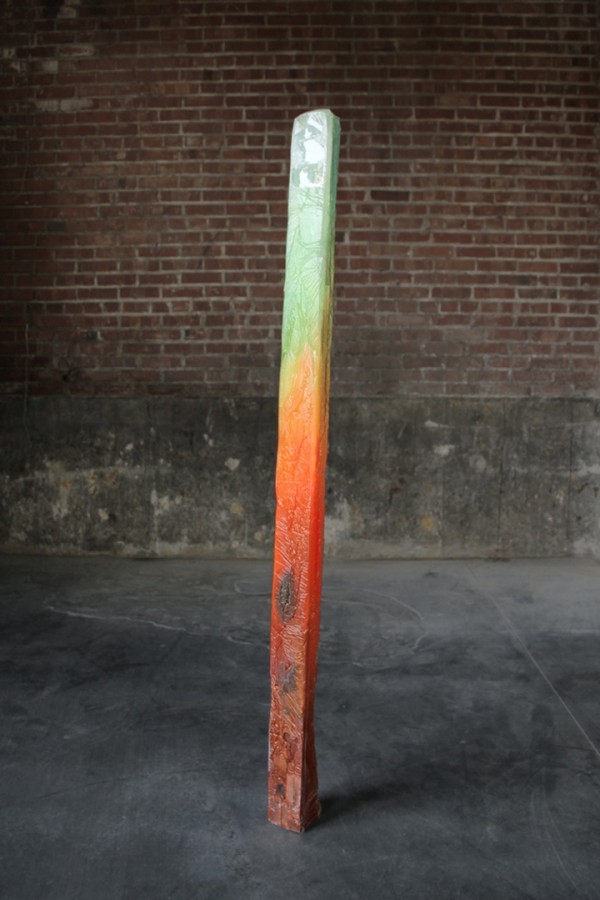

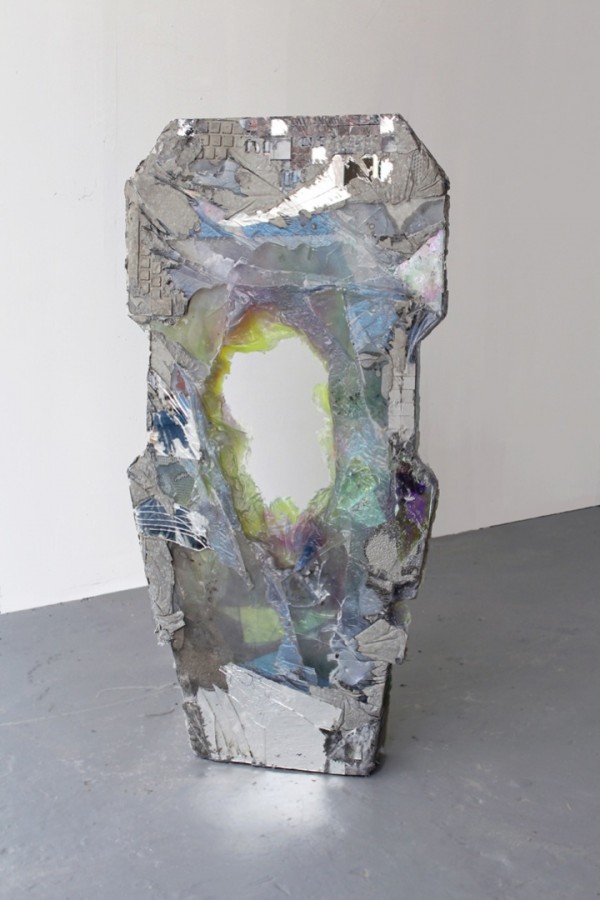
Amy Brener
Work from her oeuvre.
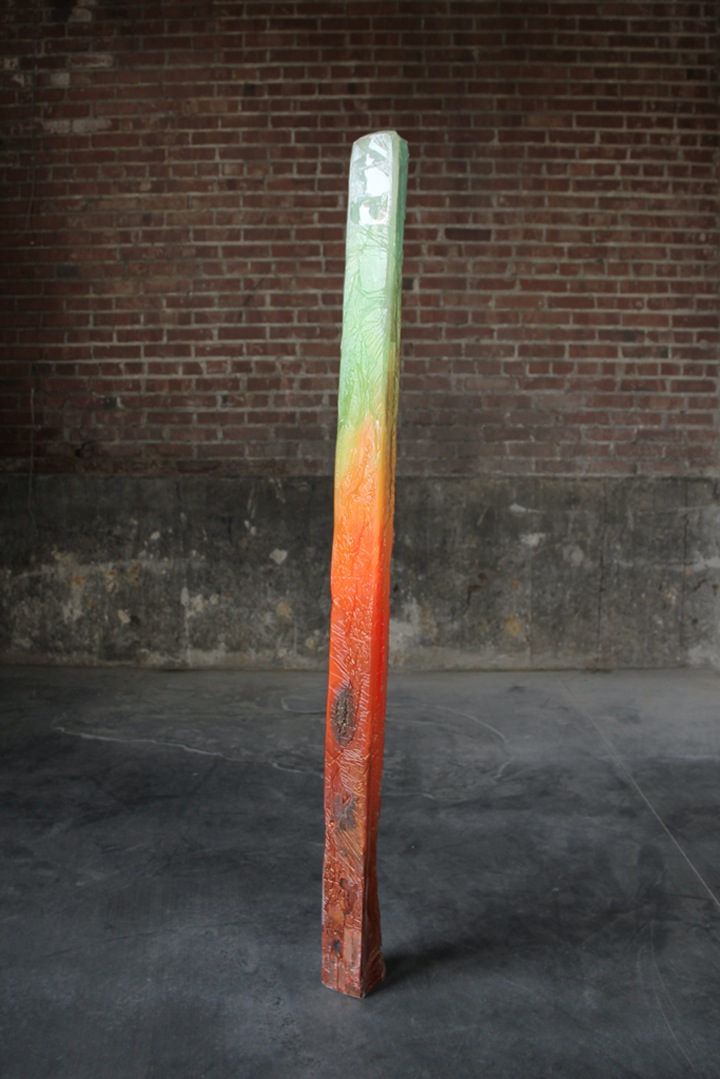
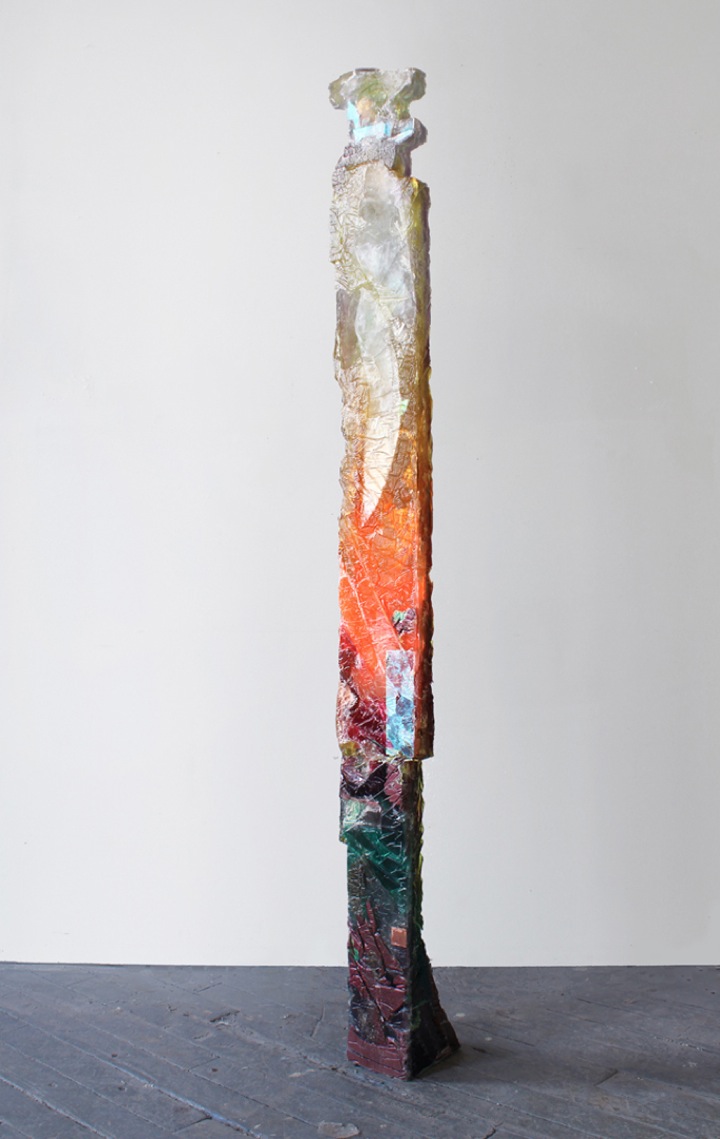
“Amy Brener has developed a method of layering resin, glass and fresnel lens to create light sensitive sculptures. Her recent works resemble artifacts of an imagined future. Some surfaces suggest touch-screen platforms and energy cells. Others are left to chance: to crystallize, crack under pressure and weather with time.
She was born in Victoria, BC and now lives and works in New York City. She holds an MFA in Sculpture from Hunter College and was a participant of Skowhegan School of Painting and Sculpture in 2011. Her work has been exhibited in New York, Toronto and London.” – Bemis Center for Contemporary Arts
Tags: new york, resin, rock, sculpture
Posted in Uncategorized | Comments Off on Amy Brener
Tuesday, 7 May 2013

Channa Horwitz
Work from her oeuvre.
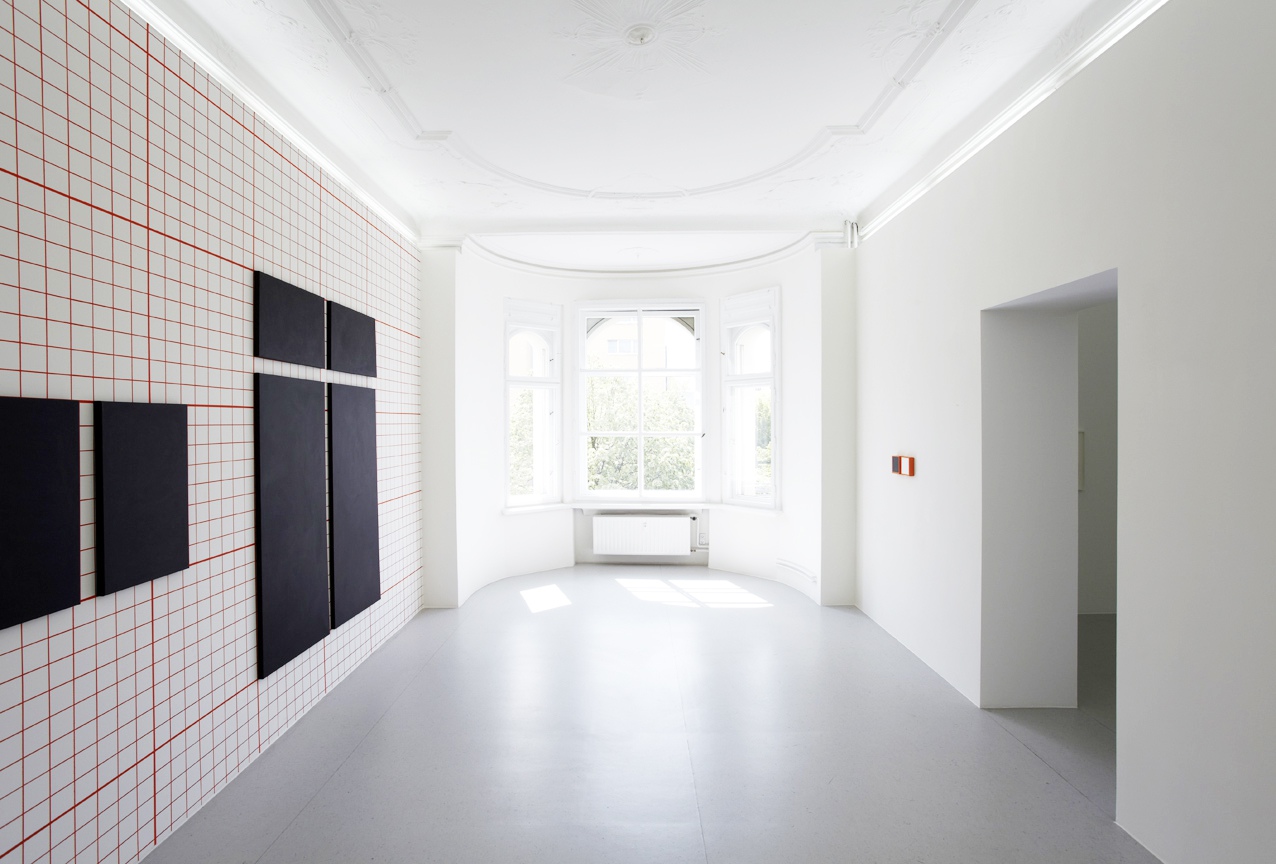
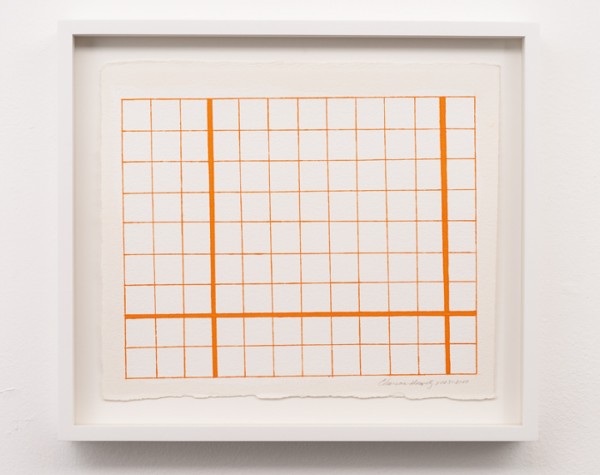
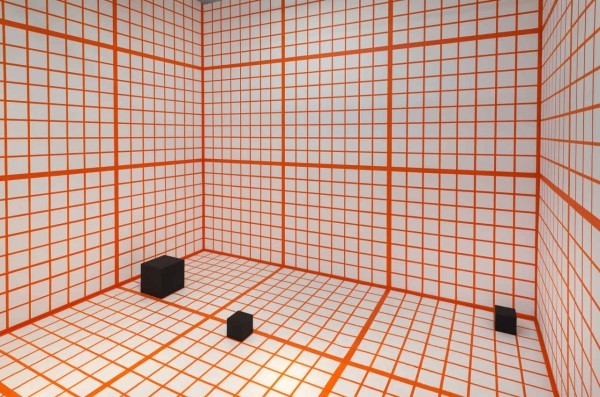
“What Would Happen If I” is the third exhibition presented at Aanant & Zoo Gallery, Berlin, by American conceptual artist, Channa Horwitz (born in 1932, lives in Los Angeles). In 2007, she had an exhibition under the title “Searching/Structures 1965–2007” based on a search that she engaged with in her work, in which she uses logically sequenced numbers, musical notations, and structural forms. Last year, the exhibition “Hello is not like I would say goodbye” presented another body of work – sculptures and conceptual drawings for performances and musical compositions. In the present exhibition, “What Would Happen If I,” Aanant & Zoo is pleased to present for the first time murals by the artist, which she has developed specifically for two of the gallery’s showrooms.
She has found that “through structure comes an apparent chance. But it is only apparent, and at its essence, structure.” Interestingly, juxtaposed with her non-arbitrary results, the title of the show, “What Would Happen If I” is an open-ended, playful phrase Horwitz uses prior to the investigations, which have led to the various manifestations of her work. In her approach, she often explores subtle variations and deep structures. In the case of this show, there is an exploration of medium, size, and dimension; from the paper and the canvas to the wall, and from two-dimensional surfaces to three-dimensional structures.
Looking back on forty years of creation, recognizable in another substantial body of work called “Sonakinatography,” Horwitz’s explorations have led her to a conceptual artistic practice before the term was even acknowledged. “Sonakinatography” consists of drawings, performances and musical compositions. Embodied sound, motion, notation within the rigid and strict orders such as geometry, grid structure, a numerical order from 1 to 8, in 2011 Horwitz keeps extending her system infinitely to other orders extracted though a linear logic resulting in ever changing variations. Like a beat that never stops, the mind game by the artist never ceases. Together with a strong bodily engagement, her work continues to produce highly aesthetic complexities in the most minimalistic of forms, which move us all into any-space-whatever.” – Aanant & Zoo
Tags: american, conceptual, form, grid, Los Angeles, structure
Posted in Uncategorized | Comments Off on Channa Horwitz
Monday, 6 May 2013

Aleksandra Domanović
Work from “The Future Was at Her Fingertips”.
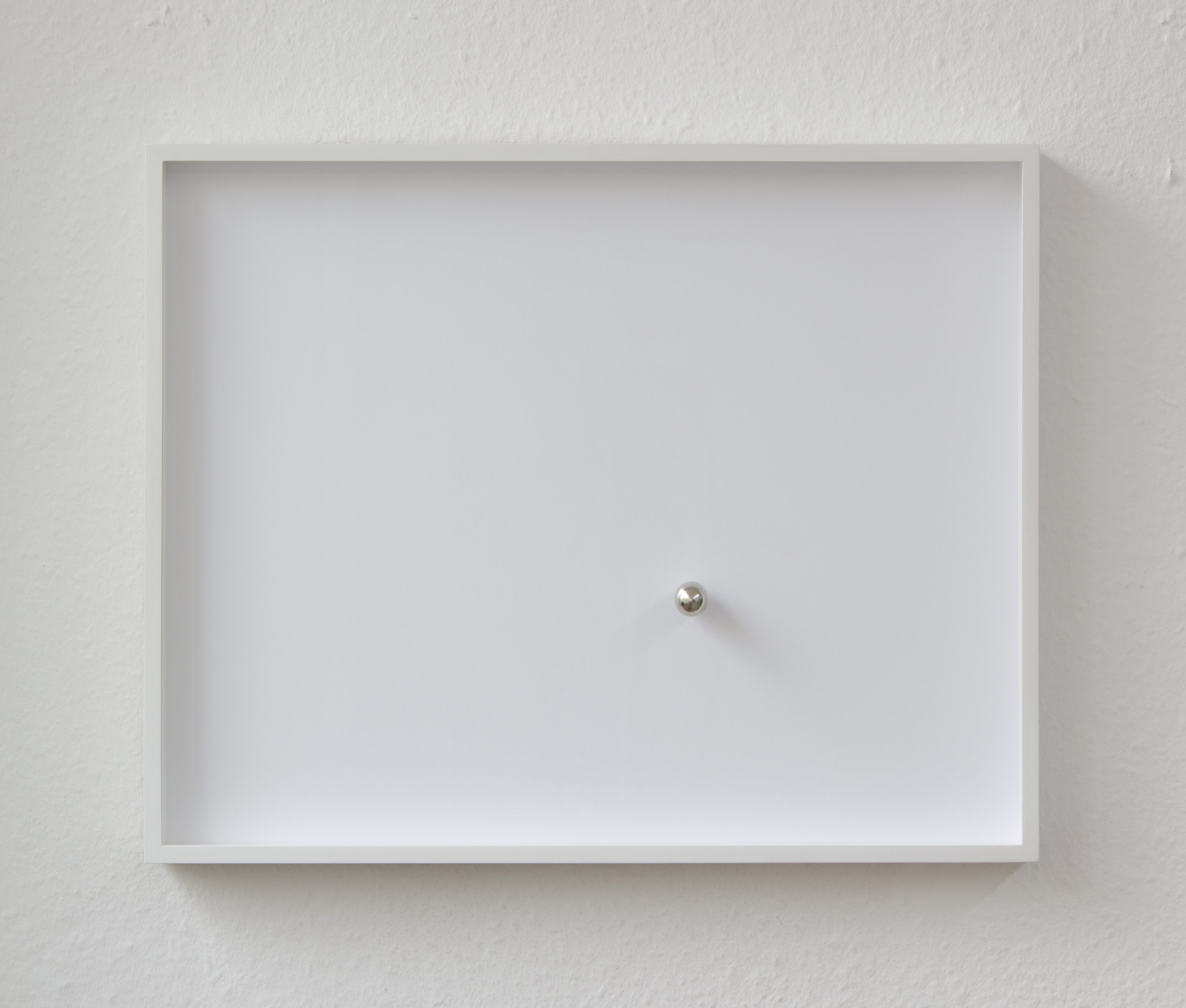
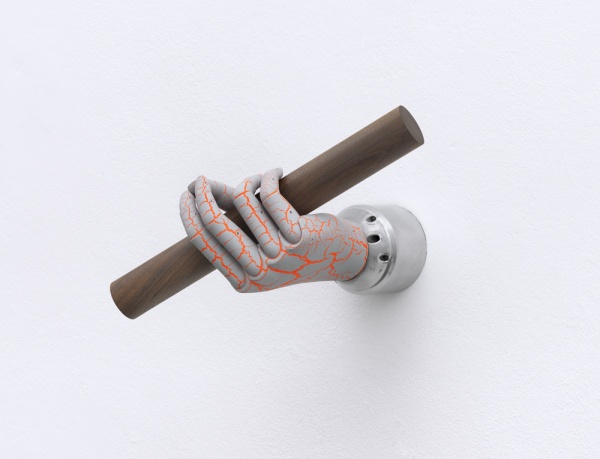
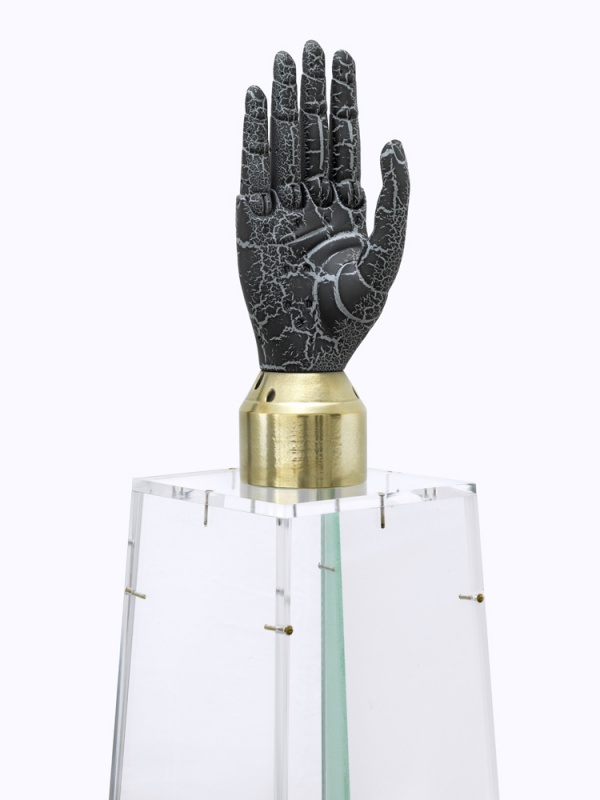
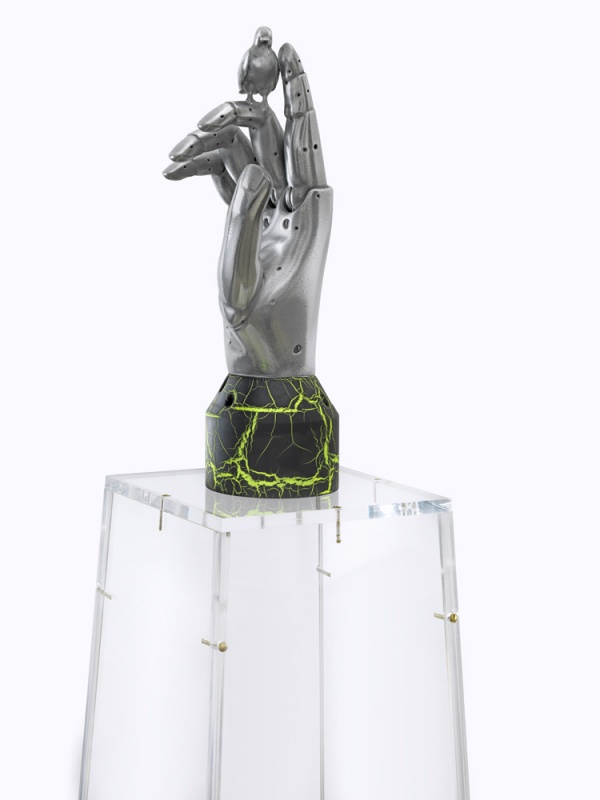
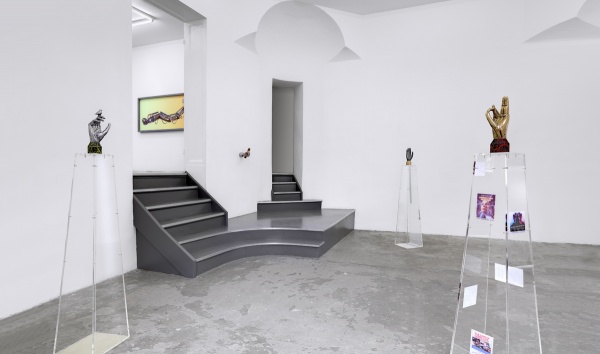
“In “The Future Was at Her Fingertips” Aleksandra Domanović (b. 1981, Novi Sad) explores the circulation and reception of images and information, relating specifically to the history of the Internet and technology in the former Yugoslavia. The exhibition draws attention to one of the earliest attempts to develop an artificial limb with the sense of touch – known as the ‘Belgrade Hand’. Invented by Rajko Tomović at the end of the Second World War as a prosthetic device intended for soldiers who had lost their hands in the war, it was then further developed by scientists at MIT. The prosthetic later stared in Donald Cammell’s 1977 Hollywood movie Demon Seed where a scientist created ‘Proteus’ – an organic super computer with artificial intelligence who became obsessed with human beings.
In tracing the history of Tomović’s hand Domanović uncovered just how important women were in the development of the creation of the Internet, Cybernetics, virtual reality and multimedia. From Ada Lovelace who wrote what is considered to be the first computer programme, to Sadie Plant’s work on the social potential of cyber-technology, to the registration of the .yu domain by Slovenian Internet pioneer Borka Jerman Blazić, Domanović charts a history in which women are the unsung heroes of technical innovation.
For the exhibition at Tanya Leighton, Domanović commissioned a fully rigged computer model of the ‘Belgrade Hand’, from which she has made five 3D printed sculptures in various gestures and symbols from diverse cultural traditions and historical timeframes – from an Indian symbol of immortality and love, to a closed fist, to one that resembles a Spanish reliquary from the 16th century. Made out of plastic, then filled with polyurethane and coated with brass, aluminum, and ‘soft-touch’ – a recently developed material used by car manufacturers to lend a feel of quality to interiors – these works, as well as a new ink-jet print by Domanoviπ, can be seen as monuments to both technological innovation and the contribution women have made in this field.” – Tanya Leighton, Berlin
“The Future Was at Her Fingertips” is on exhibit through June 30th.
Posted in Uncategorized | Comments Off on Aleksandra Domanović
Sunday, 5 May 2013
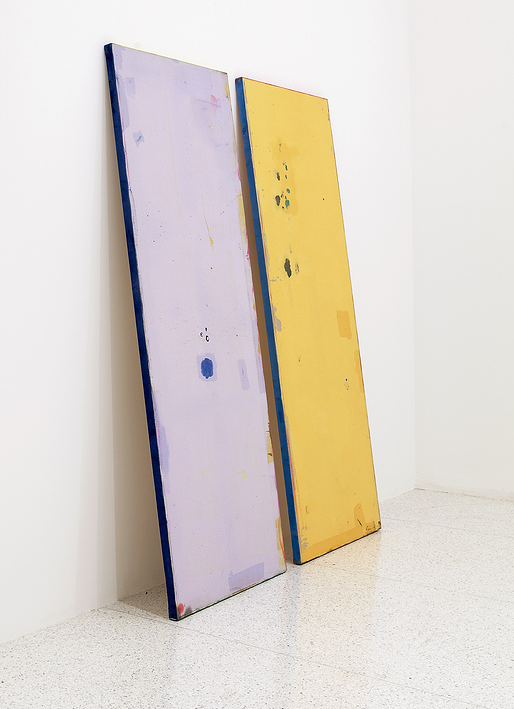
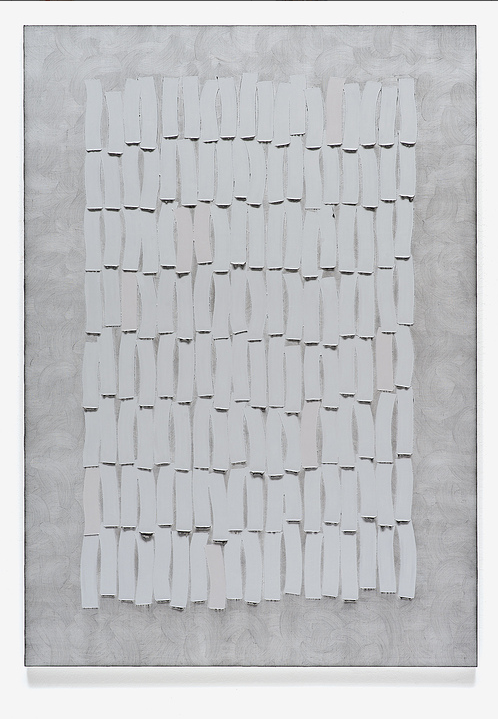
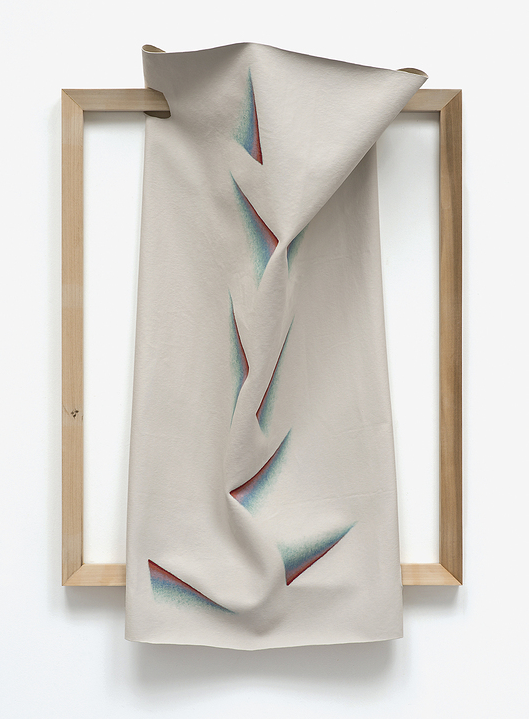
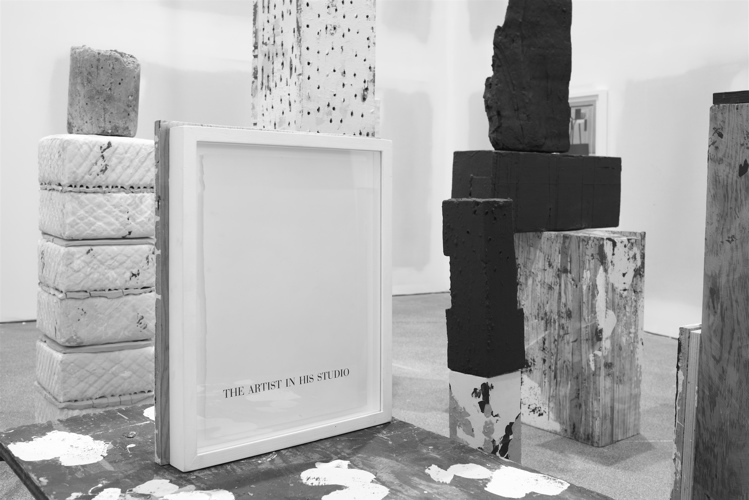
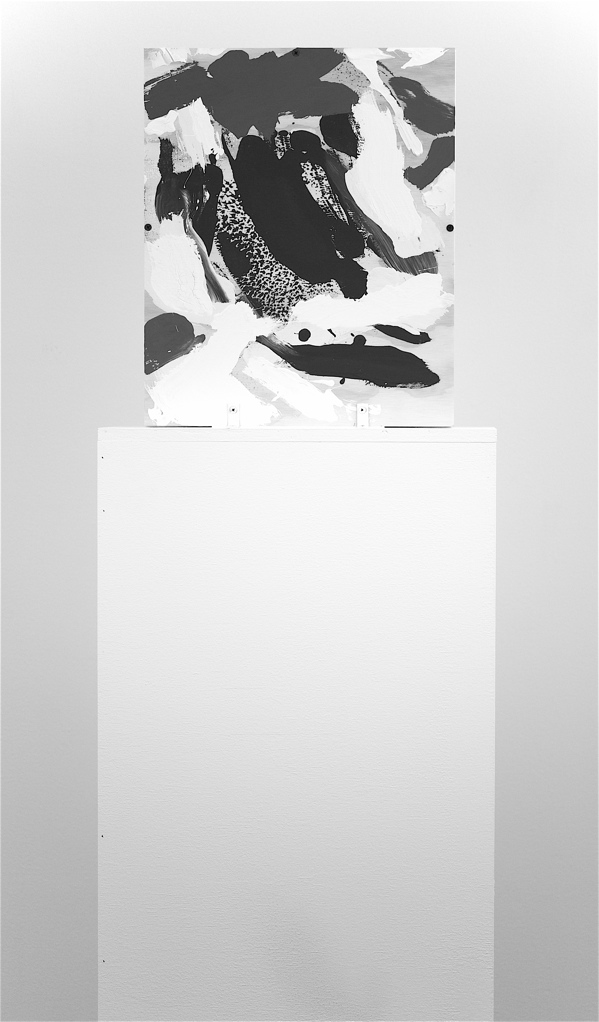
Work from Painter Painter at Walker Art Center, Minneapolis.
Painter Painter presents new work by 15 artists from the US and Europe in a focused survey of emergent developments in abstract painting and studio practice. With an expanded series of public programs, it also considers the ever-shifting role of the painter in contemporary art and culture, which remains as fluid as the medium itself.
The exhibition posits abstract painting today as a means, not an end. For these artists, painting is a generative process—one that is rooted in the studio yet open and receptive to the world. Here new languages of abstraction and eccentric methods of making are freely pursued, crossing paths with sculpture, poetry, film, music, performance, design, publishing, craft, and fashion. Thus painting becomes a conduit—a way to make contact beyond the closed frame of their formal invention.
The Walker’s first group painting show in more than a decade, the exhibition features Matt Connors, Sarah Crowner, Fergus Feehily, Jay Heikes, Rosy Keyser, Charles Mayton, Dianna Molzan, Joseph Montgomery, Katy Moran, Alex Olson, Scott Olson, Zak Prekop, Dominik Sittig, Lesley Vance, and Molly Zuckerman-Hartung.
As a complement to the exhibition, a series of studio visits with the artists offers an open-ended look at their interests and working methods. The online Studio Sessions—a collection of dialogues, texts, and visual essays—are as varied in approach as the work of the artists themselves. – Walker Art Center
Tags: abstraction, group show, Minneapolis, painting, walker
Posted in Uncategorized | Comments Off on Painter Painter
Saturday, 4 May 2013
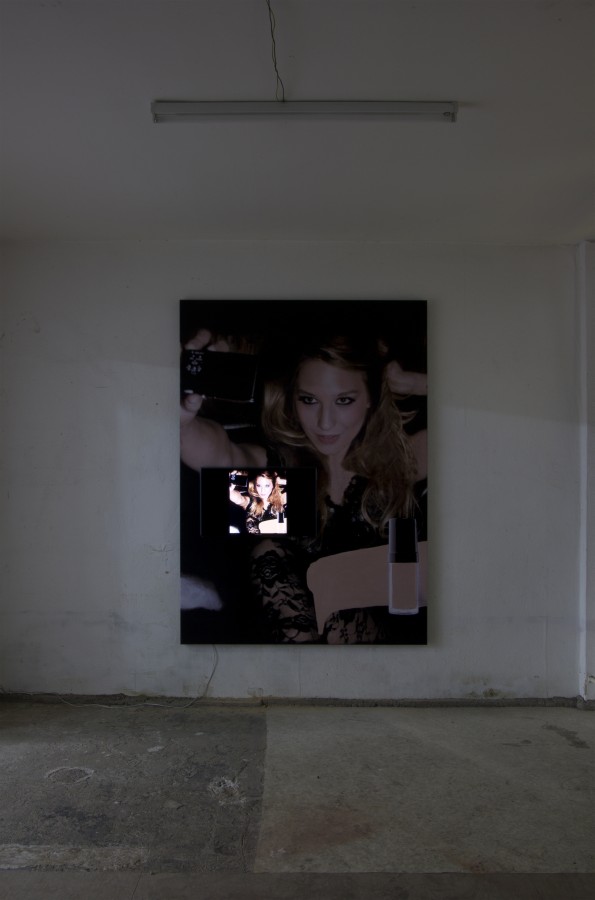
Claus Rasmussen
Work from his oeuvre.
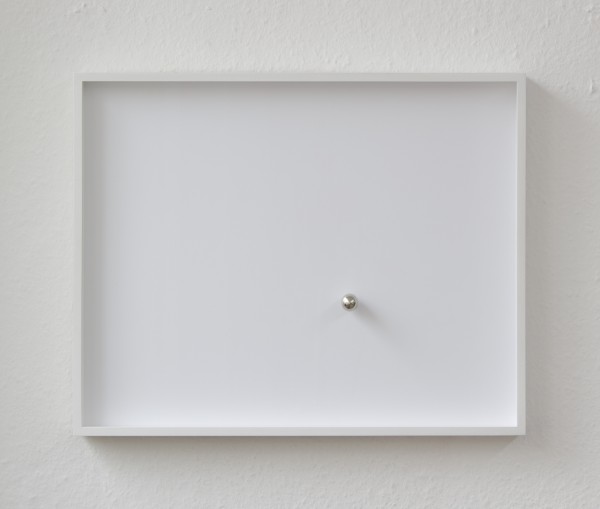
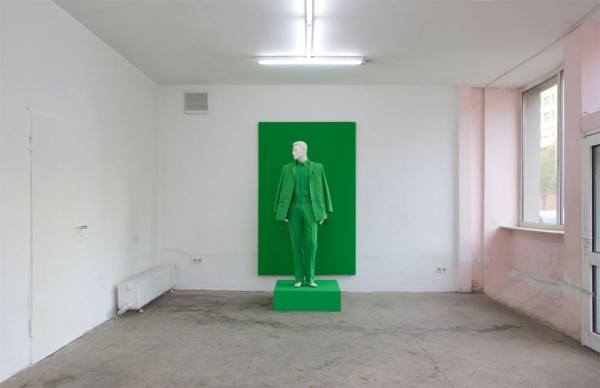
“With the dominance of mass produced and pre-manufactured goods, measures, rules,and a set of well-defined production standards have become the foundation oftrade and a free market economy. Pre-fabricated garments, furniture or evenhouses are easily and cost-effectively produced – mostly by machines – andconsumed en masse. Rasmussen confronts the accompanying hegemony of standardsand the often problematic relation between these standards and the individualconsumer: why exactly do these products possess a mass appeal? Do we actuallyneed standards by which we can measure and evaluate our lives? Or is it thatsome choices should just be made for us, and standards simply expose a basicneed for simplifying things?
In his installation “The History of the White Shirt”, Rasmussen addresses theiconic value of one of the most standardized and neutral garments. Worn byanyone from service staff to CEO, the white shirt follows a set of strictlydefined production rules like, for example, the position of the pocket andbuttons. However, Rasmussen also hints at both the organic sources on the onehand and the object’s labor value on the other by showing the rest of the fabricused to make the shirt. In doing so, the artist also calls forth both theproduct’s cultural and manufacturing history – a chronology in which standardsand labor part ways
A Marxist reading of the piece would suggest that in regards to labor, the whiteshirt becomes a commodity. A tailored shirt gains its value due to the laborinvested in its production. Furthermore, bespoke tailoring is made to measureand does not subject the body to a universal sizing system. In addition, interms of labor, spare time is a luxury. As if echoing the commodity of time,Rasmussen’s shirt rotates 360° in 60 seconds and exposes the duality in thenature of standards: the metric of a given product represents not only thestatus quo of the consumer, but also his aspirations. Conforming to standardbecomes a class marker in and of itself
The appeal of mass-produced goods is also linked to their affordability. Whenhouses, cars, and new wardrobes purchased each season become accessible to anincreasingly wider audience, a regulated standard of living is born. Rasmussenconfronts not only the fixed standards of living that govern social space, butalso the moral and behavioral standards that go into shaping and defining class.The pre-fabricated house, for example, is not only a standard as a product, butalso as a social achievement. Such houses dominate the landscapes of suburbs theworld over and have come to be imbued with norms of payment, mortgages, and procreation.The number of rooms and standardized kitchen with just enough spacefor default appliances shape family interactions and consumption habits” – Hili Perlson
Tags: chromakey, consumer materials, fashion aesthetic, german, production
Posted in Uncategorized | Comments Off on Claus Rasmussen
Friday, 3 May 2013

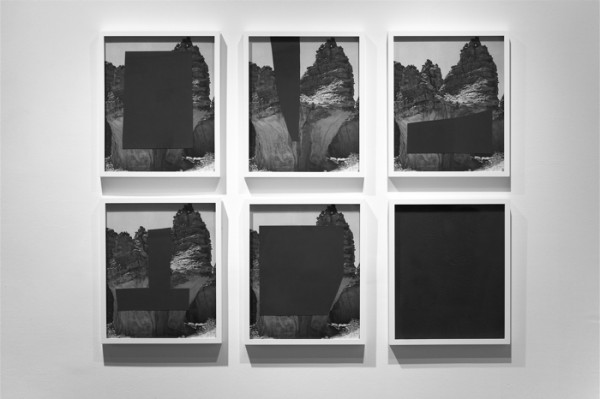
Brion Nuda Rosch
Work from his oeuvre.
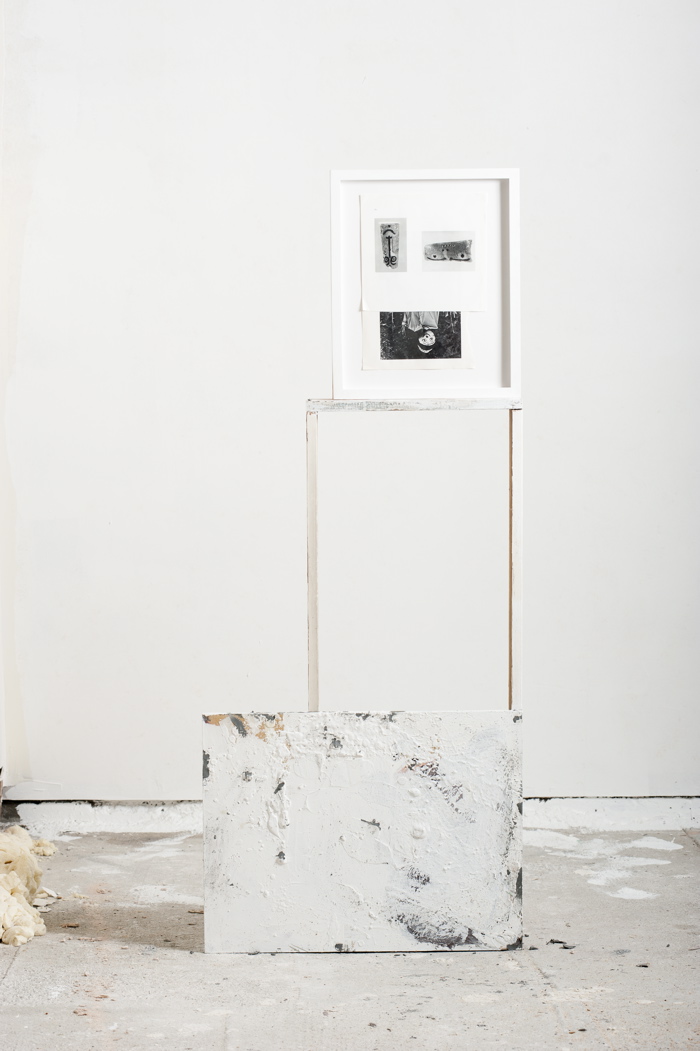
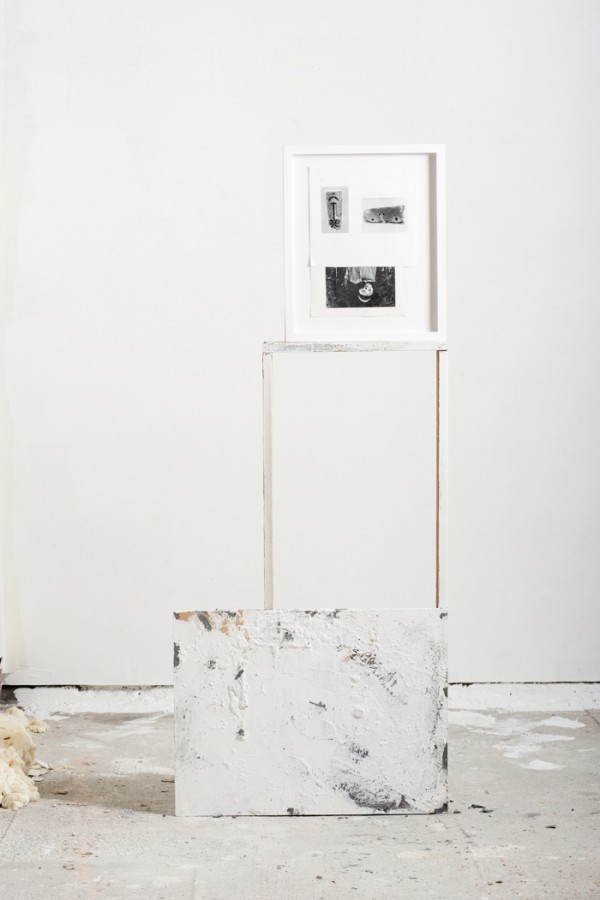
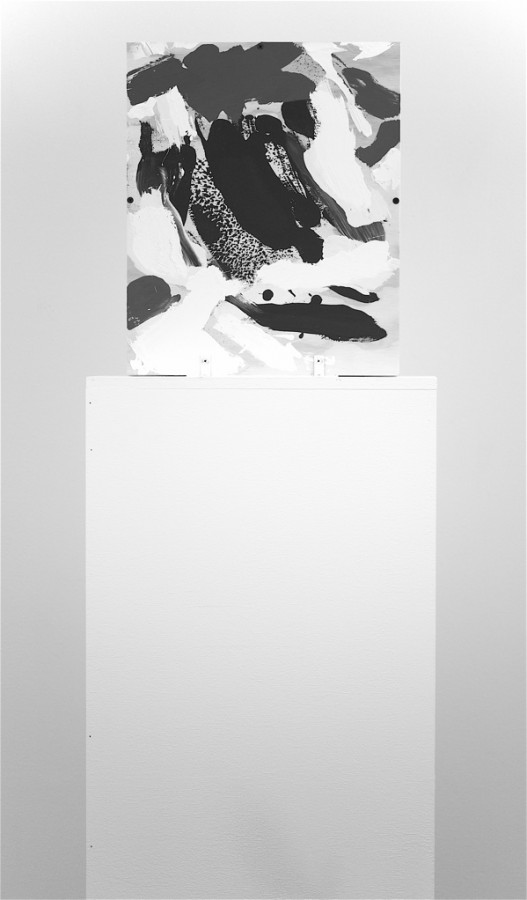
“Deconstructing or rearranging the commonplace, making new, jarring the viewer out of an object or photograph’s sense of embedded context, Brion Nuda Rosch’s sculptural works and collages make us better aware of what is the immediacy in our environments. Often simplifying the analogical process we bring to a work to understand it, by forcing the viewer into the very beginning nodal points of comparison via juxtaposition of disjunct objects in sculpture or found photographs in collage, the process reveals the more complex meanings inherent in these objects or environments.
“In many ways Rosch’s approach to art is almost classical – navigating the tensions (that aren’t easily swept under the carpet) between figures and landscapes, form and content. The room to maneuver in the tight spot where theory, and history of art collide with image making grows smaller and smaller every day, and so making compelling images that aren’t weighed down by their own cleverness becomes more and more difficult.” – Adam Mendelsohn
San Francisco based artist, Brion Nuda Rosch is originally from Chicago and is self-taught. He has recently participated in numerous exhibitions including It’s Not Me, It’s You and IEG at the San Jose Institute for Contemporary Art, Trace Elements at the San Francisco Arts Commission, Grounded at Southern Exposure and HOT & COLD: The End is Here at Baer Ridgway Exhibitions. His work has also recently been featured in both Picnic Magazine and Appendix Magazine. Expanding the role of the artist, Rosch has curated several spaces including Hallway Projects, Adobe Books and Mimi Barr.” – Eli Ridgway Gallery
Tags: black and white, collage, materials, painterly, photography, sculptural
Posted in Uncategorized | Comments Off on Brion Nuda Rosch
Thursday, 2 May 2013
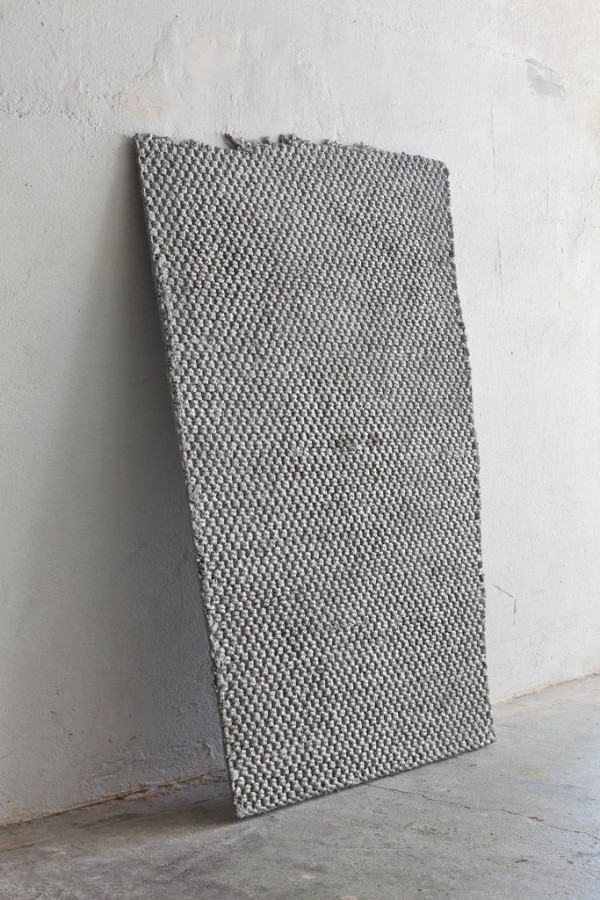

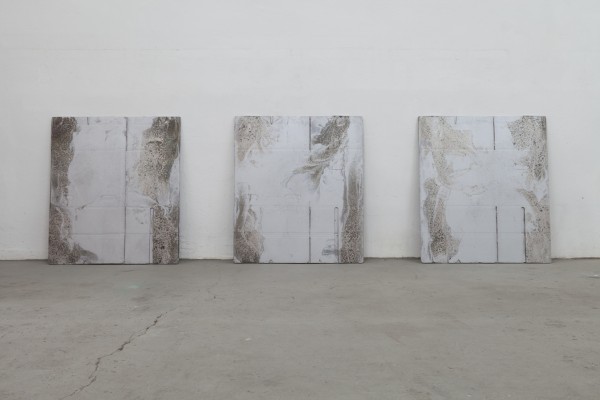
Jürgen Drescher
Work from his oeuvre.
“In his work, the artist constantly interrogates the socio-political potential of art and encourages debate on received perspectives regarding the status quo of objects, world politics, and globalization. Here, as in earlier exhibitions, we find casts and molds of everyday objects familiar to all of us. They awaken very diverse associations and sometimes inspire shame, insecurity or curiosity; they also confront us with our own expectantattitude, with our (lack of) knowledge, or with our prejudices. After a process of selection, Drescher appropriates these objects by means of sculptural techniques. He develops a personal approach to them and abstracts them into the sphere of art by translating them into materials such as aluminum, treated synthetic resins, or silver—and sometimes by also altering their scale.” – Galerie Rodolphe Janssen
Tags: german, Grey, molds, painting, sculpture, silver, texture
Posted in Uncategorized | Comments Off on Jürgen Drescher