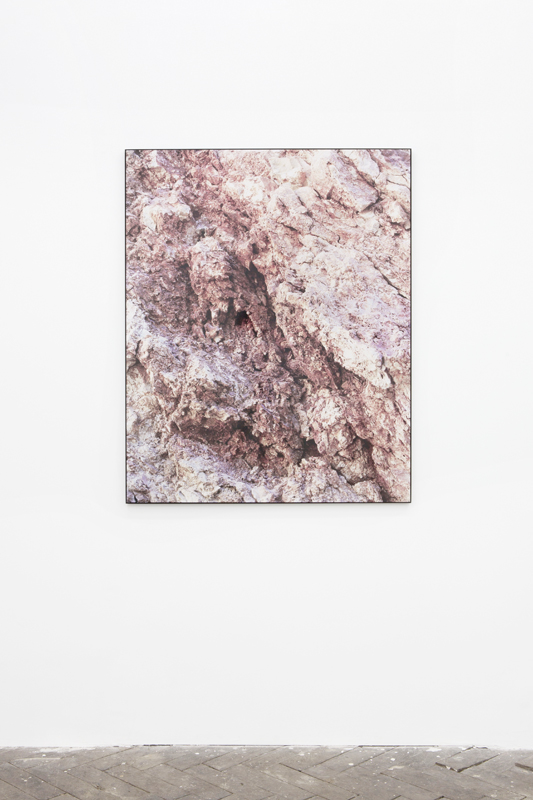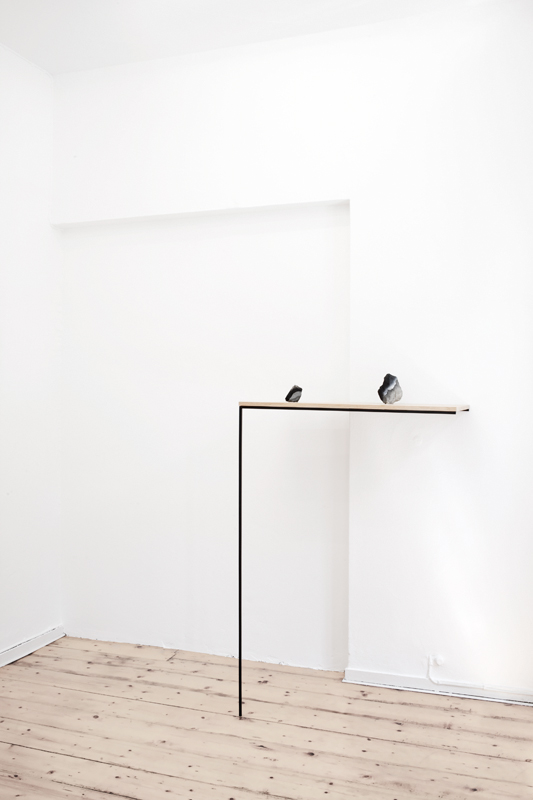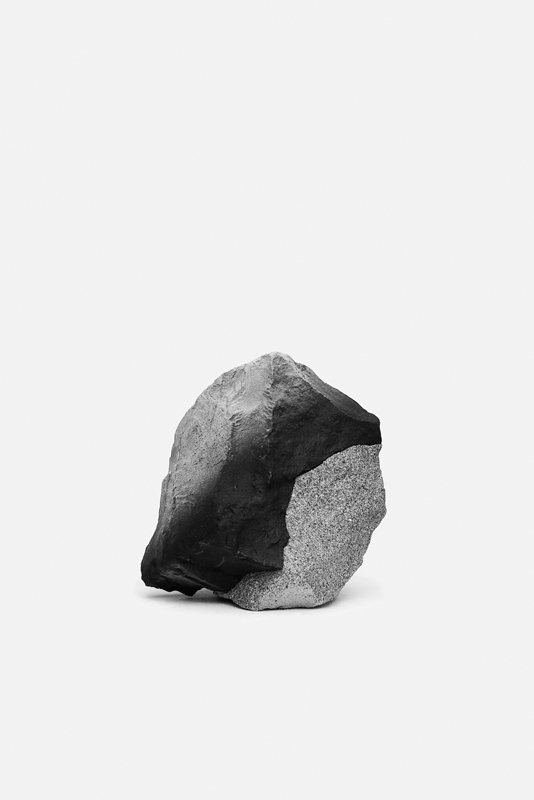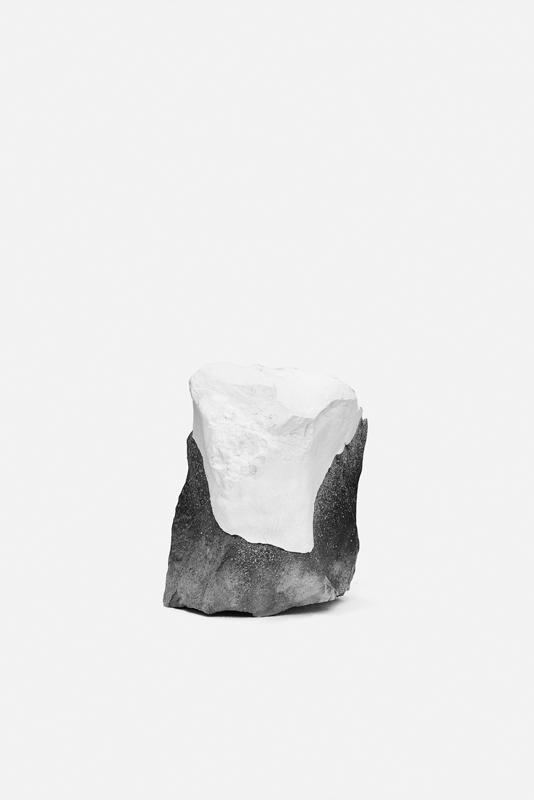
Krister Klassman

COLE-GALLERY-1762
COLE-GALLERY-1757-copy
COLE-GALLERY-1759-copy
COLE-GALLERY

Krister Klassman

Work from his oeuvre.

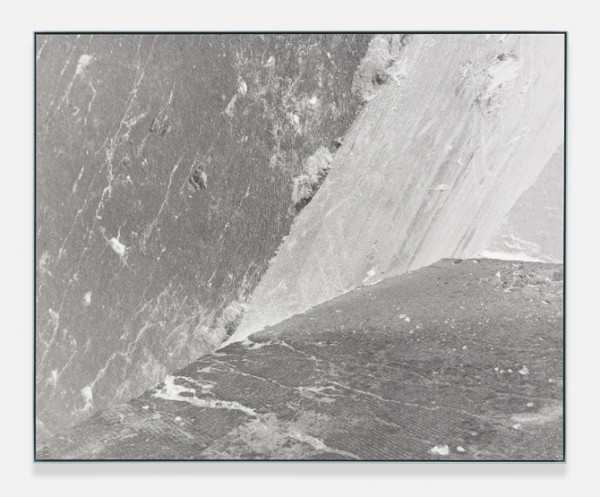
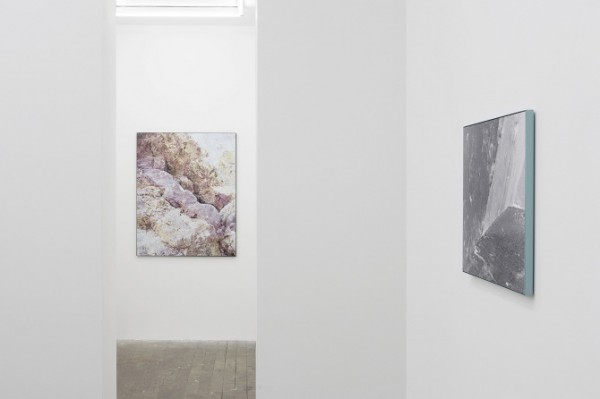
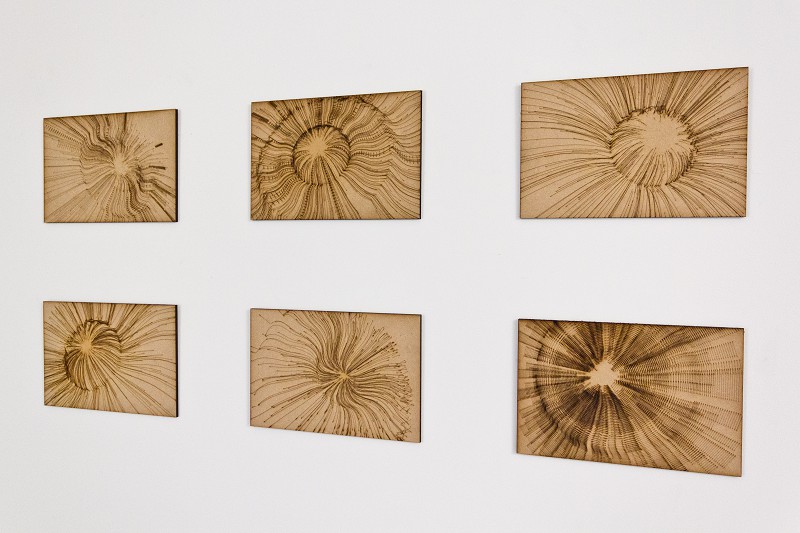
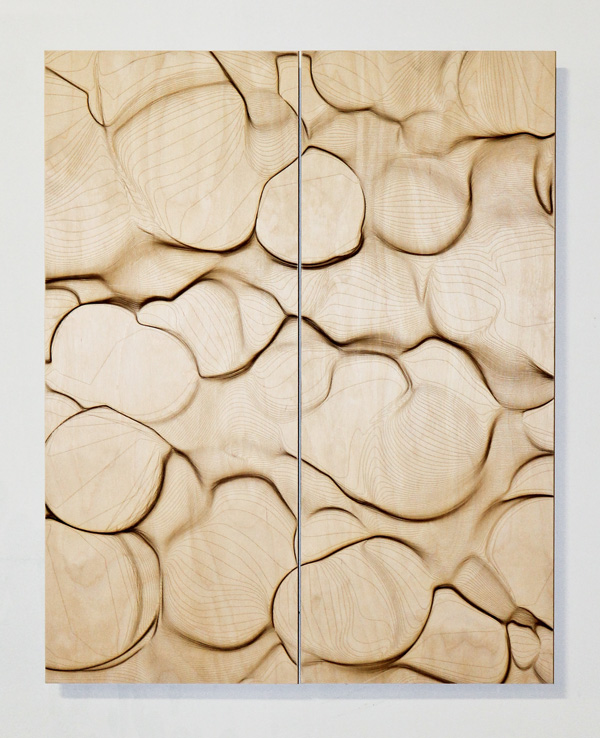
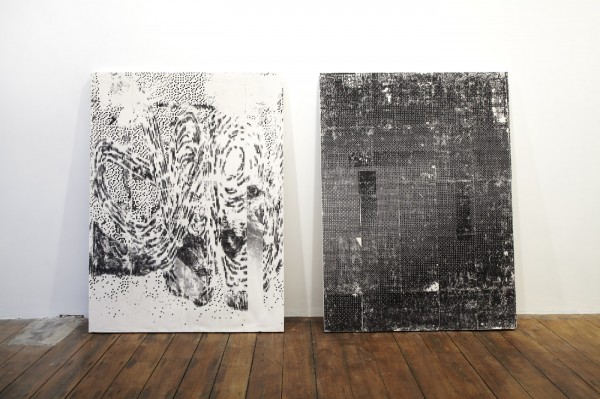
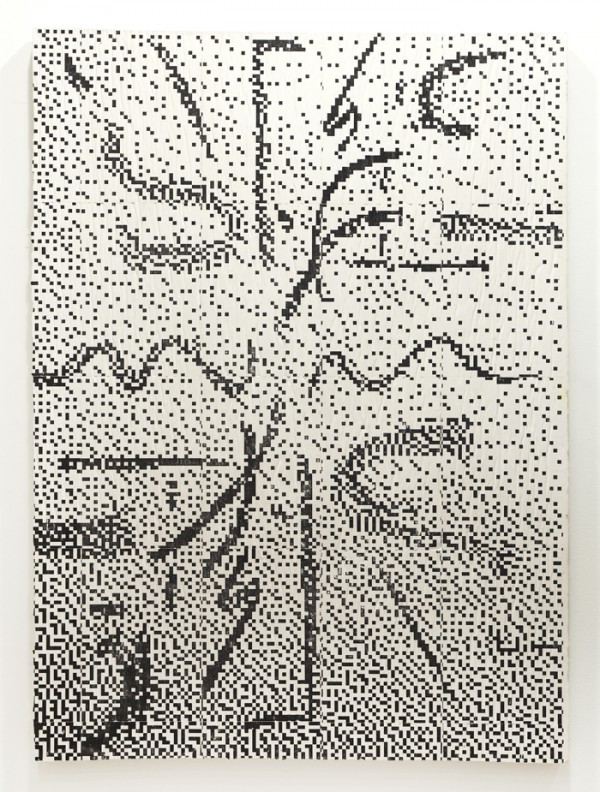
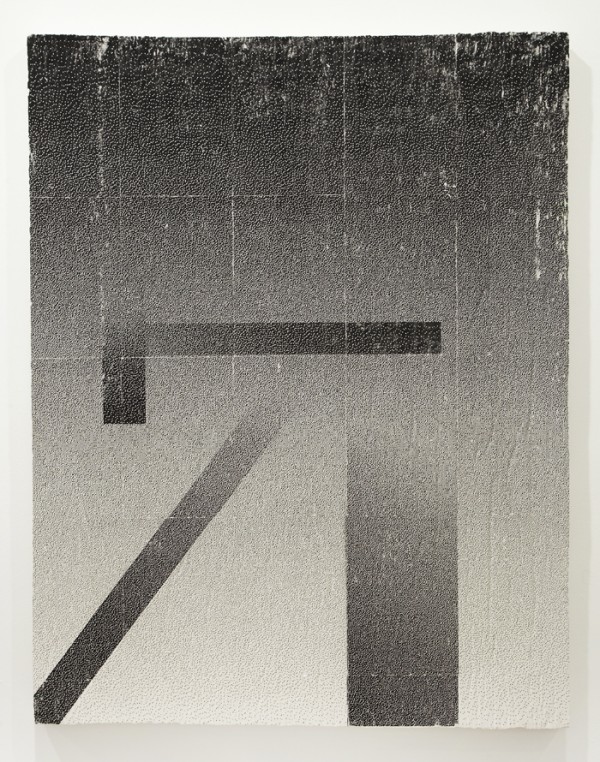
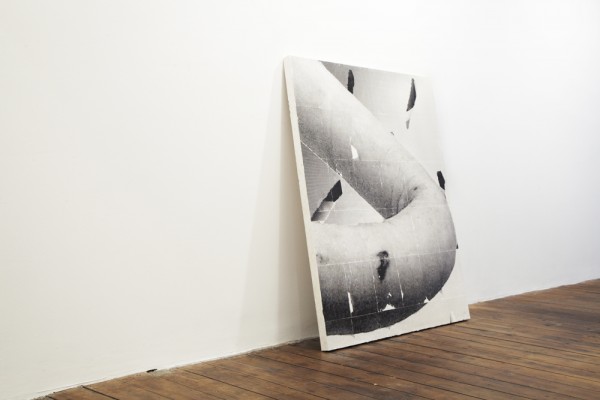
“Krister Klassman’s sculptures engage with the possibilities and traditions of the medium, utilising a range of processes along the way. In his first solo show Klassman incorporates ink drawings, digital manipulations, domestic printing and chemical reactions to produce a body of work that suggests a way of approaching a poetic dimension via digital technology.

The plaster panels have had abstract compositions imposed on them through a series of processes. Starting out as ink drawings, they are photographed, processed through Photoshop, and then printed out using a domestic printer. Plaster is poured onto the printed image, leading to an exothermic reaction between the plaster and ink. The melted xerox powder from the print is fused onto the plaster, leaving a trace of the original design etched onto the surface of the panel.

The works are sequences of transfers of information, albeit with imperfections throughout that leave the final image with its pixelated appearance. At each stage there is a reduction of information as a traditional medium gives way to digital technologies before ceding back to analogue methods. This sense of being between technologies and approaches is reflected in the status of the artworks as they operate in a space between sculpture and drawing. Whilst clearly being sculptural the works retain a strong pictorial element with their roots in drawing evident. The positioning of the works in the space acknowledge this as well, existing somewhere between the floor and the walls.

Whilst pursuing the traditional practice of drawing into new directions the works engage with the possibilities of the digital medium. Using Photoshop tools such as the ‘free transform’ and the ‘magic wand’, to name just two, the digital medium demonstrates a real possibility for poetry and abstraction as the images present in the works travel back and forth between the corporeal and digital. The images contain architectural elements, ‘dirty’ geometry, illusions, symbols and shadows that shroud, fade up/fade down with obscurity and double meanings. Whilst reminiscent of the emblems and geoglyphs of ancient civilisations, their pixelated surfaces drag them immediately into the present day, providing an instantly recognisable language in the ever-present pixel. As experiences become increasingly channeled via the pixel, Klassman suggests an alternative approach in which the old and the new reach an effective symbiosis to present the lyrical possibilities in each.” – COLE

Ben Alun-Jones

FiveRomanEmperors Ben Alun-Jones TRIANGULATION BLOG 011 Heads4  Heads3 OneGoodEmperor08 Body3

Ben Alun-Jones

Work from One Good Emperor

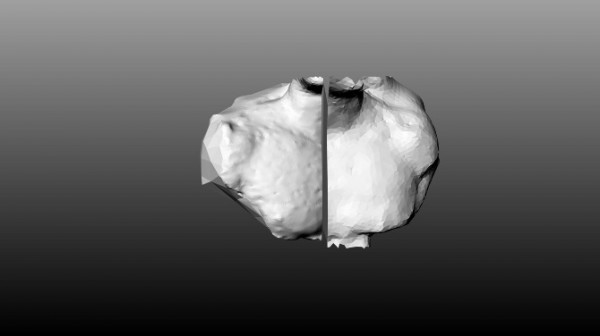
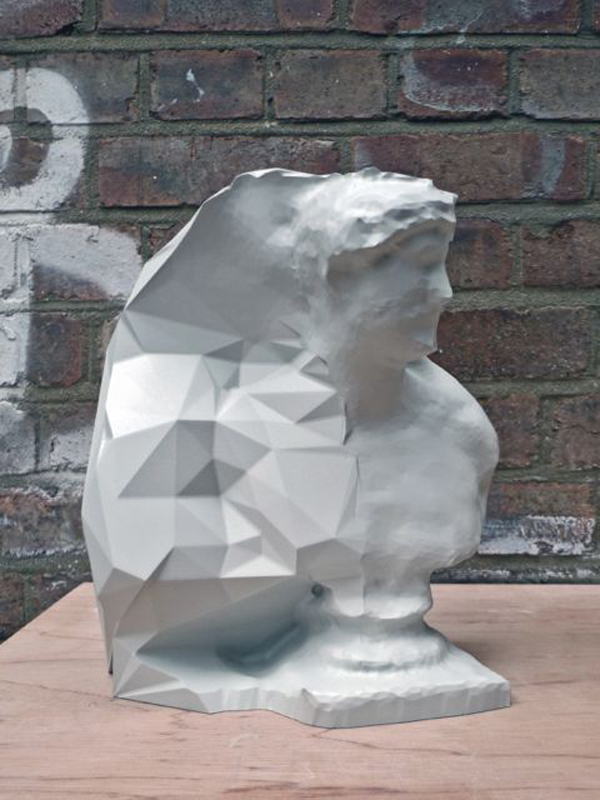
“There were ‘Five Good Emperors’ of ancient Rome – Nerva, Trajan, Hadrian, Antoninus Pius and Marcus Aurelius. These five men were the most successful of their kind. ‘One Good Emperor’ asks if by mixing and blending their best attributes can we find the greatest Emperor of the Roman Empire?

Using his 3D scanning and remixing tools, Ben Alun-Jones has scanned the busts of these five emperors from the British Museum in London and the Getty Museum in California. These scans have then been blended to create different mixes of One Good Emperor. One attempt to find the perfect mix will be shown having been reproduced physically. Visitors to Works Collective in Milan will also be able to create their own version of One Good Emperor.

Many of these classical busts were actually reproductions and so the idea of the original can often be distorted. This project questions the notions of value and uniqueness in a world where any object can be scanned, sampled and reproduced, simply by recording the object on video.”

This work has been recently shown in Ventura Lambrate Milan as part of the Works Collective.

via Triangulation

Sean Connelly

ASAOL_final-01-sean-connelly
ASAOL_final-03-sean-connelly6552_474017875998130_593633374_n
sean3

Sean Connelly

Work from A Small Area of Land at ii gallery.

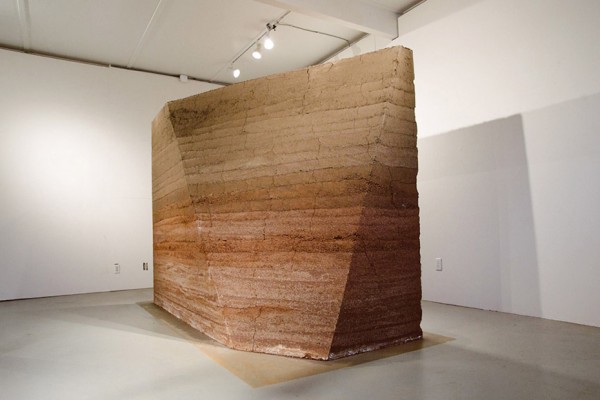
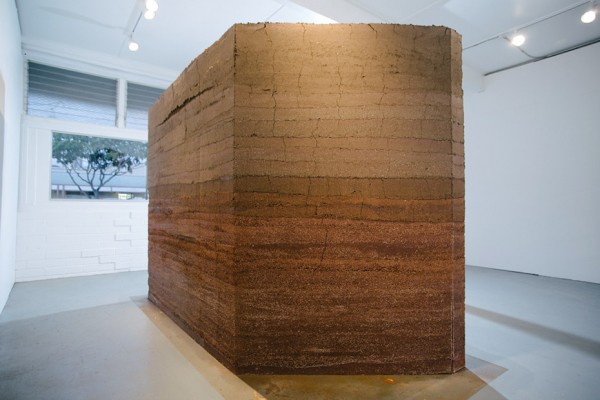
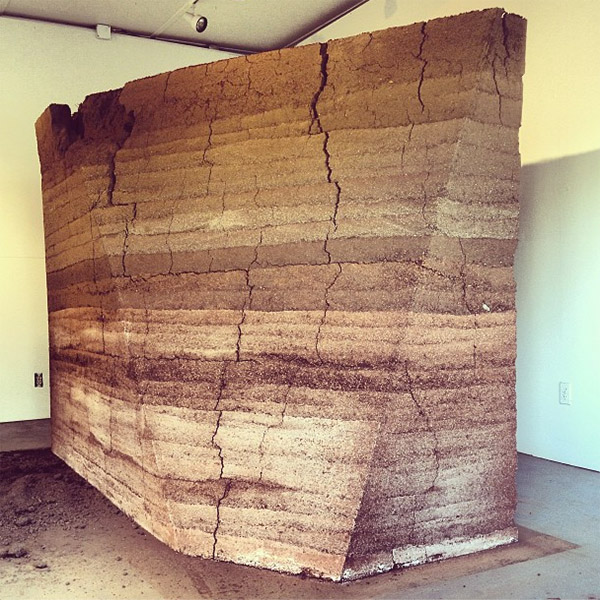
“The ii gallery in Honolulu, Hawai‘i, is currently showing architect Sean Connelly’s installation A Small Area of Land (Kaka‘ako Earth Room), a “temporary earth sculpture” made from “32,000 pounds of volcanic soil and coral sand.”

The resulting prismatic monolith is 7′ tall, 9′ long, and 4′ wide, and it “takes geometry to a new level,” we read: “starting with a basic rectangular block, the sculpture will feature a single sloping surface that aligns with the position of the sun and moon on a key date in the history of land in Hawai‘i.”

The exhibition title is the definition of the term kuleana, as translated in the Dictionary of Hawaiian Legal Land Terms. Coupled with increasingly contentious perspectives on the future use, development, and management of Hawai‘i’s land and natural resources, A Small Area of Land (Kaka‘ako Earth Room) uses two of Hawai‘i’s most politically charged materials and highly valued commodities (dirt and sand) to comment on the state of its environmental decline.” – ii gallery

via BLDGBLOG

Marget Long


88_pattern
88_sun
88_curly
88_dorothy

Marget Long

Work from You Were Driftng.

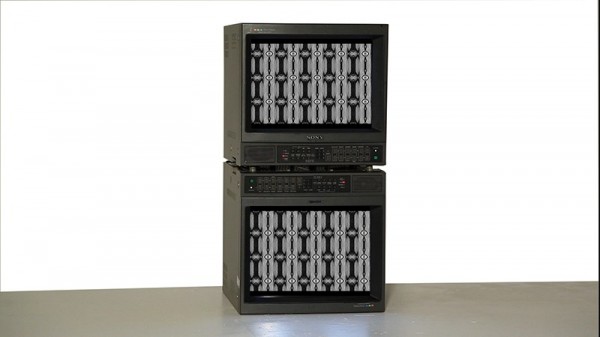
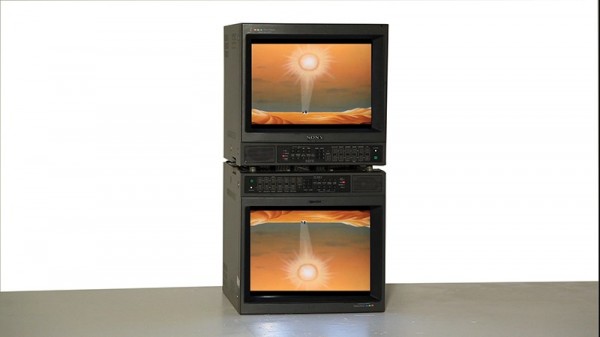
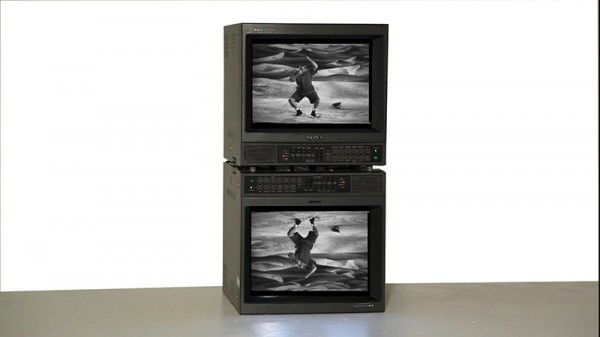
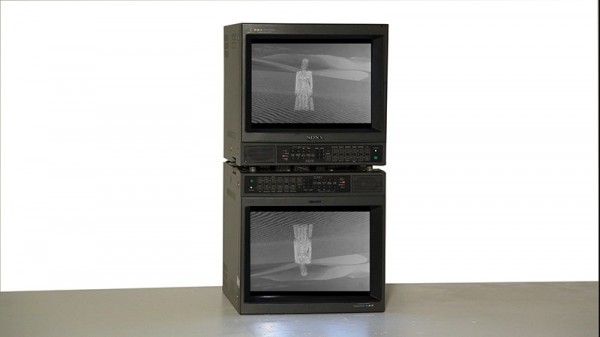
“You Were Drifting is a two-channel video installation composed of clips from twenty films that depict the advent of a mirage. The stacked monitors create a secondary mirage effect; the inverted lower monitor “refracts” the scene in the upper monitor. Presence and absence, desire and impossibility, delirium and failure are played out through the bodies of lost men on the desert.” – Marget Long

Brent Watanabe

for01-640x359
img_for_hiRes-640x425 for02-640x359

Brent Watanabe

Work from for(){};

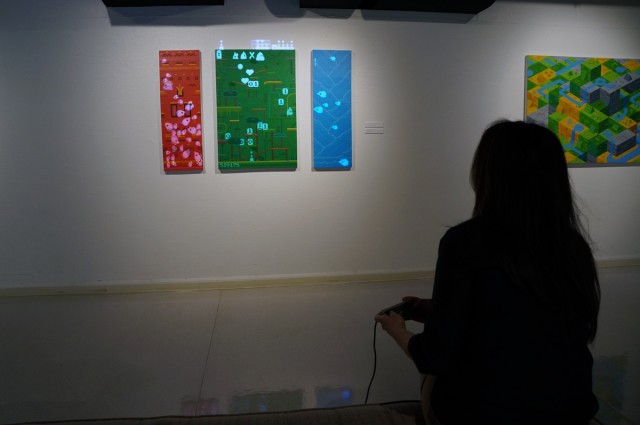
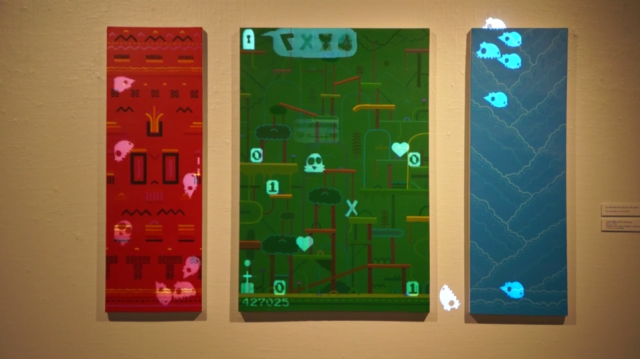
“Created by Brent Watanabe, “for(){};”, 2013 includes projection mapped video game on canvas. In for(){}; there is no beginning or end to the game, just collecting and wandering, birthing and consuming, an arbitrary point system rising until your inevitable death and the birth of another generation. Brent describes it as a game mechanism without the game – “an addictive but essentially aimless experience”.

The piece includes a collection of acrylic paintings controlled by the viewer using a NES controller. Programmer/artist Brent Watanabe worked with painter Cable Griffith to create an interactive landscape painting influenced by Hieronymus Bosch’s “The Garden of Earthly Delights”, merging traditional materials and ‘new’ technology.

Created using ActionScript 3/Box 2D and projection mapped using Photoshop CS5 and Flash CS5.5. Other components include a video projector, NES controller and CXFR for audio.” – Creative Applications

Cameron Martin

partitionalbum
adivial
sempiturn.cameron.marting

Cameron Martin

Work from his oeuvre.

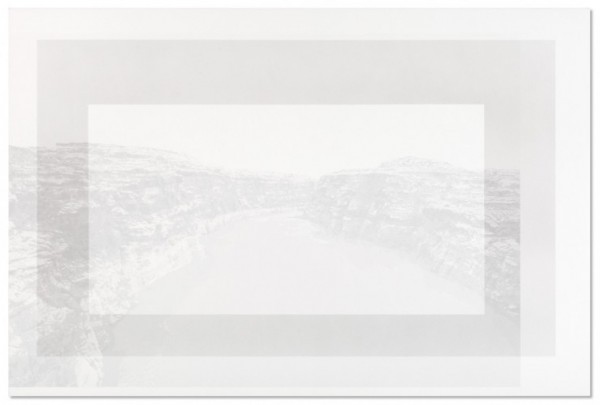
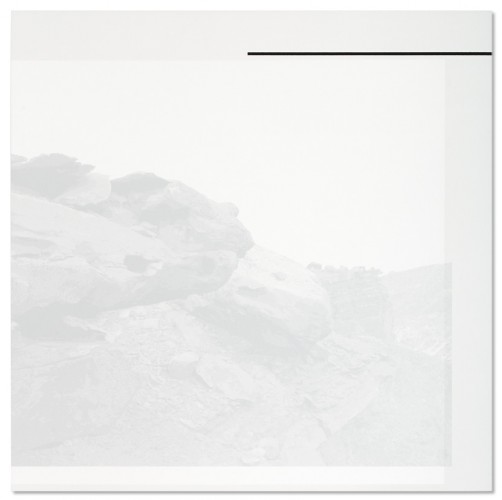
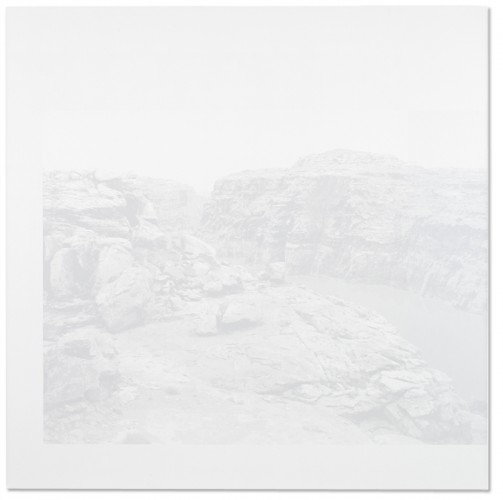
“Of all the genres one might associate with contemporary artistic practice, landscape painting is low on the list, more closely aligned with the nineteenth century than the twenty-first. In this sense, Cameron Martin’s canvases, apparently photorealistic depictions of nature executed in an icy palette of pale grays and whites, are paradoxical objects, simultaneously part of an art-historical trajectory dating back to the sixteenth-century Danube School—credited as the first to make “pure landscape” the subject of paintings—and its negation. To create them, he draws on a personal archive of images, culled from advertising, found photographs, and his own staged and impromptu snapshots; selected images are then combined, altered, and manipulated in Photoshop, from which he extracts a stencil, finally applying layers of paint to canvas with an airbrush.

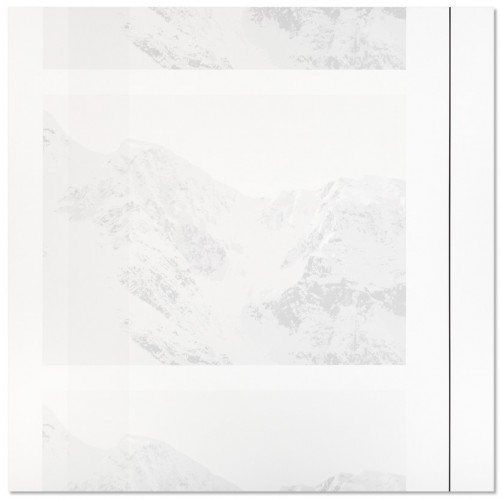
In his series “Bracket,” exhibited in 2011 at Greenberg Van Doren (now Van Doren Waxter), spectral images of craggy mountains and dense forests, given elusive titles like Balantane or Icliste, are cropped and bordered with blank space, emphasizing their relationship to not only the photographic image—as one critic noted, registering the barely-there images in Martin’s paintings is akin to watching a photograph develop in a darkroom—but also its use in media, suggesting preparatory layouts for magazines or ads. In more recent paintings, Martin augments the image with thin black lines and tonal shifts, linking them even more closely with graphic design. As Martin stated in an interview with the Brooklyn Rail, “After many years of making full bleed pictures, where the image comes entirely to the limits of the support, I became aware of how with landscape painting in particular, you are encouraged to just dive into the picture, and you don’t think about what’s outside the frame. There’s an inherent illusionism that you buy into as a result of the full bleed. I wanted to think about ways of making the image itself the subject of the painting as much as what was depicted in the image.”

In these paintings, Martin exploits the multiple associations of the term “bracket”: in photography, bracketing refers to taking multiple versions of the same shot at different exposures, while in phenomenology, it describes a suspension of pre-conceptions, setting aside certain assumptions in order to privilege the first-person encounter. On the one hand, they call attention to the formal processes of image production in their conflation of painting, photography, and digital media, but they also function as meditations on absence and presence, inclusion and exclusion.

These scenes might be conceived as corollaries to what the sociologist Marc Augé famously described as “non-places”—interchangeable, transitional spaces like supermarkets and airports that are familiar and ubiquitous, but lack any of the defining characteristics that might root them in a particular culture or location. Martin similarly renders places that are not, beyond the fact that they are literally invented by the artist on a computer: much as his process removes the direct touch of the brush, the extension of the artist’s hand seen as a guarantor of the work’s expressive authenticity, the resulting paintings are not so much landscapes as “landscapes,” images whose mediation is constantly foregrounded. In his work, landscape becomes an empty signifier, much like the intentionally vague, verdant settings of advertising images that are intended to be familiar to everyone, in which, as the artist notes, “the specificity of the location, geographically or historically, is completely eradicated.”” – Rachel Wetzler for Rhizome

Stefan Bunte

04_18A7259_Steffen_Bunte_100
05_18A7261_Steffen_Bunte_100
PT_01_ARCADEMI_BUNTE
EMSS_06_ARCADEMI_BUNTE
SAS_03_ARCADEMI_BUNTE
SAS_04_ARCADEMI_BUNTE

Stefan Bunte

Work from Proving Things at Galerie Jean Rochdard.

“The work proving things deals with the search for traces as a method. By creating various experimental setups in the form of images and objects, Steffen Bunte addresses the topic of exploring structure and shapes. The work also draws on rearrangement and restructuring of already existing objects and materials. His own photographs are extended by a selection of scientific artworks and collected things. These found objects gain a reorganized contextualization by a specific composition in the exhibition space, which allows visitors a different approach to material and object in the new setting.

An essential part of the work is mainly traveling as a strategy for gaining knowledge. With the investigation of the excavation of the future archaeological museum of Israel, the ‘National Campus for the Archaeology of Israel’ in Jerusalem, Steffen Bunte‘s preoccupation with structure and form is transmitted in particular. The images of stones Site I (A), Site I (B) and Site II remind us of pictures shot by a scanning electron microscope. Here physical properties, such as sense of scale completely dissolve in the large-format photographs of the surfaces.This bizarre but equally technical world of the macrocosm also builds the basis for the black pedestal piece 300 , whose model is a greatly enlarged ice crystal. Here the borders between abstract macro photography and the images and forms that we know of, start to blur. Further this raises the question which aesthetic is inherent in the visualization of perception and knowledge.

There to shall establish the series Mars Science Laboratory, whose images are taken by the Mars rover Curiosity on the same-named mission, launched in 2012 by NASA. The work of the remote-controlled robot on the alien planet is analogous to the idea of curiosity and discovery.

From the context of collecting, archiving and displaying, the trolley Depot I, and the rack Depot II, alongside the small travel souvenirs (nasal spray, mobile phone, water bottle) are disposed of their original value and transferred to new situations. Hereby the resulting reorientation of the relationship between object and surroundings gains relevance. The revaluation and alienation through the marble detaches the trolley from its functionality. The trolley and rack itself symbolically represent depot and archive, whereas in the exhibition they display nothing more than themselves…” – Galerie Jean Rochdard

Marius Watz

Mark-Making-9208-ArcSurf-drawings Modular-group GridPanel02AB-0064-800

GX30-iMAL-9131-ArcSurf


Marius Watz

Work from his oeuvre

“Marius Watz (NO) is an artist working with visual abstraction through generative software processes. His work focuses on the synthesis of form as the product of parametric behaviors. He is known for hard-edged geometrical forms and vivid colors, with outputs ranging from pure software works to public projections and physical objects produced with digital fabrication technology.

Watz has exhibited at venues like the Victoria & Albert Museum (London), Todaysart (The Hague), ITAU Cultural (Sao Paulo), Museumsquartier (Vienna), and Galleri ROM (Oslo). He is a lecturer in Interaction Design at the Oslo School of Architecture and Design. In 2005 he founded Generator.x, a curatorial platform for the production of a series of events related to generative art and computational design. In 2010 he co-curated the exhibition “abstrakt Abstrakt: The Systemized World” with Eno Henze at the Frankfurter Kunstverein.”

Extreme Environments and Future Landscapes

screen-shot-2013-02-18-at-7-14-20-pm
screen-shot-2013-02-24-at-7-28-20-pmscreen-shot-2013-02-18-at-7-23-40-pmscreen-shot-2013-02-18-at-7-31-16-pm


Extreme Environments and Future Landscapes

“Finally back from the seven day expedition and research in Svalbard, where we received lectures by the municipality on Longyearbyen’s past and present , by LPO architects to understand the challenges of building on frozen (and now slowly melting) tundra, by UNIS, the university centre in Svalbard on the researchers community in the archipelago, and by the scientists running EISCAT, two large radio telescopes studying the Northern Lights. We also ventured into the frozen landscape to Barentsburg, a soviet era mining town, still active and with 300 inhabitants and to the depths of glaciers to see ice cave formations produced by melting tundra.

All the while, we tested and probed the surroundings with surveying equipment designed and built for the expedition, at urban and natural landscapes, from -30 degrees Celsius to overcast blackout weather. Below is a selection of images from the research which will now allow the students to define an architectural brief for a building design, that will tackle some of the challenges they have reserached.

ARCTIC AUDIO DEVICE
MILJA LINDBERG AND LIINA PIKK

Our surveying device is used for testing sound absorption properties of snow by transmitting sound onto snow and reflecting it to a receiver. The device consists of three parts. A blue transmitter tube (Ø 60mm) sends focused sound frequencies through a speaker fitted at one end of the tube. A red receiver tube 20mm wider in diameter picks up sound waves reflected from the snow test bed. Both tubes are connected to tripods with an angle adjuster that works as a protractor to set the right angle. This piece also connects two lasers on top of the tubes. The lasers meet in the middle of the snow test bed. From this spot a sample of snow is taken with a test tube and placed onto a photolab. Together with a picture of the snow sample the following information about the testing conditions is recorded: date, time, temperature of air and snow, site coordinates, name of the recording and snow depth. The transmitted and recorded sounds are then compared and analysed together with the testing conditions.

LIGHT BEACON STUDIES
MARTA NESTOROV

A device to facilitate the process of recording the changes of light – to follow the different conditions with the help of an artificial light source, a beacon, and a camera. To study how direct light, reflected light and bounced light might work in varying environments, weather conditions, and times of day and night. To create a spectrum of how the light is perceived depending on where you look, or the different surfaces and areas in a specific space – from afar to up close, the changes in snow, ice and other elements. How the wildly different landscape and climate influence how the natural light is seen, with a correlation to an artificial light- and reflective source. To inspire and create a collection of the intensities and range of colours, as well as the relation between an artefact and the environment itself.

PORTABLE POLAR BEAR ALARM
DAVID A. GARCIA (TUTOR)

Due to the exceptional relationship between the human population of Svalbard (2500) and the polar bear population (3000), the encounter between the two species occurs often, and not necessarily in the best of circumstances.. Although the bears are protect ted by strict laws, no one is allowed outside zone 10 (urban area of Longyearbyen) with out a rifle or a guide with a rifle. This become clear when entering any public building or store, you are asked to leave your rifle or hand gun behind….they provide security lockers for this. Albeit the high security measures, when encounters occur, weather in town or out in nature, bears are owlet scared off by flares, or shots in the air. But when a polar bear has not eaten for months, their are quite determined, and on many occasions, casualties have occurred.
The proposed design allows for a “soft” perimeter alarm, not one that will stop polar bears form approaching the designed area, but allows for an acoustic or visual alarm to be triggered. more over, specially in the long dark season (6months) the laser allows for hum as to recognise the alarm, and avoid unnecessary triggers. This flexible systems creates a nomadic edge, which can be moved at will, defining the limits of safety, and the boundary between “nature” and “urban” landscape through the parameter of danger.” – via BLDG Blog

Gaylen Gerber

Support-large-gray-A-26592-800x635
WALLSPACE_Gerber-3-600x399
WALLSPACE_Gerber-6-600x399
A 26584

Gaylen Gerber

Work from his oeuvre.

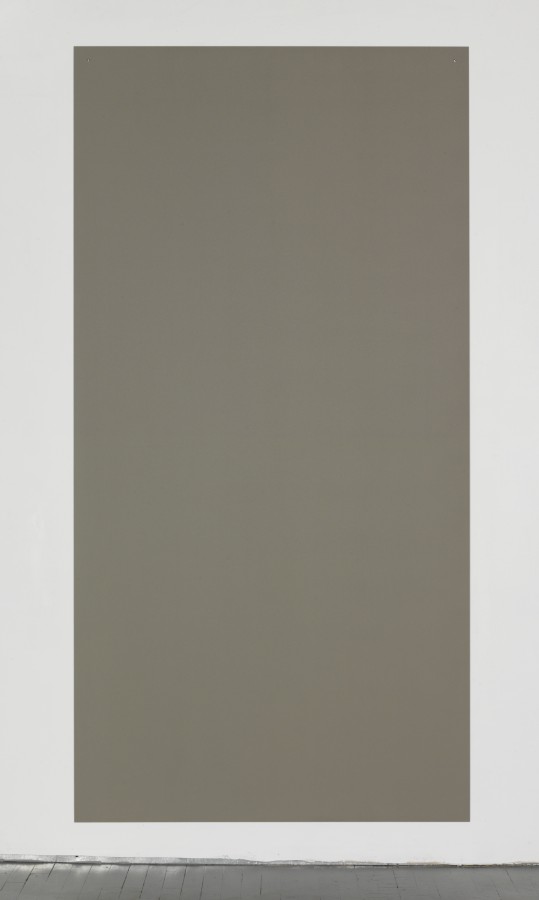
“Gerber typically focuses on the normative aspects of visual language: the way we, as part of a shared culture, accept certain forms, colors and situations as institutional, or we take them for granted as impartial common ground. These visual norms act as grounds for all other forms of expression and we use them to register difference and create meaning. Gerber’s work is often positioned so that it highlights the relationships between the frequently invisible normative aspects of visual language.

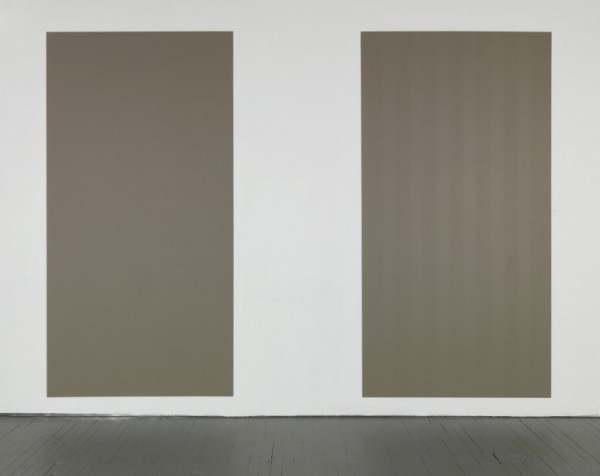
In this presentation, Gerber focuses attention specifically on artworks in which he uses gray as the “neutral” ground against which we form meaning. This gray is present in the painted frames employed in the earliest works in the exhibition, a series of genre images of a still life that were realized between 1980 and 1982. In these works the images appear to be distorted until they are viewed from an acute angle, at which point they appear normal. This shift in understanding as we move around the work focuses attention on the viewer’s activity and underscores the performative character of both Gerber’s practice and of any interpretation.

Untitled, a painting from the 1980’s that also employs a genre image of a still life, is painted in a single shade of gray; the image is only visible through very subtle shifts in the painted surface. Gerber conflates the ground and the expressive qualities of the image by making them literally the same color, suggesting permeability between these elements. As we try to differentiate the still life from its situation, everything, including the light in the room and the whole of the painting’s context that would normally become its background, remains in the foreground of our perception and understanding.
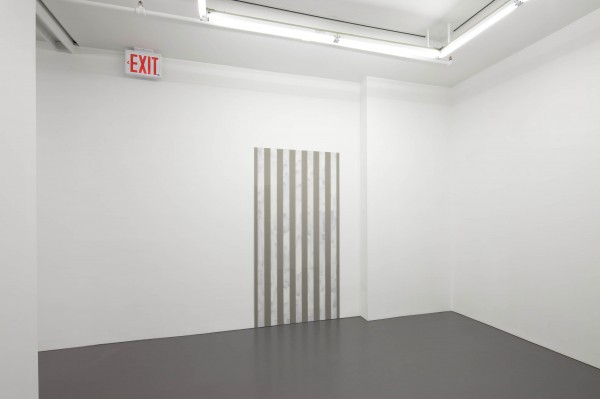
In the Supports, the most recent of the artworks included in this exhibition, Gerber applies gray paint to one side of two remnants (which are commonly known as souvenirs) from Daniel Buren’s work Crossing Through the Colors from 2006. With these souvenirs, Gerber creates artworks that raise our awareness of the permeability between artists and their practices. In one instance, Gerber’s gray paint obscures Buren’s trademark stripes, and in the other we see Gerber’s gray through the stripes. Thus, Buren’s stripes and Gerber’s neutral gray are positioned interchangeably as both ground and expression. Similarly, it becomes apparent that Gerber’s Untitled still life functions as both ground and image when Stephen Prina layers black enamel spray paint on top of it, focusing attention on the way all artistic expressions act as grounds against which other expressions are perceived in addition to functioning as expressions in their own right.

This conscious exchange between elements in Gerber’s practice accentuates the conditional quality of any interpretation and illuminates the role of the ground in determining value. By heightening and even confusing perception Gerber returns us to an individual visceral experience that suspends easy apprehension.” – Wallspace