Javier Fresneda

6_2012_wb_fe_07
6_2012_wb_fe_03
6_2012_wb_fe_08
6_2012_wb_fe_05

Javier Fresneda

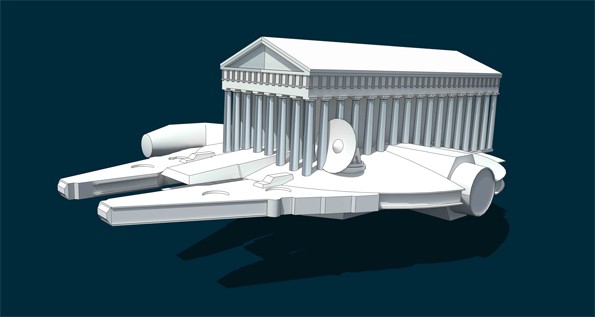
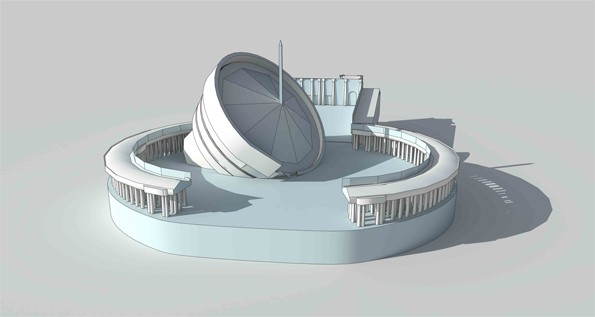
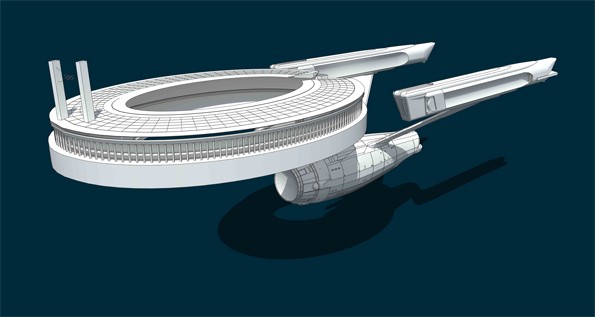
Work from Future Studies.

“Looking at the works of Javier Fresneda, we see drawings; three-dimensional renderings, models; photographs;
sculptures, and web pages. What gives him the right to partake of so many different media? In my view, the
answer lies in his unconventional way of thinking, in which the medium is subordinate to the language. He
chooses the media depending on the idea, time, space, and context and is interested in utopian projections,
societies, absurdities of all kinds, physical and metaphysical worlds, experiment, loneliness, obscurity, the
unknown, culture against nature. (The list could go on.)
He deals with the absurdity and mystery of the world, and his works speak of the complexities of reality and art.
He does not simplify his work for the viewer, but demands maximum effort and attention. Fresneda’s attitude is
far from the populism of fashionable contemporary art, which strives to be instantly understood and consumed
for the sake of media attention and the market. I had the opportunity to see quite a few of his projects, and I
must admit that I changed my interpretation of each of them several times over. His works provoked me to the
extent that I kept on developing and elaborating my takes on them. They intrigued me, and I had a feeling that I
understood them, but not all the way through to the end. As in most good works of art, this task has to be
completed by the viewer.

Even when I read the short explanation of his works that he sent me, it seemed that, as though in some
intellectual quiz or wilderness survival competition, he deliberately complicated the reading for the viewer even
further so as to force him to use all his intelligence and imagination to solve the tasks. Like explorers in the near
and distant past who explored unknown places, Fresneda, too, explores the outermost limits of our imagination
and the projections our civilization is capable of. He tries to transpose us mentally to new spaces which we
haven’t visited yet, or to think up new constructions/combinations.

In his work MontañaMúltiple, we see a mountain consisting of 14 mountaineering routes to the highest
mountain peaks on Earth; in effect, he has created a new mountain. This mountain is imaginary and real at the
same time; what’s absurd is that a model of this mountain has been made which, at the same time, is a sculptural
exhibition artifact. Models are usually made for architectural projects and not for natural formations. Fresneda is
interested in extending the possibilities of our thinking to the outermost bounds of the phenomenal world,
where (as a matter of fact) we continue to travel primarily in our imagination; even in this century we are not
much further along in this respect than the civilizations whose architecture he merges with space ships in the
Future Studies series.

The works from this series project our viewpoint into the future, because we know that the Atomium sculpture
in Brussels and the Eiffel tower in Paris are still standing, although in his renderings we see them destroyed and
then remodeled and reused. Through this series of works, we understand that every present is also the past of a
future. Fresneda shifts us, the viewers, from our time and space into the future. It is known that if we want to
understand something better, we have to estrange the point of view and somehow try to step out of space and
time. Good art pulls the rug out from under the viewer, shaking the ground he stands on, from which things
looked well ordered and almost unchangeable. Javier has been doing well in unsettling our reality thus far.” – Miran Mohar
Translated by Jasna Hrastnik

Spiros Hadjidjanos

ADSC_0467web

aaDSC_9621-2-web-640

abDSC_9451-web-640

DSC_9145-2-A-FINAL-web

abDSC_9471-web-640

Spiros Hadjidjanos

Work from Displacement Maps

“Displacement Maps is an investigation on the derivatives of digital images as physical objects. These derivatives demonstrate the relation between a digital object and its potential mutations as a configurative relation between reformatted variations of spatiotemporal structures.

Using a rendering of Masdar City, a planned urban environment, designed from scratch–currently in construction–in the desert of the United Arab Emirates by Foster+Partners architects, as a blueprint, the artist reconstructs the entire city as an animation using hundreds of extruded images of compact digital cameras found online. Low-resolution images are mixed with high-resolution images, all extruded. The images of the cameras and the process of their acquisition reflect on the current state of digital image production with references to symbolism in architectural form.

The artist explores the potentiality of the digital image over actuality. The mutable digital object is r¬egarded as an object of anticipation and its material transformation as an object of reminiscence providing us with a view of the world that can ultimately be mathematized. An electronic object encompasses aspects that are transformative in a perpetual awaiting state and determines phenomenologically, the emergence of temporality and spatiality itself.

Displacement maps is an inquiry aligned to an aesthetic scientific naturalism regarding the ontology of the digital. With UV prints on carbon-fiber plates, a 3D print and an animation Hadjidjanos demonstrates that the difference between a digital file and its direct physical manifestation is a difference in their essence, yet they have interconnected structures.

The title of the show is drawn from the displacement mapping technique, a process found in 3D software that adds real surface detail to objects in three-dimensional space by using two-dimensional gray-scale images. The process explicitly demonstrates that numerical representations of digital objects do not have a singular identity but instead they can exist in numerous variations.” –von cirne

Josh Kline

moving-up_featureimage1
032_CAA_WN11-650 work2_kline

Josh Kline

Work from his oeuvre.

“Typically, when an art work is referred to as being ‘of the moment’, it’s meant derisively. Our romantic ideals require art to transcend culture and time, to live on eternally rather than in a fashionable present. ‘Dignity and Self Respect’, Josh Kline’s first solo exhibition in New York, unapologetically did none of this. His objects (lit by the cold glow of the kind of LEDs often seen in shop displays), photographs and videos are time capsules of this very moment, of New York, of Kline’s circle of collaborators and friends born in the mid-1970s and early ’80s. The caustic press release adeptly described his world (that of creative sector workers with multiple jobs) as fighting a losing battle, both economically and psychologically, with the city’s increasing championing of celebrity and commercial endeavors  ‘James Franco holds down 19 careers. Why can’t you?’

And, with the variety of products offered by a typical American pharmacy chain-store, why can’t we? Sleep is for the Weak (all works 2011) comprises three Bodum cafetières filled with Red Bull, DayQuil and Coke Zero, and ‘infused’ with Vivarin, Dentyne Ice chewing gum and Ibuprofen. Composed of mass-marketed products, this homemade yet utterly artificial combination carries a quiet threat of the next iteration of hyped consumables to come. A similar message comes with Kline’s portrayal of the millennial generation in the video What Would Molly Do?, which documents interviews with potential interns for Kline within a constructed set. The process takes place in front of a green screen intercut with flashes of fans or props being adjusted. Self-awareness (and any inkling of professionalism) is mostly absent here; one barely audible candidate’s only enthusiastic response is when asked if he does Molly (a term for MDMA). Perhaps these subjects can get a boost of inspiration from trying on the antibodies of the creative professionals they aspire to from Share the Health (Assorted Probiotic Hand Gels), where cultures swabbed from a Uniqlo store and iPad app developers are cultivated in soap dispensers. Or they could pick up one of the silicone surrogates of Creative Hands, in which each cast clutches a contemporary token of its profession. From the retoucher with her Apple mouse, through the studio manager with a bottle of Advil, to Kline’s own hand (identified in one of his other roles, that of a curator) with Purell hand sanitizer, these creative producers are often those whose work it is to be the invisible support behind the star artist or global advertising campaign. Presented in multiple editions, these are bodies reduced to occupations, permanently wedded to their tools.”- Frieze Magazine

Manfred Mohr


Manfred Mohr TRIANGULATION BLOG 13
Manfred Mohr TRIANGULATION BLOG 01

Manfred Mohr

Work from his oeuvre.

“…The inevitable question that arises in response to algorithmic based art is the aesthetic value of something where the work is supposedly done primarily by a computer. The artist to some is perceived as absent from such mathematical constraints and rules of logic. It’s as if to give way to an automated system is to deny the potential of artistic expression insofar that these restrictions by their nature can only have specific, predetermined outcomes. Systematizing the process of art-making inhibits expressivity, but as formalistic as algorithms probably are on a superficial level, they are manipulable and can lead to wildly expressive potentialities.

Art that manipulates algorithms within a specific set of parameters to achieve unexpected results, or generative art as it is generally known, has risen to prominence within the past twenty years. Its popularity as an art form has perhaps grown in the last decade as our relationships to the world become increasingly mediated by digital technology and as the algorithms at the heart of those technologies become more omnipresent. Despite this recent popularity, the notion of using algorithms to create art reaches as far back as the 1960s when artists would use plotters (or automated drawing machines) to generate art from written programs processed through the devices.

Considered to be one of the fathers of digital art, Manfred Mohr was one of the first to use these generative methods digitally to make the majority of his works. Born in 1938 in Pforzheim, Germany, the New York based pioneering artist was originally a jazz musician and painter whose sensibilities leaned more towards the work of the abstract expressionists and action painters, in particular the works of K.R.H Sonderberg. However, he was then introduced to the work of German philosopher Max Bense whose Aesthetics of Mathematics sent him in the completely opposite direction. It became clear to the artist that to fully realize and communicate his intentions he would have to divest himself of the obscuring emotional nature of action painting and pursue more rationalistic constructions of geometric forms. If traditional art meant to stimulate the heart, his was meant to stimulate the mind.

Mohr’s interest in a systematic generation of geometric forms predates even his use of computers. His work phase hard edge saw him introduce geometric shapes that would operate as visually expressive signs when juxtaposed with each other. Very early in his work he restricted himself to the colors black and white, a restriction that would last almost 40 years. The binary provided more freedom to focus on the spatial relationships of lines, points and shapes that would comprise the majority of his art. The breakthrough to actually use computers came when he met Pierre Bardaud, a musician composing music with computers. Subsequently, he was inspired by the meteorologists’ use of plotters and sought to use one for his work. Soon after he began programming his own algorithms in the FORTRAN programming language as soon as 1969.

However, Mohr’s investigations into rational forms generated digitally should not be considered a relinquishing of control on the part of the artist. Instead, his pursuits are better thought of as an extension or enhancement of the artist’s abilities. Mohr’s use of the algorithm to create art can be understood as an appropriation of a mathematical form to investigate aesthetic possibilities that are out reach of immediate human comprehension. Mohr put it the best when he characterized his own work as “inconceivable, but yet computable.” The algorithms that the artist used were developed by Mohr himself and much of his process involved a continuous engagement with their interpretation by the machine. He would continually produce results and tweak his programs until he was satisfied with what was created. Mohr took advantage of a computer’s precision. It has the ability to rigorously reproduce and to also produce infinite familial variations within the context of those reproductions without degradation to that goal.

In particular, the series of forms that comprise the majority of his work are to be seen as collections of signs. Contrary to their procedural origin the signs as they exist within context of a particular work are intended to individually communicate aesthetic information against an objectified backdrop. He, in a sense, abstracts the initially formal aspects of his subject into an variety of lines and shapes that contain packaged information that can be interpreted by a spectator when contrasted with each other.

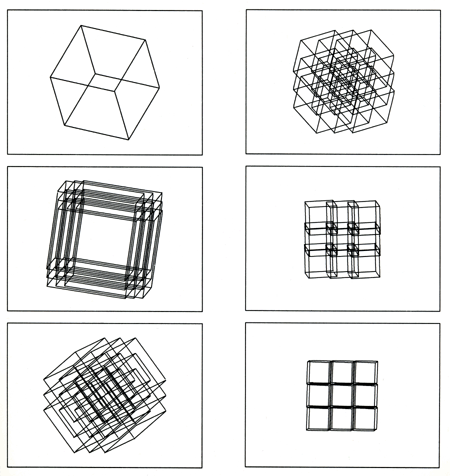
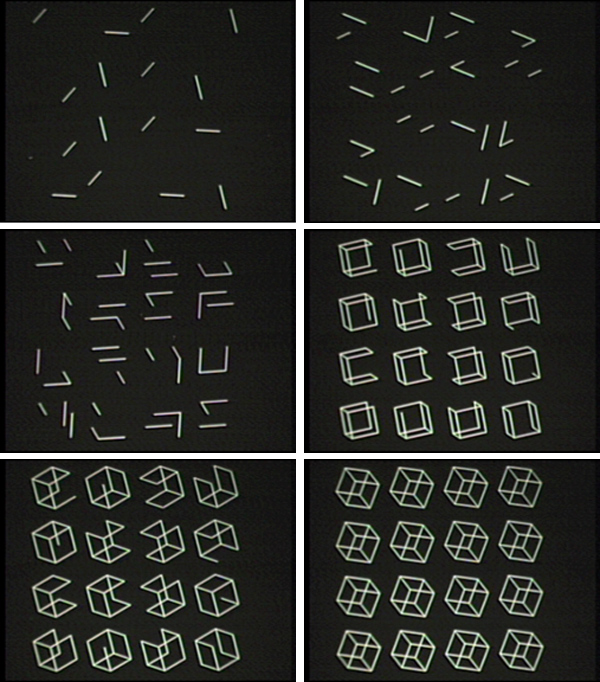
If an artist has a muse or source of inspiration for their work, perhaps it would be best to call Mohr’s the cube. By using the computer’s ability to algorithmically generate a continuous stream of figures he is able to explore spaces that exceed human intellect. The cube as a deceptively minimalist element in fact posses unlimited potential for algorithmic complexity. For Mohr it is a “fixed system which signs are generated.” In Cubic Limit II he simply cut a line down a cube and reattached the pieces in different ways to generate a variety of shapes.

Over the course of his career he introduces more dimensions to the cube exploring four dimensional, six dimensional and even eleven dimensional cubes. These so-called hypercubes that he introduces in Dimensions contain an increasingly incomprehensible, yet computable number of parallel diagonal lines. He then foregrounds these parallel diagonals into a series of abstract portraits. They are hidden random potentials that exist within the objectified, yet extremely complex form of the hypercube. They exhibit the possibility for expression within automated environments by exploiting the complexity of the systems through random, yet intended, generation.

Through Mohr’s manipulation of a multi-dimensional space he is able to intentionally generate complex expressivity while also removing himself as the subject of his completed works. By constantly engaging the potential for a single form through multiple iterations he foregrounds both the procedure for how they are made and also the continuously shifting nature of complex forms. The ‘life’ of his work is equally as important as what is born from it. He is an incredibly transparent artist who is the first to describe his process so that it can all be seen in a larger context.

Although Mohr’s art appears to tow the lines between conceptual art, constructivism and minimalism his work transcends each of these descriptions. Though he begins with an idea born from a minimal formal element it is what he transforms it into that truly defines him as an artist. He evolves something apparently simple into a densely complicated abstraction that is pregnant with meaning. He disavows the moniker of computer artist but he has pioneered the potential for algorithms for aesthetic exploration…” – Creators Project.

via Triangulation Blog.

Daniel Rozin

Screen Shot 2013-04-07 at 11.37.28 PM

Screen Shot 2013-04-07 at 11.37.36 PM

Daniel Rozin

Work from his ongoing exhibition at Bitforms.

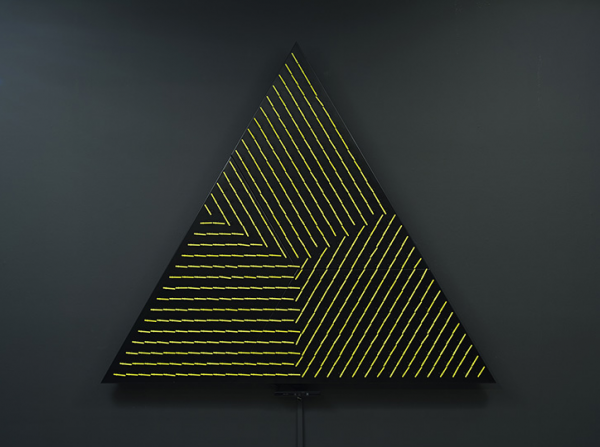
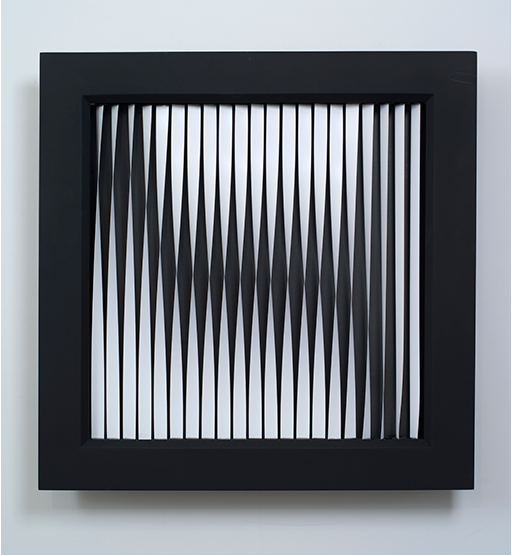
“Since the late 1990s, Rozin’s constructions in software and sculpture have investigated the psychological and optical cues inherent to image building, such as pattern and the materiality of the picture plane. In a departure from the traditional rectilinear grid, which was the foundation of his 2010 exhibit X by Y, Rozin’s new series of work proposes another geometric basis of image creation. Focusing on rotational systems of orientation, Angles celebrates the polar, or angular, notations of pictographic information. Using the triangle and sculptural elements that twist their shape, Rozin’s conversation of the grid highlights a new dimensionality of formal representation.

In Rozin’s work, the picture plane’s transformation is a means to explore animated behavior, representation and illusion. Merging the geometric with the participatory, Rozin’s installations have long been celebrated for their kinetic and interactive properties. Grounded in gestures of the body, three pieces in the exhibit Angles are mirrors of various sorts and respond to the presence of viewers in real time by recreating a visual representation of their likeness…” – bitforms.

Jeremy Gravayat and Art of Failure


Jeremy Gravayat and Art of Failure

Work from CORPUS.

“…CORPUS is a project by Jeremy Gravayat and Art of Failure that brings together sound, visuals and architecture. Based on the principle of vibration in resonance with the built environment, the sound system consists of speakers, vibrators and a score generated in real time incorporating pure frequencies. The Corpus series as a whole offers a unique approach to architecture, revealing the unique musicality of specific buildings by exciting their multiple resonance frequencies. Each special event in the series takes the form of a unique scenario, providing a physical and ghostly experience of built space. For the duration of the installation or public concert, the specific materials and structures of the chosen site are activated by low frequencies and reveal the acoustic qualities of the architecture and it’s surroundings. In parallel to the live events, some performances are recorded and shown in the form of a documentary film…” – Triangulation Blog

Alex Myers

colosseum_origin_green_o hagia_origin_color_o machupichu_origin_med_o pisa_origin_med_o statueofliberty_med_alt_o taj_med_o

Alex Myers

Work from (0,0,0)

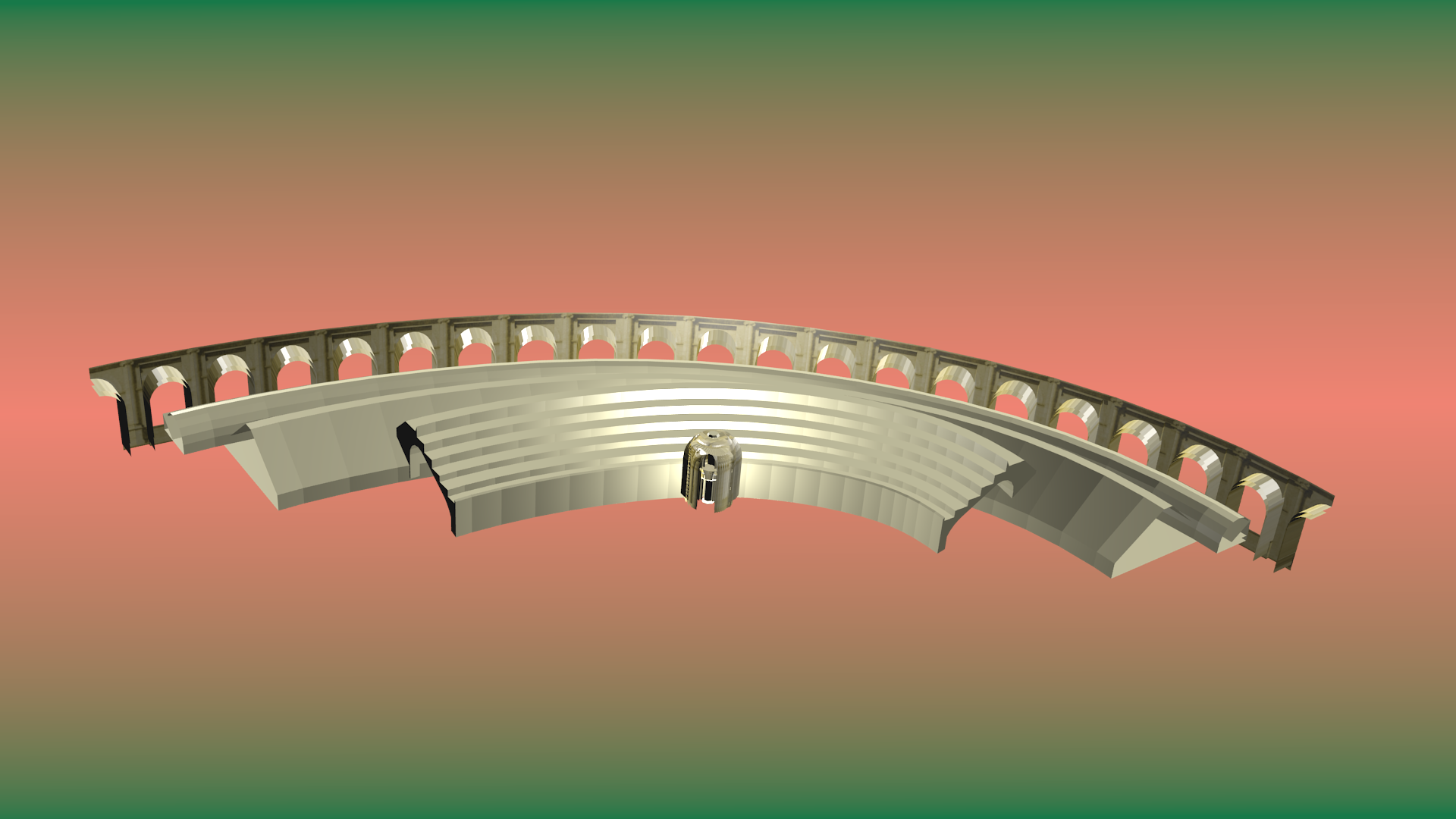
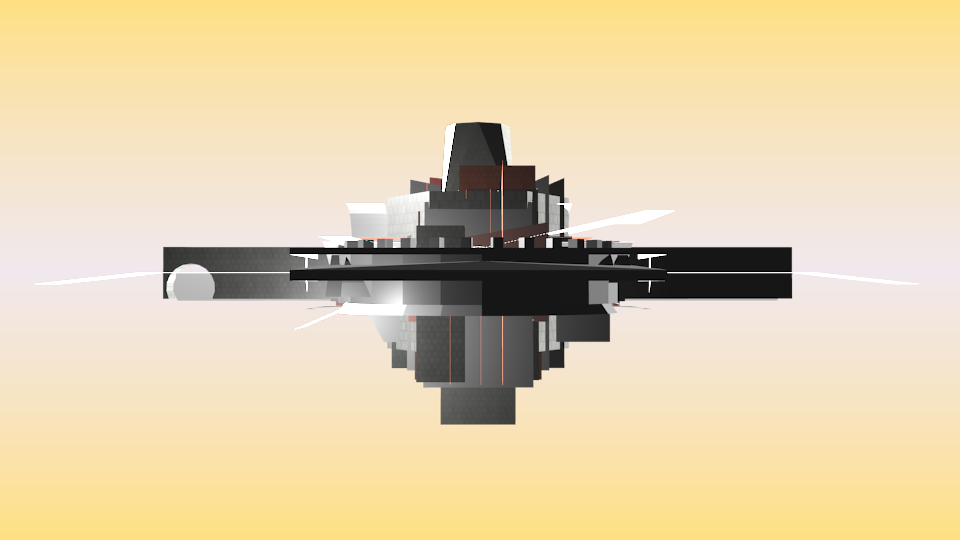
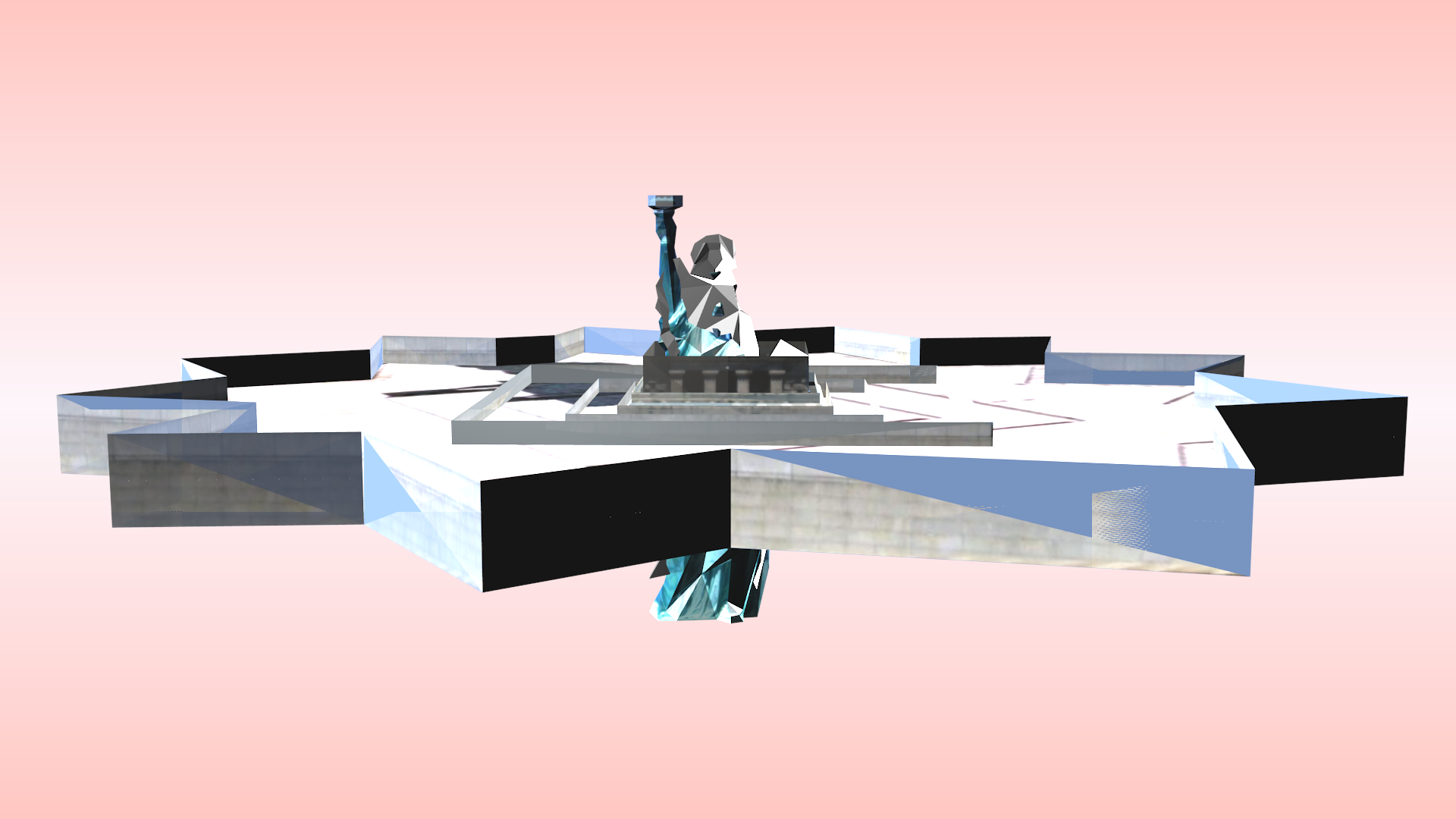
“What happens when all of the elements of a place exist in the same physical location? By changing the 3D information of a place from a proprietary format to an open one elements of each place were given their own origin point. Not something you usually want to happen. I exploited this glitch by moving the origin points to the (0,0,0) – the universal origin of 3D space. This is what happens when all of the parts of a place exist at the same point in space.”

Thomas Ruff

Installation-Ruff
TRDZSHOW2013_install03b-600x400
TRDZSHOW2013_install05-600x400
TRDZSHOW2013_install09-600x379
TRDZSHOW2013_install07b-600x400

Thomas Ruff

Work from ma.r.s.

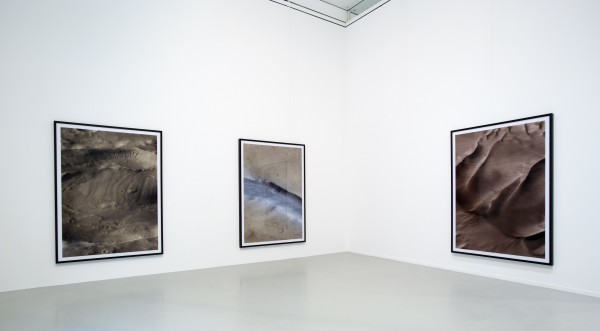
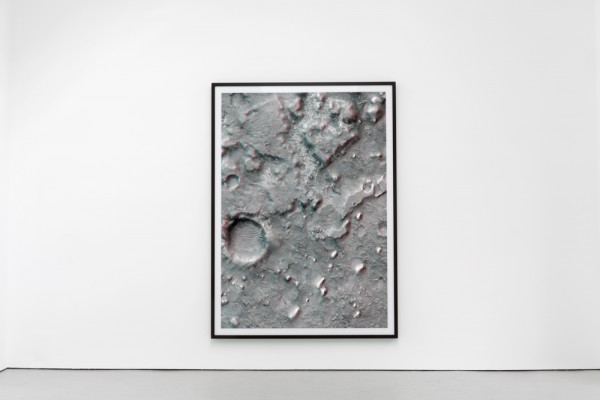
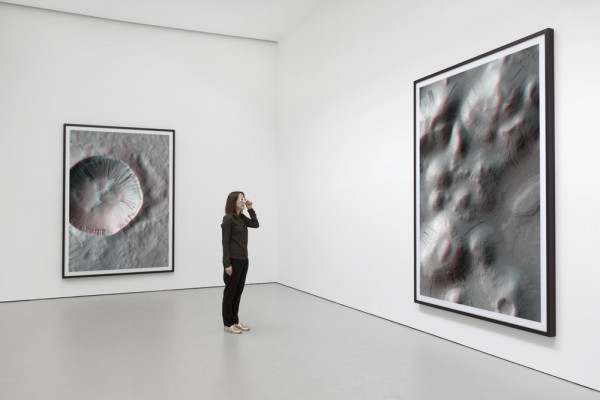
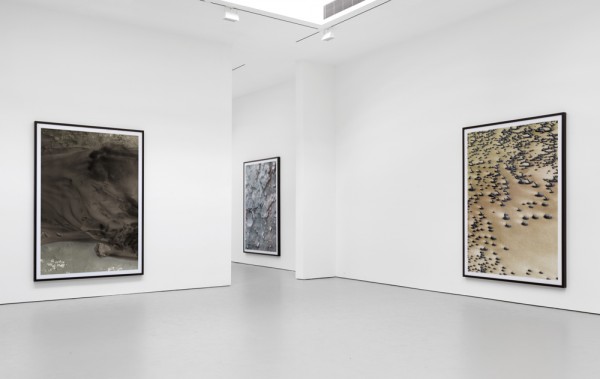
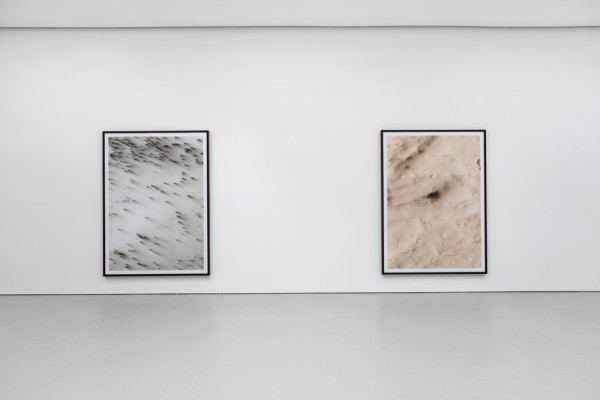
“The photograms series depict abstract shapes, lines, and spirals in seemingly random formations with varying degrees of transparency and illumination. Their compositions are reminiscent of artistic experimentation with camera-less photography in the 1920s, where objects were placed directly on photo-sensitive paper and exposed to light, creating white or gray silhouettes wherever they made contact. Cherished in particular by Surrealists, such photograms were governed by unanticipated light effects, allowing for the element of chance in the final result. Yet both the objects and the light in Ruff’s “photograms” derive from a virtual darkroom built by a custom-made software program, giving the artist more control over the outcome.

The works in Ruff’s ma.r.s. series, many of which will be on view for the first time, are based on black-and-white satellite photographs of the surface of Mars, taken by high-resolution cameras aboard NASA spacecraft (“ma.r.s.” stands for “Mars Reconnaissance Survey”). Studied by scientists for information about the planet’s geology and potential landing sites for future visits, these reveal extreme close-ups of the planet’s rugged surface, until recently unseen by anyone. Downloading the pictures from NASA’s website, Ruff digitally altered the images, changed the perspective, and added color. The resulting chromogenic prints transform the originals into visual statements that are at once documentary and fictional.

Robert Smithson

broken_circle
CRI_210214
OLYMPUS DIGITAL CAMERA
smithson_asphalt_rundown

Robert Smithson

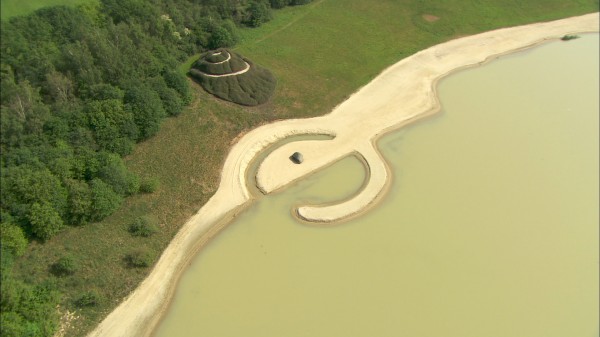
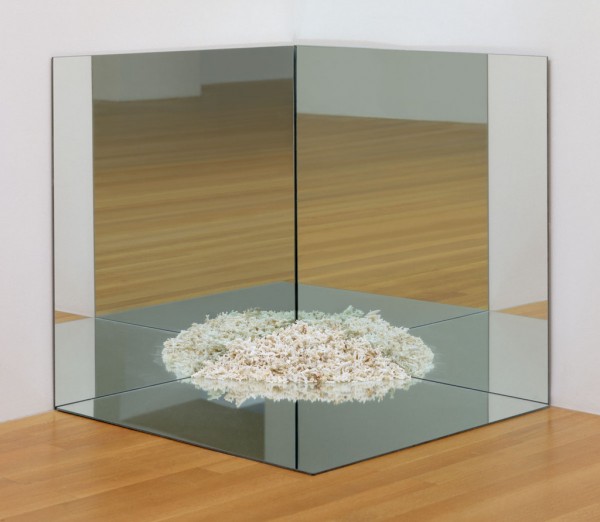
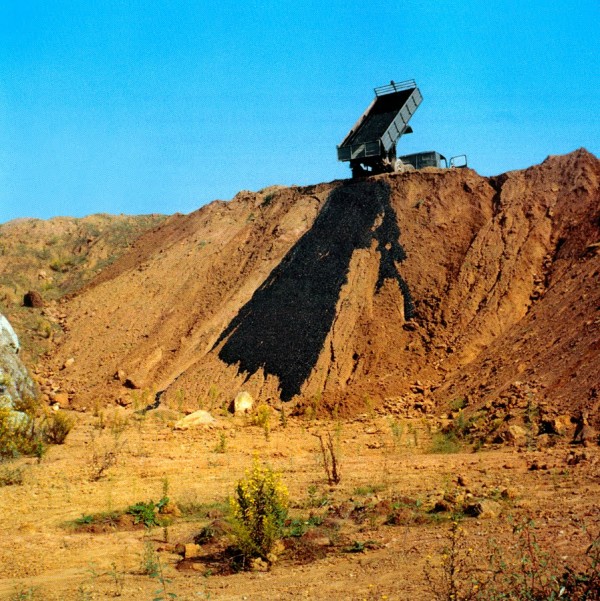
Work from his oeuvre.

“…Embodied in all of Smithson’s endeavors was his interest in entropy, mapping, paradox, language, landscape, popular culture, anthropology, and natural history. This is evident in works he created such as Heap of Language, King Kong Meets the Gem of Egypt, Enantiamorphic Chambers, A Nonsite – Pine Barren’s New Jersey, Yucatan Mirror Displacements, Partially Buried Woodshed, Asphalt Rundown and Spiral Jetty.

Entropy, was a theme that consistently ran throughout Smithson’s art and writings. He explored his ideas involving decay and renewal, chaos and order with what came to be known as his Nonsites and Earthworks. Smithson spoke at great length in interviews and essays on entropy and his notion of time. In Entropy and the New Monuments he wrote “…the urban sprawl, and the infinite number, of housing developments of the postwar boom have contributed to the architecture of entropy” and that “entropy is a condition that is moving toward a gradual equilibrium”. Partially Buried Woodshed, 1970, Kent State University, Kent State, was a piece Smithson created on site during an invitational arts festival. He located an abandoned woodshed and poured earth on to the structure until it cracked. This work is a prime example of Smithson’s visualization of entropy and time, leaving it to be “subject to weathering, which should be considered part of the piece”. This quote is from a statement Smithson signed when he donated the work to Kent State University.

Smithson developed a significant body of work that engaged complexity and oppositions: nature/culture (Aerial Map-Proposal for Dallas – Fort Worth Airport), language as material (Heap of Language), space and time (Spiral Jetty Film), monuments and the anti-monument (earthworks such as the Spiral Jetty), displacement and landmark (Map of Broken Glass, Atlantis). Mirrors were major elements in Smithson’s early structures and continued to play a major role in his later Nonsites and Displacements, begun in 1968. He said, “mirror in a sense is both the physical mirror and the reflection” it is “a concept and abstraction”… a displacement “of properties”…” – via robertsmithson.com

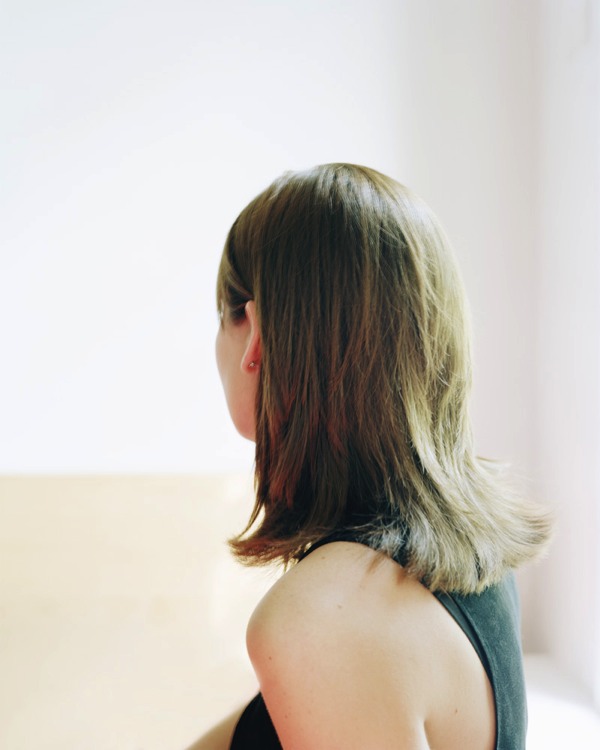
David Shoerner

stacks_image_4
stacks_image_4-2
stacks_image_4-1

David Shoerner

Work from After Gerhard Richter, Betty, 1988.

“Publisher and photographer Schoerner uses his camera as a tool in a conceptual art practice. In his serial project After Gerhard Richter, Schoerner plays upon the German painter’s photo-realist painting style by posing his sitters in homage to Richter’s painting of his wife Betty (1998). Richter’s original photo paintings, of course were rendered from photographs, a philosophical gesture stemming from the Pop Art era of the 1960s and onwards. Even as the artist engages in a programmed methodology, he cannot help but produce seductive portraits of relaxed bodies posed in natural light.” – Transformer Station