Saturday, 21 February 2009



Myoung Ho Lee
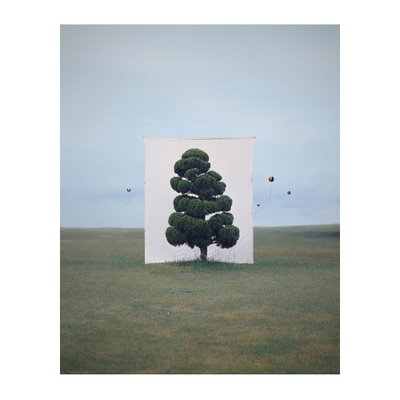
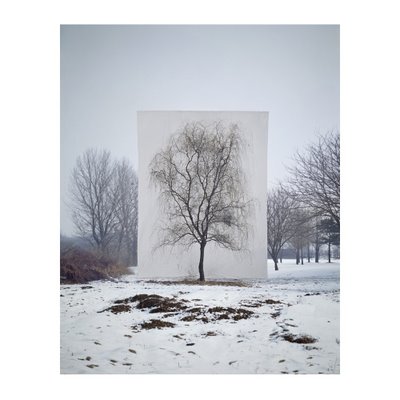
Work from the series TREE.
TREE is an intriguing take on the traditional landscape (and portrait). While isolating a tree for the photograph (with a large piece of canvas), Myoung Ho Lee also denies us a view of a significant portion of the landscape, gives an imagined view into his process, and provides a unique view of a tree removed from context. This work is both simple and complex, which really makes my day. On a side note, these remind me of some process photographs I have seen of Avedon’s work.
Tags: canvas, chinese, landscape, photography, sculpture
Posted in canvas, chinese, landscape, photography, sculpture, tree | No Comments »
Saturday, 21 February 2009



Rebekka Unrau
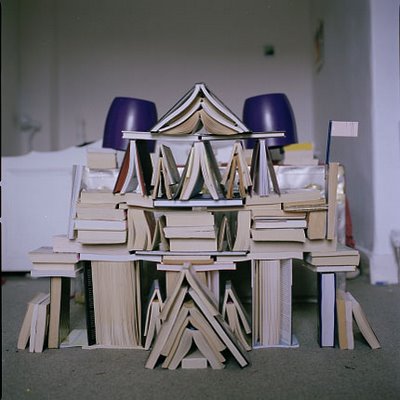
Work from the series Innerspace.
“‘Everything you can imagine is real’ Pablo Picasso
Set entirely in my bedroom, the sculptures photographed are symbols of exploration, ingenuity, and inspiration; all creative forces. Alone in my room I used only the available materials and light to investigate the potential of the materials, the space and of myself.
These photographs speak essentially of the universes we can create for ourselves. Set in a confined space they reach out past the limitations of the room to become metaphors for unlimited potential. The restrictions of the room represent those we see in our own lives, but like the room our own limitations are opportunities for creativity and discovery.
The quietness of the images reflects the private nature of discoveries one makes on one’s own.”
Found on i heart photograph.
Tags: photography, sculpture
Posted in photography, sculpture | No Comments »
Saturday, 21 February 2009


Barbara Probst
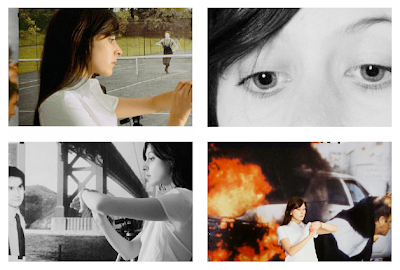
Work from the series Exposures.
“On January 7, 2000, at 10:37 PM, Munich- and New York-based photographer Barbara Probst first employed a technique that remains unique among contemporary artists. Using a remote-control device, she simultaneously triggered the shutters of twelve cameras strategically positioned around a New York City rooftop, and the resultant set of poster-size prints—in which Probst, her cameras and tripods, and the nourish urban scene all figure equally as subjects—anchored her last solo show at Murray Guy in 2004. The Rashomon-like multiplicity of perspectives synthetically prolongs the cameras’ “decisive moment,” and this clash of temporal registers was the exhibition’s most salient quality. For this show, consisting of eleven photographs constituting four artworks, Probst added emotional nuance and referential complexity to that first multipart “exposure.”
Exposure #36: Studio Munich, 09.26.05, 2:34 p.m., a five-part work that alternates black –and-white and color prints, unsettles one’s sense not only of time but also of space. Viewing the photographs sequentially, one initially assumes that the young woman in a red sweater, her hands held up near the right side of her head, is standing outside, in or near a park. The second image, shot from behind the woman, exposes the artifice implied by inclusion of the word “studio” in the title: Here one sees, behind a camera on a tripod, the contours of a room with floor-to-ceiling windows. The third frame peels back yet another layer of the construction, revealing the greenery in the background of the first picture to be no more than a studio backdrop. The fourth shot plunges one back into a conceivably “realistic” space (the grain of the photograph merges seamlessly with that of the backdrop), once again giving the impression that the woman is outside, this time on a street in New York’s Chinatown. The final photograph is a close-up of the woman’s face.
But of course one doesn’t view these images consecutively. Instead, the successive revelations encourage the eye to ping-pong between the prints, picking out details overlooked in the first pass. One gradually assembles a mental model of the depicted scene, pairing each camera with the images it has captured. But there remains an estranging detail, noticeable only because of the enlargements’ imposing size: The presence of a young boy lying on the studio floor, his head and an arm visible in the bottom right corner of the third print. This returns one to the background of the first print: The park scene is naggingly familiar because it was lifted from Michelangelo Antonioni’s Blowup (1966). (Exposure #37: N.Y.C. 249 W 34th Street, 11.07.05, 1:13 p.m., with its fashionably dressed, supine protagonist ogled by a plethora of lenses, evokes the studio scenes in that film, but to different effect.) Probst’s deconstruction of the photograph’s veracity—which, in these multipanel works, evokes cinematic precedents in both atmosphere and presentation—literally encompasses a fragment of a classic film on the same subject.
The other photographs in the show, all diptychs, hint at the complexities, temporal and otherwise, lodged in Exposure #36. These photographs evoke Christopher Williams’s photographic deconstructions and Eadweard Muybridge’s time-lapse studies. But Probst’s fruitful investigation of photography’s characteristics (and the operations of human memory) distinguishes her from both precursors and peers.”
–Brian Sholis, ArtForum May 2006.
Tags: awesome, conceptual, german, meta-photography, multiple images, photography, self-referential
Posted in awesome, conceptual, german, meta-photography, multiple images, photography, self-referential | No Comments »
Friday, 20 February 2009


Julian Montague
Work from the project Stray Shopping Cart.
“The Stray Shopping Cart Project is an ongoing work that began in 1999 as a two page spread in the seminal Buffalo, New York zine Basta! (see PUBLICATIONS). In the beginning the System was comprised of 13 Types, only a few of which would be familiar to a user of the current System. Shortly after publication in Basta!, I did an installation at a one night only art event that involved retrieving six carts from Buffalo’s Scajaquada Creek (I recently made new work about this body of water, see SITE STUDIES), and hanging them from the ceiling, still encrusted in mud and vegetation. An accompanying looping slide show depicted the carts in the situations in which they were found.
After the installation I did almost nothing with the idea of stray shopping carts until Spring of 2002, when I was asked to do a solo show of my shopping cart work at Soundlab in Buffalo. In preparation for the show I took hundreds of new photographs and discovered many new aspects of the stray cart phenomenon. The result was a significantly expanded System. The process of refinement and expansion has been repeated several times over the last four years.
The present System of 11 FALSE STRAY Types and 22 TRUE STRAY Types was arrived at in 2005 during the preparation of the book version of the project, The Stray Shopping Carts of Eastern North America: A Guide to Field Identification. The book will probably end up being the definitive version of the System.
It is unclear where and when the project will end, I am currently working on a completely new (very different) project that I’m hoping will be similar in scale to this one. While I am not currently spending much time documenting carts, I remain open to the idea of doing Site Studies in new places if it is in conjunction with a show.”
Tags: classification, conceptual, methodology, photography, pseudo scientific process
Posted in classification, conceptual, methodology, photography, pseudo scientific process, themiatic | No Comments »
Thursday, 19 February 2009
Packard Jennings amuses me. He has collaborated with Steve Lambert and his work was also included in the Shopdropping exhibition from the previous post.
Here’s some pages from a “
Welcome to Geneva” pamphlet produced to put in random public locations in Geneva, Switzerland:
Packard manufactured a
Mussolini Action Figure, which he shopdropped at Wal-Mart, and then successfully purchased. Since the bar code didn’t work, the cashier had to manually enter “Mussolini” and a price of $5.00 to sell it to him.
He does a similar shopdrop and purchase of an
Anarchist Action Figure at Target, and there’s some really great video of the manager struggling to figure out how to handle the toy.
Tags: commercialism, conceptual, humor, interaction, irony, parody, shopdrop
Posted in commercialism, conceptual, humor, interaction, irony, parody, shopdrop | No Comments »
Thursday, 19 February 2009

Steve Lambert‘s
Add-Art plugin for Firefox replaces Ad’s in your web browser with curated art images. The images are updated every two weeks and features young contemporary artists and curators.
I came across his work for the first time with the
Shopdropping exhibition curated by Pond Gallery in San Francisco.
He also has great drawings & interactive projects:
And revealing honesty:
Tags: commercialism, conceptual, humor, irony, parody, participation, performance, shop, shopdrop
Posted in commercialism, conceptual, humor, irony, parody, participation, performance, shop, shopdrop | No Comments »
Thursday, 19 February 2009

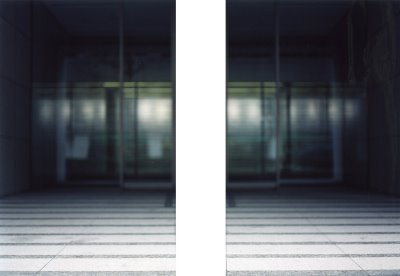


Takashi Suzuki
Work from the series Altus. I am drawn to this work in the same way I am drawn to all out-of-focus work at the moment, mostly due to the tension of wanting to see, and being unable to see (and because my current work is out-of-focus.) Suzuki’s images were not hard to find, but there weren’t nearly as many as I would have liked to see, and they are sprisingly affordable. If anyone finds more, please email me.
*Interesting note – All photographers that I know (except for two) of that shoot out-of-focus work either were born or educated in Germany. Any ideas?
Tags: awesome, blur, japan, out of focus, photography, photoparis
Posted in awesome, blur, japan, out of focus, photography, photoparis | No Comments »
Thursday, 19 February 2009


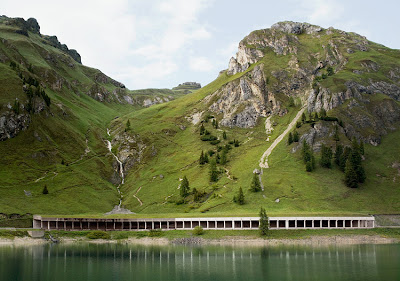
Georg Parthen
Work from the series Landschaften (landscapes)
“Landschaften is an ongoing work about the relationship of reality and its image. Digitally altered or constructed photographs of implausible landscapes.
For the project I take photos and detailled photographic studies from which I later create images that range from slightly altered to complete digitally composed photographic images. Through retouchting, digital lighting and/or montage I create interpretations of beautiful yet disturbing landscapes. It is important that viewers cannot point their finger on the manipulations but at the same time feel arising doubts whether the world shown on the images can be trusted.”
Tags: altered, conceptual, digital, german, landscape, manufacture
Posted in altered, conceptual, digital, german, landscape, manufacture | No Comments »
Wednesday, 18 February 2009

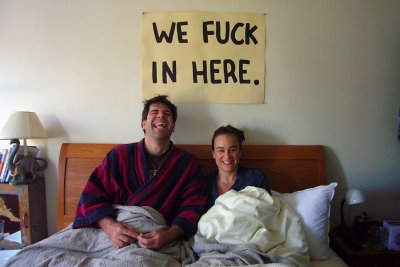
Dora García poses some interesting questions in her piece, “The Sphinx“. How will you answer?
Tags: conceptual, digital
Posted in conceptual, digital, web-based art | No Comments »








.jpg)


