Everything is Anything Else

EiAE_2 EiAE_3 EiAE_1 EiAE_4 EiAE_8 EiAE_10 EiAE_5

Everything is Anything Else

Work by Jason Lukas, Zach Norman, and Aaron Hegert
at Third Party Gallery opening reception Aug. 3rd

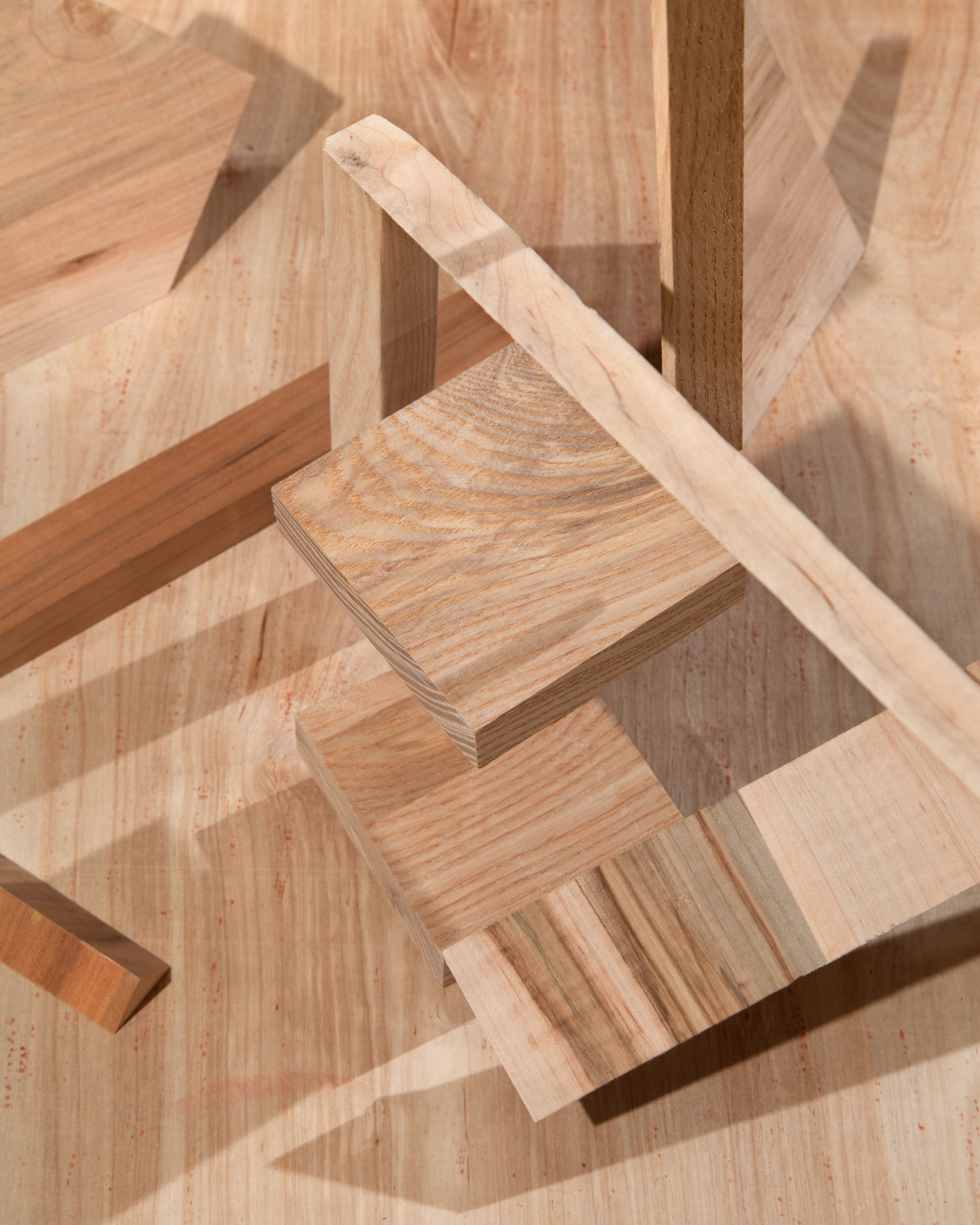
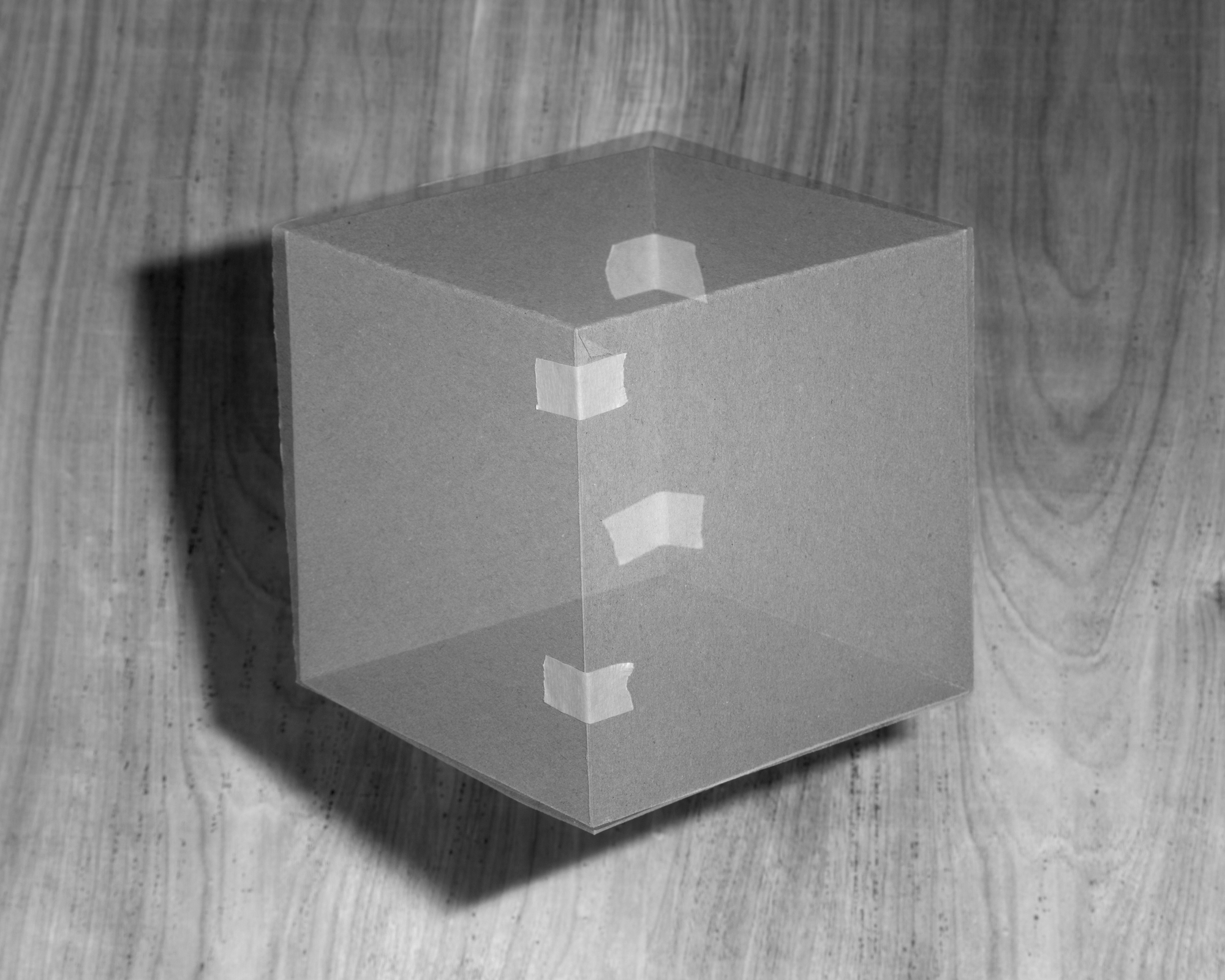
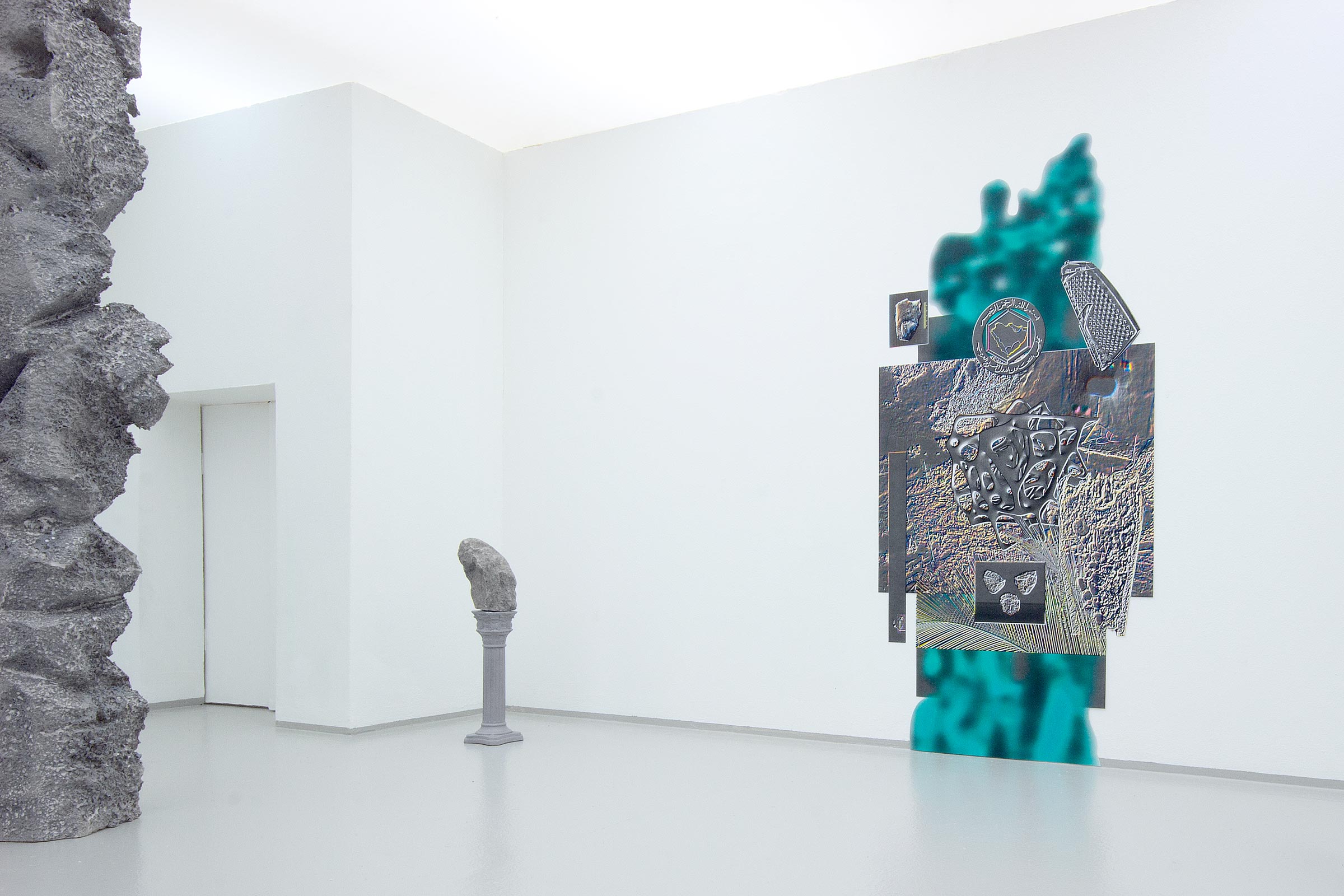
“Everything is Anything Else, the forthcoming exhibition of photographs by Jason Lukas, Zachary Norman, and Aaron Hegert, is a closed circuit exploration of the conditions and possibilities of photography in the contemporary moment. At the beginning of summer 2013 we began a collaborative and dialogical process of image making that was guided by a simple notion: that every aspect of the contemporary photograph is constantly in flux. Its materiality, its indexical qualities, its context, its content, its believability, its permanence and proliferation are always in question, unstable, and subject to easy manipulation by both its producers and consumers alike. This condition has only intensified in the post-internet age. Though these conditions are frequently observed and considered by many, and many more capable than us, the goals of this project go beyond an observation or critique. As image-makers ourselves, we wanted to develop a participatory model, a process that could open up questions about what a photograph can do, how we see it, what perceptions it can cause, and what actions these perceptions can cause in turn.

We began the process by making quotidian images. The subject matter being essentially arbitrary, our only real desire was to make images of objects and places that would appear vulnerable: vulnerable to multiple trajectories of association, multiple interpretations, multiple lines of flight. These initial images have been circulated between us, made and remade. Each image presented here exists in flux between multiple instantiations. Each iteration contains some elements of the previous iterations, either formally or materially, while other elements have been replaced or left behind entirely. The process has become obliterative. The specific cultural information within each image has been stripped away or negated. What is left behind is a base catalyst, a fundamental interest, a visual alchemy, a map of trajectories; a synopsis of the uncanny drawn out of everyday life. The works presented in Everything is Anything Else are not finished pieces or an end to our process, but merely a pausing point to invite the public to engage in this dialogue along with us.”

Nick Bastis

NickBastis5 h2 NickBastis15 NickBastis12 h8

Nick Bastis

Work from The World’s Largest Pistachio

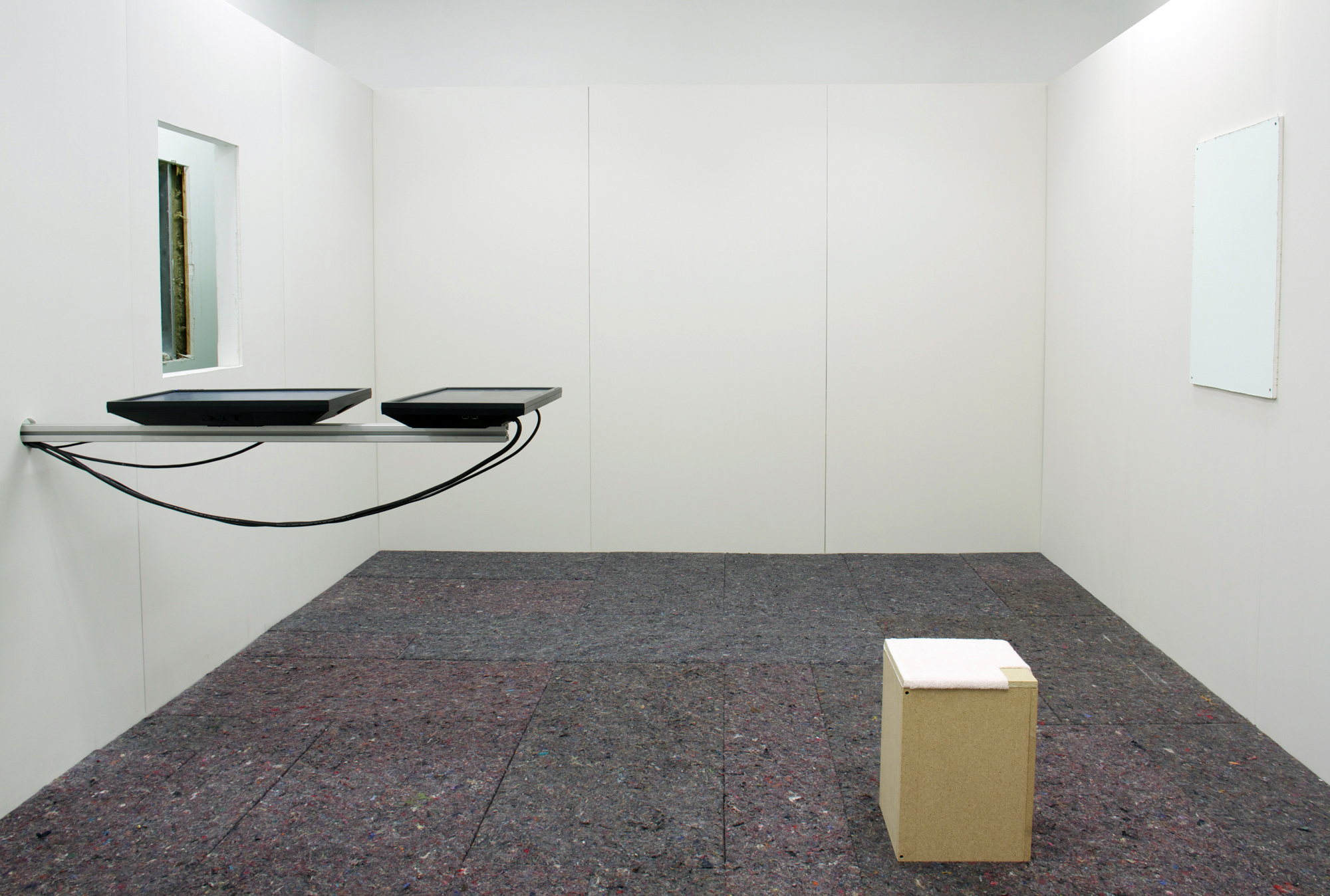
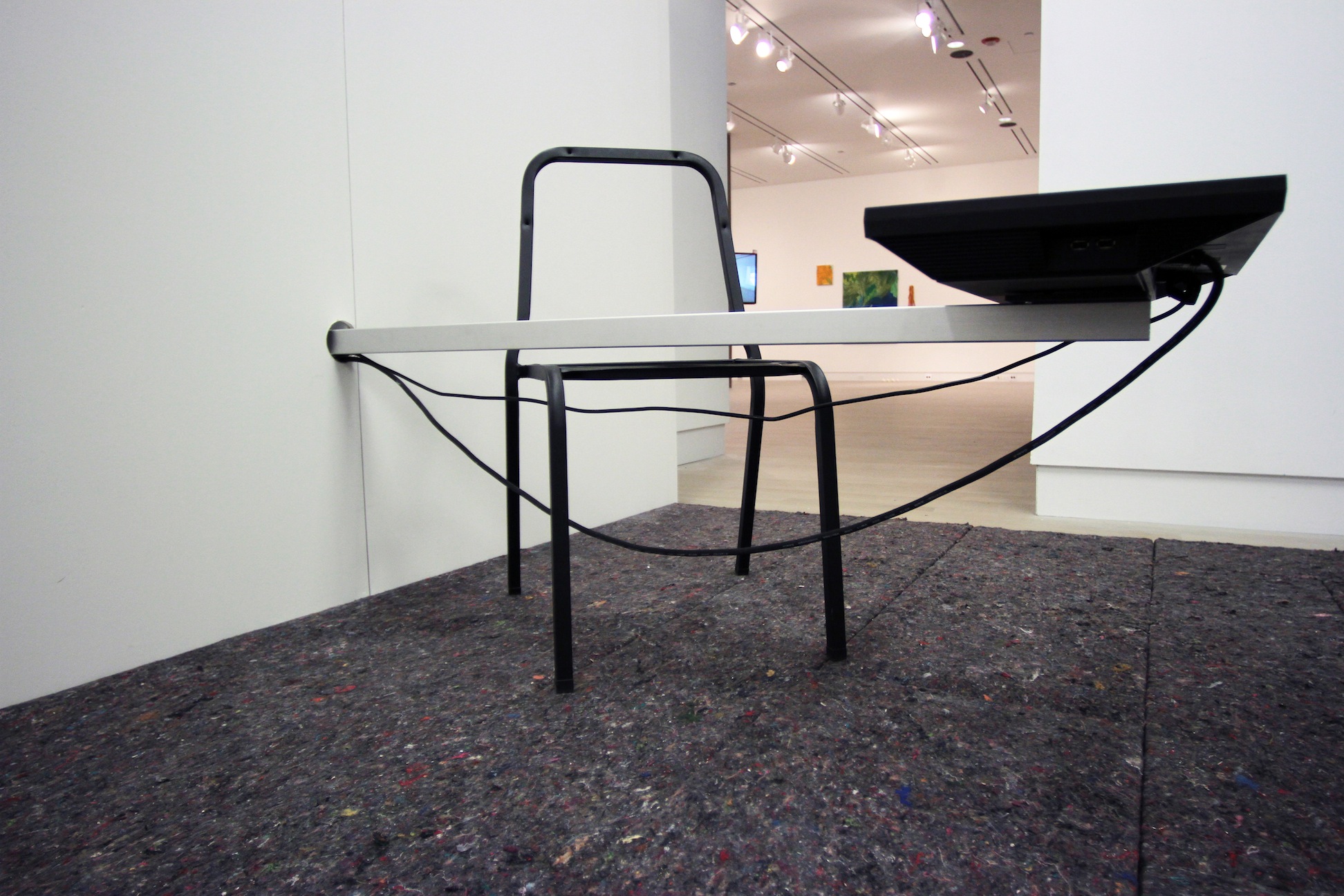
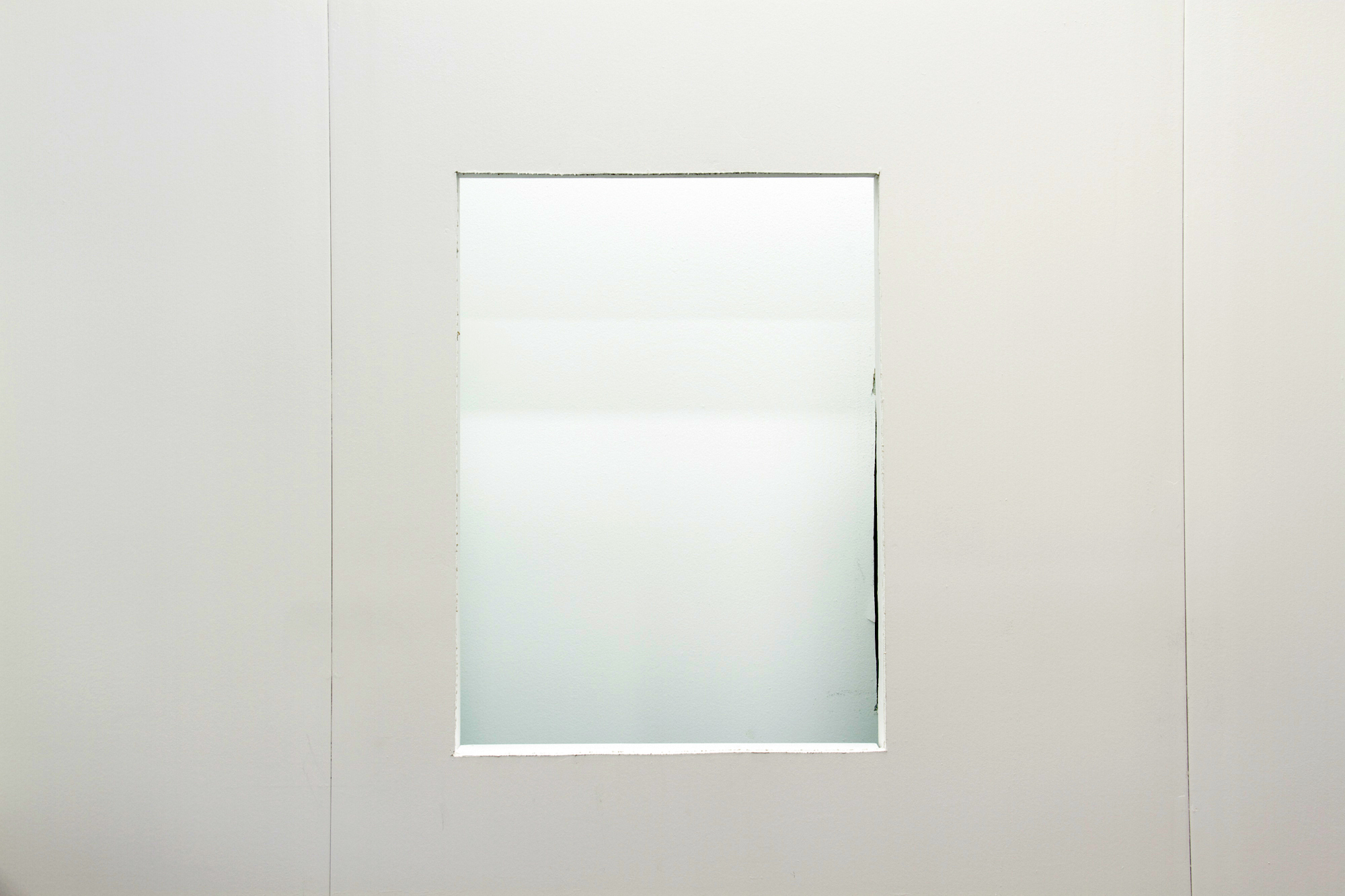
“A room built inside a room, posited as a sculpture. The room can be entered and also circumnavigated through narrow alleys. A three channel video presents text and images, also acting as a script for performances or “readings” that occurred at times during the exhibition. Large windows are cut in both the newly built room as well as the existing gallery wall, revealing a large 200 sq. ft. unused space behind it. The piece of drywall removed from sculpture’s wall is hung as a blue painting, the color that the back of the wall had been painted. The speaker is hooked up to a drum machine behind the security desk with which they report their already occurring body counts of the occupants of the room.” –Nick Bastis

Rachel De Joode

Screen Shot 2013-07-26 at 6.15.41 PM Screen Shot 2013-07-26 at 6.15.28 PM Screen Shot 2013-07-26 at 6.15.56 PM Screen Shot 2013-07-26 at 6.16.07 PM Screen Shot 2013-07-26 at 6.16.19 PM Screen Shot 2013-07-26 at 6.16.45 PM

Rachel De Joode

Work from Various Qualities To Orbit The Mysterious Core

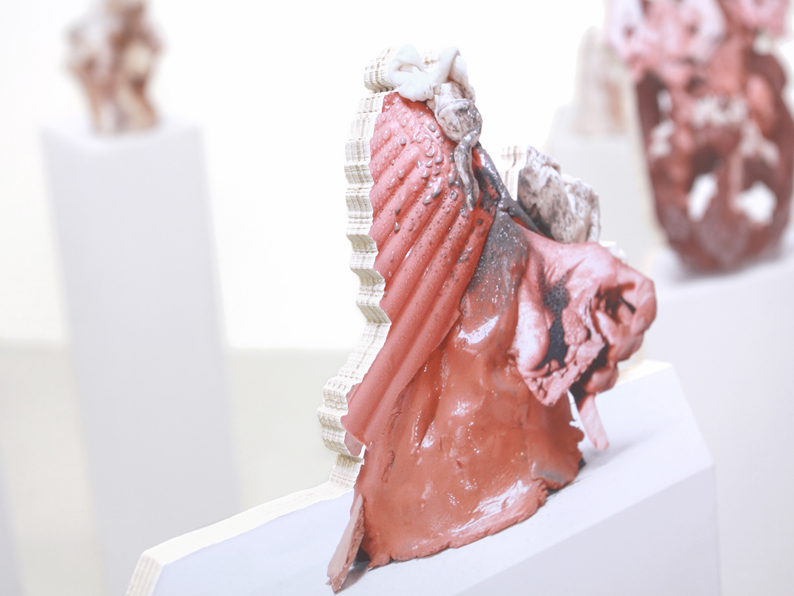
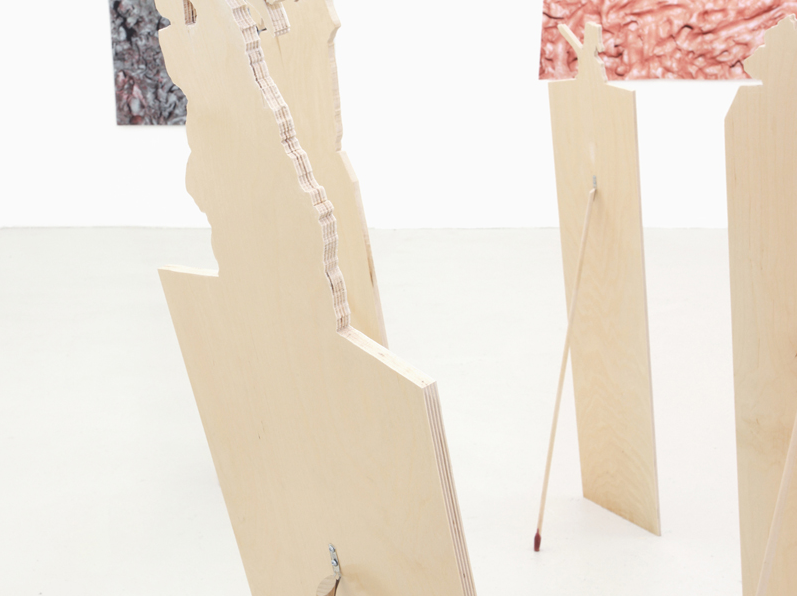
“Installation of a group of eight photographic sculptures.
The pedestals are printed, rather than produced as volumetric shapes, and the sculptures that sit on them are no thicker than the wood they are mounted to.

The sculptures are photographs of sculptures resting on pedestals; the original sculptures consist out of print out (cut-out) photographs; of partly manipulated fingers and hands that are molding clay. Other materials include: fake wood, real wood, terra cotta clay and pottery pieces, plastic terra cotta pieces, dough, plasticine, puff pastry, water, paint, glue, pigment, cement….

Measurements vary between 30 cm to 45 cm in width and 130 cm to 150 cm in height. The complete installation is about two meter in width, three meter long and one and a half meter in hight.

Materials: stick, rubber, fine art print mounted on laminated plywood (cut out by hand).” –Rachel De Joode

Owen Kydd


Owen Kydd

Work from his oeuvre

“Aperture: How did you arrive at the concept of “durational photographs”?

Owen Kydd: I was thinking about the differences between cinematic moments with photographic qualities and static images with time added and decided that “durational” applied more to the latter. The idea of duration as “incomplete time” seemed to be a way of categorizing a flow of pictures without relying on models drawn from cinematic discourse. It was not a direct challenge to the definition of cinema—my work would likely fall into a strict definition of that category—but a way of proposing the possibility of undoing the time signature of the photograph. Whether a snapshot or a tableau, a photograph denotes the flow of time by its very lack of duration. It reveals the possibility of two types of time, one that is frozen and one that is always mobile. I am trying to reverse the typical effect of the still photograph, to ask people to think about creating stillness out of duration. It’s a performance of photography that I don’t think occurs so readily in the narrative activity of cinema.

AP: Photography’s evolution has always been determined by technology and your work reflects the fact that many cameras can now shoot both stills and video.

OK: That’s exactly it. I started making this work in 2006, when still cameras began to include decent video options. It seems so normal now, but I think when we look back at this development it will be seen not only as a democratization of filmmaking, but also as a considerable marker in the history of still images. In addition to these hybrid cameras, flat screens with resolution that made video look photographic became affordable. Before this people had to rely on projectors, which meant a darkened room, and, even in the gallery space, that’s cinema. It was really in about 2005 or 2006 that technology allowed duration to be a constant variable. I was hoping my project would retroactively define certain conditions of still photographs while actively reversing the absolute time of the photograph.

AP: Can you talk more about what you wanted to explore about “the conditions of still photographs”?

OK: I was looking for a set of “static” conditions that would make something look like it was in the middle of being photographed, even when in motion. That’s a difficult effect to categorize, and I decided that instead of directly trying to reproduce a set of photographic circumstances, I should start by confronting things that I found limiting in photography. I guessed that I might find this in the some of the clichés of the medium; for example, I started with straight or documentary photographs because they were problematic for me as still images. I wanted to know if adding time could allow me to avoid some classic presumptions associated with the documentary form yet still make good pictures. I was asking questions: if the subject of a photograph moves, can I say I’ve captured something decisive? And if not, can I create an image that continues to hold this type of charged moment?

AP: What was problematic to you about documentary images?

OK: It’s a big category and difficult to define, but I could say that certain photographs which claim to report the real have always had difficulties on some level. But luckily all photographs contain cells that eventually disrupt the certainties that were originally ascribed to them. I wondered if I could accelerate this process by changing the temporal status of the image enough to create a tension, or distance, between subject and viewer that would make us think about documenting in a more fluid form. The snapshot street image seemed like a good place to start because it is understood as the most instantaneous type of photograph.

AP: But many of your works are well-planned still lifes, not snapshots taken on the street. How does duration relate to the still life form?

OK: There were instances I felt like I was creating a camera-based “street” picture without a decisive moment, where I found a version of stillness that expressed an event. But there were other times when I felt duration trapped the subject in a succession of static moments that mimicked a more traditional search for the “essential” and did little to create the tension I was seeking. Ultimately though, I was learning about what made durational photographs work—different things that resisted the need to close the shutter just once. These were found in subtle temporal and atmospheric effects such as the movement of air and light, or materials and surfaces I was using—plastics, inorganic reflective surfaces, objects that had a trompe l’oeil or ambiguous appearance on the video screen. I brought back a collection of these elements to the studio to be assembled and filmed.

The most important thing for me, aside from the instrumental control that a studio offers, is the way it introduces a present tense. The studio erases temporal markers. I wanted to record the present-ness of the studio, possibly to ensure that there was even less chance of interning an event, but perhaps also to confuse the experience of viewing. I have been asked if my studio images are live feeds from another location, which I hope is a clue that something irregular is occurring.

AP: There is a sense of “crime scene” in some of the images—the atmosphere, the sense of oddity …

OK: I am both documenting and remaking storefronts from Los Angeles as a way of performing classic photographic subject matter; storefronts have been a consistent subject for wandering photographers like Atget, Walker Evans, or Lee Friedlander. I found window displays on Pico Boulevard that clearly hadn’t changed in years and that were lit all night, which is mostly when I filmed them, without pedestrians and only the traces of headlights in the glass. It wasn’t quite clear what many of the stores were selling—a florist selling party supplies and trophies, for example, and stores with the word “museum” in their name. Maybe it’s also the imagined history of L.A., but instead of Atget–like scenes, these locations took on a noir effect, meaning they still felt like the crime hadn’t been committed. A key to noir is the separation of subjects from the world around them through the contrast of light and dark, and this contrast helps create sense of distance in the picture, providing a tableaux effect.

AP: In terms of the concentrated looking and observation involved in your durational photographs, I’m wondering about how experimental filmmakers—people such as Michael Snow, Peter Hutton, or Andy Warhol—have been a point of reference for you.

OK: I am in debt to expanded cinema and works like Empire, Wavelength, or James Benning’s films, and the last eight minutes of Michelangelo Antonioni’s L’eclisse, for making moving images appear as if they contain still photographic moments. But with most of those films, the viewer is always located in the same space as the work; there is a projector behind you, and a beam of light that situates you physically within the process of forming the image on the wall in front of you. And I should make the point here that even if you are able to watch these films on an LED screen today, they were initially constructed for projection in a darkened room. I chose flatness as a parameter in my work, and am thus bound to a form of picturing. Fiona Tan’s monitor portraits and David Claerbout’s slide shows, even though they are mostly projected, operate in a similar field. Essentially, I think that if the photographic instant has been aligned with the conditions of modernist pictorial space, then its inverse performance should share similar concerns with surface, distance, and time.” -Interview With Aperture

 

Jeff Thompson

Screen Shot 2013-07-26 at 1.37.05 PM

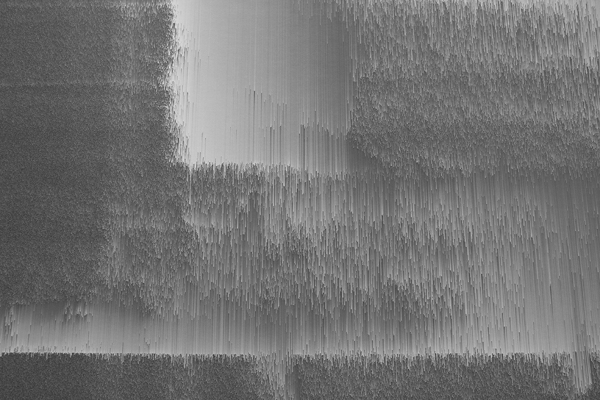
SortedRandomHexColors_detail

Jeff Thompson

Work from Random Hexadecimal Colors, Sorted Numerically

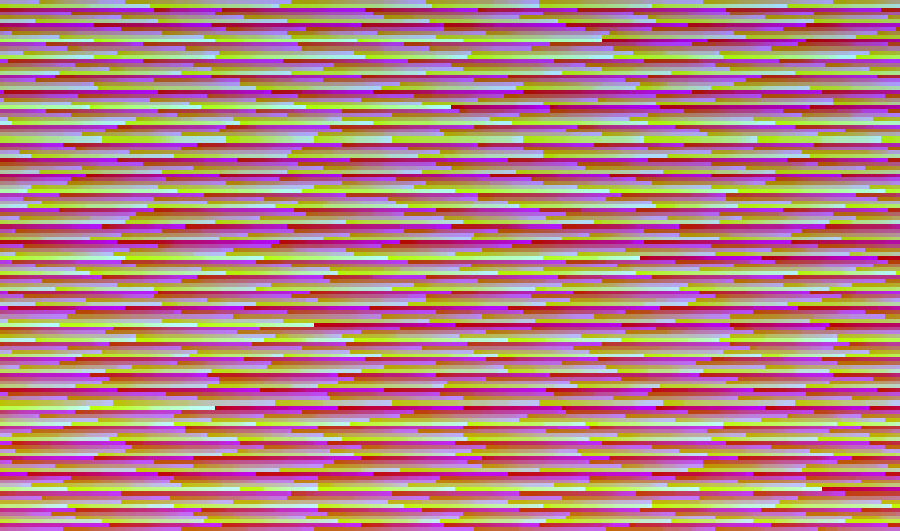
“Each frame, a set of 2,073,600 (or 1920×1080) random hexadecimal color values are created, sorted numerically, and drawn to the screen. Values range from #000000 – #FFFFFF (black to white), with all possible colors in between.

Frames are created using custom software, which are exported and rendered to video. While for each frame the overall pattern stays essentially the same and undergoes the same sorting process, because of the shifting changes with each random set of pixels there is a subtle shift resulting in washes of intense color.” –Jeff Thompson

Ryan Perez

hd_7f22b400708587a9104a5c2084b83c6b hd_f51ebe8cdac90930debf5bf7905dd355 hd_fe00a6b8a3a0450a42bf270121d22d69

Ryan Perez

Work from B.O.G.O. Vision

“There are three pieces in the series, each using color and form to play with symmetry and compliments: the pink and green set are abstracted lean-tos in a light watermelon scenery, one set sees purple and yellow backdrops with artist’s frames that serve as structure for a building, and the final places an explosion of frames on orange and cyan. They each have this playful sophistication to them from the use of color and the way the “artist frames” are used. They certainly are a take on the idea of “buy one, get one,” a funny notion considering they are a series of art pieces (not shoes or candy bars): you get two of the same artworks for the price of one look.” –Los Angeles I’m Yours

Media Lab

6676589117_126a2c9c19_zMedia Lab at LASALLE TRIANGULATION BLOG 08 6676594457_7b3367c9486676810343_60a865d365_b

Media Lab

Work from Shift

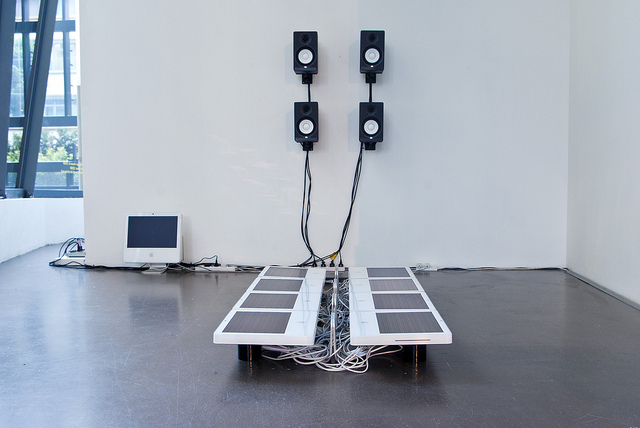
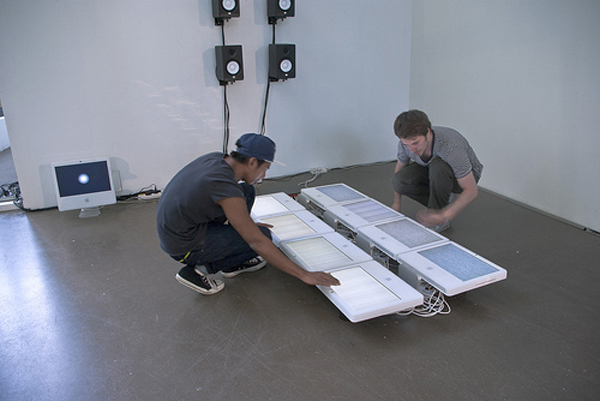
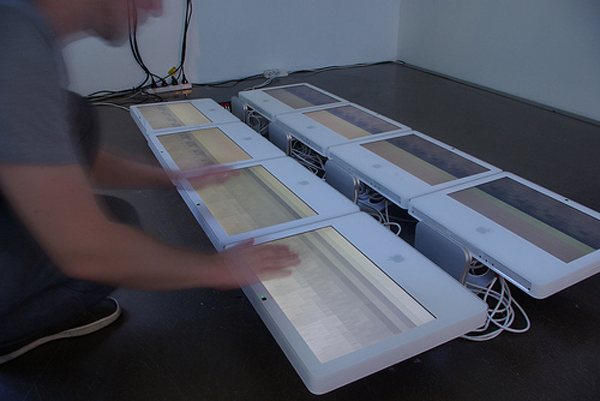
The algorithms are shaped by Andreas Schlegel, Benson Chong, Darrick Ma, Dhiya Md, Felix Sng, Marvin Liang, Mike Chen, Sid Lim.

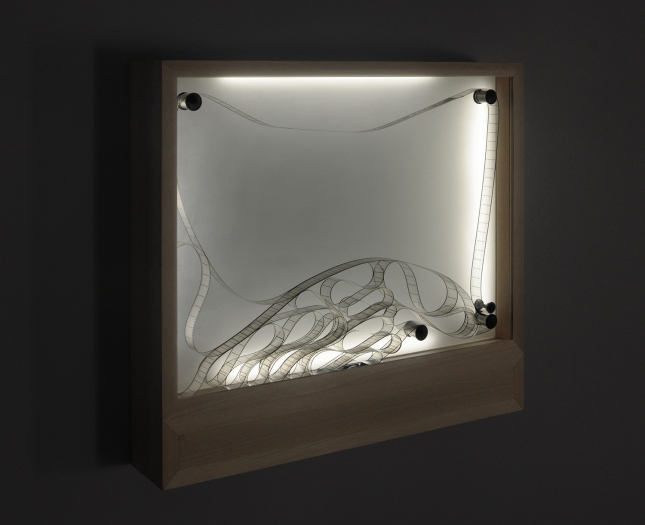
“Shift is an array of machines shifting bits and bytes informed by simple and highly repetitive algorithms. Shift pays attention to its environment through the ever-watchful eye of a built-in camera and responds to movement. Changes in state are expressed through audio and visual abstractions.

During the exhibition, the audience was able to interact with Shift through the build in web-camera of each individual computer. Activity sensed by the camera would result in visual and audible changes animating the audience to further explore the underlying system of the work through different forms of gestures.

How did the software work? To get started, Andreas prepared a software template, a sketch, that would be used by each individual member of the project. By tweaking and changing parameters and the structure of the software code, new and different mutations of the initial program would emerge. We ended u choosing 20 variations to be displayed. In the next step interactivity was added to the sketches. Since each computer that we were using was equipped with a web camera, we added a code that would allow us to capture, analyze and translate the camera feed into an additional parameter for our sketches.” –Media Lab
via Triangulation

Rene Mäe and Norman Orro

3-Exxon-Elite-Entity-with-Adidas-Retro-Oil-Spills1-1199x800@2x  2-suurem-1200x800@2x 6-Osseous-Analysis-1200x800@2x 7-Portable-Globe-1200x800@2x 8-1198x800@2x 9-Ambassador-uus-1200x800@2x

Rene Mäe and Norman Orro

Work from Xenotica, Excavation, Exegesis, Exopolitics at Konstanet

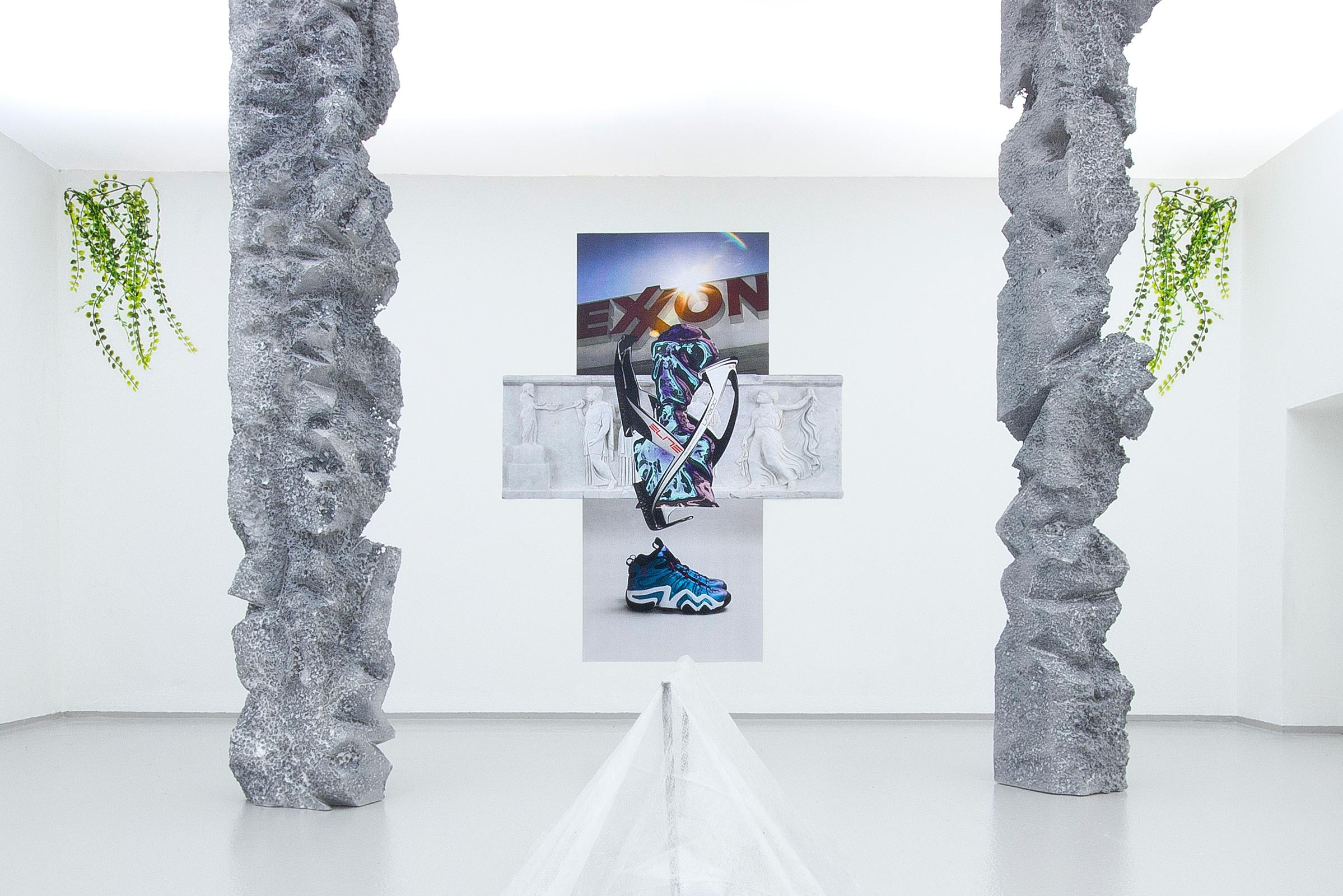
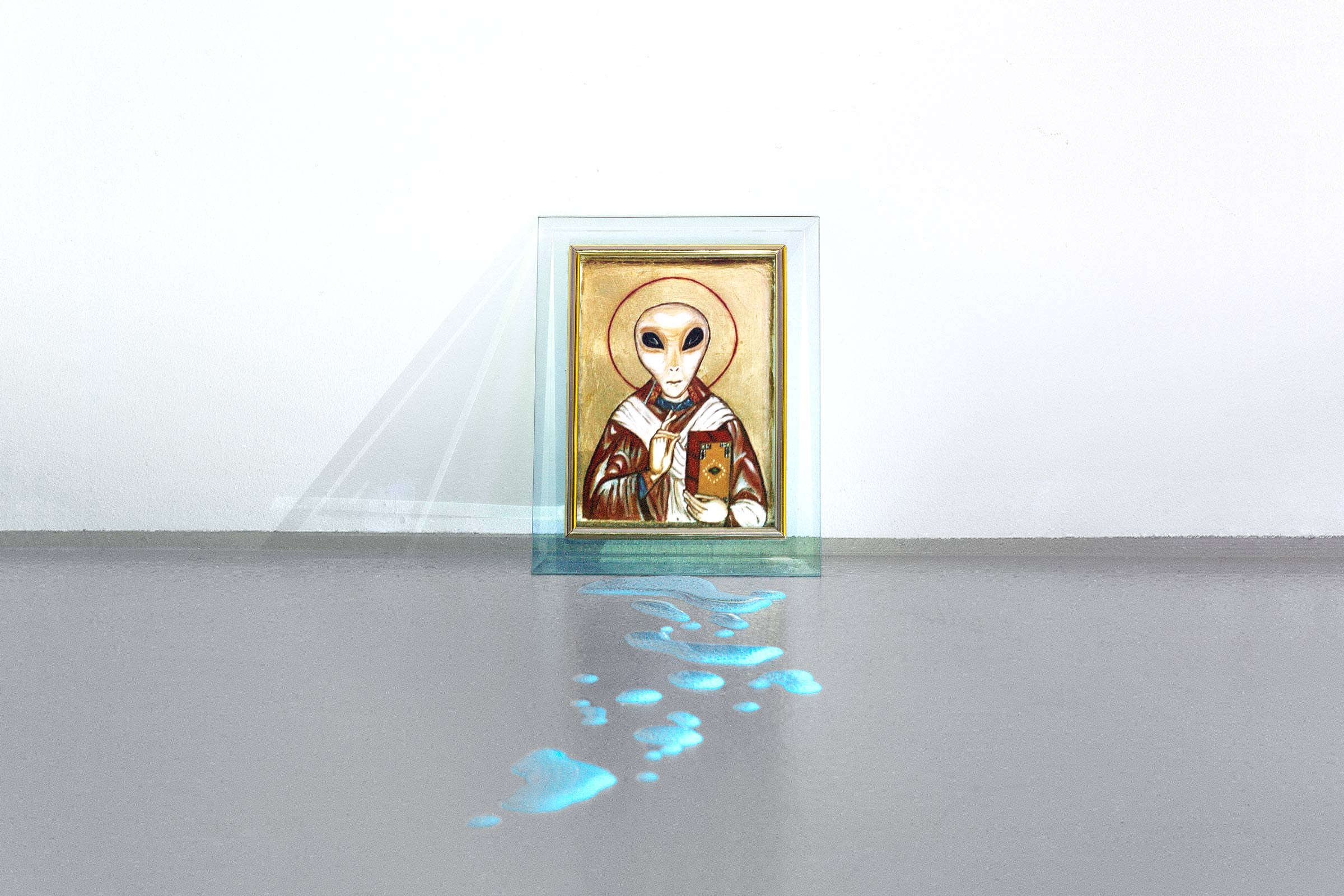
“During the last two years the village of Katonah has been the hotspot for Exxon, ConocoPhilips and others to look for new sources of oil. In the course of excavations new non-human osseous material has been discovered”, professor of archaeology Peter M. Goldingen argues. He notes that some of the archaeological findings are now investigated by Exxon (and possibly others) with the purpose to “alleviate the current financial and energetic crisis” in the energy industry.1 The exegesis of Exxon’s recent frisky maneuvers suggest xenomorphism as the central term for illuminating the crucial ingredients of the current phase in its morphogenesis. Having recourse to cognitive xenoarchaeology and xenofuturology the following is proposed.

Anthropomorphism is gradually displaced by xenomorphism. When Xenos is employed as Exxon’s brand ambassador, anthromorphism’s affection to localize the strange will be replaced by xenomorphism’s tendency to first estrange but eventually eliminate the concept of locality and strangeness in its entirety. There will be a sudden turn to xenomorphism as a central term for describing and maintaining the essential closeness of humans and their non-human and particularly xenos others.

Whereas greater attention is being paid to xenoarchaeological aesthetics, the parallel move towards the establishment of xenos ethics and thus xenos rights will necessarily begin. Xenos is thus the epitome of xenos rights (in contrast to human rights) of all prospective brand ambassadors and the related.

In the present exopolitical phase mascot will be replaced bytotem, meaning that while Xenos first acts as totem (e.g. like a simple financial saver) it gradually becomes the savior. Also, exo-politics becomes endo-politics in the sense that the search for the non-human, non-animal and non-natural (intelligence) will move its focus from exopolitical to endopolitical issues.

The case of Xenos thus exemplifies that the questions surrounding Xenos no longer necessarily imply the veil of secrecy. The coalescence and further consolidation of the private and the public will legitimize xenos as taxon permanently.”

Rosa Barba

RB_1_2011_StageArchive_-MART-13.view Rosa-Barba-Space-Length Thought, 2012-16mm film, projector, typewriter-2000px TC_Rosa_Barba_Subject_to_Constant_Change_DG_14-web TC_Rosa_Barba_Subject_to_Constant_Change_DG_29-web western_round_table_lg white-museum-inside-view

Rosa Barba

Work from her oeuvre

“In my work I don’t observe reality; I am reinterpreting it in a certain direction by making very personal decisions. I don’t pose critical questions; I am trying to invent a utopia by showing political and social mechanisms set against technical mechanisms which are themselves fragile. The paradox which results from such a tension is used to posit a utopian solution to the problem, a kind of magic which stops time and offers a slowed-down view of otherwise hidden aspects of reality. It offers an alternative reading of the past and also the future.” –Rosa Barba

Namwoo Bae

7567693df441333cb388a80c90c90b31 b53363fb4e8177c932d9c4d1d43d4984 453d2094a4e9de762138f7704af6cc9e 056acd5bde3cbabcdbb2a79517e87848
[soundcloud url=”http://api.soundcloud.com/tracks/71183308″ params=”color=ff6600&auto_play=false&show_artwork=false” width=” 100%” height=”166″ iframe=”true” /]
[soundcloud url=”http://api.soundcloud.com/tracks/71184185″ params=”color=ff6600&auto_play=false&show_artwork=false” width=” 100%” height=”166″ iframe=”true” /]
[soundcloud url=”http://api.soundcloud.com/tracks/83322279″ params=”color=ff6600&auto_play=false&show_artwork=false” width=” 100%” height=”166″ iframe=”true” /]

Namwoo Bae

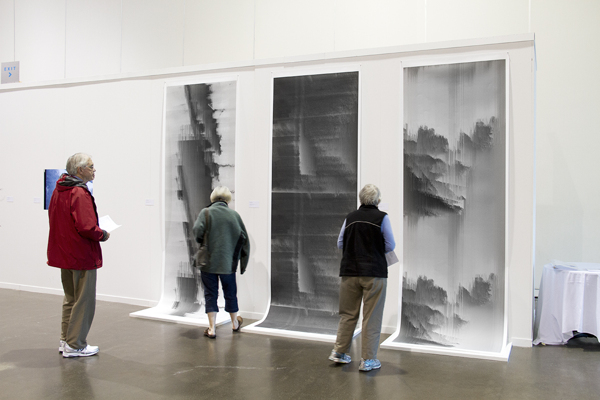
Work from The Curtain

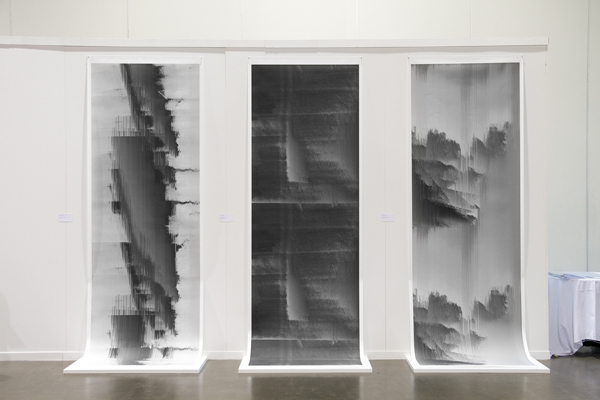
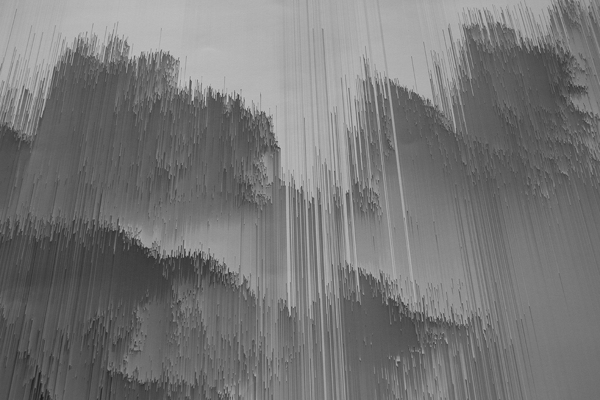
“The Curtain is an experimental RAW data visualization. Through the cross over editing with raw data, like image editing with Audacity, I was able to get heart beating sound tracks from the original photographs. Then I printed the sound tracks out as digital still images.” –Namwoo Bae