Daniel Chew

searchtermsWEB2 searchtermsWEB3 searchtermsWEB5 searchtermsWEB6 searchtermsWEB7 searchtermsWEB9

Daniel Chew


Work from Search Terms

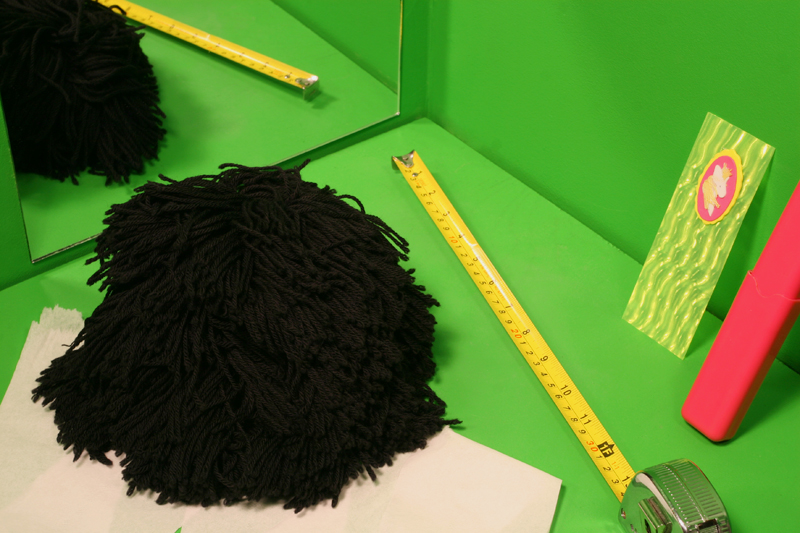
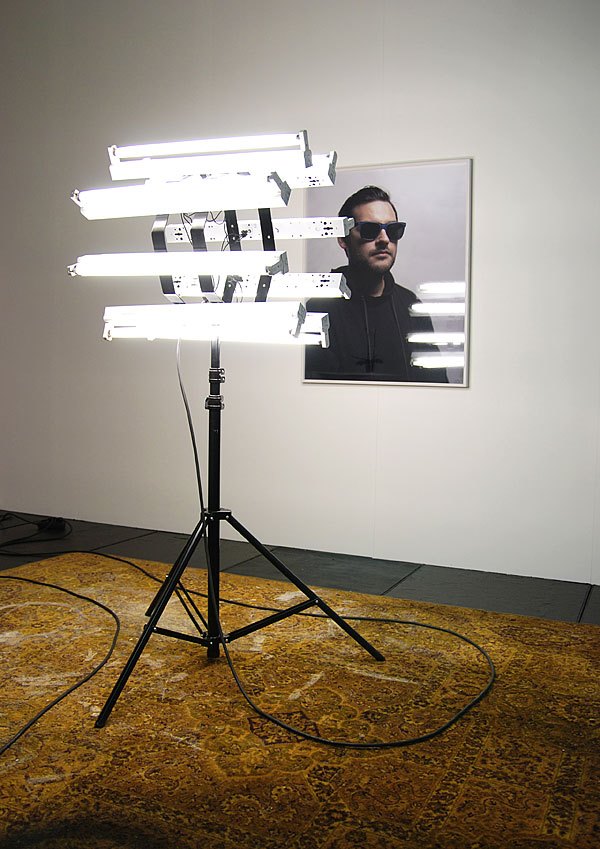
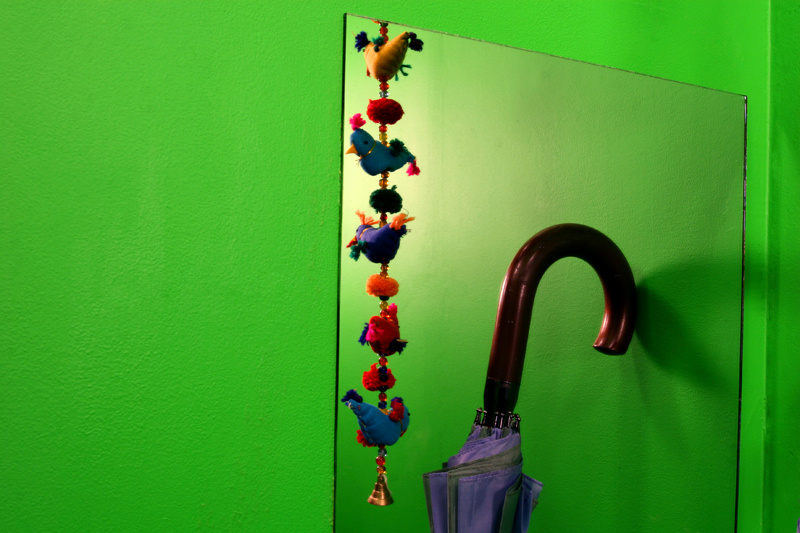
“With the work search terms I am interested in a space that exists differently when viewed in the virtual and the physical, in this case the place of the mirror within the image. While green screen technology enables a juxtaposition of infinite possibilities, its reading of space applies like a blanket statement. It is unable to understand the space of the mirror and would destroy any reflection if its operation ever concluded. To the human eye, the reflection of the mirror would not be lost, but would only point to the inconsistency of the digital image, highlighting the mistake. A map would appear, an X marking an area where the reflection curves the digital space a tiny bit to allow room for something else. A gesture not understood by technology. But what is able to exist in this space? Perhaps potentially a place where we can exist physically, a place where a reflection of our body can be sensed through one-hundred-forty words, connecting us with someone else. The sheer joy of a physicality that we feel, but never understand. Making it impossible to be surveilled, compiled, turned into data, and posted to Facebook.” –Daniel Chew

Takesada Matsutani

artwork_images_117109_525837_takesada-matsutani
Matsutani_53_gd Matsutani_50_gd

Takesada Matsutani

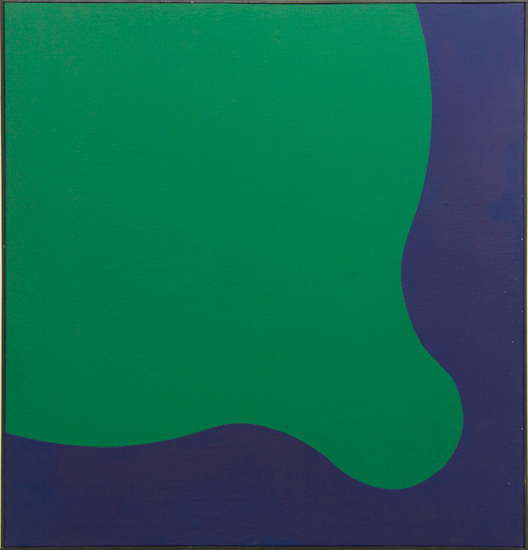
Work from his oeuvre.

“Born in Osaka in 1937, Matsutani began his artistic exploration in 1956 with Nihonga, a traditional Japanese painting genre. His paintings soon veered away from this time honored style, as his subject matter became more abstract.  Matsutani began experimenting with vinyl wood glue, which allowed the introduction of the third dimension into his paintings. In 1960, Matsutani participated in his first exhibition with the Gutai group in the Pinacotheca Gutai. He had become a member and was exhibited regularly until the dissolution of the group in 1972. He received a grant to study in France and settled down there since 1966. His work is now characterized by the use of two materials: glue and graphite. Museums and private collectors in Japan own the majority of the first Gutai generation’s art.  However, Matsutani’s productivity and longevity have lead him to be widely represented on the market today.  While most Gutai artists are no longer living, Matsutani continues to testify his commitment to the aesthetic and conceptual statements of the movement.

The Gutai Art Association was founded in the summer of 1954  by Jiro Yoshihara and seventeen other young Osaka-area artists… The Gutai Art Manifesto declared, “Gutai  Art does not change the material but brings it to life.” – Galerie Richard

Gutai Spirit Forever Part 1 is currently on exhibit through March 16th, 2013 at Galerie Richard, New York.

Jon Rafman

Screen Shot 2013-02-17 at 8.51.01 PM
Screen Shot 2013-02-17 at 8.54.25 PM
Screen Shot 2013-02-17 at 8.56.59 PM
Screen Shot 2013-02-17 at 9.01.57 PM
Screen Shot 2013-02-17 at 9.02.37 PM
Screen Shot 2013-02-17 at 9.00.36 PM

Jon Rafman

Work from Remember Carthage.

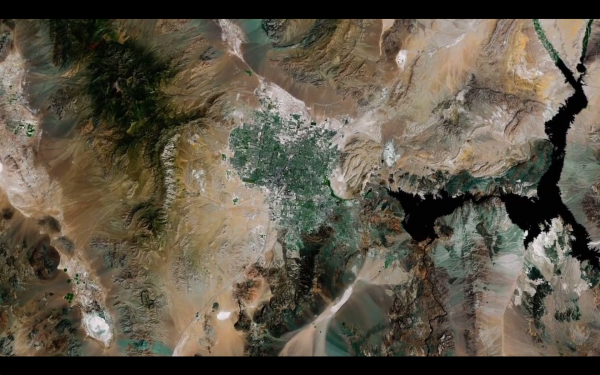
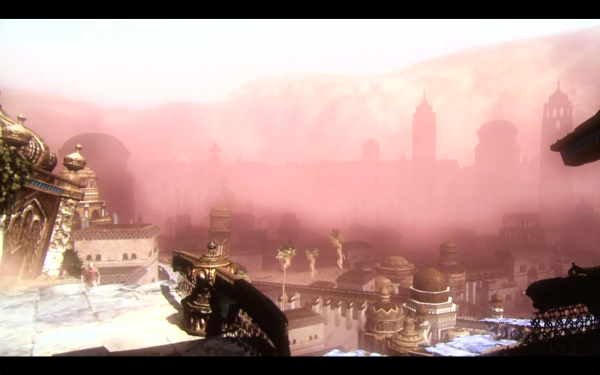
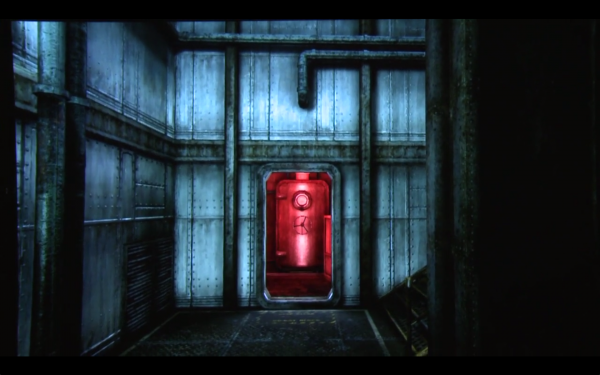
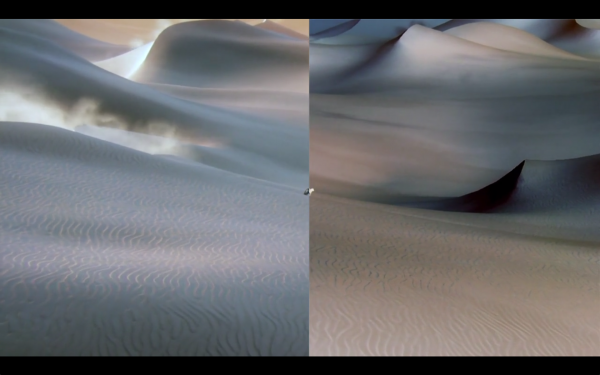
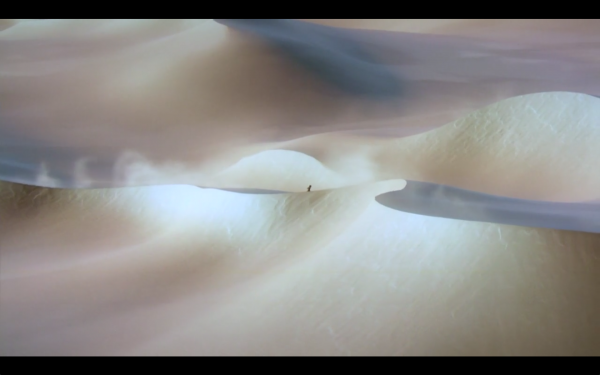
“An essay film in the tradition of experimental documentarians like Chris Marker or Harun Farocki, Remember Carthage takes the viewer on an epic journey in search of an abandoned resort town deep in the Sahara desert. However, one travels not through archival or personal images but through footage sourced from PS3 video games and Second Life, depicting ancient civilizations that seem at once familiar and totally fantastical. Presented in conjunction with the exhibition “Museum as Hub: Walking Drifting Dragging,” which centers on artist expeditions, Remember Carthage is a first-person journey through a historical fantasia that highlights the fictionalizing and exoticization of culture within gaming and virtual worlds.

The voyage begins on the swaying deck of a ship in unnamed waters and proceeds through a myriad of different landscapes, from arid deserts to the gaudy interiors of what appear to be Persian palaces, to barrooms and bedrooms—each new scene unfolding in sync with the narrator’s melancholic remembrances. As in other works by Rafman, a feeling of alienation and loneliness structures the story, with the narrator searching for a connection and yet unable to grasp what is real or stable around him. In Remember Carthage, the filmmakers emphasize how digital media makes history seem both totally accessible through archival information and, at the same, completely foreign to us. Here, the narrator’s search for the abandoned town is rendered increasingly futile as he traverses a landscape where markers of time and place often appear to be unmoored, floating signs. And, as his journey continues, he becomes unable to distinguish authentic sites from simulated versions.

The repetitive and circular sequencing of the film, with recurring locations and characters, furthers the protagonist’s sense of dislocation and interpolates the logic of gameplay—continual death and resurrection—into his journey. It is unclear whether the narrator in Remember Carthage ever arrives; despite constantly moving, he is caught in a horizontal, virtual dreamworld where his goals become ever more distant.” – New Museum

Optical Calibration Targets

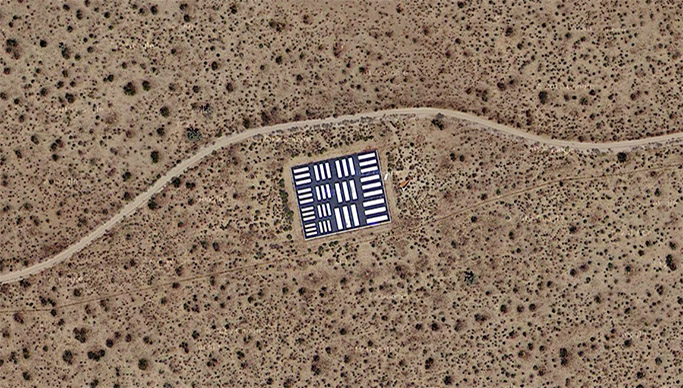
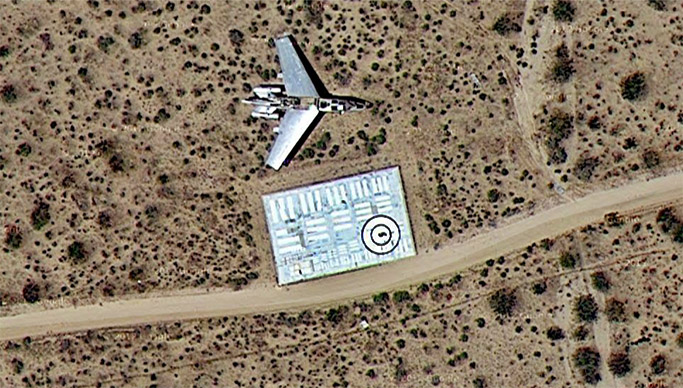
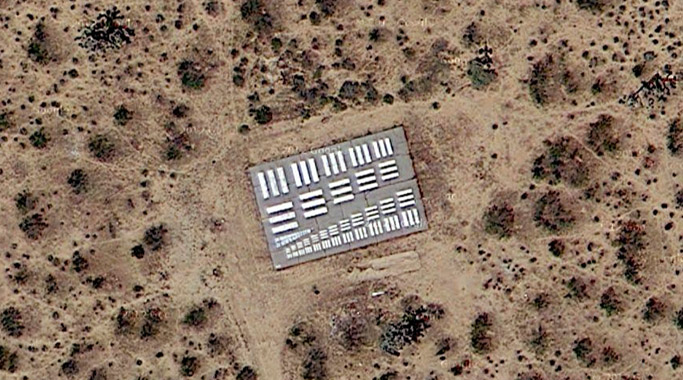
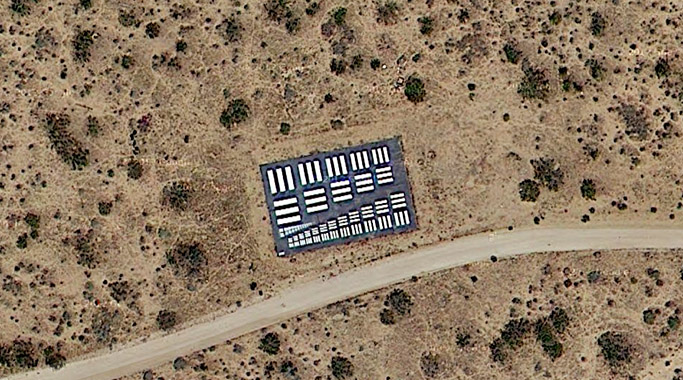
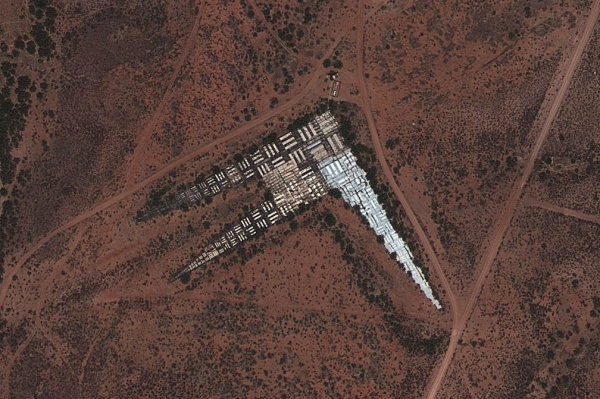
Optical Calibrations Targets (via BLDGBLG).

“There are dozens of aerial photo calibration targets across the USA,” the Center for Land Use Interpretation reports, “curious land-based two-dimensional optical artifacts used for the development of aerial photography and aircraft. They were made mostly in the 1950s and 1960s, though some apparently later than that, and many are still in use, though their history is obscure.”

These symbols—like I-Ching trigrams for machines—are used as “a platform to test, calibrate, and focus aerial cameras traveling at different speeds and altitudes,” CLUI explains, similar to “an eye chart at the optometrist, where the smallest group of bars that can be resolved marks the limit of the resolution for the optical instrument that is being used.”

Formally speaking, the targets could be compared to mis-painted concrete parking lots in the middle of the nowhere, using “sets of parallel and perpendicular bars duplicated at 15 or so different sizes.” This “configuration is sometimes referred to as a 5:1 aspect Tri-bar Array, and follows a similar relative scale as a common resolution test chart known as the 1951 USAF Resolving Power Test Target, conforming to milspec MIL-STD-150A. This test pattern is still widely used to determine the resolving power of microscopes, telescopes, cameras, and scanners.”

CLUI points out that the history and location of the tri-bar patterns corresponds to the rise of high-altitude “flying cameras” developed during the Cold War—i.e. spy planes whose purpose was not to deliver ordnance to the far side of the world but simply to take detailed photographs.

Further, “the largest concentration of calibration targets in one place is on the grounds of Edwards Air Force Base” in California, “in an area referred to as the photo resolution range, where 15 calibration targets run for 20 miles across the southeast side of the base in a line, so multiple targets can be photographed in one pass. There is some variation in the size and shape of the targets at Edwards, suggesting updates and modifications for specific programs. A number of the targets there also have aircraft hulks next to them, added to provide additional, realistic subjects for testing cameras.”

A quick scan of Google Maps locates the photo resolution range relatively easily; broadly speaking, just go up to the right and down to the left from, say, this point and you’ll find the targets.

Although I am truly fascinated by what sorts of optical landmarks might yet be developed for field-testing the optical capabilities of drones, as if the world might soon be peppered with opthalmic infrastructure for self-training autonomous machines, it is also quite intriguing to realize that these calibration targets are, in effect, ruins, obsolete sensory hold-overs from an earlier age of film-based cameras and less-powerful lenses. Calibrating nothing, they are now just curious emblems of a previous generation of surveillance technology, robot-readable hieroglyphs whose machines have all moved on. – via BLDGBLG

Eelco Brand

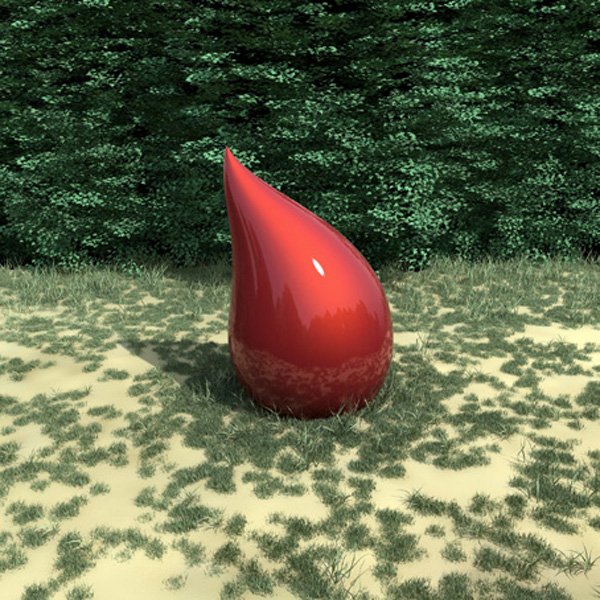
RED_OBJECT

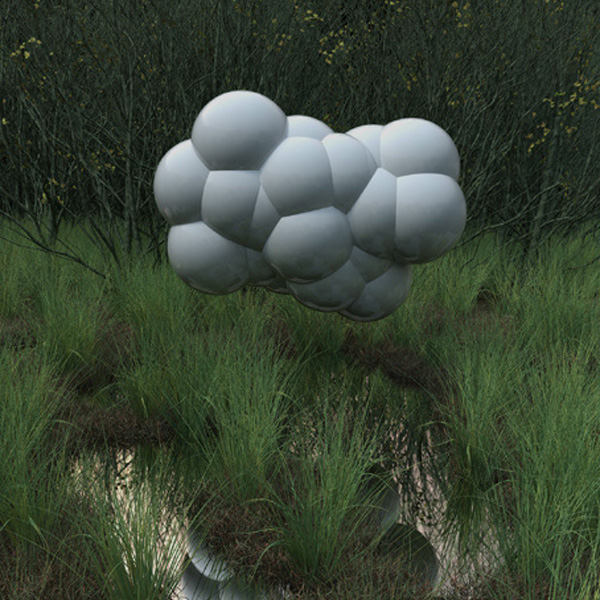
FLOATING_OBJECT 

Eelco Brand

Work from his oeuvre

“Painting largely consists of adding and removing elements. You work on an image that evolves through its own logic. For me, constructing a 3-D image is the same as painting. But the fascinating thing about working with 3-D constructions is that you can enter the virtual space behind the two-dimensional surface and, more importantly, you also have the possibility of animating a scene. This means that suddenly you can go beyond the static medium of painting, and can add both movement and sound. This has created completely new ways of constructing and presenting works. The scenes I construct as prints or animations are virtual and hand-made. I don’t use photographic materials or scanned images.”

Christoph Meier

65505_1478666732691_214113834_n
526734_1478667252704_209721266_n
535855_1478666692690_609568029_n

Christoph Meier

Work from his oeuvre.

“While the situations staged by Christoph Meier are characterized by an abstract, geometrical formal vocabulary, the objects used appear to represent a plot. The emphasis here is on the performative and narrative potential of the media and presentation formats themselves.

For Christoph Meier, exhibitions are only a moment, an isolated presentation for the public, a time for discussion—something that comes to a head and then subsides again. His current exhibition in the Galerie was preceded by work he did at the Secession in November 2010. He has developed the layout of this previous show into a new exhibition situation, with parallel variations in a brochure and in the catalog. To describe this, Patrizia Dander uses the metaphor of an echo room.

Alongside the motifs of duplication, doubles, and repetition, copying is a central theme in Christoph Meier’s exhibition: the existence of the original and the copy, plus a copy of the copy, strongly suggest not only a plot, but also a system and a structure. This manifests itself on various levels:

For Meier, copying something is among the most important procedures of artistic creativity. “Copying something, mixing it with itself, duplicating it, is a very obvious, helpful way of altering an object; also as a way of freeing it and oneself if an impasse has been reached.” (Christoph Meier)

The copied objects are based on a set of plinths chosen, put together, and commented on for Christoph Meier by Francesco Stocchi. While the originals are often highly complex, Meier has reduced the models to the simplest of basic forms, in some cases only roughly recreated, so that new objects are developed. “Deliberately making errors when you copy, that’s the freedom or if you will the necessity to try something new. In this sense the source is nothing but a source, a reason to begin.” (Christoph Meier)

In the exhibition, Christoph Meier has also included a photocopier constantly producing a 16-page brochure with an essay by Francesco Stocchi and images of Meier’s sculptures. In this way, he integrates the copy as a print medium portraying the objects and the way they are handled. The photocopier is itself a plinth: “My main concern here is the feedback loop via the copier: a plinth that spits out further plinth objects.” (Christoph Meier)

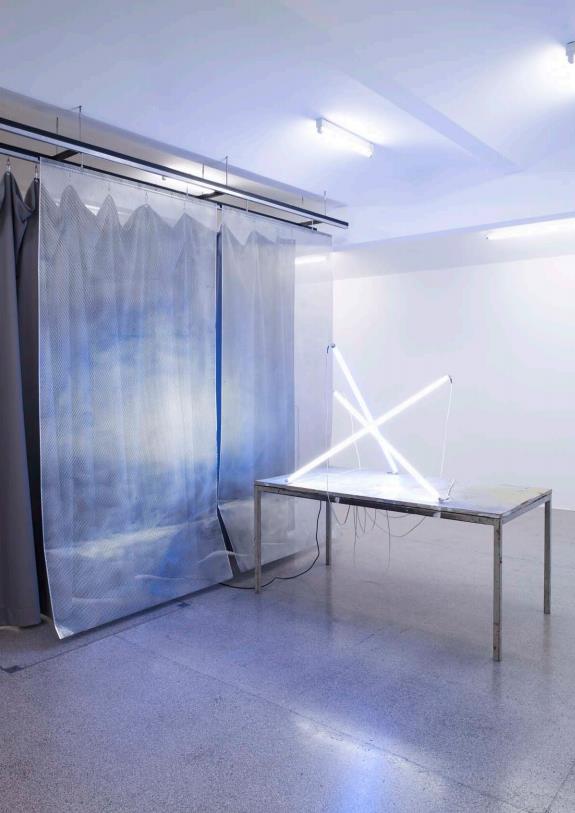
For his objects, Christoph Meier realized the “most striking version” of the principle of copying. The first room in Meier’s show can be read as a spatial abstraction of the processes taking place inside a photocopying machine: stark lighting, a perforated metal plate that creates a grid, and a gray curtain recalling the hazy effect created by photocopiers on monochrome fields. The curtain and the metal plates, in which other light sources are reflected, are movable—like the light bar in a copier. And finally, the exhibition as a whole is reflected in a wall-filling mirror at the end of the long space.” – via secession

Bernadette Corporation

as_bcorp_web_13
as_bcorp_web_17 as_bcorp_web_11 as_bcorp_web_09

Bernadette Corporation

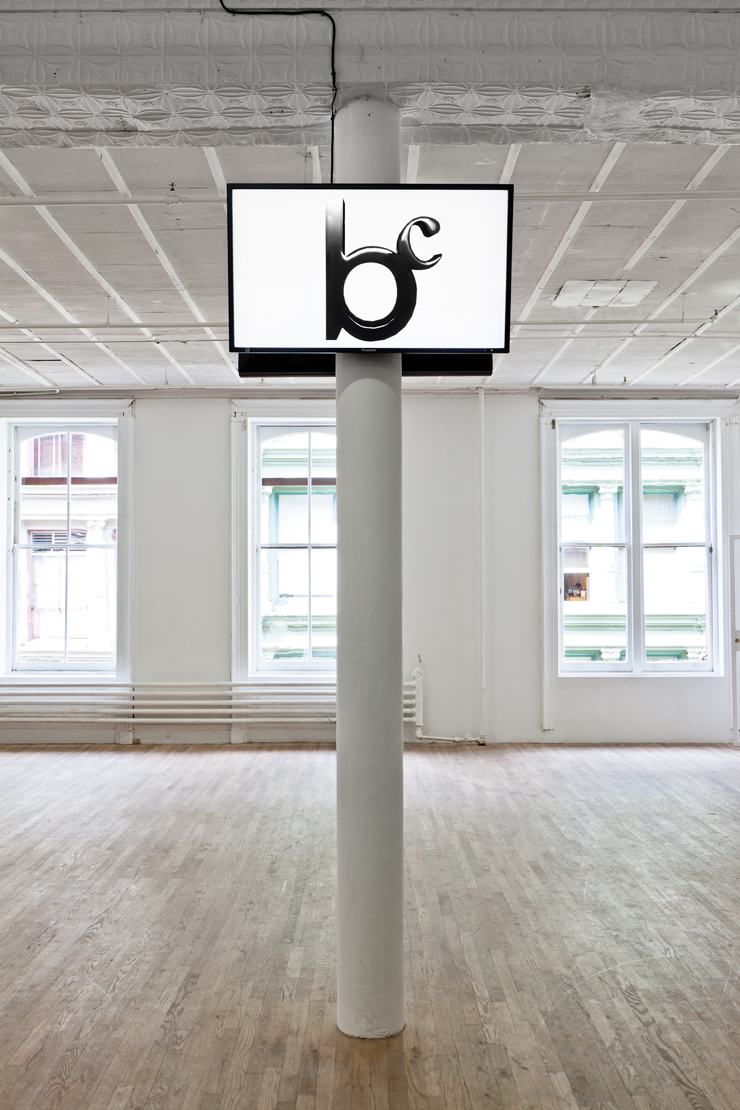
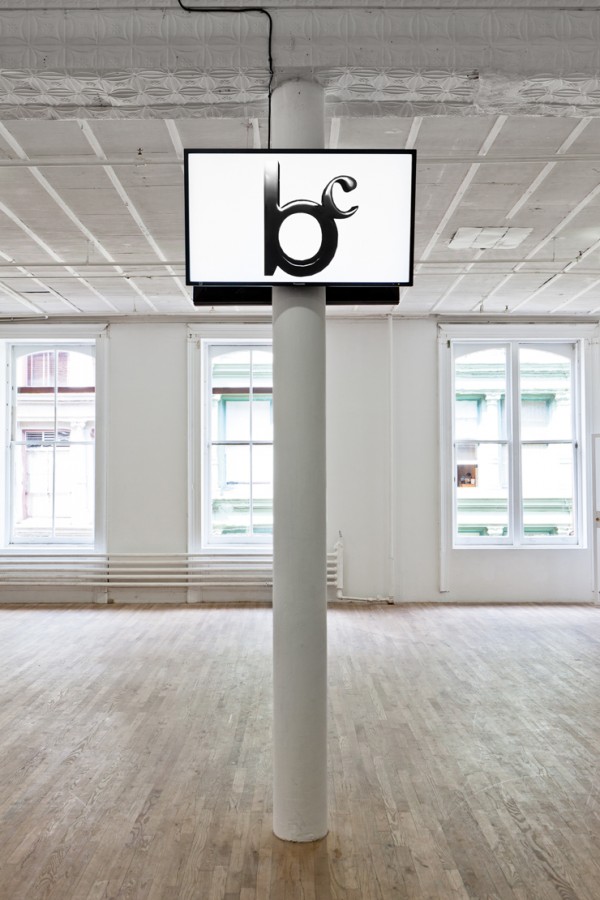
Work from 2000 Wasted Years at Artists Space, New York.

2000 Wasted Years is the first retrospective by Bernadette Corporation. The exhibition recasts the works authored by the group since their inception in the early ‘90s.

The origins of Bernadette Corporation lie in the organization of parties in downtown New York, their mock incorporation and ambiguous branding strategies suggesting a slipperiness of intent that developed between 1995 and 1997 into a women’s fashion line. In keeping with the original premise that a corporation was “the perfect way to alienate alternative politically-correct types,” the image grammar of BC’s clothing and styling focused on the mass-produced sportswear styles of ethnic minorities ghettoized in the urban territories. At a time when the fashion industry was confronted with a DIY rebelliousness, BC took its cues from the political-literary wing of the historical avant-garde. They engaged in quotation, concepts, fictions, appropriation, provocation, hoaxes, and anti-artistic postures of crass commercialism.

Between 1999 and 2001 Bernadette Corporation turned to publishing, releasing three issues of the magazine Made in USA. In the same way that the poet Stéphane Mallarmé oddly inhabited the contemporary fashion journal of the 19th century with his self-published La Dernière Mode, BC spread itself across the pages of a magazine in a polyvalent mode, with funny mute images and writing that went from poetic sincerity to buffoonery to references to French theory and a fetish for cinema critique.

Since the early days of Bernadette Corporation there was always the desire to make films, and the group began to use the context of contemporary art for production assistance and screening opportunities, culminating in one of BC’s most widely seen videos: Get Rid of Yourself (2003). The film revolves around the rioting in Genoa during the 2001 G8 summit and the militant-intellectual mood of radical Black Bloc anarchists, in opposition to peacenik anti-globalization protest organizations and the police. The video opted for seductive contagion by circulating modes of protest along with scripted passages featuring downtown actress and fashion icon Chloë Sevigny.

Within Get Rid of Yourself there runs a thread of anonymity and opacity, the rejection of normative social forms and appellations, such as being an artist, or a political activist. This “whatever” subjectivity reached its apogee with the 2004 Bernadette Corporation novel Reena Spaulings, in which the blurring, gaps, and self-unworkings were distributed in practice and product by fusing up to 50 unnamed authors’ subjectivities and linguistic styles. The narrative is imbued with an attention-deficit driven taste for chaos centered on the eponymous character – a twenty-something museum guard turned model/muse in her post-9/11 New York life. As a “novelization” of this period, the book glorifies a version of the 21st century metropolis that appeared and disappeared in the time it took to clear away the ruins of the Twin Towers.

Till that point Bernadette Corporation had little desire towards putting objects in galleries, but it was with the failure of BC’s Pedestrian Cinema project in 2006 – a proposed underground film factory in Berlin – that a proper exhibition practice commenced. BC discovered that cinema was dead, and then went about trying to hide the corpse through a rush of promotional flyers, screenplays, hours of DV footage, tweaked after-effect filters, t-shirts, and film stills that made their way into galleries in lieu of actually showing films to an audience.

This fascination with the deceptive flexibility of the gallery space continued with the reunion of Bernadette Corporation in New York in 2008. The Complete Poem, with its repurposed collective writing and auxiliary support by photos of lithe models in jeans, was tailored for the rigors of poetic form at Greene Naftali Gallery. A Haven for the Soul at Galerie Neu in Berlin concentrated its conceptual play on information flows, leaks, and PR disasters, while Stone Soup at Galerie Meyer Kainer distilled the communicative capacity of images to a murmur, with its straight-faced promotional campaign of nudity, jewelry and potatoes.

These exhibitions demonstrate the lyrically and conceptually complex relay of the quotidian that continues to engage the collective today and resonates throughout their Artists Space retrospective, all the while underscored by the “reality” of BC both as a group of relationships, and as brand.” – Bernadette Corporation/Artists Space
Aude Pariset and Juliette Bonneviot

last spring summer installation viewfestival des urbaines 2012 last spring summer hanger festival des urbaines 2012 festival des urbaines 2012

Aude Pariset and Juliette Bonneviot

Work from Last Sprint/Summer

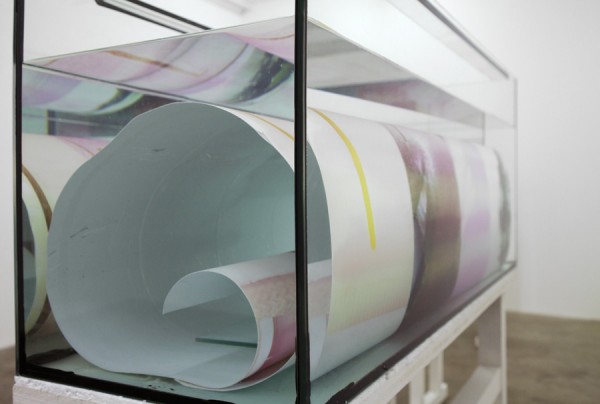
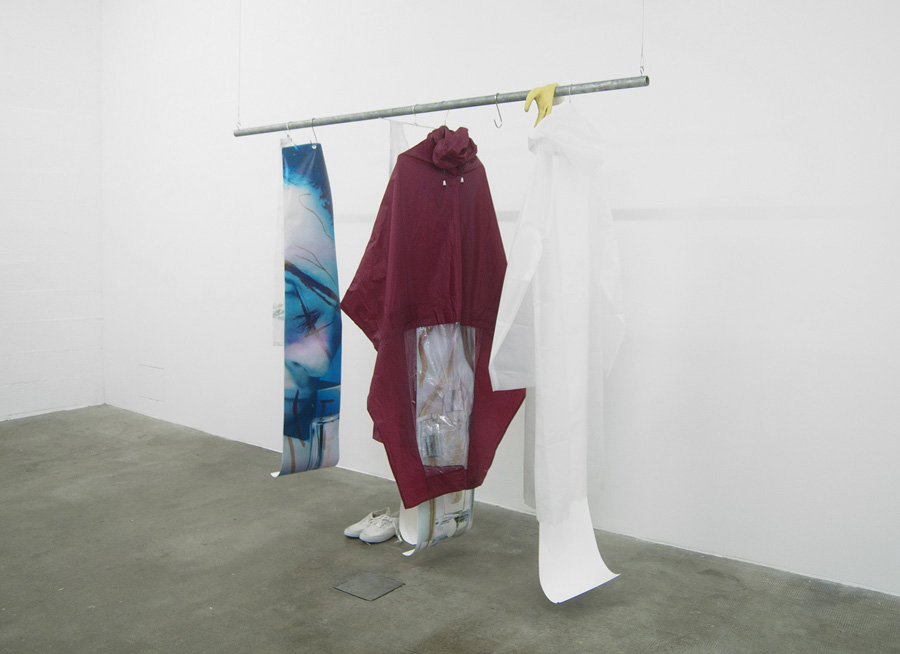
“Aude Pariset and Juliette Bonneviot are images serial killers. Like Dorian Gray, who couldn’t bear to see his aging portrait, or a publicist who constantly retouches his photos, the two artists shed one image and leap into another. By questioning the true value of visual representation, they will physically test their own artwork by letting it decay in an aquarium over the course of the festival. A show in which duration and creative methodologies unite in order to create a real-time new work.” -Elise Lammer

Barry Stone

_MG_4232
_MG_4239
_MG_4222-Edit

Barry Stone

Work from Many Worlds if Any @ Klaus von Nichtsaggend.

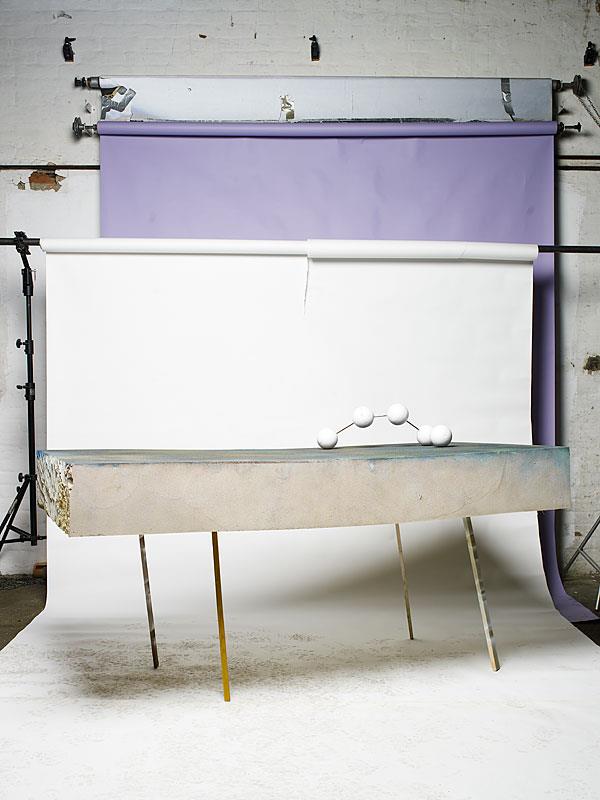
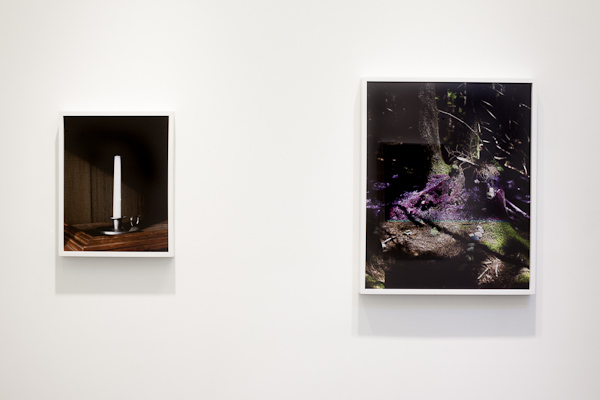
“In Many Worlds If Any, his fourth solo show at Klaus von Nichtssagend, Barry Stone continues to stretch the philosophical positions of his artistic practice within a world growing exponentially saturated with digital images. The show features seven framed photographs that employ various methods of depiction and perceptual distortion. The traditional formatting of the show belies Stone’s interest in the materiality of digital media in a continuum of image manipulation and “straight” photography.
The show’s title is taken from Nelson Goodman’s Ways of Worldmaking, in which he argues that many “right” versions of the world are simultaneously possible; one knows the world by quoting, rearranging, adding to, and subtracting from it.

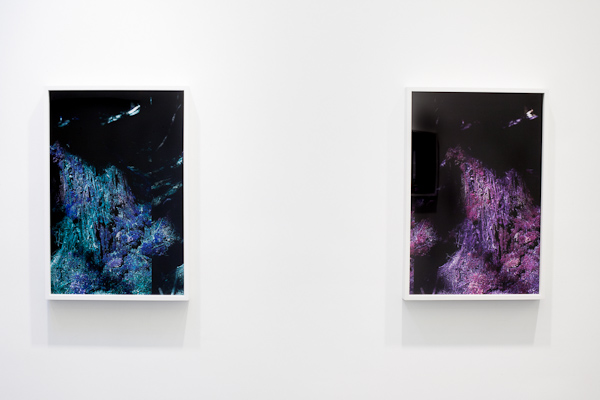
While three of the photographs are made using conventional digital camera work, the others have been altered by changing the code of the digital image. This is done by converting the image file into a text document and rearranging the resulting data. Converting the document back into an image file then yields glitches, artifacts, and other digitally induced anomalies. This massaging of the code, sometimes referred to as databending, is done relatively blindly and is a process akin to a kind of meta-collage.

Stone’s photographic subjects play upon visual archetypes ranging from rainbows and caverns to a burnt candlestick. Other photos offer scenes of a wooded commons designated for children to make fairy houses. These latter pictures have been subjected to the databending process, and their random distortions of form, color, and light create an otherwise hidden magical spectacle.

The works in the show look to the shifting position that images inhabit in photography. Among the continued mass conversion of the observable world into lines of digital code, Stone positions himself in the cracks between as a maker of images based on a “true” reality and the slippery realm of the unreliable narrator, suggesting a multiplicity of meanings, perceptual translations, and poetic possibilities” – Klaus von Nichtsaggend

Mathew Cerletty

pink_paper purple_chip-1024x1024 Mathew Cerletty/ Office Baroque

Matthew Cerletty

Work from his oeuvre.

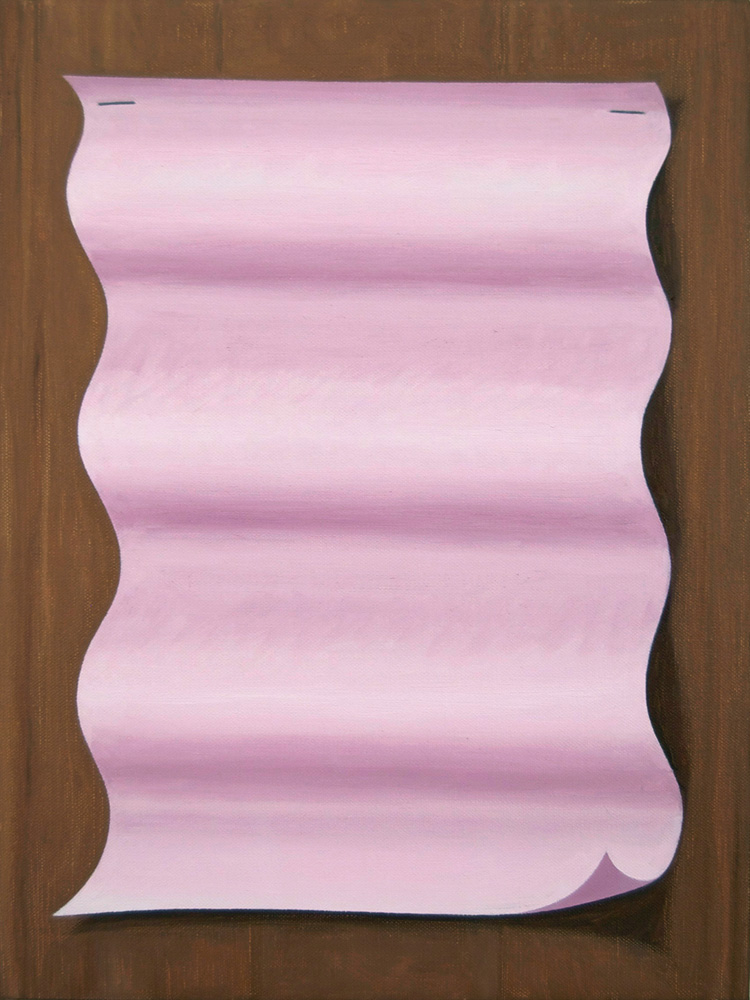
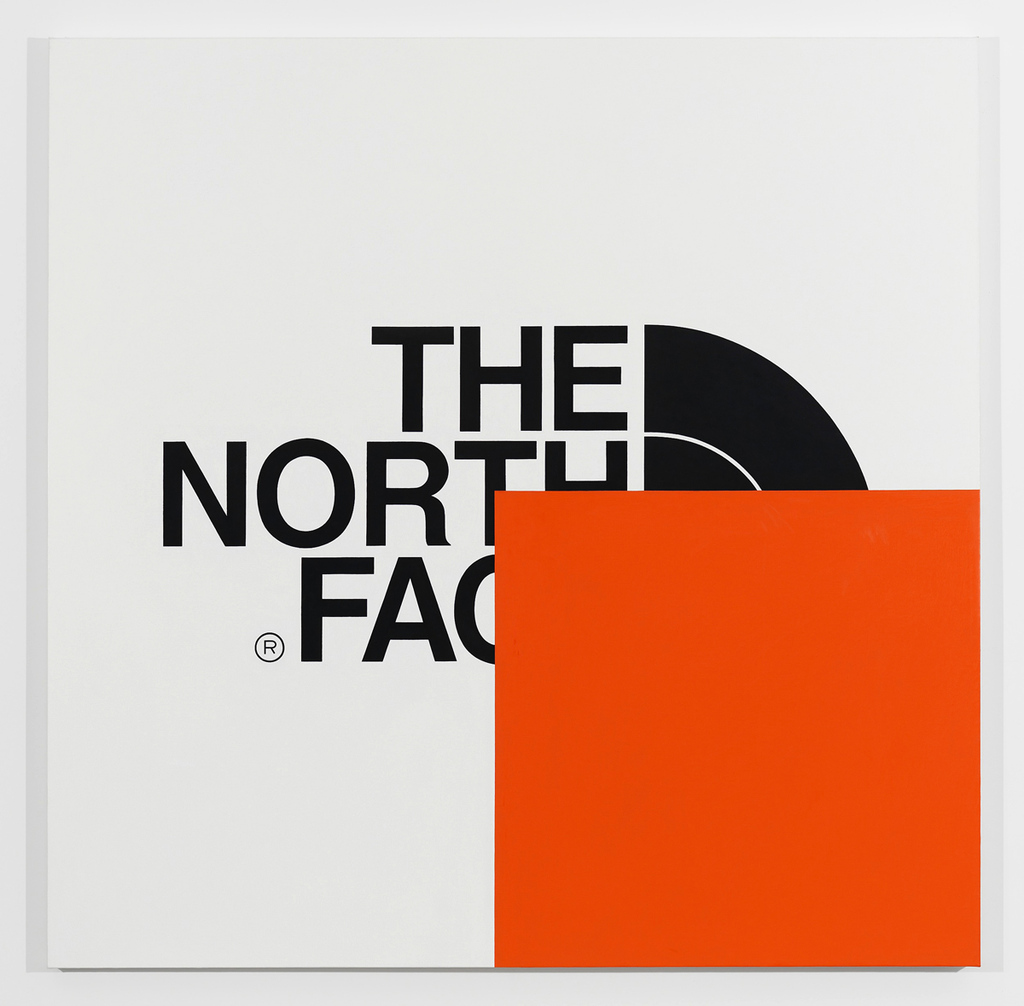
“Ikea” is a color-coordinated still life of a narrow cabinet with flowers in a red glass vase on top. Golf clubs lean against its side, a black handbag hangs from a peg rack and a three-part scroll on the wall pictures an antique skeleton key. With its rhyming rectangles and circles, it seems mainly a conflation of realism and abstraction. But the title hints otherwise, and a glance at Mr. Cerletty’s Web site reveals a penchant for social commentary. It reproduces a portrait of David Brooks, a columnist for The New York Times, and a Pop-style rendition of the distinctive, white-on-red banner of The Economist magazine. So, “Ikea” is subtly satiric: a cool-eyed study of an altarpiece for consumerist idealism.” – New York Times