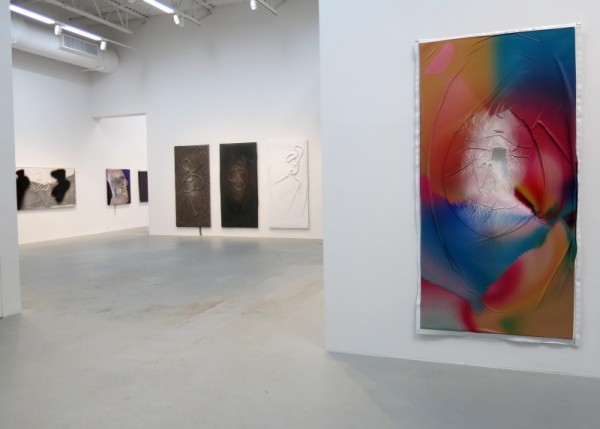
CHIMERA Q.T.E.

attiliaff-50bdb7ef12753fb attiliaff-50bdb7e012753f0 attiliaff-50a79ef5125851f attiliaff-50a79e681258512 attiliaff-50a79e531258508 attiliaff-50a79e2012584ef attiliaff-50a79e3a12584fe attiliaff-50a79e0e12584e5

CHIMERA Q.T.E.

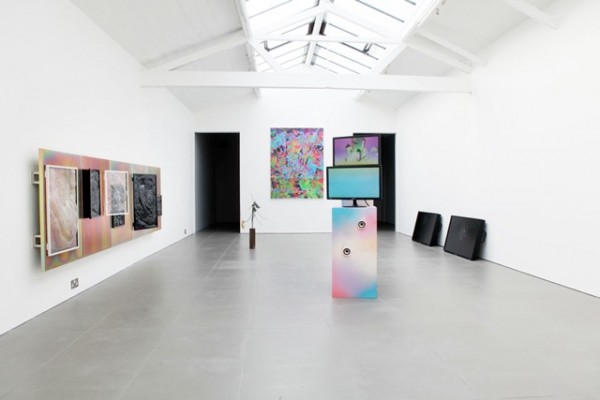
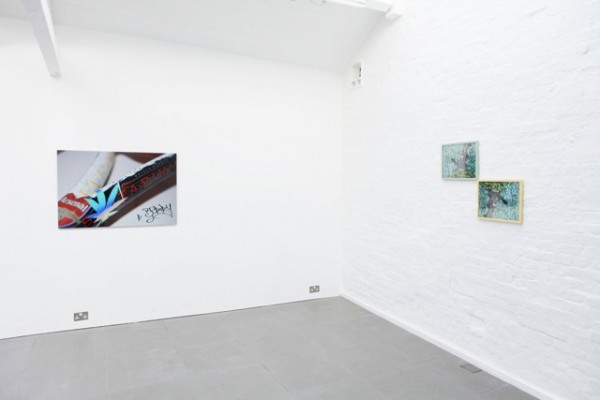
Curated by Attilia Fattori Franchini 

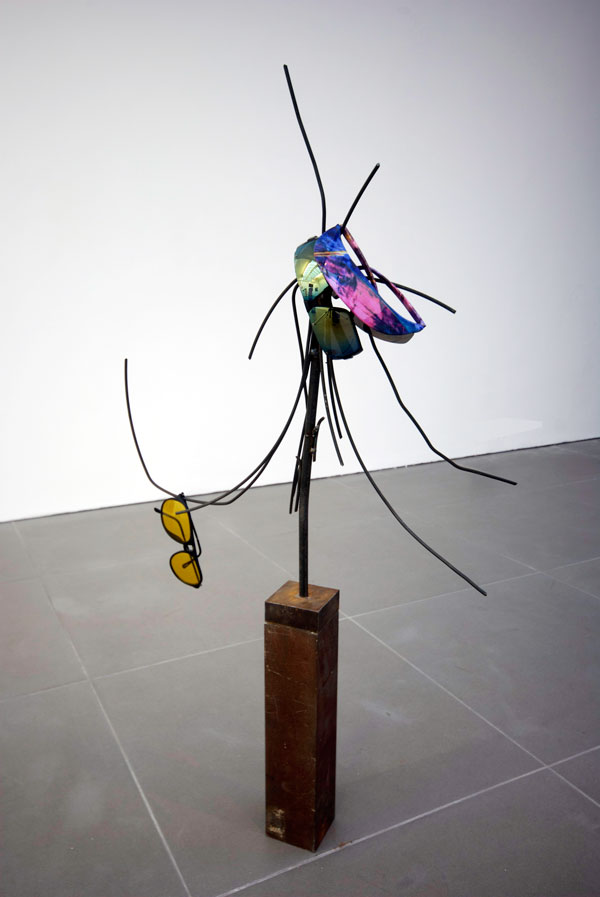
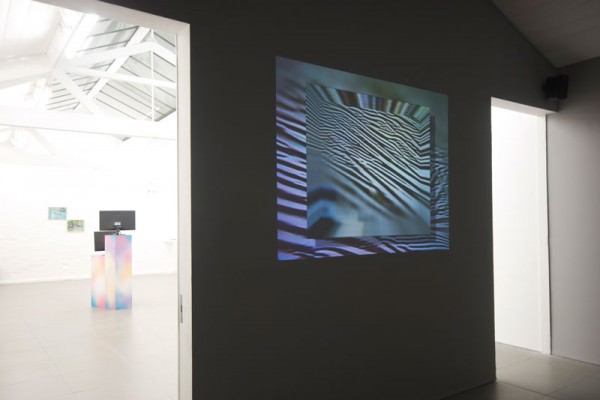
Works by Cornelia Baltes, Nicolas Deshayes, Adham Faramawy, Jack LavenderBerry Patten, Sabrina Ratté, Travess Smalley, Oliver Sutherland

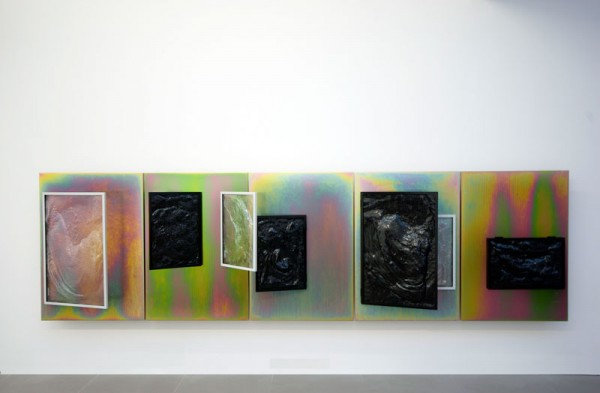
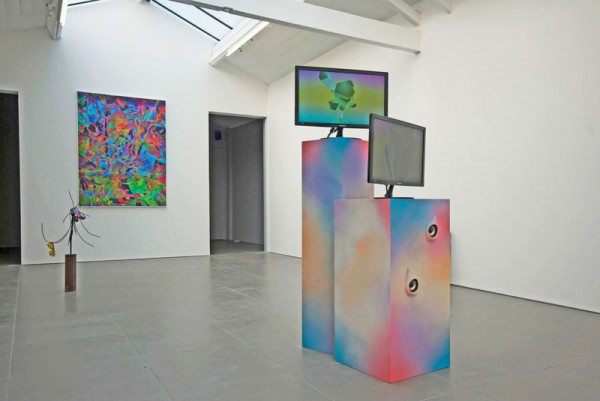
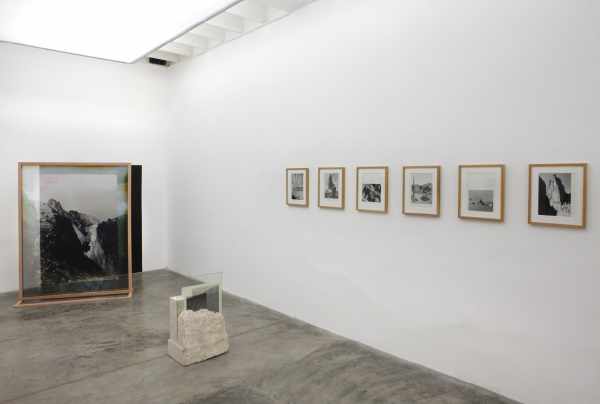
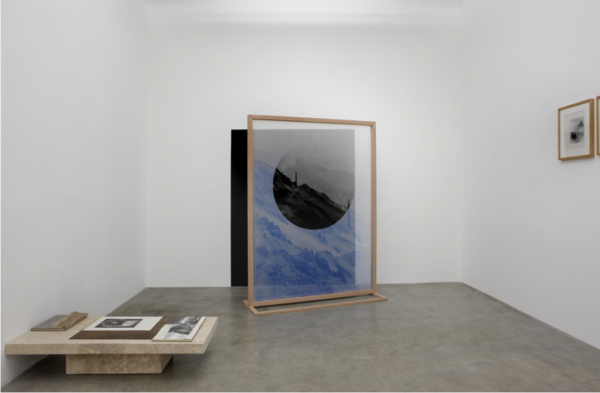
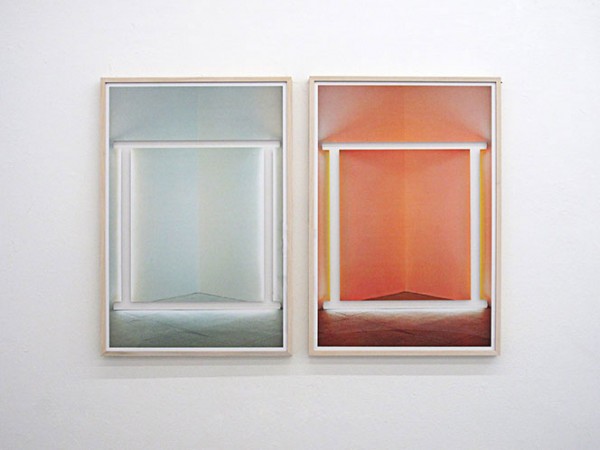
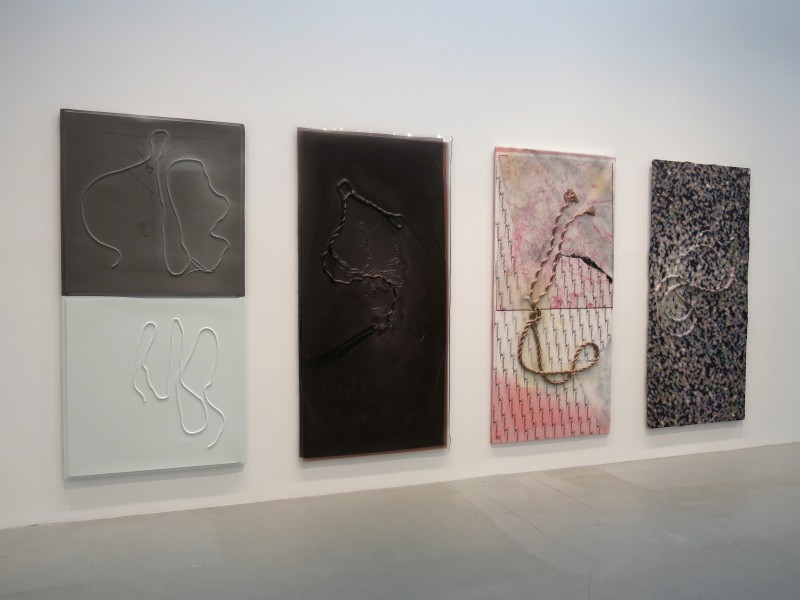
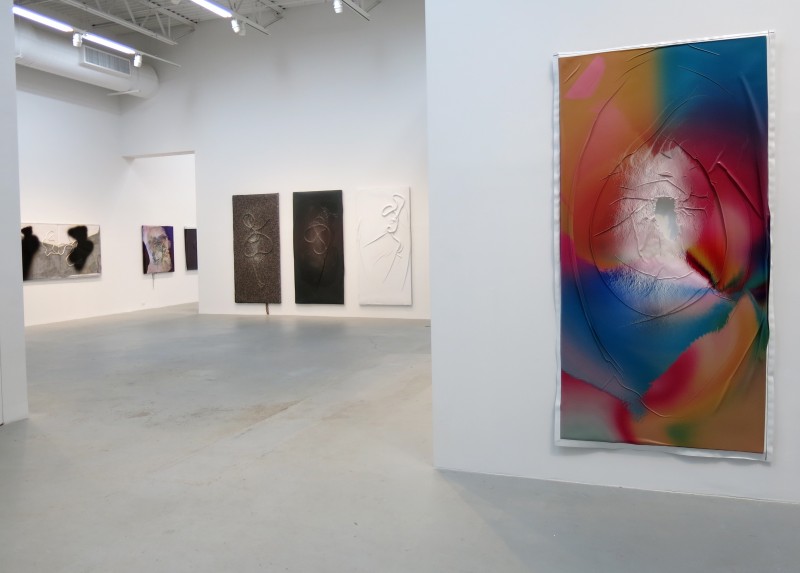
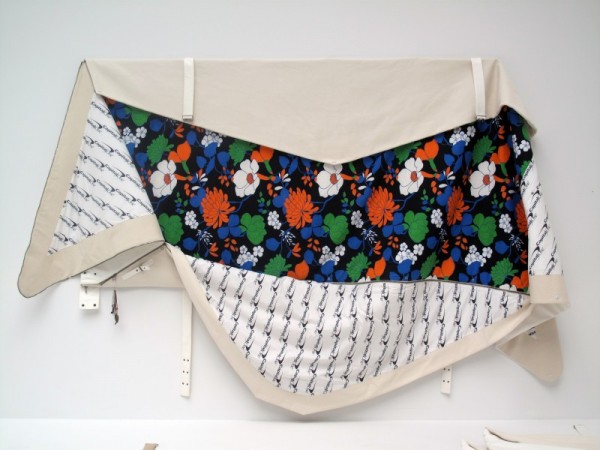
Chimera Q.T.E. works as a proposition on different levels. It celebrates chaos and the order that comes out of it. Its intention is to activate different types of readings and  understandings, questioning the status of our relationship with what is considered visual and how we absorb it.

We are increasingly related to fragmentation and constantly exposed to information, images, ideas. We flickr through things, in a jungle of ever-coming documentation or replicas of reality. Knowledge is suddenly approached on its surface, we know everything but we are never experts. Yet this multiplicity, instead of flattening sources and outcomes, transforms each particle into inspiration and opens new forms of sensorial relations. Cracks and disjunctions become drives in artistic production.

The form of representation which the exhibition lays on is dynamic and non-linear, it calls for the same type of reception.

C e l l  Pr o j e c t  S p a c e

Elena Damiani

Screen Shot 2012-12-29 at 11.13.26 PM
Screen Shot 2012-12-29 at 11.13.35 PM
Screen Shot 2012-12-29 at 11.13.58 PM
Screen Shot 2012-12-29 at 11.14.19 PM
Screen Shot 2012-12-29 at 11.14.29 PM

Elena Damiani

Work from La Historia Se Descompone En Imágenes, No En Historias @ Revolver.

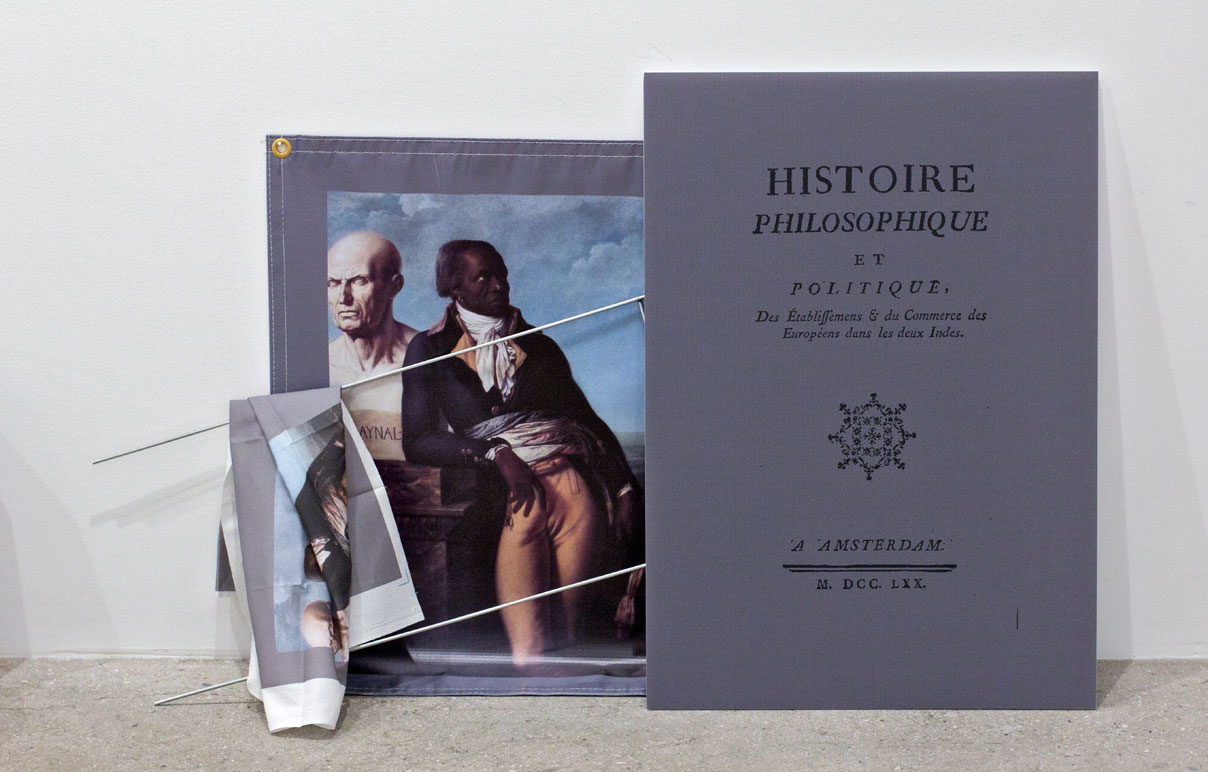
“The visual realm has seized new contexts, new materials, new techniques, has taken as its own the flexibility of time and the uncertainty of cognitive contexts. In this way, the conceptualization about the image is being drastically transformed. La Historia Se Descompone En Imágenes, No En Historias (History Decomposes Into Images, Not Into Narratives) by Elena Damiani is comprised of four basic elements that invite us on a journey to decipher the return to the universe of images which are made from documents and archives. Critical research regarding the conceptual significance of archives and the persistency with memory in a society fearful of forgetting, has funnelled Damiani’s work and research by transforming “found material” into collages and manipulated images. However, as opposed to historical (linear) memories (a key characteristic of most archives), the images in Damiani’s show disregard an order by insinuating possible mental relations…” – José-Carlos Mariátegui

Tom Burr

burr_12
burr_7
TB3653cweb

Tom Burr

Work from Sentence at Bortolami Gallery.

“…One distinction of Burr’s work that persists is his consideration of the ephemeral. This interest extends beyond time to all sensory experiences, which must be transitory by nature. He describes individual sculptures as ‘moments’ and thinks of their varied qualities in terms of musical notes, temperatures, and moods—qualities that cannot be trapped into the permanency of an object, but may be somehow suggested.

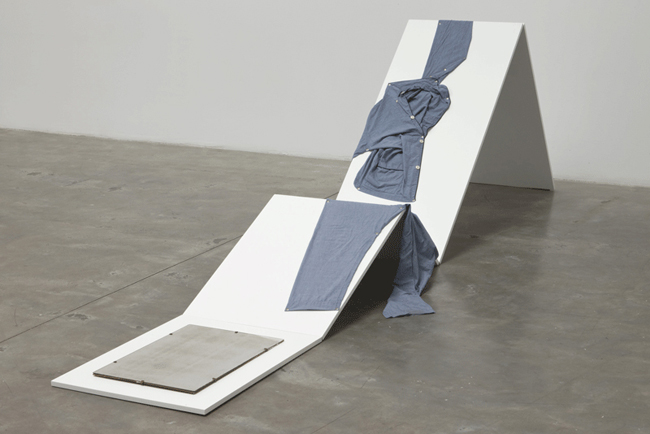
Movies and sitcoms, like Men in Black and Bewitched, acknowledge the crux of the ephemeral by giving protagonists the unearthly power of being able to snare those moments. They stop time with a click, a twitch or a wiggle. Burr positions himself as this hero and casts the viewer as his sidekick. We walk into a room full of scattered objects, many of which appear to have been suddenly abandoned. It feels almost-familiar; you are in your neighbor’s bedroom, perhaps. The scale is human and humane and even in his most monumental works bears a direct proportional relationship to the spectator. Materials have a latent potential—the hinged figure could collapse flat, the shirt could fall, the bare wood could be painted, varnished or otherwise concealed.

A sense of timing lingers between the objects and their ownership remains ambiguous. It might appear that there is a story or scene involved—and in fact there may be. Or not. Officially, no specific narrative is ever revealed by the artist, no interpretation or assignation ever described as blatantly ‘wrong.’ The shirt or pants may have belonged to the artist, or his lover, or his father. The portraits may be devotionals culled from a fan’s stash of memorabilia—to Jim Morrison, Brad Davis, John Cage, Kate Bush, etc. Or they may be surrogates, stand-ins meant to represent elements of the artist himself, discrete clues about the artist’s own biography or experience.

The use of language enhances this ambiguity. Titles for works and for exhibitions are deliberately elusive, typically bearing many meanings and leaving the visitor to speculate which—if any—bear real significance. Sentence, sliver, silver, and so forth…” – Bortolami Gallery

Stéphane Thidet

Premier-dessin-detail-4-bea60p1100651-75024
IMG_2983-e80f8

Du_vent-08895
belle_etoile_0-13c95

Stéphane Thidet

Work from his oeuvre.

“…A slightly embarrassed Prosper Mérimée admitted “a keen taste for bandits”. As to how he felt about them, he added, “I cannot help it, but the energy of these men struggling against the whole of society elicits from me an admiration that I am ashamed of.” Thus a recent book celebrating these outlaws is subtitled “anarchistic, illegalist sharpshooters… they chose freedom”. The book’s author, Laurent Maréchaux, explains, “Not just anybody can be an outlaw. The man who decides to live outside the rules laid down by society is first of all a rebel motivated by great ideals: the will to change the world, to escape from poverty and to experience to excess a freedom that burns the fingers”.

Not yet entirely lost, but for how long… Stéphane Thidet might become one of them and a number of his works show his admiration for these rebels. Looking at his works, the viewer will doubtless be surprised at the change that comes over reality while its basic organizing features are upheld and their appearances only take us slightly away from verisimilitude. Unlike Surrealist paintings describing a world that is deliberately dispensed from the laws of gravity for instance, and careful to stress the pre-eminence of electro-magnetism as a generalized force of attraction on incongruous – incorrectly termed objective – chance events, here the four fundamental forces never fail…” – Jean de Loisy

Juliette Bonneviot

WG-JBON-INST12-02web WG-JBON-00104_web Juliette-Bonneviot_web WG-JBON-00103web

Juliette Bonneviot

Work from her oeuvre.

“In The Record of the Classification of Old Painters, sixth century Chinese art historian Xie He established the ‘six principles of painting,’ classing artists into six categories. The first was ‘Spiritual Resonance,’ while the final was ‘Transmission by Copying.’ These two poles, and what lay between, hence emerged as a critical factor in both the creation and appreciation of Chinese painting.

‘Transmission by Copying’ refers simultaneously to the circulation of the original as well as a comprehension of the fundamental method of Chinese painting and calligraphy. Xie believed that there was no creativity involved in this category; thus, he demoted it to the sixth and final ranking. However, for those new to the art of painting and calligraphy, it represents the inception of a long journey towards the peak of the pyramid.

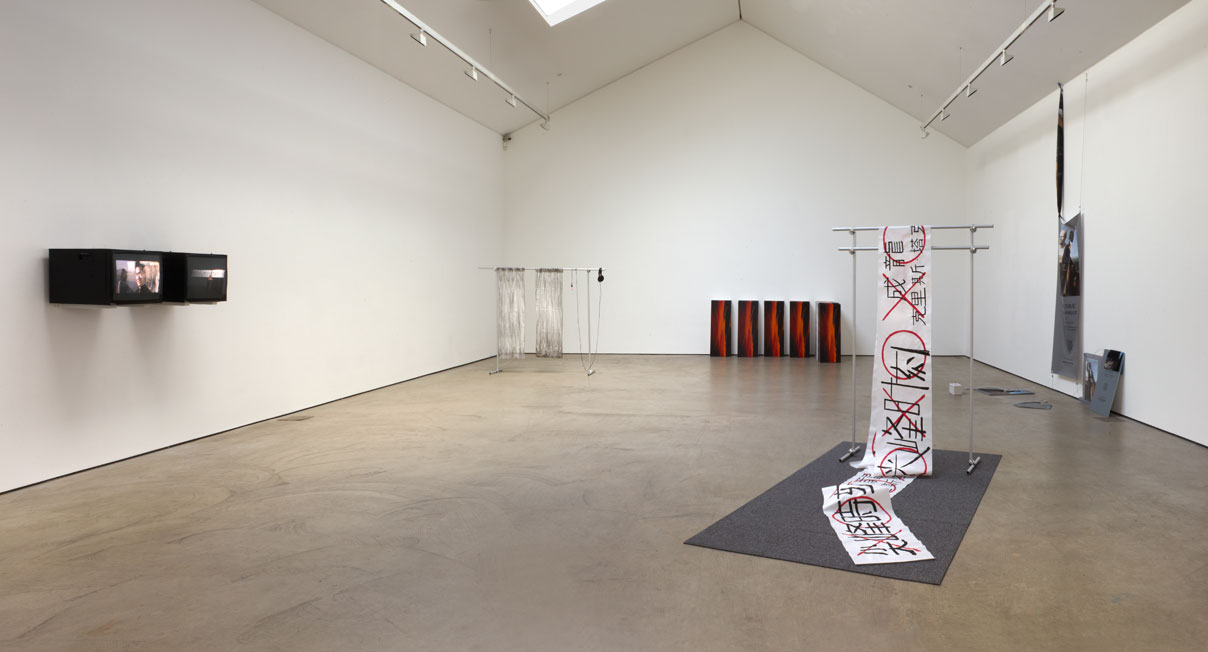
Juliette Bonneviot’s ‘gesture’ can be seen as an instance of ‘Transmission by Copying,’ even though she has never taken the ten-plus-hour-long flight to the other side of the world, nor has she heard of Xie He. Her ‘original’ is the Chinese version of the poster of a Hollywood film. The scroll wiggles down from what resembles a ‘typically Oriental’ aluminum arch with clumsy characters, which, strangely enough, are written in the ancient Chinese style of seal script. The red circles and crosses, denoting right and wrong, are copied from Gu Wenda’s Mythos of Lost Dynasties, a pseudo-character series that pointedly expresses appreciation and disapproval. Bonneviot’s writing thus echoes a style of calligraphy that is more than two thousand years old, filtered through the revised ‘copy’ of a contemporary Chinese artist-calligrapher very much steeped in his culture’s aesthetic tradition. And, while Bonneviot is not endeavoring to attain the ‘Spiritual Resonance’ that Xie claimed as the goal for all painting, she instead achieves an intriguing scrutiny of a series of simplified symbols. This unites Bonneviot with the massive degree of ‘Transmission by Copying’ currently taking place in China. The copycatting gadgets imitate not only the appearance but also the brand name of major Western products, revealing the Chinese public’s image of the contemporary lifestyle of luxury – one of the more extreme examples of Bourdieu’s ‘symbolic capital.’ This unprecedented process is also scrutinized by Bonneviot in her ‘gesture,’ wherein mass production is captured through ironic symbols: the sweet ‘candy bar’-shaped music player hanging helplessly alongside the silk and ink. The brand of the player, iRiver, easily recalls the fame of iPod. But, upon further scrutiny, it turns out to be a South Korean product. And so what? It is as far as forever, seven time zones away, and China and Korea are so close to each other. From here, < even I can barely see any difference.

Nevertheless, the soundtrack in those players brings another kind of ‘Spirit’ to the ‘Copying.’ The sound of Chinese instruments and electronic drums showcase a blend of acid rock fused with the exotic. This soundtrack also draws the outline of a comfort zone. It’s mute and undisturbed inside, protected by the boundary of distance and language, and noisy and chaotic outside, stuffed with a nod towards the African continent as well as absurd poetic monologues.

I have a snow globe in my hands, and there’s a tiny little double-roof pavilion inside, as well as a little oriental man in a white garment, standing on one leg, arms held up and balanced on his sides. It is not snow that covers the tiny little ground, but  yellow leaves. I shake the globe. From its base, the sound of a bamboo flute being played, while the leaves waving up and falling gradually around the little man reveal and then re-cover the black character written on the red background. I am guessing it reads ‘lucky.’ I stare at the globe. It is China. Almost.” -Li Qi

Jeongmoon Choi

Jeongmoon Choi TRIANGULATION BLOG 04
Jeongmoon Choi TRIANGULATION BLOG 15
Jeongmoon Choi TRIANGULATION BLOG 111

Jeongmoon Choi

Work from his oeuvre.

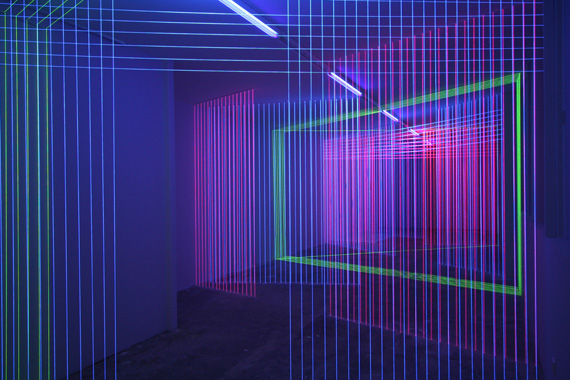
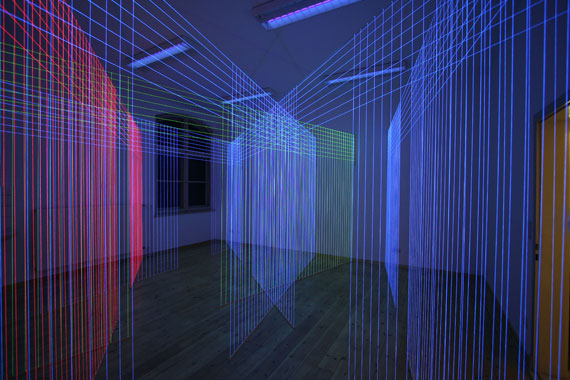
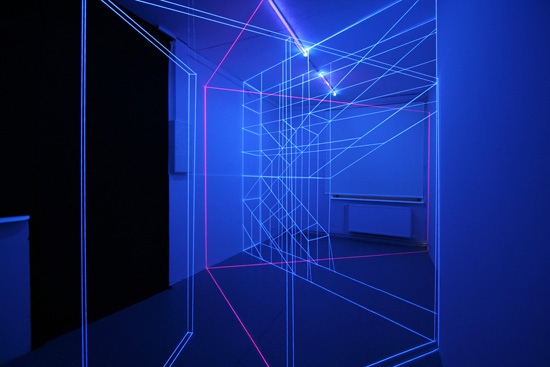
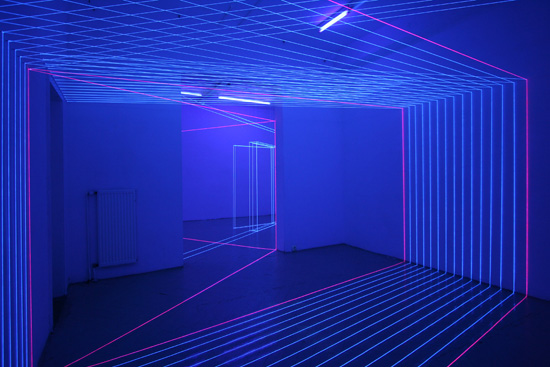
“Jeongmoon Choi works with thread and traces this three-dimensional line directly into volume to create illusions of perspective. The thread is coloured and used to outline or redefine the architecture of the spaces the artist invests. Drawing directly into space with her hand, the artist addresses questions about our environment, as well as about aspects of lodging and the role of nature in our urban spaces..” – Galerie Laurent Mueller.

“The drawings become project or even projection of an imaginary construction that takes form in its environment starting from a line, a thread, which represents the chronological decisions of a progression in space. The transition from a plane to a volume is just as important as the comparison between interior space for living and exterior space for living.” – Galerie Laurent Mueller

via Triangulation.

Michael Sellam

1Exp
B_01
BMF_1

Michael Sellam

Work from his oeuvre.

“From the moment that art ceases to be food that feeds the best minds, the artist can use his talents to perform all the tricks of the intellectual charlatan. Most people can today no longer expect to receive consolation and exaltation from art. The refined, the rich, the professional do-nothings, the distillers of quintessence desire only the peculiar, the sensational, the eccentric, the scandalous in today’s art. I myself, since the advent of Cubism, have fed these fellows what they wanted and satisfied these critics with all the ridiculous ideas that have passed through my mind. The less they understood them, the more they admired me. Through amusing myself with all these absurd farces, I became celebrated, and very rapidly. For a painter, celebrity means sales and consequent affluence. Today, as you know, I am celebrated, I am rich. But when I am alone, I do not have the effrontery to consider myself an artist at all, not in the grand old meaning of the word : Giotto, Titian, Rembrandt, Goya were great painters. I am only a public clown–a mountebank. I have understood my time and have exploited the imbecility, the vanity, the greed of my contemporaries. It is a bitter confession, this confession of mine, more painful than it may seem. But at least and at last it does have the merit of being honest.” – Letter of Picasso to G. Papini, published in Rome for the review Livro Nero, 1952. Michaël Sellam, Paris. Published in ESSE n°57, spring-summer 2006.

Carlos Cruz-Diez

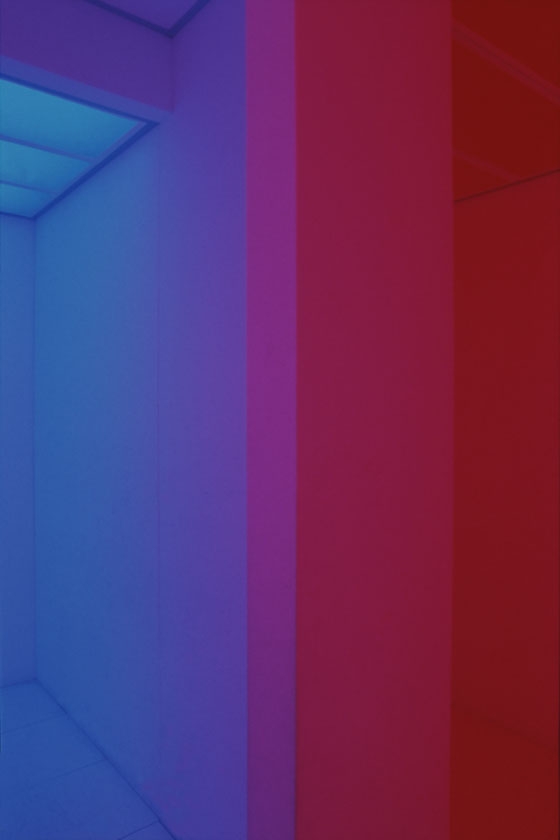
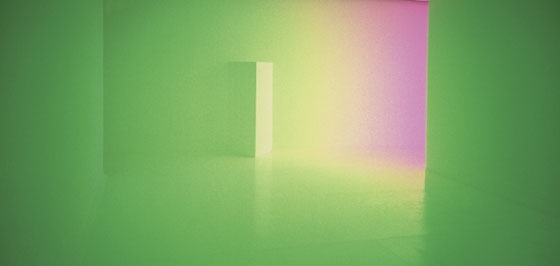
Chromosaturation_Grenade_1989_hr_r
Chromosat-CorpGroup-rouge_hr_r
Chromosat-Gelsenk-azul_hr_r
Chromosat-CorpGroup-vert_hr_r

Carlos Cruz-Diez

Work from Chromosaturaion.

“These works relate to the idea that in the origin of every culture lies a primary event as a starting point. A simple situation that generates a whole system of thoughts, sensitivity, myths, etc.

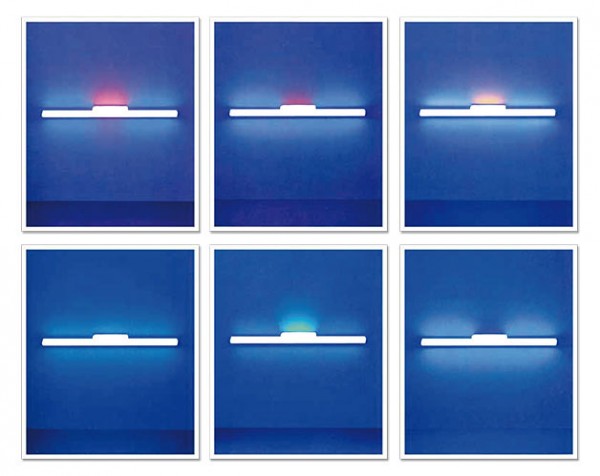
The Chromosaturation is an artificial environment composed of three color chambers, one red, one green and one blue that immerse the visitor in a completely monochrome situation. This experience creates disturbances in the retina, accustomed to receive wide range of colors simultaneously. The Chromosaturation can act as a trigger, activating in the viewer the notion of color as a material or physical situation, going into space without the aid of any form or even without any support, regardless of cultural beliefs.” – Carlos Cruz-Diez

José Dávila

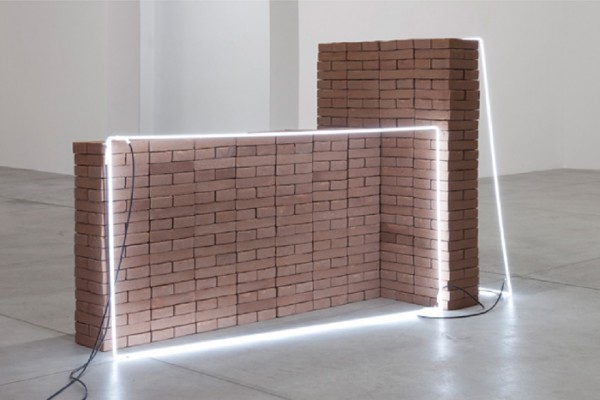
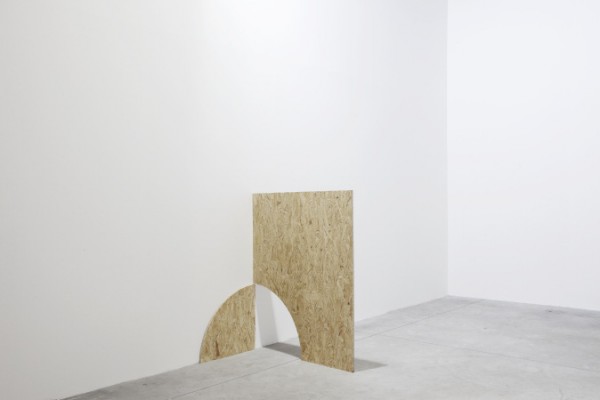
Jose Davila TRIANGULATION BLOG 01
Jose Davila TRIANGULATION BLOG 08
Jose Davila TRIANGULATION BLOG 04
Jose Davila TRIANGULATION BLOG 05
Jose Davila TRIANGULATION BLOG 09

José Dávila

Work from his oeuvre.

“José Dávila takes simple industrial, building materials with appropriated images as his medium to create works that contest the inherent qualities of modern architecture and other constructed spaces.

As Marco Scotini explains “José Dávila’s artistic practice ranges from photographs to the construction of architectural models. Each time, he produces a specular duplicate of an actual piece of architecture in which the reproduction stands as a reduced, precarious and defunctionalized but versatile and open model.

What Dávila does is create a space that portrays the architecture as such, with interventions that refute the intrinsic qualities of the constructed spaces and question the languages that define their credibility: a column that does not support, a false wall, scaffolding that is not needed and architectural models created by circumstance rather than design are some of the elements that recur in the Mexican artist’s work.” – via Triangulation

Seth Price

SPR-12_054L-800x600 SPR-12_xxx7L-800x600 SPR-12_xxx5L-800x573

Seth Price

Work from his exhibition at Friedrich Petzel, New York.

“Seth Price presents a show of new paintings. In various media. Portraits of envelopes and letter paper. What is this, the new paper culture? Another breast beater about how “we” are becoming disconnected and solipsistic, thanks to our hyperspeed digital blah-blah? So it’s a return to snail mail. And we’re getting into stationery. Maybe you could work in a play on “stationary.” Or just, “Paper Trail: Seth Price at Petzel Gallery.”
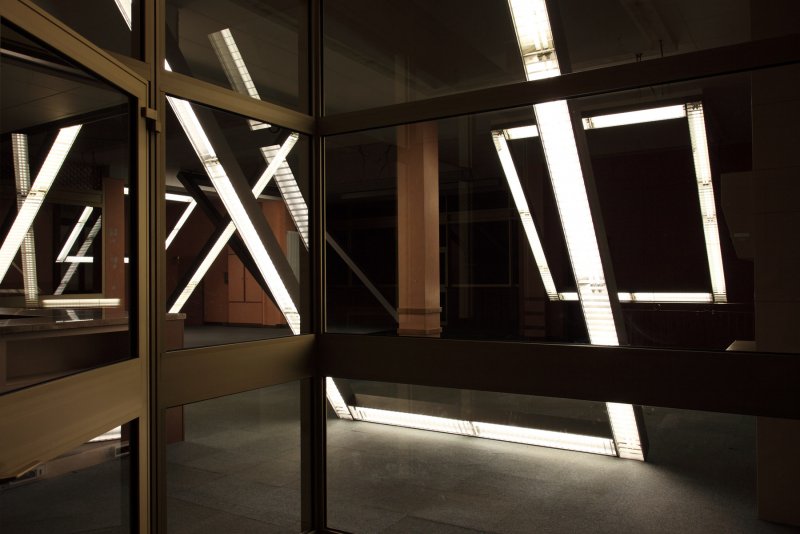
Because these Photoshop layers are real world status, fuck digie. We got back-of-the-envelope sketches, designers’ tipsy doodles, scrawls on 1970s cocktail napkins. All that, writ large. “Back of The Envelope: Seth Price at Petzel.” But see, that’s just taste. Like people who say: “Look, put it this way: I’d rather work out drunk than hung over.” You’re a bubble bath, box of chocolates, and Chardonnay type gal; I’m a guy who likes to get home and kick back, uncork a nice red, feet up, Bach deedle-dee-deeing, mushrooms bubbling in cream sauce. “Pushing The Envelope: Seth Price at Petzel.”
Like people who still grate their parmesan fine instead of roughing it into irregular scree, which gives a dish some tooth. We like heterogeneous crude, not silk-milled slick. Get with it. Same for sea salt, incidentally: “Don’t muff the rough stuff.” Definitely something here about eating and drinking. All packaged-up though, which, now, that shit really got started back in the ‘80s with Yoplait, Capri Sun, and Fruit Roll-Ups—“I’m Going to the Post Orifice: Seth Price”—and weird packaged sweets, Japanese mouth-melters in inscrutable wrappers, we don’t entirely get it but we admire the wrap, we understand processed product, the way bacon’s a pork product and plywood’s a wood product. PShop IRL, don’t mess. Like stupid designers who forget that their shining, lapidary screen images will end up on dull paper, poorly printed, logos intruding.

Because it’s underwritten, of course. Spoken for. Might have called this show “Underwriters.” The power of the purse. Which only means the evolution of the fashion industry to the point where it’s all about bags. “Whatever else you’re turning out next season? Make sure we got some new shit for stowing our old shit.” Garment bag, sleeping bag, body bag, shit. Sport it, flaunt it, slip it on, slip it in. Cinch and line, zips and bucks, loop de loop. Insides and outsides. Doing the whole “inside/outside” riff, but dead bang flat. Like people who think Helmut Lang pioneered special rinses, when point of fact native son Ralph Lauren done it in the early ‘90s, those antique industrial washers he stumbled on down South, the Carolinas or something. And he was just catching a ride on some slipshod denim folkway. Fashion is underwritten by bad behavior.

To be soft yet hard: what fulfills this mandate? In fact, a turd. Which is precisely how some see folk art: a soft transmission, hardly received. “Partial Post: Seth P.” Like people who “watch every penny,” because why, because they’re afraid it’s going to kill them? And lord, what about that title. Folkloreus is what, a Roman deity? Lord of the Underwriters. “What lies beneath.” Some old bread crust with a beard, dropping folksy quips: “Look bad and stupid, inevitably you will appear interesting, even fashionable.” God of the sly and apt. “US Letter Format: Seth Price.” Who said that? Just folks!” – Seth Price at Petzel