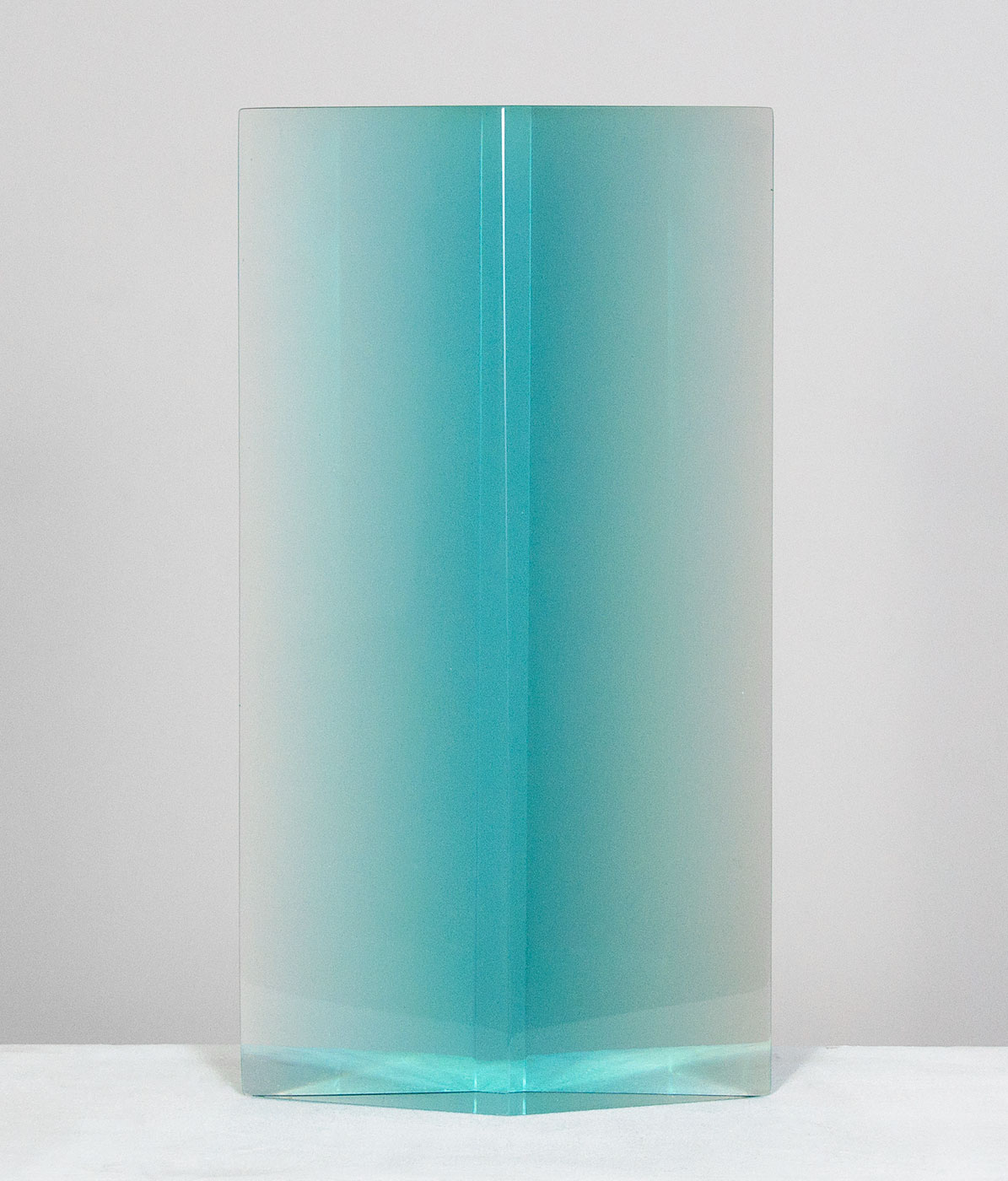
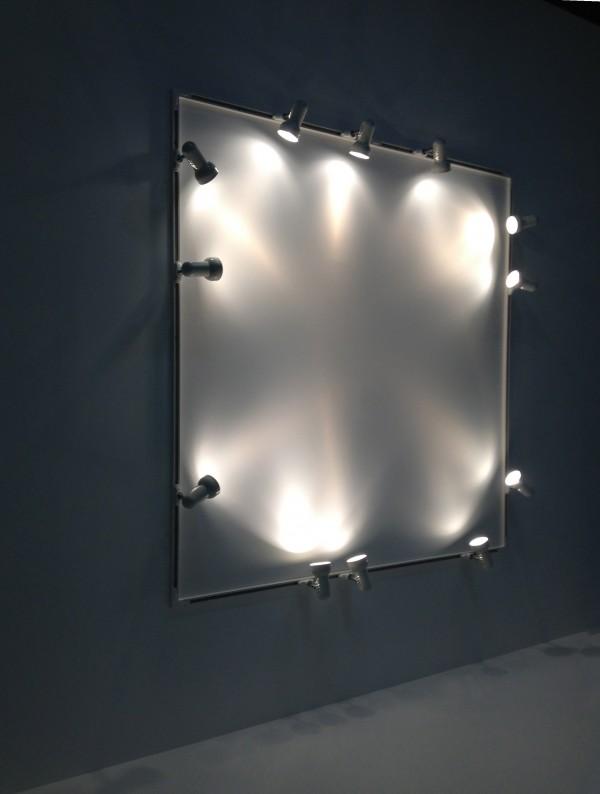
“The sculptures that Mr. Valentine has made over the last four decades — quasireligious incarnations of coastal light and air made from some of the most sterile, synthetic materials ever produced by American industry — are not exactly low-end bartering chips. They have been showing up with increasing regularity in prestigious Chelsea and Los Angeles exhibitions, and last year one of his early pieces, from 1966, was acquired by the Museum of Modern Art, where its now commands the middle of a room devoted to Minimalism. But for many years it seemed as if Mr. Valentine’s name had slipped off the list of artists celebrated for forging a distinctly West Coast version of Minimalism in the 1960s and ’70s, and that his work had been relegated to a kind of period curiosity. One of his most ambitious pieces was long thought to be lost: a pair of 3,500-pound towers made of solid cast polyester resin, imperious 12-foot-tall monoliths that ended up (for reasons beyond Mr. Valentine’s control) residing ignobly on their sides, looking a lot like elevator lobby screens, in the headquarters of the medical supply company in Deerfield, Ill., that commissioned them in 1975.” – New York Times
As of yesterday, Paglen’s project with Creative Time is in Geostationary Orbit.
“In 1963 NASA launched the first communications satellite “Syncom 2” into a geosynchronous orbit over the Atlantic Ocean. Since then, humans have slowly and methodically added to this space-based communications infrastructure. Currently, more than 800 spacecraft in geosynchronous orbit form a man-made ring of satellites around Earth at an altitude of 36,000 kilometers. Most of these spacecraft powered down long ago, yet continue to float aimlessly around the planet. Geostationary satellites are so far from earth that their orbits never decay. The dead spacecraft in orbit have become a permanent fixture around Earth, not unlike the rings of Saturn. They will be the longest-lasting artifacts of human civilization, quietly floating through space long after every trace of humanity has disappeared from the planet’s surface.
Commissioned and presented by public art organization Creative Time, The Last Pictures is a project to mark one of these spacecraft with a record of our historical moment. For nearly five years, artist Trevor Paglen interviewed scientists, artists, anthropologists, and philosophers to consider what such a cultural mark should be. As an artist in residence at MIT, he worked with materials scientists to develop an ultra-archival disc of images, capable of lasting in space for billions of years.
In September 2012, the television satellite EchoStar XVI will lift off from Kazakhstan with the disc attached to its anti-earth deck, enter a geostationary orbit, and proceed to broadcast over ten trillion images over its fifteen-year lifetime. When it nears the end of its useful life, EchoStar XVI will use the last of its fuel to enter a slightly higher “graveyard orbit,” where it will power down and die. While EchoStar XVI’s broadcast images are destined to be as fleeting as the light-speed radio waves they travel on, The Last Pictures will continue to slowly circle Earth until the Earth itself is no more.” – Trevor Paglen
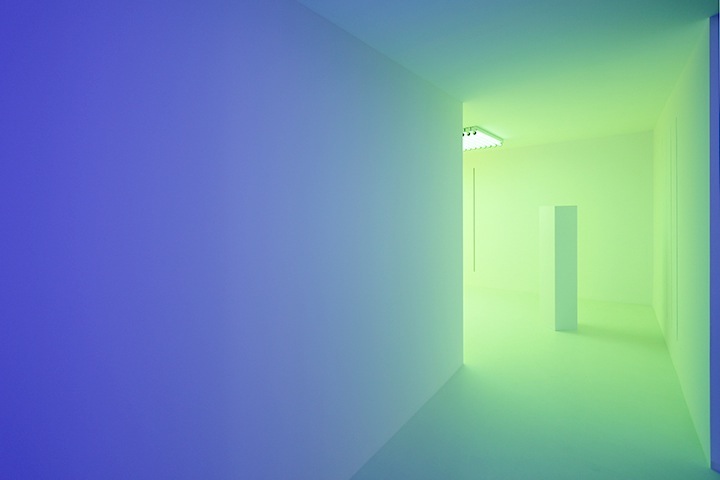
“Carlos Cruz-Diez: Color in space and time is the first retrospective of Franco-Venezuelan artist Carlos Cruz-Diez. The exhibition presents a selection of 120 works made from 1940 to the present, which bring the public to a large production center for art artist of the twentieth century, with its theoretical contributions and plastic on color perception. A student of the origins and optical effects of color, Cruz-Diez bases its proposal on color, conceived as an autonomous reality amending in time and in real space, without the help of the form and even without support. In his view, the color depends on the movement of the viewer in front of the work and involves a participatory experience. The starting point for the search of Cruz-Diez color implies instability own color. In his view, the color is not a pigment attached to a solid surface but a situation resulting from both the projection of light on objects like the way this light is processed by the human eye. It involves even all the intensity of an interactive experience in the extent that the color depends on the observer position at the work. Cruz-Diez For the artist’s task is to create situations that trigger the dialogue between the stable and the unstable nature of color on a myriad of supports activated, in turn, through multiple strategies and unconventional materials. paintings are included , drawings, prints, chromatic structures and environments, as well as models and a documentary on its draft urban interventions.” – Museo Universitario Arte Contemporáneo (translated via Google)
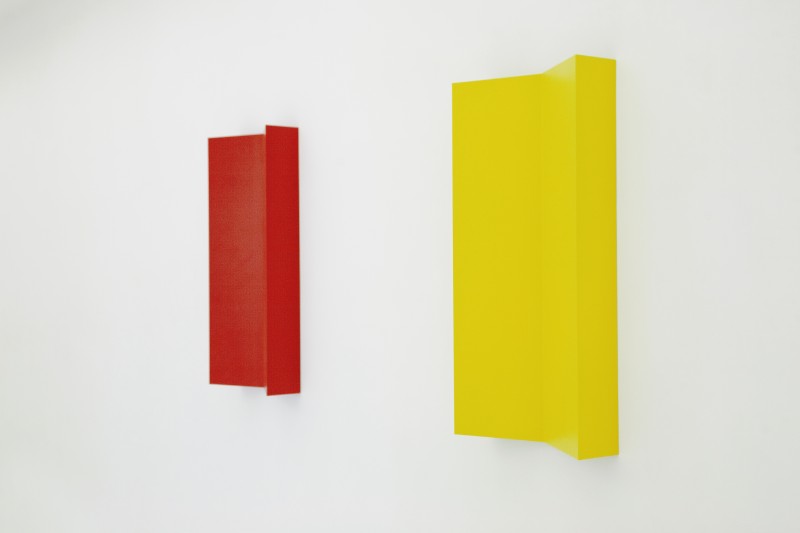
“Deschenes and Posenenske, separated by time and geography, recast questions of form, production, distribution, ontology, consumption, seeing and displaying. In this constellation, reversals are operating as points of intersection: uniqueness vs unlimited reproduction, materiality vs technologically produced objects referencing consumer goods, fragility vs sturdiness. The conversation hits moments of smooth union in the exploration of the possibilities of abstraction, the creation of space both inside and outside the work, the continuous engagement with the specific medium (photography and sculpture respectively), while ever expanding beyond them.
Charlotte Posenenske, one of the few artists in Germany to work within Minimalism in the 1960s, produced sculptural pictures, mostly monochrome surfaces made of steel and aluminum, sprayed with weatherproof RAL standard colours. Her critique of commercialism and her re-interpretation of the role of the artist still resonate as radical. The industrially produced Reliefs are conceived as multi-panel arrangements that can be re-configured in endless combinations and positions: on the floor, on walls, high, low, indoors, preferably outdoors, in non-art contexts. Posenenske restricts the display of the parts only slightly by stipulating 3 conditions, adding effervescence to their playful modularity.
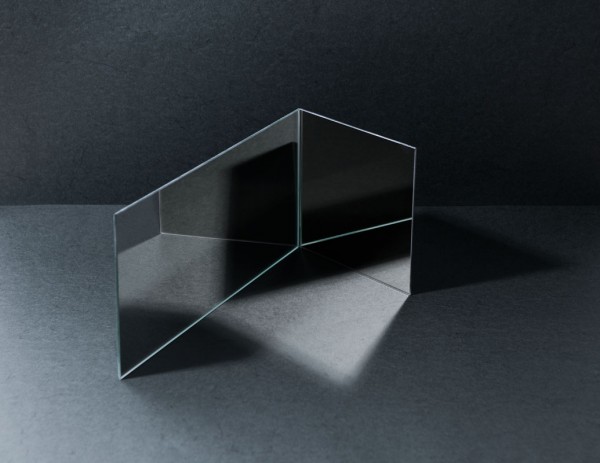
Liz Deschenes’ self-referential pictures are systematic and poetic explorations of the language and mechanics of photography. Instead of locking time in permanent forms, her camera-less images take this medium’s principal connection to the real, to its elemental components. Exposing black and white photo sensitive paper to the night sky, or color paper to intense daylight she produces semi-reflective fields, often with mirror-like properties. Liz Deschenes responds to Posenenske’s yellow, red and blue, convexely folded, concavely canted Reliefs with a series of silver corner pieces and grey graphite rectangular corners suspended from the gallery walls. The photograms bracket the works around them, mirroring them via Deschenes’ decision to reference the standardized dimensions of Posenenske’s aluminum works. The new matte photograms, produced for this exhibition at H 100 cm and W 50 cm correspond directly to the Reliefs– a double-take, not quite a mirror image, but close, another fold in her reflection on the art object becoming the actual embodiment of its “subject-matter”.” – Melas Papadopoulas
“Compared with the existence of space or matter, the existence of time is always something fragile, something paradoxical, as though it is not quite real. My work is often a study of photographic reality and plays with the concept of time. I am fascinated by the wreck or even origin of life. Major scientific issues are sources of inspiration for the creation of my work.
“Creation and destruction are necessarily, because things fee to pay each other in a manner determined by time.” Simplicius (6th century philosopher)
I believe there is a secret life hidden behind materials or situations that at first glance seem self-evident. I am constantly looking for materials that can tell more than they intended. By taking materials from their original context and bringing them into a new context, transformations of function and meaning are created. By creating these transformations myself and then capture them photographically as real, a kind of absurd dream world reveals which is still very recognizable.” – Pim Leenen
Joel Holmberg’s work spans sculpture, websites, and digital images. Imagery and forms seemingly come from any source imaginable, spanning production from all points in history, from Chinese Qing dynasty cabinets to contemporary flat panel screens. His work incorporates a variety of contemporary means of production, from 3D printing to the the very tactile process of layering inkjet cartridge ink over moulded forms. Tellingly, a past statement on Holmberg’s website read that he “creates art with computers and his bare hands.”
Posted in Uncategorized | Comments Off on Joel Holmberg
“Bertrand Lavier has built a work which, according to various “sites” opened but never closed, invites his audience to free itself from its certainties. Playing with the categories, codes, genres and materials, art Lavier manifest an inclination for addition, crossing, hybridisation transposition. The retrospective presented by the Centre Pompidou, organized thematically and not chronologically proposes, some fifty works, a journey that highlights the company short-circuit identities, an exhibition that seeks equal eye and mind.” – The Centre Pompidou.
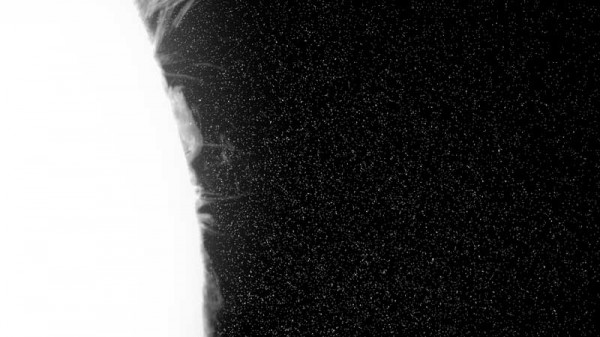
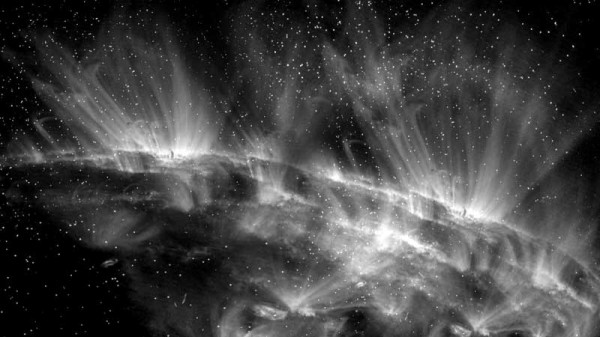
“Brilliant Noise takes us into the data vaults of solar astronomy. After sifting through hundreds of thousands of computer files, made accessible via open access archives, Semiconductor have brought together some of the sun’s finest unseen moments. These images have been kept in their most raw form, revealing the energetic particles and solar wind as a rain of white noise. This grainy black and white quality is routinely cleaned up by NASA, hiding the processes and mechanics in action behind the capturing procedure. Most of the imagery has been collected as single snapshots containing additional information, by satellites orbiting the Earth. They are then reorganised into their spectral groups to create time-lapse sequences. The soundtrack highlights the hidden forces at play upon the solar surface, by directly translating areas of intensity within the image brightness into layers of audio manipulation and radio frequencies.
…
Early on in our fellowship we came across one still image of what turned out to be the Sun. We were fascinated by this image and wondered why we hadn’t seen anything like it before. After some rooting about we discovered there were archives full of these documents of the sun but they required specialised knowledge just to extract each individual still from the data package it was stored in. We set about learning from the scientists the methods of extracting them and over the course of three months we downloaded gigabytes of archives. From here we turned these files into time lapse sequences according to their spectral frequencies and the film Brilliant Noise began to emerge. The visual noise in the images is caused by natural and man made interferences. The white noise is cosmic rays impacting the CCD of the satellite camera, we also see frame dropouts and one frame taken from a ground based observatory which shows the silhouette of a plane as it crosses the path of the observatory. We wanted to leave these flaws in as they reveal something about the tools man uses to capture these images and makes them more tangible. These disturbances are routinely removed by NASA to create a cleaner image, they then go on to colourise them.
The sound is derived from solar natural radio and controlled via digitally sampling the intensity of the brightness of the image. The sound is intrinsically born from the image, creating a symphony by the Sun. By doing this we wanted to enhance the sun as natural phenomena. Working with a documentary approach, we wanted to indulge in the raw material that is our Sun, using the image to control the fluctuation of the sound would emphasize the transitions and processes taking place…”
“…Using this as a starting point, Gil explores different language systems through the translation and fragmentation of specific texts. At the same time, this allows him to reflect on language’s different layers of interpretation and meaning, and their non-communicative employment, through various conceptual strategies. Using a broad range of media (archive material, found objects, video, music scores, typography, computer graphics…) the artist investigates the relocation of meaning, the value of the object and the paradox of the viewer…” – Garciá Galería.
“…For Morellet, a work of art refers only to itself. His titles are generally sophisticated, show some word play, and describe the “constraints” or “rules” that he used to create them. Like other contemporary artists who use constraints and chance (or the aleatory) in their works (John Cage in music, the Oulipo group in literature), Morellet uses rules and constraints established in advance to guide the creation of his works, and he also allows chance to play a role in some of his compositions.
His rigorous use of geometry tends to create emotionally neutral work, and has placed him close to Minimal art and Conceptual art in his aims. He shares a particular affinity to the American artists Ellsworth Kelly, Frank Stella and Sol LeWitt…” – Wikipedia