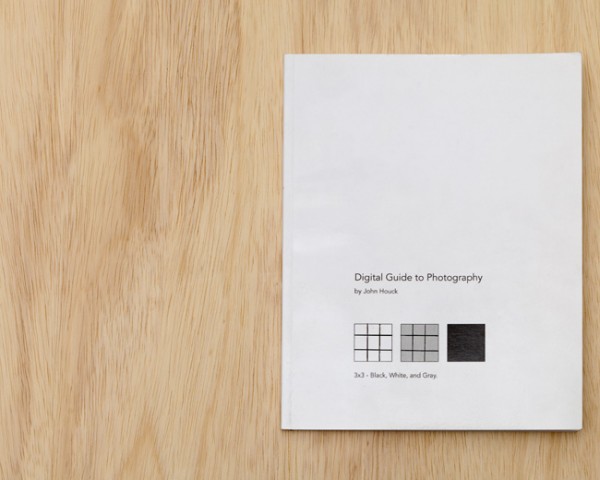
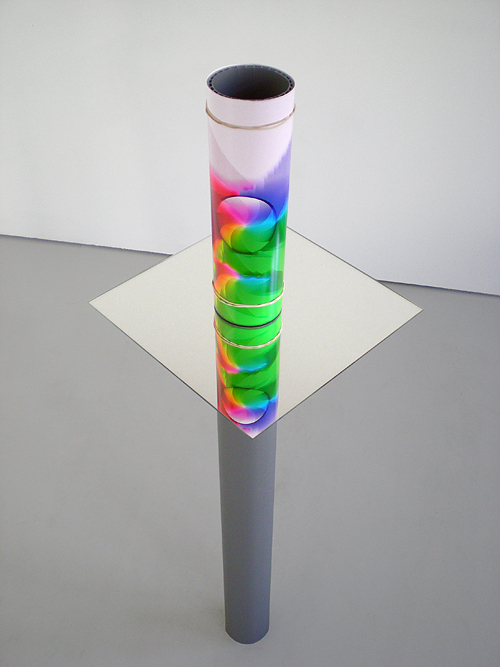
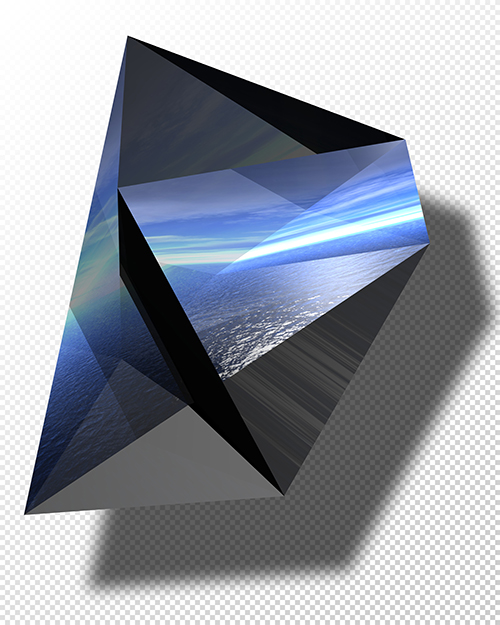
“Digital Guide(s) to Photography – An expanding series of books generated with custom written software. The software generates every combination of pixels for a given grid size and set of colors. The project is working toward generating every combination of pixels possible on a modern digital display, thus producing ostensibly every digital photo that could ever exist. This set would even include the image of you reading this text.” – John Houck
“…The idea of Terra Incognita and scientific exploration is at the heart of these projects.It is a constant search consisting in attempting to give depth and scale to landscape-objects made exclusively in studio. How by artificial reproduction might one get closer to nature’s perfection? Every photograph begins as an object, ahand-crafted construction before the photographic production. It is important to notice the stages in which the object takes shape and acquires all of its value through the final photograph. The artificial reproduction allows one to express an idea in its exactness. Whether inspired by real things or not, these pictures are hypotheses of a certain reality.Landscapes (their représentations) have always been mere interpretations of real space, and thus situated somewhere between illusion and myth. These images are a personal, finite cosmos. A territory I have delimited. What is important is to create the seeming of an existing physical space. Hence perception can sway between the impression of reality, the illusion and its interpretation.My work aims to blur the boundaries between space and time through photographic medium.” – Charles Negre
“In an attempt to disrupt the haphazard collection of archived videos that YouTube has become, artist duo Comenius Roethlisberger and Admir Jahic transformed the visual (and virtual) language of “broadcasting” into a physical medium by producing drawings on heavy handmade paper and recreating virtual references by allowing elemental art materials to do what they do best and add to the confusion.
…
The resulting collection is both distressing and humorous in its ability to highlight our often vulgar predilections.
Two-dimensional depictions of YouTube drawings, have empowered the pen as an anonymous cultural ambassador.
Commissioned works have already been prepared on request for exhibitions and private collections in Kuwait, Paris, Hamburg and New York.
While this phenomenon has already and will continue to fascinate theorists and strategists of all sorts, for most users, it is a childlike, secure, fascinating (often voyeuristic) and absurdly informative trip. So much to learn, listen to and laugh about. Without You Baby, There Ain’t Know us, joins in this celebration and comments on it through commitment, time and naively stylized depictions of their favorite YouTube clips.” – Colette
“Other works explore the notion of the real self verses the virtual self. For example, in Riley Harmon’s video works “Passenger 4 (Laurel Canyon)” and “Passenger 5 (Collateral),” the artist … inserts himself in car scenes in movies, as if he was actually in them.
“A lot of the things I make often have to do with simulation, virtuality and network culture,” Harmon says. “These pieces are experiments in using my visual-effects skills to see if it was possible to replace actors in film scenes.”
What is most amazing is that each scene looks believably real, but they are quite humorous. Harmon shows skill not only technically, but as an actor because in each, not a word is spoken. Only expressions are exchanged between the actresses in the scene and himself. That makes it seem very real, but funny when you realize he is a virtual stand-in.” – text from Pittsburgh Tribune-Review on Getting Closer
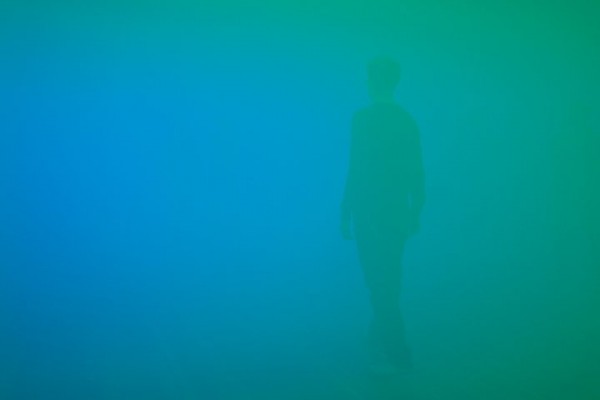
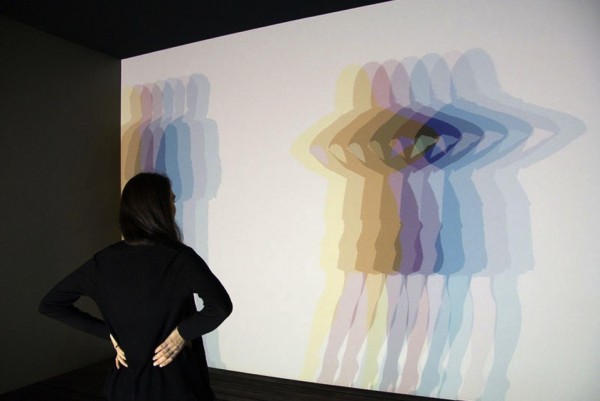
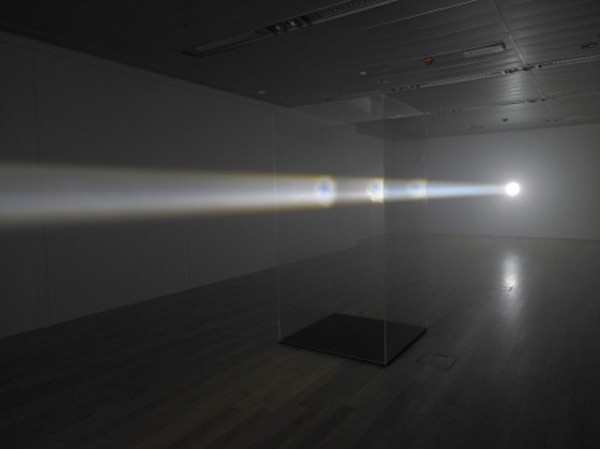
“Everything is situated within a process – everything is in motion. This not only applies to comprehensive systems like entire societies or the development of an international search engine on the internet, but also to our perception of a given space, here and now, and to our interaction with other people. All these relationships are evolving and they are not merely situated in the midst of their time; rather, they are of time.
Despite this, contemporary culture has a tendency to objectify a vast quantity of systems, relations, situations and ideas by depriving them of their temporal dimension. As a result, we have grown accustomed to regarding objects as timeless and our conception of space has been formalised. The entertainment industry, especially, has developed a strategy of communication that consciously omits the notion of temporality, since this makes it easier to set up universal utopias and desires for consumers. The separation of time and objects is thus to a large degree driven by commercial aims.” – Olafur Elaisson from his essay Your Engagement has Consequences.
“William Anastasi is one of the founders of both Conceptual and Minimal Art — relevant works were made before the movements were named. These works, starting in 1961, include Relief and Microphone, among the earliest examples of Conceptual Art. Between 1963 and 1966, we have Sink — a clear demonstration of entropy — and Issue and Trespass— important forerunners to an entire class of works involving deconstruction. Sink (which combines his Conceptual and Minimal approaches) and En Route, are among the earliest forays into Minimal Art. Holding that after Duchamp there was no earthly reason why a blind man could not be an artist, his unsighted drawings were also started in 1963. His 1966/67 Six Sites broke the ground for an entire genre of exhibitions under the rubric Site Specific. Underlying his practice is his sense that the only thing that interests him about taste is that it is always changing.” – from his website.
“…With sources originating from digital readymades or appropriated video, each artist modifies, redirects and redistributes the footage using a wide array of alterations, from simple editing to more detailed and complex reconstructions. The digital realm casts a dark shadow over the initial intent of images and our preconceptions of their meaning and usage into a new alternative mode of existence where the source becomes either a catalyst or an added layer of a whole new work.” – from the press release for Just Add Water at De Soto Gallery
“In the ancient legend, gestures have different mysterious powers. With these gestures and singings, people may get courage, mercy, intelligence or calm.
Collecting the gesture and touch data to generate and control the cloud. With the music sound, it will give you the mental and emotional balance.” – Xu Wenkai
There is a fascinating analogy regarding this work, and a compelling argument about the traditional roots of internet art over at Bad at Sports.
“Over the past forty years, Lynda Benglis has developed a distinctive and influential sculptural language. Benglis rose to prominence during the 1960s and ’70s, a time when her singular practice both intersected with and transcended the categories of post-Minimalism and feminist art. Benglis’s sculptures suggest a remarkable range of influences, including the gestures of Abstract Expressionist painting, geological flows, and ceremonial totems. They rely on both exposing process and crafting feats of illusion to create sumptuous forms.
…
Alongside her sculptural output, Benglis created a radical body of work in video, photography, and media interventions that explore notions of power, gender relations, and role-playing. These works function in tandem with her sculpture to offer a pointed critique of sculptural machisimo and suggest a fluid awareness of gender and artistic identity. They also contribute to an understanding of the artist’s objects as simultaneously temporal and physically present, intuitive and psychologically charged.” – The New Museum.
“The conceptual interests of my current body of work have surfaced from an obsession with space-time. In earlier projects I had dealt with space and time more directly in relation to perception, by creating video installations. But recently I’ve been more intrigued with how people use their (personal) space and (personal) time, which has led me to the computer and Internet.
Just like other artists of the past, my work reflects the environment I inhabit. Today, this means a world of human-computer interaction. I’m fascinated by the aesthetics of operating systems (desktop wallpapers, screensavers, alert sounds, etc.) and the readily available functions of the software (stock tools and effects/ filters). These elements create an atmosphere for the user that is highly specific and dynamic, while remaining neutral and subtle, waiting to be customized and activated. These are the qualities that inform my visual vocabulary.
The sources of my work are almost always taken from the web in some form – a song I enjoy, a video of something I saw in person, or just a JPG from Google image search. When I apply the tool to the subject, it often yields two different results – funny/ direct or serious/ abstract. My goal is to have the two meet and communicate beyond the sum of their parts.” – Adam Cruces