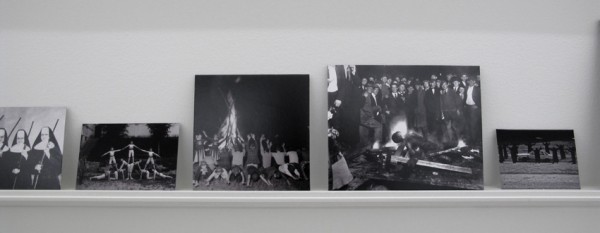
“The work Everything Is Borrowed consist of a selection of collages made from my ever-growing collection of found images, the collection is constantly undergoing structuring, categorizing, organizing and reorganizing. I’m interested in the connections and similarities I find between famous works of art and pictures made by anonymous people. Finding images on the internet is just like finding something in the public domain, internet based material becomes general cargo. As I see it, all art and creativity is a result of old ideas mixed with each other in new ways.
Interest in so-called “found photography” has increased in its digitalized form, probably because the pictures have been detached from their origin and therefore cant be tributed to any one in particular, like postcards in a flea market. On pages like Flickr and Ffffound the constitution of the collection and the persons ability to find interesting pictures is what gets credited by other users. Everything Is Borrowed serves as a staging of this new information flow and its consumption patterns.” – Erik Berglin
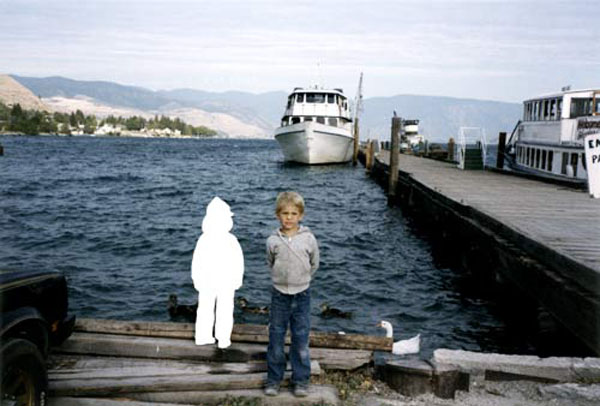
“I cut out my likeness from each photo as a way of reimagining the moments and to reconcile unremembered or painful past moments with my present self…The photographs are open-ended, ambiguous, and dishonest.” – Aaron Gustafson
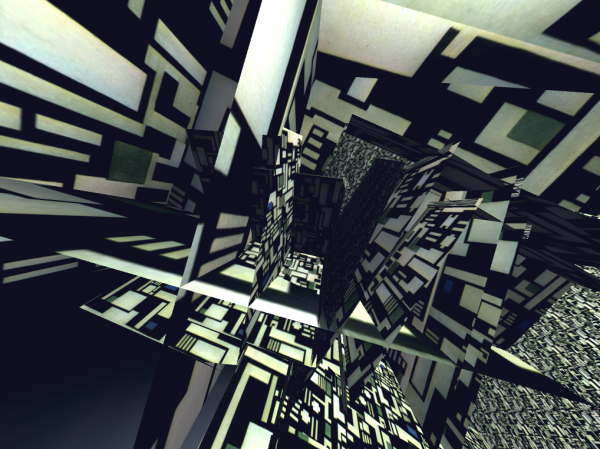
“After a rough week at work you contact an acquaintance who can get you Rhodopas M60A for a good price. The acquaintance gives you an eight-digit phone number that connects you to the shrill baud of a fax machine. Within a quarter-hour your phone rings, a low-toned voice verifies your address and credentials. When the delivery man shows up you buy two capsules of pure M60A, both sold in separate small manila envelopes. Sizing you up as inexperienced he gravely advises these pills can be snorted or distilled to make a tincture. Not wanting to waste them, or chance preparing them incorrectly, you break the capsules over your desk, where the vivid shade of blue aches to behold. You decide to take both of them. After using a library card to arrange the M60A into tidy lines you get up, pour a glass of water, turn on the old Sega Dreamcast, shut the blinds, and light a single candle. Seated at the desk, you place a makeshift straw, a discarded metro ticket, into your nostril. Inhaling deeply you feel the synthetic ultramarine powder flood up through your sinuses.
You try to stand up and feel immediately disoriented. After moment of darkness, you find yourself in a long blue monochrome hallway. As though in a trance, absorbed into the static blue all around you, swallowed like a ghost into its thick haze, you are no longer able to determine how much time has passed, how quickly it is passing, and how long you will be trapped here. . .” – extra extra
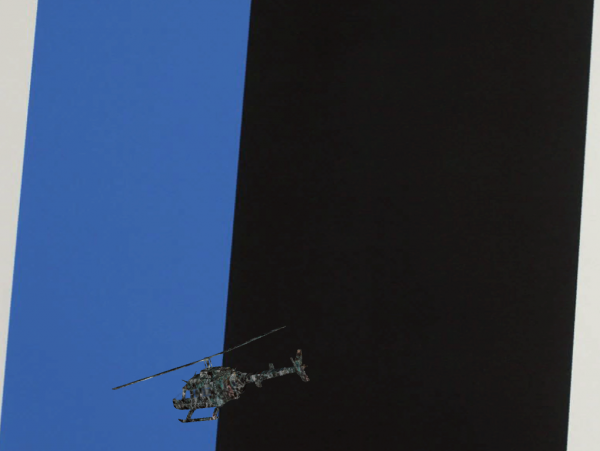
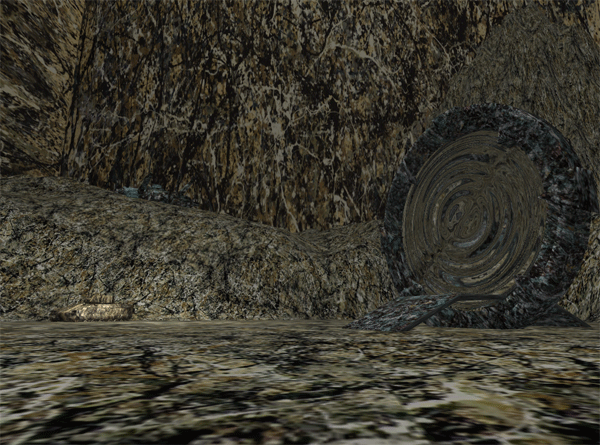
“My work is often based around an interest in people’s perception of, and reaction to, archetypes, associations and cultural memory – and how they might try to relate their previous experiences to something they’ve never seen.
‘Suspension of disbelief’ is the phrase I’m interested in – which is to believe what you see in order to entertain yourself in your experience of plays, movies and video games.
During this experience, we often make judgments that are automatic. I am interested in interrupting this process, and causing you to feel differently towards what you see. ” – Riyo Nemeth
“One Hundred and Eight is an interactive wall-mounted Installation mainly made out of ordinary garbage bags. Controlled by a microcontroller each of them is selectively inflated and deflated in turn by two cooling fans.
Although each plastic bag is mounted stationary the sequences of inflation and deflation create the impression of lively and moving creatures which waft slowly around like a shoal. But as soon a viewer comes close it instantly reacts by drawing back and tentatively following the movements of the observer. As long as he remains in a certain area in front of the installation it dynamically reacts to the viewers motion. As soon it does no longer detect someone close it reorganizes itself after a while and gently restarts wobbling around.” – Nils Völker
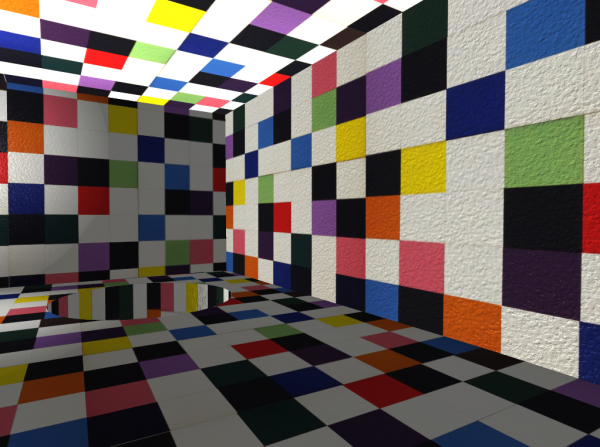
“Landscape Permutations is a series of imaginative recombinations of specific sites within my hometown – Red Deer, Alberta. In it, I investigate the relationship between a place and the specific sites that make up its (sub)urban landscape. I began this series by asking, what does it mean when different sites, at particular points in time that they are photographed, can easily substitute for the same place? Do we lose the specificity of the site, or does the repetition of these urban elements – pulled together – illuminate something about the specificity of place? While these images produce new spaces, they nevertheless feel eerily familiar.” – David Semeniuk
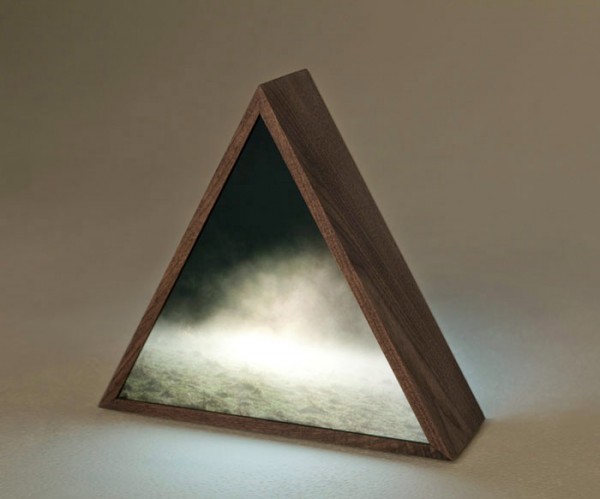
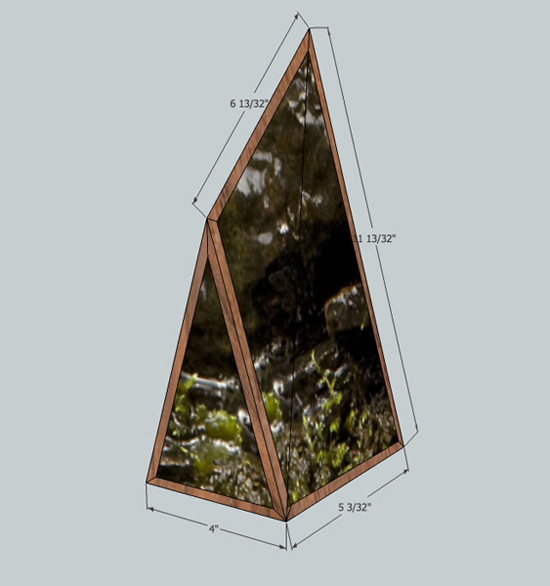
“The words of the self-proclaimed ‘para-photographer’ evoke the grounds for my formal explorations with photography. My creative process is largely informed by my concern with the impact of accelerating technologies on human perceptions of and relationships to nature.
My relationship to photography is a transformative one. The images in this portfolio document my experimental process of reworking nature-based imagery into nature-inspired, three-dimensional, forms. I am particularly attracted to creating an elevated experience of photography. Sacred geometry, alchemy, and architectural philosophies of visionaries such as Rudolph Steiner are key to the development of my work. Together my pieces assemble a personal vision of a contemporary nature culture.” – via HAFNY.
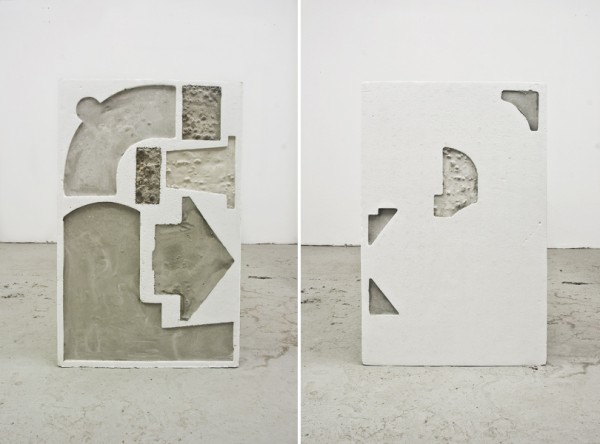
“For the concrete block piece, I substituted colored plasticine for mortar. In this position, the plasticine becomes filler that describes and embellishes the in-between spaces of the wall. Permanent Fern is made with a plastic plant and a cast generated from the cardboard shipping box it arrived in. Primer is part of a larger series of discarded foam packaging that I found near my studio and filled with various grades of concrete. I like thinking of the foam as a cultural blank spot that gains new purpose as a shape generator.” – Ethan Greenbaum
“When I first saw Blue Velvet back in 1986, I actually felt kind of bad for Isabella Rossellini. Her performance was brilliant, but I always suspected that she was the sole sane person in a cast and crew of perverts and sociopaths. Maybe she didn’t know exactly what she was getting into until it was too late, and being the consummate professional, she didn’t protest when asked, as the Guardian so eloquently described it in a movie review, to submit to “a myriad of indignities.”
Twenty-four years later, the now 58-year-old actress is the star, writer, and co-director (with Jody Shapiro) of Seduce Me, a series of online shorts created for the Sundance Channel about the sexual proclivities of animals. Last August, her strangely erotic take on bedbug fucking went viral, thanks to a perfectly timed bedbug epidemic in New York City. There was something revelatory about watching Rossellini get stabbed in the gut with a penis knife while muttering with orgasmic enthusiasm, “He ejaculates into my wound!” It was a moment when many of us realized that Blue Velvet might not have been entirely a product of David Lynch’s twisted imagination….” – Vanity Fair
“Field-Works is a series of projects which reconstrust collective memories into cyberspace as a kind of video archive by using position data captured by GPS and moving image captured by Video. Simultaneous Echos is the most recent production of the series Field-works, composting video images and locational data captured by GPS, production was made in Londonderry, Northern Ireland, UK. The project is focused onto music production within a Field-works style cyber-space. It is a big challenge how can I organize sound materials into music composition. It could be only possible to have a certain collaborator who has skills and senses, but actually it had happened. Music composer Frank Lyons is a professor at school of Creative Arts at Maggie campus, University of Ulster. With his deep understanding from classical music to local traditional music, and of course of computer music helped this production a lot.” – Masaki Fujihata