Hector Llanquín

Hector Llanquín

Work from Sunset.

“This is a series of digital photographs of sunsets altered by a controlled download error. These files where bitmap transferred via personal messaging software (adium) from one place to another. After the file was completely downloaded the transfer is aborted. The final result is that the bitmap repeats the last horizontal downloaded pixel to complete the image dimensions. This was administrated by monitoring the downloading process to stop the transfer in a certain point of the image to create some relation between the image and the error.” – via Rhizome.

Heidi Specker

Heidi Specker

Work from D’Elsi (and an install shot from Im Garten).

“The 19th-century German landscape gardener Hermann Ludwig Heinrich von Pückler-Muskau introduced the concept of the English park to Germany. His gardens didn’t attempt to imitate or harness the wilderness; rather, they were deliberately cultivated and arranged, intermittently bringing nature into view against buildings and pavilions as the visitor strolled through the landscape. In her photographs, Heidi Specker also isolates those views of alignment between nature and the built environment. Yet she is not a romantic landscape photographer, or even a modern flâneur. In series such as ‘Im Garten’ (In the Garden, 2003–4) she adopts the perspective of an architectural restorer or a insurance adjuster as an antidote to mere melancholy, recording architectural and natural decay in parallel – equivocally posing trees with their peeling bark and stunted limbs, tumescent eyes and snapped branches, against crumbling concrete reliefs.

In Specker’s work, sprouting leaves are not pictured for their conventional beauty, and Modernist architectural façades are not portrayed in the service of ornament or nostalgia; rather, both become structural elements of an abstract visual language. Buildings are no longer seen as architecture, but as surfaces or patterns. Tiles or bricks become flat grids, and branches of trees spread like brushstrokes across the sky, as if both were part of the same flat surface before they were part of the photograph. Most pointedly, in Punkte (Dots, 2003–4), an architectural pattern of round dots is both the backdrop and the subject of the image. However, Specker’s abstraction is not pure form, but one possible way to organize a view of an urban landscape.

Specker uses Photoshop like a darkroom practice – to eliminate contrast and illuminate details that would normally be too dark to make out. Although there is clearly something not entirely realistic about her photographs, they nevertheless seem organically made, like paintings or collages, rather than artificially manipulated. By artificially reducing the pictures’ depth of field, she turns some images into optical illusions, but more like conventional eye tests than harsh digital manipulations. In Schulhof (Schoolyard, 2003–4) two tree trunks appear collaged on a pink wall, figure and ground are unnaturally compressed. By refusing photography’s inherent ability to imitate perspective, Specker also resists giving us panoramic views or precious still life compositions – not unlike Pückler’s preference for isolated ‘prospects’ rather than sweeping vistas.

These photographs are searching images; they are more investigative than intrusive, like a nurse gently inspecting a wound or bending a hurt knee to assess an injury. ‘Concrete’ (2003–4) – a series of observations of Brutalist architecture – carefully, almost sympathetically, traces the stages of the life of one material: from the mixture poured into the wooden mould, hardening to leave the texture of the grain visibly imprinted in the rough grey surfaces, to grout eating away at the surfaces and damp spreading like fungi or veins. Specker reveals concrete’s raw materiality – like a tooth in which we can see the abscess, or a china cup with a chip in it.

In her most recent exhibition Specker exported her visual language to views of Bangkok’s cluttered environment, pairing her own photographs with classic images of sculpted Buddhas taken by Germaine Krull, a German war correspondent, photographer and manager of the Oriental Hotel, who lived in Thailand from 1947 to 1966. Specker paired her studies of oriental mouldings covered by metal gates, smog-filtered concrete motorway flyovers or layers of cables criss-crossing concrete façades with Krull’s images of Buddhas, bringing us closer to resurrecting the displaced Westerner in the Far East who seeks order in the rigid, anthropological archiving of the often damaged or crumbling statuettes. In one group, a photograph of a slender Buddha in the lotus position sits beside Specker’s view of a rooftop swimming pool. The image is less a panorama of the city than a palimpsest of abstract patterns: the ripples in the pool, its square ceramic tiles and the opaque green windows of the building behind it. Next to these cityscapes Krull’s Buddhas transcend serial documents of conventional ‘exotic’ beauty; they endow Specker’s images with an element of portraiture, providing faces where façades have none.

Although some attribute Specker’s eye for cityscapes to her living in Berlin, she was in fact raised in rural Germany. As she points out, while she grew up in the countryside, the surrounding land was never a wilderness so much as a livelihood. Perhaps that’s why her trees seem extracted primarily to distinguish the architecture behind them as discrete surfaces. Like Pückler’s cultivated gardens, Specker’s compositions are not pre-ordained but carefully groomed and tended.” – Christy Lange for Frieze Magazine

via Zero1.

The Beauty and Lacks of Limitation


The Beauty and Lacks of Limitation was a course about design awareness / composing in boundaries / template distending / breaking inflexible patterns in design and carrying ideas into effect. The course was held at the Merz Akademie in Stuttgart in April and was probably magical.

Thinking about your Tool

Your software just carries out instructions (it’s a dialogue between the computer and the code). So don’t forget that you give the instructions, even if the software has a limited language and an almost fixed procedure.

So what: Installing a critical Perspective

The use of your software to express something in a self-reflecting manner shows the recipient a critical examination of your design process, its expression and tool. This might be your goal! If so, check the “distancing effect” (Verfremdungseffekt) of Bertolt Brecht.

Excourse: Distancing Effect of Bertolt Brechts “Epic Acting”

Best friend wikipedia tells us: The distancing effect is achieved by the way the “artist never acts as if there were a fourth wall besides the three surrounding him […] The audience can no longer have the illusion of being the unseen spectator at an event which is really taking place.” The use of direct audience-address is one way of disrupting stage illusion and generating the distancing effect. In performance, as the performer “observes himself”, his or her objective is “to appear strange and even surprising to the audience. He achieves this by looking strangely at himself and his work.” LINK

To ensure that the recipient doesn’t get lost in the performance of someone or something (think about getting lost in templates, auto forms, tutorials,… of certain software) an “effect of distancing” (Verfremdungseffekt) is helpful to install a criticial distance to the tool itself. This irritation gives you a challenge to draw your own conclusions and form a own, “reflected” opinion.” – Manuel Bürger.

Eric White

Eric White

Work from Morphology.

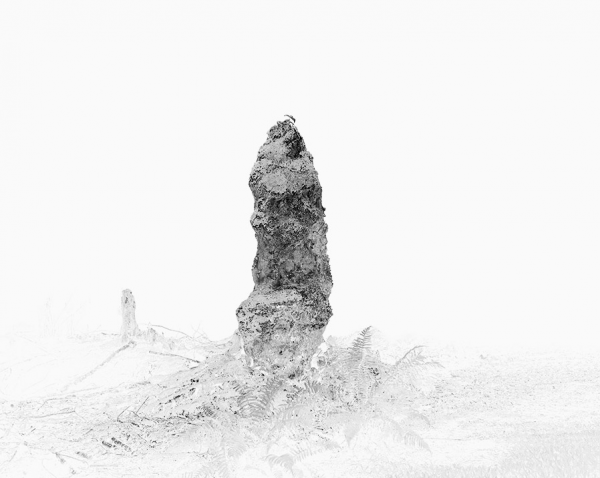
“…new way of looking at landscape. That new way involves looking at photographs of landscapes that do not necessarily read to the eye as photographs. Stripped of any indication that we are viewing traditional color or black-and-white photographic images, we are instead left to read visual elements whose variables might be more easily found in the field of drawing and painting: line, weight and value.

Through a reverse-printing method, White extracts from his large-format negatives nearly pure form, and the inversion of tonal values in the process cuts out what might normally be extraneous to the eye or total composition, leaving us with strong lines that make up the trunks or branches of trees and delicate, barely-there tones indicating grasses and brush. Foregrounds are a delicate wash of white-ish and light gray hues, while central elements contain the greatest variation of tonal value and dark lines. The horizon is a pure, unvarying nearly-white uninterrupted canvas. If this weren’t a photo competition, you might think you were looking at an etching, an ink or a silverpoint drawing.

An emphasis on vulnerability is a principle element in this body of work: literally, the vulnerability of nature to the elements, as evidenced by the bending and yielding that trees have adapted in order to survive open and exposed conditions. But vulnerable, too, is the choice by White to render landscapes as something other than landscapes—to bring the viewer back to an ordered history of neatly rendered, but oddly intimate and formal views of the natural world, one that more closely resembles 19th century botanic drawings than a composition seen and made in the last year.

Poetic and elegiac at once, I could not help but be reminded of the images that Harry Callahan made throughout his life of the natural world. Inspired by a workshop taken with Ansel Adams in 1941, Callahan enthusiastically set about making images that were the precise inverse of Adams’ grandiose and dramatic landscapes. Training his camera on the unexceptional—but well-known to him—home landscape of Detroit, his close-in views of grasses and abstractions of open spaces became beautiful visual meditations on what and how to see something for what else it might be.

Morphology, the name White gives to this series, has a couple of meanings that are relevant to viewing and considering his work. First, there is the scientific definition: morphology is the study dealing with the form and structure of organisms apart from their inherent functions. Linguistically, morphology is the study of the structures and implied content of words. To my reading of White’s images, he both succeeds in isolating and redefining a commonly seen genre, i.e. “landscape,” and also calls into question what constitutes the flavor and meaning of those forms in our visual habits, i.e. what do we see when we see a tree against sky? Is it just and only tree and sky? And if not, what else are we seeing, and what do we call that?” – via Hey Hot Shot.

Angie Waller

Angie Waller

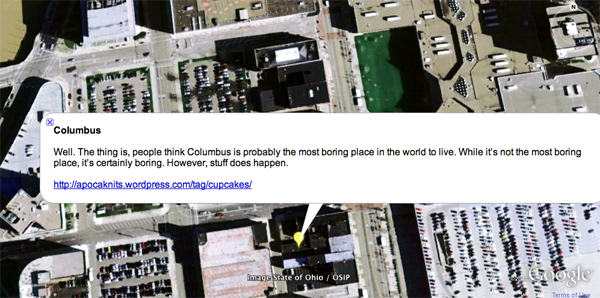
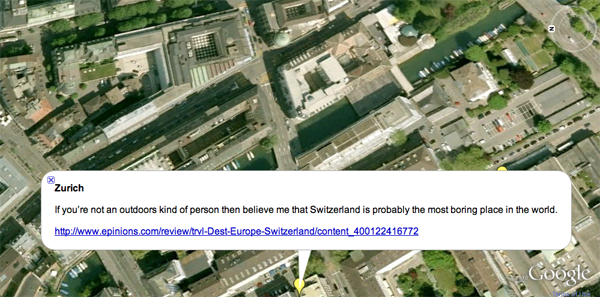
Work from The Most Boring Places in the World.

The Google Earth tour is here.

““The Most Boring Places in the World” is a Google Earth tour that pinpoints the location of bloggers, live journal-ers, and chat room commentators. These authors all claim that the city they live in or vacationed in is more boring than any other place they can imagine, at least during the time of their post. Most locations do not repeat (with the exception of North Carolina, Ohio, Zurich and Singapore). What these destinations share in common is their ability to inspire existential crises, home-from-college woes, and the suffering specific to beautiful scenery, suburban sprawl and shopping malls.” – Angie Waller

via Rhizome

Michael Schmelling

Michael Schmelling

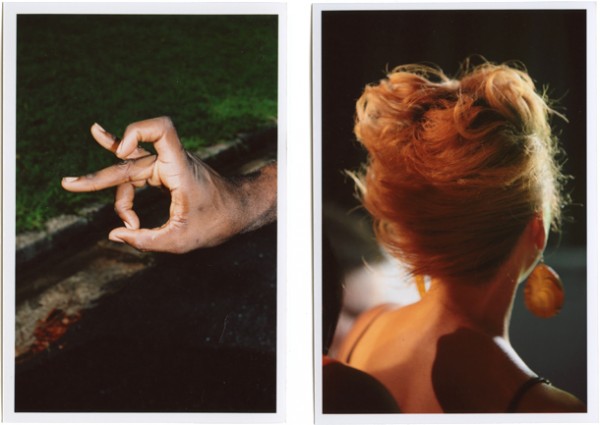
Work from Atlanta Revisited.

“Michael Schmelling’s Atlanta is a photographic tour through that city’s hip-hop scene, arguably the most influential music community of the past decade. And while Atlanta (out November 1 from Chronicle Books) includes interviews with big names such as Outkast’s Big Boi and André 3000, Ludacris and The-Dream, Schmelling focuses on the more protean realities of young musicians aspiring for their next big break. (In true hip-hop fashion, the book even comes with a downloadable mixtape of unreleased songs.)

Schmelling’s photographic style, though highly varied, bears a closer resemblance to the abstracted mundanity of Southern photographic legend William Eggleston than to New York rap documentarians such as Ricky Powell or Martha Cooper. As Schmelling says, that’ s because the Atlanta music community isn’t about glorifying past heroes. The perpetual obsession is on what’s next.

KEN MILLER: Why focus the book on younger performers instead of the big names?

MICHAEL SCHMELLING: Even by the standards of rock and roll, hip-hop belongs to its youth. There’s no shortage of big records by teenagers that have come out of Atlanta—Kriss Kross, Crime Mob, Soulja Boy… Soulja Boy was 16 and just blowing up when I started the project, so that really reinforced this notion that youth plays a huge role in Atlanta music. I guess it’s fair to say that most people have a pretty good idea of what mainstream hip-hop looks like, so I was really interested in seeing what hip-hop looks like just before it gets big—the moment before things happen. We’ re used to seeing a bit of the underground side of rock music and indie rock, but we don’ t get to see as much of it in visual depictions of hip-hop. I ended up gravitating towards people that were making music on their own, mostly out of their homes. Lots of them were just out of high school, making their first mixtapes, demos. There’ s a raw, do-it-yourself immediacy to the music that I really love.

MILLER: What do you think makes Atlanta’s music community so particularly vibrant?

SCHMELLING: Well, part of it is that youthful aspect—and then there’ s also the fact that Atlanta has always functioned as the South’s economic hub. But I think what really keeps the scene so dynamic—and this is something [New Yorker staff writer] Kelefa Sanneh mentions in the book as well—is the fact that Atlanta hip-hop doesn’ t restrict itself to just one sound or one way of making hip-hop. Anything goes. People are open to all sorts of different sounds and trends. It’s like, if it sounds good right now, then it’s good.

MILLER: Tell me a bit about the underage parties you photograph in the black-and-white section of the book…

SCHMELLING: On any given weekend there are a bunch of parties like these being thrown in the Atlanta suburbs. Most of the ones I went to were in Decatur, Stone Mountain, Tucker, Norcross, [which are] far from the city center, but still very much a part of Atlanta. They’ re thrown in semi-defunct bars, old clubs, skate rinks or storage warehouses. They’ re more all-ages than underage—lots of the kids are just out of high school. The rooms are pitch black, occasionally lit with a strobe light, very hot, very loud. Usually it’ s five or 10 bucks to get in.

MILLER: Atlanta is dedicated to Joshua Holder. Can you tell me about him?

SCHMELLING: Joshua Holder—AKA Midnite—was one third of 3rd Degree, one of the groups featured in the book and on the book’ s mixtape. Midnite made all the beats for the group. There’ s a bunch of pictures in the book from his bedroom, which doubled as 3rd Degree’ s studio. He was killed last May in a work-related accident.

MILLER: What’s up with the collages?

SCHMELLING: It was really important to me that the book have more than one way of looking at the scene—more than just one type of photograph.

MILLER: Do you have a favorite interview from the book?

SCHMELLING: I love the Gucci [Mane] interview because it delves into the economics and machinations of the scene. That stuff is so hard to get a handle on—the economics in particular—so it’s cool to hear him explain this idea that it makes more sense to buy a cheap classic car and put $200,000 worth of work into it instead of buying a Ferrari, ’cause the Ferrari would just call too much attention…” – Ken Miller for Interview Magazine.

via Zero1

Mickey Smith

Mickey Smith

Work from Believe You Me.

“We trust books—just don’t ask us to read them.

The second solo exhibition of work by Mickey Smith is a multi-media inquiry into the use of books as symbols of intellectual status in popular culture. In the found, restyled and original images that make up her critical series Believe You Me, shelves of indistinct books are used as backdrops — in some cases simply painted curtains — to perform a signaling function and confer a measure of erudition within a particular kind of aspirational portrait. But what signaling value can such images of books truly have, if they work the same way behind Martin Luther King as they do behind a porn star or a war criminal?

Believe You Me is an exercise in exuberant appropriation art that functions, too, as an elegiac lament over the loss of standards and customs that govern our use of culture, and the two-dimensional works gathered here trace the shape of that unfortunate decline. In her suite of re-photographed midcentury portraits, drawn the Picture Collection of the New York Public Library, Smith pays a kind of reverent tribute to the subjects, radiant dignitaries whose presence seems to shine on the books behind them as much as, or more than, vice versa. Working with found photographs of more contemporary figures, Smith is more whimsical and cutting, cropping the portraits and screen-stills to highlight the stagecraft absurdity—and subverting, pointedly, the emanant power of the book, as she does, too, in a short video pieced together from reality television. And in a final large-format photograph, she delivers a second-order trompe-l’oeil send-up, documenting at a coroner’s remove the flat and generic library curtains designed to be hung behind those seated for somber portraits at local photography studios, ad-hoc school photo days, and Wal-Mart portrait stations alike.

In her previous body of work, Volume, Smith photographed library-stack sets of bound periodicals to memorialize those shared objects of a common literary culture, now passed. In Believe You Me, she examines the manner in which books and book imagery continue to deliver status even in a culture that has turned away from reading—indeed even more powerfully, and more pervasively, than in eras that had not yet given up on the book as a storehouse of knowledge and wisdom. In these contemporary images, books have become vacant props, drafted into private battles and culture wars out of a desperate nostalgia for the fading power of the written word.” – press release from Invisible-Exports.

David O’Reilly


David O’Reilly

Work from his oeuvre.

“When Jackson Pollock decided that day to drip paint all over a giant canvas, he let the medium speak for itself. David OReilly provides a similar outlet to the natural voice of the digital image through hastily rendered polygons, compressions artifacts, and trace elements of the interface.

He uses his digital tools to created animated short films, portraying stories that would work in any medium. A strained domestic relationship. A young man heading to the big city. An eight-legged red cat on a quest to find his parents. That character, known as Octocat, became an accidental viral hit. An Obama-like blank slate character on which to project your hopes and dreams.

Whether it’s these finely observed portrayals of relationship and emotion, or his more abstract endeavors like the hauntingly peaceful looped animation “Black Lake” (a collaboration with Jon Klassen) and the open source head of Walt Disney, I can’t wait to see what else comes out of this low risk, high reward, one man animation studio in the top floor of this crapped on, tagged over, unlocked apartment building in Berlin…”  – excerpt from his April feature in Juxtapoz Magazine.

Cayetano Ferrer

Cayetano Ferrer

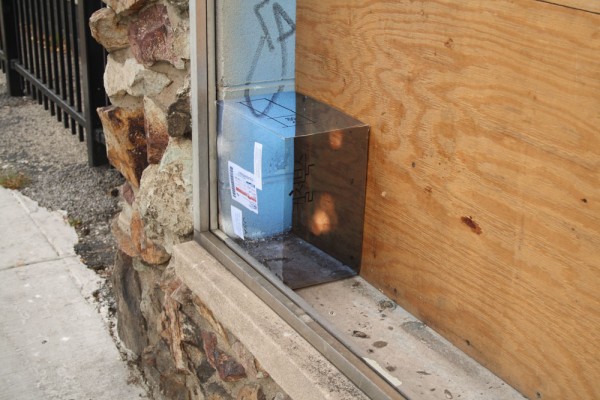
Work from Western Import.

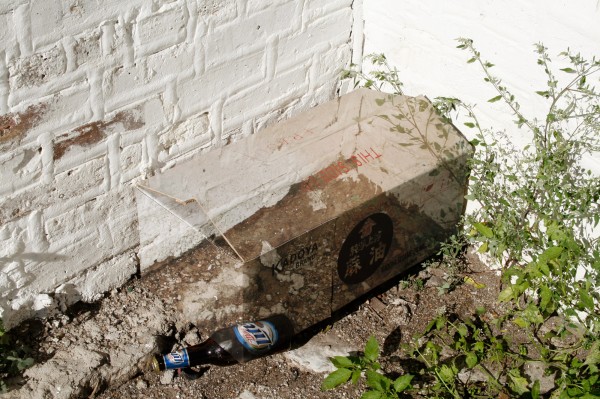
“Cayetano Ferrer uses existing forms in order to engage in a dialog about the constant flux of the built, contemporary environment. Using inkjet prints on existing objects/architecture that reveal what these objects ultimately obscure, Ferrer exposes the relationship between the built and the rebuilt, surface and hidden, as well as the delicate matter of history and memory as the present paves over the resent past in a bid to enrich economies. Ferrer’s work is a gentle push/pull between permanence and obsolescence, inviting consideration of evolution, mutation and modification in our relationship to our immediate environment.” – Three Walls

Regina de Miguel

Regina de Miguel

Work from Report (Informe).

“These images propose a series of scenarios regarding symbolic constructions not purely illustrative but subject to an interpretation, in terms of its futuristic and theatrical nature allusive of a type of cinematographic and literary science fiction (La Jetée, THX 1138, Solaris, Alphaville…).

Focused on an estrangement before the dissimilar, the need of a representation of the alien from a singular perspective but also as an abstraction, and the creation of Mythical spaces where actions and time seem to respond to peculiar unwritten laws.” – Regina de Miguel