Monday, 10 December 2012

Richard Artschwager
Work from his oeuvre.
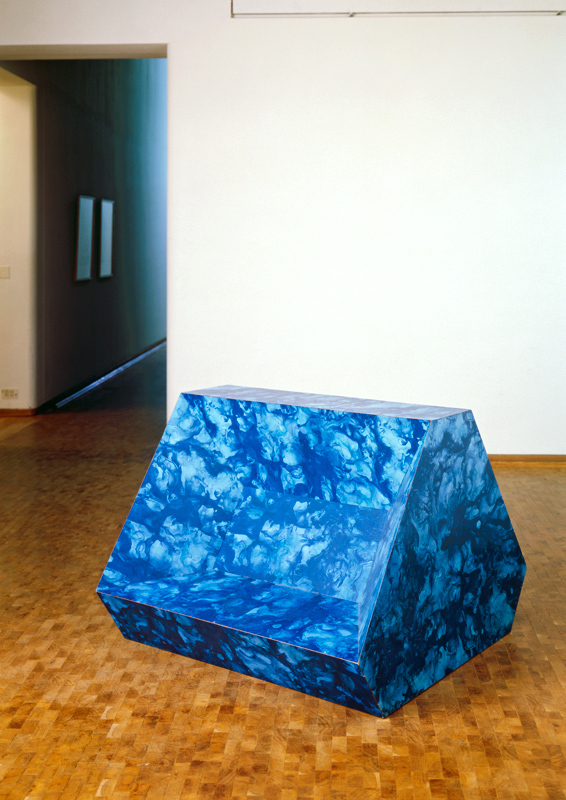
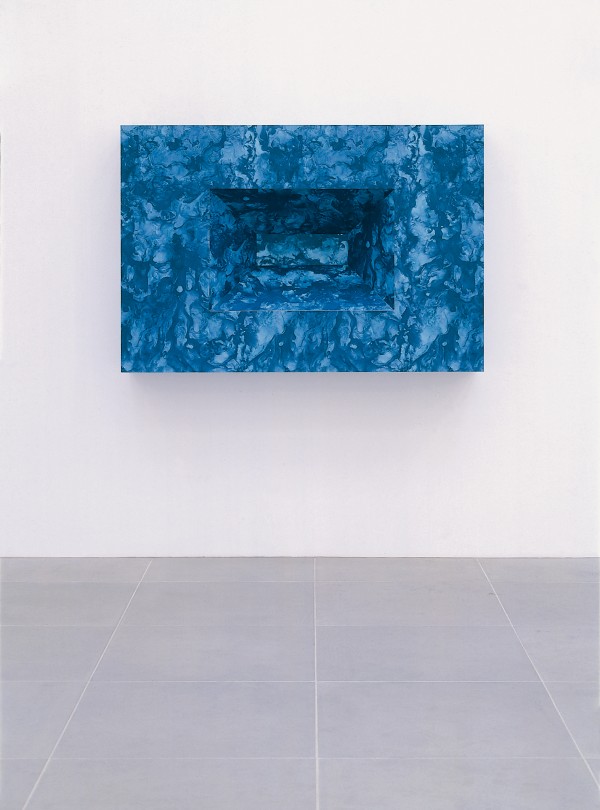
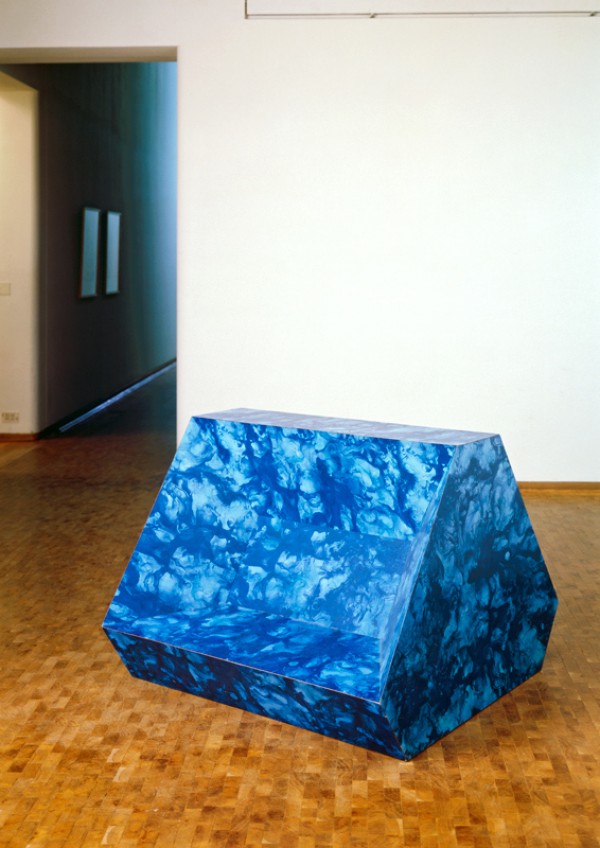
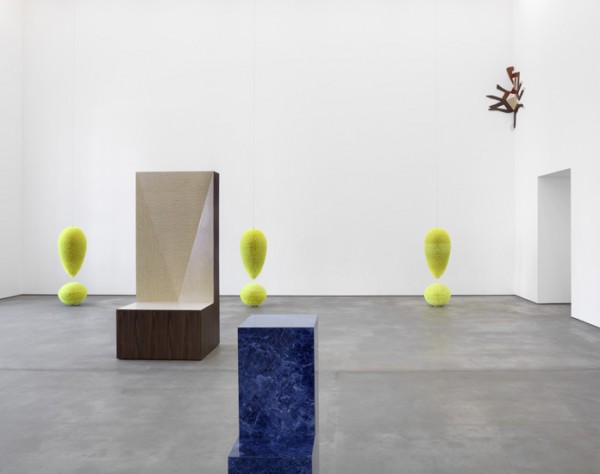
“The practical skills that he developed as a craftsman, along with his use of unconventional materials like Formica wood-grain laminate, Celotex ceiling insulation panels, and rubberized horsehair, distinguished Artschwager’s efforts from those of his contemporaries. His scientific training also came to bear on his work. In both his early grisaille paintings on Celotex and his Formica sculptures, Artschwager edited down the idea of the object to its most basic components, removing items from their everyday contexts and placing them under scrutiny in much the same manner as a scientist working in a laboratory.
When asked about his 1964 sculpture Table with Pink Tablecloth, Artschwager once responded, “It’s not sculptural. It’s more like a painting pushed into three dimensions. It’s a picture of wood.” Artschwager made this idea more explicit in later pieces like Splatter Chair I, 1992, in which the object is flattened and splayed out on a wall, creating a hybrid form. Conversely, his paintings of modern buildings and bourgeois interiors and his photorealistic portraits are sculptural in their presentation. Using imagery culled from newspaper photographs that he enlarges with a grid technique, Artschwager paints onto the nubby and uneven Celotex surface. He borders these works with heavy, fabricated Formica or mirrored frames, propelling his paintings further into the three-dimensional realm.” – Blouin Art Info
A survey of Richard Artschwager’s work is on exhibit at the Whitney through February 2013.
Tags: american, formica, minimalist, sculpture, whitney
Posted in Uncategorized | Comments Off on Richard Artschwager
Sunday, 9 December 2012


Dan Bradica
Work from his oeuvre.
“My work involves disrupting the appearance of the natural environment to explore its relationship with artifice, control, and classification. I create photographs of temporary sculptures made from synthetic materials in managed forest preserves. Each sculptural form takes a shape complementary to its surroundings appearing in contrast to a depiction of the landscape that acknowledges the maintenance and control of civic land.
This project is a result of a personal desire for an idyllic wilderness within reach of my Midwestern home. With this work, I explore contained and illusive spaces that are shaped by their geographic location, yet appear separated from their immediate surroundings. This work attempts to examine our perceptions and interpretations of nature, further investigating our place within the ecosystem.” – Dan Bradica
Tags: chicago, color, intervention, nature, photo sculpture
Posted in Uncategorized | Comments Off on Dan Bradica
Sunday, 9 December 2012
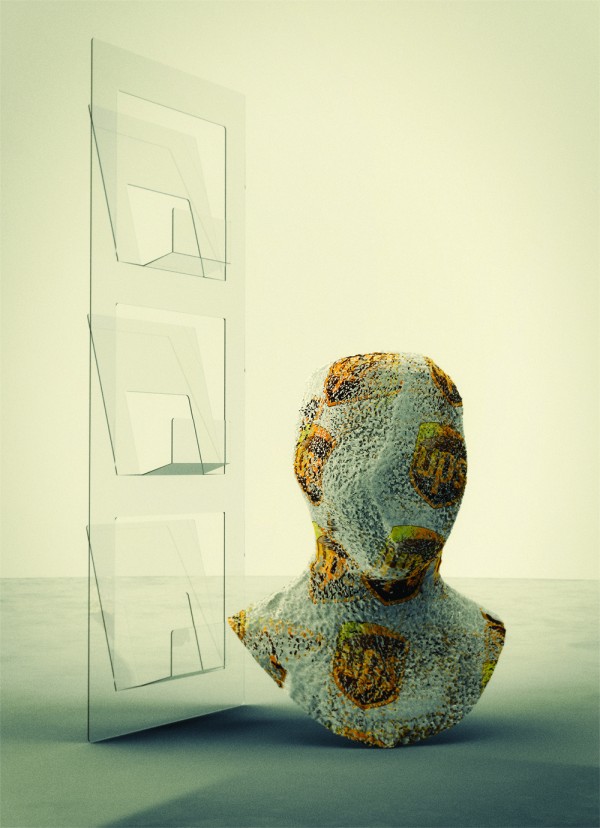
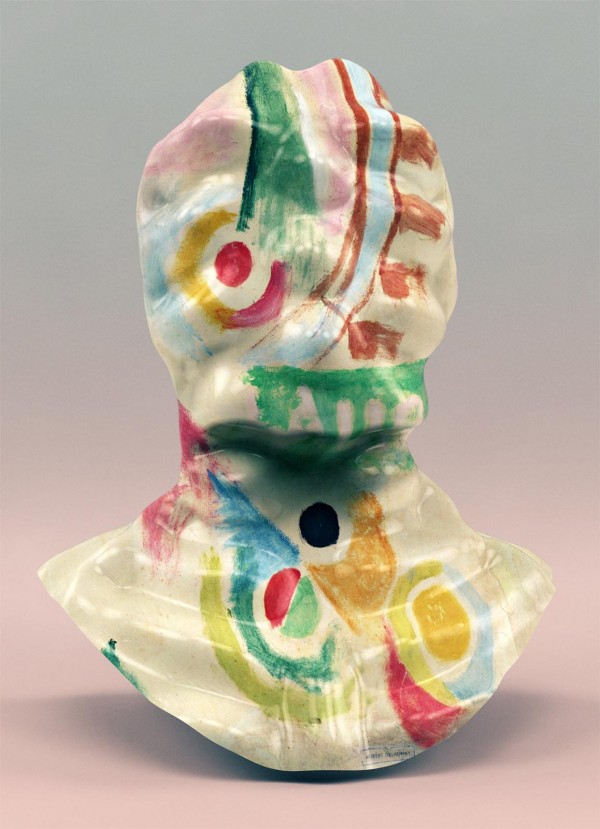
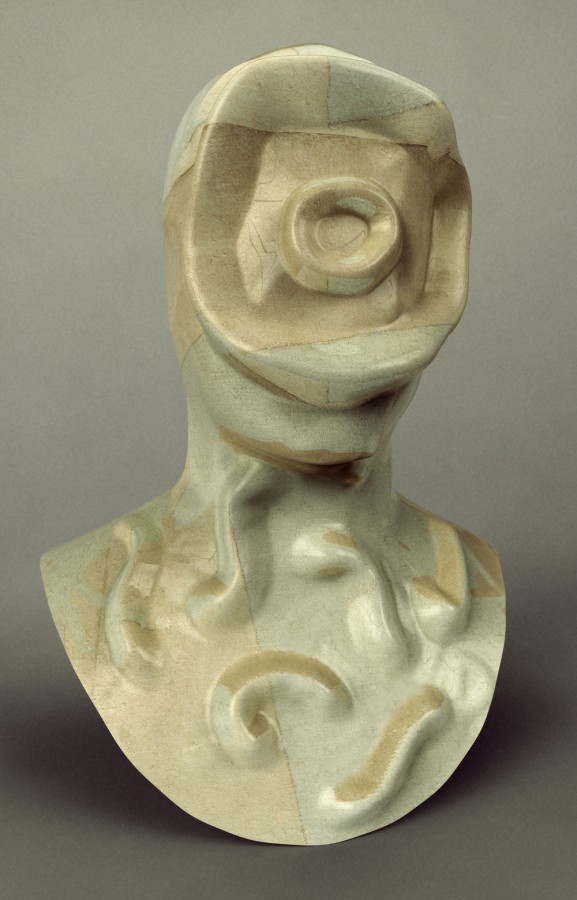
Jon Rafman
Work from New Age Demanded.
“Inspired by classical Greek busts, Jon Rafman uses computer software to digitally render three-dimensional forms. The forms act as the structural surface on which two-dimensional Internet-sourced images are applied. The series is presented as large-scale archival pigment digital prints. Each print is created with its own specific texture and sculptural mutation. Rafman uses historically recognizable works from canonized artists like Mark Rothko, Georgia O’Keeffe, Piet Mondrian, and Wassily Kandinsky as the subjects of his appropriations.” – Stefan Hancherow.
Tags: bnpj, bust, busts, canon, digital, gnms, greek, meta-art, new media
Posted in Uncategorized | Comments Off on Jon Rafman
Friday, 7 December 2012


Agnes Martin
Work from her oeuvre.
“…Grid, in this context, is a convenient but misleading descriptive. It identifies a superficial relationship of Martin’s work to an abstract concept of two-dimensional space, when in fact her painting tends to suggest an extension of our concept of three-dimensional space. The breathing that I describe in these prints takes place serially, from one print to the next. It occurs between the prints, you might say. In this way, Martin allows their space to expand in the mind of the viewer as she travels from one print to the next. Thus they take on an additional dimension.
I would argue that all Martin’s work, not just the serial editions, accomplishes this. The fourth dimension is the spatial dimension beyond the three-dimensional living space to which we are all accustomed. Length, width and height are the first three dimensions. The fourth is time. So to experience the fourth dimension necessitates moving through three-dimensional spaces. Not a three-dimensional space, as when you’re traveling down a road in a car, but multiple three-dimensional spaces, one after another. For us, the experience is only possible in our minds. “Do not look at the rain,” wrote Martin, “look at the space between the rain.” If you do, you’ll find your field of vision suddenly goes loose, like a sail when the wind has died. You’re not seeing anything particularly; you’re seeing everything at once. This is what Agnes Martin’s work is like for me. I look at her drawings and I see right through them, beyond them into a universe of space, into the fourth dimension…” – Ben La Rocco for the Brooklyn Rail.
Tags: Canadian, grid, minimal, painting, structure, white
Posted in Uncategorized | Comments Off on Agnes Martin
Thursday, 6 December 2012


Leslie Hewitt
Work from her oeuvre.
“Working with photography, sculpture, and site-specific installations, Leslie Hewitt addresses fluid notions of time. Her work oscillates between the illusionary potential of photography and the physical weight of sculpture. In her photographed arrangements, she isolates personal ephemera and the residue of mass culture to consider the fragile nature of quotidian life.” – Leslie Hewitt
Tags: experience, installation, memory, meta-photographic aesthetic, personal perspective, photography, sculpture
Posted in Uncategorized | Comments Off on Leslie Hewitt
Wednesday, 5 December 2012
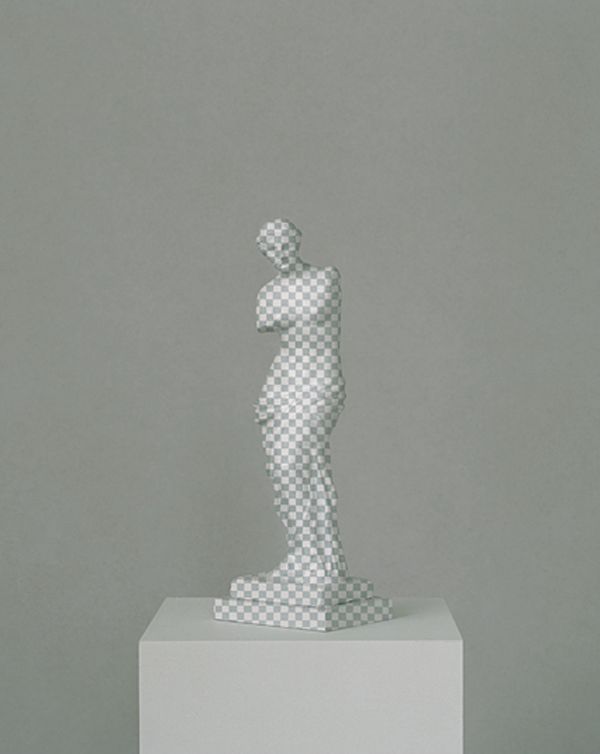


Darren Harvey-Regan
Work from his oeuvre.
“Entwining image and object, the work of Darren Harvey-Regan often sees a hybridisation of the conventions of photography and sculpture. As quietly humorous as they are frustrating his works challenge the viewer to distinguish where representation ends and the object begins. “The presentation of photographs in interaction with objects serves to highlight the inherent tensions within representation; between the photograph as an object and the image of the world it contains. In this way, I consider the photograph as being something not only to think about, but to think with.” – Sumarria Lunn
Tags: busts, greek, new media aesthetic, photoshop
Posted in Uncategorized | Comments Off on Darren Harvey-Regan
Tuesday, 4 December 2012


Dan Shaw-Town
Work from his exhibition at Seventeen Gallery.
“Dan Shaw-Town’s first solo-show with the gallery is an arrangement of four wall and floor based pieces. Each work contains a composition of graphite and spray paint covered paper, which has been heavily worked, creased and manipulated, or folded over on itself repeatedly.
The works employ conflicting elements. On the one hand, Shaw-Town demonstrates personal gesture in the dense build up of hand worked graphite. At the same time he alludes to the language of manufacture; wall works are of standardised size and nailed up using metal grommets, large areas of paper have been sectioned off and systematically sprayed with paint and floor based works are supported by rubber sheeting or industrial steel. The covering of graphite is gestural but also impersonal. It describes the exhaustive and repetitive series of actions to build up the surface, but the hand of the artist obliterates itself in repetition.
The work occupies a space somewhere between drawing and sculpture, concerned simultaneously with the pictorial and material. Wall pieces can be read as formally minimal compositions, but the folded floor based pieces hide the majority of their worked surface. Shaw-Town combines the materials of graphite, paint and paper, to produce a new substance, a new material, a process that isn’t accurately described by the familiar moniker of graphite on paper.” – Seventeen Gallery
Tags: charcoal, english, fold, minimal, monochromatic
Posted in Uncategorized | Comments Off on Dan Shaw-Town
Monday, 3 December 2012


Jan Robert Leegte
Work from Random Selection in Random Image
“I’ve been working around the concept of the “selection” marquee from photoshop for many years now. I made sculptures, and architectural installations. The notion of the manifested or materialized cognitive process of selecting intrigues me. I see it in an ongoing passion for what I call hypermateriality. A material that is highly confusing and powerfull. Currently I’m all back on the net as medium, and made an adaptation in JavaScript of the selection marquee. Wanting the web to decide on the image, I chose to randomly select an image through the Flickr API” – Jan Robert Leegte
via Triangulation
Tags: GUI, random, selection tool, UI, web-based art, website
Posted in Uncategorized | Comments Off on Jan Robert Leegte
Sunday, 2 December 2012


Iris Touliatou
Work from Matter enclosed in heavy brackets.
“The project Matter enclosed in heavy brackets centers around the cancelled theatrical premiere of The Cradle Will Rock, a play directed by a very young Orson Welles for the Federal Theater Project in New York. Both a wonderful Opera and a remarkable piece of theater history, The Cradle Will Rock is an allegory of corruption and greed, set in the fictional Steeltown, USA and composed in a style that falls somewhere between realism, romance, vaudeville and agitprop. Originally set to open in New York on June 16, 1937 with elaborate sets and a full orchestra, the production was shut down due to political pressure and the scenery, props and costumes, regarded as government property, were confiscated. Orson Welles moved the cast and the spectators to another theater, in which the actors sung the entire play from the position of the audience, in complete absence of props. Through a process of associations and symbolic gestures, historical facts meld with personal interpretations and semifictional narratives. Thus, the incident of 1937, is inserted into a larger context while its political actuality is implied. The sculptural elements, placed halfway between matter and the representation, replicate modernist vocabulary and agit prop theater set design to create both a precise and minimal stage. While applying lyrical titles, often borrowed from songs, an austere and conceptually accurate range of materials such as glass, concrete, steel and fabric is employed. Additionally a new series of collages relates, appropriately, to the concepts of disappearance, appearance, superimposition, and substitution.” – Iris Touliatou
Tags: berlin, glass, gnms, greek, minimal, photography
Posted in Uncategorized | Comments Off on Iris Touliatou
Saturday, 1 December 2012


Evan Gruzis
Work from Alpha Wave @ DUVE Berlin.
“When the eyes are closed, before reaching somnolence, the brain experiences some of its strongest signals – Alpha Waves. In this exhibition, Evan Gruzis focuses on the the conflation of this physio-meditative state and the subliminal aesthetic that it achieves. The oscillation between full awareness and unconsciousness is the point of departure for Gruzis’ Alpha Wave.
When the eyes are closed, before reaching somnolence, the brain experiences some of its strongest signals – Alpha Waves. In this exhibition, Evan Gruzis focuses on the the conflation of this physio-meditative state and the subliminal aesthetic that it achieves. The oscillation between full awareness and unconsciousness is the point of departure for Gruzis’ Alpha Wave.
When the eyes are closed, before reaching somnolence, the brain experiences some of its strongest signals – Alpha Waves. In this exhibition, Evan Gruzis focuses on the the conflation of this physio-meditative state and the subliminal aesthetic that it achieves. The oscillation between full awareness and unconsciousness is the point of departure for Gruzis’ Alpha Wave.
Gruzis’s work finds the heightened brain activity and meditative state that is the Alpha Wave.” – DUVE Berlin
Tags: berlin, brain, color field, installation, painting, stripes, ultraviolet, violet
Posted in Uncategorized | Comments Off on Evan Gruzis