“Using simple and functional components, Zimoun builds architecturally-minded platforms of sound. Exploring mechanical rhythm and flow in prepared systems, his installations incorporate commonplace industrial objects. In an obsessive display of curiously collected material, these works articulate a tension between the orderly patterns of Modernism and the chaotic forces of life. Carrying an emotional depth, the acoustic hum of natural phenomena blends effortlessly with electric reverberation in Zimoun’s minimalist constructions.” – bitforms nyc
“I compose self-portraits to explore the creative framework of gesture within the photograph. The images are depicting different tropes that serve as a canvas of visual influence — a mash up of autobiographical experiences and historical imagery. To reference (by referencing) myself as the picture taker in the scenes, the photographs address the idea of the artist’s hand.” – Bobby Scheidemann
“With the internet and digital media gaining increasing influence on the current generation of young artists, more works tend to have some representation in cyberspace as intangible objects. Some art today can only be accessed in a digital format. Additionally, those pieces with actual physicality are usually fabricated or manipulated in this new medium at some point in their construction. The internet is used as a tool to appropriate material for use in painting and photography — not to recycle, but to reference. Young artists can now critique the experience of making work from within the context of art history while stumbling through our present and increasingly digital art movement. However, using the web as source material complicates ownership. Does intellectual property still exist in the way artists operate today?
The relevancy of internet context within a physical exhibition is a new challenge for our generation of art makers and curators. Keepin’ it Real examines the possibilities and difficulties presented by work that exists in dual realms, the physical and the digital, as well as the opportunities and limitations of a curatorial process entirely reliant on e-mail, chat, and internet surfing.” – Hungryman Gallery
“The Belgian artists Jos de Gruyter (*1965 in Geel, lives in Brussels) und Harald Thys (*1966 in Wilrijk, lives in Brussels) celebrate slowness and the absurd in their videos and photographs. Their compellingly atmospheric video installations are characterized by an extreme elongation of time, very simple settings and the targeted use of digital effects and sound. States of being locked into pointless actions and impersonal, sometimes threatening environments and situations become allegories of the failure of communication and community. But laughter is also provoked, which finally interrupts the stasis.” – Kestnergesellschaft.
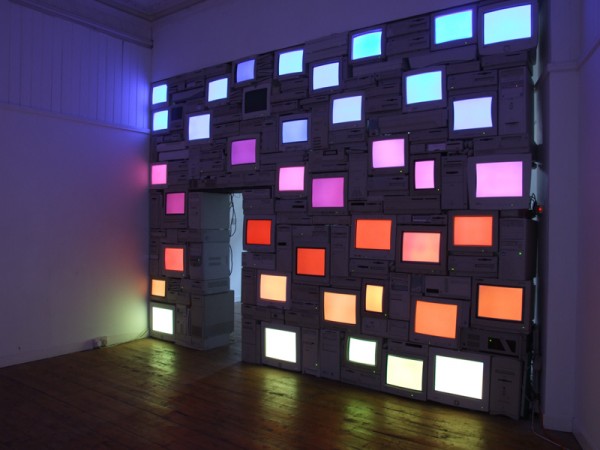
“For Computer Installations, including the obsolescent beauty of “Mauritian Sunset”, pictured below, he took old computer monitors, donated by his alma mater, the Glasgow School of Art, and turned them into gorgeous large-scale installation pieces.
Eye-grabbing from the front and equally intriguing from the back. I love the “technology behind the curtain” vibe; the allusion toward so many beautiful things whose veneer faces us while the nuts and bolts of how their allure is maintained is hidden. The door also intrigues me. You don’t have to travel around the outside of the entire piece to see both the gilded and the mechanical side; there’s a passageway right there in the middle, a portal, and Smith invites us to openly transverse between the two. This way we see the honest connection between the colourful light and all those dull, grey wires that are working so hard to create it. They might not be as pretty or as celebrated, but they’re responsible for all the shiny glory shimmering on the other side.
For “Green/Blue Horizontal”, inspired by the ubiquitous Windows wallpaper “Bliss”, he created a walk-in corner installation from more than 60 computers. Programmed to glow blue and green, people could walk inside the amazing luminescence created by the piece and find some bliss of their own.” – via shape+colour.
“In the context of meteorology, ground truth is information gained by a meteorologist about an extreme weather event from an eyewitness in close proximity to the actual event. The meteorologist learns the ground truth while viewing radar generated graphics of the event on a computer screen. The eyewitness account can confirm, discredit or complicate the digital information, but action, such as issuing a tornado warning, is rarely taken with a ground truth assessment. Within this specific social interaction between meteorologist and eyewitness is a metaphor about human perceptions of and experiences in the natural world as well as the value of empiricism within the realm of representation.” – Peter Happel-Christian
“…Daniel Buren develops a sequence of site-specific interventions for the Staatliche Kunsthalle Baden-Baden that engage with Hermann Billing’s neoclassicist building. The wall-high structures decisively alter our perception of the architecture and, by interacting with light, color, and reflections, create impressive spatial sensations of the rooms in which they are deployed. The Café Kunsthalle also undergoes a new configuration, which will be preserved for the duration of the exhibition and beyond.
Furthermore Daniel Buren spans the exhibition across the urban landscape of Baden-Baden. With more than 100 flags, designed by the artist, the glamorous spa town is transformed into an extension of the exhibition space, with the Staatliche Kunsthalle Baden-Baden as its core…” – Kunsthalle Baden-Baden
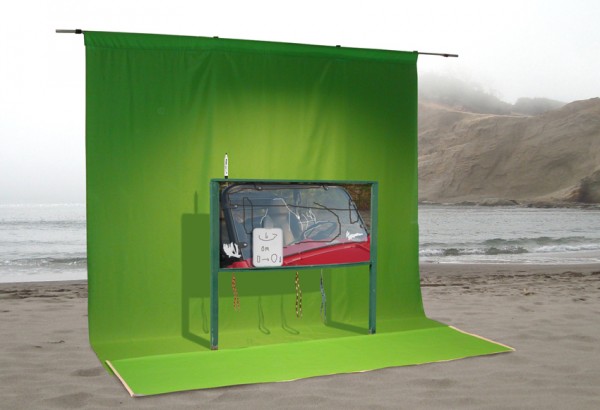
“For six weeks the exhibition space of the Scheltema complexwas transformed into a filmstudio for a project that connects art, psychology, documentary, cinema and music. During this working period I interviewed people on situations or conditions that makes them feel abnormal and different from others, recording it on video. These conversations functioned as a starting point for creating new ‘staged’ moving images in which the interviewees also play a part. The greenscreen process together with cut out images from old books created illusionary backdrops and locations. As these scenes refer to cinema of a by-gone era in our collective memory, the seven personal stories and the look ‘behind the scenes’ interweaved with the visual language and universal themes of the classical Hollywood movie in this work-in-progress presentation.
Last step in the process was shooting material for a final scene, by means of filming the interviewees in front of the green screen, while viewing ‘their’ moviescene for the first time… This material was first presented during the art festival Niet Normaal. Together with the transcriptions of the initial interviews it will be part of a future video work in which the documentary and fictional aspects will be integrated.” – Koen Hauser
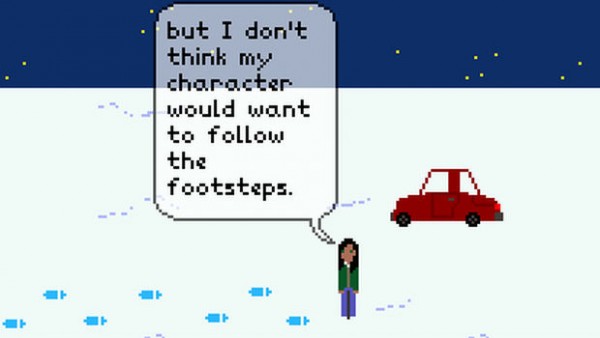
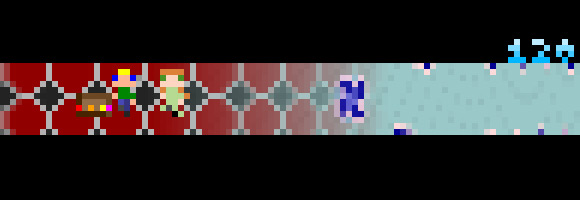
“I am prepared to believe that video games can be elegant, subtle, sophisticated, challenging, and visually wonderful,” Roger Ebert, the world’s most famous film critic, wrote in 2005. “But I believe the nature of the medium prevents it from moving beyond craftsmanship to the stature of art. To my knowledge, no one in or out of the field has ever been able to cite a game worthy of comparison with the great dramatists, poets, filmmakers, novelists, and composers…video games represent a loss of those precious hours we have available to make ourselves more cultured, civilized, and empathetic.”
This is what the video-game industry lacks. Not money; it rakes in $40 billion globally per year, even more than Hollywood. Not influence; it’s got a lock on the hearts and minds of America’s eighteen- to thirty-four-year-old males. What it lacks is legitimacy. The video game in 2008 is a ghettoized creative form, more ghettoized even than comic books; at least comics have their hipster auteurs, their graphic novelists, their Chris Wares and Daniel Cloweses and Brian K. Vaughans. But there are no video-game auteurs whose names ring out in the wider culture.
According to Jason Rohrer, the reason for this is simple: “Ebert’s right.” Games suck. Game companies have spent so many years trying to make skulls explode complexly and water ripple prettily that they haven’t invested any time in learning how to make games that are as emotionally dense as the best novels and films. Most games are a waste of time. Soulless. Empty. Rohrer is far from the only game-maker who believes this. In fact, a growing number of game-makers in positions of power at large companies — Electronic Arts, Ubisoft, etc. — aren’t interested in continuing to defend the industry against its critics. Because, one, it’s hard to see how the critics are wrong, hard to see how Halo 3 and Grand Theft Auto IV aren’t what they seem to be. Murder simulators. Really fun murder simulators. And, two, if you’re a middle-aged game-maker and you’re going to see Children of Men on the weekend with your wife and kids and getting your mind blown, you hit a point where you want to do something better, more important, than making blood flow realistically…” – Esquire.
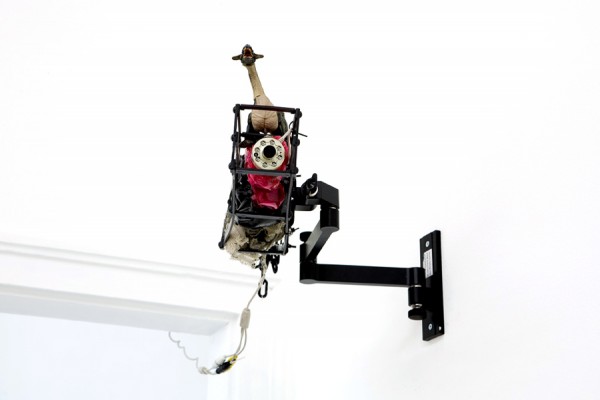
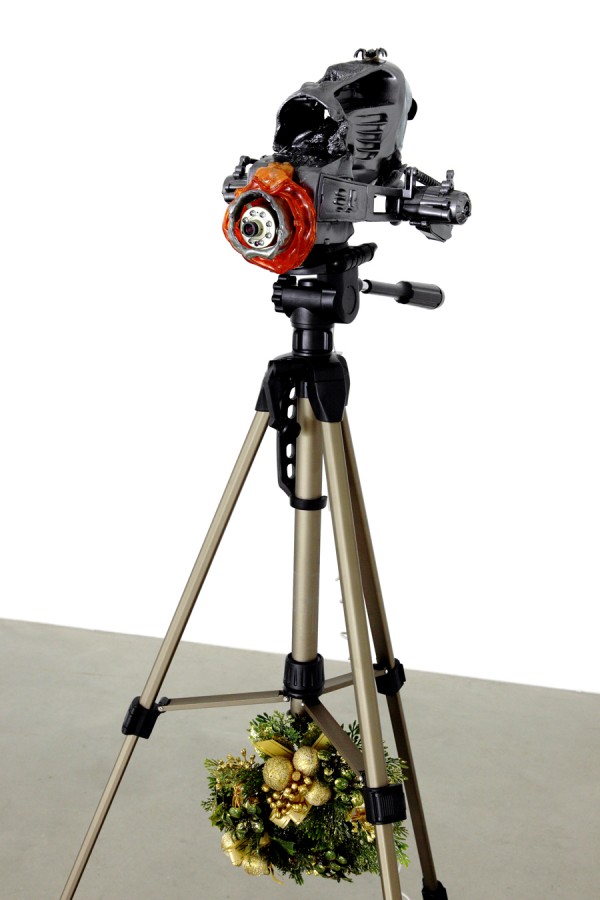
“NICOLAS CECCALDI recently produced a series of high-end custom-made surveillance camera prototypes made of melted children’s toys. These biomechatronic dispositives have fantasies of total war inscribed on the surface of their plastic shells and keep a wakeful eye on reality. By plugging them onto video display devices (e.g. a video projector), CECCALDI performs and investigates the continuous feedback dialogue of surveillance apparatuses, built environments and individuated creativity.” – We Find Wildness