Jason Rohrer

Jason Rohrer

Work from his oeuvre.

I am prepared to believe that video games can be elegant, subtle, sophisticated, challenging, and visually wonderful,” Roger Ebert, the world’s most famous film critic, wrote in 2005. “But I believe the nature of the medium prevents it from moving beyond craftsmanship to the stature of art. To my knowledge, no one in or out of the field has ever been able to cite a game worthy of comparison with the great dramatists, poets, filmmakers, novelists, and composers…video games represent a loss of those precious hours we have available to make ourselves more cultured, civilized, and empathetic.”

This is what the video-game industry lacks. Not money; it rakes in $40 billion globally per year, even more than Hollywood. Not influence; it’s got a lock on the hearts and minds of America’s eighteen- to thirty-four-year-old males. What it lacks is legitimacy. The video game in 2008 is a ghettoized creative form, more ghettoized even than comic books; at least comics have their hipster auteurs, their graphic novelists, their Chris Wares and Daniel Cloweses and Brian K. Vaughans. But there are no video-game auteurs whose names ring out in the wider culture.

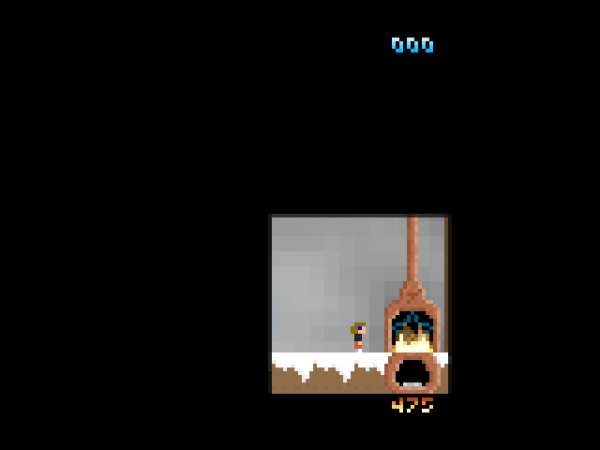
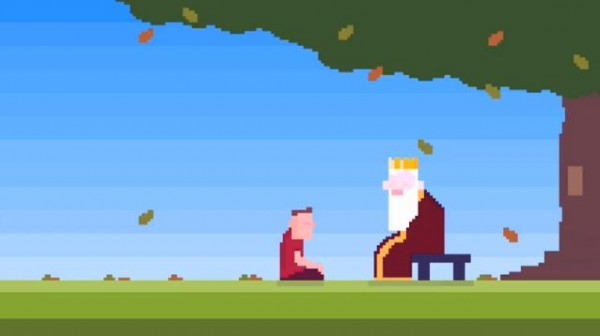
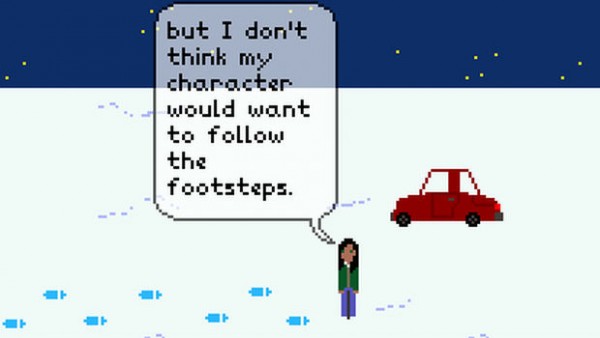
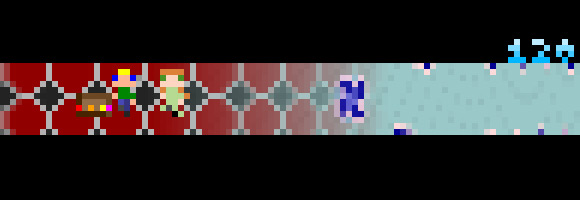
According to Jason Rohrer, the reason for this is simple: “Ebert’s right.” Games suck. Game companies have spent so many years trying to make skulls explode complexly and water ripple prettily that they haven’t invested any time in learning how to make games that are as emotionally dense as the best novels and films. Most games are a waste of time. Soulless. Empty. Rohrer is far from the only game-maker who believes this. In fact, a growing number of game-makers in positions of power at large companies — Electronic Arts, Ubisoft, etc. — aren’t interested in continuing to defend the industry against its critics. Because, one, it’s hard to see how the critics are wrong, hard to see how Halo 3 and Grand Theft Auto IV aren’t what they seem to be. Murder simulators. Really fun murder simulators. And, two, if you’re a middle-aged game-maker and you’re going to see Children of Men on the weekend with your wife and kids and getting your mind blown, you hit a point where you want to do something better, more important, than making blood flow realistically…” – Esquire.
Nicolas Ceccaldi

Nicolas Ceccaldi

Work from his oeuvre.

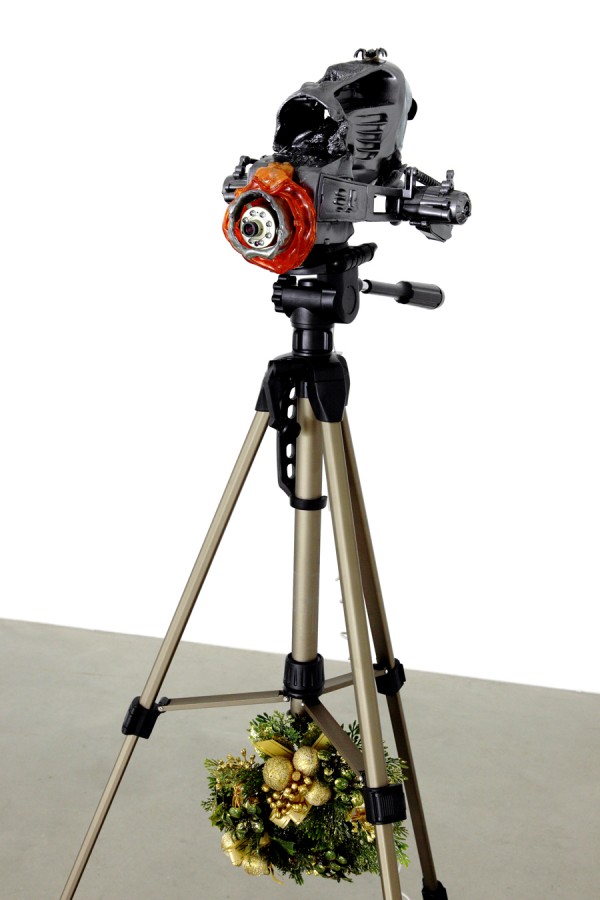
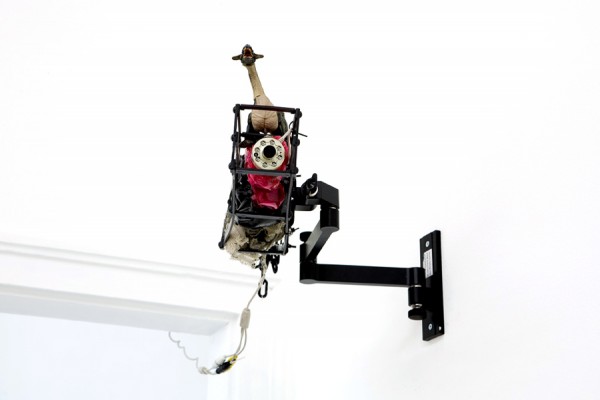
NICOLAS CECCALDI recently produced a series of high-end custom-made surveillance camera prototypes made of melted children’s toys. These biomechatronic dispositives have fantasies of total war inscribed on the surface of their plastic shells and keep a wakeful eye on reality. By plugging them onto video display devices (e.g. a video projector), CECCALDI performs and investigates the continuous feedback dialogue of surveillance apparatuses, built environments and individuated creativity.” – We Find Wildness

via Rick Silva

SIMPARCH

SIMPARCH

Work from exhausted.

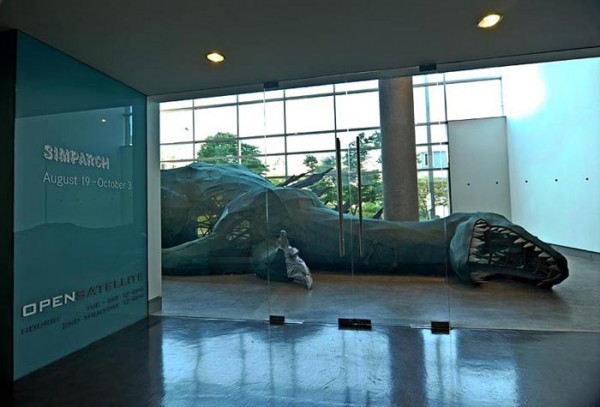
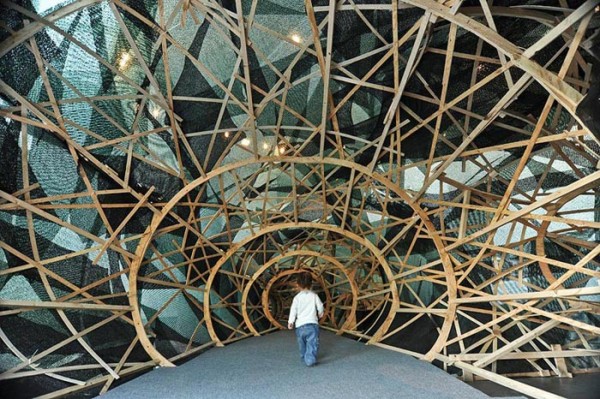
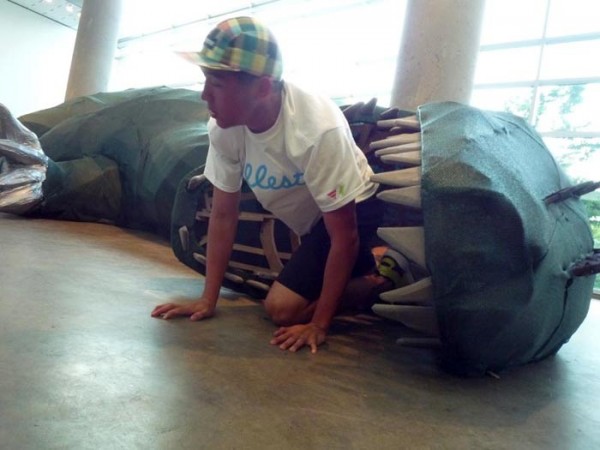
exhausted, is a brass tacks Godzilla, a no-fuss, architectonic simplification of a massive biological organism. The sculpture has all the important and iconic attributes of the movie character – the snake-shaped skull, the craggy spine plates, and the T. rex-like, taloned limbs – but unlike its theatrical counterpart, SIMPARCH’s Godzilla is an inert, makeshift shelter – a paean to the nuclear age.” – SIMPARCH

Andrés Laracuente

Andrés Laracuente

Work from Eyes Have No Cash.

“For his second solo exhibition in Paris, Andrés Laracuente has created a rhythm of kinesthetic thought in a new series of photographs and sculpture. The artist grounds light-weight objects and procedures which are disassociated with the physical by marrying them to an especially earthly form of Juju. Throughout the exhibition Laracuente leans heavily on the word “model” taking it for many turns, cross pollinating hand models, the prototype, and social models of technology, communication, fashion and desire.

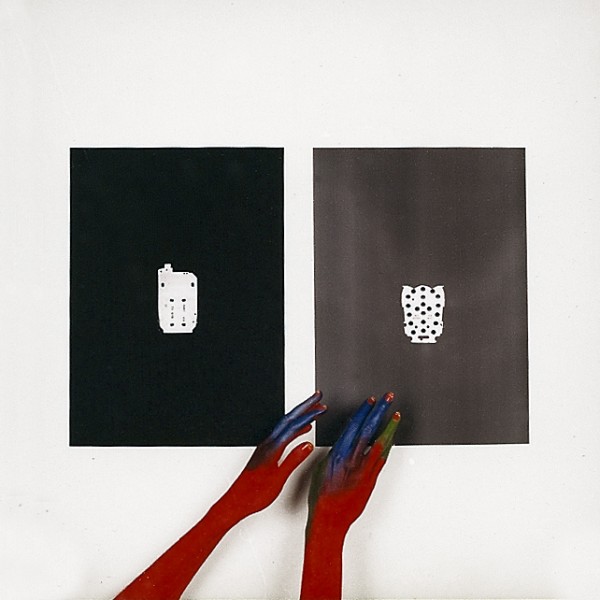
The four photographs of the hand modeling series feature human hands saturated with pigments of RGB. They are unexpectedly paired with their intimate counterparts of interface in the form of printed images. Images created by scanning specialized wipes used for cleaning wood, leather, and steel are modeled alongside those of keypad components removed from the interior of mobile phones. Without picture making abilities, Photomodel is like a haptic camera. The artist replaces micro-processors with red clay leaving only the optics, the LCD, and the camera’s armature. This work would suggest the photographic image is crude, base, and modeled like an object, while emphasizing the memory of the body.

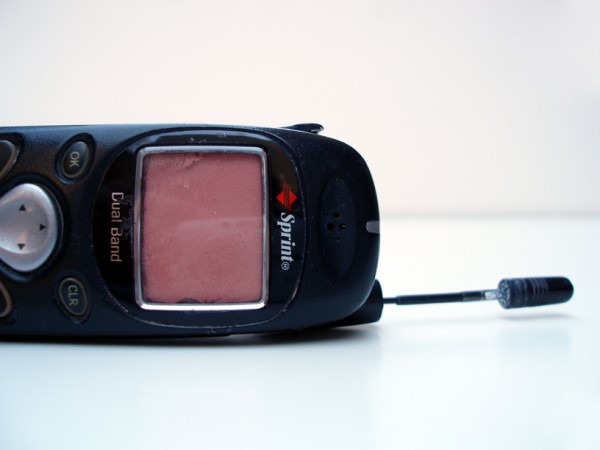
Ford Tracer, implicit of foot worship, Henry Ford’s Model T, and the fashion model is a fragile clay form shaped from the underside of the high heel shoe. With this work and throughout, Laracuente creates an underlying relationship to the earth and the ground. In the work Extended Vibration: Intercourse two twin mobile phones vibrate continuously, spinning slowly like the minute hand on a clock. Of a make and model from the recent past, the perpetual motion of the mobiles begin to create a choreography of human relationship and communication. The work is an unanswered endless call from a familiar void, and absurdly persistent.” – Galerie Yukiko Kawase

via VVORK.
 

Brad Troemel and Jonathan Vingiano


Brad Troemel and Jonathan Vingiano

Work from Blind Mist

“Blind Mist is a platform that relies on participants to submit their URL to an open database. From here, the website scrapes every image off the URLs participants offer and adds those images to another archive.There is no limit to the number of URLs/images a participant may add. A stream of images from this archive is presented at random on the Blind Mist homepage. Each image functions as a link back to its original website, allowing users to continue exploring content they found interesting. Through Blind Mist, we intend to offer an alternative to the dominant blogging format of aggregated or self-selected digital media and open possibilities for new, unforeseen juxtapositions in visual content. Additionally, we are interested in promoting a platform that mixes ‘high’ and ‘low’ artworks, allowing any and all content to be viewed in the same, uniformly context-free space for further investigation– hence the name’s reference to a ‘blind draw’. While the internet is often spoken of in terms that represent a desire for fast paced action (‘The information superhighway’, ‘surfing’, ‘Tumbling’, ‘streams of content’, ‘torrents’) we often come to see online content in isolated, static presentations. Blind Mist is an attempt to show content at a pace more compatible with contemporary media landscape in which we exist. Blind Mist is also an attempt to offer a chance for the discovery of our peers artwork in a way that sidesteps the troubled subjectivity associated with curating.

By allowing everyone to mutually benefit through exposure and contribution, Blind Mist is currently the beginning of an artistic commonwealth, fulfilling the artistic potential of a decentralized population only feasible in our digital age.” – Brad Troemel and Jonathan Vingiano

via Rhizome Commissions


Cheryl Donegan

Cheryl Donegan

Work from her oeuvre.

“Painting is the touchstone for Cheryl Donegan’s aesthetic, though she seldom produces work that resembles painting in any conventional sense. Indeed, her preferred media are video, performance, and installation, and her recurrent points of reference film, MTV video, modern decor, and the mass media. By such means, she addresses canonical subjects in modern painting: the traditional relation between artist and model, the purported autonomy and nonreferentiality of abstract art, the topos of the heroic, gestural painter. The grandiose rhetoric that obscures, inflates, or mythifies these subjects is deftly dismantled by an incisive irreverence, while the art itself is reaffirmed in an homage admittedly more spirited and saucy than reverential.

Invited to make a work for the world wide web Donegan characteristically decided to approach her abiding subject through a language specific to this new medium. By opting to use low tech devices peculiar to the web, such as gif animations, frames, refreshes, and mouse-overs, she focused on the basic tools integral to this medium.

Taking as her starting point a mainstay of art practice, the studio visit, Donegan offers viewers the opportunity to construct their own version of this highly codified ritual, albeit as an encounter at a virtual site. Drawing on some of her favorite motifs, the detergent bottle/camera, the signature mark of the artist, the stripe and other generic motifs from past painting, and elsewhere, in the commercial world, she presents viewers with a multitude of means by which to navigate this site and track their quarry. Just as studio visits typically meander episodically from topic to topic, or devolve into an erratic, unstructured archeological probe, or wander off into circuitous labyrinthine paths that bypass the artist’s key concerns so viewers to “Studio Visit” may find themselves circling uncertainly round several miscellaneous subjects, returning unexpectedly to others, or becoming deflected, sidetracked or even stonewalled by others. That such visits abruptly interrupt the ongoing flow of creativity is wryly attested in the fractured sequence of photographs, shot over the course of a day of the artist alone at work in her studio, which unfold when the visitor occupies the site.

While in pursuit of those revelatory truths purportedly vouchsafed in a visit to the inner sanctum, the site and source of creativity, viewers are never permitted to lose themselves in an “authentic encounter”: images of cameras and of film frames constantly indicate the mediated character of this meeting. What ensues may at first appear a disarmingly direct, playful and revealing introduction to this artist and her preoccupations, but as in all her practice, the work soon declares its self-reflexivity as the languages, genres, and codes of the art form are turned back on themselves. The search — the process — consequently proves more rewarding than any endpoint. Irrespective of whether solutions or revelations were sought, closures, for Donegan, are necessarily artificial, temporary, and provisional. ” – Lynne Cooke

Niklas Roy

Niklas Roy

Work from PING!.

“In the decade where videogames were born, everything virtual looked like rectangular blocks. From today’s perspective, the representation of a tennis court in the earliest videogames is hard to distinguish from a soccer or a basketball field.
‘PING! – Augmented Pixel’ is a seventies style videogame, that adds a layer of digital information and oldschool aesthetics to a video signal: A classic rectangular video game ball moves across a video image. Whenever the ball hits something dark, it bounces off. The game itself has no rules and no goal. Like GTA, it provides a free environment in which anything is possible. And like Sony’s Eyetoy, it uses a video camera as game controller.

What I found interesting when I developed this game, is, that it could have been made already in the seventies. The technology that I used for it is (in a way) similar to what Atari used for the first Pong. It becomes even more awkward, if you think that the electronic components for capturing and evaluating a video signal are cheaper than the rotary game controllers that Atari used. But still, from an economic point of view it makes sense that Eyetoys weren’t the ultimate controllers of thirty-something years ago, as a video camera was probably very hard to afford back in the days.” – Niklas Roy

via Today and Tomorrow.

Andrew Lewicki

Andrew Lewicki

Work from his oeuvre

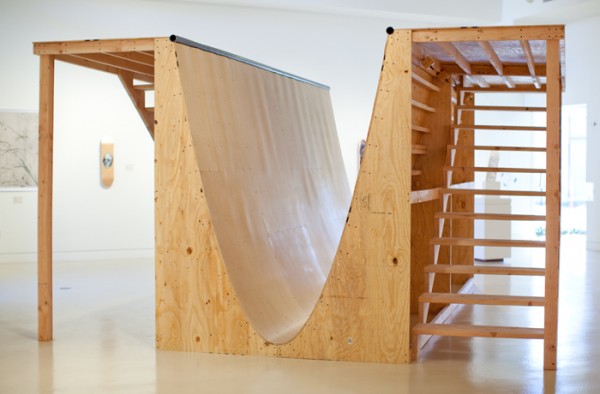
“Through an exploration of the language of material, meaning of form, and viewer reception, I investigate the overlapping space between social symbolism, functional intent, and reckless imagination. Using sculpture, site specific installation, and photography I explore ideas on longing and desire, notions of inferiority in a materialistic society, and the transformative power of liberation through the manipulation of material and form. Drawing from my own relationship to deviant subcultures such as graffiti and skate culture, I confront the many physical and psychological boundaries that often expose the subject of our desire. I strive to create art that will penetrate beyond the typical boundaries of the gallery space, and engage viewers from the cultural soil from which it is inspired.

In my most recent work, I have turned to ordinary urban aesthetics such as civil engineering, commercial pop imagery, and luxury/design branding, to inform my uncanny sculptures and photographs of ironic signage. “One-liners” dominate the foundation of this work, and I use them in a method that parodies their social function: to create a blip in the otherwise smoothly serious façade of life. Often playing on childhood nostalgia, I hope to elicit a reversion to a more instinctual response in viewing one’s environment and everyday objects. My process of production includes careful consideration of material symbolism, as well as meticulous mimicry of ubiquitous fabrication/production aesthetics. A collision of absurd irony develops, that is often shockingly simple, but the effect on the viewer is complex.” – Andrew Lewicki

Mike Bodge

Mike Bodge

Work from N SKY C

“I wrote a program that takes a picture outside of my office window every 5 minutes. It uploads the photo to a server and then analyzes the sky portion to figure out what the average sky color is at that time. The site is a constantly updating mosaic and record of the sky over New York City, and I think it looks pretty awesome.

I’m looking to expand this project across the globe. If you have a cool view and wouldn’t mind running the program hooked up to a webcam all day, get in touch.” – Mike Bodge

via Triangulation

Johan Rosenmunthe

Johan Rosenmunthe

Work from Transmutations.

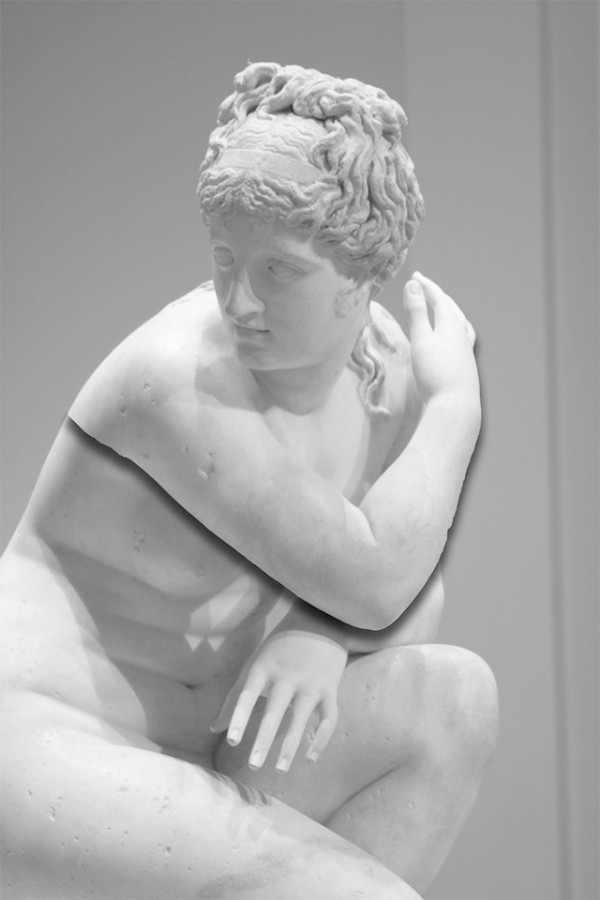
“What is a transmutation? It’s described as a sudden change from one generation to the next, that is large in comparison with the usual variation of an organism. The theory on the transmutation of species was proposed by Jean-Babtiste Lamarck in 1809. He believed that an innate life force, which he sometimes described as a nervous fluid, drove species to become more complex over time. This fluid is shared between all living organisms, which raises the question: What is essentially human, what do we share with the other species and what comes to us as a primordial urge. Does animals have the same urges or are they mutating towards a more sophisticated way of life. Is Homo sapiens the goal or just another transmutation?

Rosenmunthes pictures can be seen as visual transmutations – bastards of light and interference. They are jumps in style and expression, and evidence of a personal investigation.

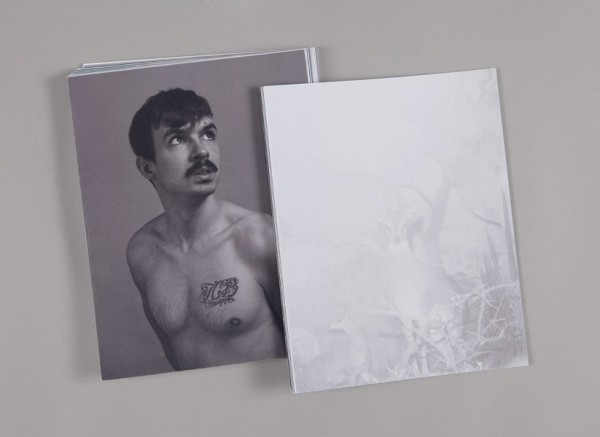
‘Transmutations’ is a book project with a new look at the dialectical relationship between culture and nature. A study of bestial connotations of human gestures and poses, and it questions how much originates from the animal in us. It is a look into the attitude of the young generations and the relationship between staging and substance. The project includes photographs of stuffed animals photographed at the Museum of Natural History in New York. Their postures are carefully orchestrated by humans.

Common to all pictures are the outside world’s expectations. To be the perfect animal or human. To be able to grasp and selectively borrow from other races without being perverted, and at the same time be what we are – humans or animals.”  – Vandret Publications

via Conscientious