Saturday, 30 April 2011


Charlott Markus
Work from Pygmalion.
“Charlott Markus constructs still life arrangements that manifest as site-specificinstallations or photography. Her work explores an intermediate stage, they are betweenfamiliar and unfamiliar. Thus she uses leaving spaces and materials are affected and have no further function. In precise composition given objects and places with a history of their role in a new reality. Markus’ sense of the picturesque, the tactile and sculpturalimages in her compositions gives a poetic and timeless power.” – ACF translated by google.
Tags: giraffe, meta-photography, rietveld, still life, swedish
Posted in Uncategorized | Comments Off on Charlott Markus
Friday, 29 April 2011


Sreshta Rit Premnath
Works from A Cage Went in Search of a Bird.
“In this series of photographic interventions images culled from the US Navy’s website, linked to the operations being carried out against pirates in Somalia, are cropped, cut, reassembled and reframed under the headings “Surrender” and “Surround.” The lexicon of the sublime landscape is collided with that of military operations. While the sublime landscape is said to surround the viewer thus enticing his soul to surrender, strategic operations are carried out by the navy in order to surround the pirates and force them to surrender.
The ocean is explored as territory that lies outside the realm of governmentality – a site of awe and threat. Day and night enormous quantities of cargo – the embodied process of the distribution of commodities – ply these waters silently, transparently. It is only at the moment of their disappearance that they suddenly become present to us all. Suddenly, when an oil tanker goes missing, its enormous body comes into focus. It is then that the cage goes in search of the bird. Law must be forced upon the lawless in order to make the absent present. In order to, once again, make the present disappear.” – Sreshta Rit Premnath.
via VVORK
Tags: cut, fold, overlay, photograph, refresh
Posted in Uncategorized | Comments Off on Sreshta Rit Premnath
Thursday, 28 April 2011


Priscilla Tea
Work from her oeuvre.
“Priscilla Tea is a young painter who lives and works in Milan. Her large scale canvases are often a collision between digital gestures and painterly gestures, but generally speaking, her concern is with the idea of painting-after-internet. Priscilla is focusing her work on a painting practice premised on layers, performativity and innovations which were native to the computer screen, where each individual painting is functioning as a piece of research, and in this constant enquiry there is a neo-analogical development.” –Militos Manetas
via- Gloria Maria Gallery
Tags: computer screen, Milan, painting, painting-after-internet, reify
Posted in Uncategorized | Comments Off on Priscilla Tea
Wednesday, 27 April 2011


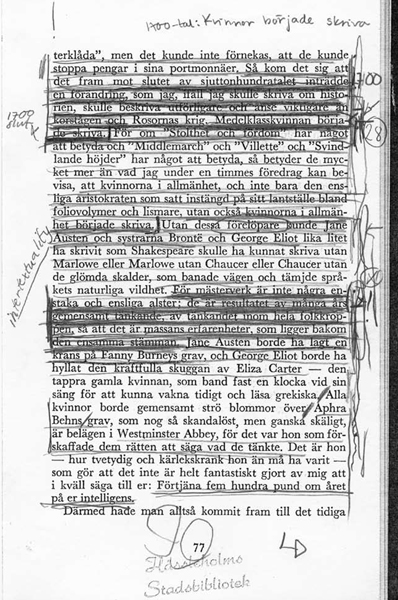

Kajsa Dahlberg
Work from A Room of Ones’ Own / A Thousand Linraries.
“A Room of One’s Own/A Thousand Libraries is a compilation of all the marginal notes made by readers in the Swedish library copies of Virginia Woolf ’s 1929 pamphlet A Room of One’s Own.
The piece is an analogy to the content of the book were Woolf, using Mary Beton as her alter ego, is searching for female representation throughout the history of literature. She is astonished by the end- less and peculiar representations of women written by men, while there are very few books written by women. Throughout the book she is describing, not only the search for a literature written by women, but also the conditions under which this literature was written.
In A Room of One’s Own/A Thousand Libraries Woolf ’s words are reframed within a collective script of responses, tied together not only across individuals, but also across a period of nearly half a century (Woolf ’s book first appeared in Swedish in 1958). One of the most underlined sentences is: “For mas- terpieces are not single and solitary births; they are the outcome of many years of thinking in common, of thinking by the body of the people, so that the experience of the mass is behind the single voice.” – Kajsa Dahlberg
Tags: books, crowd, installation, library, poetry
Posted in Uncategorized | Comments Off on Kajsa Dahlberg
Tuesday, 26 April 2011


Richard Long
Work from his oeuvre.
“Long made his international reputation during the 1970s with sculptures made as the result of epic walks, these take him through rural and remote areas in Britain, or as far afield as the plains of Canada, Mongolia and Bolivia.[4] He walks at different times for different reasons. At times, these are predetermined courses and concepts; yet equally, the idea of the walk may assert itself in an arbitrary circumstance.[5] Guided by a great respect for nature and by the formal structure of basic shapes, Long never makes significant alterations to the landscapes he passes through. Instead he marks the ground or adjusts the natural features of a place by up-ending stones for example, or making simple traces. He usually works in the landscape but sometimes uses natural materials in the gallery. Different modes of presentation, sometimes combined, were used to bring his experience of nature back into the museum or gallery. From 1981 he also alluded to the terms of painting by applying mud in a very liquid state by hand to a wall in similar configurations, establishing a dialogue between the primal gesture of the hand-print and the formal elegance of its display. He stressed that the meaning of his work lay in the visibility of his actions rather than in the representation of a particular landscape.[6] Nearly forty years on, his work continues the dialectic between working freely and ephemerally wherever in the wide world, and bringing it back into the public domain of art spaces and books in the form of sculptures of raw materials such as stones, mud and water and photographic and text works.[7]” – wikipedia
via Today and Tomorrow
Tags: 60's, 70's, documentation, environmental, nature, performance, radical, walking
Posted in Uncategorized | Comments Off on Richard Long
Monday, 25 April 2011

Kate Steciw
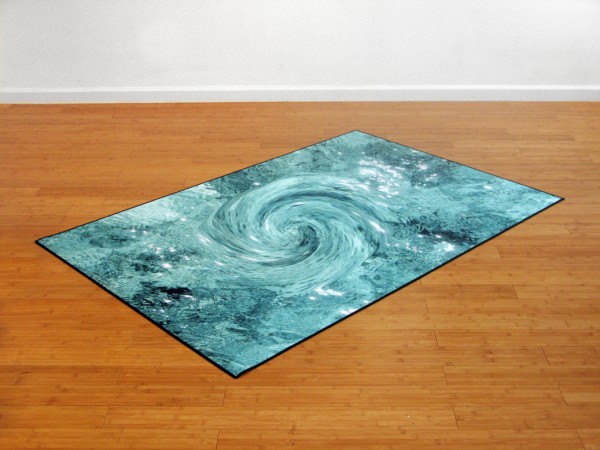
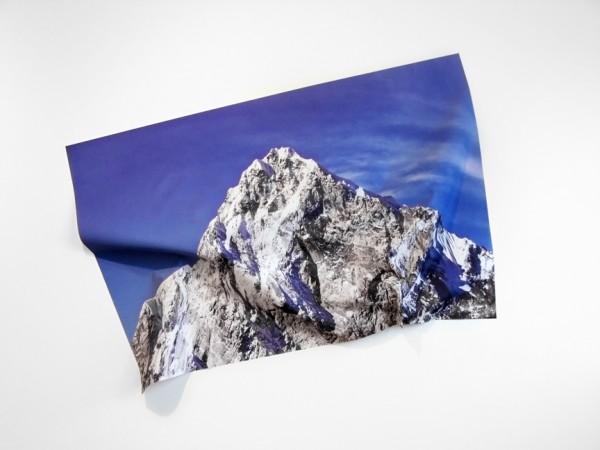
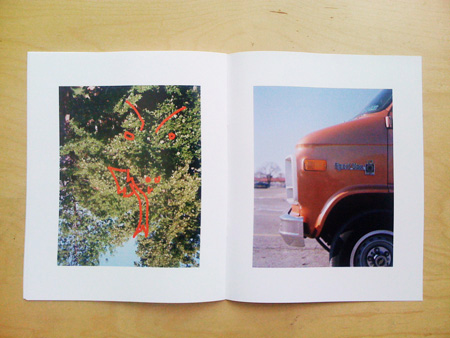
Work from her oeuvre (and The Strangeness of This Idea) buy the book here.
“I am interested in making a photograph other – juxtaposing or superimposing the mundane or expected with the altered or intangible – allowing (or even forcing) a photograph to move beyond the 2D and exist in 3D and even 4D spaces or implied spaces. I strive to expose the failure of the photographic object to reflect an increasingly immaterial world and the demands that that world makes on our perceptions. By returning that ‘other’ material to a photographic space/surface or juxtaposing it with a ‘straight’ image, a relationship is drawn between the evolving abstraction of photographic/graphic space and the abstraction inherent in all photography. It is this perceptual volleying between the solid or tangible and the immaterial or altered that, in my opinion, best characterizes the mutable nature of the contemporary visual experience – solid/static to liquid/dynamic and back again.” – Kate Steciw
Tags: awesome, big fan, implied space, meta-photography, object, process
Posted in Uncategorized | Comments Off on Kate Steciw
Sunday, 24 April 2011


Artemisa Clark
Work from Following Piece – LA.
“Recontextualizing Vito Acconci’s “Following Piece” within the cars, freeways and streets of Los Angeles, each video is taken from my car as I follow randomly selected cars throughout (and beyond) Los Angeles. The videos, seen here as stills, are projected and looped next to ink on paper line drawings of the paths created following the car in the video. The names of the video and map sets correspond with the time spent following the car depicted.” – Artemisa Clark
Tags: acconci, car, driving, homage, performance, recontextualization, redo, remix
Posted in Uncategorized | Comments Off on Artemisa Clark
Saturday, 23 April 2011
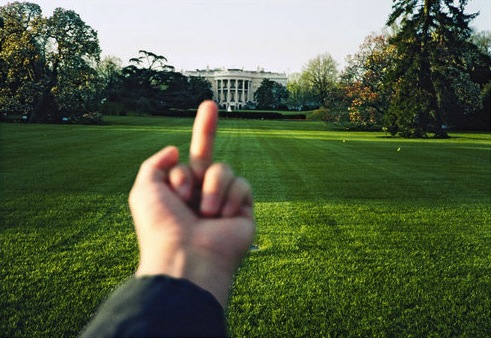
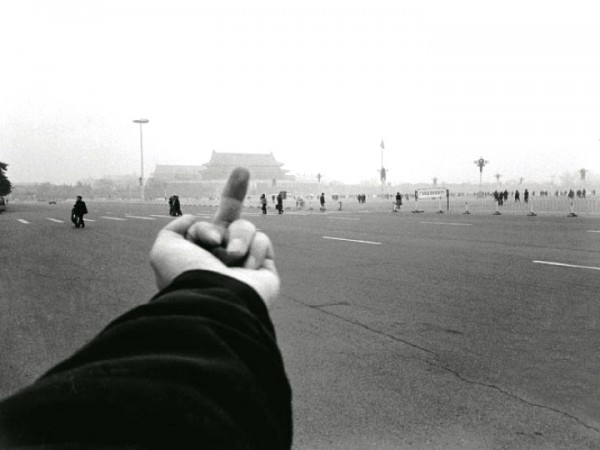
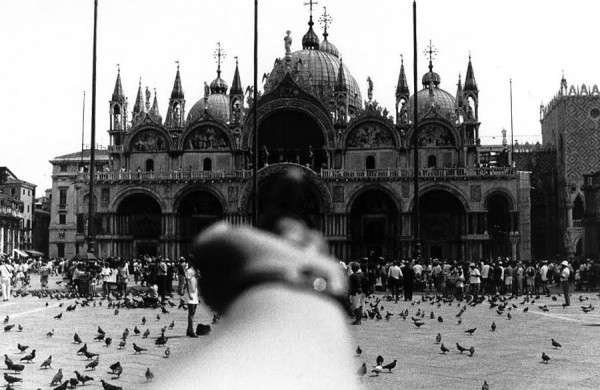

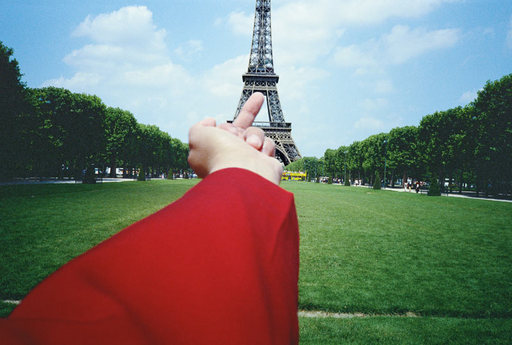
Ai Weiwei
Work from Study of Perspective.
[petition for Ai Weiwei’s release]
“…Each picture show the artist’s hand making a one-finger gesture, again rude, at a variety of places familiar and unfamiliar. The equal-opportunity dissing encompasses power sites like Tiananmen Square and the White House, but also, intriguingly, Long Island City, Queens. Together with the history-infused sculpture, the antic pictures give a sense of the versatility of an artist whose role has been the stimulating, mold-breaking one of scholar-clown.” – Holland Cotter for the New York Times
Tags: activism, damn the man, middle finger, performance, photography, save the empire
Posted in Uncategorized | Comments Off on Ai Weiwei
Friday, 22 April 2011
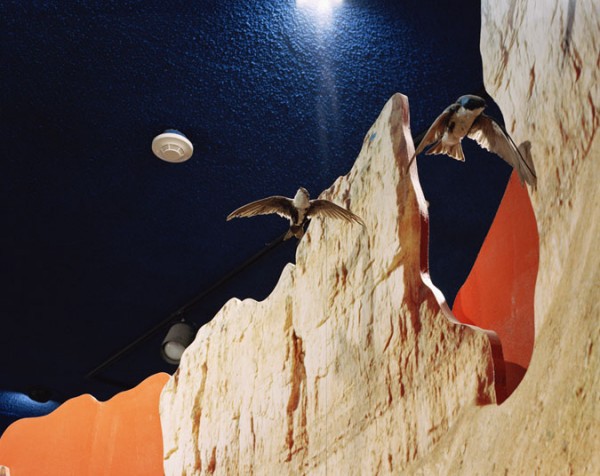
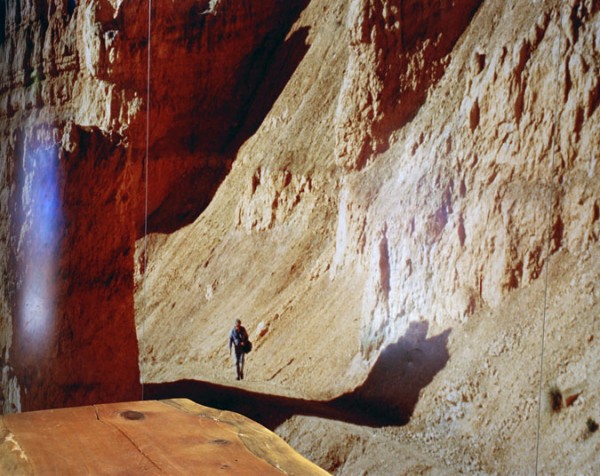
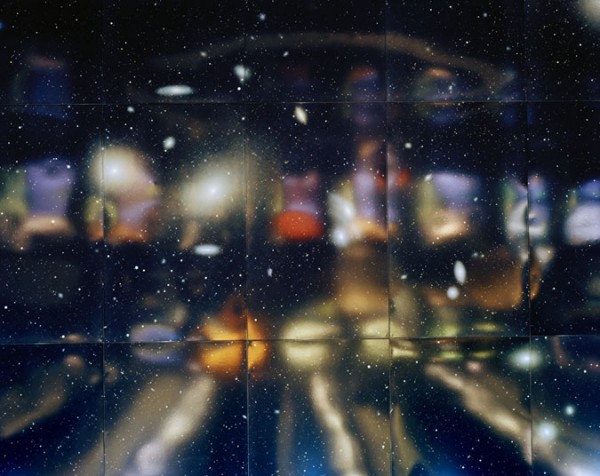
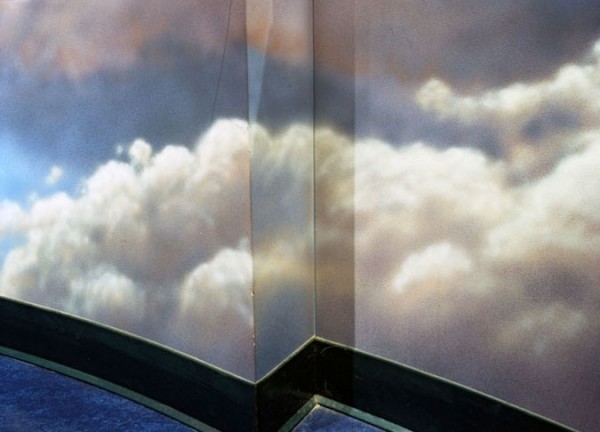
Anthony Lepore
Work from New Wilderness.
“Anthony Lepore’s New Wilderness is a series of photographs that lay bare nature as an historical construct governed by human invention and intervention. Although these images often suggest collage or post-production alterations, they are produced with a 4 x 5 camera in visitor centers and on the edges of designated wilderness. In his “landscapes”—which are as often the capturing of a mountainside studded by telecommunication towers as the picturing of “forest-pattern” wallpaper in a ranger’s office—Lepore is showing us our own misunderstanding of the environments we are prone to find ourselves in. He points to our most ridiculous attempts at cultivating, domesticating, and aestheticizing nature, and finds (in the crevices, along the seams) the sublime beauty of human carelessness. He knows it is not the diorama of the California desert that needs to be seen, but the lone branch that stretches beyond its frame to touch the pale white wall just beside it. The branch fails at being the image of nature it is cast to portray. Or does it successfully achieve the signification of liberation we press upon nature to deliver us? The uncanny dialogue of a soda machine with the Grand Canyon, or a fire alarm that appears (as a UFO? a satellite?) in the outer space model insists on our own intervention in what nature is. Nature is never at a remove from our own impression of it. It is, like these images, a series of maps and pictures.” – Ryan Kelly
via iheartphotograph.
Tags: cut paper, fake, faux, indoor, landscape, meta-photography, nature, photographs, wilderness
Posted in Uncategorized | Comments Off on Anthony Lepore
Thursday, 21 April 2011
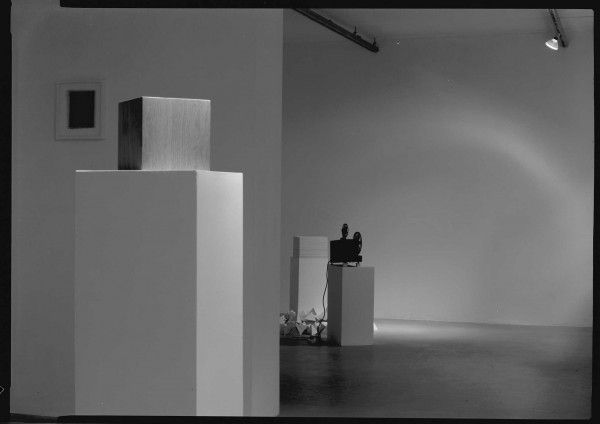


Jesse Ash
Work from his oeuvre.
“Jesse Ash: I have been reading a bit about the chess grand master Bobby Fischer, who only passed away recently. His story is fascinating. But I think his match against Boris Spassky in Reykjavik really interests me. The match was presented as a ‘cold war battle’ and so had deep political significance, yet all this hype and ‘meaning’, revolved around the game, with its own rules, formulas, patterns. I like the way this ‘meaning’ is represented, or signified through the formal elements of these wooden chess pieces, their individual moves, sequences, the checquered board and its territories.
David Lewis: The chess match as a (now traditional) metaphor for art?
JA: Not for art solely – there are a lot of things that collide here, some of which I don’t have specific answers for, but I think that’s why it interests me. There’s something about spheres of activity which mirror and reflect each other, where associations exist across and through small micro internal moments like the construction of a chess move in the mind of Bobby Fischer, to the board as a mirror of territorial occupation, to the macro global economic / military movements. But this is all played out through a very specific system confined to a table in a room in Reykjavik. The funny thing is that as I’m thinking about this, I can hear the British national anthem in my head … because while I was looking into this event in Iceland, I watched a documentary on the cod wars between British and Icelandic fishermen. There’s a scene where one of the British fishing boats plays the anthem through a tiny radio propped on the deck of his boat in the middle of North Sea. He stands there, in his boat facing Iceland. It’s a really humble action of defiance. The cod war was taking place at the same time as the chess match. I love the idea of this tiny, crackling sound in the middle of a vast expanse of water, playing simultaneously as Bobby Fischer moves a wooden piece which has potential significance to global politics. This was meant to lead to a work, but I haven’t made it yet. Maybe it’s better just like this, in words?” – Fragment from an interview published in UOVO, issue/17, 2008, pp 128-145.
VVORK
Tags: 16mm, 4x5, chess, folded, newspaper, superdutch aesthetic
Posted in Uncategorized | Comments Off on Jesse Ash