Valentin Ruhry

Valentin Ruhry

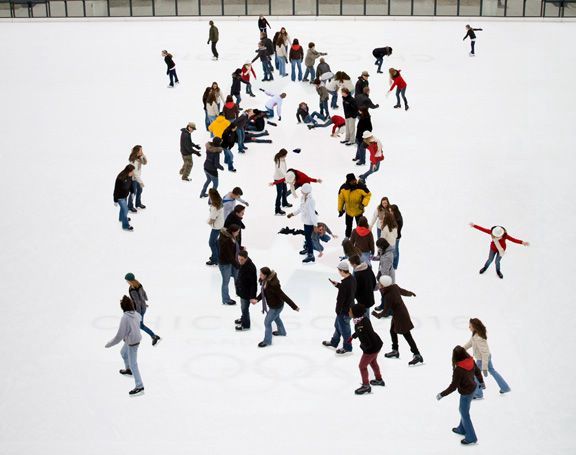
Work from his oeuvre.

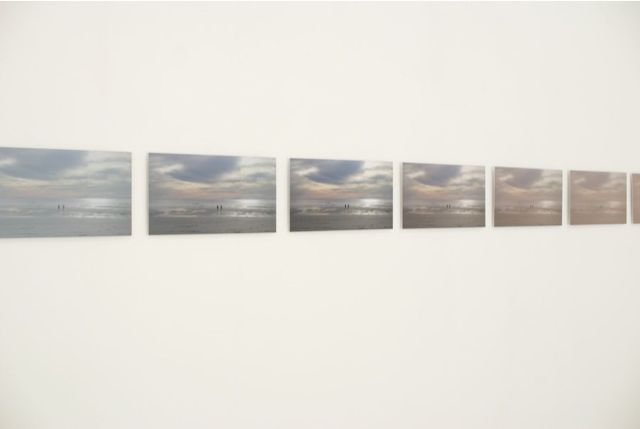
“To cite Claude Levi-Strauss, the engineer and the amateur constructor represent two completely different ways of behaving. For the engineer, there are only raw materials, which can be employed as desired, and disturbance factors, which are to be excluded. The amateur constructor may use waste material (also on a mental level) and fragments, which as it were bear witness to the history of the individual or to society. The amateur constructor does not begin with nothing, but he might perhaps accomplish a new combination of ready-mades. It is in this area that the artist Valentin Ruhry plays the role of someone legitimising a game, who in doing so endows it with greater scope and a meaningful context. (quot. Günther Holler-Schuster)

Newport Beach is a town on the Californian coast. In January 2010, an incidental snapshot was taken of a sunset over the Pacific. The special atmosphere and chromaticity of the light remind one of Caspar David Friedrich’s Mondaufgang über dem Meer (Moon Rising above the Sea). Since the volume of light also constitutes a sculptural material in the work of Valentin Ruhry, he took this photograph as the starting point for his new work New Port Beach.

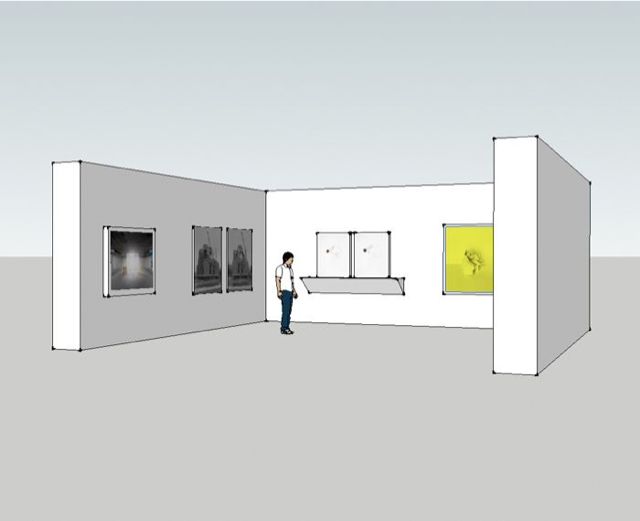
New Port Beach is an installation composed of iron sections and fluorescent tubes. The first room presents an undulating light surface, a “frozen wave” covering about 20 sq ms. On the opposite wall is a series of photographs displaying a particular progression of colour, upon closer inspection of which one can see that it is always the same photograph mentioned above that is used, with two shades of colour overlayering it by means of various transparencies.” – Christine Koenig Gallerie
Tereza Zelenkova

Tereza Zelenkova

Work from her oeuvre.

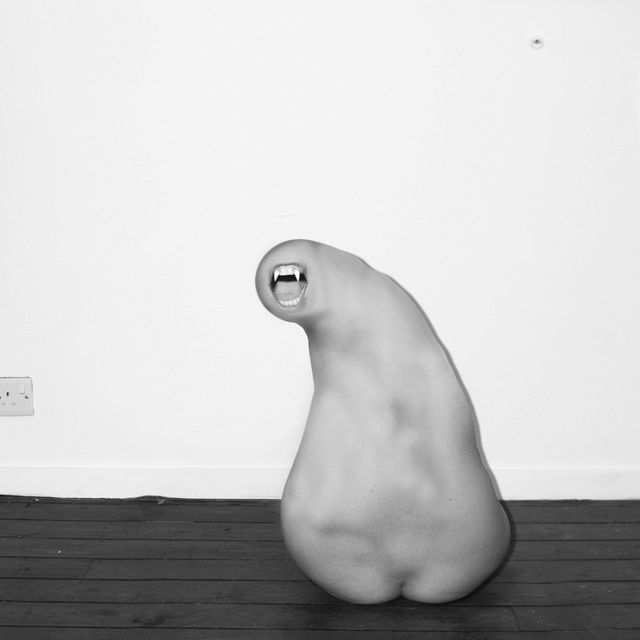
From an interview with Grant Willing on too much chocolate

GW: Your work feels very intentional and considered, but there is still this lingering sense of spontaneity in some of your images. Can you tell me how you go about making your images?

TZ: Actually my work is very unintentional and unconsidered. My latest project on Bataille is definitely a bit more controlled; at least I am trying very hard for it to be and that’s why I’m shooting in the studio. But usually the way I control the final outcome and communicate my ideas is through editing. I don’t take too many photos but editing is seriously at least 50% of my work. The amazing thing about photography is that you don’t have absolute control over the resulting image and some of the choices you make while creating a photograph are entirely unconscious. In the end it is the process of editing that allows you to be entirely in control and work with specific agency.

Alexandr Skarlinski


Alexandr Skarlinski

Work from his oeuvre. Screen captures are from here and here.

In lieu of a statement, I have placed Skarlinski’s most recent writing below.

I have been thinking about a new idea for a project lately, that would unfortunately require much too much grant money and free time to currently pursue.  The work itself is quite simple, to be presented as a short, documentary style film, some photos, and a sculptural relic.  I myself, as the artist or creator would be the vocal or living feature of the documentary, occasionally appearing with a beard, with different hair cuts and disheveled appearances, hopefully to exemplify the great time and stress that goes into any long term personal endeavor.

The process now becomes a logistical catastrophe.  In the backyard of my house, located in the city, which I rent with my girlfriend and dog, I would build a boat, or rather a ship.

A largish ship, large enough to live in, and large enough to confirm sea worthiness.  The hull of the boat would be lifted above the yard by great wooden beams, like the ones seen in illustrations of the ark. Any normal yard stuff could continue around and under the hull of the ship, gardening, dog matters and the like.  The references to the biblical ark would be, as with any hand built boat, unavoidable however never fully discussed unless with a joking manner.

The documentary itself would feature the shipbuilding, my girlfriend and myself living with the structure, my dog being a dog around it, and most importantly the ship and its creation becoming a local spectacle.  Neighbors would come by and ask us about it, some would gossip, plenty of joking and backyard bbq conversations would concern the ship and the people around it.  People from other neighbor hoods would begin to flock to the ship, like a roadside attraction. Others from around the city would create their own attractions. Post cards would appear at novelty stores with images of the ship, a local t-shirt that never sells would be at others. Old men would fantasize about it at local bars, landlords would scorn its existence.  Morning news stations would have quick three minuet sections about a young artist couple and their crazy shipbuilding project. “I am building the future home for my girlfriend, myself and our dog.” It will seem quite adventuresome.

Eventually the boat would be finished, however I live some three miles away from the city harbor. A helicopter comes, it lifts the boat and it soars the three miles to water. A sailing metaphor gliding over the neighborhood and neighboring ones alike, passing past the business district, office working turning heads, executive meeting halting in spectacle. We are all so confidant, though our hair is on end. The helicopter floats there above the water, the boat just inches from landing. We all realize that there is still so much room for failure the boat could still sink.

via extra extra

Amir Zaki


Amir Zaki

Work from Eleven Minus One

“Amir Zaki’s 11-1 meticulously recreates a group of photographs made in the mid-1980s by internationally-renowned Swiss artists David Fischli and Peter Weiss. Fischll and Weissʼ work, which depicts precariously balancing temporary sculptures intentionally constructed in a slap-dash manner, privilege the photographs over the sculptures themselves, a notion Zaki interprets as an ironic inverse of the professional photographic documentation of artwork. In Zaki’s adaptation of Fischll and Weissʼ series, there is a re-inversion at play, but also an additional element of distortion: Zaki refocuses his attention on the sculptures, but uses virtual 3D media to create hyper realistic nonobjects in a eries of short animation loops, a body of photographic prints depicting orthographic views of the 3D models, and a foldout book based on the eleven different ways that a cube can be unfolded. Working with this methodology allows Zaki to question the conventions and limitations of photography by exploring depictions of “real” space, but without the restraints of actual physics or forces such as gravity. He also highlights the perversion of using Fischli and Weissʼ photographs of quickly-made, throw-away sculptures as a source to create incredibly laborious photorealistic scenes that can be explored from all angles, both through photographic and orthographic projections.” – LAXArt

Heather Rasmussen

Heather Rasmussen

Work from DeconstructConstruct.

” The series DestructConstruct is based on found photographs of shipping container accidents downloaded from the Internet. Each found image is used as a model for a sculpture that is constructed for the production of the photograph. Individual shipping containers are folded by hand out templates of colored cardstock, and placed according to the found image. The sculpture then exists as a photographic work, which directly relates to the original photograph, including the ship name, place, and date the accident happened. I abstract the scenes of the catastrophes, removing the original context and placing the damaged containers, rendered simply out of colored paper, onto a seamless white background. This process transforms the containers into pristine patterns of color and shape, thereby confusing scale and altering the perception of the shipping container as an object. The paper is now seen as fragile, crushed or torn due to an unknown circumstance.” – via Heather Rasmussen

Daniel Freytag

Daniel Freytag

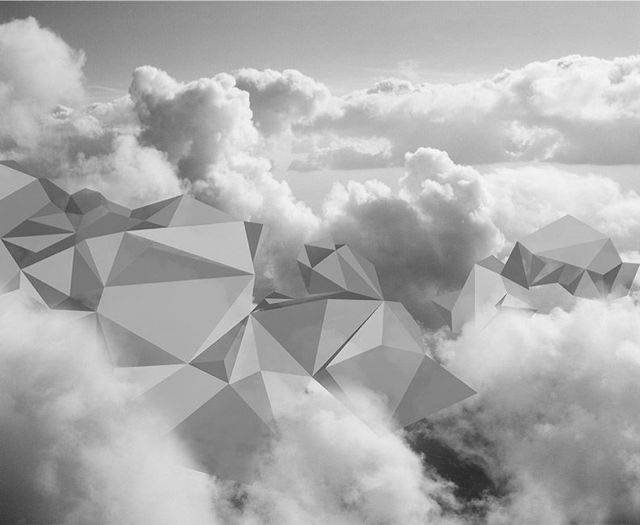
Work from Monolith

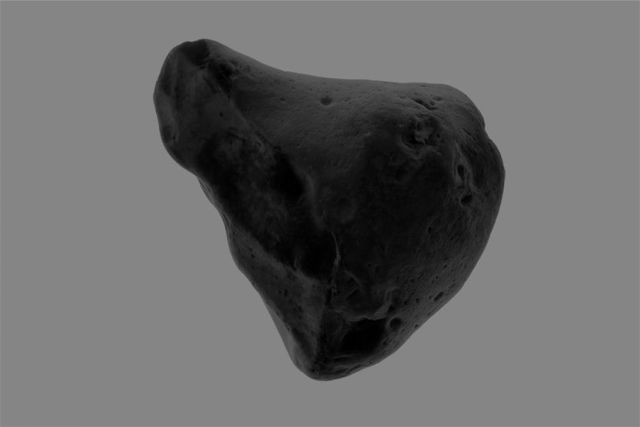
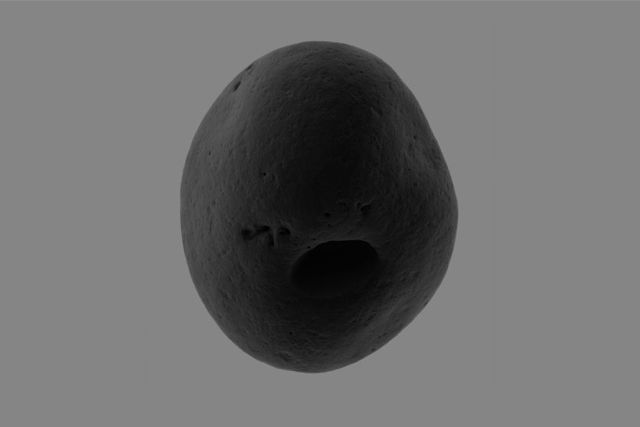
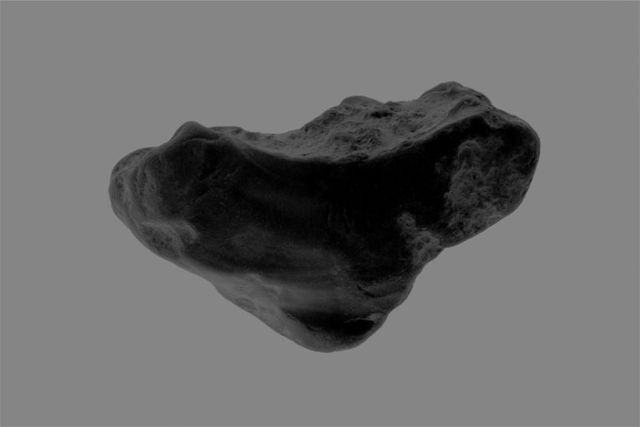
Alright, I am going to take a quick stab at this work based purely on how the aesthetic of these pieces fit in the scope of contemporary works. However, this particular aesthetic (similar to the superdutch) has a loose connection to the remainder of Freytag’s work. What I find most compelling about Monolith is use of the photograph as object rather than record. Unlike many digital (or analog) photo-manipulations or abstractions, these pieces have a far less strict connection to a representational reality. There are no real relationships to the objects of representation beyond what we recognize as a rock, albeit a non-monolithic one (this furthers the abstraction and distances the connection to mechanical reproduction). This too, for some reason, inspires me to inspect the work and appreciate how someone who seems to be removed from the particular concerns of the aesthetic of meta-photography can fit so squarely within in at the same time.

Dave Murray

Dave Murray

Work from his oeuvre.

“Dave Murray is a Chicago-based artist working in photography, sculpture, and digital media. Falling, Jumping, Mirrors, Office Plant, Shark, Cans, Skies, Stars, Frisbees, Bats, Ghosts, Boxes, Boulder, Rocks, Legs, Cones, Balloons, Mandalas, Skull, Cheerleaders, Sports, Politics, and much more.” – via the meta tag on http://www.davidamurray.net/

via i heart photograph

Daniel Everett

Daniel Everett

Work from his oeuvre.

“Daniel Everett embodies the current technological zeitgeist shared by post dot-com kids, the kids of the dot-com kids, and the relationship we have to our interconnectivity (the internet). His work is jaded, earnest, and self mocking at the same time.” – Beautiful/Decay

Hugh Brown

Hugh Brown

Work from Allegedly: New Chainsaw Works.

“Hugh Brown first cut his teeth as a chainsaw collector and punk rock aficionado; an unlikely pairing that spawned a Grammy award-winning music-packaging design artist and an obsessive appropriation artist compelled to insert chainsaw references into brilliant forgeries of Ed Ruscha, Jackson Pollack, Ed Keinholz, John Baldessari and dozens more contemporary art heavy hitters.

While the images stand on their own, there is humor and wit lurking within each Allegedly creation for the true art insider to uncover. Take the Hiroshi Sugimoto piece entitled Vista Theater (Texas Chainsaw Massacre 2) – Brown rented out the theatre and used a large format camera and an extremely long exposure to capture the entire film on a single print, just as Sugimoto did in his photographs of old American movie palaces and drive-ins as an expression of time. Or the Alexander Calder wire sculpture depicting a chainsaw held up by a three-person pyramid entitled Three Acrobats, One Chainsaw – a nod to both Calder’s primary medium and his fascination with the circus.

Each piece is as unique as the story behind it. He studied Hans Namuth’s footage of Pollock’s wrist movements, bought the same brand of gouache as Henri Mattisse and used Bruce Nauman’s neon fabricator to spell out Was/Saw in place of the iconic Raw/War. Not only are the works so convincing that many mistook them for authentic pieces when shown last year at the California State University Fullerton Grand Central Art Center but the process by which they were fabricated is an artistic expression entirely unto itself.

A photographer, printmaker and assemblage artist for over 35 years, Brown has had seven solo shows and many group shows including two at the San Francisco Museum of Modern Art and three at the Triton Museum of Art. But Brown’s standout achievement is a second place finish in the “Design a Chair for Barbie” competition sponsored by Vitra Design Museum, Metropolis Magazine, Mattell and W – not because of the second place finish but because the entry caused a fist fight amongst the judges.” – press release from Robert Berman Gallery

Recent with Juxtapoz.

Aristide Antonas

Aristide Antonas

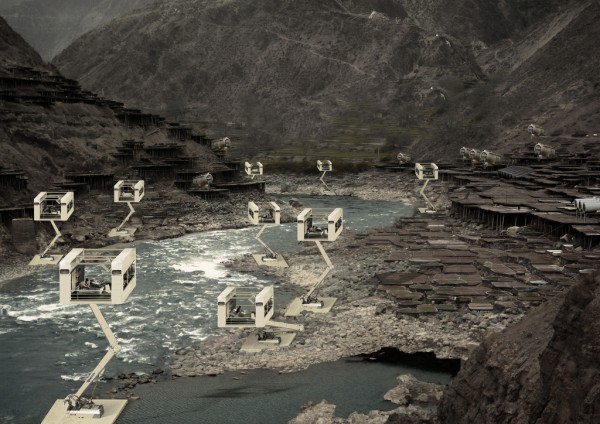
Work from Crane Rooms.

“Simple concrete foundations and elementary water pools are proposed to be installed in non hospitable beaches or arid hills nearby the sea. The room units form independent cells, they can be covered by tissues during the day; they provide a quality connection to the Internet. The private or public character of each room is regulated by the chosen high of every unit. The high control system is located inside every room. Platforms go up and down following the will of every provisional inhabitant. A bigger screen, related to the bed, serves as a home cinema structure; a small office, a wardrobe and a shower are placed in the same moving platform. A common underground kitchen serves the needs of all the complex; a reverse osmosis desalination plant provides drinkable water to the invisible kitchen and to the units (the water pipes follow the length of the crane).

An identical design for “crane rooms” can be undertaken within a system of moving vehicles in order to form a dispersed, moving “crane room hotel”. Rooms moving up and down provide summer shelters with changing views.” – Aristide Antonas