Wednesday, 31 October 2012


Ulrich Vogel
Work from his oeuvre.
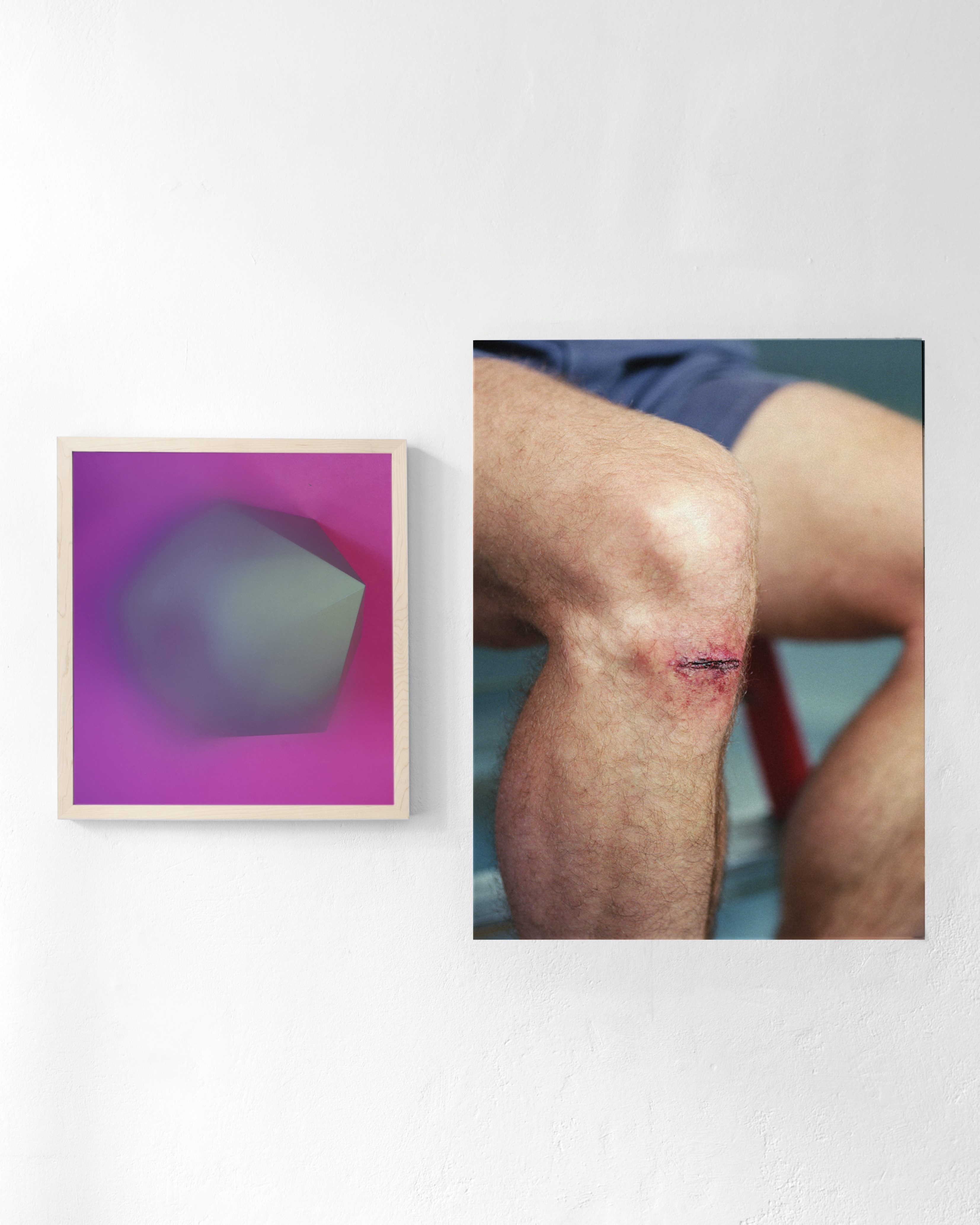
“..Right up to the present day Ulrich Vogl‘s work has been defined by an approach which is both conceptual and experimental. The sources of inspiration are often the materials themselves: everyday objects such as slide projectors, construction lamps, cardboard tubes and aluminium foil, or materials which carry a hint of “special effect” within them
from the outset. Vogl “borrows” these glittering and iridescent materials from the world of theatre and show business.
Whether they are simple, everyday materials or special ones: they are always presented in an unusual context and
processed in unexpected ways, using Vogl’s own distinctive style.
The result of this process-based and analytical approach is that each work stands for its own and develops its individual effect space. In the process, the exterior material forms also change continously. Although Vogl’s work is based on drawing, from one instance to the next it may express itself as a room-filling installation, a film or an object. Drawings in the classical sense – works on paper – are now virtually non-existent in his work. The expression “Extension of drawing”, already the title of an exhibition and a catalogue, epitomises Vogl’s approach. Using sign and drawing as a starting point, he extends his work into other spheres…” – Julia Trolp
via Triangulation Blog
Tags: awesome, installation, light, minimal, projector, space
Posted in Uncategorized | Comments Off on Ulrich Vogel
Tuesday, 30 October 2012
Bevis Martin and Charlie Youle
Work from their oeuvre.
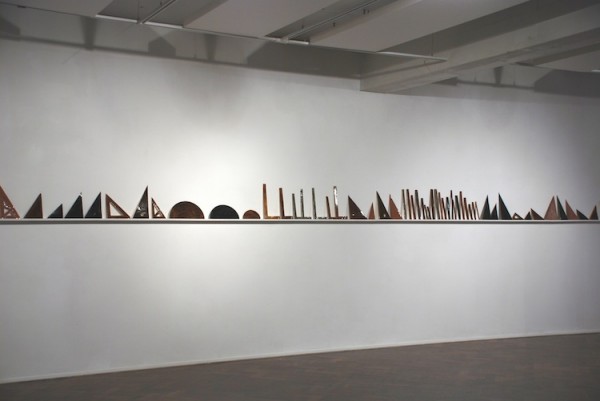
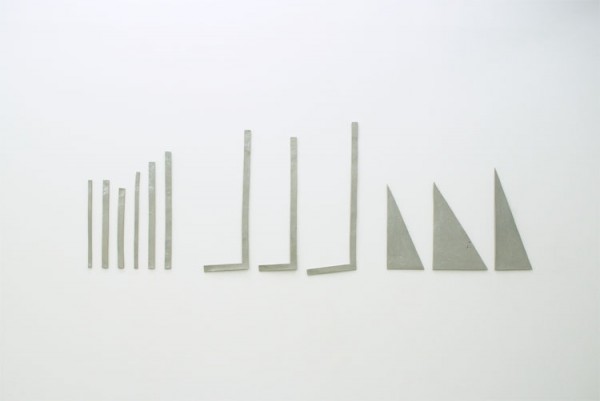
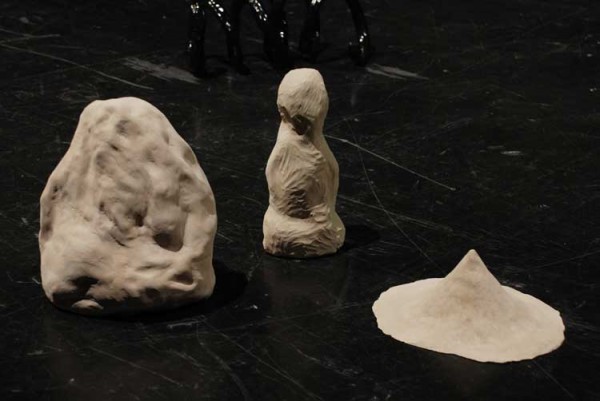
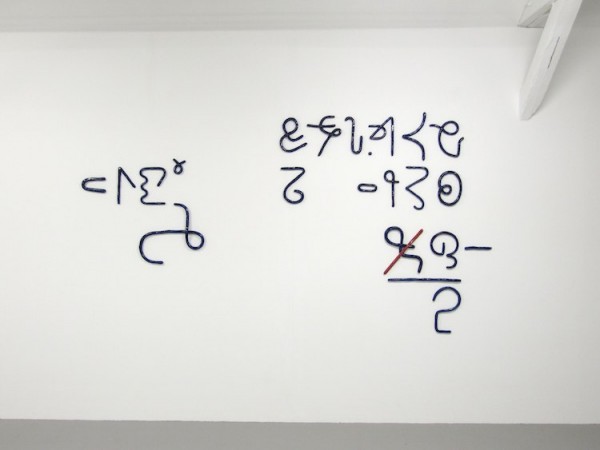
“Over the past four years or so we have developed a collaborative practice in the conception and realisation of our work that we find liberating and interesting. It is an expression of our common interest in ambiguities in the idea of authorship and expression – having both worked with found objects and images that allow a degree of distance or role playing in the making of the work we naturally came to a point where it made sense to treat our ideas as possibilities to be shared or swapped. In making our respective work we found that we were posing ourselves a similar set of questions – can one express something by adopting second-hand means, how do images ‘make sense’, does one make things for someone else, what are the rules and does one follow rules in breaking them? Increasingly we are focusing on a certain stupidity in the nature of our relation to images and objects. We want to work on finding ways to disturb the comfortable ‘transmitted idea – object/image – recieved idea’ formula, to play with the way that an image can stand in for an idea. This has led us to look at museum displays and other pedagogic compositions as well as shop windows and adverts that seem to offer a model of transparent direct communication – the image or object as an ambiguous remainder in a process of communication. We are trying to enhance the inadequacy that we see in all efforts to communicate, in order to make the encounter with the work more disturbing. We are also interested in the range of possibilites in the making of something; the idea of ‘style’ and the relationship with materials. Embracing the badly made, the overworked stating the obvious, slightly incorrectly, through inadequate means in order to communicate abstract and difficult concepts – conjuring up the sublime using modelling clay and pasta. We follow an instinct to make the work when it makes us laugh, not because we want to make work that is simply funny or ironic, but because our we treat our laughter as a clue that something is disturbing.” – Martin and Youle
Tags: ceramic, geometry, math, semiotics, symbol
Posted in Uncategorized | Comments Off on Bevis Martin and Charlie Youle
Monday, 29 October 2012


Rob Sherwood
Work from The Warp & The Weft, ongoing at Son Gallery.
“Rob Sherwood’s exhibition The Warp & The Weft presents a cycle of works which create unexpected, sensory experiences out of systematic processes. These are often informed by abstractions found or created whilst using digital media and communications: unnecessary disruptions in otherwise logical and functional environments. The installation involves painting, paper making, sound, video and photography: each media and process being defined by its unique but corresponding system and their different ways of reacting under the artist’s hand, and interacting with one another.
In Sherwood’s paintings the grid is the underlying structure. He is interested in its role in processing digital light: particularly the organisation of colour into separate entities and the illusion of their togetherness, as made evident by pixellation. The grid is apparent in both Screen No.1, a folding screen that follows a painted algorithmic pattern, and in a video work exploring the colour palettes on painting software.
Elsewhere a sound piece finds harmonies within the falterings of a streamed mp3 file, whilst a photo diptych forces images arbitrarily sourced from the internet into new relationships. Hanging on a panel is a piece of paper: handmade using the pulp of Japanese knotweed, an invasive plant known for its complex, rhizomatic root structures.
As with his grid paintings each of these works tampers with an apparently rigid system and finds creative space in a subjective interference. The suggestion is that models which appear strict or sterile can combine meaningfully with subjective fields of feeling, whether in the algorithms of the internet or those of a painted pattern.” – Son Gallery
Tags: block, color, geometry, installation, minimal, warp, weft
Posted in Uncategorized | Comments Off on Rob Sherwood
Sunday, 28 October 2012

Elizabeth Corkery
Work from her oeuvre.
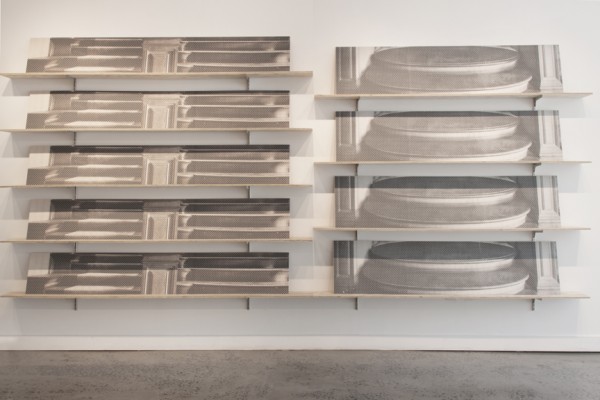
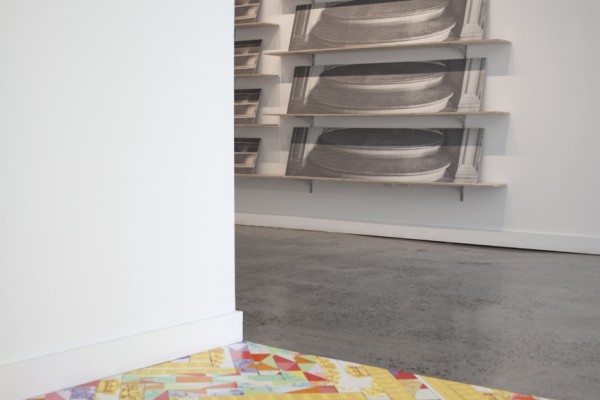
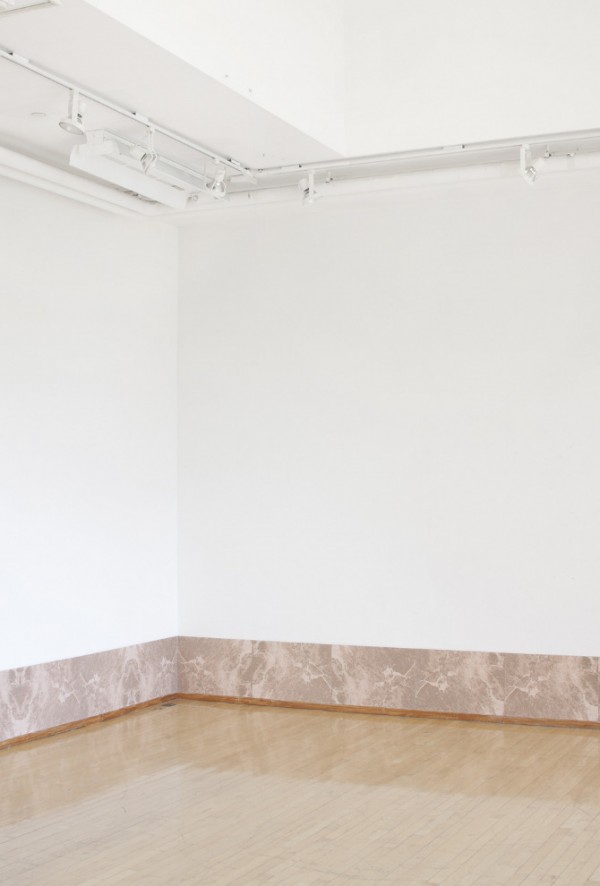
“Corkery works through an ongoing fascination with the concept of simulation and the multiple with specific regard to their relationship with printmaking. Her practice currently centres on large-scale installation pieces which initiate a slippage between the conventionally two-dimensional nature of print media and a more volumetric architectural space.
Often relying on production modes of panelling and tessellation, shapes and line repeat and dissolve across separate modular surfaces resulting in a rhythmic interplay that forces us to reconsider the architectural environment as merely a static backdrop.
Because of their scale, many of Corkery’s pieces rely on creative collaboration, from fabrication to installation. They respond to a combined feeling of strange familiarity and irrationality. The works provoke in the observer an acute awareness of perception as a bodily and cognitive process, an eccentric series of stops and starts, trials and errors and, ultimately, of rationalization. But in the brief moment before that rationalization, the world is made strange again. A kind of re-enchantment.” – Elizabeth Corkery
Tags: column, faux, gnms, printmaking, trompe l'oeil
Posted in Uncategorized | Comments Off on Elizabeth Corkery
Saturday, 27 October 2012


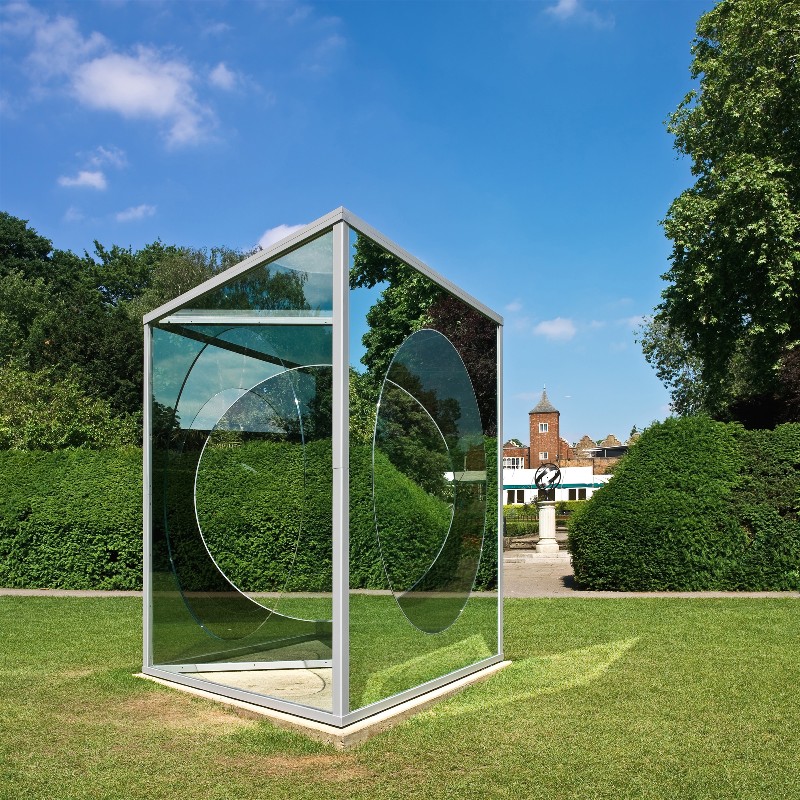
Dan Graham
Work from his oeuvre.
“Graham’s rejection of the high-seriousness of modern art emerged at the same moment as Pop art in the early 1960s. “I love magazines because they are like pop songs,” he once explained about his early conceptual magazine works, “easily disposable, dealing with momentary pleasures.” He infused his approach with a wide range of literary, anthropological, and scientific influences, from cybernetics and topology to the writings of Jean-Paul Sartre, Gregory Bateson, and Margaret Mead. Graham’s performances of the 1970s and his architectural pavilions of the 1980s to the present, with their kaleidoscopic refraction of bodily experience, demonstrate his interest in revealing the private self as part of a social, public context.
The fluid, democratic quality of Graham’s work continues to exert a powerful influence on younger generations of artists. His desire for a connection to others mirrors our own; yet his work offers a way to critically explore that desire at a moment when interconnectivity and instant feedback are conditioning our collective consciousness to an unprecedented, global degree.” –Whitney Museum of American Art
Tags: architectural, modernist, sculpture
Posted in Uncategorized | Comments Off on Dan Graham
Friday, 26 October 2012


Elspeth Diederix
Work from her oeuvre.
“…Diederix is playful and inventive in her visualisation of images but strict and almost mathematical in constructing her compositions. Even though her photographs may give the impression that they are brought about by chance, they are in fact staged to an extreme degree. A plastic bag may become a flower, a plastic bottle part of a classical still life. Is a motorbike still a motorbike when it has been covered all over with pink pigment?…” – Elspeth Diederix
Tags: dutch, kenya, meta-photography, rietveld
Posted in Uncategorized | Comments Off on Elspeth Diederix
Thursday, 25 October 2012


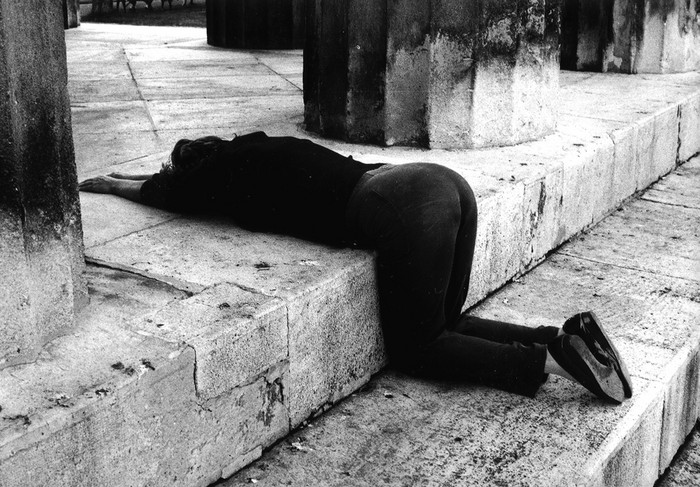
Valie Export
Work from her oeuvre.
“The black-and-white images here are far more quiet. In them the artist uses her body as a kind of measuring or pointing device, leaving us to decide exactly what she is pointing at. She crouches in corners, presses against walls and lies along the ledges of an imposing 19th-century building in Vienna. She lies in the gutter of a curving traffic median. She mimics the contours of sand dunes. Sometimes she draws on the images, as if to make comparisons between the geometry of her pose and the geometry of the architectural space she occupies.
But the work’s undercurrent is more visceral and humorous, and at times a little abject. Ms. Export seems to be haunting Vienna, inserting herself into places that are overpowering and by definition male. In the end her protest strikes the viewer as anything but passive.” -Roberta Smith, New York Times
Tags: austrian, black and white, feminism, performative, photography
Posted in Uncategorized | Comments Off on Valie Export
Wednesday, 24 October 2012
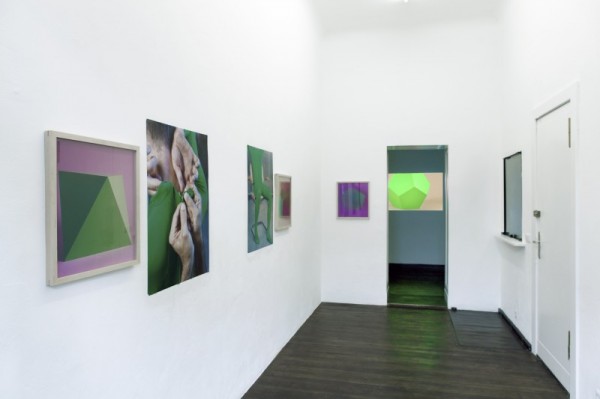


Shahryar Nashat
Work from his oeuvre.
“Shahryar Nashat’s previous work has investigated his interest in art collections, reproductions of works of art, as well as questions relating to appropriation and artistic reuse, display issues and apparatus. Lighting, plinths, pedestals, and the mode of positing and projecting all play pivotal roles in Nashat’s video installations, sculptures and photographs and highlights how display and reproduction affect meaning.
Many film and photographic works employ representations of the body, often positioned on plinths and pedestals that act as an extension of the body and the ground of sculptured feet. In a new video work The Rehearsal of Adam Linder,2011, a dancer is filmed during and straight after a rehearsal, alternating between the body being overtly physical and in rest. Through the presentation of the video, the displaced body can be understood as acting as a stand-in as both a viewer and performer. This is idea of a stand-in or proxy is mirrored in a series of bench-like sculptures that suggest the viewer might sit down and through that action become a part of the artwork. The entire installation works as a constellation of works that constantly shifts between what is to be looked at by the viewer, what is to be performed by the artwork in its concept and form, and what is to be performed by the viewer in looking at the works. ” – Studio Voltaire
Tags: body, color, performative, photography
Posted in Uncategorized | Comments Off on Shahryar Nashat
Tuesday, 23 October 2012


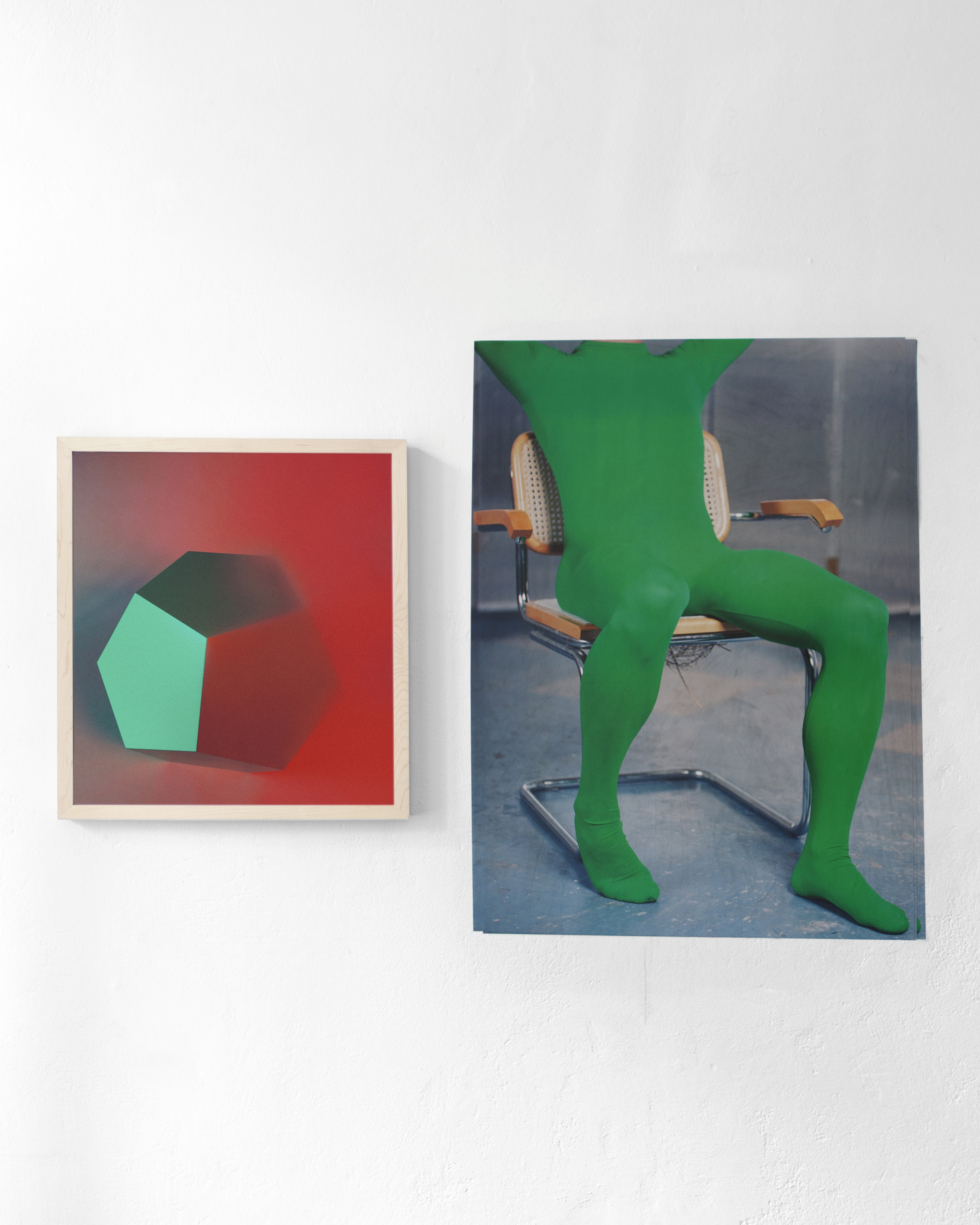
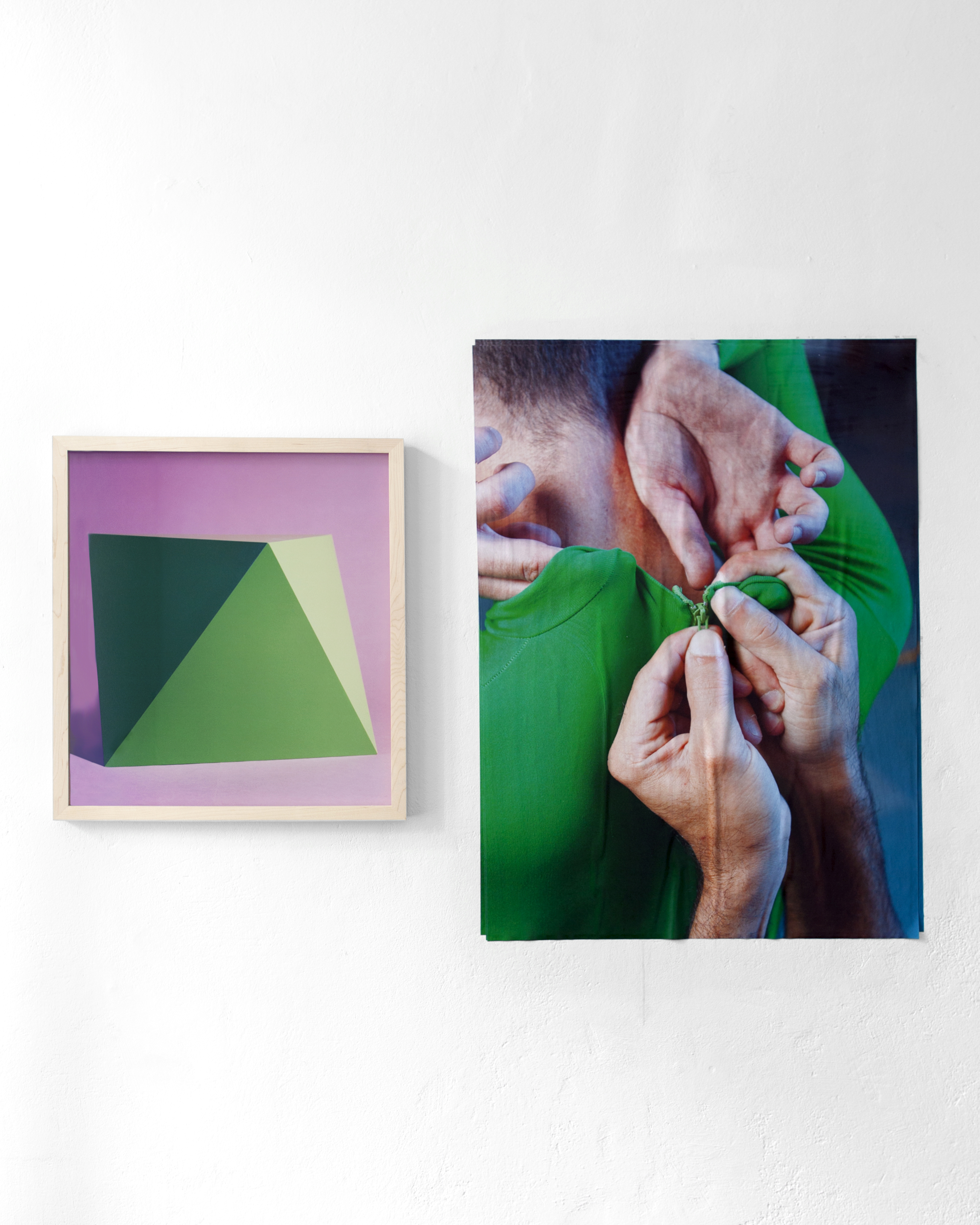
Alex Isreal
Work from Property.
“…The title Property refers to the Hollywood studio prop department. For Property, 2011, at Peres Projects’ Kreuzberg gallery, Israel has amassed a collection of sculptures culled from the thousands of readymade props available for rent at prop houses in Berlin and at the Babelsberg movie studio.
In the gallery, the props assume the role of sculpture: physical art objects to be experienced without the mediating barrier of the lens. At the exhibition’s close, Property will be dispersed: the rented props will return to their original sources and to being circulated through various on-camera jobs…” – Peres Projects
Tags: gnms, gradient, minimal, rad
Posted in Uncategorized | Comments Off on Alex Isreal
Monday, 22 October 2012


Samir Mougas
Work from his oeuvre.
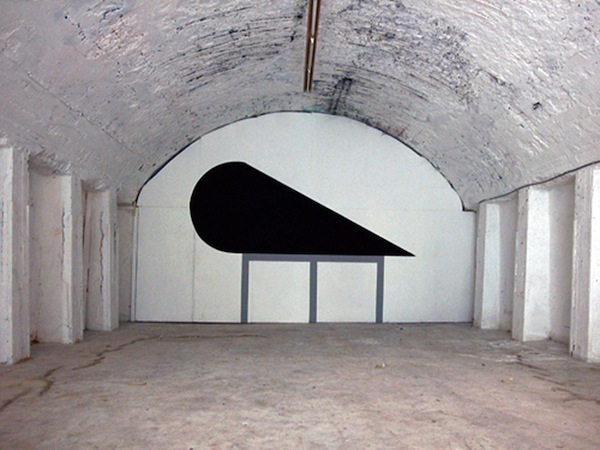
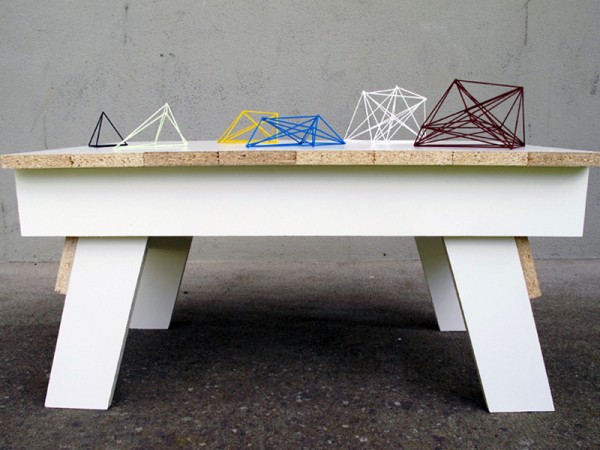
“In a logical result of both a distant legacy of the readymade, assimilation practices of sampling, sample, quotation or appropriation of the art of recent decades, or ways of thinking and classification is needed in the era of the web, many artists working today it is possible to name a directory. Is a set of forms, references, borrowing visual culture and / or material (often modern and contemporary) that make up the vocabulary of the artist – the principle is certainly not unusual – this directory is materialized and structured as such or it does not, remaining a mental representation.example, among Samir Mougas, works clearly a result of ownership forms whose origin is most often found on the side of the geometric abstract art and minimal art, as they were perceived in the field of art history, but also as they were digested with graphic design, industrial design, or even tuning , so as to become a kind of heritage. It is this heritage minimalist geometric-between art, design and pop culture, which for Samir Mougas what could be considered his formal repertory.
For most artists, the main challenge of these approaches is generally not related to critical questioning notions of authority or originality – questions that characterize however, a number of approaches to ownership.
The interest is more here in the development of a design methodology, defining the artist more or less rigorously and systematically cultural database where it can then draw. Moreover, in the work of Samir Mougas, this ambivalence between investigation forms and free appropriation is doubled sometimes through the use of protocols that allow them also to introduce intuition and subjectivity in the process of creating original logic and rational…” – IASP (Jerome Dupeyrat Maïwenn and Walter)
via Piet Mondriaan
Tags: belgian, geometry, minimal, modernism
Posted in Uncategorized | Comments Off on Samir Mougas