Jonathan Schipper

Jonathan Schipper

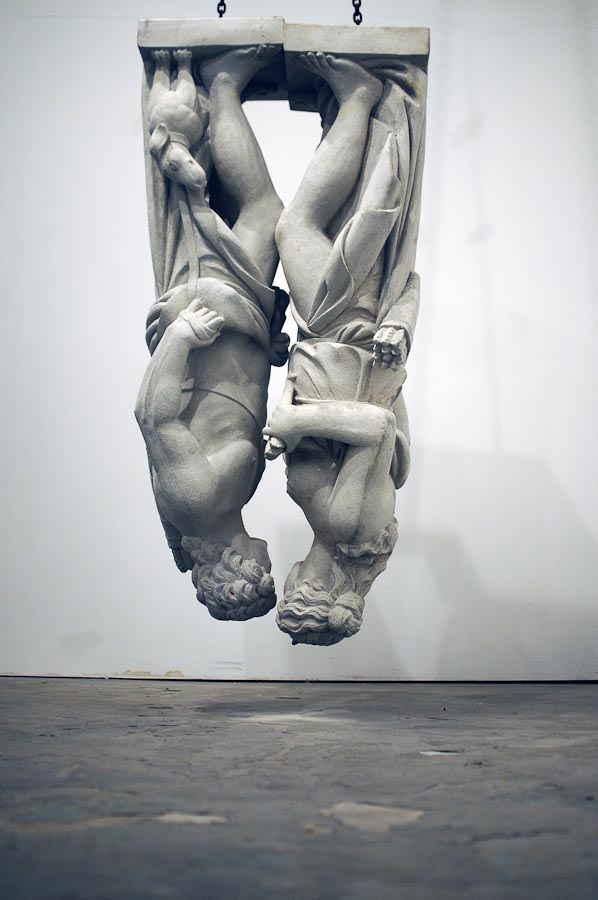
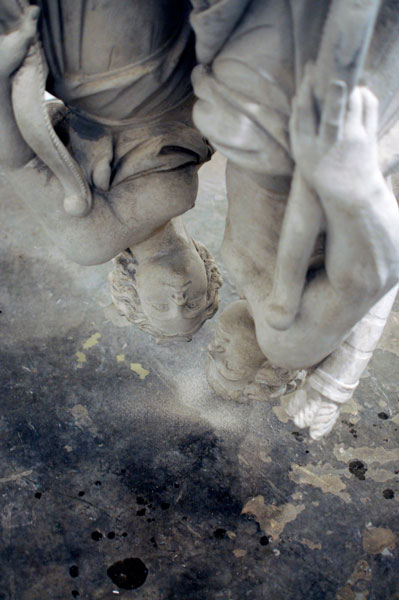
Work from To Dust.

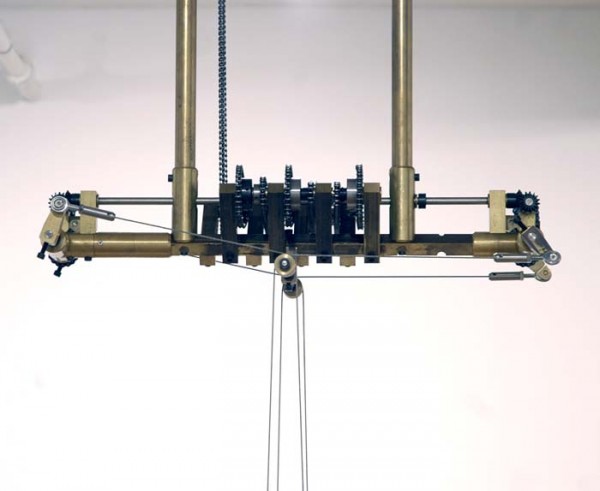
” Two sculptures are hung from a mechanism that gently grinds them into each other. The sculptures will slide against one another for many years creating new unimagined form…

…The Shortcomings of the Living World’s Experiences vs. The Infinite Potentialities of The Universe, A DEATH CATHARSIS PARADIGM 

The thrill of the Cyclone is an old thrill. Bull Fights. …Aztecs… Standing in line under the aged wooden roller coaster on Coney Island, hearing the creaking of the wood under the barreling weight of the heavy cars, the screams of the groups in freefall… waiting, looking up: you have already entered into the ritual.

Tension builds as the crowd salmons through the slots into fate-chosen cars. The platform shakes deep and heavy, connecting to an unseen force. To wait in line, to watch, to anticipate – is to participate. Anticipation is part of the experience. When your moment comes, you step into the car. And the larger than life force of the mechanism catches you up and hurls you over a precipice. The pure natural force of gravity slips you terrifyingly up out of your seat, as the machine drags you even faster against it: down. Two jealous gods do battle over your mortal body. To ride the Cyclone is to be swept up in the center of the narrative. Ulyssian adventures of life and death are in action upon you. In the end, through the dark, the car rushes home and is impressively and abruptly stopped. The firm hand of force is finished with you, done. The door is rudely shown to all. “Get out.” It is over. You walk out on wobbly newborn legs a changed man – giddy – full of life.

Thrilling or nauseating the rollercoaster is built to have a physical effect. What is this about? Why take fate in hand for fun? Interacting with elemental bodily fear, and transforming that fear into a feat, changes your relation to the world.

Surprising your autonomic functions, scaring the hell out of your reptilian brain, is fun.

For once you are the older brother of the autonomic, you know more than it does, you alone are privy to the knowledge of your fate. Why not fake it out, give it a shock, silence it for a while?  For once, you can override its chronic, nagging suspicions of doom. Why not discharge your automatic brain so it doesn’t run you. So you run it.

It is a primal bodily catharsis to throw yourself onto the Cyclone. You take the tension of fear and combust it, convert it out into the universe. The pressure is released. Ritual is a very old reset button. The function of all ritual is catharsis.” – Jonathan Schipper


Daniel Temkin


Daniel Temkin

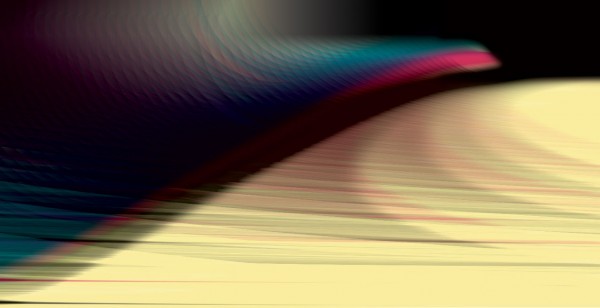
Work from Glitchometry.

Daniel Temkin makes still and interactive pieces stemming from different forms of miscommunication, often built as uneasy collaborations with the computer. I’m featuring two of his projects which are related with glitches and errors produced by the use of basic softwares such as Photoshop. The first one is called Glitchometry, Daniel describes; each image begins as one or a few black squares or circles. They are sonified — imported into an audio editor. Sound effects are added to individual color channels, as if they were sound, transforming the image. Because the tool is used in an unconventional way, there is no immediate way to monitor the effect. The image manipulator has a sense of what each effect does, but no precise control over the result. It is a wrestling with the computer, the results of which are these images.” –Triangulation Blog

Dev Harlan


Dev Harlan

Work from “Astral Flight Hangar“.

“Astral Flight Hangar is the first solo exhibition at Christopher Henry Gallery of multidisciplinary light artist Dev Harlan. Occupying two floors, his hybrid works combines the physical and the virtual with the use of sculpture, light and projection. The large scale works draw on foundational geometries, and yet serves as vessels which contain material seemingly captured from the ether. There is no reckoning required – they are Here and Now. They embody that indescribable matter that exists between everything and nothing.

Utilizing innovative video projection mapping techniques, Harlan controls and shapes the projected image into precision alignment with his sculptural forms. Through his masterful use of this hybrid video technique Harlan makes the intuitive a reality and gives the works rhythms and a dialogue that set their own pace. Using a palette of strong, assertive colors, kinetic geometries, and varying vantage points the artist projects an intuitive dialogue onto the sculptures that is succinct and cohesive.”- Dev Harlan

United Nude

United Nude

Work from Low Res Project.

“…Based on a very simple idea, the project explores the principle that every physical object is essentially a composition of numerous tiny two-dimensional surfaces, which can be blown up into a larger and playfully ‘pixelated’ low-resolution version of themselves. ‘Take any item and tell the computer to generate different versions, by changing a very high resolution file to a lower resolution,’…” – Wallpaper*

Amanda Ross Ho

Amanda Ross Ho

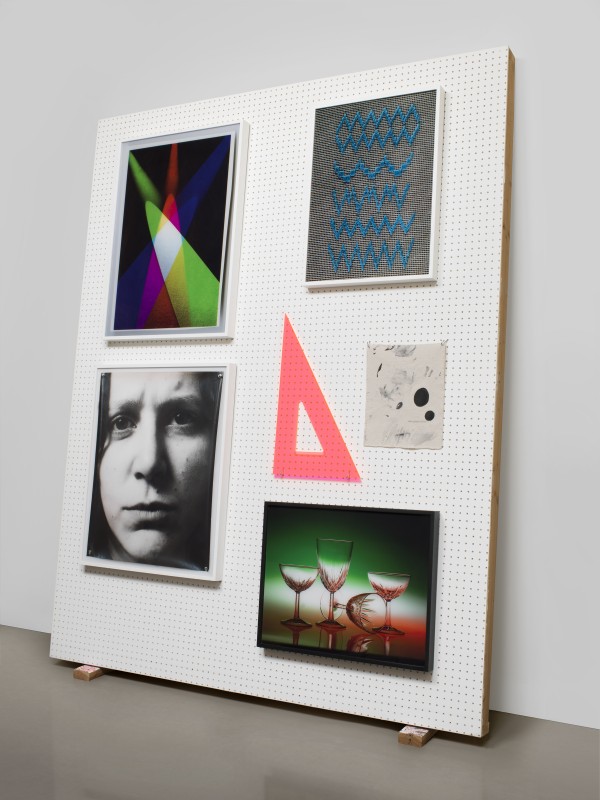
Work from her oeuvre.

Allora & Calzadilla


Allora & Calzadilla

Work from “Body in Flight“.

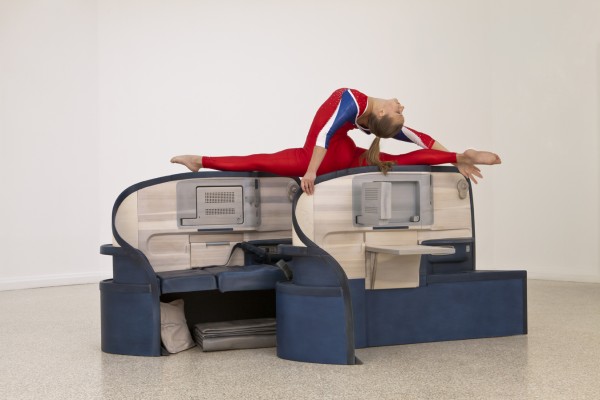
“The performances for Body in Flight, beginning every hour on the hour, will last 15-20 minutes. That length of time, Allora notes, is a big departure from the typical, 2-to-3-minute gymnastics routine. “We’re slowing things down, stretching them out,” she says, “taking things that you know and making them strange.”
The artists also point to the fact that the airline seats partially obstruct the public’s view of the athletes, something that real gym equipment would never do. “There are moments where you just see a head, or a hand or an arm, because of the way the seat intersects the body of the performer,” Allora explains. The result is a kind of “perverted or contaminated gymnastics,” as Calzadilla describes it. To develop the movements, Allora & Calzadilla worked with choreographers as well as coaches from USA Gymnastics. The artists have previously used dance in their work Compass (2009). Conceived for the Temporäre Kunsthalle Berlin, this project featured a dropped ceiling that separated dancers from an audience; the result was a dance performance that could be heard but not seen.
Ideas from conventional sculpture are also in play. The artists say that they were thinking about Brancusi’sBird in Space (1923), with its aerodynamic form that seems to take flight from the pedestal. In this case, the pedestal (the seat) also has a close relationship to the Pop object and the readymade. The business-class chair, Allora says, represents “an advanced form of industrial design, the ultimate commodity fetish.”
Another consumerist chaise, the tanning bed, is the focus of a sculpture installed in the pavilion’s rotunda. Its inhabitant is not a live human, but an altered bronze replica of the statue that crowns the U.S. Capitol Building. Titled Armed Freedom Lying on a Sunbed, the piece will call attention to the architectural parallels between the pavilion and the Capitol (and may also bring to mind certain politicians with perma-tans).
Algorithm, the other sculpture, is more interactive. It combines a custom-made pipe organ with a functional automatic teller machine; the ATM will generate a unique musical score for each transaction performed.
The Venice projects have a close relationship to the couple’s recent performance piece Stop, Repair, Prepare: Variations on “Ode to Joy” for a Prepared Piano, which delighted audiences and impressed critics when it was presented in 2008 in the atrium of New York’s Museum of Modern Art. It involves a musician performing part of Beethoven’s Ninth Symphony while standing in a hole in a modified grand piano and slowly walking it around the space. In both cases, the artists are inducing trained professionals to relearn their crafts, but with a twist—the piano must be played backwards and from behind the keys, the balance beam walked with slopes and curves. “We’re asking them to reinvent their skills, or to use their skills to make new gestures or forms that are not part of their standard vocabulary,” Allora says. “And this idea of re-skilling doesn’t end with the performer,” Calzadilla adds. “The public is asked to re-skill its way of viewing.”
“You have modern choreographers, professional athletes, artists working together. It feels incredibly avant-garde,” says Lisa Freiman, senior curator of contemporary art at the Indianapolis Museum of Art and commissioner of the U.S. Pavilion. “They’re creating a new language for art.”
Despite the show’s experimental nature and ambiguous allusions to geopolitics, the artists’ Biennale proposal had strong support from the State Department (its Bureau of Educational and Cultural Affairs has a role in selecting the country’s representative). “At this moment in time, with all of the conflicts going on around the world, their project is one of the most important statements that the United States could make in an international context,” Freiman asserts. “So much of Allora & Calzadilla’s work deals with conflict—whether it’s esthetic, social or political—played out in physical form.”’ – Art in America

Berndaut Smilde

Berndnaut Smilde

Work from his oeuvre.

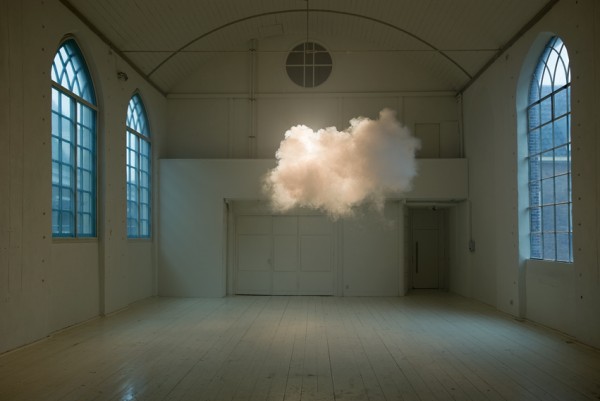
“Berndnaut Smilde’s work often draws upon the physical presence of transitional spaces.
Places such as corridors, elevators, staircases and balconies interest Smilde as spaces that exist to be in between. This interest also branches out into the possibility of how a given space might be in between states of construction and deconstruction.

Using his day to day surrounds as points of conjecture, Smilde often works in response to site, creating special narratives whereby multiple layers of ideas and meaning are able to collide and awkwardly coexist.

Throughout this process Smilde often uses construction materials and imitation products such as photographic prints, artificial turf and polystyrene interior decoration, that make reference to the physical construct of those spaces he works with and that play on the boundary of where in between starts and ends.” – Tristan Hessing

Marie Lund

Marie Lund

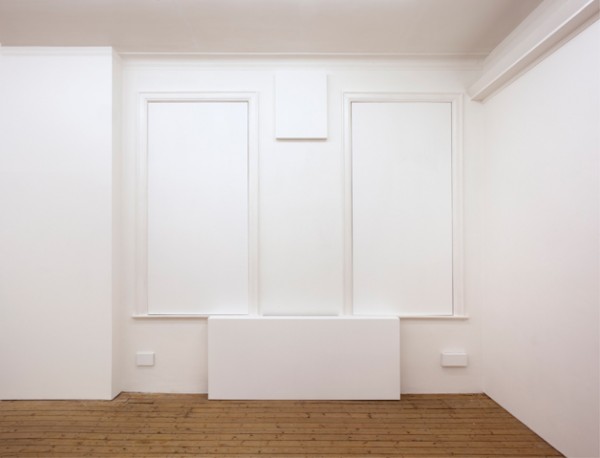
WOrk from her oeuvre.

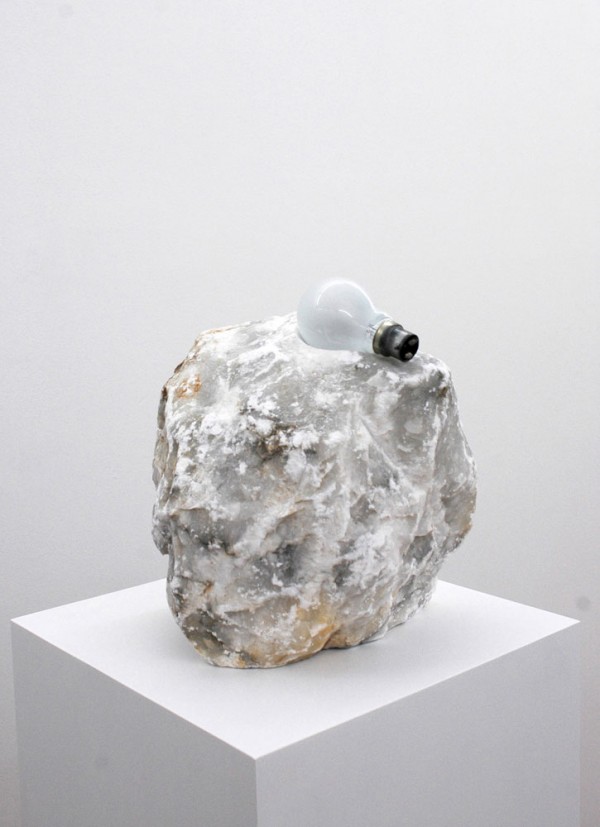
“A shoehorn sits between a shoe and a hand. A compact disc plated with gold, a door handle, a light bulb, a clothes hanger. Two part words.

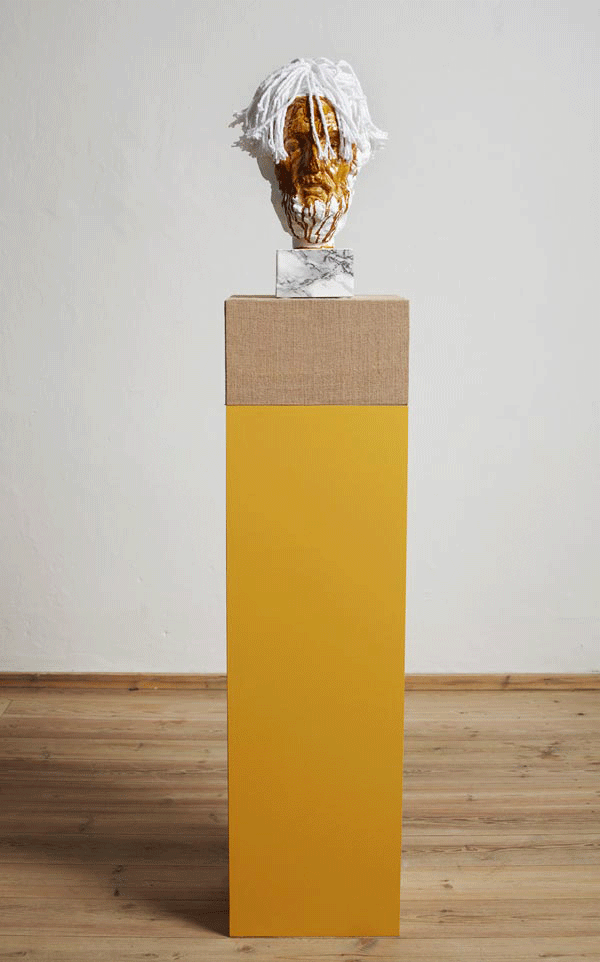
Stones stand as geological specimens – extracts from a vast landscape, but up close they are their own vast landscapes, entire mountains. Objects are sited, offering an associative sense of scale and physical proportion, bringing one back down from the soaring heights. The couples have left their origins behind, paired up – forcibly abstracted, they are now free. A block of alabaster has the cold inanimate nature of a portrait bust not yet begun, a figure not yet rendered, material in flux. Paired with a disused domestic object, the silent presence of the human figure asserts itself through its absence.

Marie Lund is interested in material and the potential of continual process, the surface, border, the division between materials and their surroundings, it and the rest. It is not immediately clear whether a form has been left unfinished or been worn down, in a state of potential or nostalgia, (emerging or retreating) future or the past. Lund’s work situates itself in an ambiguous temporal order, dislocated from context and origin.

The Sequel is a bronze cast of mould of a previous sculpture by the artist, a figure of a bird carved into. Here, bronze, the most weighty and eternal of materials, depicts a shell with its core missing, a bird that has flown. The Sequel has captured nothing but the silhouette; it is a sculpture of an absent sculpture.

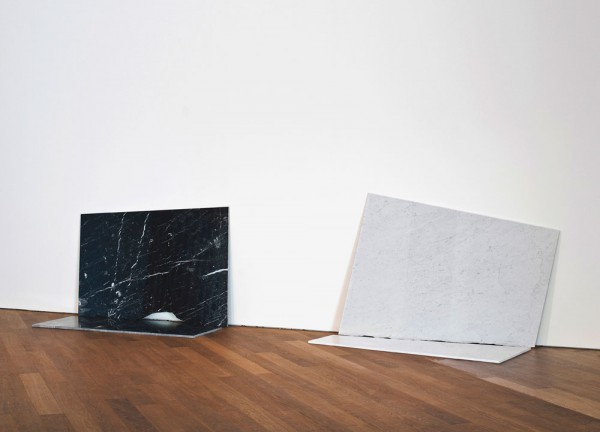
The two-dimensional becomes three-dimensional by a simple gesture between space and the material. Marine Painting calls to mind the Pietra Paesina works of the Renaissance – those polished marbles whose natural designs conjure up the silhouettes of ruined landscapes – is composed of a large sheets of marble, broken into two parts placed in the angle between wall and floor.” – Laura Bartlett Gallery

via VVORK.

Nadia Kaabi-Linke

Nadia Kaabi-Linke

Work from Flying Carpets.

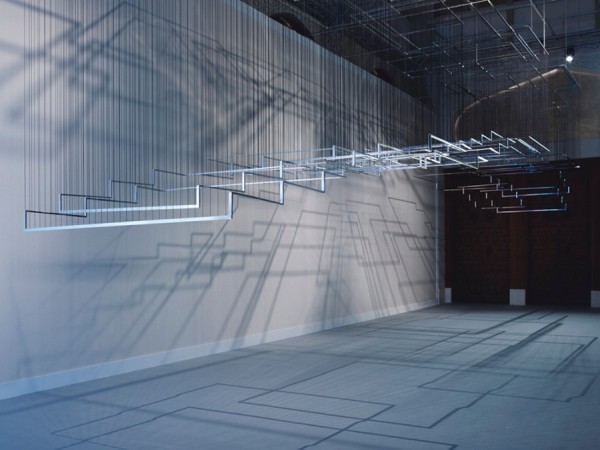
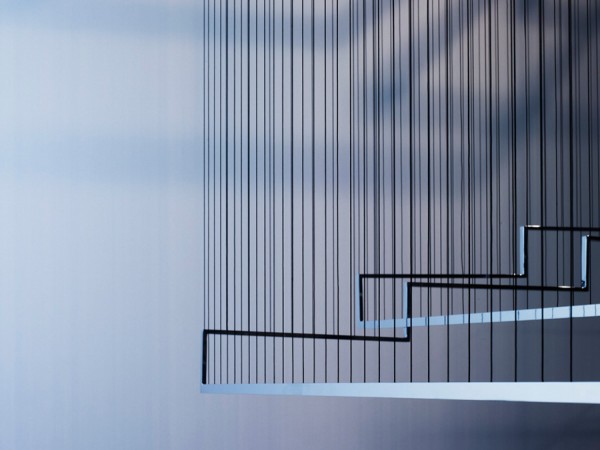
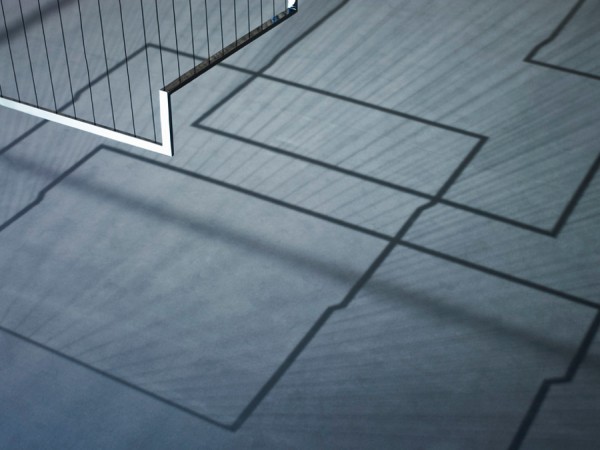
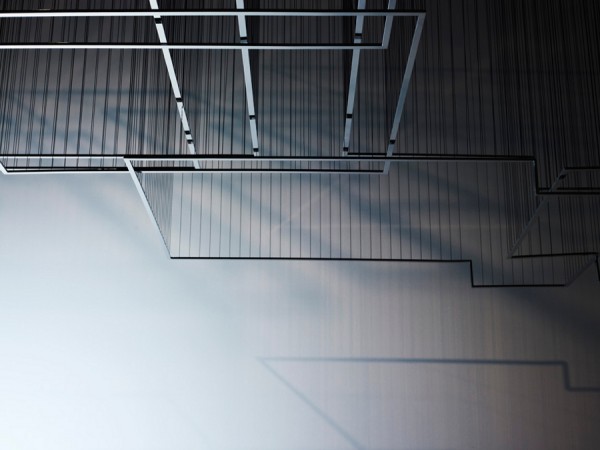
“From the legendary stories of King Solomon to One Thousand and One Nights and Hollywood’s Thief of Baghdad (1924), the image of the flying carpet has entered popular imagination as one of most universally recognised symbols of the Orient. Flying carpets describe a boundless and unrestricted mode of travel and freedom. It is this characteristic that interests the artist in relation to the carpets used by hawkers who sell counterfeit goods on the streets of Venice. In stark contrast to the freedom embodied by the symbol of the flying carpet, the mobility of the street sellers is greatly restricted. Of mainly African, Arab or South Asian descent, the peddlers also use their carpets to bundle together their goods in order to flee from the authorities. Nadia Kaabi-Linke’s installation gives expression to the socio-political predicament of the hawkers. In her work, geometric metal forms, derived from stencil outlines of the hawker’s carpets, are suspended by cascades of hanging thread. Hovering in space like a floating cage, the work takes the shape of a bridge, Il Ponte del Sepolcro in Venice, where the artist spent a 8-day period documenting the activities of the street sellers. With beauty and fragility the work underlines what is, in effect, a day-to-day sense of confinement experienced by the hawkers as they clandestinely ‘move’ from place to place. ” – Sharmini Pereira (2011), Footnote to a Project, p. 314.

Nanna Starck

Nanna Starck

Work from her oeuvre.

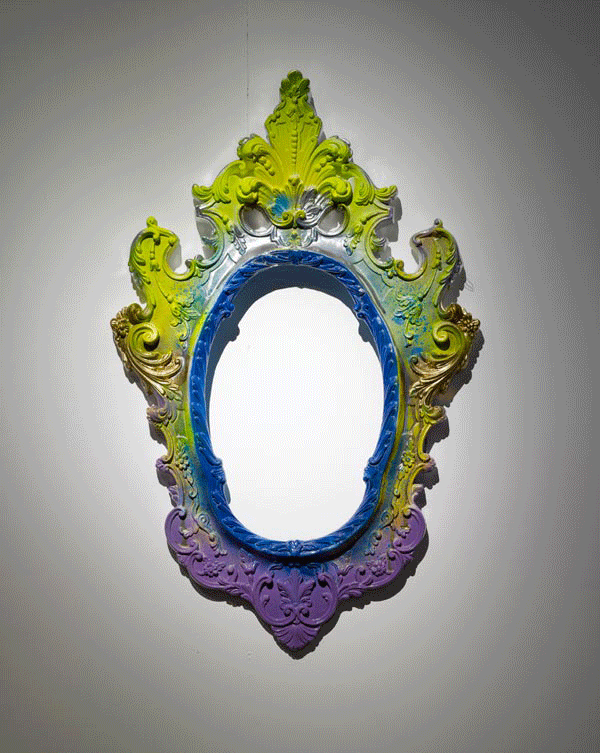
“An empty stage, a picture frame still missing its subject, a pedestal on which nothing is placed. Yet. These are some of the elements in Danish artist Nanna Starck’s sculptural practice. Trained at the cross-media department of Wall & Space at the Royal Danish Academy of Fine Art, Starck operates in a media interface between sculpture, installation and painting. Which is what is sometimes hard to determine when you run your eye over her widely branched practice which seems saturated by equal parts burlesque parody, baroque ornamentation and severe formalism. A recurrent element, however, is the modified ‘ready-made.’ Rather than chipping the shape from the block or modelling the figure with her own hands, Nanna Starck borrows objects from popular culture’s archives of kitsch, which she modifies and places in the space of high culture. Take, for example, the decorated plastic chandeliers, that are meant to resemble the old Venetian kind, but that scream out their falseness, enhanced by the colourful, fluttering ribbons, the artist has added. Or take the whinnying horses’ heads that have been retouched in harsh, fluorescent colours in a dripping airbrush style of painting, that hint at the romanticising posters of horses in teenage bedrooms of the 1980s. Beneath the paint, the horses’ heads, available by mail order, are white and plaster and probably intended by the manufacturer a rather different, pure style than they are given here.
The undermining gesture that the modification signifies is characteristic of Nanna Starck’s practice. It is within the paraphrasing reworking of existing material – in the case of the horses’ heads and the chandeliers even materials that are already trying to be something they are not – that a new object arises. In that sense, Nanna Starck is more modifier than sculptor in a traditional sense, as her artistic devices are conceptually founded in the parasitic logic of the ready-made. Existing materials are used and reused tactically and shiftingly.

Voliére LeWitt is the title of one of Nanna Starck’s pieces: a small table with tortuous legs on which has been placed a Sol LeWitt-like construction, which with its rectangular grid seems like too strange a bird on the baroque piece of furniture. In this collocation of minimalism and baroque, the two poles that Nanna Starck’s own practice oscillates between are linked. On the one hand the idiom of the baroque: the superfluous ornament of the paint, the tassels, the whinnying horses. On the other hand a modernist aesthetics: the formal severity, the pursuit of repetition, the use of bright colours and primary shapes such as the cube, the circle and the triangle. As in Voliére LeWitt both poles are often present in the same piece. This is a crucial point, as it is this contradictory dialogue between baroque and modernism that creates the aesthetic ambiguity or tension if you will, in Nanna Starck’s practice. The burlesque is admissible here, but only because it is always carefully controlled. The ornament is fostered here, but only because it is never left to grow wild, rather it is tamed within an immensely tight frame formally speaking.

This control can be viewed as a conscious staging strategy. You could call it the staging of ornament in so far as the ornament is consciously projected as exactly that: ornament. Staging as strategy is central in Starck’s practice. Recall the empty stage, the empty frame, the empty pedestal. The stage and the pedestal are part of Starck’s contribution to the 2004 ‘Exit exhibition’, called The Nothing Award. As props for a performance that has not yet begun, the empty stage solicits a future action. It is the frame around what could happen. The frame around the space of potential, just waiting to be filled up.

The empty stage is also interesting because instead of being a background for a performance it becomes an object in its own right. Robbed of lines, actors and action, the stage enters into a loop of self-reference in which it only points back at itself. Like the empty picture frame, by the way, that only shows the actual framing – not the framed which is absent. Both stage and picture frame travel into a vacuum of significance, a loop of self-reference, which self-consciously bears the exhibition situation itself as both form and content.

You could call The Nothing Award a meta-piece, as it stages its own exhibition in a both intelligent and humorous way. As it shifts the piece from the piece itself to the piece-around: the context of its own presentation. Or you could call it an anti-sculpture, as it, with its empty pedestals, shows not only how today, sculpture has slinked down from the pedestal, but far more radically, how it has made sculpture of the pedestal itself. ” – Camilla Jalving, PhD