Saturday, 21 May 2011


Eric Cahan
Work from Sky Series
“A native New Yorker and devotee of contemporary art, Eric Cahan’s influences include Mark Rothko, James Turrell, and the Light and Space movement, a brand of minimalism that originated in Southern California in the 1960s and focused on perceptual phenomena such as light, space, volume and scale. When he visited Turrell’s Roden Crater Project, Cahan felt an intense connection to the visionary masterpiece. As Turrell stated, Cahan believes that “light is not so much something that reveals, as it is itself the revelation.” See more;
The photographs in the ongoing Sky Series are initially captured as the sun rises or sets. Cahan uses as many as four different cameras ranging from 6 x 7 film to digital. Employing dozens of graduated filters traditionally used by filmmakers, his objective is to create a window into a time and a place, and to demonstrate how memories and colors shift and become abstract. Cahan produces chromium prints of each image numerous times until the result is seamless, free of banding or blemish. Beyond technical description, the picture evokes the presence of, and the artist’s reverence for, nature at its most sublime.” Triangulation Blog
Tags: chromium, color, gradation, minimalism, photography, sunset
Posted in Uncategorized | Comments Off on Eric Cahan
Thursday, 19 May 2011
Alberto Cabrera Bernal
Work form Perforations and Every Four Frames
Alberto‘s work will be showing at mg/gm tomorrow night.
“A film constructed from destruction with the piercing or perforation of its footage, the different Super 8 fragments of selected archive images. Although, at first, its identity is one of attack, the film does not only speak of hostility towards its support, it is not only about the breaking down of pictures but also offers sediments of intentions that speak of the opposite, of positive assaults with a clear structural vocation. Every four frames the film ́s body is punctured, the holes revealing the cinematographic mechanism’s entrails: the screen and light.
The Super 8 reel’s contemplation warns us that it is not just an audiovisual product. The string of perforations that make up its structure gives it an added objectual value, strewn with sculptural connotations, placing the film in a neighborhood where with works from other genres also reside: for example, the interventions of Gordon Matta-Clark, the cuts introduced in different buildings and, more specifically, the similarity of the forms remind us of “Conical Intersect”. They even share strategies because the making of this film fundamentally stems from applying the jobs of debris removal and extraction of material (visual) on source reels which amass diverse images.
During the minute and a bit the film lasts, the most emblematic cinema is unable to avoid the censure of the punches. Images of Marilyn Monroe, James Stewart, 20th Century Fox, etc. appear demolished amongst exact cadences.” –Alberto Cabrera Bernal
Tags: destruction, film, holes, Madrid, Super 8, video
Posted in Uncategorized | Comments Off on Alberto Cabrera Bernal
Wednesday, 18 May 2011
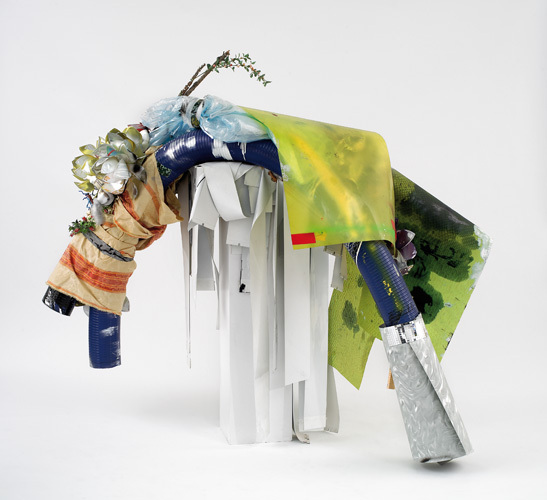


Isa Genzken
Work from her oeuvre.
“Although Isa Genzken’s primary focus is sculpture, she uses various media including photography, film, video, works on paper and canvas, collages, and books. Her diverse practice draws on the legacies of Constructivism and Minimalism and often involves a critical, open dialogue with Modernist architecture and contemporary visual and material culture. Using plaster, cement, building samples, photographs, and bric-a-brac, Genzken creates architectonic structures that have been described as contemporary ruins. She further incorporates mirrors and other reflective surfaces to literally draw the viewer into her work. As part of her deep-set interest in urban space, she also arranges complex, and often disquieting, installations with mannequins, dolls, photographs, and an array of found objects.” – Isa Genzken’s Wikipedia entry.
Tags: 3d, german, sculpture, stack
Posted in Uncategorized | Comments Off on Isa Genzken
Tuesday, 17 May 2011


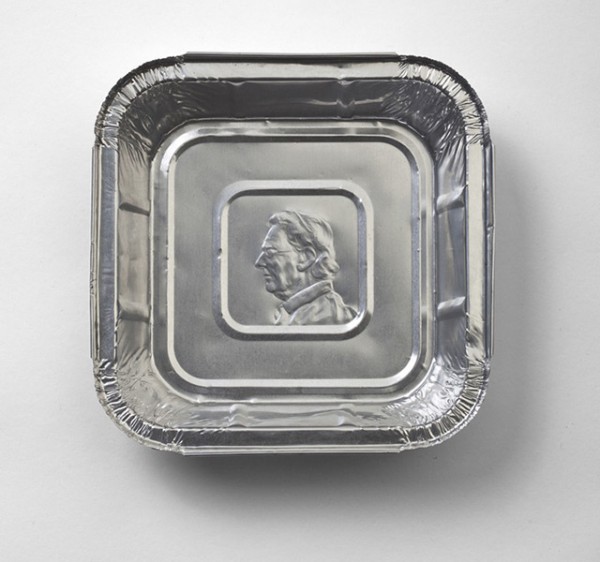


Idan Friedman
Work from Profiles.
“Profiles, a project by Israeli-based designer Idan Friedman, references commemorative medals and historic portrait miniatures typically set in gilt metal but introduces a contemporary twist. The portraits, embossed on aluminium throw-away trays, suggest that ordinary people (like Idan’s local cashier pictured) deserve recognition. Skillfully executed, this project perhaps also suggests that we no longer appreciate the craftmanship of more traditional art forms, or even the production of everyday objects; a comment on our disposable culture.” – It’s Nice That
via Today and Tomorrow / It’s Nice That.
Tags: 3d, aluminum, bust, design, relief
Posted in Uncategorized | Comments Off on Idan Friedman
Monday, 16 May 2011


Irena Knezevic
Work from Failure of Visible Universe.
“This work, conceived as a ongoing collaboration with University of Chicago Department of Astrophysics, functions as an annual index of all galaxies imploding since the work was first exhibited in 2006. Especially pertinent in a time of recession and disaster, recently the editions were developed into personal one-offs, where annual editions can be ordered corresponding the year of worst personal failure by the person purchasing the work. The edition is sent flat and crumpled into a pile by the collector and hidden away to gather dust and ruin.” – Irena Knezevic
Tags: aluminum, collaboration, crumpled, science, space
Posted in Uncategorized | Comments Off on Irena Knezevic
Sunday, 15 May 2011
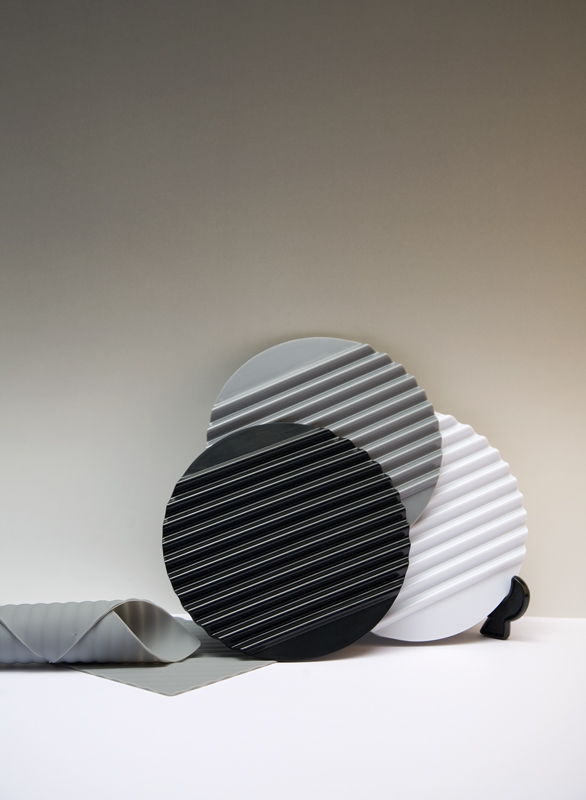
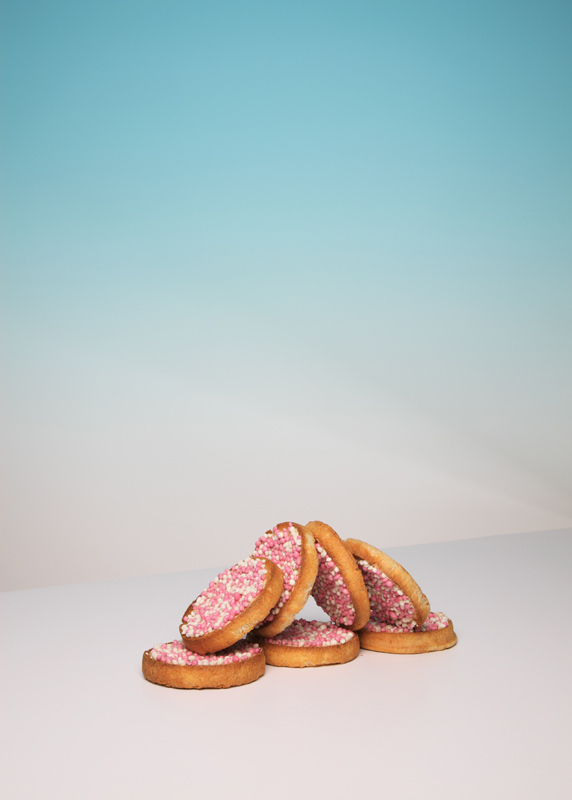


Wyne Veen
Work from his oeuvre.
“My central theme is uselessness. I feel that life is ridiculous. The products and arrangements I show are a reflection of investments of time and effort by men. They show the development of our society just like the old 17th century famous Dutch still lives did. But I don’t see this development as something to be proud of, I think it is way over the top. So I criticise it. I often wonder what on earth people are occupied with while there are so many better things to do. I don’t want to define these better things, because it’s up to people themselves. But I am quite sure it won’t be creating another plastic peach.” – Wyne Veen for Zest magazine.
via Triangulation Blog.
Tags: color wash, photography, still life, studio, superdutch, uslelessness
Posted in Uncategorized | Comments Off on Wyne Veen
Saturday, 14 May 2011
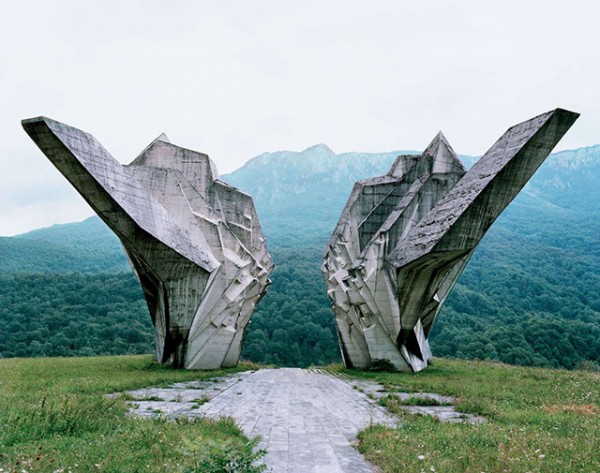


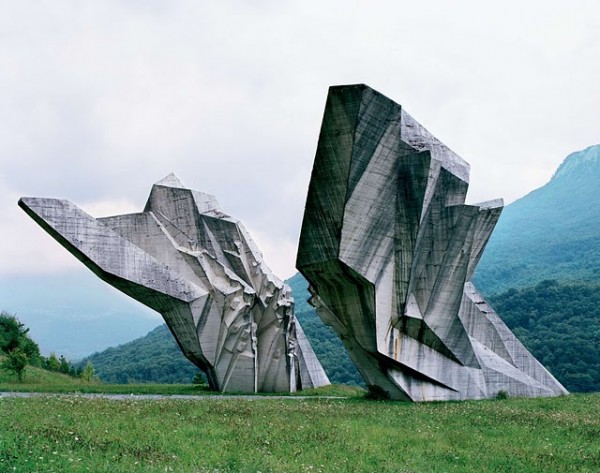
Jan Kempenaers
Work from Spomenik.
Buy the book here.
“Powerful photographs of mysterious monuments in former Yugoslavia. Willem Jan Neutelings, quoted from this book: “The Antwerp-based photographer Jan Kempenaers undertook a laborious trek through the Balkans in order to photograph a series of these mysterious objects. He captures the Spomeniks in the misty mountain landscape at sundown. Looking at the photographs one must admit to a certain embarrassment. We see the powerful beauty of the monumental sculptures and we catch ourselves forgetting the victims in whose name they were built. This is in no way a reproach to the photographer, but rather attests to the strength of the images. After all, Kempenaers did not set out as a documentary photographer, but first and foremost as an artist seeking to create a new image. An image so powerful that it engulfs the viewer. He allows the viewer to enjoy the melancholy beauty of the Spomeniks, but in so doing, forces us to take a position on a social issue.” – Jan Kempenaers
via Today and Tomorrow
Tags: architecture, concrete, eastern block, monument, photography
Posted in Uncategorized | Comments Off on Jan Kempenaers
Friday, 13 May 2011


Lauren Pascarella
Work from her oeuvre.
“My work involves demonstrating, in both image and process, the intangible connection between signifier and the signified. By photographic fragments of imagery that is site-specific to the viewer (a book, a chair, a light, a building), I am compelling the viewer to consider only what is in front of himlher visually. Through a series of input / output “distancing” in process (real object- photograph- print- re-photograph- print- real “object”), I am able to amplify the way in which a viewer utilizes these visual signs in order to signify what is actually present The distancing in process and the chaotic piling of imagery illustrates viscerally the frustration of a viewer to untangle the knot of the physical and the implied, the tangible and the psychological.
My focus lies in the comparison of the way that we perceive the physical world to the way that we traditionally read art, specifically photography. I am interested in this willing detachment of the spectator from what is represented in favor of what represents it” –
Tags: meta-photography, object, reify, sculpture, semiotics, signifier
Posted in Uncategorized | Comments Off on Lauren Pascarella
Thursday, 12 May 2011


jodi.org
Work from globalmove.us.
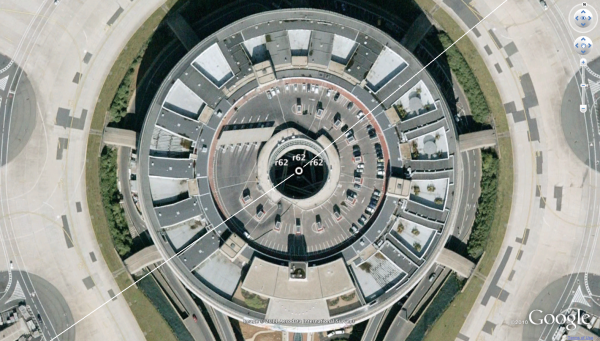
The following are just screen grabs, take the time and visit the site, it is well worth it.
“Icons dominate the modern maps completely and with the comic style Google simplifications of symbols our ives have become very ordinary. There are currently some 166 Google standard symbols available in Google Earth and 91 in Google Maps. Of course there are projects to symbolise our worlds, where you an find replacements and additional material for Google Earth and Maps.
This domination of everyday live orientation has lead to some surprising and funny projects and reactions. One was the real world Google Maps
location marker and now one that I just found as an online project by the artist collective
Jodi.
‘
Jodi, or
jodi.org, is the duo of the artists Joan Heemskerk and Dirk Paesmans. They started creating artworks for the Web, later they also turned to software art and artistic computer game modification. Now, they have been in what has been called their “Screen Grab” period, making video works by recording the computer monitor’s output while working, playing video games, or coding.’
Their website
globalmove.us is a portal to the wold of mapping with Google Maps and Google Earth, a spinning, twirling and hopping approach. If previously the icons made you feel ridiculous this is heaven. It is a very fascinating visualisation?animation using web based mapping tools , on the other hand it is quite annoying and without context that one could start making sense of what is going on on the screen. In the end it really shows how these tools manipulated our daily experience” – text via
UrbanTick
Tags: collective, google, icon, jodi, maps, net-art, old school, satellite, screen shots
Posted in Uncategorized | Comments Off on jodi.org
Wednesday, 11 May 2011


Temporary Services
Work from Designated Drivers
“For Designated Drivers, we invited an international selection of twenty people and groups to each fill one four-gigabyte USB flash drive with material of their choosing. These drives will then be presented in exhibition spaces, attached to wall-mounted retractable laundry lines. Visitors will be able to load their own drives or laptops (or use a host computer and CDrs or DVDrs) with any of the material they would like from each of the flash drives.
The drives include images, films, audio, programs, and many publications worth of writing and graphic design. File types include: MP3, JPEG, PNG, AIFF, TIFF, PSD, WORD DOCs, PPT, MPEG, PDF, AVI,and more. The participants have included mountains of material – often at higher resolution than is commonly seen on a personal website, and in many cases material that is not duplicated online at all. Some participants have used this opportunity to present a few recent projects with great depth, while others have chosen to survey their entire creative output over more than a decade.
The contents of the flash drives in Designated Drivers are deliberately not available online from one centralized location. We want you to get out of your house. We want you to mingle, in person, with others and talk about which files look interesting to transfer and which might be more to someone else’s liking. We want to make file sharing a bit more physical, social and special again – the way that tape traders in the 1980s would duplicate music onto cassette for another another and mail amazing obscurities to each other all over the world. We also recall those who linked their VCRs together to share obscure films and concert footage. Technology has come a long way, and today we can make these exchanges without a quality loss with each generation that gets removed from the original. We can fit more copies into ever smaller packages. But we question our own growing dependence on the internet as a means of detached information exchange and want to try another approach.
The following people are participating:
Lisa Anne Auerbach
Cara Baldwin
Matt Bua
Cake and Eat It Collective
Electronic Disturbance Theater/b.a.n.g. lab, Brett Stalbaum, Micha Cárdenas, Amy Sara Carroll, Elle Mehrmand, and Ricardo Dominguez: www.thing.net/~rdom & bang.calit2.net
Dan Gleason
Ryan Griffis & Sarah Ross
Terence Hannum
Hideous Beast
IC-98
Tim Ivison
Gregory Jacobsen
Vladan Jeremic & Rena Raedle
Tim Kerr
Loud Objects
Alexis O’Hara
Rob Ray
Deborah Stratman
Adam Trowbridge & Jessica Westbrook
You Are Here ” –Temporary Services
Tags: chicago, collective, Copenhagen, files, installation, USB
Posted in Uncategorized | Comments Off on Temporary Services