“Kari Altmann, for example, considers her work to be located not in individual works (as meaningful as they may be), but rather in her avatar inside the data cloud wherein one views her perform the excavation and molding of her own artistic archive in mutable cloud-space, cloud-time.
Sometimes she’ll just add an image for research or edit an older project; sometimes she’ll list, but not show new projects she’s working on; sometimes she’ll add a new video; sometimes she’ll take a video away; and so on and so on and so on and so on in a plethora of permutations one follows the artist play with her own cloud data:
Change, evolve—not to “better” data, just different data—data occurring in an ecological network of additional data networks which are—as a whole–growing and becoming self-reflexive, becoming visible to themselves (and its self).
The performative focus here, then, is not on the physical body repeating an action, but rather on the virtual body mutating its own archival network.” – excerpt from Post Internet (which is awesome by the way).
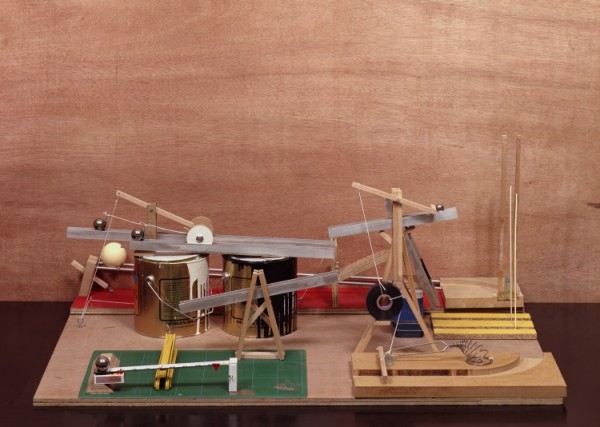
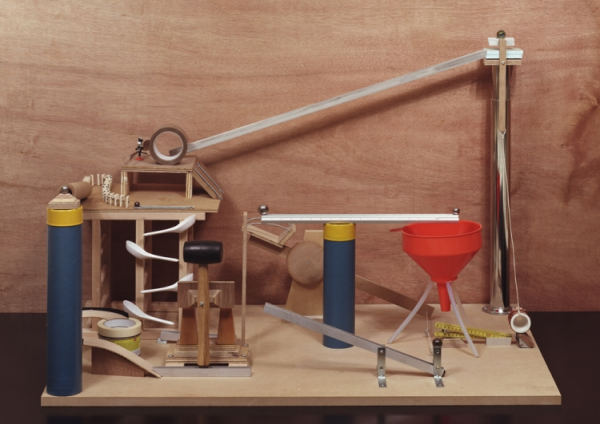
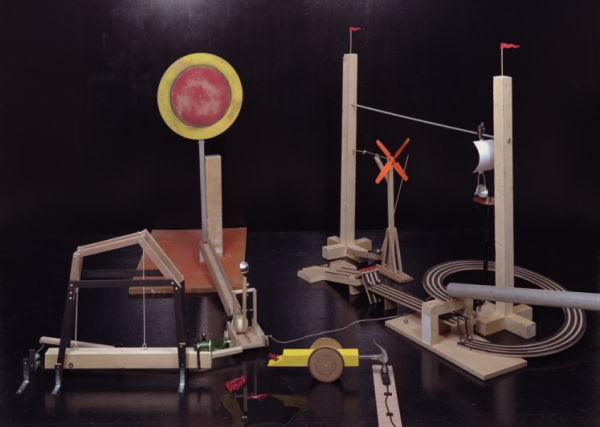
“A series of three photographies using the «adventures» of the explorer / pirate Francis Drake in the 16th century as a point of departure. A chaotic and difficult to follow chain of events is constructed as a cause and effect machine. The idea is to recreate a chain of events from history.
Necessarily, it will be impossible for the viewer to interpret and understand the actual events represented, as can often be the case with history itself. History is, in spite of often being read as cold, hard fact, a highly subjective field, where rewriting, omitting and forgering actual events is not unheard of. Re-interpretation of history, and re-discovery of truth, remains an ever-lasting task for historians.
History often reveals itself as far more unprecise than we would like it to be, as is also the case with this piece.” – Lello / Arnell
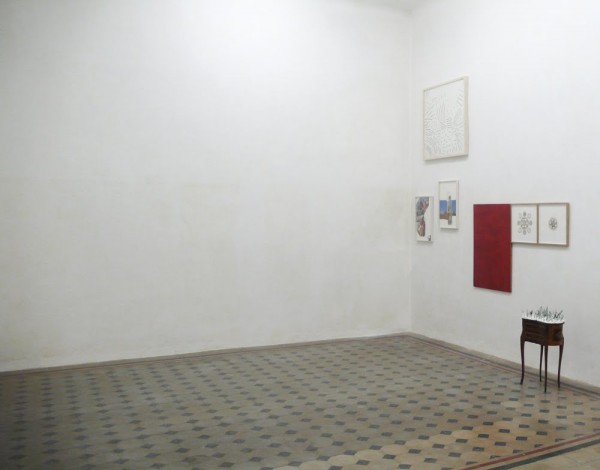
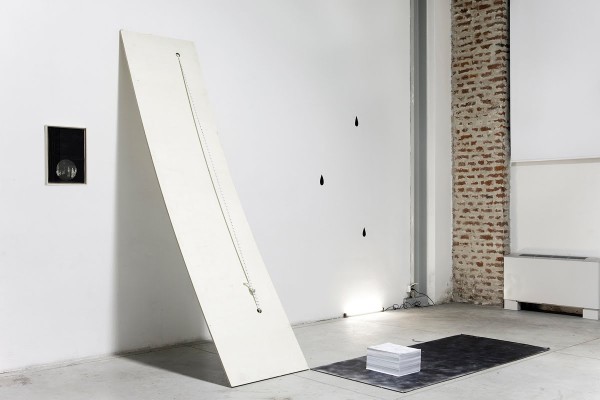
“Mirror Project is a series of exhibitions organized by Barriera, Turin, where the invited artists will work and discuss with the space, developing a site specific project. The protagonist of Mirror Project’s first edition is Renato Leotta. Leotta worked on space-time coordinates, defining a new path within the exhibition space. The physical experience of place and history was revised by the artist through the use of symbols and their fascination, to create a synthetic result aesthetically manifested through mathematical calculations. The artist brought changes to the exhibition space to act directly in the communication mechanisms that move a room.” – Mousse Magazine
“Using the spectacle of a motor vehicle crash as a stand in for the spectacle of art making, Kraus has created a new body of work that investigates modes of production and audience.
The exhibition at Rental in New York consists of sculptures made from pieces of metal taken from cars and motorcycles involved in real crashes. The motorcycle “pieces” are cast in clear plastic and cement- which mimic the production model used in the development of the bikes, only in these works the dents and scratches from the accident are included. Also by including the original as part of the work, Kraus takes what appears to be a multiple and creates singular art works.
Betamax video stills of audiences taken from staged stunts from the 1960’s and 1970’s complete the exhibition in a blur of abstracted viewership. Although the stunts themselves have been removed the anticipation of the audience remains…” – press release from Rental
“In Full Throttle, by Artie Vierkant, a six-screen video installation and continuing series, action and suspense scenes from major Hollywood films are recorded streaming over the Internet at very slow connection speeds. Each film is a major part of our collective pop culture consciousness but is made available publicly only through means which are morally and institutionally spurned by physical-object-oriented capitalism. As a result, this type of content is nomadic, always existing somewhere without restriction but perpetually needing a new haven. Here, through the process of recording these over a throttled Internet connection, they become abstracted and formalized versions of their original images, dispelling or intensifying the tension created for the scene by the filmmaker and redirecting the aesthetic focus to the medium of display.” – [Installation shown at Extra Extra in Philadelphia for Artie Vierkant & Constant Dullaart, August 6 – 29 2010]
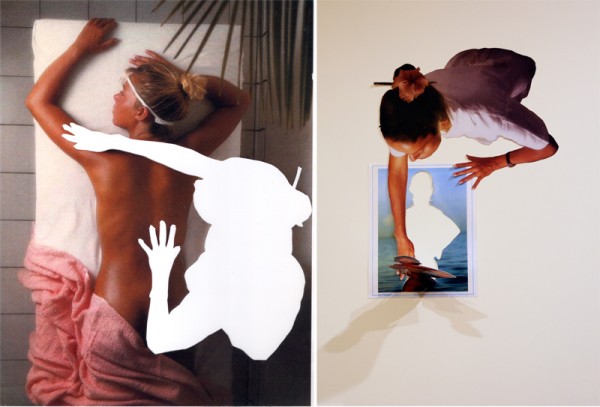
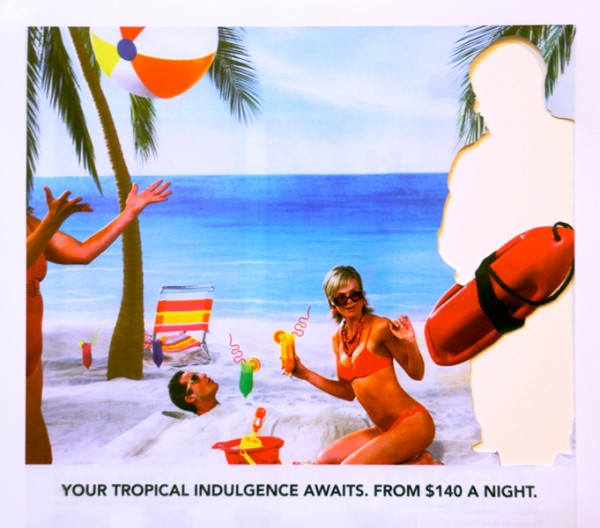
“My work examines cultures created under the influence of colonial and post-colonial regimes and their relationship to The Land. I mine foodstuffs, recipes and archival materials such as photographs and tourist publications, in order to reconstruct and create a new series of narratives, which I juxtapose against the stories told by the colony to sell romantic notions about nature and labor.
Through sculpture and painting I use food items and recipes to explore migration patterns, both voluntary and involuntary, and how cultures have been created through the influence of multiple mother cultures and the conditions of The Land. By manipulating photographs and tourism imagery, I investigate how The Land has been sold through picturesque fantasy and fantastic copy.
I ask the viewer to question the “real,” the seen and unseen in order to navigate these conflicting narratives.” – Andrea Chung
Below is an excerpt from the narrative/stream of conciseness press release from Williams’ show at Galeria Gisela Capitain. Read it.
“…Williams prefers to distance himself from the gestures typically associated with professional photographers, relocating his practice across a complex series of citations and diversions of modern photographic knowledge. Every camera predicts its user, who is already included in its program. So Williams goes to work on the program itself, confronting it with the potential of his own joblessness … ” -John Kelsey
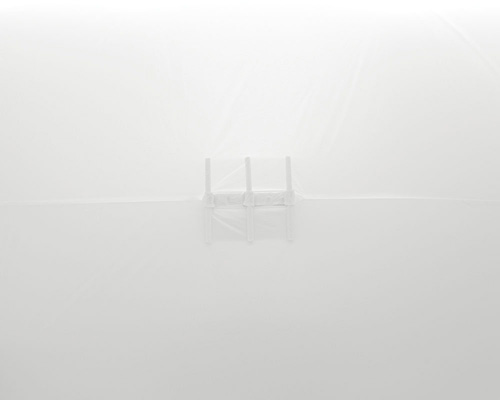
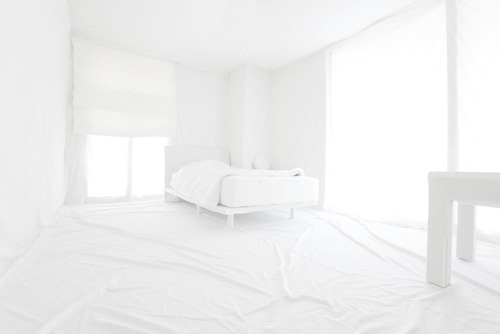
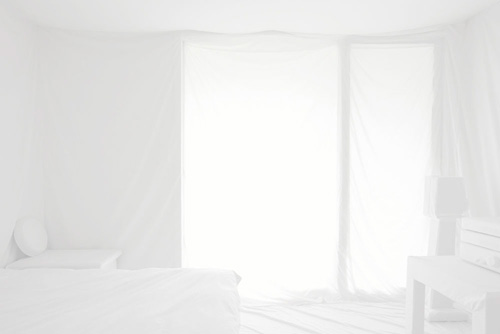
“I cannot open the window, nor watch the clock in my room. The only thing I can do now is to see the daylight from the windows, touch [the] fabric and fall asleep. I and the room, we both could take a rest. Only light and time flow in this room without any will. Then I feel like I finally give a complete denial of what is considered significantly.” – Serry Park
“The artist—who passed away in 2008—was well-known for his startlingly realistic collages of urban scenes, often animated with a kind of end-of-the-world, scifi-inflected festivity. Impact craters in the centers of wrecked cities share chaotic page space with Dalí-esque visions of giant human breasts in the sky.
Waterfalls scour sublime new cliffsides from the architectural canyons of Manhattan; modern tower blocks pitch and yaw atop aircraft carriers at sea; battleship gun turrets are cloned and repeated into Baroque stupas—cathedrals of artillery—along the empty roads of agrarian landscapes. For my money, these latter structures outdo Hans Hollein’sAircraft Carrier City in Landscape, with which they nonetheless share a certain tectonic similarity.
Gunnery pagodas and blasted metropolitan cores meet surreal scenes of burning astronauts on the moon, while the neon lights of artificial volcanoes melt nameless city districts under radiative tides of surprise eruption. Apollo rockets are unearthed from Mesopotamian tombs in the shadow of Stone Age petroleum tanks. Tatlin’s Tower stands proud in a junkyard, stuffed full of broken TVs. The Woolworth Building wakes up to find itself at the bottom of a cave, and there are construction sites everywhere.
However, these are not the explicitly psychedelic photo-collages of someone like, say,James Koehnline, in which machine-mandalas and nude fakirs intermix with jungle leaves inside heavily tiled cosmic temples. They are more like diagnostic slices taken through a militarized imagination formed in the context of post-War Japan.
In some ways, in fact, I’m reminded of an interview with Paul Virilio—which I also read here at the CCA—published in AA Files a few years back. There, Virilio quips that “The Second World War was my university,” and he goes on to describe the various ways in which abandoned military fortifications and the total annihilation of once-thriving cities affected his ideas of what architecture should be.
Tsunehisa Kimura’s “visual scandals,” I’d suggest, bring together a similarly rogue education—star pupils in a university of war—with a Ballardian afterglow, a nuclear flash from the Pacific Rim, delivering images of cities that escaped erasure by American bombs only to be buried under electronic goods of Japan’s own making, sometimes literally faceless citizens staggering through landscapes no one ever thought the last century would bring.” – via BLDGBLOG
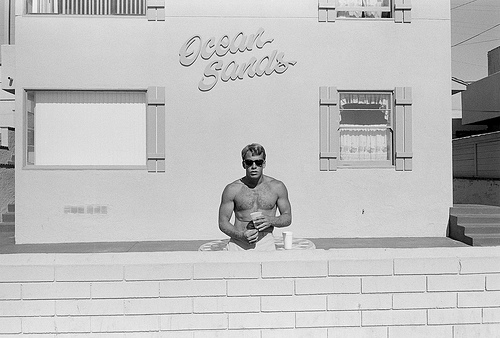
“In Wessel’s images the idiosyncrasies and anomalies of Southern California and the American West are chronicled with a wry objectivity. Insightful and often ironic, these photographs demonstrate that photography can surpass its documentary role to embrace speculation and suggest narrative. Ultimately the work challenges not only our expectations of the photographic medium, but our ways of seeing and our preconceptions about the familiar. [Steidl]
“Wessel’s remarkable work: witty, evocative and inventive, is distinctive and at the same time a component part of the great development of photography which flourished in the 1970s. The pictures continue to grow and evolve and the work is now regarded as an individual and important contribution to twentieth-century American photography.” – From the introductory essay by Sandra Phillips, Curator of Photography at The San Francisco Museum of Modern Art.