Zelda Zonk

IMG_0591 IMG_4814 A-P1040508 (1)

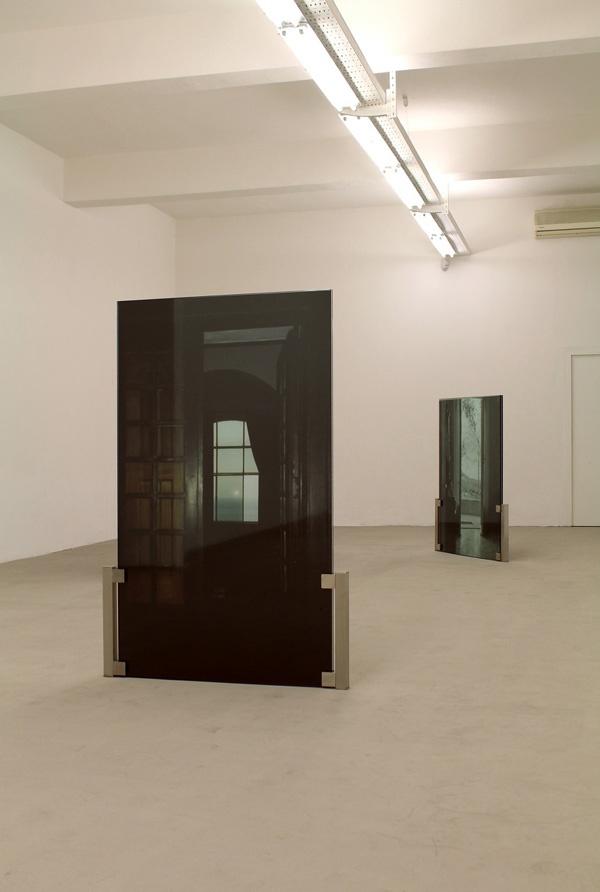
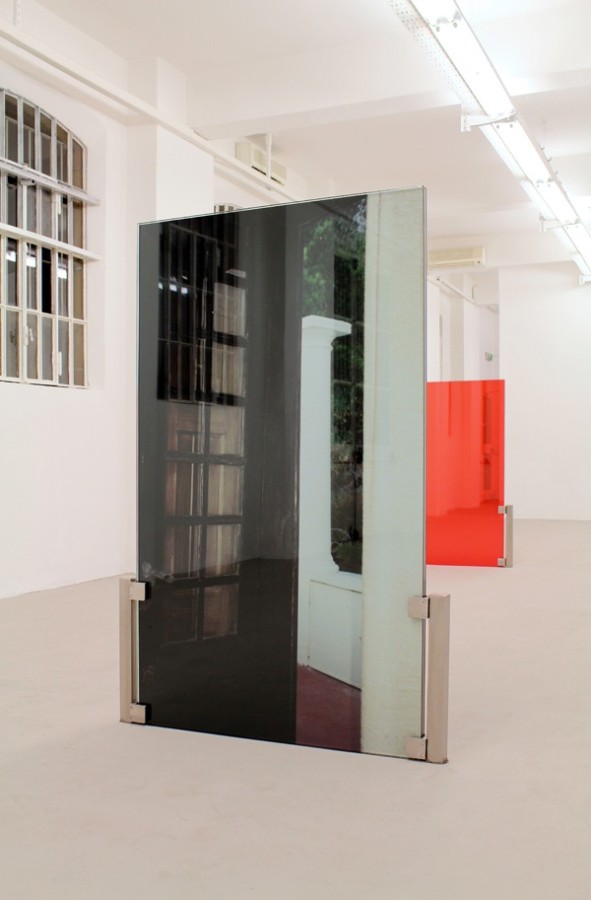
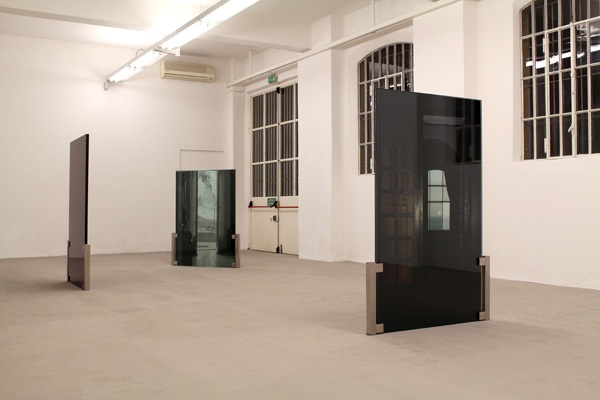
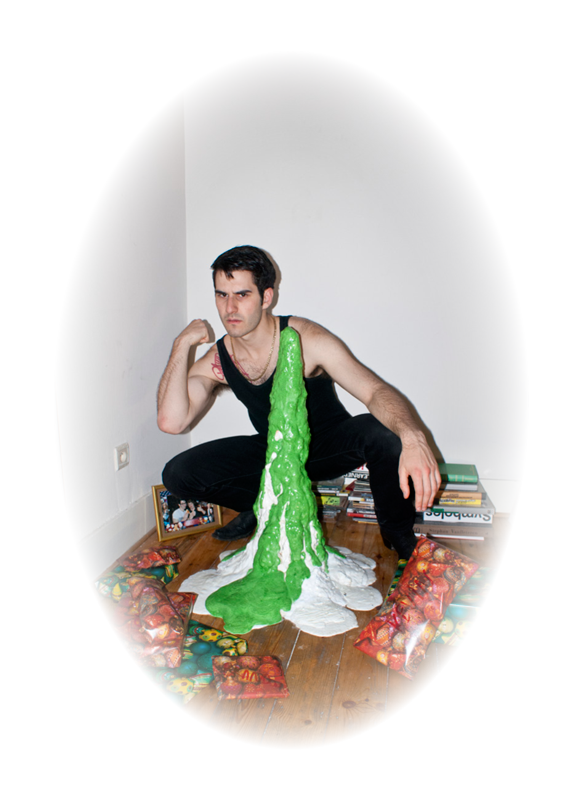
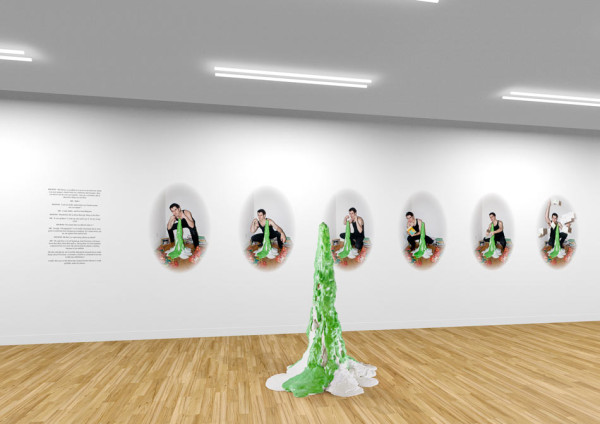
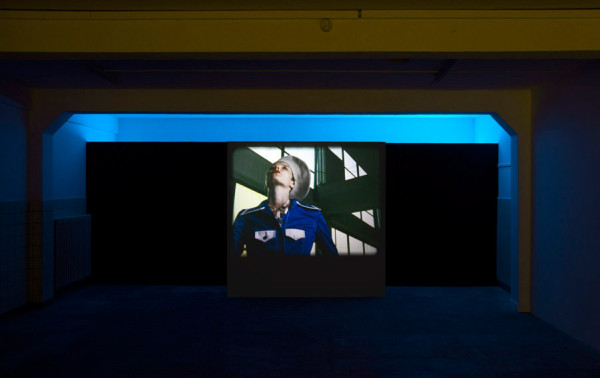
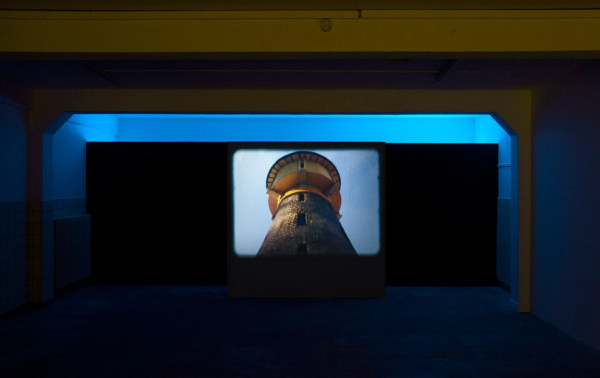
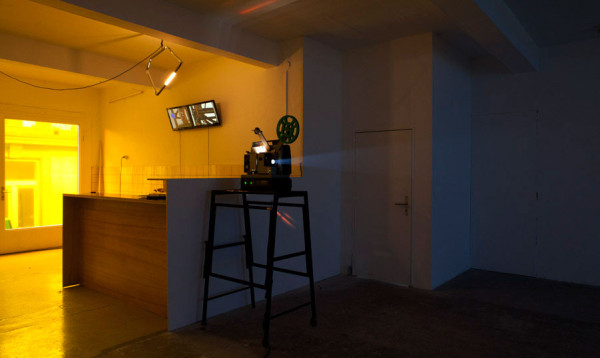
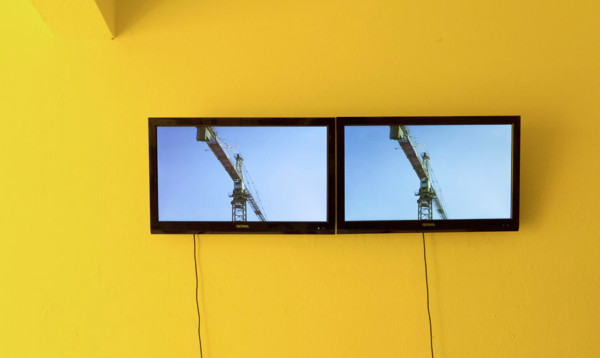
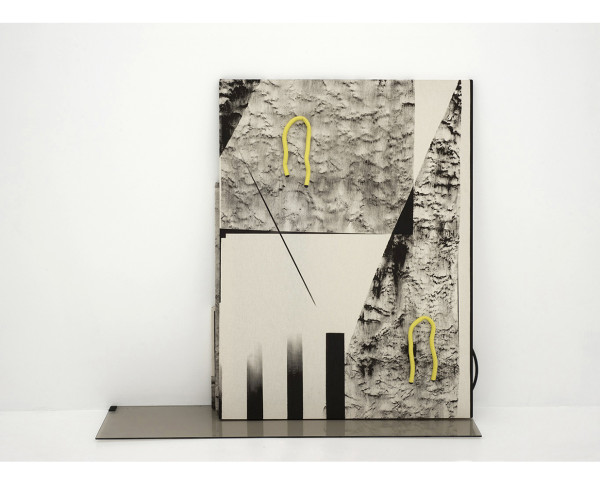
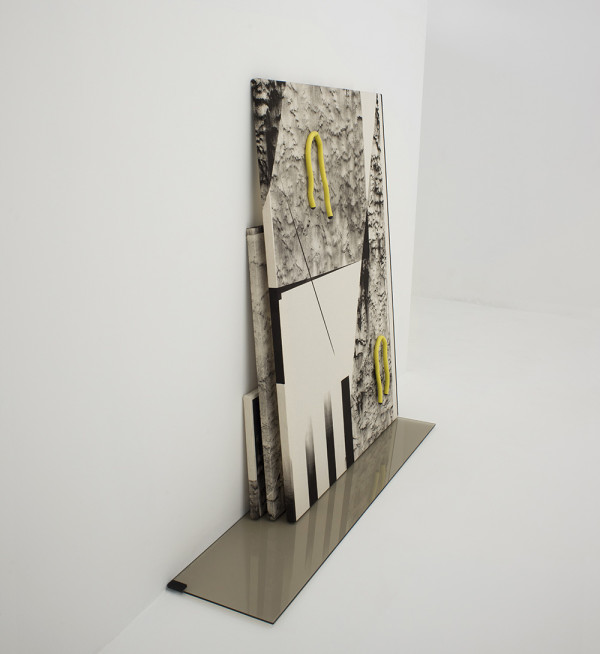
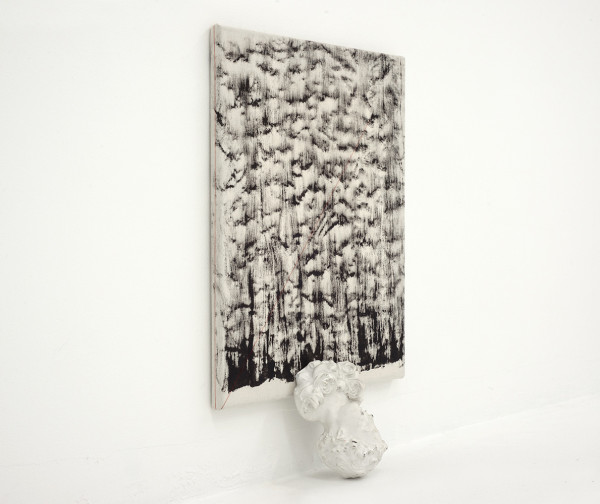
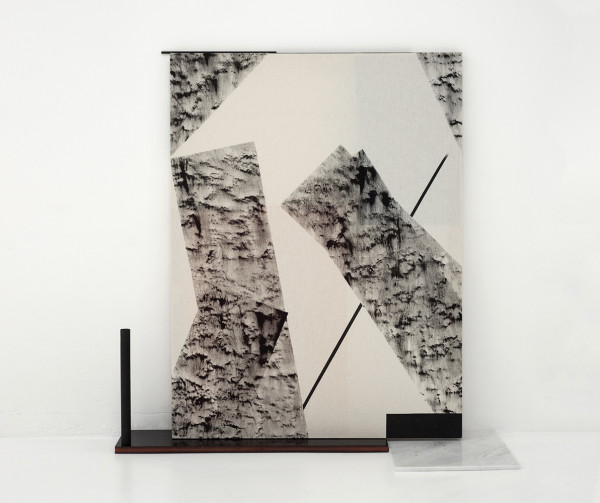
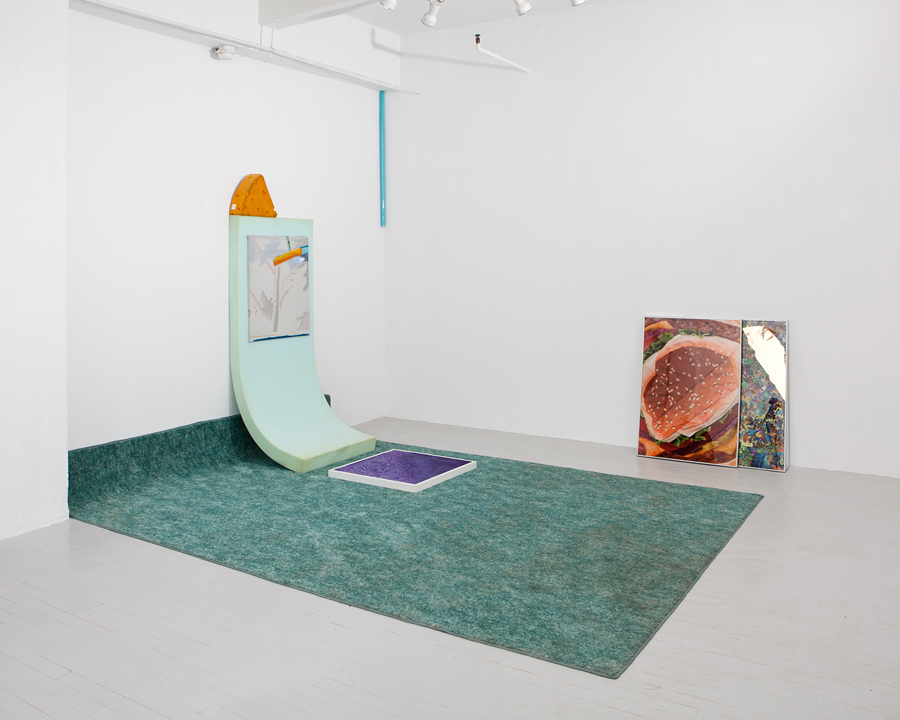
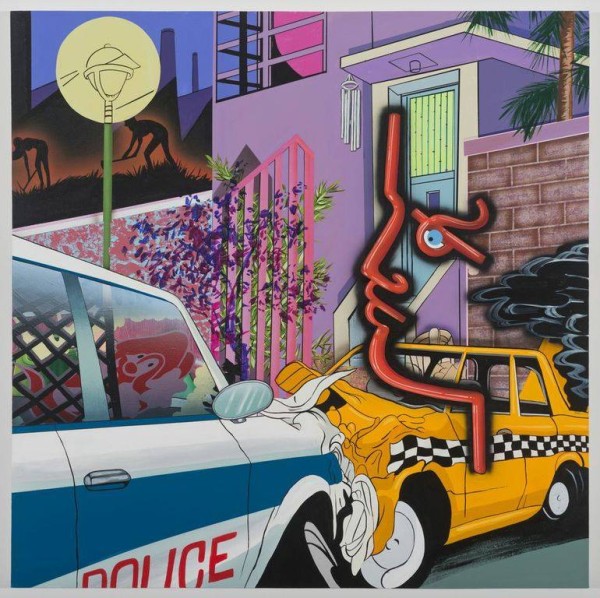
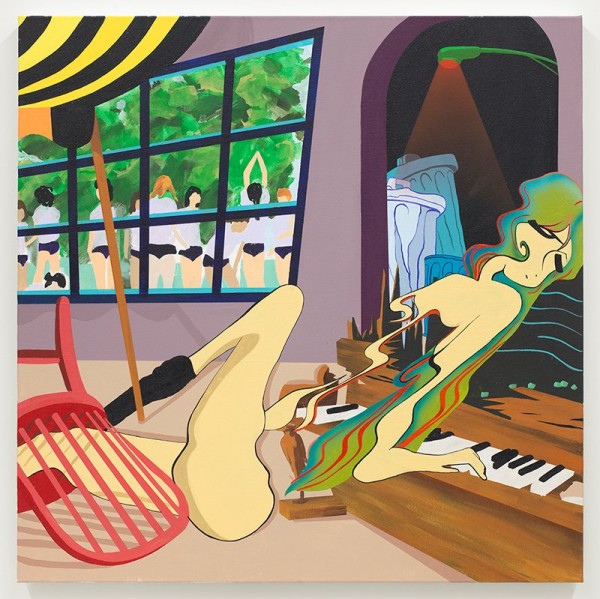
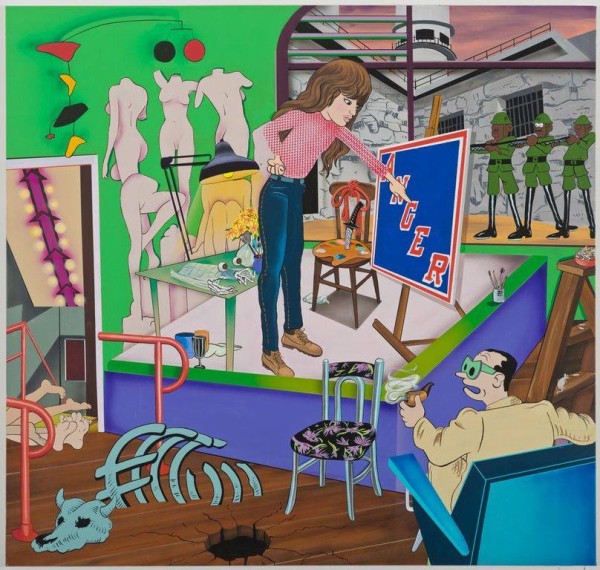
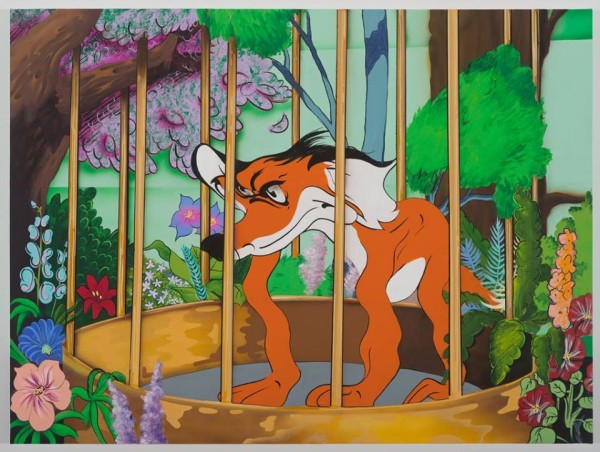
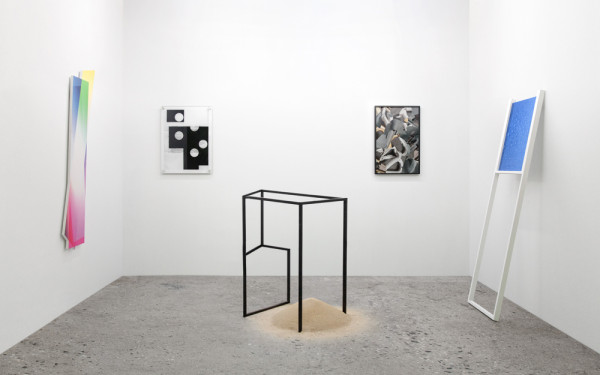
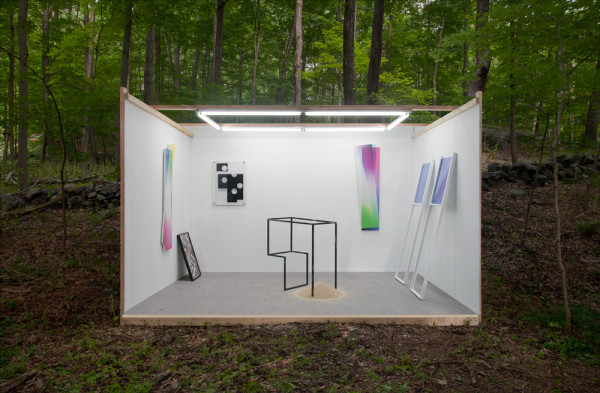
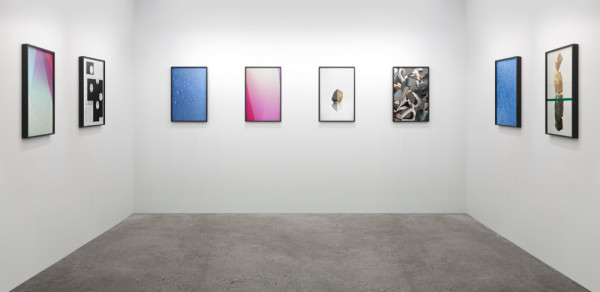
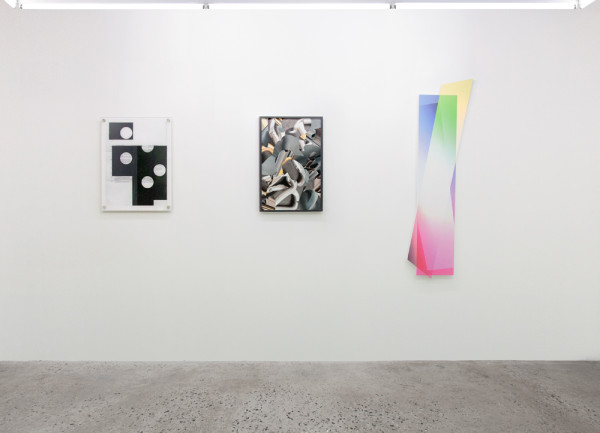
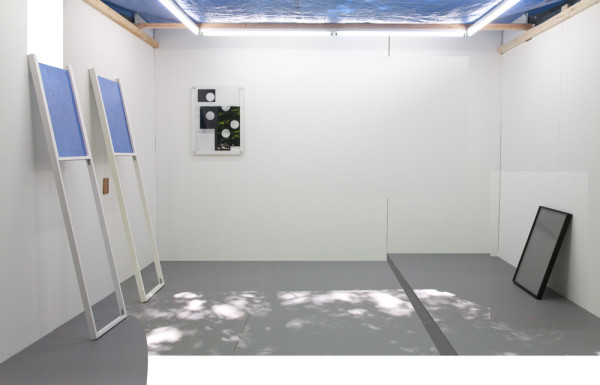
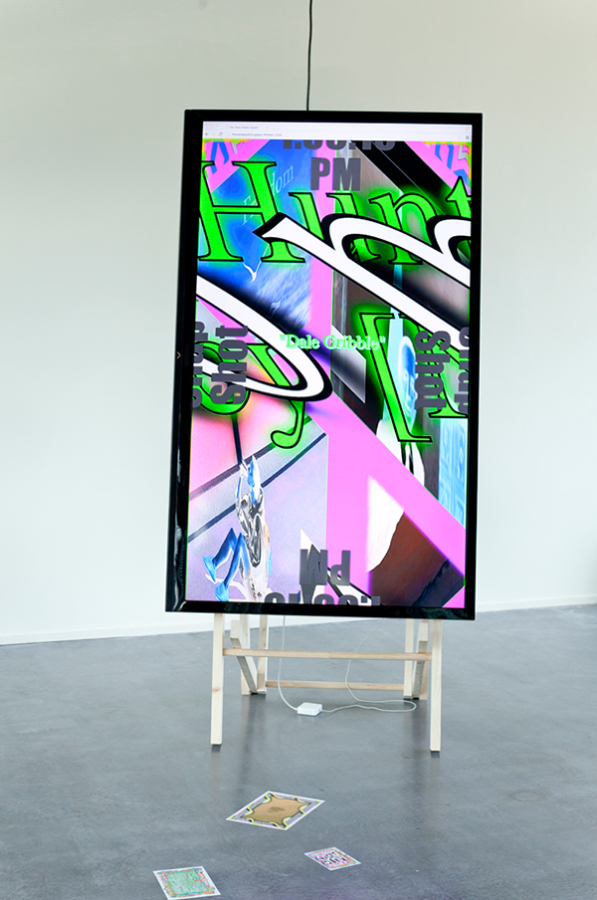
Work from “Zelda Zonk” at Preface Gallery, Paris.

“Zelda Zonk has escaped her primary identity. She has always refused to stick to a single self, contented to be chameleon-like. She wanted to be mobile,
to hide and succumb to the joys of masks, disguise and role-play.
2 An exhibition of fictional artists.” – Timothée Chaillou/Preface Gallery

Harun Farocki

Screen Shot 2014-01-11 at 1.23.24 AMScreen Shot 2014-01-11 at 1.19.24 AMScreen Shot 2014-01-11 at 1.18.53 AM IThoughtIwasSeeingConvicts
Harun Farocki

Stills from “Images of War (at a Distance)

Harun Farocki: Images of War (at a Distance) marks the first comprehensive solo exhibition of Berlin-based artist Harun Farocki (b. 1944, German-annexed Czechoslovakia) in a U.S. museum, and features the U.S. premiere of Serious Games I–IV (2009–10), a four–part video installation at the center of the exhibition. The exhibition reflects a recent large-scale acquisition—realized as a joint effort by MoMA’s departments of Media and Performance Art and Film—of 36 artworks, a body of work spanning four decades and including nearly all of Farocki’s videos, video installations, and films in video format.

Galvanized by the international student protest movement of the late 1960s, Farocki has developed an experimental documentary style, integrating his own material with footage appropriated from a range of sources, including mass media, surveillance, and political propaganda. Serious Games I–IV (2009–10), which is comprised of four distinct video installations—I: Watson is Down (2010), II: Three Dead (2010), III: Immersion (2009), and IV: A Sun with No Shadow(2010)—positions video game technology within the context of the military, where it originated. The work juxtaposes real-life wartime exercises with virtual reenactments in order to examine the fundamental links between technology, politics, and violence. Other works on view include the early agit-prop filmInextinguishable Fire (1969) and Videograms of a Revolution (1992), a collaboration with Andrej Uijca. The exhibition also includes Farocki’s most recent work, The Silver and the Cross (2010). Some 32 works are presented at three interactive viewing stations, providing a comprehensive overview of Farocki’s practice.

In the adjoining Projects Gallery, I Thought I Was Seeing Convicts(2000) and the trilogy Eye/Machine I-III (2001–03), are on view from June 29 through October 17, 2011. I Thought I Was Seeing Convicts draws connections between the role of surveillance in everyday consumer culture and in prison life, directing viewers’ attention to the fatal shooting of an unarmed prisoner by a guard at a maximum-security penitentiary in 1989, an event that was caught on camera. In Eye/Machine I-III, Farocki collects images from military and industrial surveillance devices to explore the increasingly complex relationship between humans and machines.

A selection of publications featuring texts by or about the artist will also be available in the exhibition gallery, presenting the various dialogues that have taken shape around Farocki’s work, as well as his indelible impact on film criticism and theory.” – Museum of Modern Art, New York

Sebastian Jefford

install shot ROGK surface-lite instructional (detail) 1-660x439 3.-Bootleggers-660x440 installation shot Sebastian Jefford

Work from his oeuvre

“Sebastian Jefford makes objects, paintings, images, installations, videos and web-based works – and often things that exist somewhere in between. Familiar yet strange, a chronic artificiality pervades in his work to the point of sickliness. Humble DIY materials and domestic objects are assigned new yet curiously absurd roles. The work forges a styleless, workaday, dull environment, accented by elements of pathetic drollery: jostling between an industrial coldness and slapstick crappiness. It takes an impressive degree of accomplishment and assurance to make this approach somehow so involving, and with Sebastian currently undertaking the the Spike Island Studio Fellowship, we expect to see much more in the near future.”

Toril Johannessen

Teleportation Paradigm_UKS18 Teleportation Paradigm_UKS7 Teleportation Paradigm_UKS19 Teleportation Paradigm_UKS15 Teleportation Paradigm_UKS5 Teleportation Paradigm_UKS1

Toril Johannessen

Work from Teleportation Paradigm at Unge Kunstneres Samfund

“TELEPORTED

You may have had the experience of waking up in a strange place, not realizing where you are, or for a short time thinking that you are somewhere quite different? At the Teleportation Paradigm exhibition, everything has been organized for such a spatial confusion to take place – in a monumental light installation based on an experiment that has previously only been carried out on rats.

The work is the result of collaboration between artist Toril Johannessen and neuroscientist Karel Jezek of the Kavli Institute for Systems Neuroscience, NTNU, Trondheim. Johannessen has often been involved in interdisciplinary work, working with programmers, engineers, physicists and geologists, but this is the first time she has worked so closely with a scientist. Jezek and Johannessen close in on each other’s disciplines, but they do not try to blur the boundaries by letting the researcher act as an artist or vice versa.

MAP” IN THE BRAIN
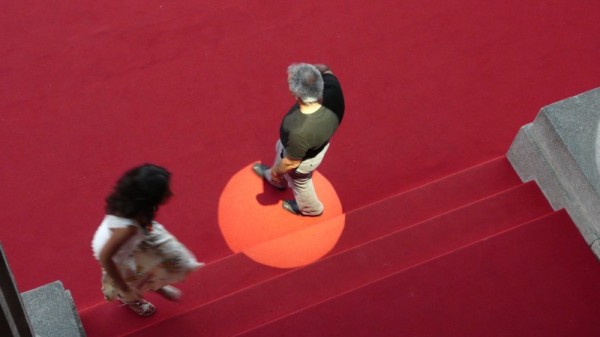
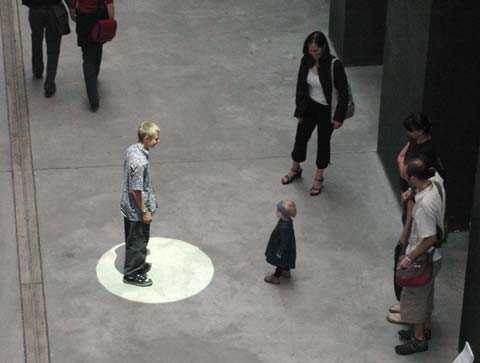
As you enter a new room, the place cells in your brain create and save a spatial memory. A “map” of the room takes shape. When you step outside, it is put aside, but if you return, it will be retrieved. The light installation Teleportation Paradigm consists of three rooms the public may enter, a greatly enlarged version of the laboratory experiment «teleportation paradigm» that Jezek and his colleagues performed on rats in order to study the brains’ memory of place. At UKS it is inflated to human size, and the audience enter the same situation as the rats.

The rats/people first spend time in rooms A and B, then in C. The lighting in A differs from that in B, as it did in the original neuro-experiment. Each room has its own discreet audio tracks. Thus, in rooms A and B two different maps are stored in our brains. Room C is programmed to switch between elements of A and B, and both of these “maps” are retrieved. It is this moment, as you are “teleported”, which is of interest to the researchers: The transition between two memories. This transition may be experienced as a spatial disorientation.

While Jezek and the other researchers could measure and map electromagnetic signals in the brain, but not inquire after the test subjects’ experience of “teleportation”, at UKS people can experience, but not measure.

Inside the installation there is a mural of a classic optical illusion, a so-called Necker cube. The cube is also central to the drawings at the exhibition and to the book Unseeing.”

Spencer Stucky

cdc0a37c50e5e4a686fb4df7948d959c b3a0fd7b07dd9abdff98d2405e48712e de7a444d5e944ac0e0000f352e259a8c b0f51c294234f20deaa6a53fa179bada 051eca552a9cf6d85ac0677e5d8ee9ea d2f9d9702a2a7f73453efdd9598034f6

Spencer Stucky

Work from his oeuvre

“Whether architectural, anatomical, or miniature, the model is both object and investigative exercise.  As an object, such as a scale replica or illustrative device, a model presents authority: a hierarchy of information structured for legibility.  Yet the model is also employed for the prospective, the unmade, the planned action.  In this sense the model is a sketch: one rendering of possibility among many, a moment in a process of revision.  A model is also an idea: an idealized rendition of what it depicts. In the practice I have built, the notion of the model is central. My photographs and sculptures investigate the fixity of site, the reconfiguration of space, and the affects of display and surface, while utilizing the provisional qualities of the stand-in.”

Mateo Tannatt

Mateo Tannatt 1 mateo_tannatt_fabrique 20110709222535dfe MT_2_SC_5_DIG0

Mato Tannatt

Work from his oeuvre.

“Tannatt tends to circle complex political or sociological themes and then deliver works that are open and unstable, never unlocking the problems at their centre. For ‘Rendezvous Vous’, Tannatt reprinted the building’s notice of abandonment but, erasing the central chunk of its text, drew keyholes over it. He also penned a libretto in which one of the homeless men sings about his life. The character was cast, in this dubious entertainment, as a debonair gentleman-vagrant: the photo-collage No. 1 Hit Song(2010) pictures him with a top hat, cane and suit jacket. The title of the sculpture, Casting Call: Vagrant No. 1 (Mattia) (2010), which places a half-dressed mannequin behind a freestanding metal frame, hints at Tannatt’s own forename – he might be projecting more than just theatrical stereotypes.

Throughout Tannatt’s work, we see personal spaces opened up and the realm of the public shown to be a subjective, inconstant mess. He refers to his painted steel structure Konzert (2010) as a ‘plaza sculpture’; it shows a room exploded into an abstraction, a space turned into an object and then into a symbol (particularly in its slight resemblance to a swastika). He is deeply interested in public sculpture by artists such as Clement Meadmore, Mark di Suvero and Alexander Liberman, whose abstract constructions are frequently degraded into logos by civic or commercial interests.

But these sculptures’ straightforward legibility appeals to Tannatt, as does the aesthetic efficiency of advertising. He draws a comparison between advertising and nature, pointing out that a fruit’s skin is the best possible advertisement for its own ripeness. In Untitled (Yellow for Helio) (2011) Tannatt hangs two bananas and a blond wig on a yellow-painted metal frame; the fruit blackens as the exhibition progresses. If only people, he seems to imply, could be so easily read. A related photo-collage, Last Name Bannana [sic] (2011), is a photograph of a woman gazing out of a window shrouded beneath a stream-of-consciousness text that laments, amongst other things, the difficulty of interpersonal communication.” – Frieze Magazine

Anouk Kruithof

website_order_everythingiswave_02 website_order_everythingiswave_03 website_order_everythingiswave_07 website_order_everythingiswave_271 website_order_everythingiswave_12

Anouk Kruithof 

Work from her oeuvre

“Anouk Kruithof considers photography as a starting point of infinite possibilities. Her method is interdisciplinary and mostly idea based. She inventively explores ideas of the picture plane, the image, and the materiality and physicality of the medium of photography. Her work is at once seductive while simultaneously critically deconstructing this seductiveness. Social inter action such as encounters with strangers, she analyzes, shapes and imagines forming a basis in her practice. She is interested in the inner worlds of people. Visualizing the universal discomfort, which can be seen as the boundaries of the human mind. Basically she is looking for elements, which can’t be seen from outside with a medium: photography, which just shows just the surface of things. It seems like an impossible target and therefore creates resistance, which stretched her practice from photography into -photo, -video, and -spatial installations, social in situ-works, take away ephemera, assemblage, performance and artist-books. Often her temporary installations and interactions with unknown people and space form the basis of her photographs. After she uses her photographs as material, which she transfers across different surfaces and spaces into sculptural forms, minimal installations, and tactile artist-books.”

Sebastian Black

DSC_8148 43 113

Sebastian Black

Work from his oeuvre.

“One could say that the press release, considered as a medium, meets its match – for fraughtness, for derision inspiring valedictorianism, for metonymic fidelity to the churning undercurrents of value, taste, power, etc – in the medium of painting. Fine. One could also say that saying that is the cheapest price of admission to the Show.

Now that we’ve paid, I have to tell you that this show – in its lowercase leisure – does not yet exist. I guess that in a way this lightens our load and description can slouch into speculation. For instance, I speculate that there will be at least three paintings. I speculate there will be some other things, that are not paintings, but are similar to paintings. Also, I promise there won’t be any plants. Beyond these vague offerings not much else needs to be said. The specifics, as is often the case in the realm of the aesthetic, remain to be seen.For now though, I’m going to relish the future’s blurry vista. Maybe there is no better tool for revealing the contingent nature of boundaries than astigmatism. We should roll with it, internalize it, embody it. Roger Caillois called this kind of radical mimesis “an incantation frozen at its high point,” although to be fair he was talking about bugs. I’d maintain that its a pretty good description of a painting, which is both defined by and overflowing its limit.” – Sebastian Black

Olivia Erlanger

materialstudies6 materialstudies31 materialstudies3 materialstudies4 materialstudies7

Olivia Erlanger

Work from Material Studies.

“Vivid, warm light fills the room and spreads over the desk as I sit and work at my computer. Daylight disappears slowly, burning, falling, bathing the Hudson River in washes of gold and rose. And while I am sure the sunset is spectacular, I keep my back turned, ignoring it.

The unavoidable connotations of relaxation, of love and romance, with fantasies of desert islands – it’s all too much. The natural sunset has become so saturated with meaning that it is impossible to tell the difference between the reality and it’s symbolism, or simulation.1

Like Dave Hickey’s experience of sunset over the Las Vegas Strip (as described in his essay Rhinestone As Big as the Ritz) my sunset over the Hudson River “looks bogus as hell.”

Hickey writes,

“…the question of the sunset and The Strip is more a matter of one’s taste in duplicity. One either prefers the honest fakery of the neon or the fake honesty of the sunset—the undisguised artifice of culture or the cultural construction of “authenticity”—the genuine rhinestone, finally, or the imitation pearl.”2

If the Sunset Strip is Hickey’s “genuine rhinestone”, then I’ve found mine in sunset calendars. Calendars are used to make sense of the infinite. By using imagery of the same diurnal event to represent the passage of time these calendars also reflect our wish to stop it.

The authenticity of the sunset calendar is in its shortcomings. In simulating the sunset through images symbolizing the daily experience, the event is abstracted from it’s phenomenal truth. But there is honesty in the abstraction and an acknowledgement of it’s own blatant fakery.

Similarly, the honesty of the “Double Rainbow” video by Paul Vasquez (aka Yosemite Mountain Bear) is in its own shortcomings. In “Double Rainbow”, Vasquez cries, laughs and screams, sharing his delight over capturing the double rainbow on camera. The recording is dim, gray, and shaky.  His genuine awe of the double rainbow makes the grainy video look even more unremarkable.

The failure to faithfully reproduce the double rainbow phenomenon is exacerbated by Vasquez ecstatic ramblings. The viewer does not take him seriously but rather laughs at the ridiculousness of the depth of his emotional response. But, as with my sunset calendars, the authenticity of “Double Rainbows” is found in its flaws – its failure in attempting to share the experience, to communicate a feeling, to capture the ineffable.” – Olivia Erlanger

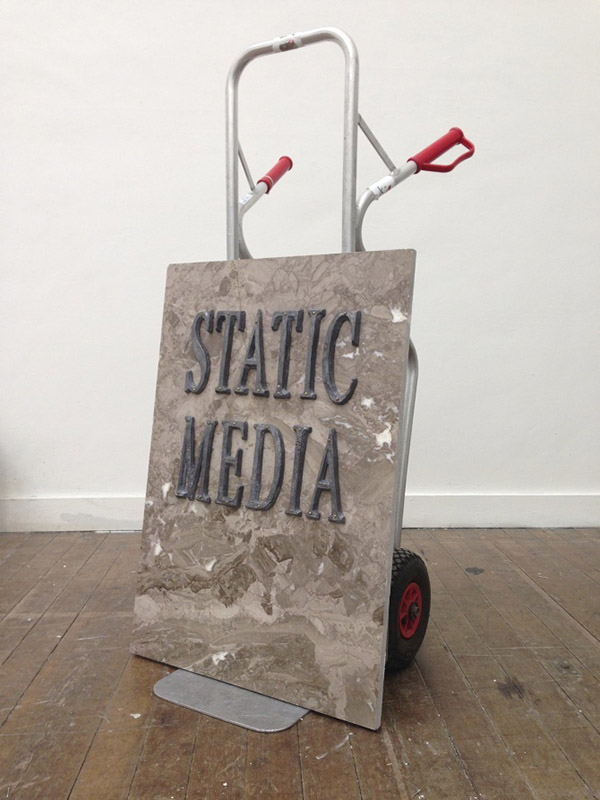
Richard Healy

rowing-6 rowing-5 rowing-13 rowing-9 rowing-11 rowing-8 rowing-10 rowing-1

Richard Healy

Work from Prone Positions

“Oliver Basciano: Your work, which encompasses sculpture, installation and video has this uncanny, unworldly feel to it. This perhaps stems from your use of digital animation in the videos works, which in turn affects how the viewer receives the tangible objects. Yet we should be more familiar with this aesthetic – we spend so much of our time working in ‘digital space’ – on our laptops, staring at our phone screens after all. What is your work’s relation to real world materiality? Much of your work seems a rejection of, or at least a critical investigation, of physicality.

Richard Healy: The idea of ‘materiality’ occupies a lot of my time. For me physicality has always appeared to be the result of ‘hard-work’ or ‘labour’. I would never say that I reject hard work, but I do investigate the idea of how ‘hard’ I am working versus how ‘productive’ I am being in the studio. I suppose this is a by-product of working with digital technology. I can sit until late in the studio being highly productive, creating thousands of high definition jpegs for a new film, however I am not working ‘hard’, my computer is. Again, I can make dozens of marks with a digital pen and in a few clicks these are transposed into chiseled strokes on a slab of marble. The computer allows for this hyper-productivity because it is divorced from the time constraints of physical material labour.

OB: How political is that mediation of labour for you? Marx said we were supposed to become freed through our labour, and then the Silicon Valley utopianists said we’d become freed from labour. Yet we seem to have become enslaved to our screens. I always think of video rendering as a great expression of that: the computer is doing the work, but it traps you, babysitting it. Or, more generally, maybe we’re the babies and the computers are looking after us. But perhaps you have a more optimistic outlook!

RH: Generally I have an optimistic outlook. My interest in labour is a result of the consistency of technology in our everyday lives, every moment is an opportunity to be productive at the hands of a laptop or smart phone. Is that liberating? I honestly do not know, I definitely find the speed of technology liberating, but you are right that more often than not it just frees more time to use more technology. To open another window or look at another screen.

Any political mediation would be on who owns this productive space. I use various online platforms through which I make my work – Tumblr pages, issuu pdfs, Vimeo uploads –these platforms obligate the user into a form of self-design or self-presentation. This is interesting I think. How we are so free with the idea of appropriation that we happily navigate the web projecting images of ourselves through the default settings of others. I realise the speed of the computer screen obligates me to work more, blurring the boundary between social past-time and real-time labour. However my optimistic side hopes that this blurring is a result of my satisfaction with producing work through this process. Not only can you produce effects quickly through a computer but in a second you can upload it onto the web to show the world. The act of courting attention in this way can have its trappings, however I view it as a liberating aspect that the computer screen has offered the art world.

OB: We can never fully reject materiality though, however much we spend our lives working with or within computer space, we’re still eating, breathing, moving objects in the real world.

RH: Yes and the work isn’t rejecting or ignoring that. It will always be rooted in the material world, so undoubtedly the idea of materiality is always present in my work. For example I have a collection of images of marble and other surface textures to render into films and prints. These materials are always placed out of arm’s reach however. They are suggested, described rather than realised. When an object does escape the gravity of the computer screen and I produce a sculpture, the choice of materials (mainly glass) echoes their digital origins. These choices were repeated in my last show where digital prints were mounted directly onto the surface of the glass frames denying any physicality of the paper, while trying to recreate the moment when I first saw the image on the computer screen.

OB: Perhaps a work you made for a show last year titled Vetiver connects that idea. You made candles scented with the smell of a Comme des Garcons cologne right? Whilst the candle is an object, its main function is something immaterial, a smell.

RH: The use of perfume came about from an invitation to do a show at Marian Cramer’s project space in Amsterdam. It is a unique situation, as it demands that the artist make work for Marian Cramer’s home as well as the white-cube gallery space. The notion of this brought up obvious issues of gallery display, interior design and taste. I started to make scented candles as objects that could exist in both spaces and bridge the presentation. The idea of using my cologne in these candles seemed sensible: it allowed the show to address my tastes as the artist and Marian Cramer’s tastes as curator and collector. As a motif it seemed very different to other elements within the show. Most of the works deal with surface and the formulation of architectural space, yet here there was nothing but the heavy vapor of the cologne I used.

OB: What’s your relationship to design, or more specifically architecture? You didn’t study it did you? Your work, both the videos and the sculptures, has an architectural sensibility to it. The computer animated video Testing Ground for example has this amazing architectural space depicted, yet it’s a fiction – it reminds me of those old Archizoom projects or Zaha Hadid’s conceptual designs.

RH: Yeah, I really like the idea of fiction within art practices, and architecture links to this. I never trained as an architect and when I was younger I didn’t express any interest in architecture, I did however love science fiction. And my first interests in architecture came from sci-fi design – Star Trek: The Next Generation, Babylon 5 and Dune, as well as the Foundation series by Isaac Asimov were hugely influential. However, it wasn’t until I saw an exhibition by Superstudio that I realised that architecture could be concept based, that it could be virtual rather than real. That first encounter with Superstudio lead to me seeking out Archigram and Archizoom and their models, fanzines and masterplan prints. With all these groups, what I liked was the language they used; in fact I probably liked the way that they communicated their ideas more than the ideas themselves. Architectural design has a really great aesthetic to create fiction with. Models and prototypes are such interesting objects of potential that allow you to point the audience in a direction and at the same time afford the audience a lot of freedom.

OB: When did this interest manifest itself as a work though?

RH: The first time I made an architectural film was out of necessity. Part of my fine art course was an interim show of all the student’s works in what was a very small gallery. The idea of compromise in that situation was problematic for me so I decided I would make a virtual model of the gallery and curate a solo show of objects from my studio at the time. That video became the first version of Testing Ground. These videos have been shown several times since that outing and every time are different, reflecting a different set of objects and ideas that are occurring in my studio. In fact I think of Testing Ground as a direct extension of my studio. That is another aspect of architecture that I have borrowed – the idea that a work can be edited, altered and improved in subsequent versions.

OB: That idea of editing, renovation and improvement (which a digital practice lends itself to) is picked up in a text that you made available alongside a show you did last year. It was a story, a parable really, written by the architect Adolf Loos, describing a man who hired in an architect to furnish his house. The essay seems to mock the idea of a ‘finished product’.

RH: Loos’ essay was a critique on a certain mode of modernist design and the limitations it placed on the user. In the story the client wants to bring art into his home, however does not want to deal with choosing it, so hires an architect and defaults to his tastes. I found the idea of scale the most engaging aspect of the essay. In the end the architect has reduced art and design to a capsule collection of good-taste, while simultaneously reducing his client’s life into an ordered trap of certainty and function. In Testing Ground I delay any conclusion, I prolong the process with more edits and additions. It is a space for production without any conclusion, which is an exciting prospect.

Interestingly, having used Loos’ essay I came across Against Nature by the French novelist Joris-Karl Huysmans, that seems to celebrate the provisional and inconclusive. I ended up using an extract to accompany the exhibition Vetiver. In the extract Huysmans’ protagonist creates various perfumes to mask the smell of the garden outside his window. In the end he gives up, collapsing exhausted on his windowsill, but only after having mixed endless variations of compounds and tinctures. The whole book is filled with similar unconcluded projects, however there is something progressive about these willful acts even though they serve no function. It’s a really moving book.”

text via interview Oliver Basciano