FakeShamus

FakeShamus_grizzly_1280TouristTrap_900 DonVont_900hammertime_900 FakeShamus_DeepCamo_1280

FakeShamus

Work from his oeuvre

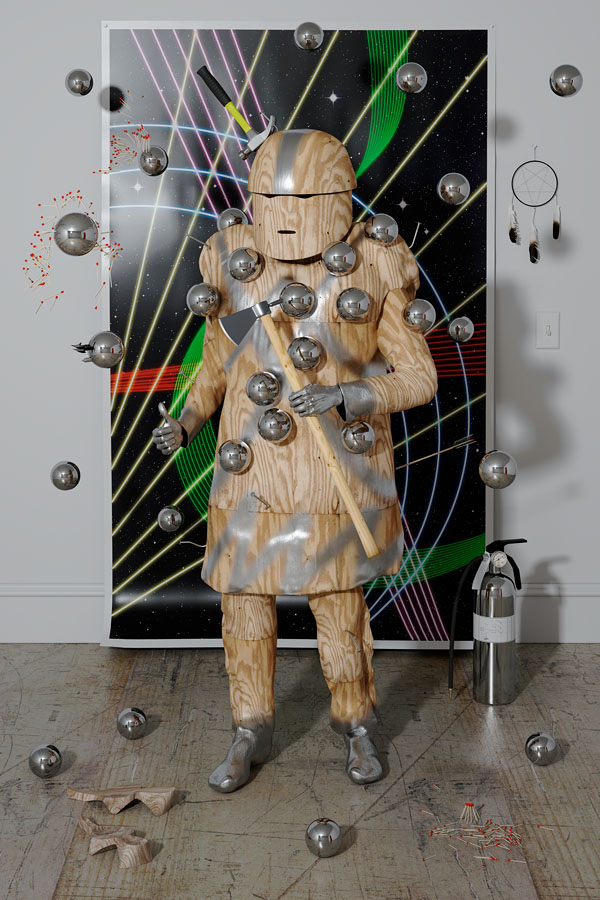
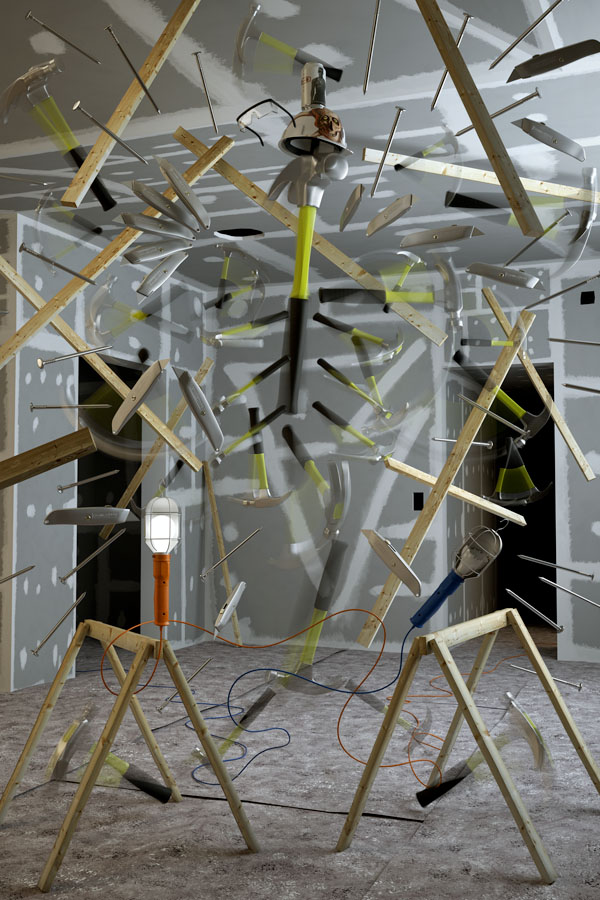
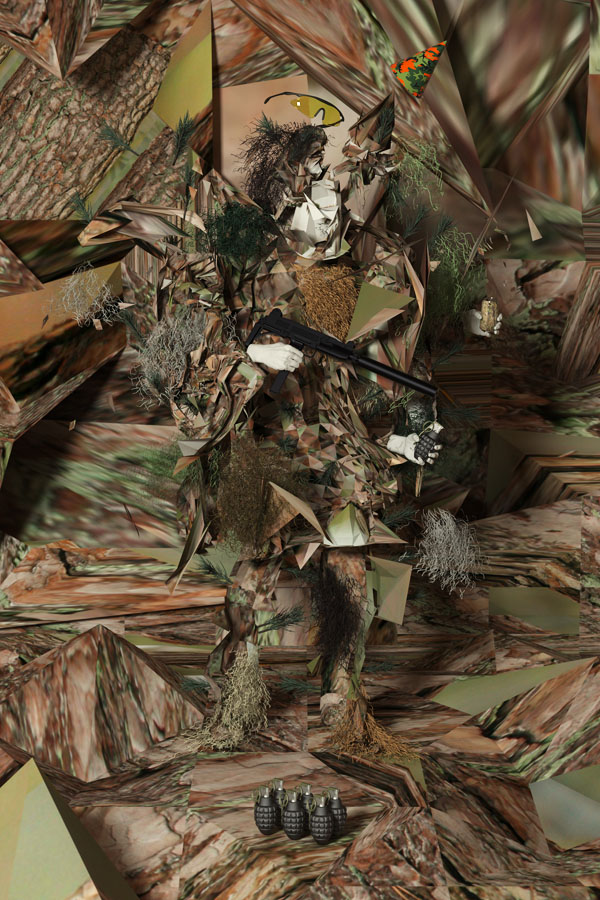
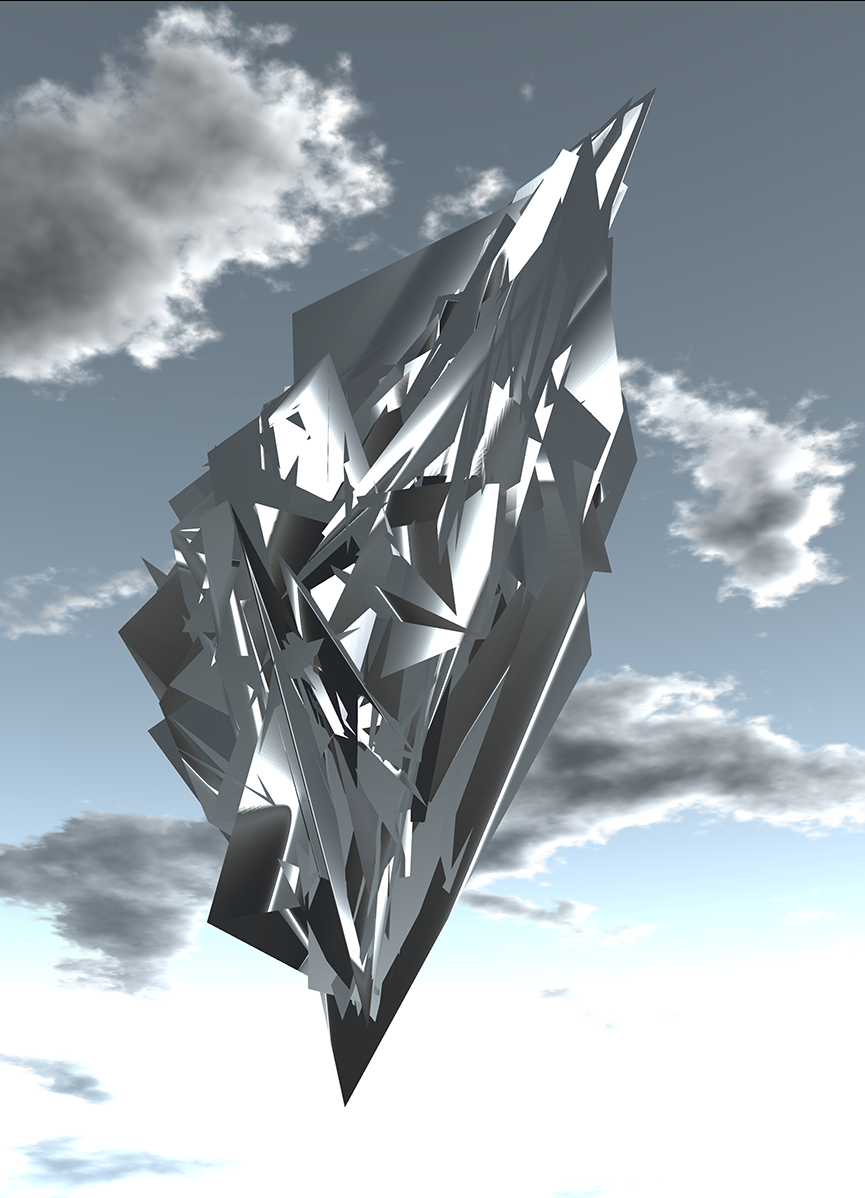
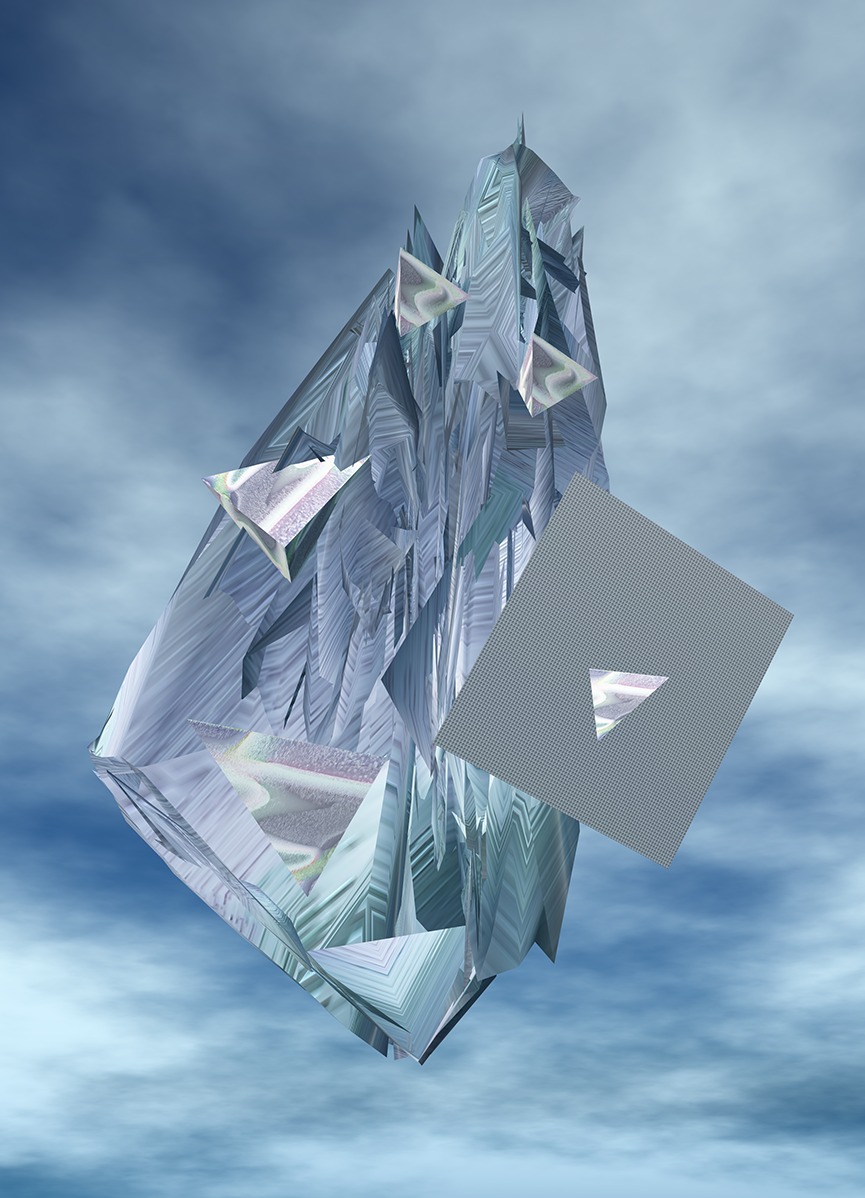
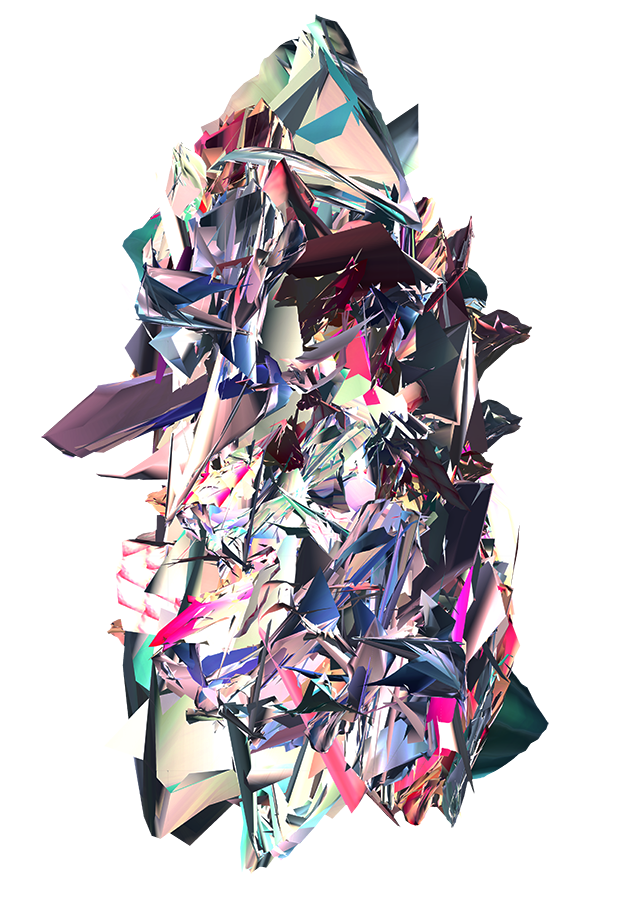
“FakeShamus is kind of an alter-ego and a nemesis at the same time from the New York-based digital artist Shamus Clisset, whose works receive a meticulously care over several months and furthered his knowledge of digital 3D modeling and raytracing software.

Clisset‘s work futher blurs the boundaries between an almost unbelievable faithfulness to reality with an extreme paradoxical sense of fantasy. He culminate aspects like the absurd, surreal, violence and perversity into several conscious digital golems and complex compositions assuming every command and taking on any form basically. These darkly, mysterious and humorous ambients found in FakeShamus‘ works may often disguise our perception from the advanced and intense level of craft behind each artwork, which is completely intriguing and is the result of a strong conceptual and technical involvement created by Clisset.”

via O Fluxo

Maxime Guyon

1
2
7
9

Maxime Guyon

Work from Landscaping Studies.

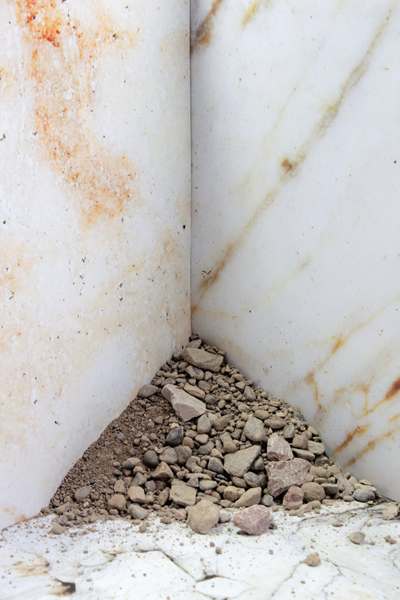
“This is a personal study and interpretation about Landscaping in swiss mountain environment.
I wanted first to start in discovering my visual feels on the field (especially in Rhône Glacier), then bring back at the studio all the details that gave me sense to my research.

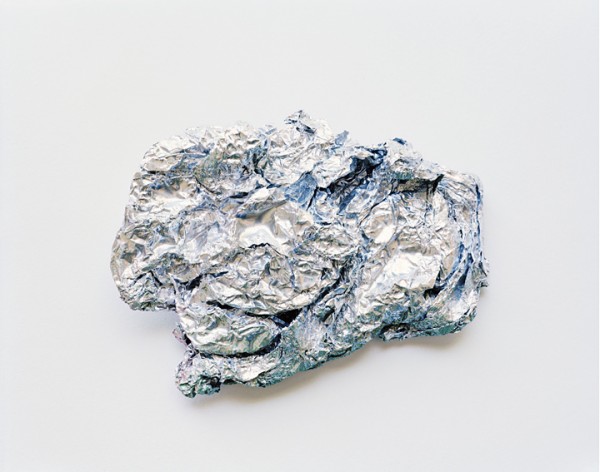
I found answers and results in taking pictures of Geneva climbing walls and in composing rocks still life.” – Maxime Guyon

Félix Luque Sánchez

-1
-2
-3

Félix Luque Sánchez

Work from Different Ways to Infinity.

“Different ways to infinity is a science fiction artwork using a variety of media. The installation proposes a collection of archives from an imaginary scientific laboratory. It is composed of 3 parts: parts 1 and 2 are inspired by chaos theory and approach infinity through complexity; part 3 is an “infinite space filling” generative sculpture.

1. A synthesizer with oscilloscopes and audio system
The synthesizer is based on Chua’s circuit, one of the first physical demonstrations of the existence of chaos. Its output signals are visualized through oscilloscopes and heard through loudspeakers. The synthesizer is controlled by motorized potentiometers, which changes the modulation parameters in real time in order to force it to enter and exit chaos in an infinite loop. Every time chaos is reached, fractal shapes known as ‘Lorentz attractors’ appear on the oscilloscopes.

2. A set of 3d animations and large prints
These large digital prints and 3d animations are generated by software simulating strange experiments in computational fluid dynamics.

3. A modular sculpture
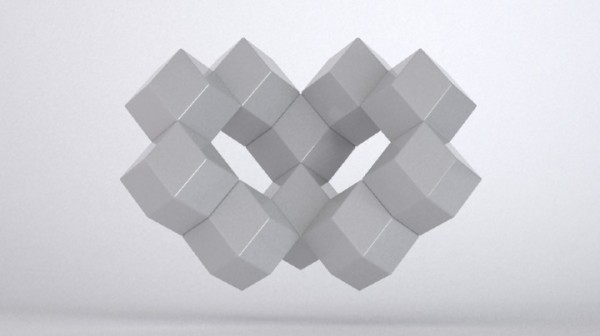
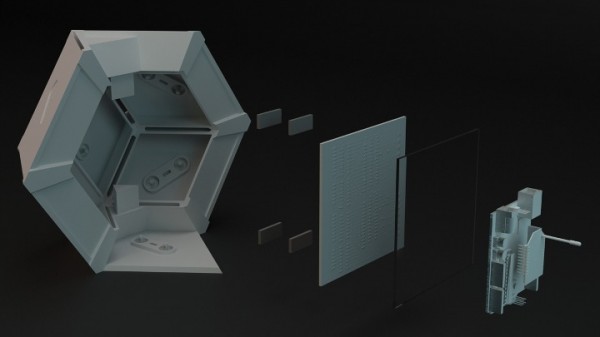
The sculpture is composed of rhombic dodecahedrons, geometrical objects part of the family of «Space-filling polyhedra» : shapes which can be assembled to completely fill the space, to generate a tessellation of an infinite space. These forms act as the building blocks for a sculpture generator, with a high combinatorial potential for the assembly of any geometry.
These dodecahedra express complex reactive behaviours through their luminous edges.
The artist designed for the exhibition one specific geometrical configuration, a closed shape assembly exploiting at their best the formal and dramatic qualities of this sculpture generator.
By programming complex behaviours in the dodecahedra, i.e. controlling the light flowing in their edges from random to ordered patterns and contours, the perception of this geometrical shape is first blurred: from nothing to the chaos of its potentially infinite geometrical configurations, its perfect designed geometry slowly reveals itself through the interactions of the visitors with the sculpture.” – Félix Luque Sánchez

François Morellet

65308_301208386660066_1786117284_n
197463_301208413326730_146716017_n
arcs-de-cercle-complementaires_geometree-n5_1983
c2ab-dc3a9crochage-nc2b05-c2bb-2005
fm_rococoncret-77

François Morellet

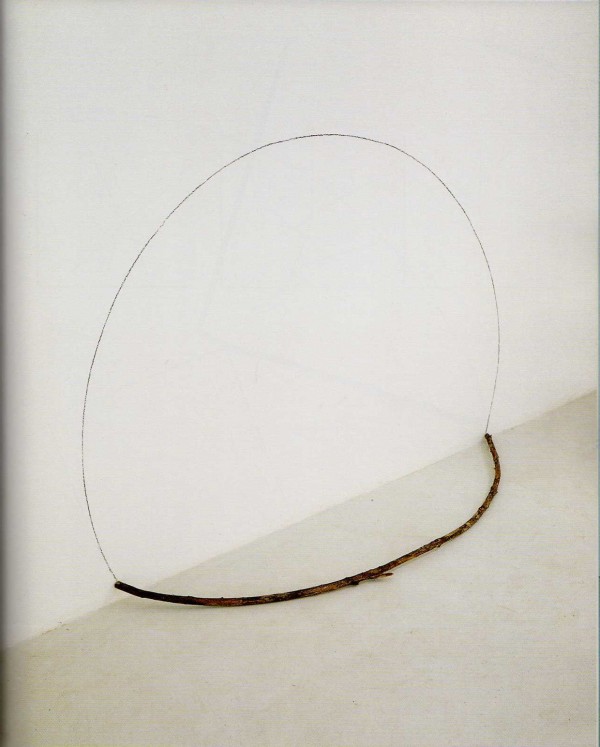
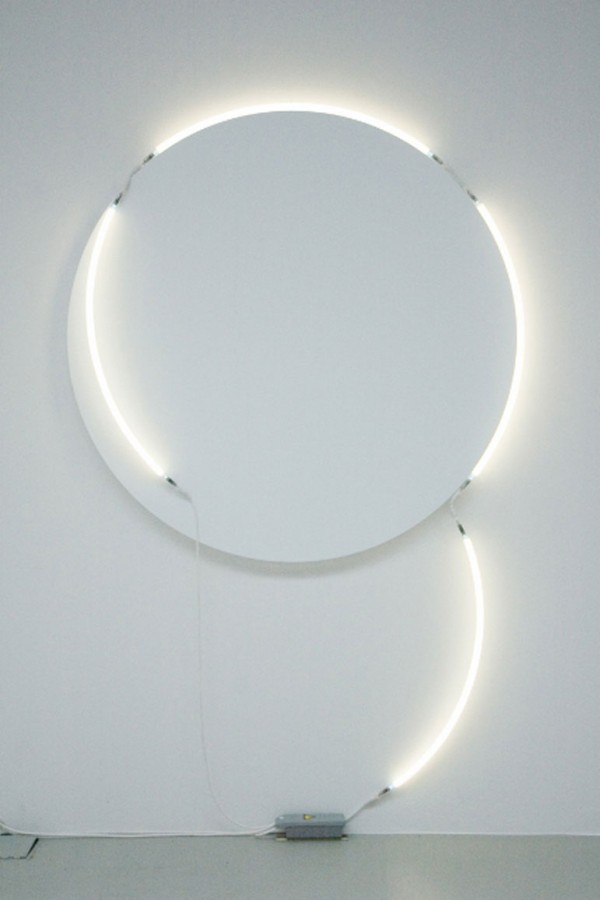
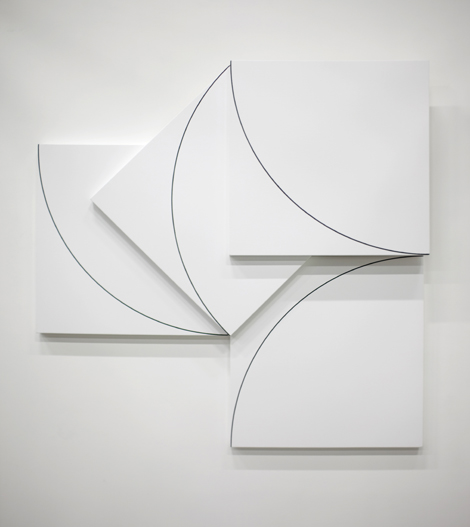
Work from his oeuvre.

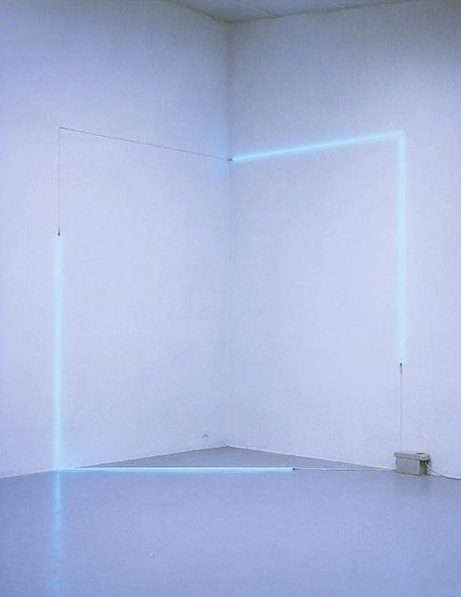
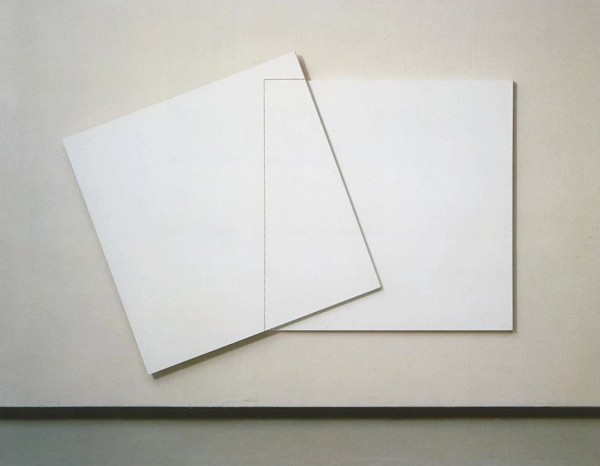
“…For Morellet, a work of art refers only to itself. His titles are generally sophisticated, show some word play, and describe the “constraints” or “rules” that he used to create them. Like other contemporary artists who use constraints and chance (or the aleatory) in their works (John Cage in music, the Oulipo group in literature), Morellet uses rules and constraints established in advance to guide the creation of his works, and he also allows chance to play a role in some of his compositions.

His rigorous use of geometry tends to create emotionally neutral work, and has placed him close to Minimal art and Conceptual art in his aims. He shares a particular affinity to the American artists Ellsworth Kelly, Frank Stella and Sol LeWitt…” – Wikipedia

Isabelle Cornaro

022-03062013-800x533 013-03062013-800x533 004-03062013-800x533 001-03062013-800x533

Isabelle Cornaro

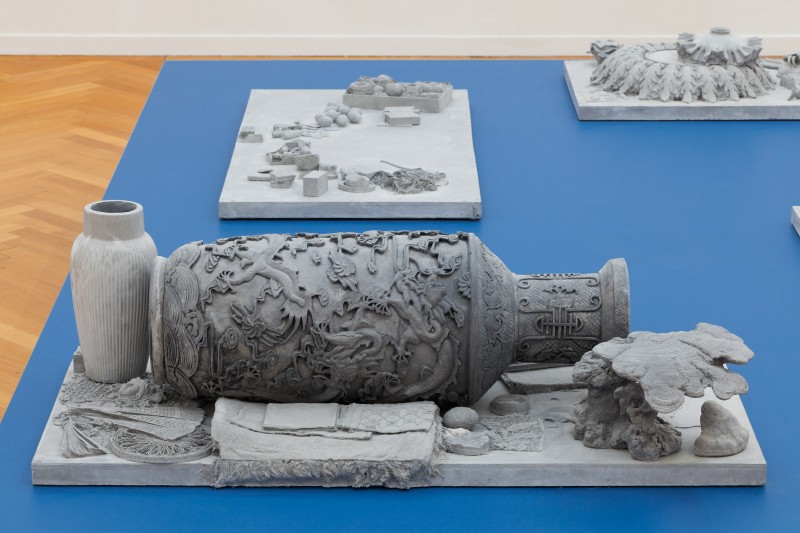
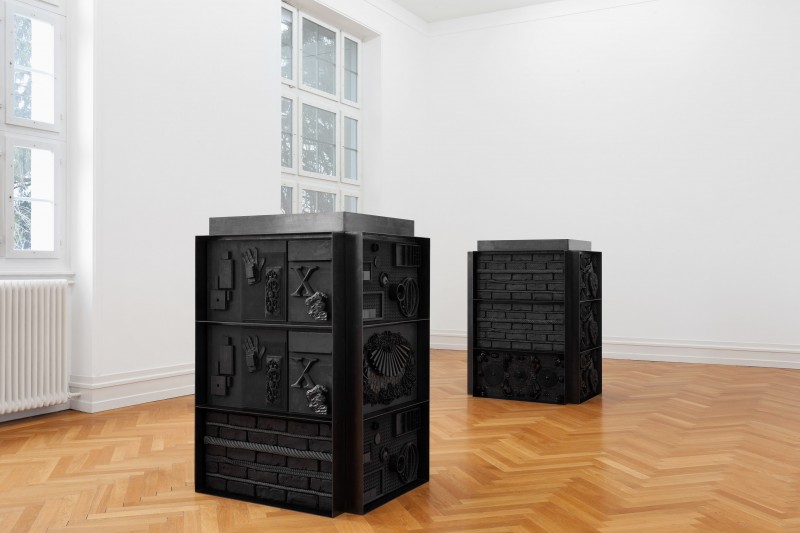
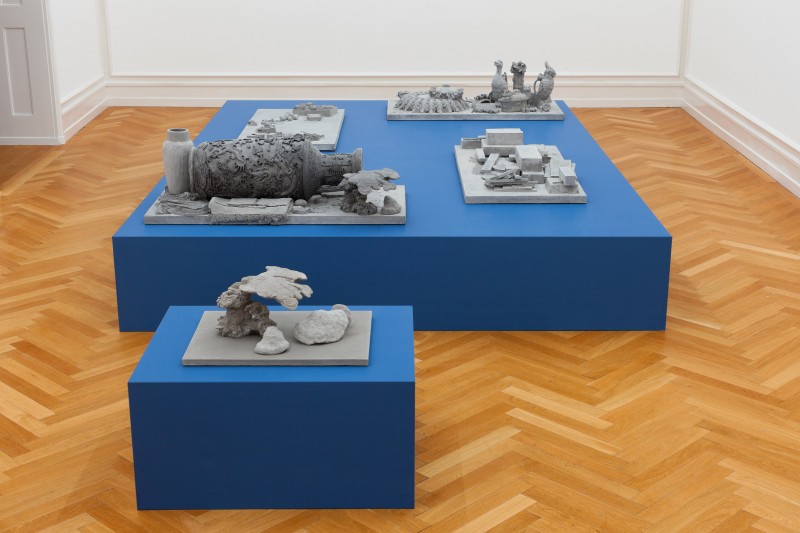
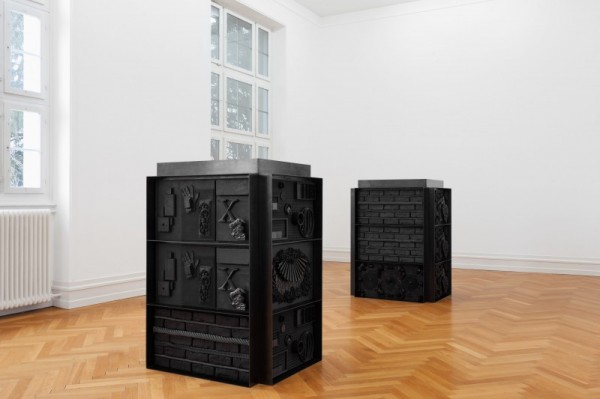
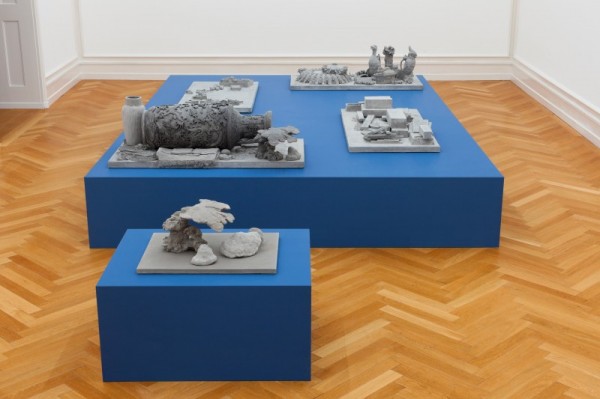
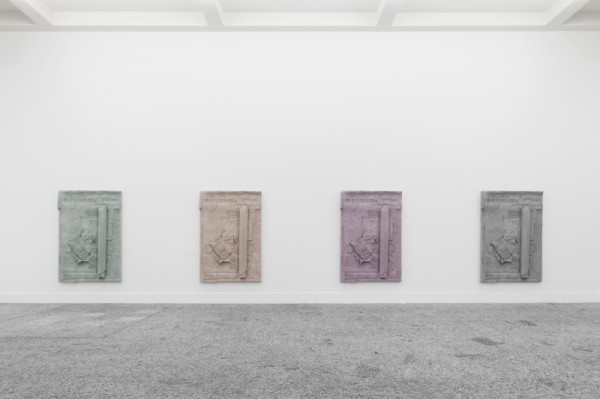
Work from her exhibition at Kunsthalle Bern.

“Six questions to Isabelle Cornaro on the occasion of her exhibition

Fabrice Stroun: At Kunsthalle Bern, you will exhibit two sets of cast works, one horizontal the other vertical, which are collectively titled Homonymes. Most of the objects you are using to make these casts seem to come from a defunct era; old-fashioned tchotchkes found in someone’s attic or at the flea market.

Isabelle Cornaro: They do indeed come from flea markets, which I visit without any pleasure. I dislike the slightly pornographic relationship to objects, half-sentimental, half-lecherous, that these kinds of places generate. The objects I select are domestic, decorative baubles (vases with ‘Oriental’ motifs, cheap glassware, Christmas decorations, etc.), outdated tools (rubber stamps, metronomes, old camera lenses, etc.), my own worn-out working tools (small varnished plinths, bits of bubble wrap, plaster, glass sheets, slides, etc.) as well as objects linked to money (coins, bills, poker chips, piggy banks, etc.) or to pageantry (perfume bottles, jewels, medals, lipsticks, etc.). There are rarely any direct human representations, only abstract, vegetable, animal and mineral motifs. All these objects are the product of semi-industrial labor (since none or very few of them are actually hand-made) and they articulate the values of a social class– which happens to be, most of the time, my own.

FS: Is this a way of bringing to the fore an autobiographical dimension in your work?

IC: No, not in this sense. It’s just that, having grown up with them, these objects are familiar. I know them intimately. The very first objects I ever used to make art are jewels that belonged to my mother. Not only did I have them at my fingertips, but I had also seen them in old photographs that date to a time when my parents were living in a former French colony. The jewels were made with local gold and diamonds, the very natural resources that got the French there in the first place.  Today, the majority of the objects I work with would be copies of copies of precisely such jewels: surrogates.

FS: The use of this ideologically charged, depleted decorative aesthetic demarcates a semantic field that is very much your own. Your work seems relatively impervious to avant-garde citations or to the globalised pop culture so many of your contemporaries draw on.

IC: I find it difficult to work with pop culture because, in my opinion, it is already overflowing with meaning. Most importantly, pop tends to generate a positive, sentimental relationship to culture that I find unproductive. I prefer working with objects that make me ill at ease. This unsympathetic relationship to my source material creates a tension that I much prefer.

FS: Do you consider these casts as ‘models’ of something, or some process, or should we regard them more as ‘allegories’? And if so, allegories of what?

IC: I like the trope of an allegory since it describes an abstract relationship to the world and often calls for the use of figures. The cast object relates to two distinct fields of likeness: to the real objects that were used to make the casts, and to the abstract categories they represent.

FS. Are you talking about aesthetic categories of representation or art-historical ones, which relate more to technique?

IC: The categories I refer to are empirically defined, most often while observing different objects lying around my studio at a given time. For the horizontal Homonymes, for example, I identified three distinct families of objects: naturalistic objects (even when streamlined), ‘in the shape of’ a duck, a flower; etc., objects carved with decorative motifs, repeated and stylized, and objects sporting geometrical form– even if impure– that brought to mind a notion of abstraction. In other words, my categories were Naturalism, Stylization and Abstraction. A fourth cast was then made with all the ‘leftovers’.

FS: Once you have defined an ensemble of objects, what formal or processual principle presides over their assembly?

IC: It really depends on the series I am working on. As far as the Homonymes are concerned, they are not so much composed as simply piled up. The absence of composition allows me to put aside my subjectivity, or at least my ‘sensibility’. This allows me to move from formal (or stylistic) to more categorical considerations. Here, the piles were thought of as ‘heaps’, following a functional rather than an aesthetic logic. By that I mean that spacing had to be sufficient for the technician to make the casts, with various heights so as to reveal the maximum detail, etc. One thing that really matters to me is that the cast is molded in a single take. It is a solidifying, a change of material state– meaning that all the objects used become a single mass; ‘drawn’ shapes, emerging from a formless block of matter. An important point of reference for me are 16th-century Mannerist grottos, where animals and flowers are sculpted in a mass that remains partly formless, or, rather, keeps its initial natural shapes. There are also other grottos where the entire stone is sculpted, including the parts that are supposed to be formless; ‘natural’ matter. The material and the manner in which it is used projects an image of reification, i.e. of death – the passage from a living, animated body to that of an object, that is to say, of a corpse.

Isabelle Cornaro was born 1974 in France. She lives and works in Paris. Major presentations of her work were organized by the Kunstverein Düsseldorf (2009) and Le Magasin (2012) in Grenoble. Kunsthalle Bern presents her first monographic exhibition in Switzerland. The exhibited works date from 2006, such as All we ever see of stars, to this day. Two new large productions, Celebration and God Box No. 1-3, were made specifically for this exhibition.” – Kunsthalle Bern

via Contemporary Art Daily

Masood Kamandy

33_registrationfailure
33_20120229mountain
33_20120229structure
33_20120229groundglass

Masood Kamandy

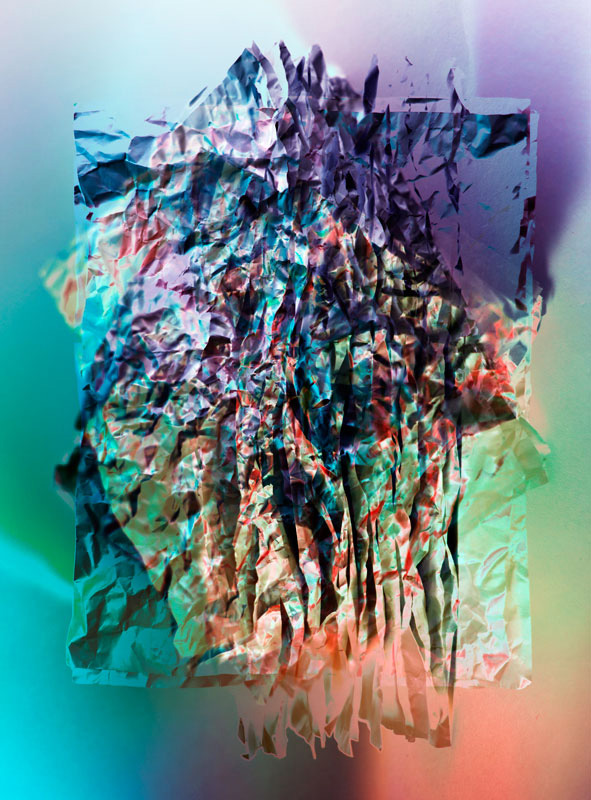
Work from Superimpositional.

“This project uses computer software I developed to combine many images into single images. It is influenced by historical practices of chronophotography which developed soon after the invention of photography, and also aleatory art practices like the work of John Cage. This process has the ability to show the movement of my body, the movement of my subject and the passage of time. It also shows how subjects occupy space.

The photographs are installed in rhizomatic configurations, a nod to the way that the images were generated using layers.” – Masood Kamandy

LaTurbo Avedon

tumblr_mexp9mzb121s0parwo1_1280 tumblr_mghj60KDLr1s0parwo1_1280 tumblr_mhbub3h2ED1s0parwo1_1280 tumblr_mix08uezB71s0parwo1_1280

LaTurbo Avedon

Work from New Sculpt

“LaTurbo Avedon is a social media avatar and artist. Her work has been enabled by an ever-growing network of friends and collaborators, allowing her to participate in both online and offline exhibitions internationally. Residing entirely on digital platforms, her work ranges from character creation in video games to constructing entirely new virtual environments to inhabit.
Beside LaTurbo Avedon‘s main creations, you’ll be able to find amazing pararell online series, such as ‘png Island‘ or the beautiful pieces in ‘New Sculpt‘. The process for New Sculpt has been to reinterpret photographs using various 3D rendering tools. Returning to the now-aged Second Life platform, LaTurbo Avedon used the process of importing sculpt maps or ‘sculpties’ as a way to look at images differently.

LaTurbo Avedon explains: Where the rendering engine is anticipating a prepared sculpt map, which often looks like a smooth gradient of several colors, I am instead feeding it a much more complicated sequence of colors when I give it a photographic image. Whether the imported image is a portrait of Brad Troemel or documentation of a Mark Rothko painting, each has its own conversion to a three-dimensional shape. The resulting objects are often duplicated and arranged to create new formations.”

via O Fluxo

Talia Chetrit

TC6
TC2
485909_1491507973714_1073137045_n
311711_1491508253721_85188674_n
chetrit

Talia Chetrit

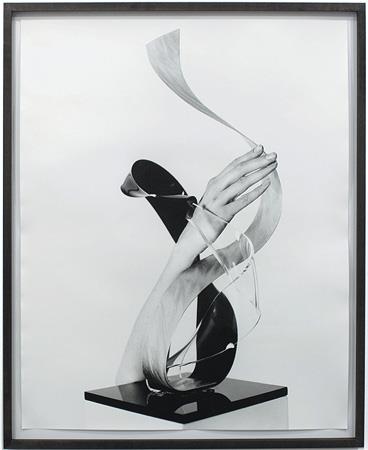
Work from her oeuvre.

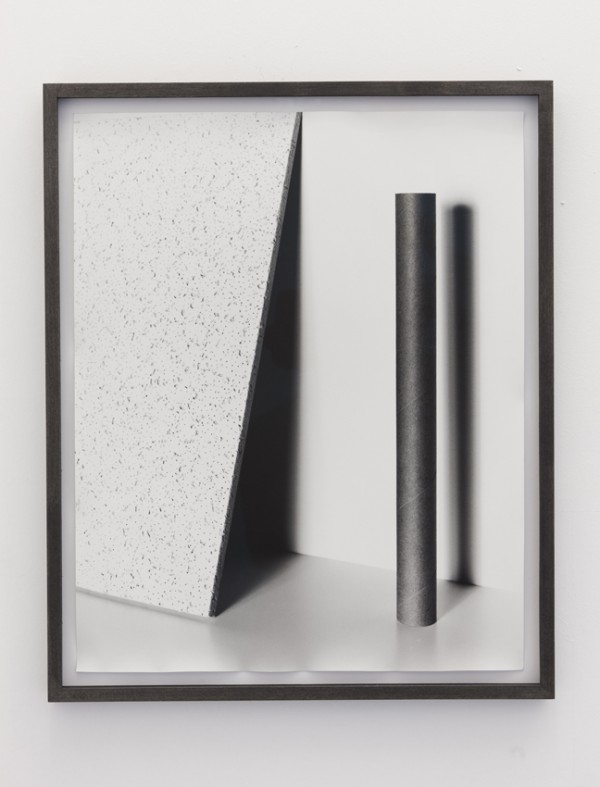
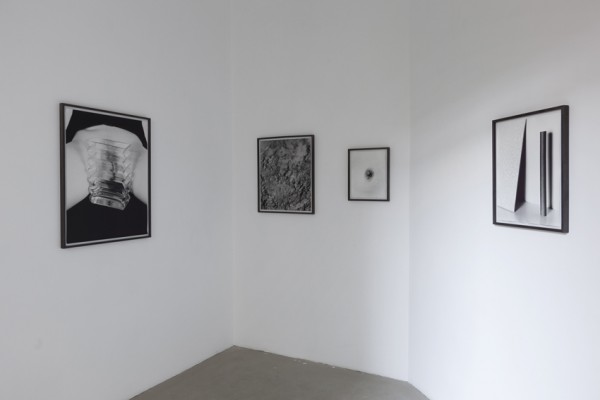
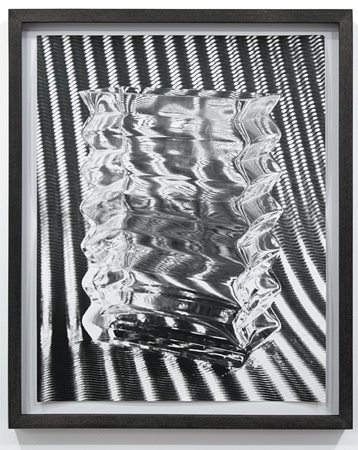
“Talia Chetrit’s second solo show at Renwick Gallery could be described as a satisfying instance of something simple done well. After all, what could be more straightforward than a group of elegantly composed, black and white, still-life studies of pattern, form, texture and light? Chetrit’s exhibition featured images of thick, bevelled glass vases placed against hard curved planes of tightly wound wire (Vase/Machine), geometric white grids casting shadows against someone’s back (Nude/Grid), and simple forms such as cylinders and flat pieces of wood making neat triangular shadows (Triangle/Tube, all 2011), all sumptuously printed in high-contrast rich blacks and crisp whites.

Spend a bit more time with them, however, and the images become more complex. Two vases are photographed upside down (Drip Vase, 2011). It’s hard to work out what they are to start with – the simple optical trick makes them anew in the mind; they look like gloopy, melting plastic stalactites. In another image, Handstand (2011), a naked woman, in what looks to be an artist’s studio, is also photographed upside down, although here she’s doing a handstand, next to one of the vessels in Drip Vase, and an assortment of other props. Hand/Sculpture (Modular) (2011) shows a hand clasping a bendy piece of tubing – is it a sculpture the hand is holding? A prop? A busted length of piping? What is it a modular part of? In a sister photograph, Hand/Sculpture (2010), a hand appears intertwined with a scrappy, twisting abstract sculpture on a plinth – an object that looks like a piece of Modernist doggerel. Perhaps the hand is trapped there, or perhaps – given the strangely low angle at which it meets the sculpture, as if sneaking up on it from below – the hand is trying to steal the object on the plinth. The wrist and arm the hand is attached to look strangely elongated, an awkward angle that gives you pause to wonder whether the hand is real or not. In contrast to the vases, sculptures and human forms, Dirt (2011), as the title suggests, depicts a patch of soil, a shallow triangle shape dug into part of it, next to a smaller triangular shard of flinty material. Chetrit’s images start to cross-reference each other; the same vase appears in different photographs, along with repeated forms such as tubes and triangles. You start to notice how materials that play at being transparent – thick, sculpted glass or geometric grid – are distorting the background they’re placed in front of, warping the regular patterning of metal or imposing itself across the contours of a back. These photographs are plugged into each other, generating a network of tiny signals.

What particularly intrigued me about this group of images was how that network of signals was not confined to formal relationships between the objects depicted in the images. There appeared to be a subtle semiotic layering occurring; allusions to art history but also commercial photography. Chetrit’s images speak to the history of still life, and also the objectified representation of women within the avant-garde moment of early 20th-century Surrealist photography (the ghost of Man Ray is clearly present, especially in Nude/Grid, as is László Moholy-Nagy in Chetrit’s approach to photographing objects). Looking at the high-contrast printing, and the way they’re presented in simple metal frames, I also couldn’t get away from thinking about how tasteful they look. And just as you arrive at that word – tasteful – that’s when Chetrit’s work reveals further levels; the high-contrast prints, the female hands and the mute, enigmatic compositions (in particular, the hands holding sculptures) remind me strongly of fashion photography, or of 1980s Athena posters – black and white, hard-edged, cool yet mysterious. These are still lifes of both objects and styles, vanguard Modernism and high-end perfume ad all rolled into one. Chetrit’s photographic still life studies intersect with historical allusion and commentary on how photography’s stylistic codes get absorbed into a mainstream of visual representation. Did I say something about these being simple?” – Dan Fox for Frieze.

Florence To

dazzle_700
Foveastills_700

Florence To

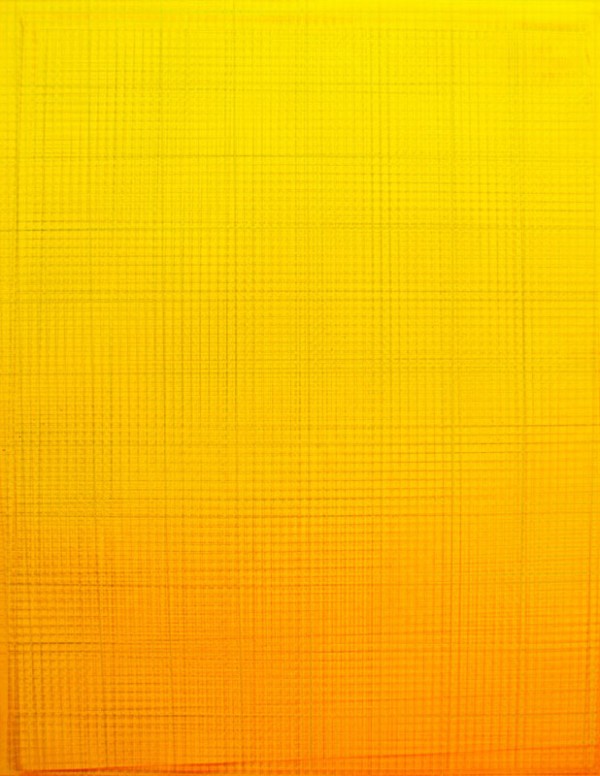
Work from Fovea by Florence To

“”Providing a constant background upon which a stimulus can be superimposed: an absolute threshold upon the dark-adapted state, a differential threshold upon the light-adapted state. Hecht had written equations for the steady state; and by assuming that the visual threshold, absolute or differential, corresponds to a constant increment in the rate of breakdown of photosensitive material, he could extend his treatment to departures from the steady state the phenomena encountered in brightness discrimination, the response to flickering light, and the absolute threshold.

Before he started any experiments in human dark adaptation, visual acuity, intensity discrimination, or colour vision, he had already published theoretical approaches to these functions on the basis of existing data. Having repeatedly been frustrated by incomplete or inadequate information, he was determined that measurements from his own laboratory should be precise and exhaustive.”” – Florence To

via Triangulation Blog.

Jessica Mallios

001_002
001_005
001_016
001_008
001_019

Jessica Mallios

Work from Disassociate

“This work focuses on the phenomenological aspects of photographic language. These photographs examine the construction and manipulation of objects and surfaces through experimentations in the studio and the field. They incorporate painting and sculptural references in both constructed and found subjects. They use reductive framing to disorient the viewer and perform faux techniques, sourced from commercial markets, to call attention to an object’s contradictory presence. I’m interested in producing works that misrepresent the subject and keep the viewer in a suspended state of recognition.” – Jessica Mallios