Pamela Rosenkranz


Pamela Rosenkranz

Work from her oeuvre.

“Rosenkranz is interested in evolutionary mechanisms and processes, that seem to be the basis of how people are organized in a society. The artist is interested in the differences between body and mind, in human interactions, and in men’s relationship to nature. Rosenkranz explores these interests, utilizing scientific explanations that contradict our current notions of what it means to be human.

Rosenkranz uses a variety of materials. The emphasis is on the naturalness of these materials, and to that end even PET (Polyethylene terephthalate) can be seen as a natural product. Even though they claim to be the most evolved of all organisms, human beings are just one of many elements on our planet. Everything created by humans is natural; in this way, the concept of “artificiality” is called into question. Rosenkranz’ thinking is influenced by a materialistic perspective that calls the subject into question. The artist annuls identity and gender differences; her position as a woman is likewise rendered meaningless.

Rosenkranz’ works explore the various ways in which we define ourselves as human. They address fundamental human qualities, highlighting these and placing them in a partly new, partly familiar context. Even though the exhibition consists of individual works, it can be understood as one overall examination by Rosenkranz in which, themes and elements recur throughout the rooms of the Kunsthalle. In the first space of the Kunsthalle, the artist has installed a sink, which is the same as those found in the restrooms of the Campari Bar located in the adjacent rooms. The faucet is open and blue colored water flows permanently; its splashing against the ceramic sink makes a sound which superimposes itself upon the silence in the rooms. Strolling through the rooms, visitors will realize that the color blue is a recurring element. The evolutionary perception of blue within our visible spectrum was created at a pre-evolutionary stage when creatures only existed under the sea. Our sensitivity to this color has barely changed throughout the course of the history of humankind and we are still highly sensible for the wavelengths of blue than of all the other colors of the visible spectrum.

On large-format prints behind plexiglass, Rosenkranz presents monotone blue surfaces based on the IKB works (International Klein Blue) by Yves Klein that were created at the end of the 1950s and downloaded by her as JPEG’s from the internet; for these monochrome paintings produced by the French artist, he invented and patented a specific blue tone, which increases the brilliance of ultramarine blue. The color of Rosenkranz’ pigment inkjet prints is based on the data information which contains colors that are subject to prevailing light conditions, scan settings, or photochemical conditions, etc. The prints are hand-mounted and due to the manual operation bubbles arise undermining Yves Klein’s idea of an intangible heaven, and the immateriality of the sky: as the bubbles become objects they challenge the concept of air being immaterial.

In contrast with the color blue as Wild Blue Yonder (the fascination with the vastness of the sky) the color red represents physicality and the body. The color of blood next to genetic skin pigmentation is primarily responsible for skin tone. The red also shines through the white walls of the Kunsthalle, which have been painted with standard dispersion mixed with fake — or real — blood. A bottle of SmartWater filled with a liquid is set close to the pink wall. Is the content water or sillicon? Is it skin color? The work does not spell it out, and yet it refers to our desire to look fresh and eternally young. It is about the preservation of beauty, of purity as physical criteria of perfection. Health and fitness are two issues often recurring in Rosenkranz’ exhibitions, and here they come to the fore once again.

Another new work in the exhibition focuses on the influence of color in decision-making. A seemingly random sequence of gigantic expanses of color is projected in the two last exhibition spaces of the Kunsthalle. The projection is accompanied by a computer-generated voice called “Heather”. This voice repeats the words “Yes” and “No” – agreement and rejection – in every conceivable intonation available for the range of meanings offered by the voice program. At this point this work refers to a specific way in which colors have been used in the domain of science, especially in the so-called Brainbow project. This specific color spectrum is used by scientists and was developed while conducting experiments on mice to make their brain activity visible. The RGB color spectrum was used to color-code their neurons. Rosenkranz’ project in turn, is interested in knowing how existential human emotions can also be color-coded and how they can then be contemplated and categorized in a manner that is strictly analogous to colors.

Pamela Rosenkranz’ approach is not based on a scientific interest as such. She works with findings and speculations culled not only from the natural sciences, but also from politics, history, philosophy, and popular culture. The exhibition Feeding, Fleeing, Fighting, Reproduction therefore can be thought of as a self-contained project that revolves around the conflict between scientific description and subjective experience. Furthermore, she also criticizes a conception of art, which puts the focus on the artist’s subjectivity, and she does this by confronting statements and explanations from contemporary science with prevailing notions of art, thereby radically negating the use of terms like ‘experience’, ‘identity’, and ‘gender.’”- Kunsthalle Basel

via Contemporary Art Daily 

Alex Da Corte


Alex Da Corte

Work from his oeuvre.

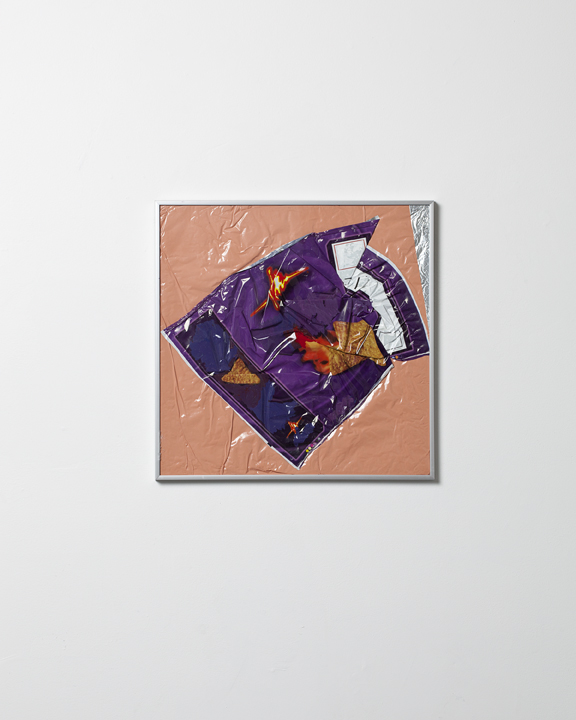
“Mr. Da Corte’s work revisits the objects and fascinations we’ve left behind by using low-cost items the way Jim Hodges uses bodily fluids. However, while Mr. Da Corte references Abjection, and artists like Mr. Hodges and Eva Hesse, the approach is different.

“It’s kind of that romanticism with objects,” said Mr. Sheftel, “but in a different way. Rather than bodily fluids, [Mr. Da Corte’s] looking at things like shampoo. Shampoo is a really intimate substance. We put it on our bodies, it seeps into us. It gets under our skin. So it’s not really abjection, but it’s related—it looks at the things that are close to us now. It’s a different conversation when Alex is going to the dollar store in Philly and using that as his art supply store and looking at off-brand soda, shampoo, and low-level items that engage in a conversation about class and race.”

“I am attracted to these items for their accessibility,” Mr. Da Corte told Gallerist via email. “Despite their common place, they offer promises of escape and pleasure through smell, color and texture. Framing shampoo, removes its utility, allowing me to reconsider it as a voyeur and scientist.”

Mr. Da Corte’s upbringing also heavily informs his work. “There’s a Philly bent too, I think,” said Mr. Sheftel. “Looking in Fishtown, Philadelphia. He grew up in Camden and went to Philly for school.” Mr. Da Corte, who divides his time between New York and Philadelphia has an upcoming solo presentation at its Institute of Contemporary Art.”- Gallerist NY

Katie Paterson

Katie Paterson

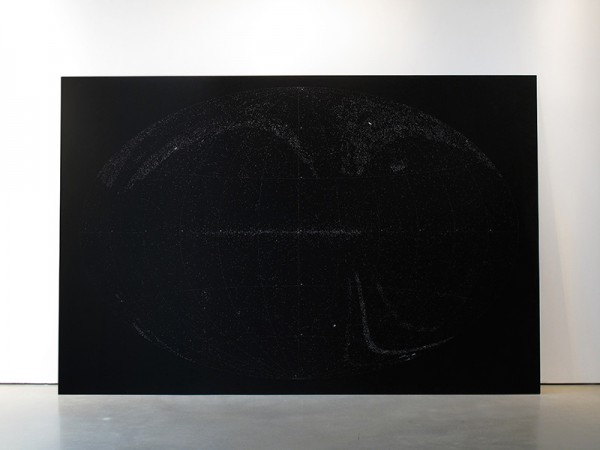
All the Dead Stars.

“A map documenting the locations of just under 27,000 dead stars – all that have been recorded and observed by humankind.” – Katie Paterson

Romaric Tisserand

Romaric Tisserand

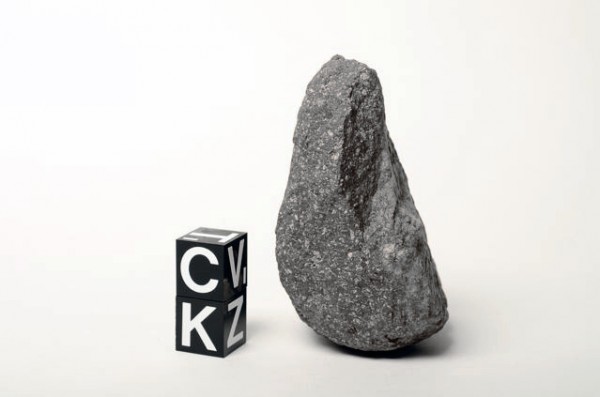
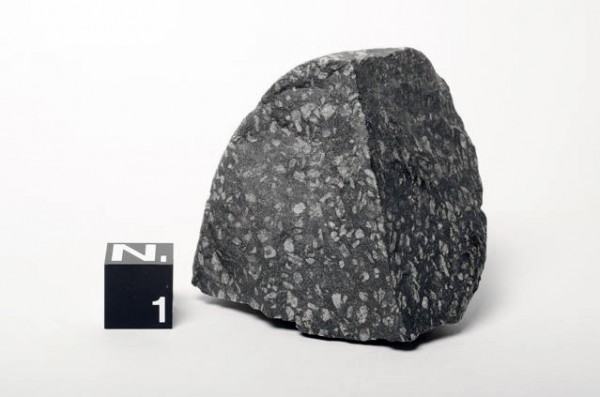
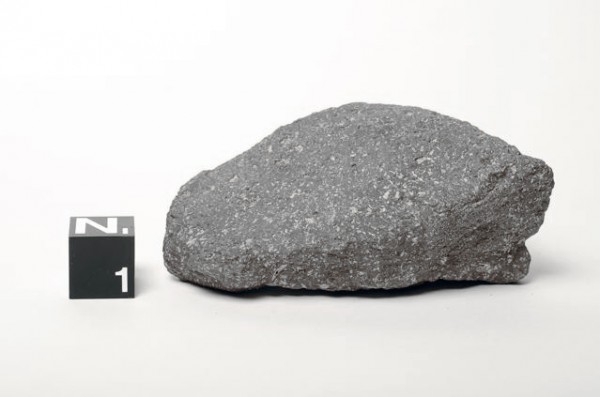
Work from Space Rocks.

“Photography has born as a scientific reproduction tool of the reality and has been the strongest and the largest medium to construct modern history of the mankind but the statut of the photographic document as lost its authority with reality in its new relation with the digital world. Since photography switch into digital era, the truth we used to attached to this medium has disappeared. There is no more negative to prove chemically and mechanically that an event has really occurred. The change of the nature of photgraphy into an image brought deep distance between the fact itself and its representation.

Without image there is no event and any event could be built with images. Mass Consumption of images has created images to serve specific goal and to be recognized, modifying the production process from « taking » to « making » a picture. The space conquest have been focused all its energy in the construction of an heroic and mythic media exploit. Without any image of the first moon landing on the moon, nobody would have believed it…” – Romaric Tisserand

Miki Kratsman

Miki Kratsman

Work from Targeted Killing.

“”Targeted Killing”, the new project Miki Kratsman is working upon, examines the term “focused foiling” coined by the IDF (Israel Defense Forces). In the course of the Israeli-Palestinian conflict, the IDF uses this term against those it considers proven to have intentions of performing a specific act of violence in the very near future or to be linked indirectly with several acts of violence thus raising the likelihood that his or her assassination would disrupt similar activities in the future. The photographs in this series were shot using a special lens, which is commonly used by IDF UAV (unmanned aerial vehicle). The outcome is an illusory moment – an image of the seconds before a targeted killing. The photographs draw on the images disseminated by the IDF via the media to the Israeli public in the aftermath of events of this type.

All the photographs in “Targeted Killing” were taken from Mount Scopus, located in northeast Jerusalem and overlooking the Palestinian villages surrounding it. Mount Scopus has been strategically important as a base from which to attack the city since antiquity, as a result of the 1948 Arab-Israeli War, parts of Mount Scopus became a UN protected Jewish property exclave within Jordanian-occupied territory until the Six-Day War in 1967. Today, Mount Scopus lies within the municipal boundaries of the city of Jerusalem. All the photographed characters in Kratsman’s “Targeted Killing” are innocent Palestinian civilians going about their daily lives. However, the way they are being photographed echoes that of “suspects” and so evokes and reinforces this image in the eyes of the viewer.” – Miki Kratsman

via Mrs. Deane.

Brush it in

Brush it in at Flowers East, Curated by Lorenzo Durantini, featuring Joshua Citarella, Fleur van Dodewaard, Christiane Feser, Darren Har vey-Regan, Antonio Marguet, Anne de Vries.

“An ever secretive and loosely defined field, digital post-production has invariably sharpened the crisis of faith in photographic representation. This loss of faith has levelled the playing field; all manipulative strategies are at once simultaneously expected and disavowed. The artists in this exhibition are instigating what could be called the beginnings of a post-Photoshop engagement with photography. What was once a novel and paradigm shifting digital process has become a banality; it is used everywhere and by everyone. Brush it in hopes to further dismantle the mechanism of image manipulation by highlighting its relationship to sculptural and material interventions.” – Lorenzo Durantini

Csilla Klenyanszki

Csilla Klenyanszki

Work from X Marks the Spot.

“X MARKS THE SPOT” is an epilogue or even more, a new chapter that follows my graduation project “My logic is gone or did I just find it? …because nothing is more abstract than our own reality.”

It is all about looking for the hidden possibilities related to form and function and my own fantasy. My inspiration is my house and my environment (it’s kind of a kitchen chemistry), which becomes a playground. I like to work with common objects and discover their possibilities, give a new function for them. I try to play with the borders of the nonsense; something that looks foolish at the first place can always find its right place at the end. But like in every game and story it is impossible to tell what will happen and how the end is going to be. The whole project can become a tea party or a toy story. It doesn’t really matter how we call it, because eventually it is just a game, which is about the fact that you can enter another world…” – Csilla Klenyanszki

Hilary Lloyd


Hilary Lloyd

Work from her oeuvre.

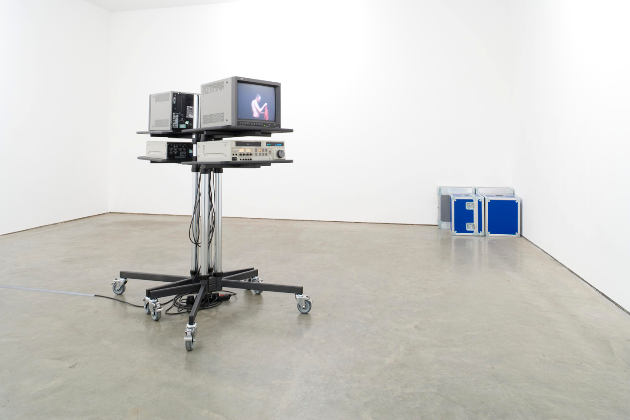
“Hilary Lloyd’s work is predominantly realized through the presentation of sequential images, either within video or slide installations. This work is rooted in Lloyd’s observation of people, objects and spaces. Each individual piece portrays its subject in isolation: men working at an outdoor carwash in Sheffield, UK (Car Wash, 2005); the iconic DJ Princess Julia playing records at Queer Nation in London’s Kings Cross (Princess Julia, 1997); a motorway construction site in Glasgow (Motorway, 2010); a young man taking off his t-shirt (Colin #2, 1999). Lloyd’s camera acts as a voyeuristic gaze that addresses minimal, often repetitive movement and banal materiality. The resulting compositions appear at times staged and at others record the world from afar, examining the phenomenological interplay between the honed theatrics of physical activity, and the immaterial conditions of seeing and being seen.

The equipment used to display these images (monitors, projectors, stands and cabling) form a highly visible and fetishized aspect of Lloyd’s installations. Similar to the awareness of the body’s movement in space induced by minimalist sculpture, the amplified presence of the technologies of audio-visual display compels a physical dimension to the act of looking. Viewers are placed within an equivalent ‘scene’ of experience to that which exists between Lloyd and her subjects – a scene mediated by codes of posture and desire.” – Artist Space


Marius Engh


Marius Engh

Work from his oeuvre.

“A carpet turned painting, turned envelope, turned drawing, turned curtain.
A monument turned subway station, turned photography.
A throne turned drain, turned crooked mirror.

This is Marius Engh’s fourth solo exhibition at STANDARD (OSLO). Other recent solo exhibitions include “My Target Is Your Eyes” at Galleria Gentili, Prato,”An Aggregation of Adversary” at Layr Wuestenhagen, Vienna; “Exhume to Consume” at Supportico Lopez, Berlin; and “The Center of the World” at Preus Museum – National Museum of Photography, Horten. Marius Engh’s works have previously been included in exhibitions at Kunsthall Oslo, Oslo; Museum of Contemporary Art, Chicago; Westfälischer Kunstverein, Münster; Bergen Kunsthall, Bergen; Kunsthalle Bern, Bern; The Bruxelles Biennial, Bruxelles; and Witte de With, Rotterdam.

This exhibition concludes seven years of program in Hegdehaugsveien 3. A publication documenting the 56 exhibitions and discussing the architecture of Knut Knutsen, who designed the building, will be launched in November.”- Standard (Oslo)

via  Contemporary Art Daily 

Ulrich Vogel

Ulrich Vogel

Work from his oeuvre.

“..Right up to the present day Ulrich Vogl‘s work has been defined by an approach which is both conceptual and experimental. The sources of inspiration are often the materials themselves: everyday objects such as slide projectors, construction lamps, cardboard tubes and aluminium foil, or materials which carry a hint of “special effect” within them
from the outset. Vogl “borrows” these glittering and iridescent materials from the world of theatre and show business.
Whether they are simple, everyday materials or special ones: they are always presented in an unusual context and
processed in unexpected ways, using Vogl’s own distinctive style.

The result of this process-based and analytical approach is that each work stands for its own and develops its individual effect space. In the process, the exterior material forms also change continously. Although Vogl’s work is based on drawing, from one instance to the next it may express itself as a room-filling installation, a film or an object. Drawings in the classical sense – works on paper – are now virtually non-existent in his work. The expression “Extension of drawing”, already the title of an exhibition and a catalogue, epitomises Vogl’s approach. Using sign and drawing as a starting point, he extends his work into other spheres…” – Julia Trolp

via Triangulation Blog