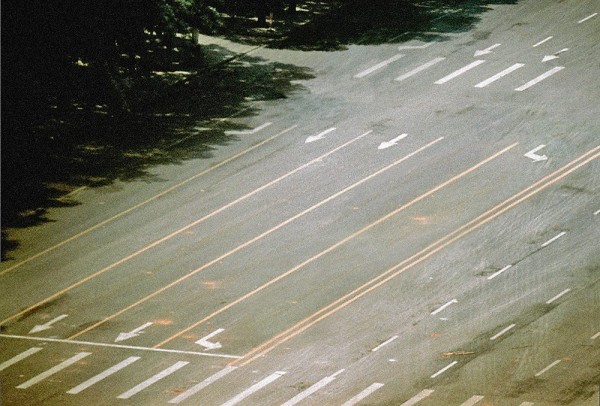
“…His work is by turns humorous and piteous, elegiac and ironic, and cumulatively very powerful for he has shaped an essay from aesthetically elegant, delicately nuanced pictures that are pitch perfect, in the spirit of the American West and in keeping with its long history of fine photographs.
Smith could have recorded a failure of the imagination or the ruin of desert ecologies, but he was after something much more interesting and amorphous—an intersection of human, climatic, and geographic realms as yet without a name. Such an orderly, labor-intensive, wide-ranging application of knowledge and engineering to the land might be considered some novel and rampant form of garden if houses and streets were not its principal rationale, but since they are, this collocation is usually termed a suburb or a subdivision. Surely these are inadequate terms for Smith’s subject, which, in its totality, is a vision of the future of our planet, of the time when man-made environments no longer just spread out in widening circles around cities and encroach like weeds along the highways, but hold sway everywhere, carpeting the land from valley to mountain and from sea to sea.” —Maria Morris Hambourg
“Fisk-Vittori creates work about everyday objects and environments. Arrangements of objects are presented as photographs and installations that question the function, meaning, and history surrounding that object and display. The arrangements feature both deliberate and casual formation that satirize advertisements and lifestyle magazines. Her interest lies in the relationship between art and design, and the parallel between the gallery and ordinary spaces such as the living room. The plant life and natural elements in her work emphasize an awkward relationship between the natural and human-constructed worlds. Familiar objects are presented in situations that reveal material essence and create new visual conversations” – via WIPNYC.
“I believe that every situation, thought or object carries a good work of art in itself. I search for this artwork by going back to the basis and to observe from that point an inner contradiction and to find a simple solution for this contradiction. Subsequently I use the medium most suitable for that concept.” – Helmut Smits
“…Much of Ader’s work centered on the simple act of falling. Fall I (Los Angeles), 1970, documented in black and white, Conceptual-style photographs, finds the artist sitting in a chair atop the roof of his California bungalow. In the sequence that follows, he inexplicably loses his poise, awkwardly rolls down the roof and plummets into the bushes below. Similar pieces find the artist biking into a canal, Fall II (Amsterdam), 1970 and loosing his grip on a tree branch, Broken Fall (Organic), 1971. By removing these perilous moments of action from any motivating context, Ader invites two almost mutually exclusive possibilities for interpretation. The first focused on the irreducible physicality of his performance; the artist, in experiencing the corporeal threat of a particular situation, offers his body as the finite producer and bearer of meaning. That is, in the Modernist- Materialist tradition of “it is what it is,” the body becomes the ultimate interpretive measure. Although Ader was unusually guarded in speaking about his work, he pointedly denied this perspective as his sole intent: “I do not make body sculpture, body art or body works. When I fell off the roof of my house or into a canal, it was because gravity made itself master over me.” Thus Ader opens his work to a second group of more literary possibilities: metaphor, allegory, irony and the corresponding narratives of the self. His falls make themselves available as symbols ranging from subjective failure and dissolution to that of a theological order.
Ader repeatedly enacts the Cartesian contradictions between the experience of bodily pain and the intersubjective production of consciousness. In his essay, “On the Essence of Laughter,” French poet Charles Baudelaire discusses the comedic convention of falling in terms of this experience of fragmentation: “The man who trips would be the last to laugh at his own fall, unless he happens to be a philosopher, one who had acquired by habit, a power of rapid self-division, and thus of assisting as a disinterested spectator at the phenomenon of his own ego.” Thus for Baudelaire, falling can engender a sense of doubling. A person who has tripped and is falling is losing the self-possession of consciousness and becoming an object. To laugh during a fall is not merely to imagine yourself as another spectator, that is in another subjective state, but to recognize the smug folly of consciousness in facing its own material constitution.
In some sense, falling, as a forced union of mind and matter, could be seen as a rehearsal for the more immutable event of dying. This analogy is palpable in Ader’s short film Nightfall, 1971. Shot in his garage-studio, the camera records the artist painstakingly hoisting a large brick over his head. His figure is harshly lit by two tangles of light bulbs. He suddenly loses control of the brick,crushing one strand of lights. As he again lifts the brick, allowing tension and dread to accrue, the climax seems inevitablethe brick will (and does) fall and terminate the camera’s remaining illumination. Here the film abruptly ends with the irrevocable logic of consciousness extinguished. This simple cause and effect sequence performs a narrative that is startlingly incongruous with its conclusion. The brick is witnessed demolishing the lights, but that seems to be an insufficient explanation for the void of meaning it leaves in the wake of the film’s endingthe blunt finality of another’s death, by implication, creates a similar scramble to find language for a disturbing rupture…” – Brad Spence
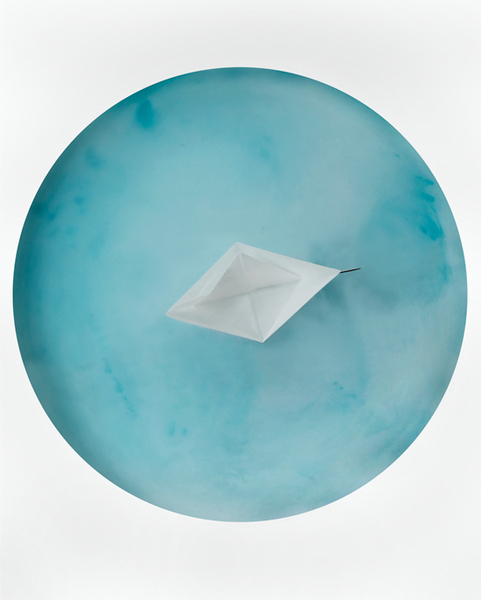
“This body of photographs, entitled Elsewhere, is an attempt to reconcile my physical surroundings with the fears, fascinations, curiosities, and daydreams occupying my mind. The photographs and constructions consist of common artifacts, materials, and scenes from everyday life, which have been rearranged and reassembled into various forms, patterns, and illustrations. The images aim to examine the distance between where my mind wanders to and the material objects that inspire those fixations. Equally important in this work are the ‘big picture’ and the ‘little things’—the mundane and relatable artifacts of our daily lives, and more mysterious notions of life and existence. This work is about creating order where we expect to find randomness, and also hints that the minutiae all around us is capable of communicating much larger ideas.” – Kevin Van Aelst
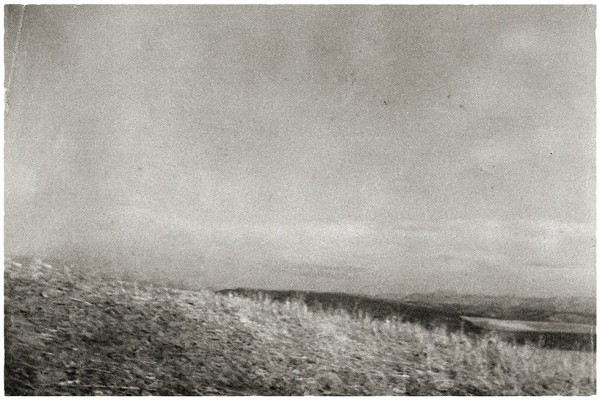
Work from Fatescapes features images from the canon of photographic history with the subjects removed.
“In my last work I am interested in historical contexts of human history, widely recorded by photographic medium in the last three centuries, I am interested in the medium itself, in its representational function and image as such.
Getting off the main motif from the historical documents, from the photos which became our culture heritage, our image bank, a memory of nations, a symbol, a propaganda instrument or an example of some kind of photography, a template for making other images, in the time when almost all these photographs were reinterpreted by many authors of following generations from many points of view, with the knowledge that some of them were staged or their authenticity is disputable, I place questions about their sense, their meaning, their function and their future. I am interested in possibilities of photography in the time when analog process is over and I am asking what is next in the world waiting for change…” – Pavel Maria Smejkal
“As an American with typically mixed bloodlines, I started this project to explore the many places in Europe where I have ancestry and their influence on me as an artist and a person. The images in this series have emerged from my attempt to unwind the conflation of my lineages and to get to the center of my thoughts and feelings about freedom and rootlessness, culture and cultural amnesia, and above all a desire to connect to something more profound than the modern American experience.” – Brea Souders
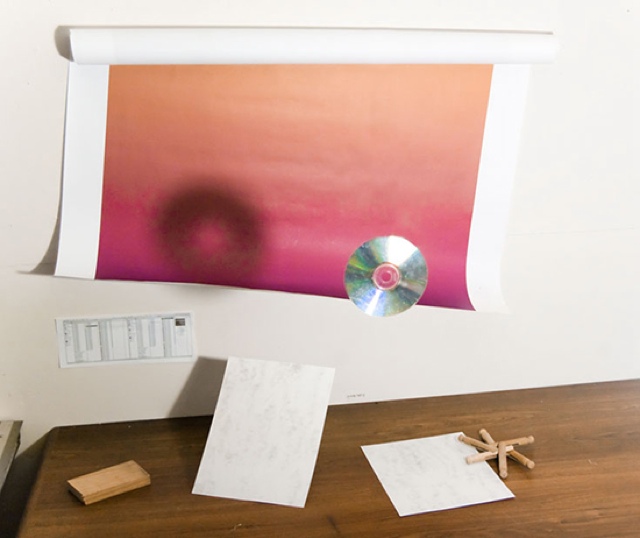
As a retrograde homage to net artist Rafaël Rozendaal, Anges Bolt recreated 5 of his flash sites through the use of physical props in the studio. This backwards translation of web to world is an ironic, pithy, and simple twist on web based works that places the internet in a new context. This simple gesture I find to be a remarkably clever recontextualization of Rozendaal’s works. The sites are: jellotime.com, popcornpainting.com, muchbetterthanthis.com, tothewater.com and colorflip .com.
The work of Ceal Floyer is nothing if not succinct — sometimes it can be pretty hard to spot: the image of a light switch, for instance, projected on to the wall of a gallery precisely where you would expect a light switch to be. But if her work can seem minimalist, she might just as easily make something large.
Floyer’s work, in a way, distils the “eureka!” moment. It captures the crux point between expectation and fact. It exposes the flip-side of life, it plays with the absurd. It has a quicksilver conceptual wit. “There’s a fine line between making sense of the world and making nonsense of it,” she says.” Rachel Campbell-Johnston, South Bank Show Breakthrough Award, Sunday Times, 6 January 2006
The work of Ceal Floyer is nothing if not succinct — sometimes it can be pretty hard to spot: the image of a light switch, for instance, projected on to the wall of a gallery precisely where you would expect a light switch to be. But if her work can seem minimalist, she might just as easily make something large.
Floyer’s work, in a way, distils the “eureka!” moment. It captures the crux point between expectation and fact. It exposes the flip-side of life, it plays with the absurd. It has a quicksilver conceptual wit. “There’s a fine line between making sense of the world and making nonsense of it,” she says.” Rachel Campbell-Johnston, South Bank Show Breakthrough Award, Sunday Times, 6 January 2006″ – via Lisson Gallery.
“My work explores culturally accepted and media supported perceptions.
I manipulate found imagery and objects in order to visually analyze the unwritten rules and hidden messages associated with modern American life. By focusing on one aspect within a specific, media driven ideal, I examine the psychology behind these conventions and how they may alter our expectations. This act provides an ambiguous space in which the viewer is invited to consider the cultural expectations of social status, gender roles, age, race, morality, tradition, and sexuality.
This sociological work is a manifestation of my own experience. I grew up in a relatively standard, pre-internet, blue collar household inundated with images that were delivered though the TV and local newspaper. These messages symbolized “the better life” and “how it should be”. Since the development of the world wide web and the expansion of media into every nook and cranny of our daily lives, we now receive far more visual information than ever before. It is through this barrage that we receive cues, as a society, as to what is acceptable and what is not. I am intrigued by how these messages can manipulate us culturally.
…
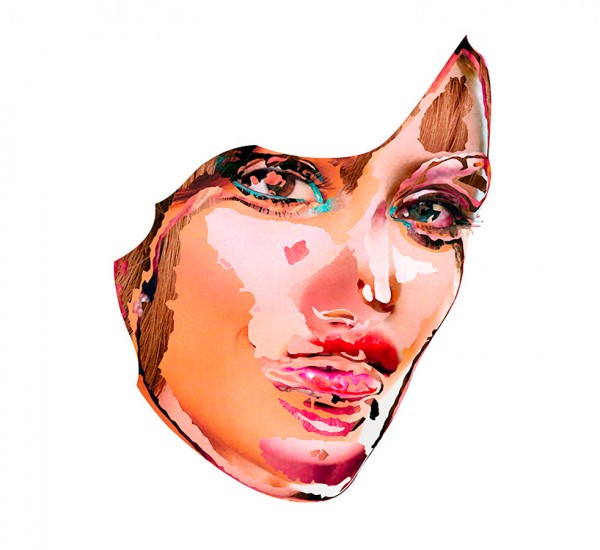
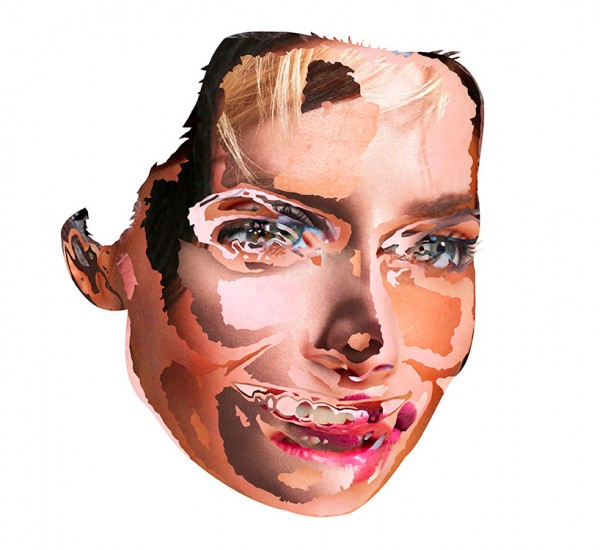
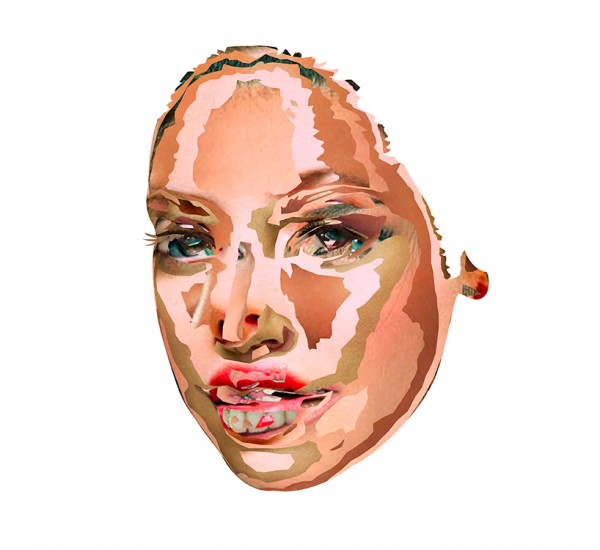
The models displayed on the covers of women’s fashion magazines are presented as the epitome of modern beauty. Some women attempt to emulate the attributes of these cover models by using various products and even through surgical means. It is not unusual for a woman to request the hairstyle of this singer from their stylist or even the lips or nose of that actress from their surgeon. If we can pick and choose specific features and re-combine them as we please, is beauty simply a collaboration of features? Is loveliness merely a sum of our parts?” – Lee Gainer