Viviane Sassen


Viviane Sassen

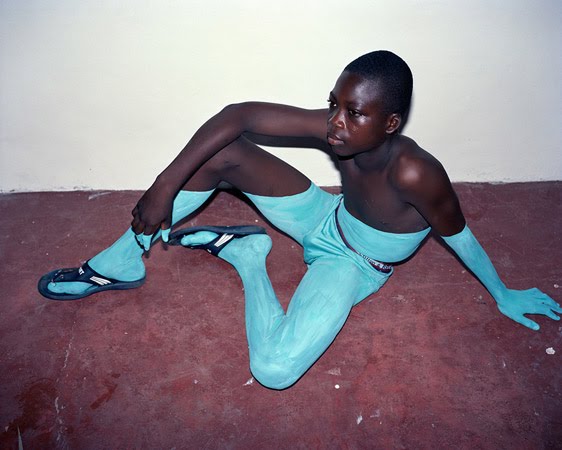
Work from Ultraviolet.

Sassen’s work is on view at Danziger Projects until April 10th.

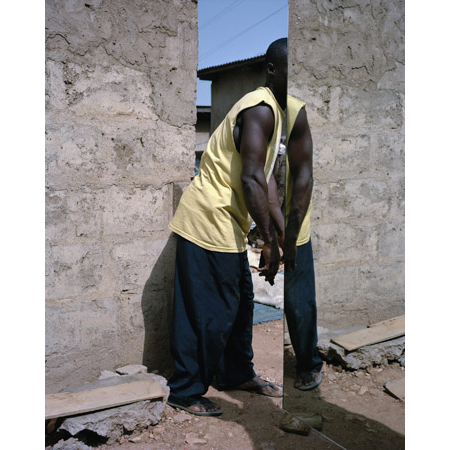
“In this work she has established a visual vocabulary that is stylized, symbolic and mysterious. Her aesthetic combines a sense of childhood memory, where scenes are crystallized and highly saturated with color with a photographer’s sensitivity to the body and surface. The strong presence of shadow and darkness in Sassen’s images provokes more questions than answers. If there is such a thing as magical realism in photography, these photographs embody it.

These portraits combine the spontaneous with the staged, and often come out of ideas that Sasson carries in a sketchbook of inspirations for future compositions. These ideas are shared with her subjects as the starting point for each photograph. Critic Vince Aletti commented, “Her photographs tease convention but with witty and unexpected results, partly because her subjects are all young Africans who seem to have enjoyed collaborating with her. She tends to treat the body as a sculptural element — a malleable shape that combines with blocks of shadow and bright color in arrangements that sometimes read like cut-paper collages, bold and abstract but full of vibrant life.”” – via Danziger Projects

Rafaël Rozendaal


Rafaël Rozendaal

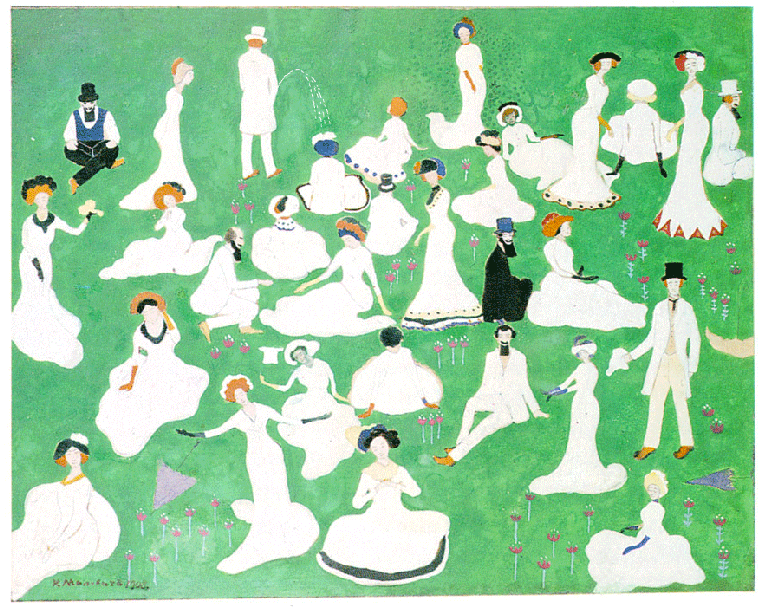
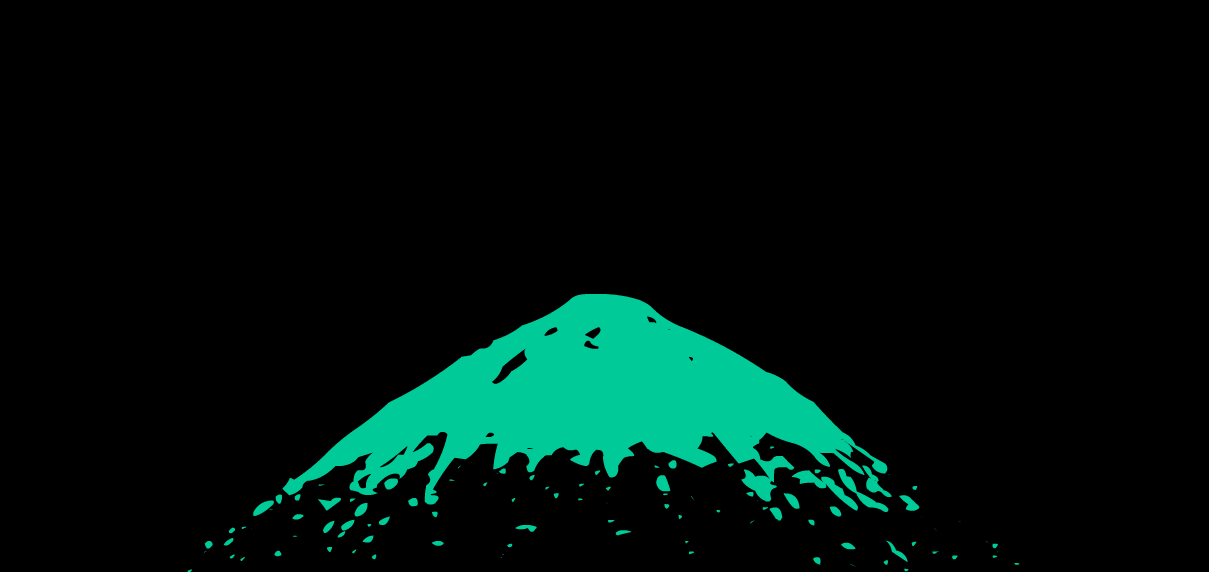
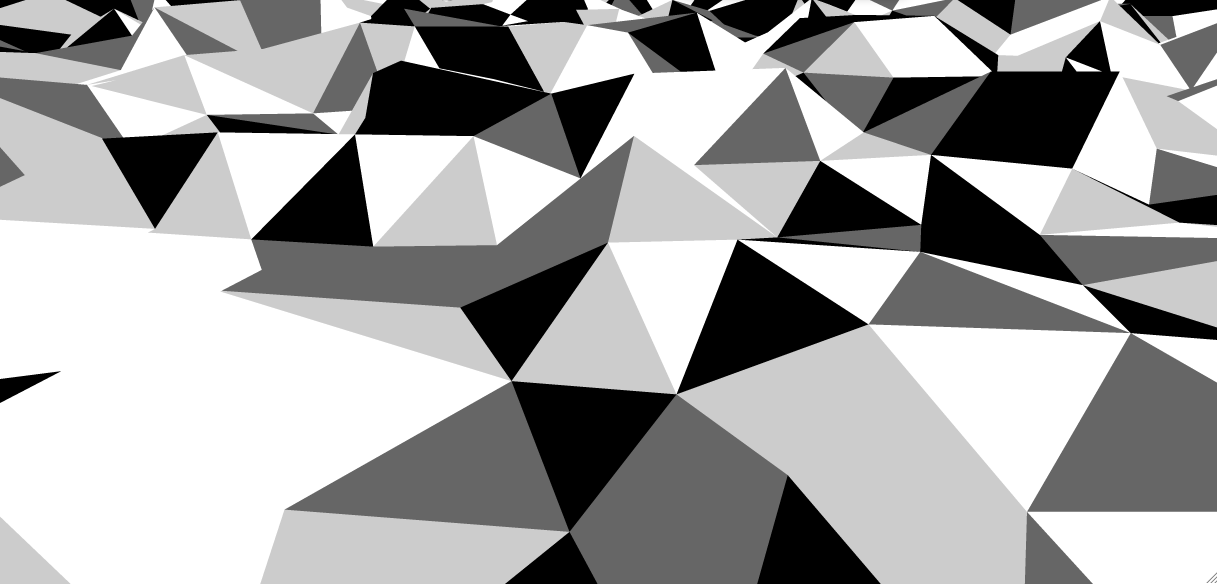
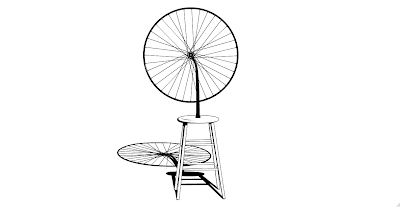
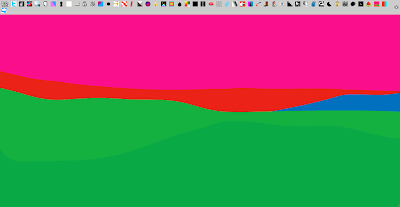
Work from http://www.leduchamp.com/, http://www.kazimirmalevich.org/, http://www.vaiavanti.com/, http://www.hotdoom.com/, and http://www.fromthedarkpast.com/.

All of thee works are interactive web-based works, so the screen captures above are not representative of the full depth of each piece. Go see them.

“Richard Brereton: As your online work is not for sale, how do you make a living from what you do?

Rafaël Rozendaal: My online work is for sale. The collector buys the work with the domain name. Domain names are a real commodity so selling a website as an art piece is not that crazy.
The owner also receives a certificate which is a contract stating the website must remain open to the public.
It is a cool kind of ownership, the owner sees the exact same piece as the rest of the world but their name is in the title bar of the website. “collection of …”

What compels you to produce your work?

There are many reasons, curiosity is a big part of it. I get an idea and it is a challenge to get it out of my brain. It’s a scary process, because I have no clue how to do it and if it will work. I don’t know if it will feel good. It’s not that I am trying to get a message across, but i want to achieve the best possible form. Making popcorn look and sound like popcorn even though it isn’t popcorn at all.

I make work because if I don’t I feel guilty. Because I want to be famous. Because every time I put out a new piece good things happen. I make work because it gives me a feeling of accomplishment. Because I am the boss of my website.

Do people see your work as humorous?

Humor is very broad. Humor is used a lot for self protection. You can use it to make a tragedy less tragic or to mask your opinion.
I am not sure if I really use humor in my work. I try to find a space where you are not sure. Somewhere between beauty and curiosity. I like the original meaning of the word aesthetic: to intensify perception.

Humor exists on all levels, from very primal to more subliminal. Humor and intelligence are not directly linked, they walk hand in hand and sometimes go about on their own.

Would you describe your work as absurd?

To me one of the most absurd things in life is that people need so many things just to function. I wish I could walk around with empty pockets but you always have to bring keys and money. It would be cool to have an assistant to carry those for me.

What makes for a perfect Rafael Rozendaal piece?

I don’t think perfect pieces exist, I’ve never seen one. I always enjoy retrospective exhibition of dead artists. I enjoy seeing all the works and the trial and error throughout the artist’s life. Van Gogh is a perfect example, he struggled so much and a lot of paintings are mediocre but every now and then he achieves critical mass.

I confess I wasted several minutes unraveling your Papertoilet.com, I was slightly hoping for a different ending, do people ever complain about your work?

Exactly that piece gets a lot of comments, people want a different ending. Movie makers must get that so much, “it was great but why did the girl jump off the bridge?”
It’s always flattering knowing that people care but I’m so happy I’m the boss of my website, I get to do what I want to do. I can’t imagine negotiating with actors and producers and studios when what you want is completely irrational and nonverbal. (If you run out of paper on papertoilet.com, double click for a new roll.)

OutInTheWind.com is very haunting, is it about death?

My work is not “about” something. If it was, it would have a short explanation next to it, telling you what to think or feel when you watch it. I hope that my pieces become independent entities that are part of peoples lives and can be used or seen in any way. Like having a tree in your garden.

BurningCigarette.com might make people want to smoke, do you smoke?

I hate cigarettes more than anything in the world. I always have. I hate their smell and I hate what it does to people. But this way we can enjoy the visual beauty without the side effects.

I once put OnAHorse.com on one of my computer screens, I was tired, I noted it acted as a stimulant, like a metronome, can you tell me what other say about your work?

I’m not sure, it would be nice to ask people without me around, to get some real opinions.

I regret we won’t be including Nosquito.biz (for obvious reasons) but it did make me smirk. However AnnoyingCursor.com gave me anxiety, and when I returned to look again my anxiety returned too, is this your intention?

I honestly don’t have any intentions. I believe that the work exists without any reason other than its own existence. This is very important to me. How it resonates and what it does to people should be completely open.

What ideas have you had, but so far been unable to implement?

I want to make a video game: you walk around through different cities and landscapes and anything you touch melts. You just see two hands in front of you and the world with melted cars and trees and clouds.

Where do your ideas originate from?

I was actually thinking about this. I was running low on new thoughts so I wrote down all the places and situations where I came up with pieces. I thought I would find a pattern and then I could set up my life in favor of more new ideas. But the events and places were very unrelated.
I think it is very important for me to be bored every now and then, that’s usually when I get space in my head for new ideas.

What would make a perfect Rafael piece?

I would like to get to a point where I’ve made so many pieces that you can walk around and see something and think: thats an RR moment, another Rafael piece.

What is the ideal way you would like your work to be seen?

There is no perfect or ideal. It is like listening to songs, they can be great when jogging or in a stadium with 40.000 people, the exact same song can be great in different ways in different situations.

Do you see any commercial applications for your work?

Yes, I would love for big companies to license my work, so I don’t have to make anything for them and still get a lot of money. Just like using a song for a movie or commercial. The pieces themselves will always stay the way they are, but they can be multiplied and modified and projected in different situations. It is fine for people to take my work and remix it or whatever but companies have to pay.” – Richard Breerton and Rafaël Rozendaal for Elephant Magazine.
Hollis Brown Thornton


Hollis Brown Thornton

Work from Recent Work.

“The phrase “The Earth on the Back of the Giant Turtle” originates in Native American myth. In the story, the world is covered in water and an animal is asked to dive to the bottom of the primordial ocean to collect mud to form the dry land on the back of a huge turtle. Although this earth origin may seem silly today, the story is one in countless explanations cultures throughout history have formed defining the origins of Earth and the nature of the universe. We constantly question events happening around us and our answers are always dictated by our limited perspective, by what we know or don’t know, by being born into a culture with a dominant religious or mythological or scientific belief, and by living in a constant state of flux and, eventually, death. And it is our perspective, beliefs, culture, religion that make this turtle story seem a bit unrealistic, just as future generations will likely dismiss certain beliefs of our time. The story of the earth on the back of the giant turtle is another step in the continuously developing understanding of an ever-changing reality through science and experience, from explaining how and why the sun sets to predicting the path of a hurricane to trying to understand the growing impact of virtual reality to the potential future realities.” – Hollis Brown Thornton

Brookhart Jonquil


Brookhart Jonquil

Work from On the Einstein Podolsky Rosen Paradox (where each of the six pages of Bell’s Theorem is crumpled up identically) and Untitled (Essay Without Words no. 1 + no.2).

“Brookhart Jonquil’s work, On the Einstein Podolsky Rosen Paradox, confounds our sense of time and space, working off the assumption that crumpling a piece of paper is a singular act, performed in a specific time and a particular space. By presenting six mimetically crumpled papers (Bell’s Theorum whose content is inaccessible to us and seem like remnants of cast off ideas), one is led to question the evidence, and wonder if the same action is happening in different spaces, repetitively, simultaneously or somehow entangled.

Use Value and Access in Contemporary Art

In Das Kapital, Karl Marx makes the distinction between use-value and other, more abstract kinds of value, including exchange and labor value.1 Indeed, use-value is only one particular form of value. Something need not have use-value to have exchange value, and vice versa. Art is often seen as having no use-value whatsoever, despite typically having an exorbitant amount of commodity value. Then what does one do with art when it specifically challenges its own usefulness, incorporating materials from the so-called “useful” world? This question has been frequently raised in art history by Cubist collages, Dada and neo-Dada assemblages, postminimalist sculpture, and continues to be as persistent as ever. The artists in this exhibition enter this dialogue in their own unique ways, complicating the issue through the themes of labor, reclamation, and social critique. However, perhaps the most prescient issue they tackle is mediation’s role in how we defining value and usefulness. It is only through the distance of mediation that we can ask ourselves what these terms mean and how they apply to contemporary art. It is through the mediation of an object’s “art” status that the useful is redefined.” – excerpts from the catalog Usefulness: Construction, De-construction, Reconstruction by Cecilia Vargas and Greg Stuart

Constant Dullaart

Photoshop Wave effect applied on found image of straight sea horizon, printed on a 30 step Lenticular lens.


Constant Dullaart

Work from his epic oeuvre. Many of his pieces, including Domain Name Readymades are experiential, go to his website and explore. Three awesome pieces 1, 2, 3.

“The Dutch artist Constant Dullaart maintains a small collection of web pages — or “readymades,” as he calls them — united by their common status as empty corners of the Internet.  They are junkyards of sponsored links, error messages, and domains for sale that no one wants to buy. Dullaart keeps the links to these pages in one place with Delicious, a Website that lets registered users save bookmarks and tag them with keywords for easy retrieval. (Dullart sets Readymades apart from the hundreds of links saved on his account by tagging them “readymade.”) Delicious is a tool designed to help its users bring order to their online experience; Dullaart’s Readymades represent a punk misappropriation of the site to track the chaos of the internet’s misfired synapses.

Several of Dullaart’s Readymades are “link dumps” — domains registered with the purpose of aggregating cheap ads rather than publishing useful content. Some of the services offered through the sponsored links may be tenuously connected to the search terms brought the user there, or associated with the words in the URL. For instance, www.baddomainname.com includes links to domain registration services and, less explicably, to law firms, while the links at www.hopeless.org suggest suicide prevention counseling. Dullaart’s selections also include squatted domains, sites bought for later resale. www.1nt3rn3t.com andwww.theinternets.com have yet to find takers.

Found media are a favorite subject of Internet artists, who often evoke the anarchy of the Web by sampling oddities from its less traveled paths. Many of Dullaart’s peers seek out specimens of “dirt style,” a term coined by artist Cory Arcangel to describe media that look naïve, crude, or messy.  (An early project in this vein involving the selection and display of entire sites was Alexei Shulgin’s WWWArt Awards, 1995-1997, which the Russian artist bestowed on “web pages that were created not as works of art but gave us definite ‘art’ feeling,” i.e. amateur designs whose awkward juxtapositions yielded uncanny effects.) Dullaart’s Readymades, however, demonstrate his interest in what might be called “default” style – the bland tables of sans serif text and soulless stock photography that frame ads for some of the most common search terms (auto insurance, cheap airline tickets, pornography), baring the underbelly of the internet’s popular use.

But Dullaart¹s Readymades are more than a formalist exploration of the Internet at its most banal. They are also a study in the relationship of the index to its referent, an issue that Rosalind Krauss connected to the readymade in her 1976 essay “Notes on the Index, Part 1.” Krauss defines indices as “the traces of a particular cause, and that cause is the thing to which they refer, the object they signify.” She offers footprints and shadows as examples; the domain name would be an analogy to such indices in the internet, since it marks the online location of the site that appears in the browser window below. In Readymades, Dullaart has selected sites where the URL’s content occupies the position of the referent, rather than serving as a place marker. They are domains that someone has staked out as an empty lot, or that generate a metonymic web of sponsored links. His Readymades are sites where footprints come before the feet. 

In his Readymades Dullaart turns Delicious into a means of display, as many artists have done with other social media, including blogging platforms and Flickr, the photo sharing site. It’s an exceptional use of the service; like his internet-savvy colleagues, Dullaart primarily uses Delicious to accumulate sources of inspiration. “Contemporary Semantics Beta,” an exhibition that he has organized at Arti et Amicitae gallery in Amsterdam, presents Delicious as a studio and sketchpad. It features artists whom Dullaart met by sharing links on the bookmarking site, and his curatorial strategy of installing works alongside the images that served as the impetus for their creation is meant to reflect the way that Delicious makes an artist’s interests visible and public. Like Readymades, “Contemporary Semantics Beta” establishes Dullaart as a persistent investigator of new modes of constructing and relating meaning brought about by the Internet.” – Brian Droitcour for Art in America

Hannah Whitaker


Hannah Whitaker

Work from her oeuvre.

“…Combining scientific, mystical, and animal elements, these photographs convey a sense of naïve curiosity and experimentation. The title emphasizes a common thread in many of the pictures–the notion that looking directly at something can be dangerous. So the lightheartedness of certain photographs (X-Ray Specs as fashion accessory or white rabbit as backdrop for a rainbow) is undercut by a sense of encroaching harm and the heavy sublimity of the natural world.

Hannah’s images could be considered magical in the realistic panorama usually associated with photography. This magic, originating in curiosity and the impulse to modify, takes the image beyond the mere issue of its credibility. Visually both jaunting and enamoring, Hannah’s photographs combine the unpredictability of nature with human elements, lending mental and visual cleverness to each photograph and the series as a whole.” – press release from the Y Gallery.

Alterazioni Video


Alterazioni Video

Work from I Would Prefer Not To.

“The relationship, both passioned and obsessive, which the group developed in a daily engagement with the web provides the backdrop of this project. For months the artists lived on Google-images and on different search engines appropriating the experiences and memories of other users with whom they shared a collective imagery in a continuous expansion and which is beyond control. Their exploration led to a reflection on the “web 2.0” aesthetics which is self-propagating within the world wide web and changing our way of knowing and perceiving the world.

The artists have stated about this exhibition that:

“We spent hours surfing the net among thousands of images each day. We began to think that every smile, every glance we encounter might be intentionally dedicated to us. We became aware of living a shared intimacy in which small gestures and memories reproduce themselves ad infinitum and offer themselves to many without losing their freshness. Through the net we become closer to the other without intrusion and we can share with him a visual universe of unimaginable dimensions, a pulsating and vital place with which we are all madly in love”.” – Alterazioni Video

via Random Magazine

Marco Manray


Marco Manray

Work from Why is there something rather than nothing? and Flatlandia.

“Why is there something rather than nothing?

This is the question that Leibniz poses while wondering about creation.
Entering in the Metaverse, the question remains the same.
Why is there something rather than nothing?
How will the future landscape be? Where will our avatars pose their feet?

This artwork is a series of photographs of a new land called The Grid, the net of the servers that hosts the Second Life world simulating physical surface geography. This land is the basic structure underneath all of the Second Life world, the earth where millions of avatars start to live. Marco Manray, like an Ansel Adams in Second Life, puts his tripod in the middle of the wilderness areas of an ideal West, exploring what is still left of the wild, the untouched segment of the natural-not natural environment of the Metaverse.

The results are twelve black and white photographs of Second Life landscape that with their sense of reality again pose the question: “Why is there something rather than nothing?”” – Marco Manray

via Random Magazine

Arabella Campbell


Arabella Campbell

Work from her oeuvre.

“Aligned with a systemic approach to abstraction exemplified by the work of Agnes Martin and Robert Ryman, Arabella Campbell is becoming increasingly recognized for her formally and conceptually meticulous practice. Her work often acknowledges the edges of its own material and institutional support structure, to nuance and qualify our consideration of proportions, dimensions, depths and limits.

For Campbell, the geometries of the white cube and of nature are cues that precipitate work based on the careful adaptation of an existing order. Her past works include an indoor/outdoor site-specific commission consisting of three large monochromatic paintings with their proportions and colour sourced from the gallery’s architecture, which correspond symmetrically to three sections of ground outside revealed by removing the sod. For the recent sequence of canvases titled the Physical Facts series, Campbell implemented seven pragmatic configurations of delicate monochromatic surface and untreated support. At Catriona Jeffries, specific architectural events such as the cut in a gallery wall or the indented “reveal” around the perimeter of the space prompted several new works in the exhibition. A sequence of photographs depicting a dark, shadowed gap where the dense west coast forest draws back from the Pacific Ocean was installed parallel to the channeled reveal of the gallery wall. This same architectural reveal materializes again in another work as a series of sculptures shaped to the same dimensions, intruding on the floor.” – via Catriona Jeffries

Caroline Bachmann and Stefan Banz


Caroline Bachmann and Stefan Banz

Work from their oeuvre.

“Let’s imagine a situation that everyone familiar with the art scene regularly sees or personally experiences: the puzzled expression on the face of a viewer when looking at a painting, his/her eyes surreptitiously shifting from the artwork to the blank wall, in search of a label with captions, or maybe even a salving explanation, as if those spare words could supply a hasty rescue from an awkward declaration, whether public or private: “I do not understand.”

If this is the case when viewing Stefan Banz and Caroline Bach- mann’s joint works, their titles could provide you with tentative guidelines, or mislead you even more, since they are conceived just as a note, a written record of the attitude and the feelings of the artists in relation to the painted image. Often cunning quotes drawn from the most varied sources such as literature, cinema, music, art, news, daily life, to name a few, the titles (e.g.Toteninsel from the homonymous series of the five works by Arnold Böcklin, or Man Of God, from the name of a song by Neil Diamond) serve as keys to the varied and multi-layered visual references intrinsic to the paintings, which are built on both emotional and theoretical bases. Each work by Bachmann and Banz implies a stratified ensemble of stories having multiple and unfixed meanings open to further personal interpretations by the viewer. Sometimes funny and ironic, sometimes more serious or disquieting, Bachmann/Banz’s stories dig into reality, history, culture, personal and collective memory, by taking back to the present a collection of politicians, movie and rock stars, criminals, writers, directors, artists, as well as landscapes and friends. Those half-forgotten experiences and questionable, mystifying events common to many who have the same socio-po- litical and historical background as Bachmann and Banz — both Northern Europeans coming of age in the 1960s — are recalled and identified through recognizable symbols. Once combined in an un- expected pictorial and conceptual context, these signs engender a distortion of the predetermined visual memory, baffle the acknowl-dged understanding of some specific facts, personalities, or of life in general, and prod new associative and critical approaches. “A painting never says the truth,” comments Banz sardonically, and Bachmann adds “in our works the most important thing is not the image itself, but the topic we choose: most of our paintings are based on misunderstanding.” – Excerpt from Suddenly an Image by Nataline Colonnello.