Travis Shaffer


Travis Shaffer

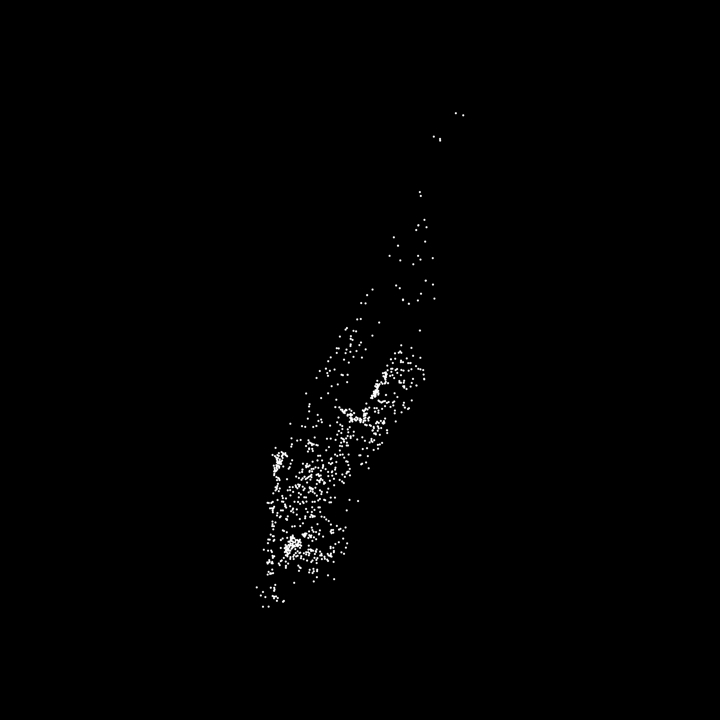
Work from the ongoing series Keyword : Community.

In order (top to bottom): Art Gallery:Manhattan, Church:Kentucky, Pub:United Kingdom, and Walmart:United States.

“My work addresses the inter-connectivity of contemporary life through the discourse of visual culture. In my practice I re-contextualize visual and textual information gathered from sources both real and virtual. Using craft as a divisive tool, I re-present this research as art, integrating an aesthetic and typically seductive component into the presentation of said data. These works take form as mixed media sculpture, artist’s books, installations, performances and photographic prints. The resulting works blur the distinction between the formal art object and didactic representation.

In the Project “Keyword : Communities” I have generated a system for the visualizing the relationship between particular spatial and institutional communities, this work attempts to draw attention to the distribution and frequency of said communal centers within particular geographic regions. The data from this ongoing body of work is sourced from google maps keyword searches of particular regional communities (hence project name and titling structure). Physically these works exist in two states. The sculptural pieces are 3 foot square by 3/4″ deep, they have each keyword location recessed into the surface, and are painted using traditionally automotive methods to achieve a high gloss industrial finish. The second incarnation of the work is a series of 10″ square silver gelatin print portfolio made using a digital negative system.” – Travis Shaffer
Barry W. Hughes


Barry W. Hughes

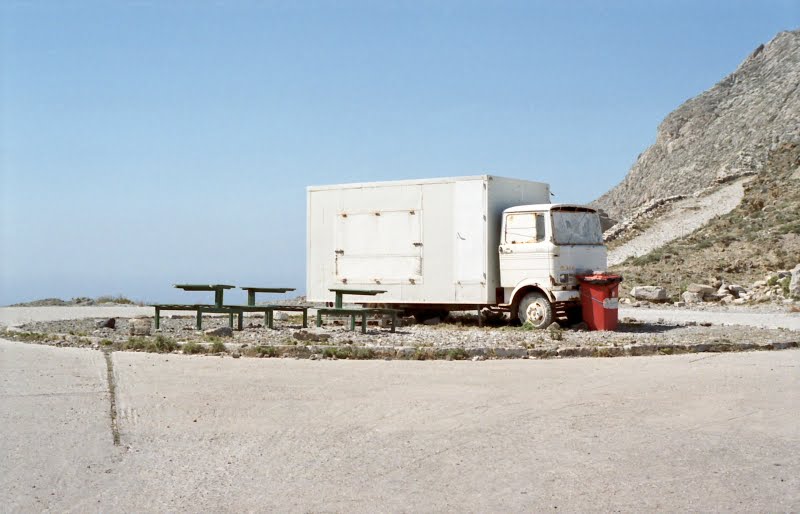
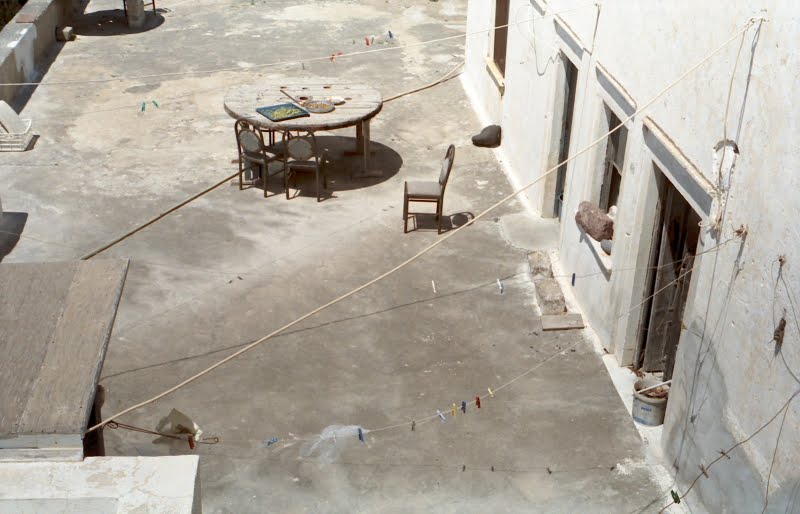
Work from End of Time.

Hughes got in touch with me recently to share his new project he also runs SuperMassiveBlackHole, which is well worth the read.

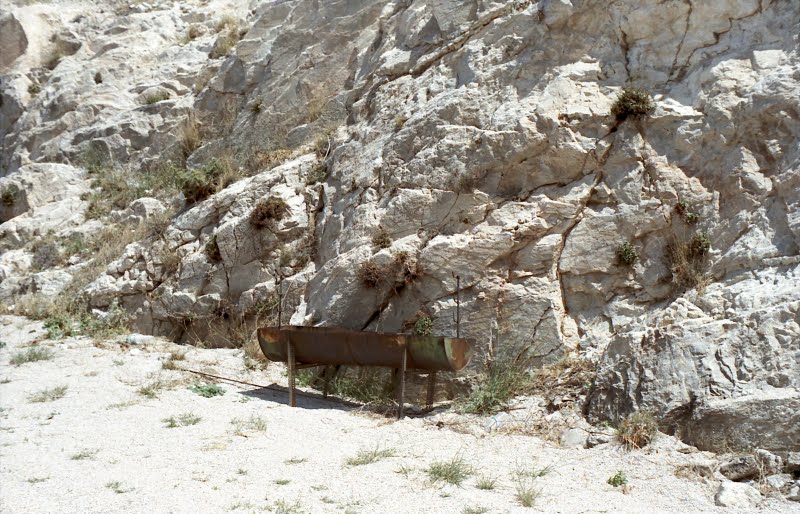
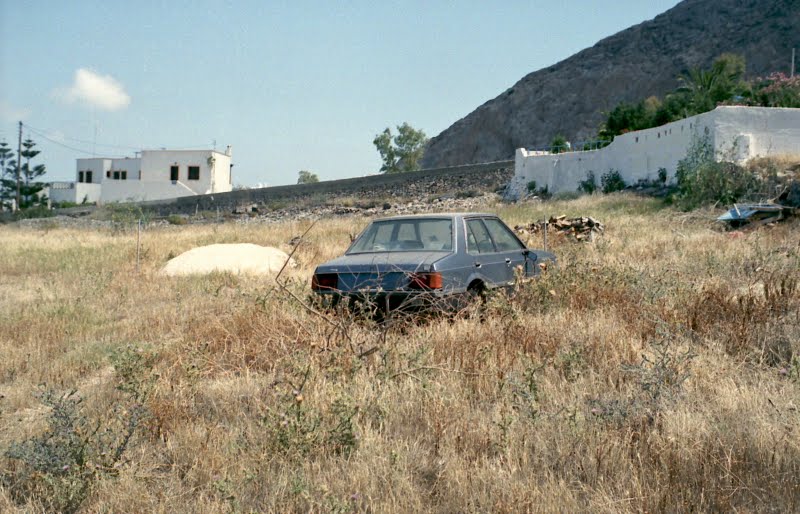
“According to archaeological evidence found at many of Santorini’s ancient sites, the first human presence on the island is situated back to the Neolithic Period and it is believed the island hosted an important civilization around 3600 BC. Santorini was victim to an enormous volcanic eruption in 1500 BC. The eruption was so powerful that many consider it to be the main cause of the destruction of the great Minoan civilization on the nearby island of Crete. As a result of the eruption, the centre of Santorini sank, and the many earthquakes that followed destroyed a big part of the rest of the island, creating what appears to be a small island within an island. Some say the destruction of the island and the legend of Atlantis are connected.

Hughes chooses everyday objects and situations to explore ideas such as incidence, coincidence and accident, motivated by a desire to understand the tension between the intentional and unintentional gesture. Many of his works are based on the reinterpretation of social, scientific or psychological histories and models which ultimately pertain to his overall practice. ” – Barry W. Hughes

Penelope Umbrico


Penelope Umbrico

Work from Broken Sets (ebay) and Desk Trajectories (part of her exhibition As Is).

Umbrico has an opening tonight at LMAK Projects (139 Eldridge on the Lower East Side, Manhattan) that I strongly recommend you go to see.

“Broken Sets (eBay) are images of the screens cropped from pictures of broken LCD TVs Umbrico found on eBay.com, where they are sold for parts. The sellers turn on the TVs while photographing them so that potential buyers can see that the electronics behind the screens work. Umbrico became interested in the incidental abstract beauty of the screens because they are derived from the breakdown and failure of their own promising technology. By presenting these inadvertent abstract compositions as formal compositions in their own right, Umbrico collapses the obsolescence and breakdown of new technology with the aesthetic formalism of utopian Modernist abstraction.

A reoccurring theme in Umbrico’s work is the examination of how unattainable lifestyles are marketed, lusted after, and devoured by consumers. She highlights underlying cultural longings of a consumer subject allowing it to be replaced by a fictional, idealized, non-existent abstraction. This sentiment is poignantly illustrated in Desk Trajectories (As Is), 2010. If a new office desk promises the ultimate in organization and productivity, these same desks on craigslist and eBay, by virtue of the fact that they are “used” and out of commission, represent the exact opposite: a deflated and empty sign of productivity. No longer useful, and taking up too much space, these desks have been subsumed to an economy of re-appropriation, value deflation, and physical degradation.

The term As Is indicates a good bargain with perhaps some flaw, but taken here as an ontological statement, As Is points to a sort of existential anxiety: its reason for being is hinged on its potential for facilitating productivity, and its form is a testament to ideologies of a clean, elegant modernist aesthetic. In these pictures, all efficiency, productivity and elegance is in question.” – text via LMAK Projects

Idris Kahn


Idris Kahn

Work from his oeuvre.

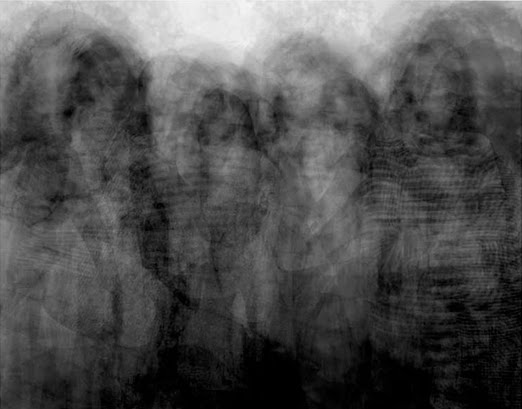
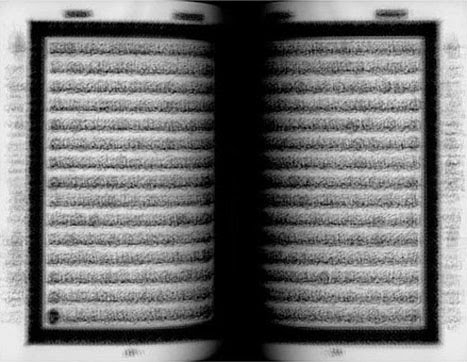
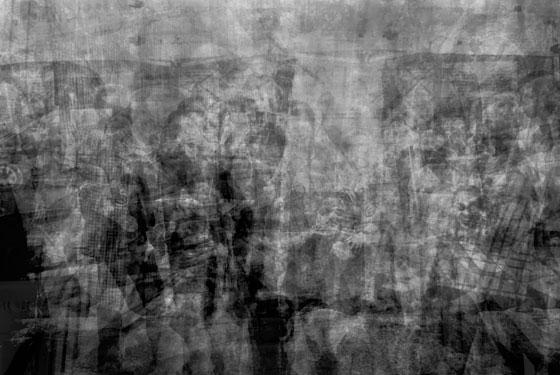
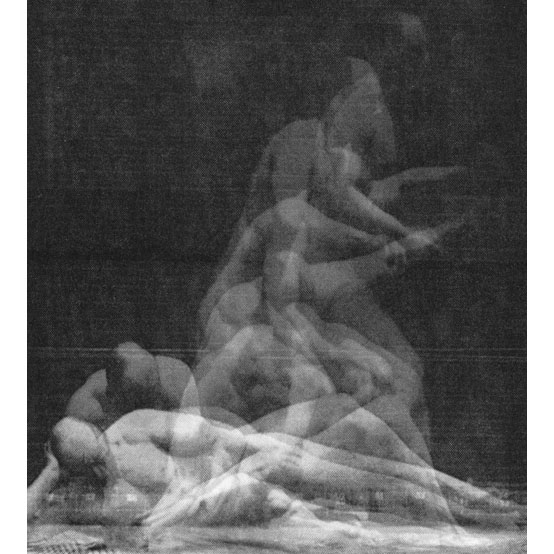
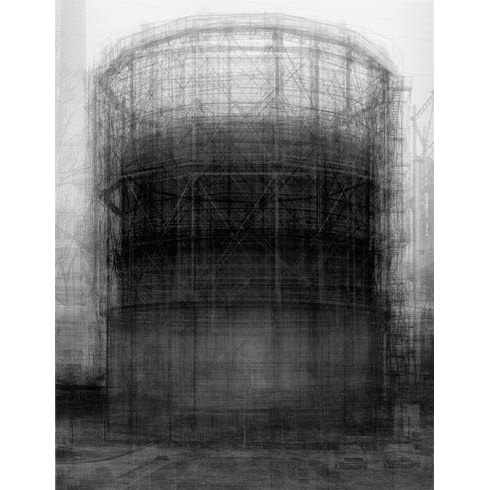
“Employing seminal texts, musical scores and paintings as well as key works from the photographic oeuvre, Idris Khan transforms the cool art of appropriation into a meditation about authorship and time. To create his works, Khan often photographs a variety of material – sometimes borrowed, sometimes of his own creation – in series and digitally layers the results, accentuating certain areas or adjusting the light, shade or opacity of the images so that resonant composites are created. The results spark new thoughts about the original content, or open up seams of interpretation. For example, with individual notes and staves almost indecipherable, in Struggling to Hear… After Ludwig van Beethoven Sonatas, 2005, the sheet music for Beethoven’s entire series of sonatas becomes a dense wall of near blackness that alludes to the composer’s encroaching deafness.

Khan’s work challenges our assumptions about various media – how they are received and digested. Words and music, which we experience sequentially and which gain power from repetition are to an extent robbed of their function by becoming almost solid images. Existing images, such as photographs of gas holders and water towers taken by the German photographers Bernd and Hilla Becher, are in Khan’s work made to appear ghostly, animated with lines of energy and pulsing with life. Khan extends the photographic moment and his images, far from appearing to be the result of mechanical reproduction, become suffused with a kind of aura or spirit that lends them the quality of drawings.” – via Victoria Micro

Pierre Bismuth


Pierre Bismuth

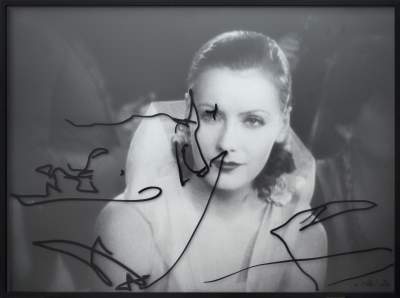
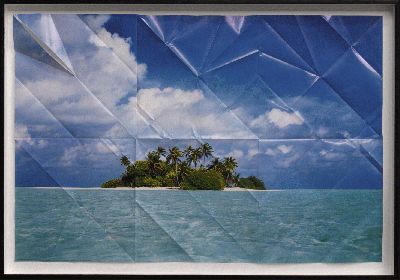
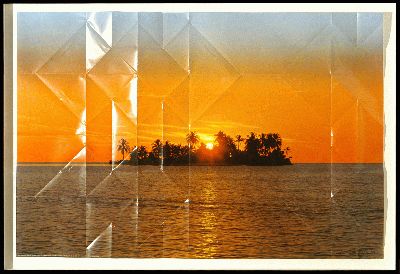
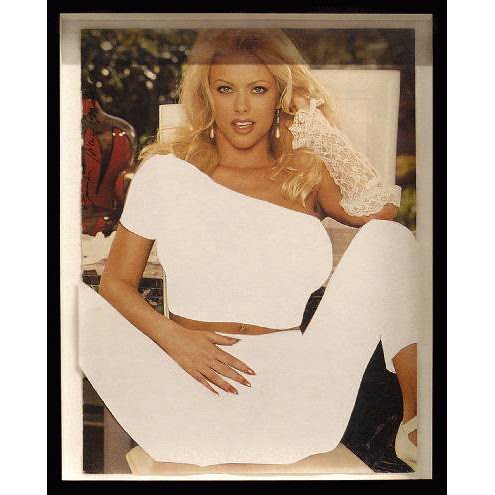
Work from his oeuvre.

__________________

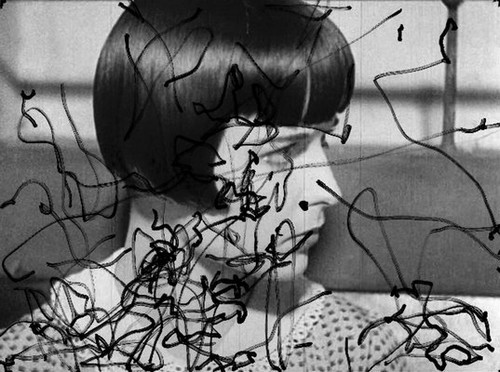
Following the Right Hand of 

“From the beginning of the movie [name of classic Hollywood movie] to the moment the image was taken, Pierre Bismuth has carefully followed and retranscribed the right hand movements of [name of iconic movie star], thereby creating a drawing overlaying the original image. Apparently random, this tangle of lines is in fact extremely meaningful and personal, since it captures the gesture of an iconic actress, whose myth the artist approaches subtlty. Bringing together several artistic approaches of the 20th century, from early photographic experiences of decomposing movement to Pablo Picasso’s drawings with a flashlight in space and in the dark, from automatic writing to action painting, Bismuth poetically reconciles fixed images and movement.”

____________________

In Collages for Men, Bismuth has re-clothed pictures of naked women from pornographic magazines. By cutting white paper in the shape of clothes to fit over their bodies, the transformation is so misleading that it is hard to imagine these women were once naked. It is as if Bismuth misunderstands the purpose of pornography, suppressing any sense of lust that these pictures may have originally communicated. His intervention takes portraits of girls and transforms them into ‘suitably clothed’ women, yet despite Bismuth’s ‘censorship’, the use of soft focus and ‘erotic’ poses continue to associate these pictures with ‘glamour photography’.

______________________

The paper-folding (origami) can be made of different materials – magazines, journals, posters, plans etc. A ready-made origami is unfolded and doesn’t reveal any trace of its creation; every object keeps nevertheless name of the thing that the corresponding origami is supposed to represent.

Stephanie Syjuco


Stephanie Syjuco

Work from her Temporal Aggregate/ Social Configuration (Borrowed Beuys) and Unsolicited Fabrications: Shareware Sculptures.

“My recent projects use objects and surfaces that look strangely familiar, manipulating conventions of style and structure to create “mixed-use” items. I have focused my work on issues of “illicit capitalism”—bootlegs, knock-offs, and the reworked commodity—in an attempt to address being an ambivalent subject of forces larger than myself—politics, global economics, capitalism, and the corporate culture machine—all the while maintaining that there is a way to mutate a given set of laws, icons, or imagery, and place them at a new and different service.

Using mostly cheap materials like foamboard, contact paper, tape, scrap wood, and laserjet prints—I have made images and objects that reference architectural or scientific diagrams, electronic equipment, cityscapes, mass-produced goods, and contemporary artworks. What interests me are the mis-translations or mis-appropriations (be they purposeful or accidental) that happen when an image or concept is remade and shifted away from their correct territories, and especially when traveling from the “top” (i.e. the global) on “downwards” (localized communities).” – Stephanie Syjuco

Viktoria Binschtok


Viktoria Binschtok

Work from Suspicious Minds.

“Viktoria Binschtok finds her motives in public space applying equally her own as well as found photographic material. Following her intuition she seeks and finds symmetries of collective behavior patterns of everyday life, whose existence otherwise seems to go unnoticed. One crucial aspect of her artistic work is to recognize ritualized actions of human beings. Only by the subjective sequencing of single observations to a series contexts reveal that all of a sudden render meaning to ostensibly trivial situations.

The exhibition ‘Suspicious Minds’ puts its focus on men that lead in reality – apart from their function – a life in the periphery. Viktoria Binschtok deals with the amassed depictions of state receptions, public announcements and speeches. When one takes a close look on the press pictures of the mighty of this world, one can actually discover a remarkable parallelism: there is at least one man behind every politician that guards him or her. Especially in times of constant terror threat and enforced security control, this is a more and more common picture. These poker-faced, well-dressed men act inconspicuously in the back. It is striking how much they resemble each other in their attempt to disclose the putative mistake in the system. They are encircled by an aura of absence and at the same time most possible tension and concentration. Their facial expression seems totally indifferent and hence enforces the focus on their stereotypical gestures and postures.

In ‘Suspicious Minds’ Viktoria Binschtok extracts the respective persons from their original context of a press picture. She selects section, point of view and image formation in a way that their faces look at the viewer in real life-size; yet, it remains unclear where and in which context the picture was taken. Only familiar details from our collective visual memory point to nameable persons or situations. These newly generated pictures examine very precisely the aspect of authenticity in photographic depictions – to which the steady presence of the printing grid refers – and, moreover, enables an unknown proximity to the subjects. In reality this would inevitably make the above-mentioned system collapse.

The aspect of proximity joins another facet of ‘Suspicious Minds’: by eliciting information from the pictures that may be placed in the image but are only perceived by her intervention, Binschtok raises the question of ‘what can we see in the pictures and what transcends them?’ Here, the formal particularity of the series conflates with the content; what one can see are the already mentioned facial expressions of the bodyguards, but being so immersed in their tasks they actually seem to disclose an insight into their mental states. Binschtok does not reach this transcendence by magnifying the pictures or rather by ‘adding a narration’ to them; their effect rather results from the discovery and astounding visualization of given facts.” – text via Klemms Berlin

John Michael Boling


John Michael Boling (some pieces with Javier Morales).

Work from his (their) oeuvre.

“John Michael Boling and Javier Morales draw their inspiration from found digital material. They appropriate, remix, and re-edit old videos, images, and sounds found mostly online. The result is work that incorporates elements of Pop art, conceptual art, music videos, and satirical nostalgia.

Some of Boling and Morales pieces simply involve juxtaposing multiple YouTube videos on the same page (simultaneously), in order to highlight their absurdity. Other pieces feature heavy editing of the source material, along with original music composed by Boling and Morales. Still other pieces may simply feature an animated GIF with some absurdist touch as the part of the image that is animating.

All of this work is posted on Boling and Morales’ website called 53 o’s. The address of the site is http://www.gooooooooogle.com, but with 53 o’s instead of the usual 2. Even the name and address of this site helps to illustrate the clever and playful approach that these artists bring to digital art.” – text via AMODA

One Hour Photo Opens Tonight!

This should be a fantastic show with a conceptually compelling curatorial focus, if you are in the DC area I suggest you pop in from time to time to check it out.

May 8 – June 6, 2010 American University Museum at the Katzen Arts Center Washington, DC
Opening Viewing: Saturday, May 8, 6 – 9pm featuring work by: Noel Rodo-Vankeulen, Megan Cump, and Tim Davis

Closing Viewing: Saturday, June 6, 11am – 4pm featuring work by: Penelope Umbrico, Clayton Cotterell, Matthew Gamber, Ann Woo, and Ruben Natal-San Miguel

One Hour Photo distills the photograph to the ultimate limited edition: 60 minutes. Photographic works by 128 artists will be projected for one hour each, after which they will never be seen again, by anyone, in any form. Each work will exist only in the experience, then memory, of the observers. Participating artists—hailing from 13 countries, ranging from amateur to emerging to established—sign release forms pledging never to reproduce, display, or sell the work they’ve contributed to the exhibition.

The photographs themselves, through a wide variety of styles and subjects, embody the show’s concept: familiar landmarks and cities dissolve into light, former bastions of capitalism fade slowly into obscurity, figures vanish, confessions and farewells are made, strangers are observed, haunting objects float in urban landscapes, even a vilified ex-Vice President makes a fleeting appearance as an amiable jokester at a black-tie event.

Just as powerful as the images is the participation of the audience. In One Hour Photo, photography’s power to capture a moment, to freeze and frame it, is returned to the experience of viewing itself. The observer becomes the camera, recording the moment on the unreliable format of memory. The project ultimately aims to complicate the myth of photography as preservation, manifest the tension between the permanence of the medium and the impermanence of time, and subvert the profit model of the edition and the print.

For the viewing schedule, please visit www.onehourphotoproject.com/schedule.php.

Jun Yang


Jun Yang

Work from Paris Syndrome.

“Jun Yang’s work reflects his background as an immigrant, an experience shared in various ways by millions of people in the age of globalisation. Born in China, but migrating to Europe as a child, the artist went through various stages of ‘naturalising’ himself, a process in which he discovered not simply what it is to be an immigrant (legal or illegal), but also how one is acculturated into a ‘European citizen’, and what it costs to be a European (born or naturalised), or in fact to be a social being in general. His work thus addresses specific issues of otherness, but usually from a much wider angle that bears on everyone’s life. Camoufalge – Talk Like Them, Look Like Them, for example, is a documentary film starting from a fictive interview with an illegal immigrant and ending with a deep analysis fo citizenship which moves from fashion, to speech acts, up to the politics of terror. Drawing on his own experience of the ‘right’ things to say and to do, and the hope of security, safety and prosperity which brings immigrants to a new land, Yang plays with his name and appearance, and explores ideas of landscape, home, architecture and social structure – mostly with quirk humour and intimacy.” – Manray Hsu; in: Liverpool Biennial, 2006, p. 110