Peter Piller


Peter Piller

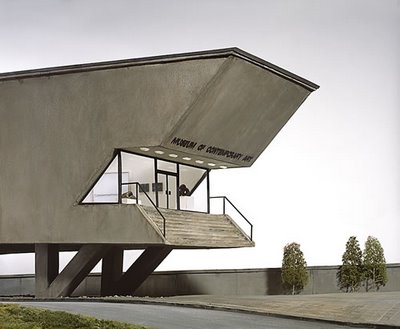
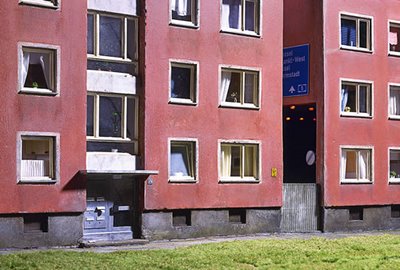
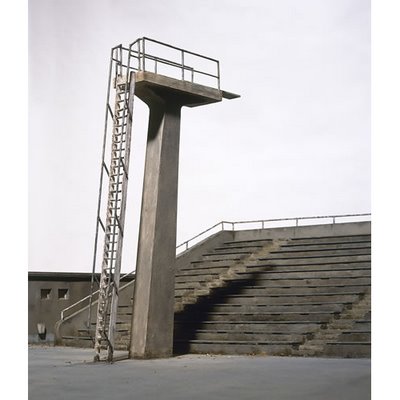
Work from Straßenende/Wendehammer and Autowäsche (Street-ends and Car Washing).

The Peter Piller Archiv is a massive compendium of collected imagery, go check it out.

An interesting article in Frieze here.

“As any curator will tell you, editing is an art, and many artists practice it. While working as a picture editor for an advertising agency, the German artist Peter Piller assembled a personal archive of thousands of newspaper images, mostly banal, small-town, photo-op stuff, ”the kind of photographs,” Mr. Piller writes in a gallery release, ”that the photographer who took them can’t even remember. They’re shot one day, printed the next, and in the garbage the morning after.”

Or in an art gallery, months or years later. Mr. Piller’s art, seen here in a strong New York gallery debut, consists of sorting selections from his archival holdings into thematic groups to suggest portentous stories. Bland shots of deserted roads look as sinister as crime scenes. Unexplained shots of bonfires default to records of mass destruction. Daily life, if uncaptioned, is a fraught and perilous state.

And it is most often absurd. Mr. Piller’s art of arrangement is never above dark humor. From a stash of aerial shots of German suburban homes he creates — in a wry nod to Bernd and Hilla Becher — a subset of houses adjoining cemeteries. From eBay he gleaned an array of snapshots of munitions for sale, each lethal missile displayed, like a designer accessory, in someone’s home.

The interest here, as in all Mr. Piller’s work, is precisely not in the photograph as precious object, and not in the objects depicted in the photographs, but in the cautionary back stories both suggest. Photography has taught us to see the world as guilty until proven innocent. As Duchamp understood, found pictures, like all found objects, can never really be innocent.” – Holland Cotter for Art in Review.

François Delfosse


François Delfosse

Delfosse is a Belgian architect and, as far as I can tell, is not pursuing art beyond his own edification. As such, I could find no statement or review, but I wanted to share these with you regardless, because they are pretty amazing. 

Cube shadow study n°8

Cube shadow study n°4

via PYTR75

Osang Gwong


Osang Gwong

Work from Deodorant Type.

Interview with Ju-Hycon Lee here.

“Gwon works between the fields of photography and sculpture. The artist plays with representations of reality and truth in both media by creating photographic sculptures and sculptural photographs…
Deodorant Type (2005-2006): Here again Gwon subverts preconceptions about representational form. A subject is rendered through the overlaying of photographs onto sculpture. The prints depict the corresponding physiology and clothing of the subject and form an illusion of surface and tangibility. The often surreal and contorted poses of the figures create an unsettling impression, while the physical lightness of the sculptures prompts the viewer to question notions of materiality.” – courtesy of  Union Gallery

Darryl Lauster


Darryl Lauster

Works from his oeuvre, which can be seen at Devin Borden Hiram Butler Gallery and Barry Whistler Gallery.

Title List (in Order):

1. Exercise Desert Rock, D-Day blast at Yucca Flats, 1951, photograph by Cpl. McCaughey, from the National Archives Records of the Office of Chief Signal Officer

2. A Young Civil Rights Demonstrator at the March on Washington for Jobs and Freedom, 1963, photograph by unknown photographer, from the National Archives Records of the US Information Agency 

3. National Anti-Suffrage Association, 1911, Photograph by Harris & Ewing, in the Collection of the Library of Congress, Prints and Photographs Division 

4. Church at Wounded Knee, South Dakota, November 1940, photograph by John Vachon, from the Office of War Information Photograph Collection, Library of Congress Prints and Photographs Division.

5. Charlotte Hall Military Academy, 1920, photograph by Theodor Horydczak, Theodor Horydczak Collection, Library of Congress Prints and Photographs Collection

“My work investigates and appropriates American history, aspects of this nation’s collective identity, and reflects on the various sensibilities of “Americanness” as defined by decorative art and vernacular art forms. In so doing I am conscious of the habitual tension between rhetoric and practice, truth and fiction, and reality and mythology. Historic objects, embedded in museum collections, speak of wealth, status. morality and values in a culture whose idealistic origins lie in the Enlightenment concepts of equality and freedom, but whose practical reality was often quite different. As such, American decorative art functions on various significant and often highly stratified sociological levels, exposing incongruity, humor, contradiction and charm. I am deeply interested in commemoration and memory, and its loss over time, particularly in the way the historic record is often forsaken or transformed through it. 

This particular series highlights the wave of popular Blue and White Transferware imports that swept through the popular material culture of a newly independent and affluent America. Primarily manufactured in China and England, these wares were formulated to appeal generically to America tastes and ideals, frequently employing images of the American eagle, flag or pastoral scenes of New England. Reproduced here using iconic images mined from the public collections of the National Archives and the Library of Congress, I have modeled these plates to create a more telling and inclusive social history of the United States. Each plate is hand cast and hand printed, using the technologies of their 19th century fabrication, with the ultimate goal of assimilating Colonial sensibilities through Post Modern critical appropriation.”

Richard Barnes


Richard Barnes

Work from the series Mumur.

Last week at a Thai restaurant, I had a sterling land on my plate of Pad Ga-Proa and eat some of my dinner. Thankfully I had finished, but other diners at the establishment did not share my fortune. 

“European starlings have a way of appearing in unexpected places — the United States, for example, where they are not native but owe their origin to a brief reference in Shakespeare’s “Henry IV, Part 1.” In 1890, a drug manufacturer who wanted every bird found in Shakespeare to live in America released 60 starlings in Central Park. After spending a few years nesting modestly under the eaves of the American Museum of Natural History, they went from a poetic fancy to a menacing majority; there are now upward of 200 million birds across North America, where they thrive at the expense of other cavity nesters like bluebirds and woodpeckers, eat an abundance of grain — as well as harmful insects — and occasionally bring down airplanes.

In Europe, where the birds are native — Mozart had a pet starling that could sing a few bars of his piano concerto in G major — they still have the power to turn heads. Each fall and winter, vast flocks gather in Rome. They spend the day foraging in the surrounding countryside but return each evening to roost. (Rachel Carson, author of “Silent Spring,” called the birds reverse commuters.) They put on breathtaking aerial displays above the city, banking in nervous unison, responding like a school of fish to each tremor inside the group.

The birds are beloved by tourists and reviled by locals — understandably, since the droppings cover cars and streets, causing accidents and general disgust. A flock of starlings is euphoniously called a “murmuration,” but there is nothing poetic about their appetites. Their ability to focus both eyes on a single object — binocular vision — allows them to peck up stationary seeds as well as insects on the move. In the countryside outside Rome, they feast on olives. Like us, the birds are enormously adaptable but what we admire in ourselves we often abhor in our neighbors.

Richard Barnes’s photographs capture the double nature of the birds — or at least the double nature of our relationship to them — recording the pointillist delicacy of the flock and something darker, almost sinister in the gathering mass. Many of Barnes’s photographs, which will be shown at Hosfelt Gallery in New York this fall, were taken over two years in EUR, a suburb of Rome that Mussolini planned as a showcase for fascist architecture. The man-made backdrop only enhances the sense of the vast flock as something malign, a sort of avian Nuremberg rally.

It is, of course, natural for birds to surrender individual autonomy to the flock; according to the Roman ornithologist Claudio Carere, who has identified 12 basic flock patterns, the starlings are primarily trying to evade falcons. But we project onto the natural world a large measure of ourselves. In ancient Rome, augurs studied the flight patterns of birds to divine the will of the gods; part of the fascination of the starlings is the way they seem to be inscribing some sort of language in the air, if only we could read it.

A consortium of ornithologists, physicists and biologists in Italy and other European countries has in fact begun studying the birds with the aim of learning not only about the relationship of individual birds to the surrounding flock but about human behavior as well. The project, named StarFLAG, entertains hopes of using the birds to illuminate herding responses in human beings with a particular eye on stock-market panics.

The starling in “Henry IV” that inspired those first American birds is a mimic, capable of tormenting a king by speaking the name of Mortimer. Mozart’s bird sang his own music back to him. But Mozart may also have smuggled a few of the bird’s notes into his own compositions. When humans contemplate animals, the question is always who is imitating whom. The starlings that so plague us in America (where we kill more than a million of the birds a year) grew out of our desire for nature to be poetic, rather than truly wild; they reflect the consequences of such self-serving fantasies. It isn’t their fault that they treated an open continent much as we ourselves did.

More and more, as surrounding habitat is flattened, we may find fragments of the wild world coming home, literally, to roost. The abundance of starlings in Rome is partly the result of climate change — they used to go farther south before Roman winters warmed up. Bird-watching thrives on the recognition that the urban and the wild must be understood together. We are, after all, urban and wild ourselves, and still figuring out how to make the multiple aspects of our nature mesh without disaster.” – Richar Barnes

Frank Kunert


Frank Kunert

Work from Photographs of Small Worlds.

Ironically, the first time I cam across Kunert’s work it was in a spam email titled “Award Winning Construction Projects” that featured the bottom image. Kunert is another example of why I am so grateful that I abandoned my model making project in its infancy.

“The project “Small Worlds” is far from being mere photographic satire. Instead, Kunert has spent weeks, sometimes even months, working with deco boards, plasticine and paint, in order to model his thoughts in 3D. With an exceptional eye for detail, he has constructed faultless models, and created scenes that look just like the real thing. Kunert never flicks on his studio lights and reaches for his large-format camera until he feels that his models have reached a state of perfection — until they have become little worlds of their own.

And, it is true, these intricate models could very well stand on their own. But by taking photographs of them, the complexity of these elaborately staged worlds (as well as the intended visual illusion they create) is made manifest. For Kunert, photo montage and computer animation do not come into question. He has no interest in getting fast results, or of achieving a perfect high-gloss surface. In his mind, it is not only perfectly acceptable that viewers of his large prints can detect that these are pictures taken of models; they should actually be aware of this fact. The “analogue look” of his photographs is intentional — Kunert’s answer to digitalization is creating images of the tangible.

Frank Kunert’s “Small Worlds” are, in their symbiosis of idea, image and caption, just as multi-dimensional as excellently-crafted written narratives. On the surface, these photographs confront us with all of the hollow words, catchphrases and banalities we encounter in our daily lives. The stereotypical and senseless aspects of human communication cannot be unveiled more convincingly than in their literal conversion into a visual medium. Kunert deliberately oscillates between humor, wit, scurrility and the grotesque. If, indeed, “Life goes on,” then, there is no question about it, it is only with the continued delivery of one’s daily paper and mail. The tombstone will, of course, need a mailbox and a doorbell, and Mr. Kunert has naturally taken both into account.

On a deeper level, these “Small Worlds” are linked by a reoccurring motif: our deep human desire for security and our fear of loss, as well as our anxiety regarding the transitory nature of life. It is no accident that, despite all of the foliage depicted, there is not a single photograph in this collection that evokes a feeling of summer. In addition, Kunert does not portray secluded suburbia as a neat row of townhouses with carports, but rather as buildings that stem from the early post-war period. Melancholy and dejection pervade these images. “Near the autobahn” illustrates how justified we are in fearing the loss of our sense of safety on an individual level. Here, the freeway literally runs through a residential neighborhood, depriving its inhabitants of any possibility of finding a calm, solitary and safe place to retreat to. The same applies to the photograph entitled “Sunny side”: no matter how hard the tenants of this apartment scrub and sweep, or decorate the balcony with potted plants, the plants will shrivel, and there will be no getting away from the traffic.

With his “Small Worlds,” Frank Kunert confronts a further menacing loss that our experience-driven “fun society” will undoubtedly encounter in the near future: the loss of imaginativeness and invention in the face of entertainment overload, which has already turned small-town, country-style inns and locales into event gastronomies, and made so-called “adventure pool complexes” out of quaint public indoor swimming pools. The fact that Kunert feels neither affected nor threatened by this loss himself can be gleaned from each and every one of his photographs, as well as the very apparent inexhaustibility of his ideas. Just how much work, time and effort has been put into spinning his visual tales, with seeming ease, becomes readily apparent in the sample models that the artist puts on display when he exhibits his photography, even if the viewers only ever get to see pieces of them.

Kunert’s art has often been rightfully compared to the poems of Robert Gernhardt. Kunert’s “Small Worlds” are equally funny, whimsical, grotesque, and pensive musings, and they are also provocative and critical. It is left up to the viewers to decide if they find the works morbid, or simply funny; if they want to truly see the deeper level of what the stories are telling them, and if they might even dare to elaborate on them.” – (This text appears by the kind courtesy of Dr. Christine Donat.)

via PYTR 75 (thanks to Mrs. Dean for posting a link to PYTR75)

Trine Søndergaard and Nicolai Howalt


Trine Søndergaard and Nicolai Howalt

Work from Tree Zones.

You have probably come across Howalt’s Car Crash Studies that made the blog rounds a few months ago. Go to both of their websites, you won’t regret it.

“TREE ZONES is a photographic exploration of the Nordic landscape and ways in which we relate to it. Thematically and formally this work is a continuation of previous projects HOW TO HUNT, DYING BIRDS and HUNTING GROUND.

In a series of images the artists have captured the barren landscapes found in areas along the Nordic timber line during winter. In this marginal land you see solitary trees weighed down by snow. The trees are bent and stunted by their harsh environment. Human forms may appear, but they seem insignificantly small within the vast, white nothingness.

The images represent a humanization of nature: Trees figure as human symbols in a series of ”tree portraits” together with larger panoramic landscapes in monumental formats. In this way a suspense is created between immense, impenetrable space and singular, isolated trees.

These large, colourless images tell a story of defiance, of surviving in spite of ruthless conditions, of being part of a world that you can not fully control or know.”

Kerry Mansfield


Kerry Mansfield

Work from Borderline.

See related work from Barbra Hilski.

“When I first encountered what I now call, a Borderline image, I wasn’t sure if the resulting negative would tell the same story as my eyes. My camera responded with a defiant “Yes!” when contact sheets revealed an entirely new world. So I began my quest to hunt down as many of these strange instances as I could find. I have been working on the series ever since then by using the windows of my chosen home as a refractory device to merge the interior and exterior space onto one like plane. The process involves shooting and printing only one negative. There are no double exposures or digital manipulation of any kind. I have found the “analog” quality of this project to be essential to its creation. I never set-up or adjust the circumstances that produce the images, I simply hunt them down and capture them. Throughout this exploration I have found an often harmonious union between man and nature. Mirrored, reflected and superimposed, the elements became interchangeable. The sky became ceilings. Trees became walls. Ground became floor. Air became windows. In the resulting photographs, the windows themselves vanish entirely while the outside pours inside and vice versa. Once a structure is built, we then believe ourselves separate or “safe” from the so-called chaotic influences of the natural world. What I have found is that, in many respects, what we really believe is an illusion of separateness. And we’ve chosen this as our reality.There is a place in between the hard lines of walls, ceilings and furniture and the botanical design that envelops the outside world where a seamless merge occurs and creates a third reality. One can no longer distinguish whether the wall in the image is concrete or if it merely floats through as apparition of itself in reflection. It is in this place, on the Borderline of real versus reflection that we can ask if one if more “real” than the other. And if so, can you tell which one it is? I have discovered that it may not matter at all and the most important element is how the spaces work together. The Borderline images encourage the viewer to look differently at their own domestic world and find a new way of examining their environment where “man and nature” can come together in a bizarre coexistence of concordance.” – Kerry Mansfield

Laura Wood


Laura Wood

Work from the series Memories of Leda and Stay Awhile.

____________________

Memories of Leda

“The motivation behind this work is an investigation into the image and perception. Despite the observations of Roland Barthes in the early 1980s, we tend to invest an uncritical faith in photography, accepting its documentation as an objective view of events and often favoring its record over one’s actual recollections. Memories of Leda touches upon the ambiguities of texts, be they photographic, painterly or mnemonic, and creates an encounter open to interpretation.

The story of Leda and the Swan establishes a mythological underpinning onto which new narratives may be inscribed. Translated from photographic texts, the story is spoken as softly blurred paintings, resulting in an account of nostalgia informed by visual documents. Memories of Leda wrestles with notions of truth and reality as mediated by our memories, reminding us that the authorial voice remains disputed.”

____________________

Stay Awhile

“This new body of work represents a departure in the artist’s practice as she explores figuration in Stay Awhile. Her previous output has included elegant studies of chandeliers and ambiguous cityscapes, rendered through an aesthetic emphasis on light and colour. While the artist begins her process with recognizable subject matter, she distills the formal beauty of the familiar to the point of abstraction. Laura Wood approaches representation as an immersion into the potentially unfamiliar terrain of the subjective.

In Stay Awhile the artist takes the human body as her point of departure and works figuratively through the suspension of its familiar parameters. Taking pornographic images as her inspiration, the artist aestheticizes the subject matter by literally altering the conditions of its perception. The images are elegant, soft, and beautiful, and create an aesthetic distance from the factual reality of the bodies and acts they represent. 
In Stay Awhile the content is second to its distillation; the paintings convey the impressionistic nature of perception. 

When viewing Wood’s work the recognizable is deferred, compelling the viewer to linger in an ambiguous surface. At once vaguely nostalgic and suggestive of the distortions of memory, the works suspend the viewer’s recognition of the familiar and yet preserve its traces simultaneously. This compelling tension between the known and the unknown prolongs the viewer’s engagement with the works, and warrants the contemplation of representation as a potentially fallible investment in “fact”.”

Press releases courtesy of the Tatar Gallery.

Daniel Barthmann


Daniel Barthmann

Work from Vier Stundenkiloemter.

“‘Vier Stundenkiloemter’ accords to the average speed of walking. The pictures are collected underway on a 800km hiking path from the French/Spanish border until Cap of Finisterre (= the supposed end of the world in the middle-ages) in the very west of Spain.

The images that resulted in Vier Stundenkiloemter are selected recordings of unmediated, indifferent, non-directional looking while just continuous walking over a period of 6 weeks.”

“[The use of the highly saturated / grainy Kodachrome aesthetic] was an aesthetic choice in a way that the reference to slide-material triggers (subconciously or not) associations to 
travel photography and possibly never-ending slide-shows. But instead of delivering pictures as a documentary of a nice summer holiday it forces the viewer to incorporate his or her own ideas, thoughts and interpretations in the process of looking at these pictures. So the series is captured at a certain path connected to real places, but it’s not intended to show country and people or personal experiences from a nice trip.” – Daniel Barthmann