Amir Zaki


Amir Zaki

Work from Relic.

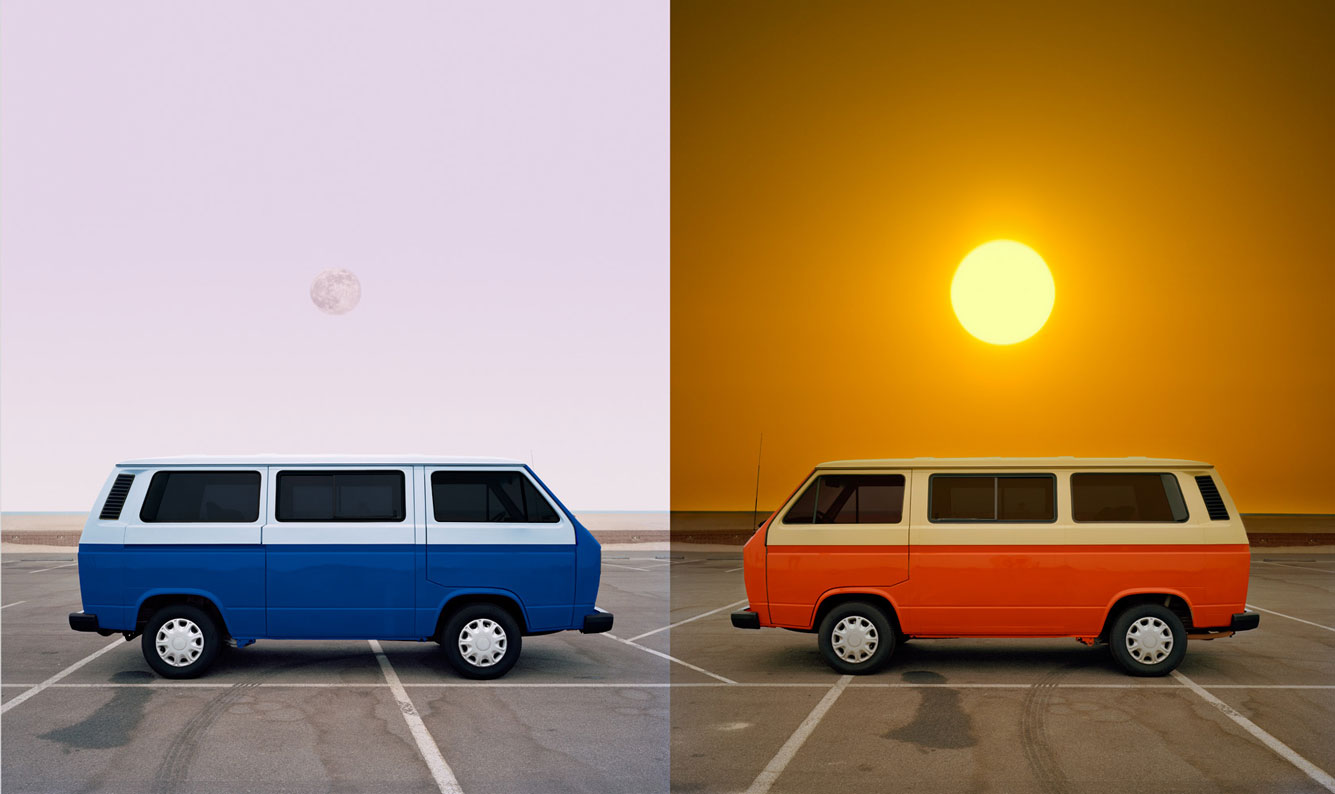
“With the advent of the digital age, deception in photography has never been easier, and Amir Zaki makes the best possible case for its artistic benefits. His brilliant and compelling portraits of retro-chic lifeguard towers in Southern California are the product of nearly as much image manipulation as actual documentation, and the result is that we see them with entirely fresh eyes.

Many photographers of the manmade landscape play it fairly straight, using careful composition, lighting, and large-format printing to lend drama to their matter-of-fact subject matter. Bernd and Hilda Becher, the German couple whose deadpan pictures of early industrial architecture gave rise to an entire school of photography, are entirely literal in their depictions, allowing their gritty subject matter to speak for itself without technical intervention. More recently, some of their followers have embraced various types of editorial alterations, choosing subtle techniques that are not always obvious in the final result.

Zaki, on the other hand, is much more upfront about using any and all available tools to bring to life his much more stylized version of reality. An earlier series put individual LA houses on a diet, distorting entire structures into impossibly skinny slivers, which were then printed in an extreme vertical format. In another set of images, Zaki replaced all the existing signage on older or abandoned commercial structures with an invented symbol system of highly suggestive, but completely mysterious pedigree – Mayan or Martian, perhaps. What was surprising was how weird such a simple substitution made his ordinary structures seem – are our cities really that odd?
The lifeguard towers in Zaki’s current exhibition aren’t so much odd as they are atmospheric: back-to-the-future cockpits for cultural time travel. They’re also virile and sexy in a very streamlined sixties way; seen from below like statues or monuments, they stand out against perfect California skies like symbols of progress achieved through order and vigilance, like the tractors and tanks in Soviet propaganda posters.

The show is much more impressive in person than online, with the high-focus clarity and elegance of the imagery greatly heightened by the huge scale of several of the prints. Two of the very best tower pictures in the exhibition have been printed in this large format, and they demonstrate what’s so striking about the series. Untitled (tower 30) is a portrait of a sky-blue guard tower against a sky-blue sky, the dominant monochrome only interrupted by the silvery sheen of the truncated safety rail on the tower’s deck. Unoccupied, shuttered, stripped of all identifying detail, the structure shares with the others in the show no visible connection to place – it could be anywhere. In its perfect, digitally amped-up color and smooth lines, it is control made seductive – unthreatening, cooly mechanical. Untitled (tower 42) is a skinnier, mustard-yellow version, with the sleek lines and dramatic angles of mid-century ocean liners, transcontinental trains, and pin-up girls.

It’s fascinating to compare pictures found online of actual California beach towers to the Zaki versions. Besides removing signage, fasteners, and any other interrupting blemishes, Zaki has also eliminated the access stairs, nearly all of the guard rails, and most of the supporting structure. Most crucially, his upward view exaggerates the size and height of the towers, which in reality are only ten feet or so above the beach. Zaki’s imposing viewpoint and monumental treatment also heightens the subliminal connection between the boxy, heavy-browed structures and a gigantic, robotic head; we imagine a race of protective (or oppressive) sentinels, rugged, implacable, and all-powerful.” – Gary Falgan for artdish.com

Stefan Ruiz


Stefan Ruiz

Work from People.

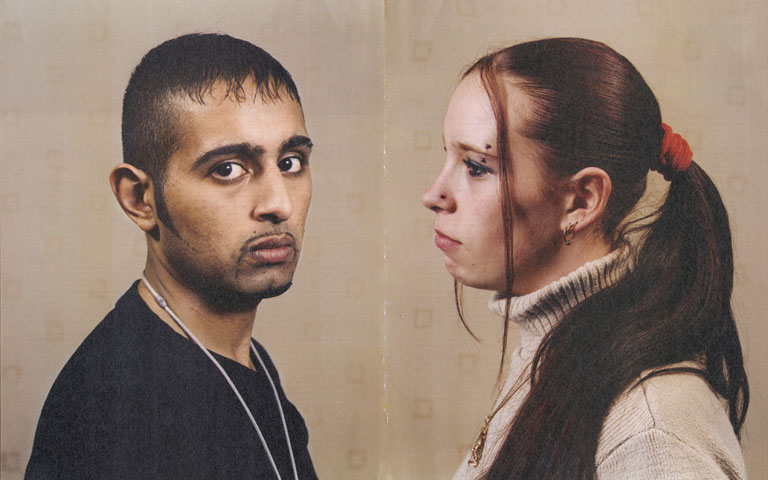
“People is a book about Stefan Ruiz’s view of the world and the fragility of the human condition. The kaleidoscope of portraits?well known celebrities and Stefan’s own family members are shot with the same humanistic voice?takes us into a journey around the world that reveals our complexity, misery and beauty. People features a selection of Stefan’s portrait and landscape photographs made between 1996 and 2006.” – Stefan Ruiz

Aspen Mays


Aspen Mays

Work from her oeuvre.

“Albert Einstein once said, “The true sign of intelligence is not knowledge but imagination.” Recent SAIC graduate Aspen Mays puts that maxim to the test in her current exhibitions at the Museum of Contemporary Art (on view until February 28) and in the Cleve E. Carney Gallery at the Hyde Park Art Center (on view until April 25). In these exhibitions, Mays works as a dedicated scientist guided by a creativity and imagination that Einstein would have admired.

AT McA

Mays’ 12×12 exhibition features her meticulous and meditative “Every Leaf on a Tree” from 2009-2010. Spread over two walls of the gallery, this photographic installation is made up of a grid of 900 small photos of the individual leaves of a tree outside her studio. The total impression is that of an immersive, conceptual forest.

As the viewer walks through the gallery, her movements cause the photographs (which are affixed to the walls with long nails) to gently flutter, thus reminding the viewer of the forces of exertion and gravity. The beauty of the installation is in the precise capturing of an intimate moment with each individual leaf; beauty is palpable in Mays’s archiving of these dynamic, textured moments.

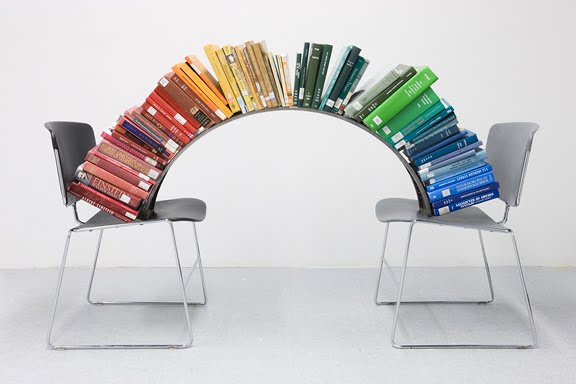
On the central wall of the gallery is “Every Book,” a piece that playfully considers notions of the archive, Einstein’s scientific revolution, and the concepts of light and gravity. 21 photographs comprise a grid that reveals a rainbow of color, constructed from the spines of hundreds of books meticulously placed on metal arcs that rest between two chairs. A closer look reveals that the books are all about Albert Einstein; in fact, the photographs document every book on Einstein that the artist could order from the Illinois Inter-Library Loan Service.

Again, the artist seems to be humorously pondering the artistic extensions of scientific revelations. “Every Book” is an imaginative composition that turns scientific history and abstract concepts into a harmonious, compelling image, and both works in the 12×12 eloquently reveal how our perception of the individual can alter our experience of the whole.
AT HPAC

Aspen Mays, “Boulder Desk,” Hyde Park Art Center Photo by Carrie McGath
Aspen Mays’s playful approach to science continues with her exhibition “From the Offices of Scientists” at the Hyde Park Art Center, where the artist takes a risk by leaving photography behind in favor of a sculptural installation. Here, Mays strives to construct the bureaucratic setting (complete with metal filing cabinets and yellow legal pads) where scientific “knowledge” is ostensibly born.

The exhibition opens with the striking “Boulder Desk” from 2010. Two cubicle walls are the only elements left standing after an apparent catastrophe: a desk has been crushed by a boulder (or meteor) that appears to have fallen right out of the sky. There is a humorous but sinister quality in this, a conspiratorial indication that perhaps this scientist discovered a truth that she shouldn’t have.

Indeed, the narrative of the entire installation hints at corruption, secrets and silly conspiratorial moments. Other objects, which the artist claims to have gleaned from her own visits to scientists’ offices, include a sign proclaiming, “If you find a meteor, bring it here and we will check to make sure”; a jar filled with black jelly beans entitled “Jellybean Universe”; and a dry-erase board covered with small marker points, one of which has been circled and labeled “Big Bang.”

The exhibition has its playful moments, but is less visually engaging than the 12×12 installation. Nonetheless, it is encouraging to see a young artist strike out in new directions and tackle new modes of working, quite like a scientist.

Mays’ talent seems to be in photography, when she has the ability to contain a moment within a frame, simplified and sustained like a piece of music. However, both exhibits are worth seeing as visually eloquent celebrations of the imagination.” – Carrie McGath for f News magazine (excerpt).

Christoph Gielen


Christoph Gielen

Work from his oeuvre.

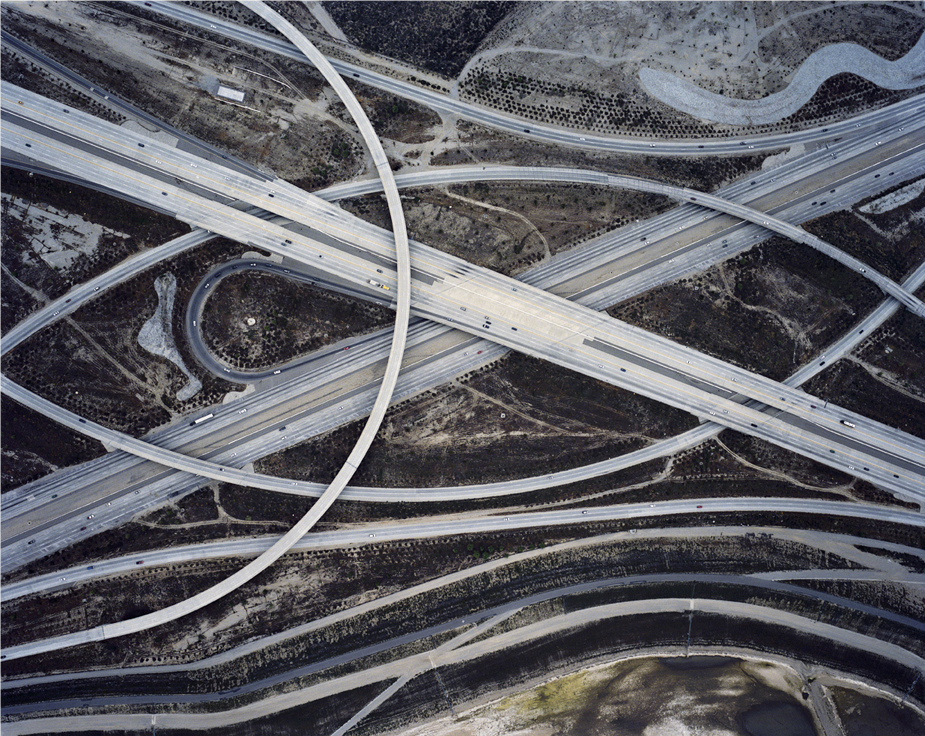
“Christoph Gielen’s photographs document urban development on three continents and over four decades and they raise universal questions about the social nature of our world. To expose the macro-structures of city planning, Gielen takes a long view. From high above in a helicopter, he focuses on housing developments, construction landscapes and traffic arteries. The distance imposes an aestheticizing process on the formal patterns in urban structures and ways of life, making them appear as blocks and wedges, cylinders, squares and curves. Yet at the same time, he reproduces residential culture in a different mode of seeing. 

The early photography discourse, as well as the highpoint of photography theory, held a primary fascination with photography as a “visibility device”, capable of making visible the invisible. The camera could discern what was hidden to the human eye. The “optical unconscious” (Walter Benjamin) was to become perceptible; for many, photography was the medium that might promise the potential for communicating with the dead or seeing spirits. Gielen’s work aims at awakening our own awareness of the spatial order underlying social structures. In this case, while photography may not be the means to raise the dead, it nonetheless becomes an optical device capable of revealing the fundamental structures of our societal ideology. One key feature of an ideology is the ability to present society as if it were natural and necessary and, indeed, many aspects of Gielen’s work deal precisely with the relationship between nature and society. 

The agenda of avant-garde photography was to reflect an unquestioned culture the so-called second nature in the light of a primary nature. Technology and nature, the environment and society, were systematically superimposed. This was an approach accompanied by an optimistic aesthetic avowal of faith in a technological civilisation. The cover of Albert Renger-Patzsch’ Die Welt ist schön (The World is Beautiful) was adorned by a vignette juxtaposing an electricity pylon with a tree mirroring the same structure.” – Johan Frederik Hartle, Assistant Professor for Philosophy of Art, Media and Culture, University of Amsterdam

Jaap Drupsteen


Jaap Drupsteen

Work from Hyster Pulsatu.

“Hyster Pulsatu is a theatrical dance performance that could never take place in a theatre. Thanks to the mixing table, the artist becomes a divine choreographer who can let dancers play in space, in rivalry with graphical image elements; who manipulates the space itself, moulding it to every wish and whim. He can split up a body and duplicate it, can zoom in on a body part, change people into dancing pillars or let them glide over he water. And while he is at it, he can stop or speed up the time, and can invent and colour to his heart’s content.

In this video, all this happens with great but controlled enthusiasm for the possibilities of the new technology. Accompanied by pulsating dance rhythms, sometimes alternated with more melancholy music and song, the laws of the theatre and a good few laws of nature (such as gravity) are thrown overboard. This happens undisguisedly; no making believe it is ‘real’. The result is a balanced mixture of dance, video art and television-technical inventions that is a precursor of the possibilities that the future has in store for us.” – text via Catalogue Netherlands Media Art Institute.

Anthony Auerbach


Anthony Auerbach

Work from The State of New York.

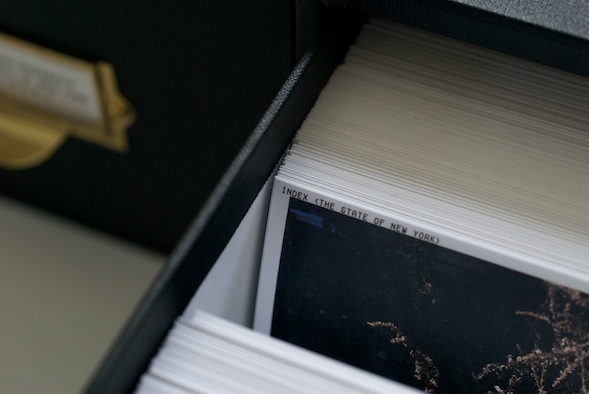
“The State of New York is an aerial survey of the whole State of New York from an altitude of seven feet. The survey records the surface of a giant copy of the Texaco road map which was inlaid in the terrazzo floor of the New York State Pavilion for the 1964–65 World’s Fair. The pavilion, designed by Philip Johnson and advertised as the ‘Tent of Tomorrow’, now stands derelict in Flushing Meadows Corona Park, Queens. The archive of photographs forms the basis of a series of works which reflect on a map in the process of turning back into a landscape and on the material of history.” – Anthony Auerbach

via i heart photograph

Zach Shipko


Zach Shipko

Work from his oeuvre.

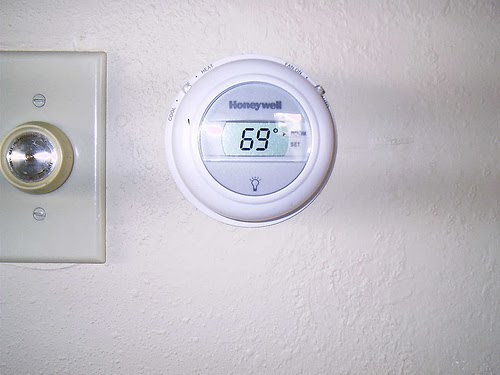
Shipko’s work is more of an examination of internet culture and kitsch than anything else. In the same way that it is accessible to the casual viewer, it also relies on a thorough understanding (or at least an informed inundation) of internet culture and various memes. I am wondering if it is purposeful that there is nothing to be found written about his work, and I must admit that it was a different experience to see the internet through the art critical lens / diary of his miniature performances. For Shipko, the internet is a gallery, site of performance, and a laboratory as well as a venue for exhibition.

Gregory Krum


Gregory Krum

Work from …Practice…

____________________________

Three approaches to a fundamental concept:
– Devotion to an endeavor. Manifested as images from the climbers’ cemetery in Zermatt at the base of the Matterhorn, images of dust and sand whose form is stolen from pictures I love or react to, i.e. Vija Celmins or Thomas Struth. Portraits of houseplants made with a cell phone camera, and in the case of Cherifa Tree whose form is stolen from Brice Marden and whose content is stolen from the tree through which Jane Bowles’ lover, Cherifa, controlled her.

– Interiors that explore objects as containers of meaning, the meaning we place in them, and the extent to which all man-made objects are an act of communication.

– Devotional offerings…the daily practice. Here is to all the unprovable truths, bravely fueled solely by belief.” – via Jen Bekman Projects

Sarah Pickering


Sarah Pickering

Work from Explosion.

“…Finally, Pickering’s Explosion photographs (2004–present) are shot at sites where fake bombs are deployed for military personnel interested in buying pyrotechnics. Manufactured by some of the same companies that make explosives for action/adventure and war films, the bombs are built for use in military training exercises. Pickering captures the explosions as they are detonated in demonstrations, isolated in a benign landscape void of people and infrastructure. Made to imitate artillery, napalm, and land mines, these explosions are controlled, and like toys or fireworks, are much smaller in scale than their real-world counterparts. The pictures Pickering makes of them are alluring. The clouds of smoke, all in different shapes and colors, hover a few feet above the ground as if a magic trick has just occurred, capturing a fleeting moment that is mysterious and beautiful, and odd in its lack of context.” – excerpt from an essay by Karen Irvine via MoCP.

Justin Shull


Justin Shull

Work from Terrestrial Shrub Rover.

““From the time of our birth, humans have felt a primordial urge to explore — to blaze new trails, map new lands, and answer profound questions about ourselves and our universe.” – NASA

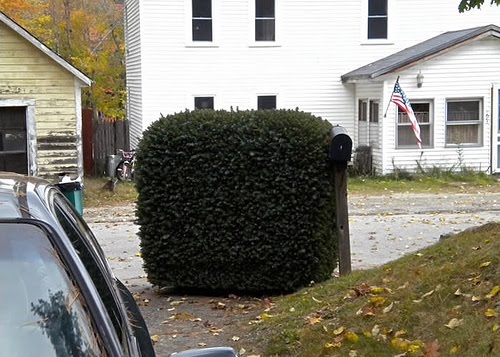
In the spirit of NASA and its forthcoming 2020 lunar expeditions in preparation for colonizing the moon, the Terrestrial Shrub Rover presents the opportunity to explore terrestrial and social environments back on Earth from within a manned, foliage bedecked, solar electric powered rover. (also in development is an unmanned, remotely controlled, webcam version)” – Justin Shull