Alex Prager


Alex Prager

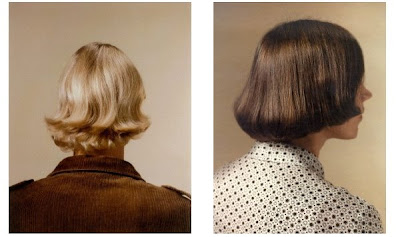
Work from The Big Valley

There is a peculiar Cindy Sherman meets Alfred Hitchcock quality that brought me to explore this work further, and I am not surprised at all to find that I am not the only one to have thought along those lines. Collection of reviews here.

“Prager photographs her female subjects in a style unashamedly reminiscent of the great mid 20th Century film directors such as Alfred Hitchcock and Douglas Sirk. Within the naivety of her compositions and colour palette there is the suggestion of an impending narrative, not unlike old movie stills once displayed outside every cinema. Prager’s photographs offer us segments of stories that encourage us to imagine for ourselves the missing passages beyond the edges of the frame. Often shot from an unexpected angle and unusually lit, the audience are positioned very much as voyeurs. Synthetic wigs, fake birds and retro costumes are meticulously planned and her models cast as players frozen in the narrative. On the surface these models appear polished and eerily near perfection, a utopia sprung with tension. Like Guy Bourdin, the king of photographic mise-en-scène, Prager demands more than simply a ‘pretty picture’. ” – from Michael Hoppen Contemporary

John Mann


John Mann

Work from Folded in Place.

I would be surprised if you haven’t seen this work yet. Mann’s Folded in Place series has made the rounds of the blogosphere, and if you haven’t seen it, you have been missing out. Mann’s site was update today (or yesterday) with some fantastic new works, check it out.

“The large color photographs in this series are informed by an interest in 19th century landscape photography, in which expeditions made to faraway lands attempted to make those lands more visually accessible. These attempts, however, often resulted in photographs that rendered those foreign sights even more unknowable and abstract, by recording images of forms and people to which the common viewer had no reference.
Folded in Place furthers the abstraction once offered by landscape photography by removing the place itself and replacing it with a mapped construction. This method leads the viewer to re-imagine the spectacle of the foreign lands and explore the abstraction of place offered by photography. The combination of still-life constructions and the maps’ reference to large and distant lands examines the paradox of known and unknown geographies offered by the photographic image. In this manner, Folded in Place turns the abstract representation of the map back into a physical landscape using photography to look at the map as a geography of its own. – All images are 24×30” digital c-prints, editioned to ten.” – courtesy of the artist.

Ernie Button


Ernie Button

Work from Back & Forth and Playing in the Shadows of Space.

I have been reading quite a bit about space exploration this week, and it is nice to see some work that is a nice glimpse of the future, as seen from the past. 

____________________________

On the surface, the thought of photographing coin-operated grocery store rides appears to be fun and superficial. But the coin-operated rides that many of us enjoyed as children are slowly disappearing from the urban landscape. That mechanical horse or the spaceship ride made a trip to the store bearable as a child but now seems hard to find. What rides do remain, most of their physical condition has deteriorated due to neglect while out in the elements. Many more rides are located in areas that are cluttered with vending machines and shopping carts, which seem to deter any desire to be used. Warning labels graffiti the rides becoming a bold visual icon that serves as a reminder of our increasingly litigious nature.

Five years after beginning this project, I returned to a number of the sites of my original photographs. Many of the rides were gone. Some of the actual buildings were gone. A few of the rides had been changed out for new ones, but a ride still remained. As the population and economy of a city grows and changes, so does the urban landscape. The demographics evolve and the family oriented population shifts to a different part of the city or country. Essentially, things change.

Black and White represents the past, whether it was a decade ago or a day ago. Color represents today, maybe even a glimpse into the future. The revisited site was photographed at a different time of day or year or a different position from the original to signify not only the passing of time but also how things are never quite the same. The findings of this project seem to mirror life: sometimes changes are dramatic or barely noticeable, but change happens. Change can be so subtle that if you don’t pay attention, you won’t know what’s different.

____________________________

Playing in the Shadows of Space

“For much of the 20th century, outer space was where we, as a nation, envisioned ourselves in the future. During the 1950’s, a future in space seemed very plausible, as if tomorrow a person could be battling Martians on their way to work. We saw the start of the space race, the expansion of special effects being used in motion pictures, the recent end to World War II and the subsequent social and economic boom. Our thoughts could not help turning to such an exciting & hopeful place like outer space. Our hopes and dreams, fears and expectations helped to color our vision of the unknown entity of outer space. By the year 2000, it was thought that the standard mode of transportation would be via the family flying machines.
 
Space invaded our toys as well. The action figures used in this body of work were manufactured and sold during the early 1950s. I chose these figures because through their amazingly detailed poses, they convey to me a sense of hope and humor, remaining fantastic yet reflective of the times both physically and emotionally. No matter how menacing I tried to make the portraits of these figures, they remained non-threatening. While I was not born during the 1950’s, these figures provide a reflective tour through what society’s fantasy was about our future in space. Dynamic, visually interesting landscapes & textures support the belief that these were indeed space men and women from the future. It will be our little secret that it’s now the 21st Century and we are still driving Chevys, Fords and Chryslers.”

Martin Creed


Martin Creed

Work No. 227, Work No. 790, and Work No. 990.

Creed’s website is a treasure trove of great conceptual art that I strongly encourage you visit at length. There is a nice piece about him in Esquire here.

“WORK NO. 227: THE LIGHTS GOING ON AND OFF

We all have our bad days, when you just can’t get it right, like moments of loss and surrender. And we all have our good days, when everything seems to run smoothly, just perfect for no apparent reason. I can see clearly now the rain has gone. You wake up, things are okay, and the sun is shining. And then out of the blue, there you go again, down into the dark pit of depression. It’s not just a matter of mood swings. Its something more basic and perverse: the inability to preserve joy. The need to measure it against a black background. Art is no different. It’s a ride on the roller coaster of emotions. Sometimes I feel so happy, sometimes I feel so sad. I always thought Martin Creed’s Work No. 227: The lights going on and off had something to do with this simple truth. It has the ability to compress happiness and anxiety within one single gesture. Lights go on, lights go off – sunshine and rain, and then back to beginning to repeat endlessly. I do not know what Creed was thinking about when he made it but to me it always looked like a swing, a mood swing. That’s why I never found it funny but frightening in its simplicity, it’s a sculpture for our lithium oriented, Prozac enhanced reality. Are we afraid of the dark or just blinded by the light? I see a rainbow and I want to paint it black.” – Maurizio Cattelan, 2004
 

Matthew Tischler


Matthew Tischler

Work from Screen Series.

I was made aware of Tischler’s work through a mailing from Jen Bekman’s 20×200 project. You can see Tischler’s work (and buy it) here.

“Technology has enormously impacted our perception of the world. Aside from the practical and pragmatic functions of computers in our time, the digital revolution has created a certain modern “aesthetic” which is extremely pervasive in our culture. I hope to reference the aesthetics of digital technology, without employing the tools. Therefore, my photographs are “traditionally” printed from negatives (chromogenic color prints), without any digital enhancement or manipulation. 

The effect of the grid used in the Untitled Screen Series is such that images are divided, pixelated, and filtered. Subjects and figures are therefore broken apart and reconstructed in such a way that they are both integrated into their environment and isolated within it. None of the subjects in these photographs have any discernable facial features or characteristics. The screen that is imposed over each tableau subjugates their identities. Richly saturated colors and flattened space create alluring vistas that seem to resemble video stills. ” 

Daniel Ehrenworth


Daniel Ehrenworth

Work from Sky / Water.

“Sky/Water is a series of black and white inkjet prints which butt together a separate shot of the sky and the water to form a fake horizon.

In addition to being a tonal study, the work is about that act of thinking.” – courtest of the artist.

Marilyn Minter


Marilyn Minter

Work from Green Pink Caviar

Green Pink Caviar is up at Salon 94 in NYC until June 13. Amazing photo-realistic paintings that are a far cry from what I normally post, but what the hell, it is my birthday, literally.

“Id and superego fight it out on the lush picture planes of Marilyn Minter’s conceptually canny painting, photography and video. Erotic attraction is the immediate effect. The centerpiece of this show, a billboard-size enamel-on-metal painting, reproduces with a lovingly sensuous touch (Ms. Minter finishes her surfaces with her fingers) a close-up, hugely enlarged, soft-focus photograph of a young female model licking beaded cake decorations off glass. Because the illusory glass is coincident with the painting’s actual surface, it is as if the model were painting from the other side, using her tongue.

Hans Namuth’s film of Jackson Pollock painting on glass comes to mind. Ms. Minter also captures tongue-painting action in her video “Green Pink Caviar.” As she languorously licks and kisses the glass, the video borders on pornography, a subject Ms. Minter has dealt with explicitly in the past.

In its hedonistic excess, however, Ms. Minter’s work also implies a Barbara Krugeresque critique of decadence in contemporary art, fashion and consumer culture. An 8-by-5-foot photograph called “Chewing Pink” shows from below a model with heavily shadowed eyes hungrily lapping up granulated pink candy, punning on powdered drugs like cocaine and heroin.

Ms. Minter’s works are as much about addiction as about pleasure. The paintings of beautiful women blowing shimmering pink bubblegum bubbles? They’re not about oral sex — they’re about the economy.” – Ken Johnson for the New York Times

via ideaslinger

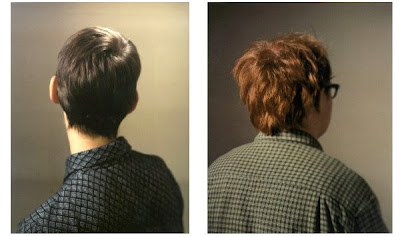
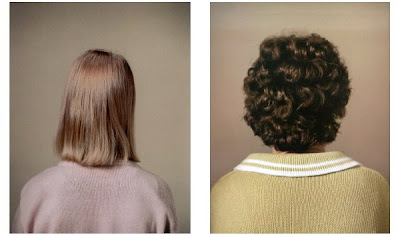
Marjaana Kella


Marjaana Kella

Work from Reversed.

“When something is not there, possibilities open.The tête-à-tête is an intimate meeting. It may be a way for us to meet our beloved or look at a picture that speaks to us. We are face to face or eye to eye with the person or the picture, rather than opposite them. I am looking at you at a moment when you are looking at me looking at you. Our gazes cross but their crossing cannot be captured; the dialogue with the picture takes place outside all representation.
 
However, representation may include a moment where one sees the other: we may look at one another or one may look at the other without the other seeing him or her. We may, of course, also observe ourselves or someone else in a mirror. In such cases, however, we are not eye to eye with ourselves or with the other. Our own face and our own gaze are never actually visible to us. I am of one flesh with the world, and ‘my body sees only because it is a part of the visible in which it opens forth’, as Maurice Merleau-Ponty says in his book, The Visible and the Invisible. I cannot, however, see the contours or gestures of the body in which I dwell in this world in the same way as others see them. Even to see my own back is difficult. And yet my being in the world consists of gestures, body positions and facial expressions, and my observing I-is immersed in my own experience of the world.
 
Immersed in the world, we are looked at from everywhere, even before we make the other the object of our gaze. Nowadays children are watched in the womb even before they make their first kick felt. I am watched, but what is a gaze? When someone turns his or her back to me demonstratively, I see a resentful gaze. The gaze is not the eye, i.e., the organ of vision. It articulates. In the field of vision, the gaze is outside; I am looked at, I am a picture. As the French psychoanalyst Jacques Lacan wrote, ‘What determines me, at the most profound level, in the visible, is the gaze that is outside. It is through the gaze that I enter light and it is from the gaze that I receive its effects’.
 
When we look at the picture of someone in a state of hypnosis, or asleep, or dead, the psychoanalytical question arises: ‘We see dreams, but do we watch them?’ Pictures of a person who is asleep, dead or hypnotised expose a body that is not being exposed with the purpose of being looked at. The pictures both show and hide a dormant threat, the threat of dissolution, nullification and loss of control. Even though we know that we are permitted to watch, we still feel ashamed. We find ourselves eye to eye with something that ought to be invisible. The pictured people do not look, though clearly, they see with their mind’s eye. Are we looking at a soul in the nude, comparable to a nude photograph taken surreptitiously?
 
When the soul or the inner space become nakedly visible, the position or perhaps rather the attitude of the body makes it apparent. In her book, Reading Rembrandt, Mieke Bal studies Rembrandt’s drawings that describe a sitting nude as a mass of flesh – which is what the body becomes in a state of complete relaxation. The whole body expresses indifference to being seen; it is not available for eroticism; it lacks any exhibitionist intent. There is nothing on the background, only the background, a surface that signals the intimacy of the woman’s position. A veil ought to be drawn to shut her from the view of the spectator.
 
At the same time, the lack of posing exposes a mask or veil with which the body makes a picture of itself and becomes like itself. Lacan uses the expression ‘to make oneself seen’. But it is possible that the subject does not pose as an object in order to be a subject, but simply chooses not to represent.
 
Silent or Quiet?
Freud’s teacher Jean-Martin Charcot had thousands of pictures taken of hysterical people in the photographic laboratory he founded in the hospital of Salpetriere in the middle of the 19th century. Charcot was a visualist who believed in what symptoms, gestures and postures can tell and registered what he saw in his theatre of living pathology. Freud was more interested in what is not seen or is only seen as holes. He began to study the psychic topography under the surface of the skin, where a visual study of the members of the body is unable to penetrate. He calls the unconscious ‘the other scene’. It is a scene on which things are often left unrepresented.
 
To represent the unrepresented or to leave unrepresented? The gaze outside seems to guarantee that there is more to see than what I see: the invisible returns from the world back to the subject, thus opening a state of visibility. In a photograph, we may be able to see how visibility becomes visible and while looking at pictures, we may become aware of the conditions for possibility of visibility. However, visibility does not simply mean that we are able to perceive something that is either absent or present. Objects, perception, images and imagination are involved in visibility, but visibility is not reduced to reproductive representation. There is also imaginary representation, where the structure of desire as well as various unreal objects, such as daydreams, phantasies, melancholy or shadows enter the picture. Loss of control, relaxation, a vague recollection, involuntary movement and flight into the world of daydreams seem to imply a flaw or deficiency of some kind. They do not aim for the sublime or look for the unnamed; instead, they represent non-representation.
 
Speech and memory may act in the same way. As interruptions. They may be completely void or full to the point of exaggeration. Yet all speech demands an answer, as memory demands recall. The answer, however, may well be silence, where the void makes itself heard. In that case, we look outside speech for some reality or something represented that could fill the void. We let the body think and analyse its gestures, positions or behaviour in order to find what is not said. We study the reverse side and feel with our gaze the living material of human hair. We feed the eye’s insatiable appetite with rich colours. We play music in order to hear the dance. The unseen and the unsaid brought out by a marriage or rather engagement of the senses, i.e., synergy, are answers to our failure to remain quiet.
 
Speech, pictures or memory may be void or they may show their reverse side. When expressing the observed by means such as these, they seem to be speaking of something that – though it may resemble a lived experience deceptively close – yet does not fully coincide with it. They bear evidence of past powers that have been pushed aside by events making their choices at crossroads. The Finnish language uses the word katsomo (‘the looking place’) to denote locations where people gather to follow various events. The word in English and many other languages is auditorium, the hearing place. When one looks at an empty katsomo, one sees oneself seeing. When the katsomo is quiet, one can hear hearing. One is eye to eye with the fact that something may take place or be swept away. – Pia Sivenius thanks to Galerie Poller

Tess Hurrell


Tess Hurrell

Work from Chaology.

“My practice is primarily using photography as a framework, a context for ideas of perception, discovery, proof and understanding. Using it’s uniquely complex language, I aim to create images that communicate on different levels about the way in which we see and observe.

‘Chaology’

This series grew from a fascination with the visual power of the photographed explosion. These silent and still forms are created from images of explosions caught at a point of expansion. Source material includes the received images from Hiroshima, nuclear tests, the space shuttle disaster, burning oil and white phosphorus bombs. They are at once icons of destruction and yet familiar organic formations, reminiscent of clouds, tornados, flowers and liquid.

‘Chaology’ is about the ironic beauty of these formations; the impossible fragmented time that the camera allows, and my distance from the reality of these mediated events. The physical creative act is an important aspect to this work, merging the contradictions of human nature: the instinct to both create and destroy.”

Hui-min Tsen


Hui-min Tsen

Work from Western Plural

Western Plural is a series of portraits of legendary figures from the Mythic West. The project emerged as an exploration of history as layers of mentally constructed narratives. I created the images by manipulating historical portraits and movie stills, accentuating key elements such as the hands, guns, eyes, feathers, then printing the picture in the darkroom from a paper negative. Through the resulting abstracted portraits of recurring characters I hoped to capture the plurality of our myths and legends.”