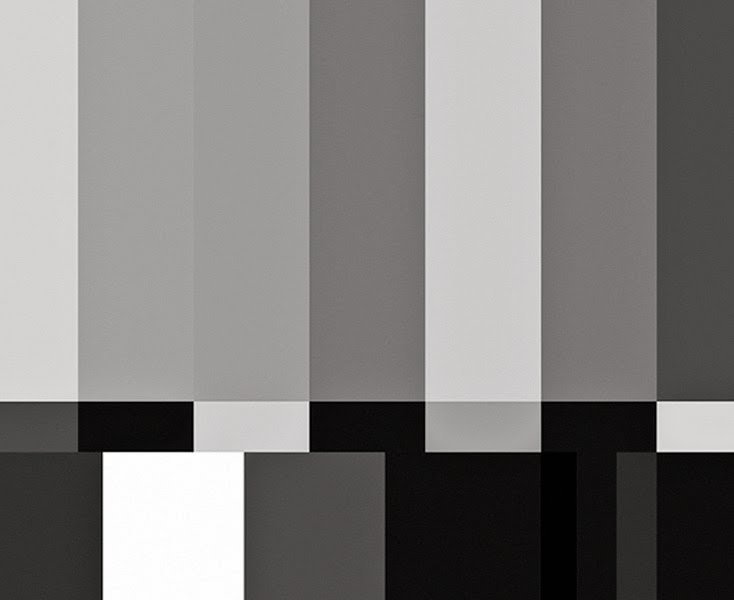
I once taught a color photography class where I had one particular student who would not participate in any class discussions. However, I knew from other classes that he was an excellent student. Later I discovered he was colorblind. Talking about color had no meaning for him.
2
For years, I had a disagreement with a friend whether Gone with the Wind was originally shot on color film. She had seen the NBC broadcast in the 1970’s on a small black and white television, and did not see it again until 1980’s, in an era when Ted Turner was rebroadcasting numerous colorized movies.
Released in 1939, Gone with the Wind, along with the Wizard of Oz, was commercially successful use of the new Technicolor process. While the Technicolor system is a color process, the original negative is shot as a black and white separation, which is later combined in the final print.
My friend, by default, won the argument.” – Matthew Gamber
“You are standing in a field in Italy, looking at a pile of rocks. They are unremarkable, rutting out the ground like any gentle reminder that we live on something called a “crust.” You’ve seen rocks and these are rocks. But someone else—a friend, a guidebook, a scholar—sees a temple, an Etruscan temple of characteristic proportions carved from something called “tufa” and consecrated to Fufluns, a wine god. You don’t exactly see a temple, but sense that these rocks—as integral to the ecosystem of any vacant Roman lot as seasonal chicory and perennial used condoms—are suddenly significant. They mean something they stubbornly refused to mean minutes before.
The more time I spent in Italy, the more interested I became in that forceful shift of attention, and wondered if it could occur outside its ancient sites. I began haunting the periphery of Rome, its modern suburbs and interstitial landscapes, outside the ring road and down highway grades, places that looked more like New Jersey than Napoli. I would march into gypsy camps and factories that made dental inserts. I once crossed two overpasses to photograph a giant glowing sign that said “MOTEL BOOMERANG.” I photographed objects and people and situations and landscapes, scenarios and fragments. Every time I felt that tingle—the one that had accompanied a field of stone fragments rising in my imagination into an ancient temple—I would take a picture. The photographs began to feel vital to my experience. I sensed the camera transforming a part of the culture no one looked at into a set of odd and material monuments. There was a preservative quality to the practice: if the monuments of these suburbs were to be documented, it had better happen now, because they were certain to be gone soon. The suburbs were a ruin in the making.
Many of my pictures did not look particular to Rome, but might have been taken outside of Phoenix or Cairo or Jakarta. The suburbs turn out to be a globalized space, with building materials and construction styles and rubbish (and maybe hopes and dreams) flooding across national borders. The Imperial Romans did the same, shipping marble from Carrara to decorate bathhouses from Tunis to Turkey. This New Antiquity doesn’t come from a centralized authority, but spreads virulently through all fertile capital markets. And its rise and ruin occur quickly, before they can be chronicled.
The idea of a “New Antiquity” colonized not just my time in Rome, but began to make meaning out of other recent areas of inquiry. In 2007 I had traveled to China, photographing in a similar manner but without a particular aim. I had spent years photographing in New York City, walking with my view camera in a shopping cart, making pictures of rubble and junk in parts of the city that were resistant to gentrification. All over the eastern seaboard of the United States, I had accumulated a longstanding set of sad little Vanitas-like found still lives, pictures that were meant to stand in for sadness and loss. The more I sifted through these pictures, taken from the edges of great ancient and modern capitals—in different spirits and for many ostensible “purposes”—the more sense they began to make together.
The First Law of Thermodynamics tells us that in the universe there is a finite amount of energy; it can neither be created nor destroyed; The same can not be said for significance. For human beings, with their persistent drive to generate meaning, there is an infinite amount of significance, and for photographers this is canon law. The photographs in The New Antiquity are attempts to pour little molds of meaning for the peripheral present to harden in; to document a very real faux-archaeological significance as I tracked down ruined fragments of a very recent ancient past.” – Tim Davis
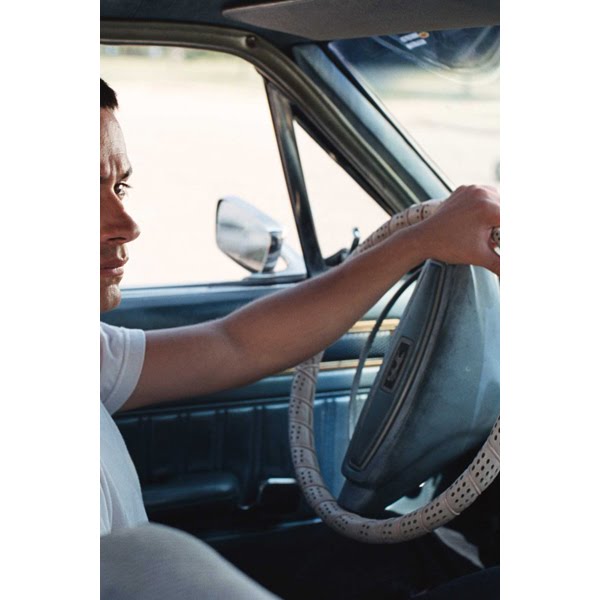
“The work in this portfolio The Presence of Things reflects an interest in continuing to photograph in a somewhat directorial manner; much like I had done with the portraits. In this case I introduced objects into the landscape environment rather than using people. The work was done largely by trial and error, I would acquire an item that I thought was interesting and look for what seemed to be the right place for it.
I wanted to retain my affection for beauty as revealed in my landscape work but add a touch of surrealism as another issue to consider. This work was exhibited at the Kathleen Ewing Gallery in 1998. In a review in The Washington Post on May 7, 1998 the critic Ferdinhand Protzman said when referring to one of the images ‘It’s a postcard from the edge, a reminder that the strangest creation roaming the landscape has two feet and a camera in its hand'” – Frank DiPerna
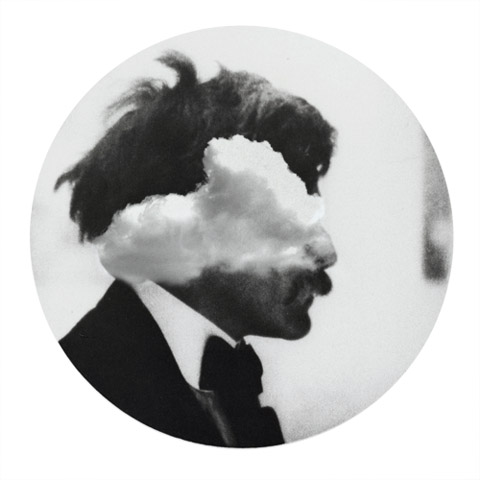
“Imagine you are on a city street, then you are the city street. You are the thoughts of the street, you are not you. Then suddenly a man with a ladder knocks into your back. You are shocked and ask yourself why and what’s going on. Then the shock disappears and you are yourself again. In life we are constantly experiencing all three stages at the same time.
Remembered dialogue from a performer in a Tino Sehgal situation.
My art investigates divergence and assimilation: change in form and the assimilation of self into other people, places and states of being. I am driven by the desire to be so close to something, to understand and love it so completely that I unite with it.
I begin this process by taking pictures of my body in a space, with an object or with a person. Then I merge myself and the space together. Once merged I begin editing myself out of the space: dissolving the connection, dissolving space.” – Chejana denHarder
“There may come to be new places in our lives that are second spiritual homes–closer to us in some ways, perhaps, than our original homes. But the home tie is the blood tie. And had it meant nothing to us, any other place thereafter would have meant less, and we would carry no compass inside ourselves to find home ever, anywhere at all.
Eudora Welty, PLACE IN FICTION
+++
Summer, 2009: I’m in New Orleans, just visiting, but I used to live here. The place has stayed with me, in me, since my first visit to the city 15 years ago. I’m staying in a tiny apartment with a beautiful red headed woman, the kind one might describe as “fiery.” She’s studying to become a nurse, and we’ll marry someday. We are just off Prytania – on the top floor of a decently-kept three story building on Philip St., and I’ve begun the search.” – Jared Ragland
“Let us say we have chosen to speak nothing but the truth. Immediately, there is a Freudian problem: should we just speak the truth as it is, or should we first take into account the circumstances and the audience to which we are speaking? There is a great difference. If we just indicate the reality, we risk of being eaten by the wolf, just like this boy from Aesop’s fable who screamed for help but whom nobody would believe because of certain previous misadventures. If we go for the second option, we risk of losing the literal meanings of words. Communication of truth becomes something of a strategical activity. You have to know how words will be heard before you even start using them. Imagine trying to convince your psychoanalyst that you are finally healed! Wouldn’t it be like speaking with language itself instead of speaking within it?
You might think I started writing about Liudvikas Buklys’ practice in a roundabout way, but believe me – it is to the point. Buklys is interested in how things take place and in the coordinates of possibilities that allow them to take place. His peculiar research might concentrate on anything from material structures to historical maps and the field of treasure hunting, but there is always an underlying thread of investigation: where are the true grounds of a given reality? Mind you, for Buklys this is a completely empirical question. The most basic material object is situated within a certain field of expectations. This field orients our perception and lets us behave in a particular way. An exhibition is one example of such a field. Furniture design is another. Offbeat archeology of modern treasure hunters is yet another.
But what if an exhibition starts to act according to a logic foreign to it? And what if we have to remove an object from its original context in order to fulfill it?” – Jonas Žakaitis
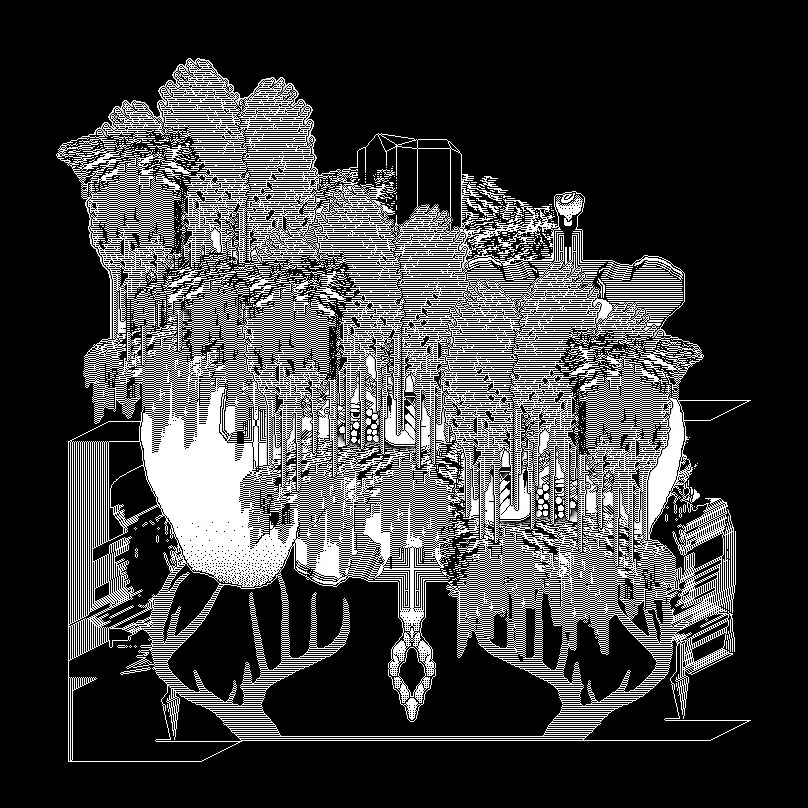
Laura Brothers, in a sense, doesn’t exist. Her net identity is abstract, aloof, and remarkably uninformative to the “casual” net-art public. This mystery is a great part of the appeal of her work, in her pseudo-anonymity, she plays the role of cultural curator or vernacular archivist re-imagining the past from a very specific MS-Paint / retro-futuristic / 8-bit-wonderland aesthetic. Brothers’ work is a constant barrage of cultural references, nostalgic re-imaginings, and aesthetic updates of the internet in its infancy, most of which seem just barely out of reach yet immensely tangible at the same time. The visceral accessibility and references to our cultural memory that she employs (seemingly without effort) facilitate an understanding of and a relationship with the work that constantly eludes understanding yet, somehow is unquestionably familiar.
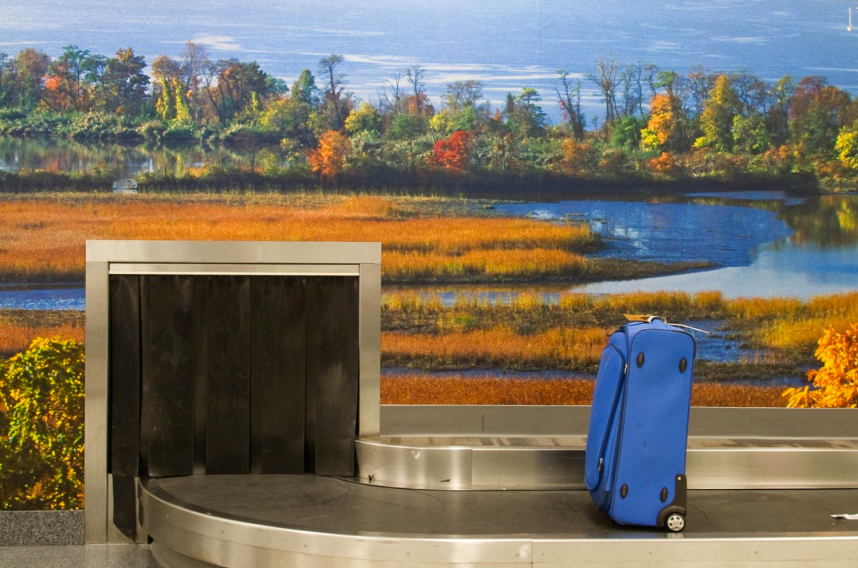
“My inspiration for creating photographs stems from finding and documenting peculiar juxtapositions in everyday places. This process often involves the act of rephotographing photographs.
My current series, Landscapes for the People, looks at the use of romanticized wallpaper landscape photographs found in everyday environments. These wall sized photographic murals seem to serve a psychological function, given their potentially intimidating or banal locations, like dental rooms and laundromats. These landscape murals allow the viewer an alternate mindset to nerve racking procedures or the mundane activities of everyday life.
Photographs from Landscapes for the People use the peculiar relationship between found images and operative items. The resulting photographs of these locations document the strange play of the functional environment and the idealized psychological landscape.”
“Lossless Processing challenges the representational nature of photography and examines programming as a visual medium by re-ordering the digital photograph using Processing and a custom QuickSort algorithm.
Sorting algorithms are one of the most basic functions in computer science, and analogous to our cognitive thought processes. Algorithms are traditionally valued on their theoretical least cost upon a given data set, rather than the aesthetics of the intermediate states. This project uses naive sorting to explore the process and function of our modified BucketSort and QuickSort algorithms in order to explore the aesthetics of process rather than quality of product.
Our works are re-ordered and removed from their previous context while still being an accurate representation of every pixel in the original image. In this process, the image now functions conceptually as a collection of visualized data rather than a mechanical/digital reproduction of reality. The action of re-organizing the photograph makes tangible the traditionally transparent functioning of the medium.” – Adam Tindale and Jordan Tate

.jpg)